
As Moscow’s Leader Reveals Total Conquest Plans, Massive Drone Strikes Kill Civilians While Prisoner Exchanges Continue Under Istanbul Accords
Summary of the Day – June 20, 2025
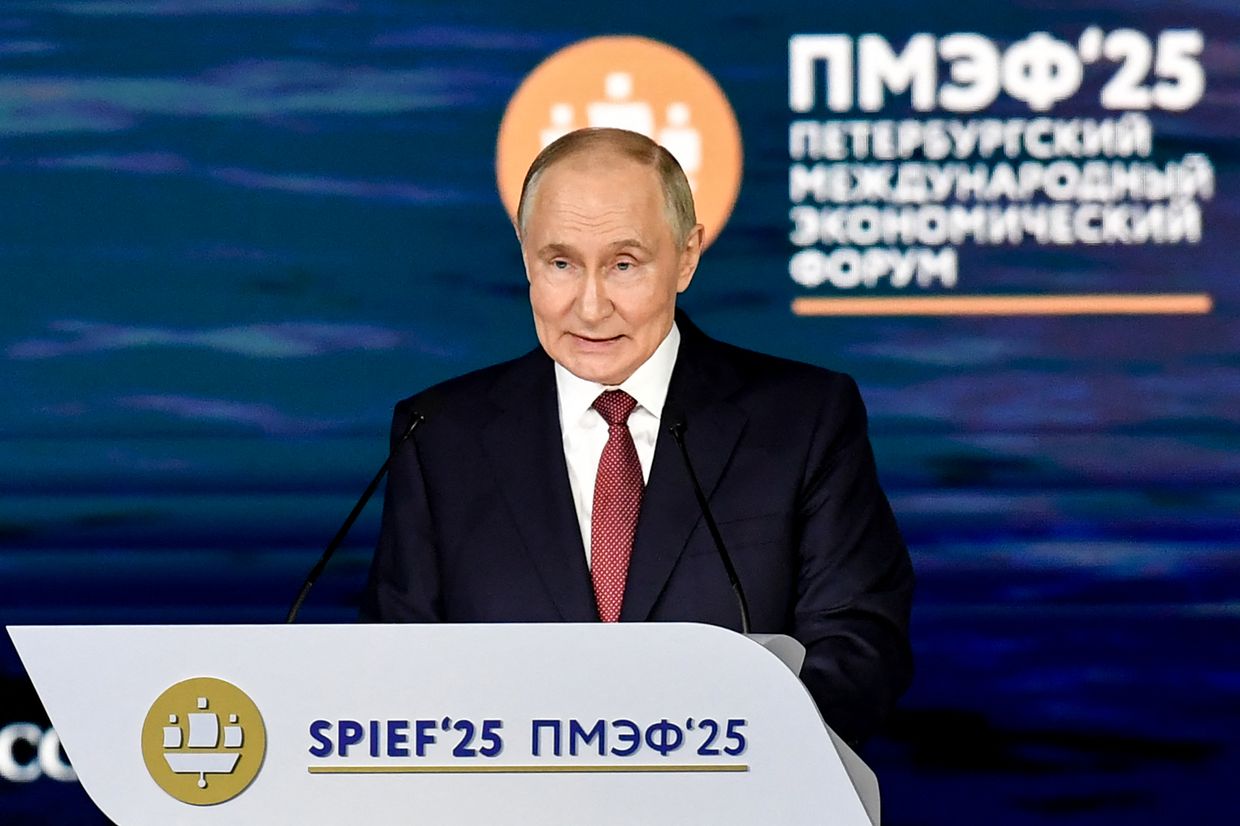
The mask of limited territorial objectives finally fell away as Russian President Vladimir Putin openly declared at the St. Petersburg International Economic Forum that “all of Ukraine” belongs to Russia—the most explicit statement yet of Moscow’s true imperial ambitions. The chilling pronouncement came as Ukraine and Russia conducted their sixth prisoner exchange under the June 2 Istanbul agreements, returning severely wounded defenders to Ukrainian soil. Meanwhile, the war’s brutal reality continued with “massive” Russian drone attacks that killed two civilians and injured thirty-nine others across multiple regions, including a devastating assault on Odesa that trapped residents in burning buildings. Against this backdrop of escalating rhetoric and violence, Ukraine imposed sweeping sanctions on dozens of Russian, Chinese, and Belarusian entities fueling Moscow’s drone production capabilities, while Putin’s alliance with Iran faced new strains from Israeli military strikes that forced Russia to evacuate nuclear specialists from Iranian facilities.
“Where the Foot of a Russian Soldier Steps”: Putin’s Imperial Declaration
The pretense that Russia seeks only limited territorial gains evaporated at the St. Petersburg International Economic Forum when Putin delivered his most expansive territorial claim yet: “All of Ukraine is ours.” The statement, rooted in the false narrative that Russians and Ukrainians are “one people,” invoked an old imperial saying that left no room for ambiguity: “Wherever the foot of a Russian soldier steps is Russian land.”
Putin’s declaration revealed how Moscow uses “buffer zones” to justify expansion beyond its illegal annexation of five Ukrainian regions. When asked about seizing Sumy City, Putin maintained calculated ambiguity: “We don’t have a task to take Sumy, but I don’t rule it out.” Russian officials have called for buffer zones extending 20-30 kilometers into Ukrainian territory, with some demanding expansion into Dnipropetrovsk Oblast up to the Dnipro River.
Ukrainian Foreign Minister Andrii Sybiha condemned the comments as showing “complete disregard for U.S. peace efforts,” responding with mathematical precision: “He already disposed one million Russian soldiers in a senseless bloodbath in Ukraine without achieving a single strategic goal. One million soldiers. Two million feet.”
At the UN Security Council, Russia’s envoy characterized Moscow’s peace memorandum from Istanbul talks as “the best offer Ukraine can get today,” demanding Ukraine recognize all annexed regions and surrender areas not under Russian control. The ultimatum makes clear that Putin views any settlement short of Ukrainian capitulation as merely a pause before resuming conquest.
Zelensky’s Defiant Response: Defending Sumy and Seeking NATO Support
In his evening address, President Zelensky directly countered Putin’s territorial threats: “The Russians had various plans and intentions there — absolutely insane, as usual. We are holding them back and eliminating these killers, defending our Sumy Oblast.” He confirmed detailed military briefings on frontline operations, particularly focusing on Sumy Oblast and border area defenses.
Despite earlier uncertainty about U.S. participation, Zelensky confirmed his attendance at next week’s NATO summit in The Hague, where he will meet European Commission President Ursula von der Leyen and NATO Secretary-General Mark Rutte on June 24. The decision reflects Ukrainian determination to maintain Western engagement amid shifting American priorities.
Sixth Exchange Under Istanbul Accords: Wounded Warriors Return Home
Ukraine and Russia conducted their sixth prisoner exchange under the Istanbul agreements, with President Zelensky confirming the return of Ukrainian defenders held in Russian captivity for over two years. The swap focused on seriously ill and wounded prisoners from the Armed Forces, National Guard, and Border Guard Service, including defenders of Mariupol captured during the 2022 siege. The oldest returnee was 60 years old.
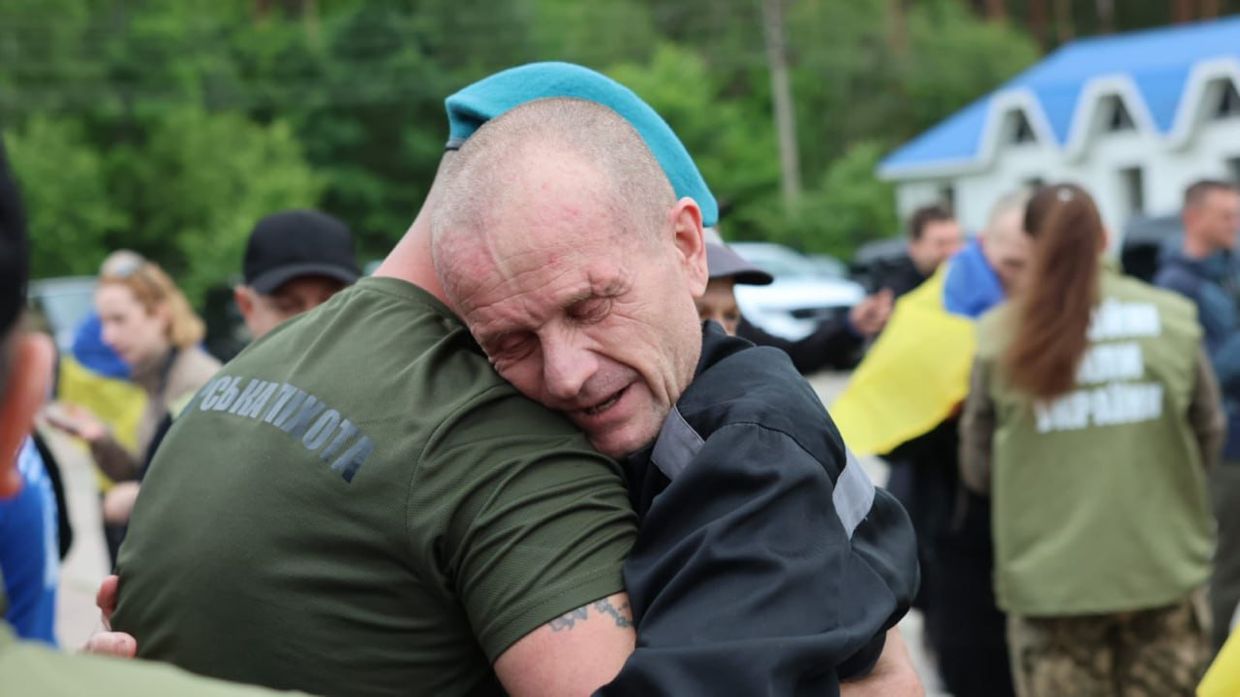
The exchanges represent the sole tangible success from Istanbul negotiations, as both sides honor commitments to phased prisoner swaps and repatriation of fallen soldiers’ bodies, even as broader political breakthrough remains elusive.
Terror From the Skies: Coordinated Drone Assault Across Ukraine
Russian forces launched 86 Shahed-type attack drones and decoys across Ukrainian regions overnight, killing two civilians and injuring thirty-nine others, including minors. Ukrainian air defenses shot down 34 drones while 36 disappeared from radars or were intercepted by electronic warfare.
Odesa bore the brunt of what authorities described as a “massive” attack beginning at 1 a.m. One civilian died and fourteen were injured, including three emergency workers struck by collapsing debris during rescue operations. Ten drones struck targets throughout the port city, hitting seven residential buildings and triggering large-scale fires that forced evacuation of over 600 people from a 23-story apartment building where flames engulfed floors 18-20. A four-story building became “completely engulfed in flames,” while the main train station suffered infrastructure damage.
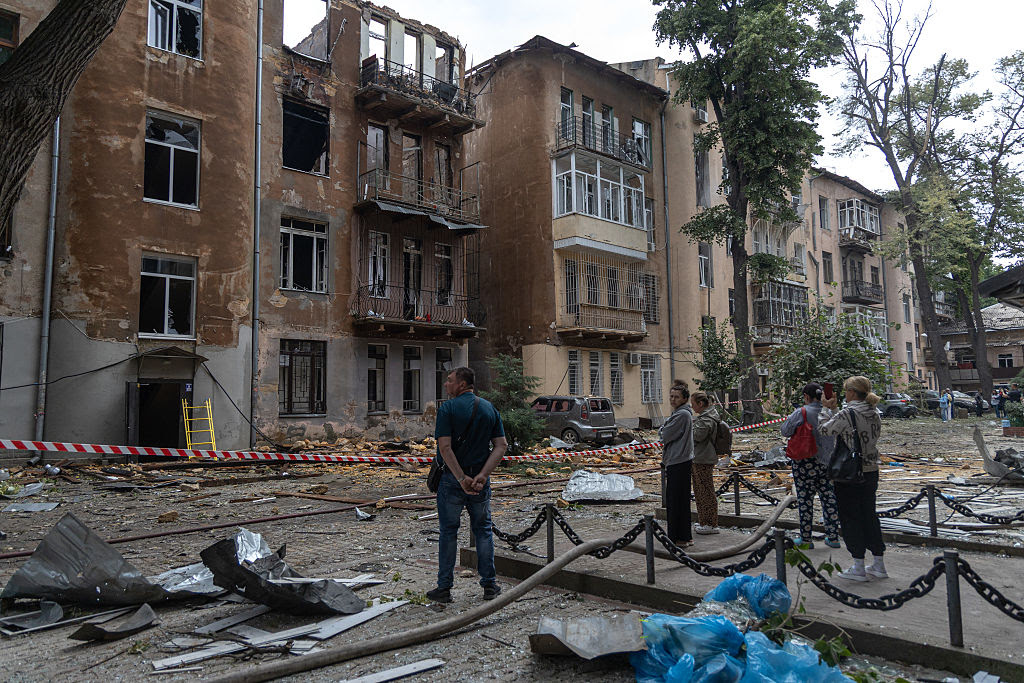
Across other regions, the systematic campaign continued: Dnipropetrovsk Oblast saw two men injured and damage to industrial facilities and schools; Donetsk Oblast recorded one killed in Kostiantynivka and five others wounded; Kharkiv Oblast suffered six casualties including two minors, with multiple residential buildings and a school damaged; Kherson Oblast counted eleven wounded with seventeen houses damaged.
Targeting the Drone Supply Chain: Ukraine’s Sanctions Offensive
Responding to escalating attacks reaching 400-500 drones per night, President Zelensky imposed sanctions on 56 individuals and 55 Russian, Chinese, and Belarusian companies involved in drone production and sanctions circumvention. Targets include entities developing Geran, Orlan-10, SuperCam, and FPV drones, among them the Belarusian Precision Electromechanics Plant and six Chinese enterprises in Hong Kong, Shandong, and Shenzhen provinces.
The sanctions also target equipment suppliers to Alabuga Machinery and component importers for Kronshtadt JSC, which developed Banderol UAVs with jet engines. Sanctioned entities face asset freezes, business restrictions, and entry bans to Ukraine.
Military Reorganization and Ground Forces Command Change
President Zelensky appointed Brigadier General Hennadii Shapovalov as Commander of the Ukrainian Ground Forces. Shapovalov previously served as Ukraine’s representative to NATO’s Security Assistance and Training center in Germany and commanded the Southern Operational Command in 2024.
Simultaneously, Ukraine’s Unmanned Systems Forces announced a new command structure uniting the branch with top drone units under Major Robert Brovdi (callsign “Magyar”), previously commander of the high-performing Magyar’s Birds Unmanned Systems Brigade. The reorganization aims to create unified command with common tactical vision for drone operations, reflecting the growing centrality of unmanned warfare.
Incremental Advances: Russian Forces Push Forward on Multiple Fronts
Despite constraints, Russian forces maintained pressure along the entire front with marginal advances in several sectors. In the Kupyansk direction, geolocated footage showed Russian advances east of Dovhenke, while the Defense Ministry claimed seizure of Moskovka. Near Siversk, forces advanced in northeastern Serebryanka, notably using armored vehicles and tanks rather than the motorcycles and ATVs characterizing most recent operations.
The Toretsk direction saw Russian advances north of the town and in central Yablunivka, with Ukrainian officials reporting intensified assaults using 23 pieces of equipment, 13 motorcycles, and over 100 personnel in 20-minute waves. In the Hulyaipole direction, forces advanced in central Malynivka, though this represented an isolated mechanized assault rather than broader tactical shift.
These incremental gains reflect Russia’s persistent pressure and ability to maintain offensive operations despite mounting constraints.
Russia’s Economic Facade Cracking: Central Bank Chief Issues Warning
Even as Putin projected territorial confidence, Russia’s economic reality told a different story. Central Bank Governor Elvira Nabiullina warned at the St. Petersburg forum that wartime momentum is “running on empty” with key resources exhausted: “We grew for two years at a fairly high pace because free resources were activated. We need to understand that many of those resources have truly been exhausted.”
Economy Minister Maxim Reshetnikov declared the economy “on the verge of recession,” with GDP growth slowing from 4.1% to 1.4% in the first quarter—the first quarterly contraction since 2022. Business profits fell one-third in March, with oil and gas sectors declining 50%. Putin intervened directly, ordering officials to prevent “stagnation or recession under any circumstances.”
The Tank Production Puzzle: Moscow’s Industrial War Machine
Despite economic warnings, intelligence suggests Russia continues expanding military production. Georgia-based Conflict Intelligence Team reported T-90M tank production reached 280 annually in 2024, up from 60-70 in 2022. Combined with decreasing loss rates as forces rely more on motorcycles than armor, Russia appears positioned to maintain equipment levels for “several more years.”
The production figures highlight Russia’s adaptation to reduce equipment losses while maintaining pressure, representing both economic necessity and tactical evolution driven by Ukrainian drone threats.
Iran-Russia Alliance Under Fire: Nuclear Cooperation in Crisis
Israeli strikes on Iranian nuclear facilities created an unexpected crisis for Russia’s longstanding partnership with Tehran. Kremlin spokesperson Maria Zakharova declared the world “millimeters from catastrophe,” while Putin announced agreement with Israel on protecting “over 200” Russian specialists at Iran’s Bushehr nuclear power plant.
Rosatom head Aleksei Likhachov confirmed evacuating “tens” of employees and weighing full evacuation from the plant Russia built and maintains—Iran’s only functioning nuclear reactor since 2007. The crisis threatens decades of cooperation representing a rare concrete tie beyond shared Western opposition.
Peskov’s Middle East Doctrine: Defending Iran Against Regime Change
In a Sky News interview, Kremlin spokesperson Dmitry Peskov declared regime change in Iran “unacceptable,” warning that assassinating Supreme Leader Khamenei would “open Pandora’s box” and promote extremist sentiment. The comments reflect growing alarm as the U.S. weighs deeper involvement in Israel’s campaign against Tehran.
Peskov also dismissed Trump’s rejection of Putin’s offer to mediate between Israel and Iran, characterizing Trump’s language as “unique” while urging mutual tolerance. The exchange highlighted limits of Russian diplomatic influence as regional conflicts escalate beyond Moscow’s control.
Estonian Intelligence Assessment: Iranian Production Under Pressure
Estonian military intelligence commander Ants Kiviselg suggested Israeli strikes targeting Iranian drone production, including a Geran-type factory in Isfahan, could reduce Russian drone capabilities. However, he warned Moscow plans to “increase” rather than merely maintain production levels, suggesting temporary disruption rather than strategic setback.
International Pressure Mounts: European Restrictions and Historical Recognition
EU interior ministers from Baltic, Nordic, and Polish countries issued a joint statement barring Russian war participants from the Schengen Area. Estonian Interior Minister Igor Taro emphasized that “hundreds of thousands of Russian citizens who have fought against Ukraine” pose “very significant security threat,” with restrictions remaining even after hostilities cease.
The Dutch parliament officially recognized the 1944 Soviet deportation of Crimean Tatars as genocide, joining six other countries in formal recognition. Foreign Minister Sybiha welcomed this “powerful gesture of solidarity with the Crimean Tatar people, who are still facing persecution under Russia’s temporary occupation.”
Oil Price Cap Postponed: EU Delays Russian Energy Restrictions
The EU postponed lowering the Russian oil price cap from $60 to $30 per barrel due to Middle East volatility concerns. “The idea of lowering the price cap is probably not going to fly because of the international situation in the Middle East,” one diplomat told Politico, as global oil prices spiked following Israeli-Iranian escalation.
The Elon Musk Gambit: Russian Asylum Overtures
Russian authorities reportedly consider offering political asylum to Elon Musk following his conflict with President Trump over government spending. State Duma deputy speaker Vladislav Davankov said Russia would welcome Musk from “a technological and visionary point of view,” reflecting Moscow’s attempt to exploit Western divisions.
Deputy Security Council Chairman Dmitry Medvedev joked about brokering peace between “D and E” (Donald and Elon) in exchange for Starlink shares, illustrating how Russian officials view Western internal conflicts as geopolitical opportunities.
Corruption at the Summit: Ukrainian Deputy PM Under Investigation
Ukrainian Deputy Prime Minister Oleksii Chernyshov’s extended foreign travel raised questions about corruption investigations targeting his former ministry. Prime Minister Shmyhal confirmed official approval for Chernyshov’s trip “until the end of the week” amid probe into alleged kickbacks from real estate developer Serhii Kopystira between 2021-2022.
Two associates were reportedly detained as the investigation advanced, with sources claiming previous searches were blocked by National Anti-Corruption Bureau head Semen Kryvonos due to longstanding ties to Chernyshov.
The Shadow of Cannibalism: Moral Collapse in Russian Ranks
Audio intercepted by Ukrainian military intelligence suggested complete breakdown within Russian forces. The recording allegedly captures a commander describing how soldier “Brelok” killed and consumed fellow service member “Foma” over two weeks before dying himself. The alleged incident occurred near Kupiansk direction villages, involving the 52nd Separate Reconnaissance Battalion.
While authenticity cannot be verified, the account aligns with documented abuse patterns within Russian ranks filled with recruited criminals, including previously convicted cannibals. Ukrainian intelligence described this as evidence of “moral and psychological collapse” potentially as significant as military defeats.
Looking Ahead: Total War Meets Economic Reality
Putin’s declaration that “all of Ukraine is ours” removes any ambiguity about Russian objectives, confirming the goal is complete destruction of Ukrainian statehood rather than limited territorial adjustment. Yet this maximalist vision collides with stark economic realities as Central Bank warnings suggest fundamental choices ahead about sustaining the war effort.
The contradiction between Putin’s territorial ambitions and Russia’s economic constraints may define the conflict’s next phase. As Moscow escalates rhetorical claims while its foundation weakens, the sustainability of current approaches faces increasing scrutiny.
For Ukraine, Putin’s admission provides diplomatic clarity while complicating negotiations. The statement makes clear that any settlement short of capitulation will be viewed as merely a pause before resuming conquest. The prisoner exchanges offer hope for individual families even as the broader struggle intensifies, with each returned defender representing both personal victory and reminder of the thousands who remain captive or have paid the ultimate price.
June 20 will be remembered as the day Putin finally said what he had long thought: that Ukraine as an independent state has no right to exist. The question now is whether Russia’s economy and military can sustain the total war needed to achieve that vision, or whether Putin’s maximalist dreams will founder on Ukrainian resistance and mounting Russian limitations.