
Kyiv Under Massive Attack as Commander Reveals $10 Billion in Russian Damage from Ukrainian Deep Strikes, While Iran Oil Crisis Could Fund Putin’s War Machine
Summary of the Day – June 22, 2025
The theater of war expanded dramatically as U.S. President Donald Trump’s strikes on Iranian nuclear facilities sent shockwaves through global energy markets, creating an unexpected lifeline for Russia’s war economy just as Ukrainian forces demonstrated remarkable resilience across multiple fronts. While Moscow condemned American “violations of international law” with breathtaking hypocrisy, oil prices surged toward levels that could fundamentally alter the war’s financial dynamics. Commander-in-Chief Oleksandr Syrskyi revealed that Ukrainian forces had inflicted $10 billion in damage on Russian territory while holding 90 square kilometers in Kursk Oblast, even as Russian forces pressed their summer offensive with nearly 695,000 troops. The day’s bloodshed included devastating missile strikes on Kyiv and Ukrainian training facilities, while the hidden costs of war emerged through corruption scandals and the deaths of recently released prisoners of war.
Moscow’s Masterful Hypocrisy: Iran Partnership Deepens as Oil Weapon Emerges
The Russian Foreign Ministry’s condemnation of U.S. strikes on Iranian nuclear facilities as “grossly violating international law” reached new heights of diplomatic cynicism, delivered while authorizing continued missile barrages against Ukrainian civilians. Foreign Minister Sergei Lavrov warned that “the world will descend into chaos” if countries interpret self-defense rights as they wish—a statement of staggering irony from a nation systematically dismantling international order through its unprovoked invasion.
Russian Security Council Deputy Chairperson Dmitry Medvedev amplified nuclear saber-rattling, claiming the U.S. had “failed to destroy Iran’s nuclear capabilities” and that “several unspecified countries are ready to directly supply Iran with nuclear warheads.” CEO of the Russian Direct Investment Fund Kirill Dmitriev announced that Iranian Foreign Minister Abbas Araghchi was en route to Moscow for a June 23 meeting with Putin.
Araghchi confirmed his travel during an Istanbul press conference, declaring “We enjoy a strategic partnership and we always consult with each other and coordinate our positions.” He added that there was “no red line” the U.S. had not crossed, suggesting escalating regional tensions that could reshape global energy dynamics.
Iran’s Parliament voted on June 22 to close the Strait of Hormuz—a decision that could transform Russia’s deteriorating war economy from dire straits to sustainable conflict funding. With Brent crude already climbing 11.4 percent to $77.27 since Israeli strikes began, analysts predicted a potential surge to $90-130 per barrel should Iran choke off this critical energy artery.
For Russia, such a price spike would reverse months of declining oil revenues that forced the Finance Ministry to triple its budget deficit target from 0.5 percent to 1.7 percent of GDP. Russian oil and gas revenue totaled $120.3 billion in 2024, but May 2025 revenues plummeted 34 percent below 2024 levels. Economists warned that Russia’s National Wealth Fund could be exhausted by 2026 under current spending patterns, making oil revenues crucial for sustaining the 41 percent of Russia’s federal budget—roughly $178 billion—allocated to National Security and Defense.
Ukraine’s Strategic Response: Deep Strikes and Diplomatic Positioning
Ukrainian forces achieved stunning effectiveness in their deep strike campaign, with Syrskyi announcing that attacks on Russian territory between January and May inflicted over $10 billion in damage at a remarkable 1:15 cost-to-result ratio. The $1.3 billion in direct damages combined with $9.5 billion in indirect losses from enterprise shutdowns created comprehensive assault on Russia’s war-making capacity.
“Remember that during negotiations, the Russian side listed a halt to strikes against the oil refining industry as one of the conditions,” Syrskyi noted. “This shows that our strikes are truly effective.” The campaign targeted oil refining sectors, fuel facilities, energy infrastructure, and strategic communications, including the audacious June 1 “Spiderweb” operation that smuggled drones across four Russian air bases.
Ukraine’s Foreign Ministry leveraged the Iranian nuclear crisis to position Kyiv as a unique moral authority, calling for dismantlement of Iran’s nuclear program while emphasizing Tehran’s complicity in Russian aggression. “Iran is complicit in the crime of aggression against Ukraine. The Iranian regime is providing military assistance to Russia, including the supply of UAVs and technologies that Russia consistently uses to kill people and destroy critical infrastructure,” the ministry declared.
Ukrainian diplomatic capabilities extended beyond policy positions to humanitarian action, with intelligence services evacuating 176 Ukrainian and foreign citizens from Israel to Egypt ahead of U.S. attacks on Iran. The evacuated foreign nationals included U.S., Moldovan, Latvian, Azerbaijani, and Estonian citizens, demonstrating Ukraine’s growing international humanitarian role despite domestic conflict.
The Kursk Factor: 60,000 Russian Troops Pinned Down
Syrskyi confirmed Ukrainian forces continue holding approximately 90 square kilometers in Russia’s Kursk Oblast, a strategic foothold that prevented Russia from redeploying 60,000 troops during spring 2025. “In April 2025, Russian units—about 60,000 people—were tasked with moving to new areas and replenishing offensive groups in the Pokrovsk, Toretsk, Lyman, Zaporizhia, and Kherson directions,” Syrskyi explained. “But our actions in the Glushkovsky district thwarted these plans.”
The operation drew nearly 63,000 Russian soldiers at its peak, supplemented by North Korean forces to reach approximately 70,000 troops. Currently, about 10,000 Russian soldiers remain fighting in the Glushkovsky district, representing significant manpower drain that could otherwise reinforce Ukrainian front positions.
Russia’s Summer Offensive: Numbers Without Breakthrough
Despite commanding 695,000 troops across a 1,200-kilometer front and recruiting 440,000 contract soldiers in 2025 alone, Russian forces failed to achieve significant breakthrough during their summer offensive. A prominent Russian military blogger acknowledged the “summer offensive” consisted mainly of grinding operations begun in late 2023, with little likelihood of significant frontline changes.
Russian forces maintained 13 divisions and numerous regiments totaling roughly 121,000 troops in strategic reserve, suggesting preparation for either Ukrainian theater reinforcement or potential future NATO conflict. However, they struggled to overcome the 15-20 kilometer contested “gray zone” created by drone operations, with poorly trained infantry advances yielding limited gains despite numerical advantages.
Russian forces achieved tactical success in the Novopavlivka direction, with geolocated footage confirming advances in Komar and Perebudova settlements. Ukrainian forces countered with gains in southern Andriivka, north of Sumy City, while National Guard officers reported Russian forces exploiting summer foliage to conceal movements from drone operators.
Air War Innovation: 82% Drone Interception Despite Shortages
Ukrainian air defenses demonstrated remarkable effectiveness, downing approximately 82 percent of Russian Shahed-type drones during massive aerial attacks despite severe surface-to-air missile shortages. Mobile fire groups achieved up to 40 percent effectiveness, while Ukraine deployed over five types of interceptor drones with specialized Air Force units downing dozens of Russian Shaheds.
However, effective interceptor drone use faced constraints from Ukraine’s shortage of tactical radar systems. Syrskyi emphasized the army needed hundreds of tactical radar systems instead of the few currently in service, specifically mentioning Israel-made RADA Electronic Industries radars for effective reconnaissance.
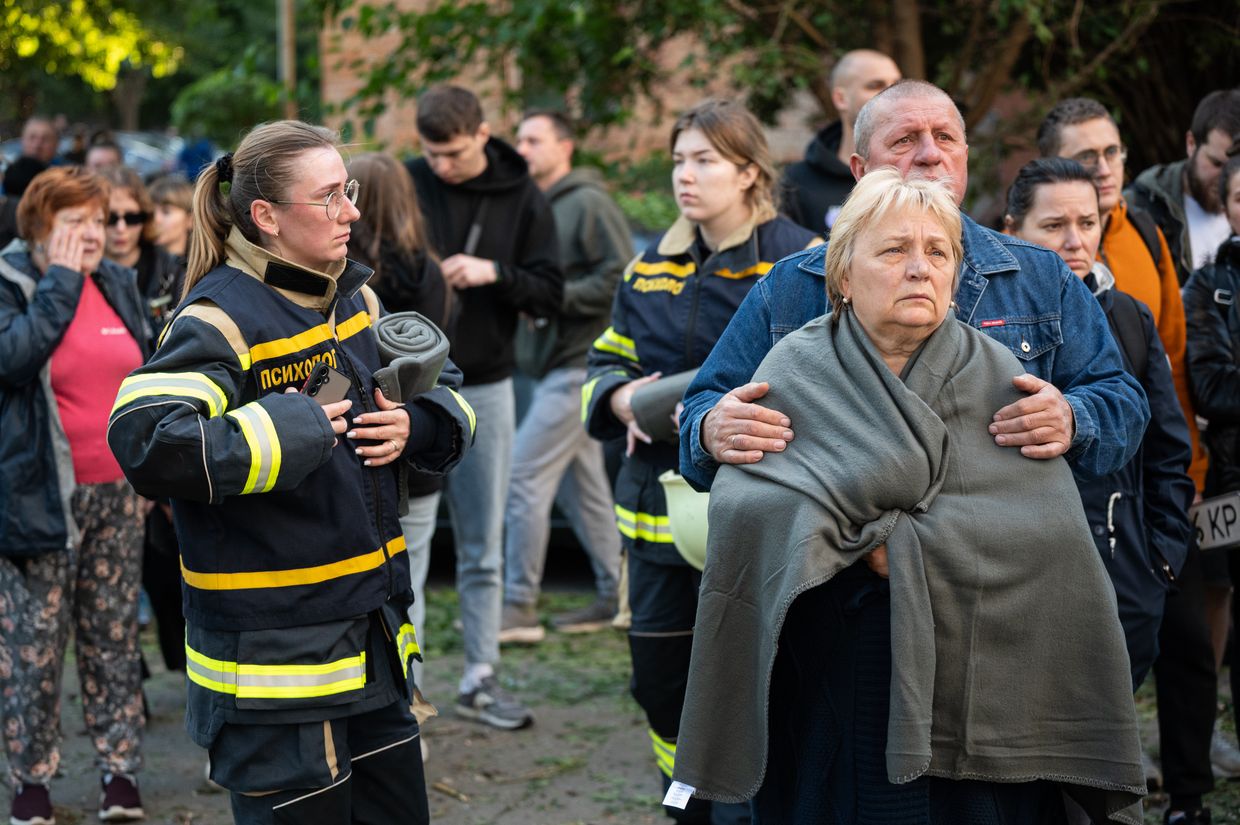
The overnight June 22-23 Russian assault on Kyiv exemplified both defensive success and remaining vulnerabilities. Russian forces deployed 368 aerial weapons including 352 attack drones and 16 missiles, killing six civilians and injuring 25 others, including four children. Ukrainian defenses destroyed 354 weapons, but debris caused additional casualties across 25 sites, with a five-story building partially collapsing in Shevchenkivskyi district.
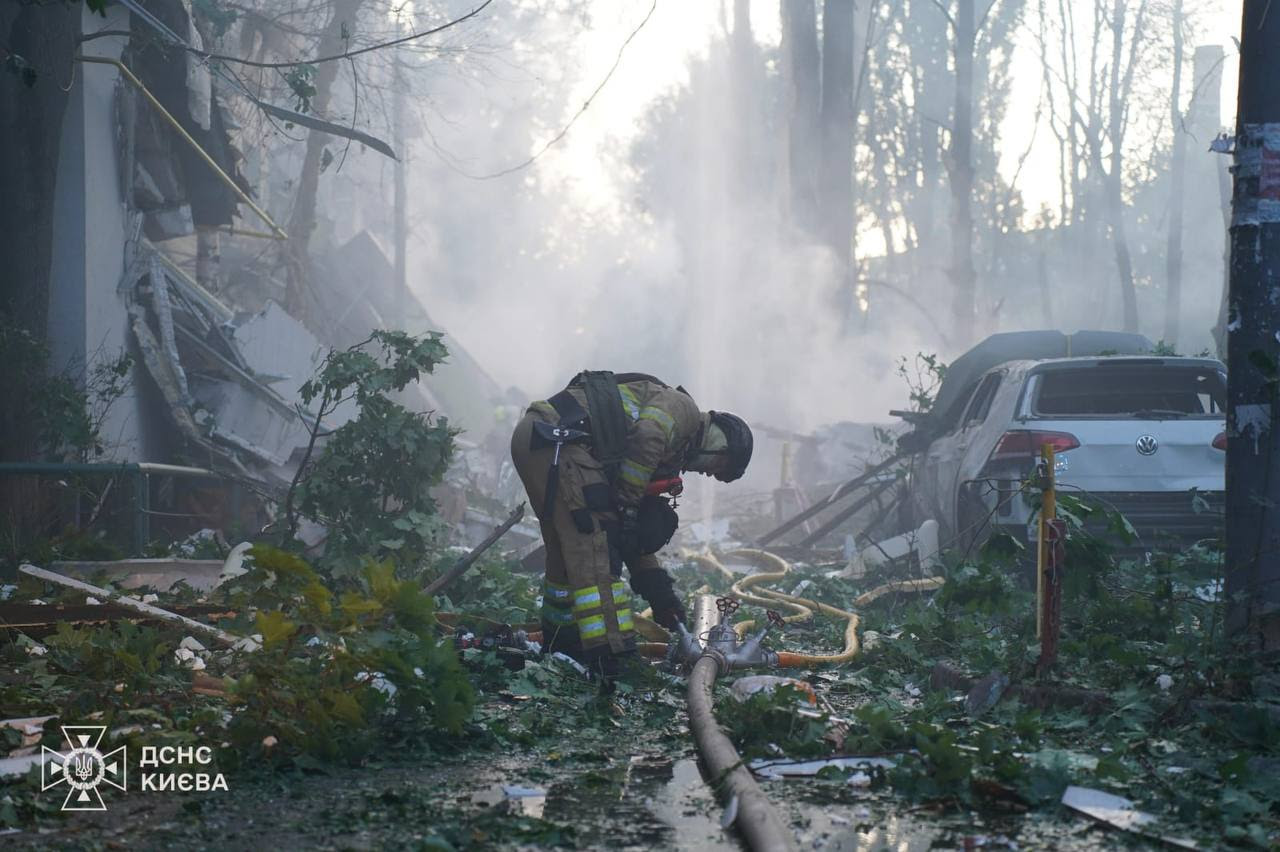
The Human Cost: Training Ground Strikes and Regional Casualties
A Russian missile strike against a Ukrainian mechanized brigade training ground killed three and wounded 14 service members, representing the second confirmed strike on training facilities in June. The Ground Forces acknowledged that timely security measures prevented greater casualties, but repeated successful attacks raised questions about force protection protocols.
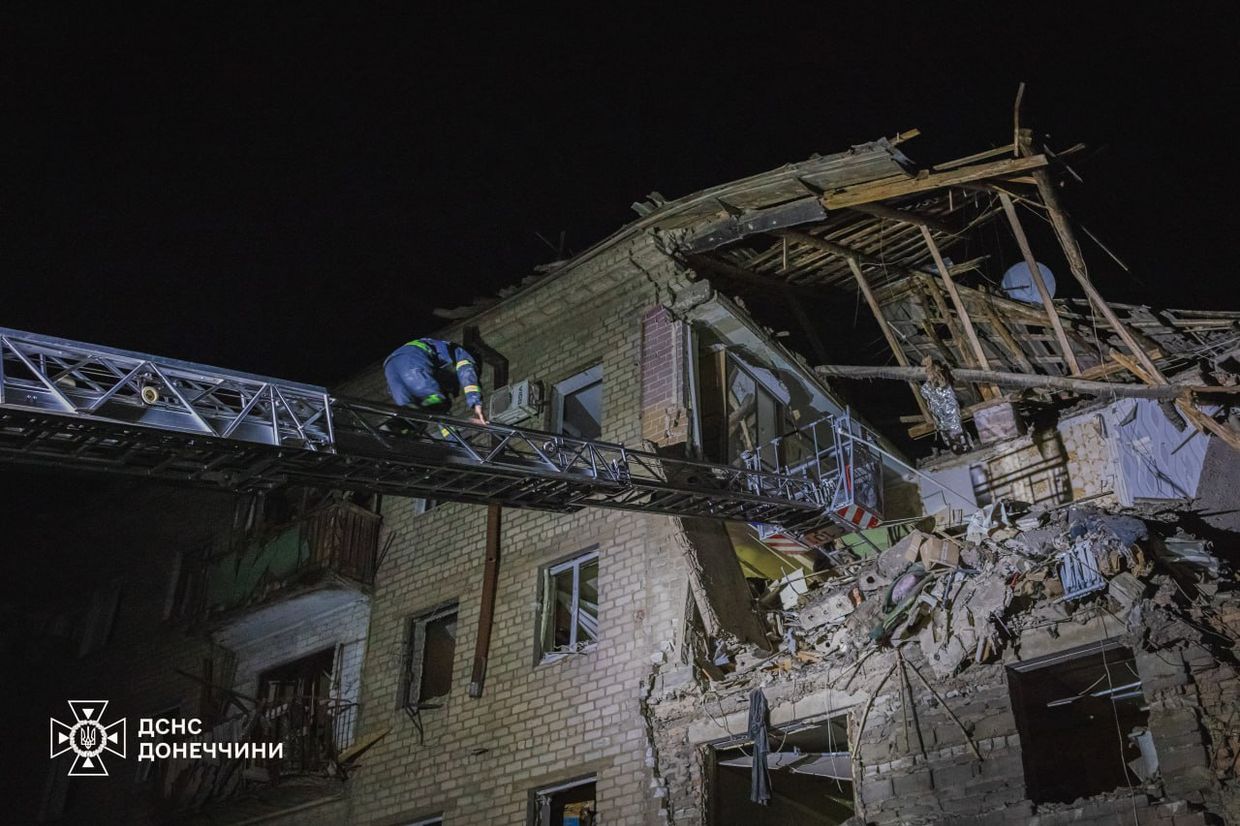
Across Ukrainian regions, Russian strikes killed at least seven civilians and injured 23 others. Chernihiv Oblast lost one civilian to drone attack, while Dnipropetrovsk Oblast suffered seven injuries from drone and artillery strikes against Nikopol district. Donetsk Oblast bore heaviest losses with three killed and 13 injured, including four bodies discovered in Kramatorsk after a missile struck a residential building.
The Torture Legacy: Former POWs Die After Release
The tragic death of Serhii Dobrovolskyi just one month after release from Russian captivity highlighted lasting damage inflicted on Ukrainian prisoners. The 43-year-old soldier died shortly after his hometown celebration in Zdolbuniv, following a disturbing pattern of former prisoners dying unexpectedly after release.
Dmytro Shapovalov, released in 2023 after enduring torture, hunger, and psychological pressure, died on June 9 from apparent heart failure. His sister recalled his treasuring an apple on release day after “dreaming about an apple for a year.” These deaths underscored UN reports of “widespread and systematic” torture in Russian facilities, with lasting health consequences claiming lives even after successful exchanges.
Adding insult to injury, Zelensky revealed Ukraine had received 20 Russian soldiers’ bodies instead of Ukrainian ones during war dead exchanges, with some carrying Russian passports and one described as an “Israeli mercenary” fighting for Moscow. The mix-ups suggested either systemic incompetence or deliberate manipulation by Russian authorities.
Military Reform and Corruption: Cleaning House During War
Commander-in-Chief Syrskyi announced comprehensive overhaul of Ukraine’s draft office system, transferring 136 officers and 325 service members involved in misconduct to other positions. “Cases of forced detention of citizens by draft officers are absolutely unacceptable,” Syrskyi declared, emphasizing that recruitment remained the main manpower source against numerically superior Russian forces.
Corruption scandals threatened national unity precisely when solidarity remained crucial. In Odesa, investigators discovered contractors embezzled over $50,000 from $114,000 allocated for fallen soldiers’ memorial tombstones, splitting the difference with city officials through inflated contracts.
Deputy Prime Minister Oleksii Chernyshov returned from abroad amid speculation linking his absence to investigations involving his former ministry. Sources alleged kickbacks from real estate developer Serhii Kopystira for illicitly transferring development land. “Finally home. A difficult but very important business trip is now over,” Chernyshov wrote, promising to “break down the smear campaign fact by fact.”
President Zelensky signed sanctions targeting individuals and entities conducting business in Russian-occupied territories, including fugitive lawmakers and real estate companies. The measures represented broader efforts to address collaboration while raising complex questions about economic activities in occupied areas.
International Partnerships: Norway’s $400 Million Investment
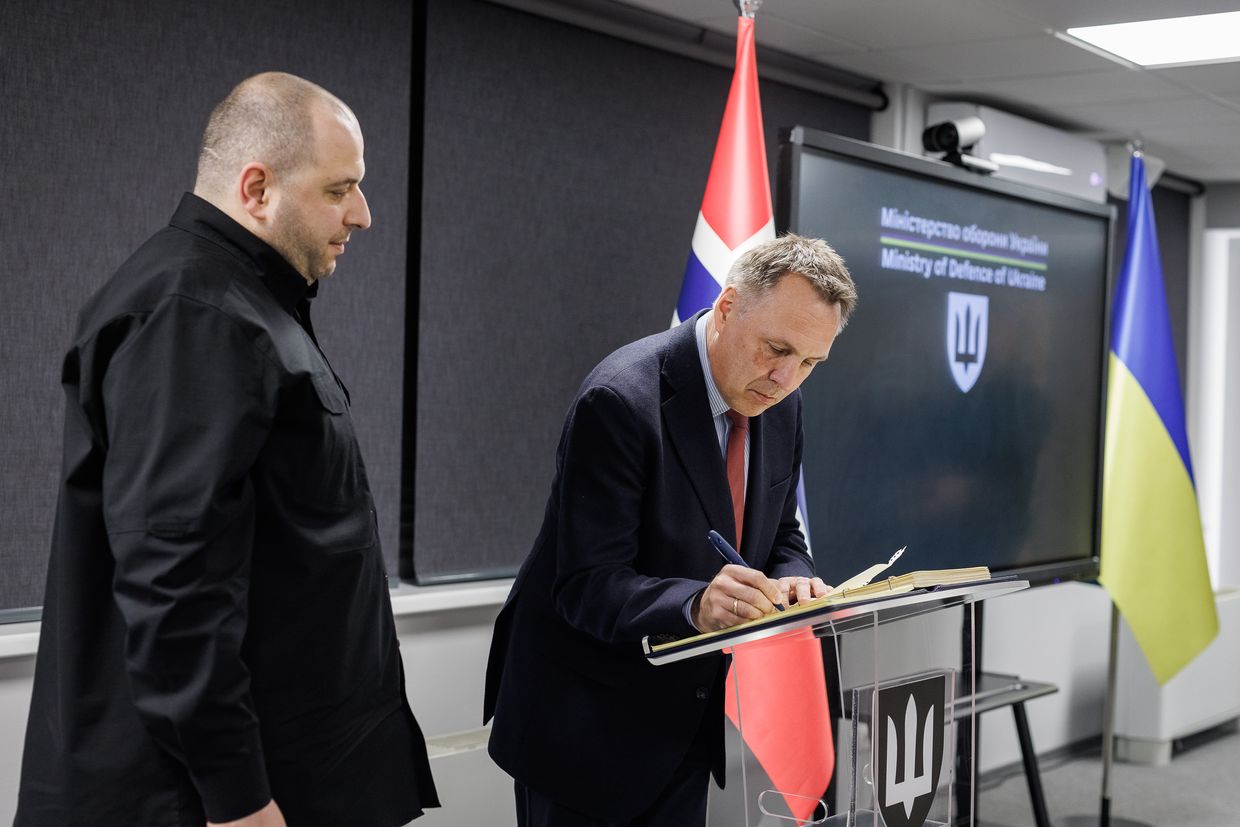
Norwegian Defense Minister Tore Onshuus Sandvik’s visit yielded a $400 million investment commitment for joint drone and air defense missile production. The collaboration focused on NASAMS system missiles, with Norway’s Kongsberg Defence & Aerospace opening a Ukraine office.
“We are working together to create all necessary conditions to produce air defense systems in Ukraine—jointly with partners, jointly with Norway,” Zelensky announced. The investment reflected Ukraine’s strategy of building sustainable defense manufacturing rather than relying solely on weapon deliveries.
Press Freedom Victory and Opposition Solidarity
Ukrainian journalist Vladyslav Yesypenko was released after more than four years in Russian-occupied Crimea, marking a rare press freedom victory. The Radio Free Europe contributor, tortured with electric shocks and denied independent legal access, became a symbol of resistance while receiving international awards.
Belarusian opposition leader Siarhei Tsikhanouski used his first post-release press conference to thank Trump for brokering his freedom while appealing for remaining political prisoners. “President Trump now has the power to free all political prisoners in Belarus with a single word,” he declared, while affirming support for Ukraine: “I believe Crimea is Ukrainian. Zelensky is my hero.”
Intelligence Warnings and Educational Warfare
Zelensky announced Ukrainian intelligence possessed proof of Russian preparations for “new military operations on European territory,” promising to share findings with foreign partners. The warning aligned with assessments that Russia could restore capabilities for European aggression within two to four years after Ukrainian hostilities ended.
Putin’s meeting with education officials revealed systematic indoctrination through revised history textbooks dedicating 30 percent of content to “Great Patriotic War” mythology. Presidential Aide Vladimir Medinsky boasted of making seventh-grade textbooks “even more ideological” by reinforcing claims that “there was no Ukraine, there was no statehood” before the Soviet Union.
The unified curriculum would be distributed in occupied Ukrainian territories, supporting broader Russian efforts to militarize society and ensure long-term regime loyalty for future conflicts.
Diplomatic Momentum: PACE and NATO Summits Ahead
President Zelensky was expected to address the Parliamentary Assembly of the Council of Europe on June 26, preceding the NATO summit in The Hague on June 24 with planned meetings involving European Commission President Ursula von der Leyen and NATO Secretary-General Mark Rutte.
The diplomatic activities reflected Ukraine’s continued efforts to maintain international coordination amid evolving global security challenges, with PACE consistently supporting Ukraine through resolutions calling for war crimes tribunals and recognizing Putin as an illegitimate dictator.
Looking Forward: The Convergence of Crises
As Iran considers closing the Strait of Hormuz and technical teams prepare for potential ceasefire discussions, the convergence of Middle Eastern conflict and Ukrainian war creates unprecedented complexity. Iran’s energy weapon could provide Russia economic breathing room precisely when battlefield losses and sanctions threaten to exhaust war-making capacity.
Ukraine’s strategic position remains precarious despite tactical successes and international support. The fundamental mathematics—695,000 Russian troops against Ukrainian forces—suggests time remains Russia’s ally absent significant external intervention. The education indoctrination programs, strategic reserve buildup, and intelligence preparations indicate this war’s outcome will determine not only Ukraine’s sovereignty but European security architecture for decades to come.