
NATO Summit Produces Defense Spending Breakthrough and Tentative U.S. Support for More Patriots While Russia Intensifies Strikes, Advances Missile Production, and Convicts 184 Ukrainian POWs
Summary of the Day – June 25, 2025
The NATO summit in The Hague delivered a historic defense spending commitment and a long-awaited face-to-face meeting between Presidents Trump and Zelensky, yet the battlefield reality painted a starkly different picture. As alliance leaders agreed to spend 5% of GDP on defense by 2035 and Trump signaled willingness to provide additional Patriot missiles, Russian forces killed at least 23 Ukrainians in renewed strikes while accelerating their missile production capabilities. Meanwhile, Moscow’s courts convicted 184 Ukrainian prisoners of war on terrorism charges, and Ukrainian forces struck a key Russian drone facility in Taganrog as the war’s industrial dimensions came into sharp focus.
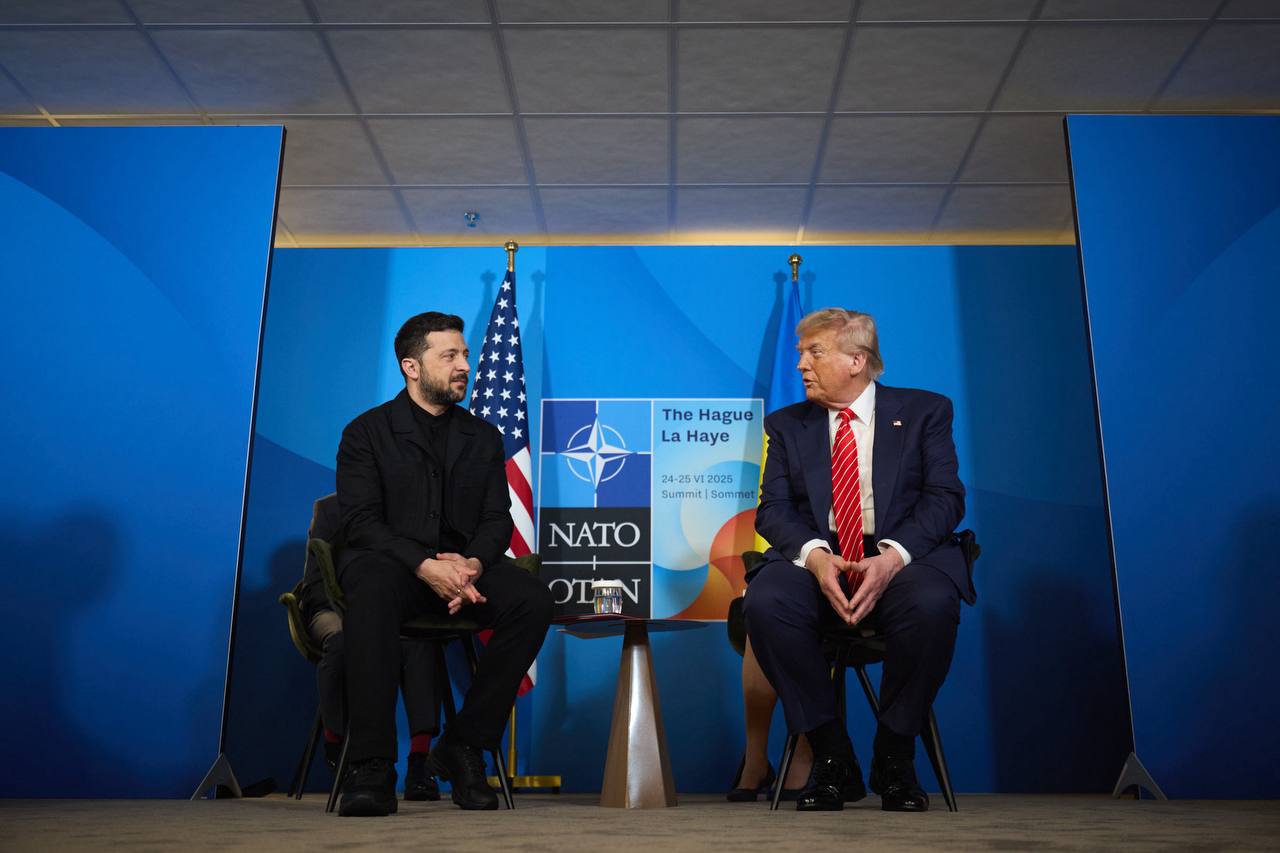
President Volodymyr Zelensky meeting with his U.S. counterpart Donald Trump on the sidelines of the NATO summit in The Hague, Netherlands. (Volodymyr Zelensky/Telegram)
The Atlantic Alignment: Trump and Zelensky’s 50-Minute Diplomatic Dance
Presidents Donald Trump and Volodymyr Zelensky met for 50 minutes at The Hague, marking their first substantial conversation since April. The encounter produced concrete discussions about Ukraine purchasing American air defense systems and exploring co-production of drones.
“We covered all the truly important issues,” Zelensky wrote on social media afterward. “We discussed how to achieve a ceasefire and a real peace. We spoke about how to protect our people.”
Trump told reporters the meeting “couldn’t have been nicer.” He stated: “I think it’s a great time to end it. I’m going to speak to Vladimir Putin, see if we can get it ended. He is fighting a brave battle, it’s a tough battle.”
“Ukraine is ready to buy this equipment and support American weapons manufacturers,” Zelensky declared following the discussions.
Patriots on the Horizon: Trump Signals Support for Ukrainian Air Defense
Trump reversed his previous dismissal of Ukrainian requests for Patriot missile systems. “They do want to have the anti missiles, as they call them, the Patriots, and we’re going to see if we can make some available,” Trump told reporters.
“They are very hard to get. We need them too. We are supplying them for Israel, and they are very effective, 100% effective. Hard to believe how effective.”
Since the start of Russia’s full-scale invasion, Moscow has launched 28,743 Shahed-type drones at Ukraine, with 2,736 fired in June alone—representing nearly 10% of the total in a single month, according to President Zelensky.
The Five Percent Solution: NATO’s Historic Defense Spending Commitment
NATO leaders agreed to spend 5% of GDP on defense by 2035, more than doubling the current 2% target. The commitment represents the alliance’s most significant financial escalation since the Cold War.
“The decision we make today makes NATO much stronger. It also makes NATO a much fairer alliance, with Europe and Canada stepping up,” NATO Secretary General Mark Rutte declared.
The alliance reaffirmed support for Ukraine, stating that direct contributions to Ukrainian defense would count toward the 5% target. The spending framework allocates at least 3.5% of GDP to core defense needs, with the remaining 1.5% covering civil preparedness, infrastructure protection, and defense industrial base development.
Only Poland currently exceeds the new target, spending 4.12% of GDP on defense.
The Tribunal’s Foundation: Ukraine and Council of Europe Formalize Aggression Court
President Zelensky signed an agreement establishing a Special Tribunal for the Crime of Aggression with the Council of Europe in Strasbourg, marking the culmination of three years of diplomatic efforts.
“Everyone responsible for this war must be held to account,” Zelensky told the Parliamentary Assembly of the Council of Europe. “Every war criminal must face justice—including Putin. The crime of aggression must be recorded, judged, and punished.”
The tribunal will target high-level officials responsible for the decision to use armed force against Ukraine, complementing the International Criminal Court’s jurisdiction over war crimes and crimes against humanity.
Moscow’s War Courts: 184 Ukrainian POWs Convicted on Terrorism Charges
Russian military courts convicted 184 Ukrainian prisoners of war captured in Kursk Oblast of terrorism charges, according to independent media reports. The POWs were charged with “carrying out a grave terrorist act by a group of individuals” under Russian criminal code.
Junior Lieutenant Yevhen Hoch was specifically accused of interfering with civilian evacuations during Ukraine’s Kursk offensive and “intimidating them by openly carrying and using combat weapons.”
Russia’s 2nd Western District Military Court has systematically processed these cases since the beginning of 2025.
Taganrog Burns: Ukrainian Strike Hits Key Russian Drone Facility
“Something unknown flew into the Atlant-Aero plant in Taganrog,” Ukrainian official Andrii Kovalenko announced. The facility specializes in producing components for combat drones and control systems, including “Orion” drones, electronic warfare complexes, and digital integration systems for strike FPV drones.
Russian authorities reported shooting down 40 Ukrainian drones across multiple regions, with seven intercepted over Rostov Oblast where Taganrog is located. Governor Yuri Slyusar claimed the strikes caused fires at a sports complex and damaged a high school and residential buildings, though no casualties were reported.
The Missile Factory Surge: Russia Accelerates Production with Foreign Support
Russia’s state-owned Votkinsk Plant has dramatically expanded its missile production capabilities, hiring 2,500 workers and importing specialized manufacturing equipment to boost output of Iskander-M ballistic missiles, Yars and Bulava ICBMs, and likely Oreshnik ballistic missiles, according to intelligence reporting.
The plant sourced manufacturing equipment from companies in China, Taiwan, and Belarus via private Russian intermediaries. The facility increased Iskander-M production from 250 missiles in 2023 to 700 in 2024, with current stockpiles estimated at 600 Iskander-M ballistic missiles and 300 Iskander-K cruise missiles.
A senior Ukrainian military intelligence official confirmed that Russia is stockpiling various missile types, with current reserves sustaining approximately two years of strikes at Russia’s current pace.
European Arsenal Expands: Allied Defense Commitments Deepen
Norway allocated 6.5 billion kroner ($642 million) for drone procurement from Ukrainian and European manufacturers. Denmark signed agreements to establish joint weapons production facilities with Ukraine, allocating 500 million Danish kroner ($78 million) to accelerate Ukrainian weapon production.
Britain announced its first use of frozen Russian asset interest to purchase 350 Advanced Short Range Air-to-Air Missiles worth £70 million. UK Armed Forces engineers adapted the ASRAAM missiles to be compatible with Ukraine’s RAVEN ground-based air defense systems, with five additional RAVEN systems to be delivered imminently.
Germany’s outgoing government agreed to release an additional 3 billion euros ($3.3 billion) in military assistance for Ukraine. The package includes 2.547 billion euros from the German budget, with the remainder reimbursed by the European Peace Facility.
Kostiantynivka’s Crisis: Front-Line City Faces Infrastructure Collapse
The eastern Ukrainian city of Kostiantynivka faces what Governor Vadym Filashkin called a “humanitarian catastrophe” as Russian drone strikes systematically destroy critical infrastructure. Located just 10-15 kilometers from Russian-occupied territory, nearly half the city lacks electricity due to shelling, while 1,900 households have no gas access.
Water is supplied just three hours daily, meeting only 20-25% of the city’s needs. Russian FPV drones have halted all city bus operations and are deliberately targeting civilian vehicles.
“The enemy is trying to control all logistics and communication routes,” explained Yevhen Alkhimov, press officer of Ukraine’s 28th Mechanized Brigade. “The Russians’ goal is not so much to destroy the city as it is to make it unsuitable for defense by controlling all the roads.”
Diplomatic Dissonance: Rubio’s Mixed Messages on Russia Sanctions
U.S. Secretary of State Marco Rubio delivered conflicting messages to NATO allies about Russia sanctions. During a private dinner with NATO foreign ministers, Rubio acknowledged that Russia remains the main obstacle to peace and said the U.S. Senate would likely consider new sanctions legislation.
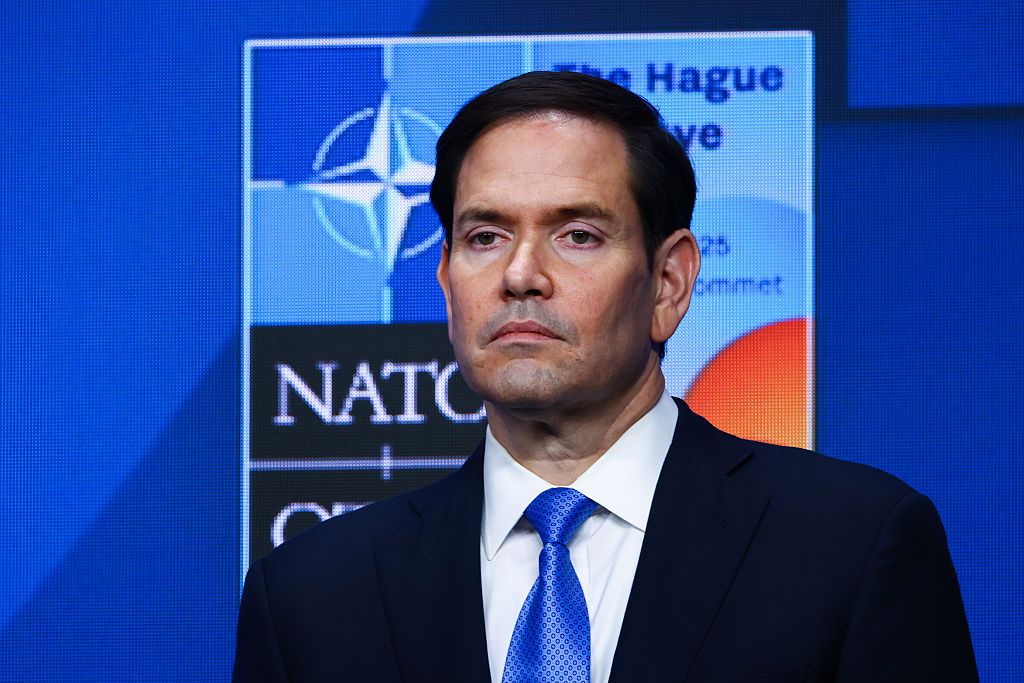
U.S. Secretary of State Marco Rubio attends a press conference during the 76th NATO Summit in the World Forum in The Hague, Netherlands. (Photo by Beata Zawrzel/NurPhoto via Getty Images)
Hours later, Rubio reversed course in a public interview: “If we did what everybody here wants us to do, and that is come in and crush them with more sanctions, we probably lose our ability to talk to them about the ceasefire.”
Polish Foreign Minister Radoslaw Sikorski reportedly criticized Rubio during the dinner, saying Russian violations of the ceasefire “should not come for free.”
Death Toll Mounts: Russia’s Escalating Civilian Attacks
Russian forces killed at least 23 people and injured more than 300 others across Ukraine in a 24-hour period. A ballistic missile attack on Dnipro killed 20 people and injured nearly 300, striking residential buildings, schools, hospitals, and a passenger train.
In Zaporizhzhia Oblast, five people were injured in attacks involving four missile strikes, eight airstrikes, 300 drone attacks, and over 150 artillery strikes across 13 settlements. Donetsk Oblast reported three civilian deaths in Pokrovsk, Zoloti Prudy, and Novoiavlenka, with 11 additional injuries.
The Ukrainian Air Force reported that Russian forces launched 71 Shahed-type attack drones and decoys from multiple directions. Ukraine’s air defenses destroyed 52 of them.
Battlefield Dynamics: Tactical Gains and Losses
Russian forces made confirmed advances in northern Vovchansk in Kharkiv Oblast and seized the settlement of Yalta in the Novopavlivka direction of Donetsk Oblast. Geolocated footage showed Russian forces recently advanced north of Shevchenko Pershe and in western Lysivka in the Pokrovsk direction.
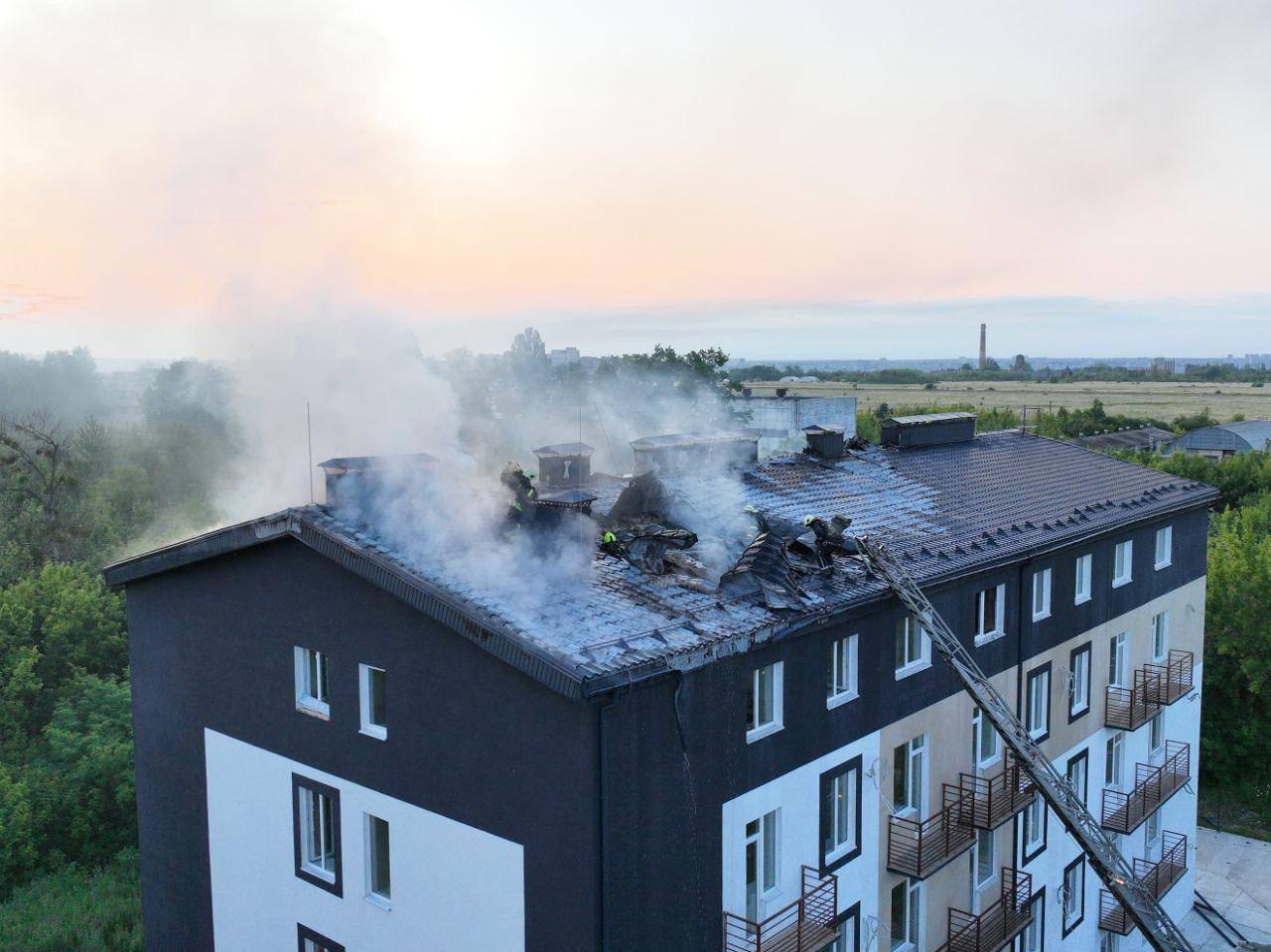
Smoke rises from the roof of a residential building in Kharkiv Oblast, Ukraine following a Russian strikе. (Oleh Syniehubov / Telegram).
Ukrainian forces demonstrated resilience with confirmed advances near Borova, where they regained positions in Zelenyi Hai and likely liberated the settlement. Near Velyka Novosilka, Ukrainian forces advanced southeast of Novopil.
Fighting continued in Kursk Oblast, with Russian milbloggers claiming Ukrainian forces attacked in the Glushkovo and Tetkino directions.
Trump’s Territorial Recognition: Russia’s Broader Ambitions Acknowledged
U.S. President Donald Trump acknowledged that Russia may have territorial ambitions beyond Ukraine, stating “it’s possible” when asked directly about Putin’s broader objectives during a NATO press conference.
“I know one thing: He would like to settle. He’d like to get out of this thing. It’s a mess for him,” Trump added.
The American Fugitive: Ukraine Delivers Decades-Old Justice
Ukrainian authorities arrested a 66-year-old U.S. citizen who had been on the run for more than three decades, wanted for multiple child sex crimes committed in Arizona in the 1980s and early 1990s. The man had been living in Ukraine under a false identity, using forged documents under the name of a Mexican citizen.
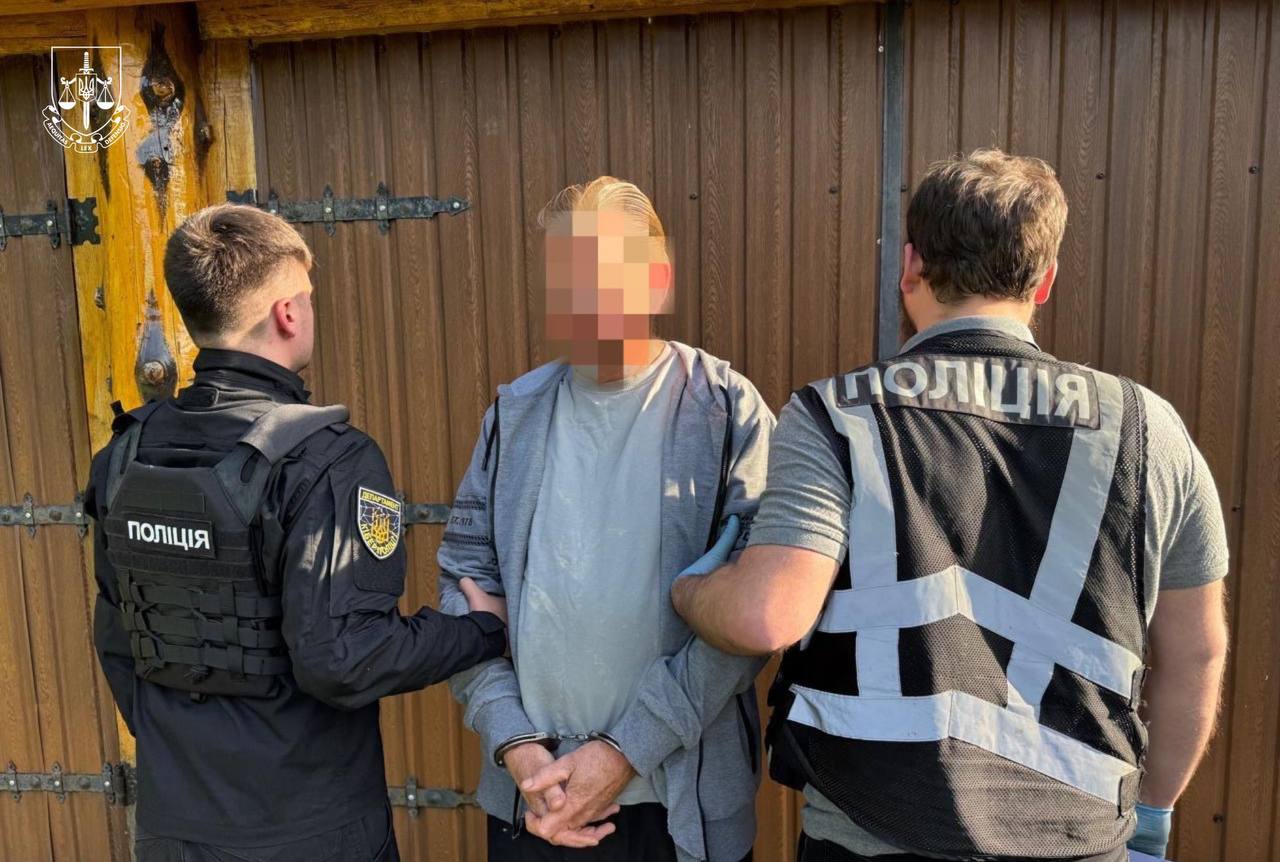
Ukrainian police detain a U.S. citizen, who had been on the run since 1992 over child sex abuse charges, in Kyiv Oblast, Ukraine. (Ukraine’s Prosecutor General / Telegram)
The suspect worked as a preschool director in Pima County, Arizona, and committed sexual offenses against four children aged 4 to 9 between 1984 and 1991. Ukrainian law enforcement located him using digital tools and open-source intelligence analysis.
Putin’s Isolation Deepens: BRICS Summit Absence Over ICC Warrant
Russian President Vladimir Putin confirmed he will not attend the upcoming BRICS summit in Brazil due to the International Criminal Court arrest warrant issued against him in March 2023. Foreign policy aide Yuriy Ushakov cited “certain difficulties in the context of the ICC’s demands.”
Putin will participate remotely via video while Foreign Minister Sergey Lavrov attends in person. Brazil, as an ICC member state, would be obligated to arrest Putin if he entered the country.
Ukrainian Giving Reaches Historic Milestone: One Billion Hryvnias Donated
Ukrainian citizens donated a landmark 1 billion hryvnias ($23.8 million) through private bank Monobank to support the Armed Forces of Ukraine, the bank’s co-founder Oleg Gorokhovskiy announced. The funds will provide critical supplies and equipment to front-line forces.
Monobank’s “Banka” tool, originally designed for personal savings, became a primary platform for military fundraising after the full-scale invasion.
Cultural Accountability: Victoria Amelina Wins Posthumous Orwell Prize
Ukrainian author Victoria Amelina was posthumously awarded the prestigious UK Orwell Prize for her book “Looking at Women, Looking at War,” becoming the first Ukrainian writer to receive the honor. Amelina died in July 2023 from injuries sustained in a Russian missile strike on Kramatorsk while documenting war crimes.
“An unforgettable picture of the human consequences of war,” judges declared. Her incomplete manuscript was finished by close friends and colleagues who preserved her voice while completing her final work.
Amelina is among 208 Ukrainian artists killed by Russia since 2022, according to Ukraine’s Culture Ministry.
Russian Officials Voice Economic Warnings
Russian Central Bank Governor Elvira Nabiullina said on June 20 that the momentum behind Russia’s wartime economic expansion is rapidly fading. She pointed to the depletion of key internal resources including labor, industrial capacity, bank capital reserves, and liquid assets from the National Wealth Fund.
Economy Minister Maxim Reshetnikov said the Russian economy is “on the verge of a transition to recession.” Russian President Vladimir Putin dismissed these concerns, claiming that Russia’s economy remained strong despite sanctions and war.
Lavrov Outlines Russian War Justifications
Russian Foreign Minister Sergei Lavrov claimed the “root causes” of the war are alleged discrimination against Russian-speakers in Ukraine and NATO violations of obligations to not expand closer to Russia, including claimed NATO plans to build bases in Crimea and British plans to build a base on the Sea of Azov.
Lavrov previously claimed in December 2024 that the main “root causes” are NATO’s alleged violation of obligations to not advance eastward and Ukrainian government’s alleged discrimination against ethnic Russians and Russian language, media, and culture.
Looking Forward: Diplomatic Initiatives Amid Continued Violence
As NATO leaders departed The Hague with historic defense commitments and renewed pledges of support for Ukraine, Russian missiles continued falling on Ukrainian cities and Moscow’s war machine accelerated production. Trump’s meeting with Zelensky offered potential for sustained American support, while his administration’s approach to sanctions remains uncertain.
The establishment of the aggression tribunal provides a framework for future accountability, while Russian courts systematically criminalize Ukrainian prisoners. NATO’s 5% defense spending target represents unprecedented military mobilization, yet extends to 2035. The gap between diplomatic aspirations and military realities defined June 25 as a day of promise shadowed by ongoing destruction.