
Russia Bans Ukrainian Language in Schools, Deploys More North Korean Forces, and Faces Massive Drone Strike While Ukraine Conducts Prisoner Exchange and Secures International Defense Commitments
Summary of the Day – June 26, 2025
As Russia launched a systematic assault on Ukrainian language and culture by banning Ukrainian-language education in occupied territories starting September 1, the war’s industrial and international dimensions intensified. North Korea prepared to deploy additional troops to Russia as early as July, while Moscow faced its largest drone attack of the year with 50 Ukrainian drones striking across the country. Ukraine conducted another prisoner exchange under the Istanbul agreements and secured substantial international commitments, including Dutch funding for advanced ground vehicles and White House promises of NATO protection. The day underscored the war’s evolution from territorial conflict to civilizational struggle, with language, identity, and international alliances becoming primary battlegrounds.

Ukrainian soldiers pictured after being released from Russian captivity. (President Volodymyr Zelensky/Telegram)
The Cultural Genocide Accelerates: Russia Bans Ukrainian Language in Schools
The Russian Ministry of Education published a draft order on June 23 detailing plans to exclude Ukrainian-language education from the federal basic general education program at all levels starting September 1, 2025. The ministry claimed it was excluding Ukrainian education “in connection with the changed geopolitical situation in the world,” while noting students could retain access to Ukrainian through some extracurricular programs.
The order will terminate courses on Ukrainian literature and effectively eliminate Ukrainian as a mandatory subject in occupied Zaporizhia and Kherson oblasts, where it had been taught “at the request of parents” in occupied Donetsk and Luhansk oblasts, occupied Crimea, and Russia’s Bashkortostan Republic during the 2023-2024 school year.
Ukrainian Ministry of Foreign Affairs condemned the draft order on June 24 as a “manifestation of Moscow’s genocidal policy” toward occupied Ukraine. The systematic elimination of Ukrainian language instruction represents an escalation of cultural suppression that began in 2014, when only 214 students received Ukrainian language education in occupied Crimea during the 2020/2021 academic year.
Zaporizhia Oblast occupation Minister of Education Elena Shapurova had announced in March 2023 that schools would abolish mandatory Ukrainian language education by the start of the 2023-2024 school year, with occupation head Yevgeny Balitsky stating students had an “option” to study Ukrainian for a maximum of three hours weekly while Russian instruction remained the default.
Legal Stranglehold: Russia Tightens Control Through Property Law
The Russian State Duma approved on June 24 the second and third readings of a law establishing procedures for recognizing real estate documents that established rights to properties in occupied Donetsk, Luhansk, Zaporizhia, and Kherson oblasts on September 30, 2022—the day of their illegal annexation.
The law allows Russia to recognize real estate documents issued by Ukrainian authorities prior to annexation while creating regional commissions in each occupied oblast to determine document legality. Ukrainian Luhansk Oblast Head Oleksiy Kharchenko noted the law means any Ukrainian real estate documents issued or notarized after September 30, 2022, will not be recognized.
Russian State Duma Deputy Speaker Anna Kuznetsova praised the law for “integrating the liberated (occupied) regions into the single legal space” of the Russian Federation. The legislation will impact Ukrainians who fled after the invasion, as Russian authorities require property owners to appear in occupied territories with Russian documentation to register claims or risk losing properties to state ownership.
Zaporizhia Oblast occupation officials are expanding magistrate positions, with acting department head Andrey Trivaylo reporting that occupied Zaporizhia Oblast requires 29 magistrates based on current population estimates. Under Russian law, magistrates handle minor civil and criminal cases at the lowest judicial levels.
Children as Weapons: Military Youth Programs Expand
Russian youth organization “Movement of the First” reported on June 24 that middle and high school-aged children from occupied Kherson Oblast will attend the district stage of the “Zarnitsa 2.0” military-patriotic game in Russia’s Volgograd City. The competition involves children aged seven to 17 competing in pseudo-military exercises at municipal, district, regional, and national levels.
Kherson Oblast occupation head Vladimir Saldo and Zaporizhia Oblast occupation head Yevgeny Balitsky announced on June 25 that the first cohort of youth cadets from occupied Ukraine completed parachute jumps at the “Avangard” military-sports center in Volgograd Oblast as part of the “Time of Young Heroes” program. The parachute program appears designed to encourage Ukrainian children to consider serving with Russian airborne forces.
North Korean Reinforcement: Additional Troops Deployment Planned
South Korean intelligence suggests North Korea may deploy additional forces to Russia as early as July or August 2025, according to a South Korean lawmaker briefed by the National Intelligence Service. The deployment would supplement North Korea’s continued supply of artillery ammunition and missiles to Russia.
The South Korean lawmaker reported that Russia may be preparing a large-scale assault against Ukraine in July or August 2025, with North Korea receiving technical advice on satellite launches and missile guidance systems in return for military support. North Korean personnel would most likely fight in Ukrainian territory, as Ukrainian forces maintain a limited presence in Kursk Oblast where previous North Korean troops operated.
Moscow Under Fire: Largest Drone Attack of the Year
Explosions were reported in Moscow overnight on June 26, with Mayor Sergey Sobyanin confirming emergency services responded to sites where two drones were downed. Russia’s Defense Ministry claimed 50 Ukrainian drones were shot down across the country, with two targeting Moscow specifically.
Kaluga airport and Moscow’s Vnukovo airport imposed flight restrictions during the attack, with restrictions later lifted. The Shot Telegram channel reported debris from a downed drone struck a residential building, with local residents reporting widespread alarms.
The attack represents the largest single Ukrainian drone operation against Russian territory in 2025, demonstrating Ukraine’s expanding capability to strike deep into Russian territory. Ukrainian drones have forced 217 temporary airport closures across Russia since January 1, according to independent media reports.
Prisoner Exchange Continues: Seventh Swap Under Istanbul Deal
Ukraine and Russia conducted their seventh prisoner of war exchange in accordance with June 2 Istanbul agreements. Ukrainian officials reported the return of severely wounded and sick POWs as well as soldiers under 25 years old, with most of the released Ukrainians captured in 2022.
President Volodymyr Zelensky confirmed soldiers from the Armed Forces, National Guard, and State Border Guard Service returned home without revealing specific numbers. The youngest released captive was 24 years old, taken prisoner during the battle for Mariupol, while the oldest was 62.
The released soldiers had fought in Donetsk, Luhansk, Kherson, Kharkiv, Sumy, and Kyiv oblasts, with several officers among those freed. Russia’s Defense Ministry also announced a prisoner exchange with Ukraine without specifying numbers involved.
Commander’s Assessment: Sumy Offensive Falters
Ukrainian Commander-in-Chief General Oleksandr Syrskyi stated on June 26 that Ukrainian forces have repelled the Russian summer offensive in Sumy Oblast and stabilized the frontline “as of this week.” Syrskyi reported that Ukrainian offensive operations in Kursk Oblast forced Russia to divert forces from the Sumy offensive.
According to Syrskyi, Ukrainian forces have pinned about 50,000 Russian military personnel in the Kursk and North Slobozhansk directions. Ukraine’s Siversk Group of Forces Spokesperson Vadym Mysnyk stated Russian forces are most active in northern Sumy Oblast but have decreased their use of all-terrain vehicles in assaults, relying more on infantry operations.
Confirmed Russian advances included the seizure of Andriivka north of Sumy City and advances southeast of Oleksiivka, based on geolocated footage published on June 26.
Front Line Dynamics: Advances and Counterattacks
Russian forces made confirmed advances in the Toretsk direction, with geolocated footage showing recent progress north of Toretsk and northwest of Yablunivka. Ukrainian forces demonstrated resilience with confirmed advances north of Peredubova in the Novopavlivka direction.
The Russian Ministry of Defense claimed seizure of Novoserhiivka, with ISW assessing Russian forces had taken the settlement by June 24. Fighting continued across multiple sectors, with Russian forces conducting offensive operations near Chasiv Yar, Pokrovsk, and Velyka Novosilka without confirmed advances.
Russian forces used “mother drones”—large platforms carrying multiple smaller FPV drones—to fly to Ukrainian rear positions and launch strikes beyond electronic warfare range, according to a Ukrainian servicemember operating in the Vovchansk direction.
International Defense Commitments: Advanced Vehicles and Funding
The Dutch Defense Ministry financed production of 20 Ermine ground vehicles for Ukraine through German manufacturer Rheinmetall, marking the first order for the new-generation tactical platform. The vehicles, designed primarily for front-line evacuation missions, combine diesel engines with electric motors for silent operation.
The Ermine system offers “Silent Move & Silent Watch” capabilities, traveling up to 50 kilometers silently through heavy terrain and 100 kilometers on roads. Deliveries are expected to begin in 2026, making Ukraine the first country to receive the advanced tactical platform.
Dutch Prime Minister Dick Schoof presented a new military aid package including 100 drone radar systems, front-line vehicles, and 80 million euros for drone initiatives. The package complements other international commitments made during the NATO summit.
Crimean Strike: Ukrainian Drones Target S-400 Systems
Ukraine’s military intelligence agency claimed Ukrainian drones struck air defense equipment in Russian-occupied Crimea, damaging radar units and components of the S-400 Triumph system. The strike by HUR’s “Ghosts” unit damaged two 92N2E multifunctional control radars, two 91N6E detection radars, and an S-400 launcher.
Published video footage showed multiple drone trajectories approaching and hitting targets. HUR emphasized that radars serve as the “eyes” of air defense systems, with their destruction rendering anti-aircraft systems “combat ineffective.”
War Crimes Funding Cuts: White House Targets Investigation Programs
The White House Office of Management and Budget recommended on June 25 canceling funds for nearly two dozen programs investigating war crimes worldwide, including multiple programs operating in Ukraine. The targeted organizations include Global Rights Compliance, which gathers evidence of Russian war crimes, and Legal Action Worldwide, which supports prosecution efforts.
The State Department has until July 11 to submit appeals for preserving any targeted programs. Secretary of State Marco Rubio could potentially argue to preserve programs supporting Russian war crime prosecutions in Ukraine, according to sources familiar with the matter.
The cuts continue Trump administration reductions in foreign assistance and civil society programs, including the previous termination of the Ukraine Conflict Observatory, which tracked Russian abduction of Ukrainian children until funding ended.
SBU Counterintelligence Success: Russian Agent Network Disrupted
The Security Service of Ukraine detained a 19-year-old suspected Russian agent accused of planning terrorist attacks in northern Ukraine, including a failed bomb attack targeting a National Guard soldier in Kyiv. The suspect was recruited through Telegram channels offering “easy money” and received detailed instructions from Russian handlers to assemble explosives.
The agent rented an apartment in Kyiv, purchased a scooter, and hid an improvised explosive device in its storage compartment near a pre-arranged meeting spot. Russian handlers lured a Ukrainian National Guard soldier to the location under the guise of a date arranged via messaging app, detonating the IED remotely when the soldier arrived. No injuries resulted from the failed attack.
After the unsuccessful attempt, the suspect was ordered to Pryluky in Chernihiv region to prepare new attacks, including setting fire to a military vehicle, which he completed before detention. Police found explosive components and communication evidence during arrest. The suspect faces up to 12 years in prison under Article 258 of Ukraine’s Criminal Code.
Erdogan’s Diplomatic Initiative: Three-Way Meeting Proposed
Turkish President Recep Tayyip Erdogan announced Ankara is working to organize a meeting between Presidents Zelensky and Putin, with Trump potentially joining the talks. Speaking after his meeting with Trump, Erdogan said the U.S. president expressed interest in participating if the meeting occurred in Turkey.
“He said, ‘If Russian President Vladimir Putin comes to Istanbul or Ankara for a solution, then I will also come,'” Erdogan told reporters. “We will hold the necessary contacts and, God willing, realize this meeting as soon as possible.”
Zelensky has previously voiced openness to a trilateral meeting, telling broadcaster Suspilne on May 27 that he was ready to sit down with both Trump and Putin. Putin claims willingness to meet but did not attend previous talks proposed in Istanbul, sending lower-level delegates to May 16 peace discussions.
European Components Flow: Zelensky Exposes Sanctions Violations
President Zelensky told the European Council on June 26 that European companies continue shipping critical weapons components to Russia that end up in missiles and weapons used against Ukrainians. Ukraine is identifying these materials and will pass evidence to EU officials.
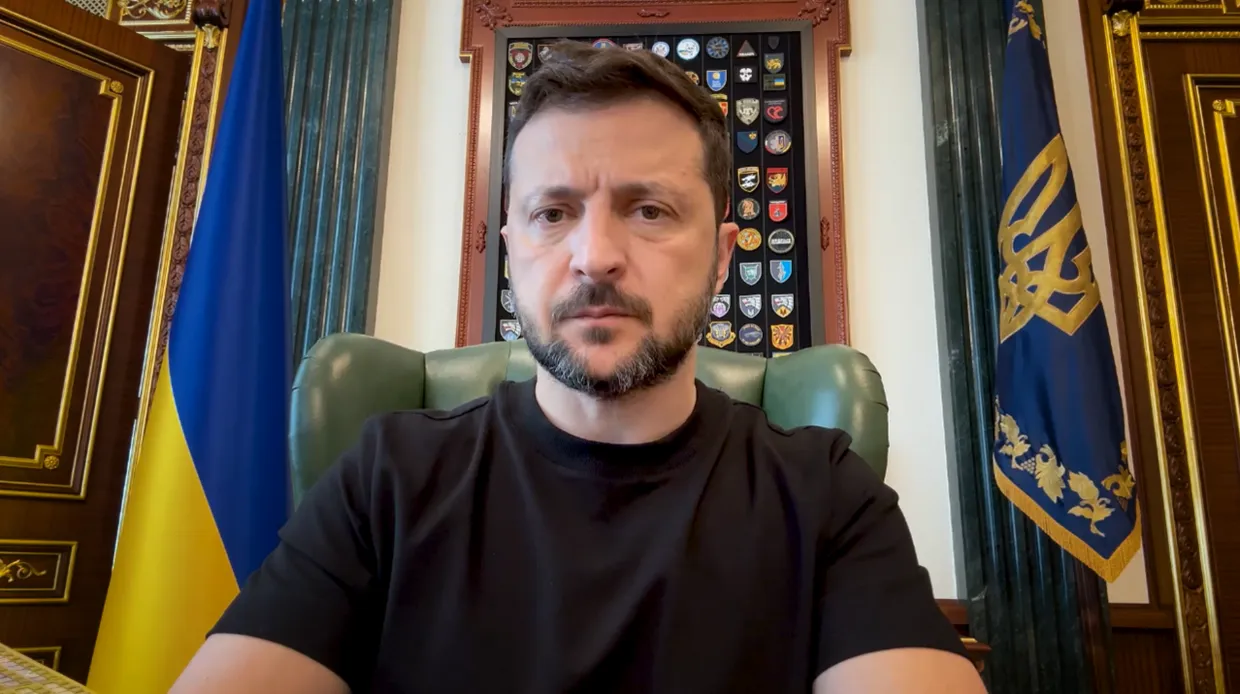
President Volodymyr Zelensky delivers remarks to the European Council via video address. (Presidential Office)
Zelensky urged the EU to pass “a truly strong” 18th sanctions package targeting Russia’s oil trade, shadow tanker fleet, Russian banks, and supply chains bringing equipment for weapons manufacturing. He called for sanctions on tanker captains and ports Russia uses for oil exports, while reiterating demands to drop the oil price cap to $30 per barrel.
“Russia’s military ambitions grow when its oil revenues are high,” Zelensky stated. He noted several European countries still rely heavily on Russian oil and gas, expressing frustration over criticism from some EU leaders while Ukrainian respect for EU rules allows continued oil flows.
North Korean Destroyer Program: Russian Assistance Confirmed
Russia provided North Korea extensive assistance in designing and rapidly constructing two advanced destroyers, the most modern in Pyongyang’s fleet, according to satellite imagery and launch footage. The Choe Hyon class destroyers were built in just over a year—an unusually fast timeline impossible without foreign support.
One destroyer launched in April was followed by a failed May launch during which the second vessel capsized in front of Kim Jong Un. The incident prompted Kim to condemn the failure as a “criminal act,” blaming officials for “irresponsibility” that “could not be tolerated.” The wreck was recovered in early June.
The ships show clear Russian design influence, including distinctive bow and stern structures found on Russia’s Admiral Grigorovich-class frigates. One destroyer appears equipped with the Russian Pantsir-M system, marking the first time this advanced air-defense system appeared on a non-Russian warship.
Economic Pressure Mounts: Russian Soldiers Refuse to Fight
More than 20,000 Russian soldiers have been prosecuted for refusing to fight in Ukraine since September 2022, according to Russian independent media outlet Mediazona. Cases included 18,159 soldiers going AWOL, 1,369 failures to comply with orders, and 1,010 desertion charges, with 17,721 already sentenced.
The prosecutions reflect growing resistance within Russian forces as the war extends into its fourth year. Russia continues recruiting 40,000-45,000 men monthly for military service, according to President Zelensky, primarily through volunteer contracts with substantial sign-up bonuses.
Defense Industry Expansion: Satellite Evidence of Vehicle Production
Satellite imagery of Russian armored vehicle repair plants indicates continued reliance on refurbishing Soviet-era stores. The 81st BTRZ in Armavir has likely refurbished up to 200 BTR-70/80/82 APCs annually since 2023, while the 144th BTRZ in Yekaterinburg annually refurbishes 100-150 BMD-2 IFVs and BTR-D APCs.
The Arzamas Mechanical Plant likely produces over 500 BTR-82 APCs annually, with satellite imagery showing growing hull stockpiles suggesting increased production or repair operations. Kurganmashzavod likely produces 100-120 BMD-4M IFVs, 360 BMP-3 IFVs, and 20-30 BTR-MDM APCs annually.
Russian forces have increasingly used motorcycles and buggies instead of armored vehicles due to high loss rates, with over 3,700 IFVs and APCs lost in 2024 alone according to British International Institute for Strategic Studies estimates.
Chornobyl Repairs: International Funding Secured
Ukraine will receive €42.5 million from international partners to repair the protective arch over Chornobyl nuclear plant’s destroyed reactor, following damage from a Russian Shahed drone strike on February 14. France pledged €10.6 million, the United Kingdom committed €6.9 million, and the European Commission contributed €25 million.
Environment Minister Svitlana Hrynchuk announced the funding at the European Bank for Reconstruction and Development headquarters in London during a meeting of the Chornobyl International Cooperation Account Assembly. Ukraine has completed preparatory work and structural surveys for the repairs.
EU Sanctions Extended: Six-Month Renewal Approved
The European Union reached agreement to extend sanctions against Russia for another six months, with Polish Prime Minister Donald Tusk confirming the decision at the EU summit in Brussels. The extension maintains current sectoral sanctions encompassing trade, finance, technology, industry, transport, and luxury goods restrictions.
The agreement comes despite fears that Hungary might block the extension. The EU first adopted sanctions related to Russian aggression on July 31, 2014, significantly scaling up measures following the full-scale invasion with 17 major packages since February 2022.
The 18th sanctions package remains under debate, with Slovak Prime Minister Robert Fico threatening to veto the package over energy concerns.
Trump’s Defense Promises: NATO Protection Guaranteed
U.S. President Donald Trump promised during the NATO summit that Russia would never attack the alliance while he is in office, according to three unnamed European officials. Trump made the commitment despite acknowledging it was “possible” that Russia has territorial ambitions beyond Ukraine.
The promise comes as NATO allies agreed to raise defense spending to 5% of GDP by 2035, with Trump’s proposed 2026 defense budget prioritizing drones and long-range missiles over traditional platforms. The $892.6 billion request includes increased investment in small drones while reducing F-35 fighter procurement from 68 to 47 aircraft.
Trump-Meloni Meeting: Determination Needed for Ukraine
Italian Prime Minister Giorgia Meloni told Trump that the determination shown toward Iran should also be applied to ending Russia’s war against Ukraine. Meloni welcomed the ceasefire between Israel and Iran while emphasizing sustained commitment is needed in Ukraine, where Putin declared “all of Ukraine is ours” last week.
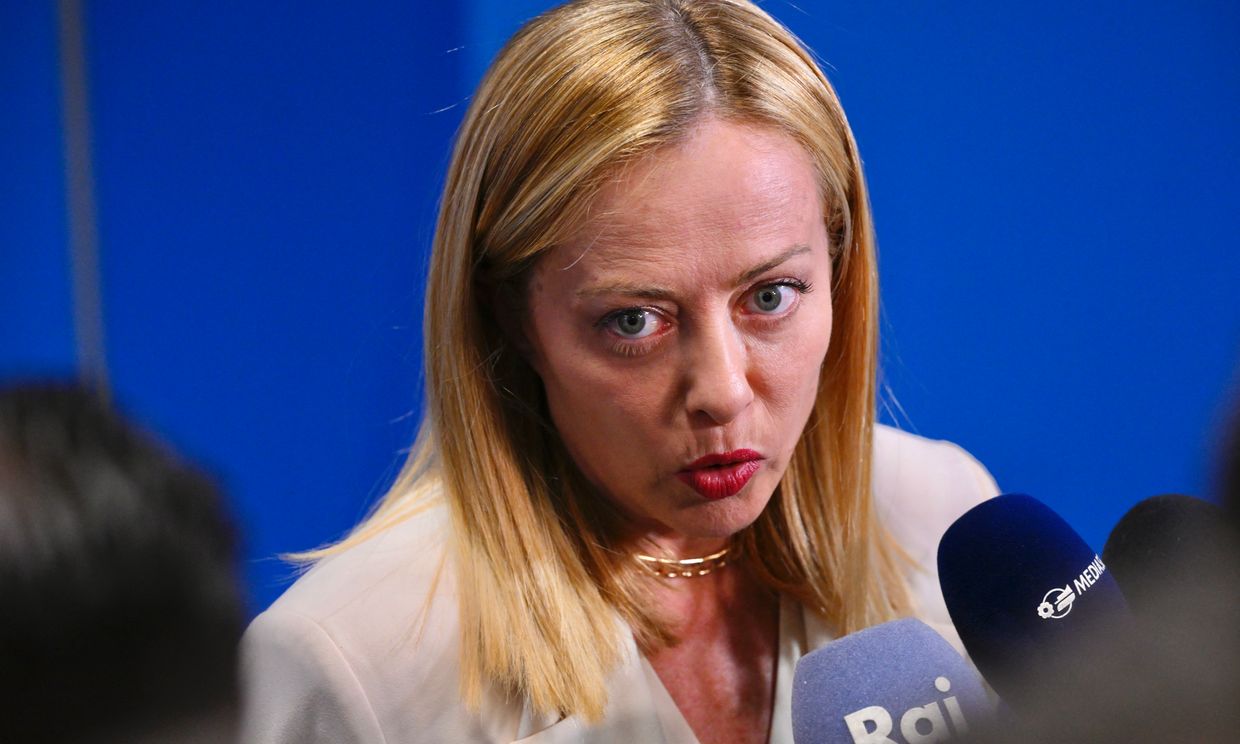
Italy’s Prime Minister Giorgia Meloni speaks to the media during a NATO leaders summit in The Hague, Netherlands. (John Thys / AFP)
“I spoke about this with President Trump, to whom I said the same determination is needed to achieve two other important ceasefires,” Meloni stated. “One in Ukraine, where Russia seems unwilling to take any steps forward, and one in Gaza.”
Hungarian Opposition: EU Referendum Results Announced
Hungary’s government announced that 95% of participants in a national consultation opposed Ukraine’s EU accession, with 2,278,000 people participating—approximately 29% of the electorate from 2024 European Parliament elections. Opposition leader Peter Magyar dismissed the consultation as a “government propaganda campaign” with the lowest-ever turnout.
The European Council failed to unanimously adopt a statement supporting Ukraine, with all 26 EU states except Hungary reaffirming Ukraine’s “inherent right to choose its own destiny” and support for EU membership. Hungary retains veto power over Ukraine’s accession progress.
Prime Minister Viktor Orban voted against Ukraine’s EU accession and warned that allowing Kyiv to join would “destroy” Hungary. The consultation results were released on the eve of the European Council summit, potentially providing Orban leverage to delay Ukrainian membership.
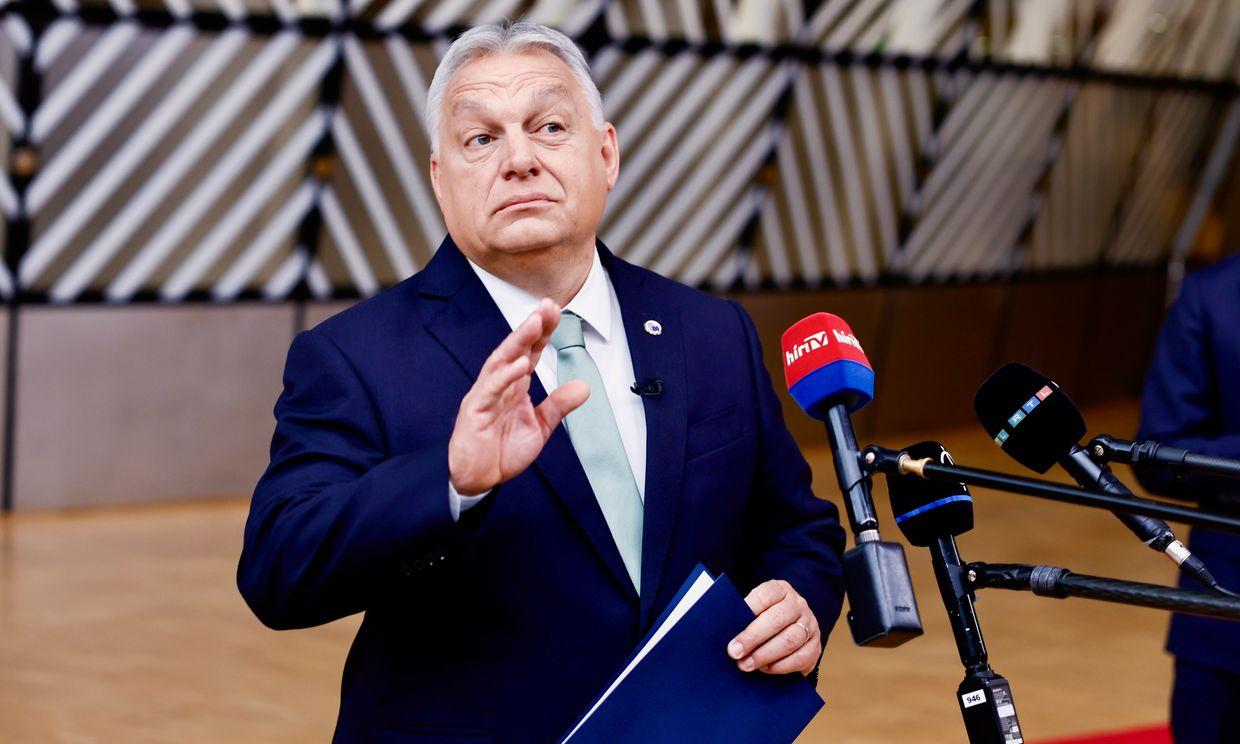
Hungary’s Prime Minister Viktor Orban at a European Council meeting in Brussels, Belgium. (Simon Wohlfahrt / Bloomberg)
Kremlin’s Bellicose Rhetoric: Undermining Western Support
Russian Deputy Foreign Minister Alexander Grushko claimed on June 25 at the Organization for Security and Cooperation conference that the West is adopting “hostile policies and military planning that could explode from any spark.” Grushko further claimed that new Western military aid packages “fuel” the war in Ukraine.
Russian Deputy Foreign Minister Mikhail Galuzin reiterated on June 26 Russia’s demand that Ukraine commit to official non-aligned status and claimed NATO violated promises from the early 1990s to refrain from expanding eastward. Russia consistently demands that Ukraine commit to neutral, non-aligned status, which would require constitutional amendments and NATO policy changes.
Advanced Drone Tactics: Mother Drones Deploy FPV Swarms
A Ukrainian servicemember operating in the Vovchansk direction reported on June 26 that Russian forces have begun operating “mother drones”—large drones carrying multiple smaller first-person-view drones to fly to Ukrainian rear positions and launch strikes beyond electronic warfare range.
The servicemember stated intense fighting continues in the Vovchansk direction with Russian forces conducting motorized assaults of three to five personnel on motorcycles. Ukrainian Center for Countering Disinformation Head Andriy Kovalenko reported that Russian forces first conduct strikes with swarms of Shahed drones before striking areas with ballistic missiles.
Airport Disruptions: Moscow Aviation Hub Paralyzed
Kaluga airport and Moscow’s Vnukovo airport imposed flight restrictions during the drone attack, with spokesperson Artyom Korenyako stating: “The airport is temporarily not accepting or sending flights. Aircraft crews, air traffic controllers, and airport services must take all necessary measures to ensure flight safety.” Restrictions were later lifted.
According to the Shot Telegram channel, debris from a downed drone struck a residential building, with local residents reporting “alarms went off everywhere.” Ukrainian drones have forced 217 temporary airport closures across Russia since January 1, already surpassing the combined total for 2023 and 2024.
Equipment Losses Mount: Daily Battlefield Toll
As of June 26, Russia has lost 1,015,750 troops since launching its full-scale invasion, including 1,100 troops over the past day, according to Ukraine’s General Staff. Russian equipment losses include 22,892 armored fighting vehicles, 53,195 vehicles and fuel tanks, 29,617 artillery systems, 42,153 drones, and 10,968 tanks. The General Staff recorded 154 clashes across the front on June 25.
Khartiia Brigade Innovation: Ukraine’s First Female Military Recruitment Campaign
Ukraine’s 13th National Guard Khartiia Brigade launched the country’s first military recruiting campaign targeting women for tech roles in May 2025. The campaign, with the tagline “Her strength is her mind. Her choice is Khartiia,” aims to attract women to positions including drone operators, electronic warfare specialists, and ISTAR dispatchers.
Around 70,000 women serve in Ukraine’s nearly million-strong military as of 2025, with approximately 5,500 in front-line combat roles. The campaign was developed in collaboration with Dignitas Fund and Dutch organization “Protect Ukraine,” focusing on motivated female volunteers who represent a highly skilled yet under-utilized category in the army.
Female soldiers from Khartiia, including drone operator Alina Andreieva and ground robotic systems operator “Jess,” were closely involved in developing the recruitment materials. The brigade’s progressive management style and NATO standards integration have created a more welcoming atmosphere for women compared to other Ukrainian military units.
Looking Forward: Cultural War Intensifies
As diplomatic initiatives continued and military aid flowed, June 26 demonstrated the war’s expansion beyond territorial conquest into systematic cultural elimination. Russia’s ban on Ukrainian language education represents perhaps the most significant assault on Ukrainian identity since the invasion began, creating conditions for generational Russification of occupied territories.
The simultaneous deployment of additional North Korean forces and the largest Ukrainian drone attack on Moscow showed the conflict’s international dimensions deepening while technological capabilities expanded. Despite Trump’s promises of NATO protection and continued prisoner exchanges, the fundamental trajectory remained unchanged: Russia pursuing maximalist objectives through force while Ukraine defended not just territory, but the right to exist as a distinct people.
The gap between international commitments and battlefield realities persisted, with advanced ground vehicles promised for 2026 while children in occupied territories faced immediate cultural erasure. June 26 marked not just another day of war, but a day when the stakes became clearer: this is a struggle for civilization itself.