
As Moscow deploys Iranian-made precision drones and new thermal capabilities, Ukrainian forces destroy fighter jets 900 kilometers inside Russia while diplomatic efforts stall amid continued violence
Summary of the Day – June 27, 2025
The war’s technological battlefield took center stage on June 27 as Russia tested sophisticated new Iranian-made drone variants with artificial intelligence capabilities while Ukrainian forces demonstrated their own evolving strike capacity by destroying four Su-34 fighter jets deep inside Russian territory. The day’s events underscored the rapidly advancing nature of drone warfare, even as diplomatic initiatives remained stalled by Moscow’s continued rejection of ceasefire proposals. Meanwhile, Russian forces pressed forward with ground advances near critical Ukrainian positions, including areas containing valuable lithium deposits, while civilian casualties mounted from increasingly precise Russian drone strikes that have killed over 3,000 civilians since 2022.
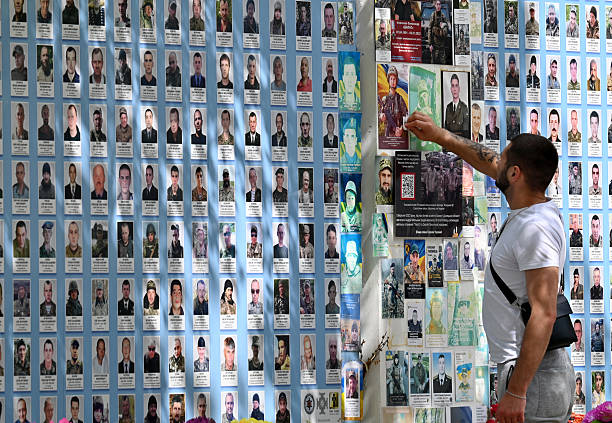
A man cleans dust from a portrait of his dead brother in arms on the Memorial Wall of Fallen Defenders of Ukraine outside Saint Michael’s Golden-domes Cathedral in Kyiv. (Sergei Supinsky/ AFP via Getty Images)
Silicon Valley Meets the Battlefield: Iran’s AI-Enhanced Drones Enter the War
Ukrainian forces discovered debris from a new generation of Shahed drones on June 18 that revealed a technological leap in precision strike capabilities. The recovered drone contained an advanced camera system, artificial intelligence and machine learning platforms, and radio-controlled operation systems allowing Russian operators to pilot the weapons remotely from Russian territory. Ukrainian electronic warfare expert Serhiy “Flash” Beskrestnov told the Associated Press that these white, unmarked variants bore Iranian labeling systems rather than Russian markings, suggesting Iran sold new Shahed models to Russia specifically for combat testing.
The technological sophistication represents a dramatic evolution from earlier drone variants. While Russian-made radio-controlled Shaheds rely on “primitive” and cheap components vulnerable to Ukrainian electronic warfare, the Iranian-made versions incorporate expensive, high-end technology designed to overcome Ukrainian defensive measures.
Thermal Vision Transforms Night Operations: Russian Drones Gain Heat-Seeking Capabilities
Russian forces integrated thermal imaging cameras into Shahed-136 drones to improve strike precision and nighttime operations. Footage published June 24 showed an intercepted Russian drone equipped with thermal cameras capable of identifying heat signatures from engines, generators, and thermal power plants. The thermal capability allows drones to operate effectively in low visibility conditions, automate target identification through machine vision, and maintain targeting accuracy even in GPS-jamming environments.
The thermal-equipped drones can correct strike trajectories in real-time, home in on heat signatures, and ignore decoy targets with cold thermal signatures. Unlike GPS-dependent variants that operate blindly when jammed, thermal-equipped Shaheds can adapt to environmental conditions even without precise target coordinates.
Decoy Warfare: Russia Deploys Cheap Plywood Drones to Overwhelm Defenses
Russian forces began using cheaply-made Gerbera drones constructed from plywood to overwhelm Ukrainian air defense systems. These lesser-known Shahed variants feature simplified designs, satellite navigation antennas, and onboard modems with SIM cards allowing operators to control them via 3G and 4G mobile networks. Some Gerbera drones carry cameras for targeting moving vehicles, while others serve as decoys to help higher-value Shahed drones penetrate Ukrainian defenses.
The decoy strategy reflects Russia’s adaptation to Ukrainian defensive improvements, using low-cost platforms to exhaust expensive Ukrainian interceptor missiles while protecting more sophisticated strike drones.
Striking the Bear’s Heart: Ukrainian Drones Destroy Fighter Jets 900 Kilometers from Border
Ukrainian Special Forces and Security Service drones struck four Su-34 fighter jets at the Marinovka airfield in Russia’s Volgograd Oblast overnight June 27, destroying two aircraft and damaging two others. The attack, conducted 900 kilometers southeast of Moscow, also ignited fires in the airfield’s technical and operational facilities where combat aircraft undergo service and repair.
The precision strike against aircraft specifically used to drop guided aerial bombs on Ukrainian territory demonstrated Ukraine’s expanding deep-strike capabilities. The operation marked another escalation in Ukraine’s campaign to disrupt Russian air operations at their source, forcing Moscow to relocate aircraft further from Ukrainian borders and reducing sortie rates.
The Battle for Lithium: Fighting Intensifies Around Critical Mineral Deposits
Active fighting continued around the village of Shevchenko in Donetsk Oblast, site of one of Ukraine’s largest lithium deposits, as Russian forces attempted to capture the strategically valuable location. Ukrainian Khortytsia group spokesperson Viktor Trehubov confirmed that while Russian forces had pushed out Ukrainian soldiers on June 26, the situation remained fluid with control changing multiple times daily.
The Shevchenkivske deposit covers nearly 40 hectares and contains lithium ores along with rare elements including rubidium, cesium, tantalum, niobium, beryllium, and tin. Ukraine holds one-third of European Union lithium reserves and approximately 3% of global reserves, making control of such deposits strategically significant for electric vehicle battery production and the U.S.-Ukraine minerals agreement signed April 30.
Diplomatic Deadlock: Putin Offers Third Round of Talks While Rejecting Ceasefire
Russian President Vladimir Putin announced readiness for a third round of peace talks without specifying his direct participation, while continuing to reject Ukrainian proposals for a comprehensive 30-day ceasefire. Putin suggested Istanbul as a potential venue but acknowledged that peace memorandums from both sides remain “absolutely opposite” in their terms.
Ukrainian Defense Minister Rustem Umerov revealed that Ukraine’s next diplomatic goal involves organizing a direct meeting between President Volodymyr Zelensky and Putin. Previous rounds saw Putin sending lower-level officials despite pressure from the United States and Zelensky’s willingness for in-person negotiations.
North Korea’s Elite Forces Bleed for Russia: 20% of Kim’s Personal Reserve Deployed
Defense Minister Umerov disclosed that North Korea has deployed approximately 11,000 elite troops to support Russian operations, representing more than 20% of Kim Jong Un’s elite “personal reserve” force. These specially selected soldiers have undergone four known rotations in combat operations, suffering significant casualties estimated at over 6,000 by UK intelligence.
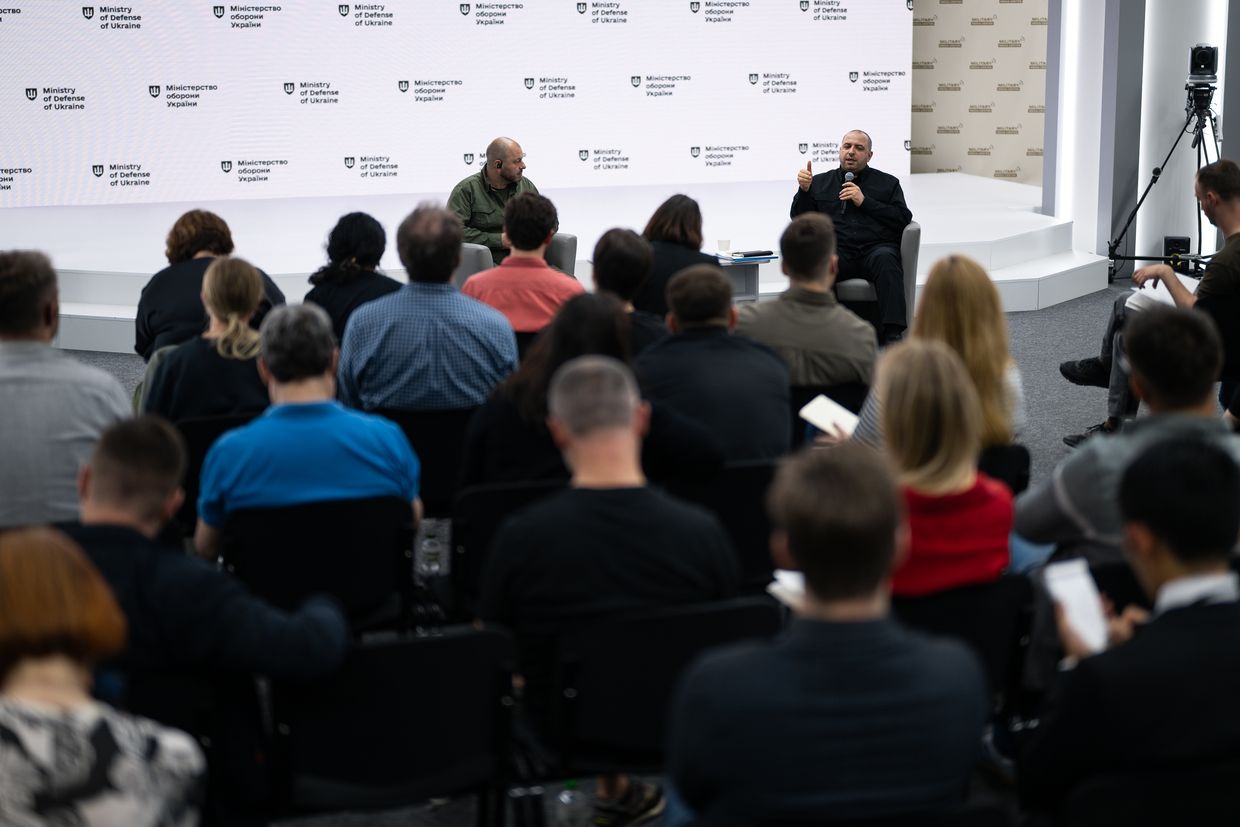
Defense Minister Rustem Umerov speaks to the press, in Kyiv, Ukraine. (Ukraine’s Defense Ministry)
The deployment reveals both Russia’s growing dependence on foreign forces and North Korea’s willingness to sacrifice its strategic reserves. Umerov noted that North Korea bears the military burden while Russia fails to uphold reciprocal obligations under their strategic partnership agreement, creating tensions within the North Korean regime.
Industrial Espionage and Mistaken Identity: Pro-Palestinian Activists Destroy Ukrainian Military Aid
Approximately 150 pro-Palestinian activists broke into a Belgian storage facility and destroyed $1.1 million worth of military equipment intended for Ukraine, mistakenly believing it would be supplied to Israel. The protesters targeted OIP Land Systems, which has provided Ukraine with 260 armored vehicles since the Russian invasion began, including Leopard 1 tanks manufactured at their Tournai plant.
The activists used hammers and grinders to damage vehicles and computers, delaying Ukrainian military deliveries by at least one month. The company’s CEO noted that OIP Land Systems has not produced defense systems for Israel for over 20 years, despite being owned by Israeli defense company Elbit Systems.
Economic Warfare: EU Sanctions Package Stalls Amid Hungarian and Slovak Opposition
EU ambassadors failed to approve the 18th package of sanctions against Russia due to opposition from Hungary and Slovakia, marking the first time Slovakia has attempted to block EU restrictions. Slovakia demanded postponement until decisions are made regarding consequences from RePowerEU, the European Commission’s initiative to end Russian fossil fuel dependence by 2030.
The deadlock occurred even as EU members extended existing sectoral sanctions against Russia for six months and as President Zelensky signed a decree synchronizing Ukrainian sanctions with EU and G7 measures. The stalemate highlighted growing divisions within the European Union regarding the pace and scope of economic pressure on Moscow.
Corruption at the Top: Deputy Prime Minister Posts Record Bail Amid Land Grab Charges
A Ukrainian court set bail at Hr 120 million ($2.9 million) for Deputy Prime Minister Oleksii Chernyshov while restricting his foreign travel in a high-profile corruption case. Chernyshov, considered a close Zelensky ally, faces charges of abusing his government position to illegally enrich himself through land deals that cost Ukraine Hr 1 billion ($24 million).
The case marks the highest-ranking corruption charges against a sitting Ukrainian official, with investigators alleging Chernyshov undervalued land plots to benefit developers in exchange for discounted apartments worth over Hr 14.5 million ($346,000). Despite the charges, the court did not remove him from office, and Chernyshov declared his intention to fight the accusations while remaining in his position.
The Human Cost of Precision: Russian Drones Kill Over 3,000 Civilians
A UN Human Rights Monitoring Mission report revealed that Russian short-range drone attacks have caused over 3,000 civilian casualties since February 2022, including 395 deaths and 2,635 injuries. The attacks deliberately targeted civilians engaging in daily activities including driving, walking, and operating clearly marked ambulances.
April 2025 marked the deadliest month on record with 42 civilians killed and 283 injured. The UN documented cases of drone operators specifically hunting civilians, with attacks designed to instill fear and disrupt daily life in frontline communities. These systematic attacks on non-combatants may constitute war crimes under international humanitarian law.
Chemical Weapons Continue: Russia Deploys Banned Substances in 888 Monthly Attacks
The Ukrainian Center for Strategic Communications reported 888 cases of Russian chemical weapons use in May 2025 alone, including grenades containing chlorobenzalmalonodinitrile (CS) gas delivered by first-person view drones. The Organization for the Prohibition of Chemical Weapons confirmed environmental testing showing Russian forces used riot control agents banned under the Chemical Weapons Convention.
Russia’s systematic use of chemical weapons represents a direct violation of international law and the Chemical Weapons Convention, of which Russia is a signatory. The escalating frequency of chemical attacks demonstrates Moscow’s willingness to cross established red lines in international humanitarian law.
Industrial Mobilization: Russia Boosts Production While Claiming Future Cuts
Putin claimed Russia plans to reduce defense spending beginning next year while simultaneously increasing military production capacity. Russian defense conglomerate Rostec reported 27% revenue growth in 2024, reaching 3.61 trillion rubles ($46 billion), with production increases across multiple weapons categories including 1.1 times more armored vehicles, 1.3 times more artillery ammunition, and 1.7 times more rocket systems.
Open-source data indicates Russia increased industrial production by 2.6% between April and May 2025, with the majority attributed to defense sector expansion. Aircraft production increased 16.9% in May alone, suggesting Russia prioritizes platforms needed for potential future NATO conflict over immediate battlefield requirements.
European Defense Revolution: NATO Commits to 5% GDP Military Spending
NATO allies agreed to allocate 5% of GDP annually to defense and security expenditures by 2035, responding to intelligence assessments that Russia could rebuild sufficient military capacity to challenge the alliance within five years. The commitment reflects growing European concern about Russian military capabilities and ongoing sabotage efforts across the continent.
German intelligence chief warnings that Russia will have capabilities to attack NATO by 2030 drove the increased spending commitment. Estonia’s Foreign Minister Margus Tsahkna emphasized that Europe must take greater responsibility for its defense, noting that Russia’s 2024 military spending of $462 billion exceeded the combined defense budgets of all European nations.
Technological Innovation Under Fire: Ukraine Produces Four Million Drones Annually
Ukrainian companies achieved production capacity for four million drones annually, with 1.5 million already delivered to frontline forces by the end of June. Defense Minister Umerov announced that over 95% of drones used by Ukrainian forces are domestically produced, reflecting the country’s rapid technological adaptation to warfare requirements.
The government allocated Hr 2.5 billion ($60 million) monthly for direct procurement while launching the DOT Chain Defense marketplace allowing brigades to order specific drone models directly. This streamlined procurement system reduces bureaucracy and delivers equipment ten times faster than traditional methods.
Trump Threatens Iran: “Without Question, Absolutely” Would Bomb Nuclear Sites Again
U.S. President Donald Trump declared he would “without question, absolutely” consider bombing Iran again if the country’s nuclear program becomes concerning. Trump’s comments followed U.S. strikes on June 21 against three major Iranian nuclear sites – Fordow, Natanz, and Isfahan – using over a dozen bunker buster bombs. Despite mixed intelligence reports on the strikes’ effectiveness, Trump described the operation as “unbelievable” and warned that sanctions are “BITING” Iran’s economy.
Russia-Belarus Military Cooperation: Youth Indoctrination Programs Expand
Putin addressed the 12th annual Russian-Belarusian regions forum, emphasizing military-patriotic youth programs designed to encourage participation in “spiritual, moral and traditional” values. The Union State framework implements a specialized “road map” for youth policy through 2027, with Putin highlighting the importance of preparing youth for military service and potential future conflict with NATO.
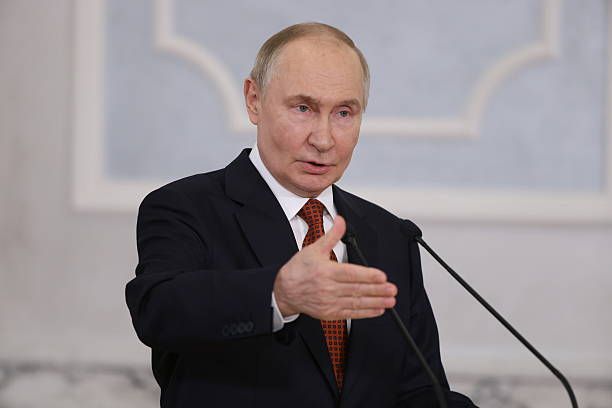
Russian President Vladimir Putin speaks to journalists during his press conference at the Palace of Independence, in Minsk, Belarus. Russian President Vladimir Putin finished his two-day visit to Belarus, where he attended the Eurasian Economic Union Summit. (Contributor/Getty Images)
Militarization of Russian Society: Defense Spending Surges 13-Fold on Youth Programs
Russian investigative outlet Novaya Gazeta reported that Russia increased spending on youth patriotic education programs from 11.4 billion rubles ($145 million) in 2022 to a planned 66.6 billion rubles ($849 million) for 2025. The number of regional youth patriotic forums increased from 74 in 2022 to 157 in 2024, while patriotic gatherings and competitions rose from 514 in 2023 to 905 in 2024.
Putin also ordered the reduction of minimum age for drone racing championships from 10 to seven years, with the Russian Drone Racing Federation and “Movement of the First” youth program jointly hosting federal competitions in 2026.
Chechnya’s Military Youth Training: 300 Teenagers Learn Combat Skills
Chechen Republic Head Ramzan Kadyrov reported that 300 teenagers aged 14-17 participated in the first military-patriotic “Time of Young Heroes” session at the Vladimir Putin Spetsnaz University. The program included basic firearm skills, sniper training, engineering, drone control, tactical medicine, and topography instruction, along with “Zarnitsa” military competitions teaching first aid, grenade throwing, and weapon assembly.
Russian Force Modifications: New Uniforms for Wounded Soldiers
Russian Deputy Defense Minister Anna Tsivileva claimed 60% of wounded Russian servicemen want to continue military service, announcing the development of 50 sets of modified military uniforms and shoes for wounded and disabled troops. The initiative may explain Russia’s increasing reliance on wounded personnel in combat operations to address manpower shortages.
New Prosecutor General Appointed: Zelensky’s Loyalist Takes Top Justice Role
President Zelensky appointed Ruslan Kravchenko, 35, as Ukraine’s new prosecutor general on June 21, making him the youngest person to hold the position in Ukraine’s independent history. Kravchenko previously served as military governor under Zelensky and prosecuted Russian war crimes in Bucha. His appointment follows the October 2024 resignation of Andriy Kostin, with deputy Oleksiy Khomenko serving as acting prosecutor general during the interim period.
Ukraine’s Military Contract Success: Young Volunteers Show Battlefield Effectiveness
Defense Minister Umerov reported that Ukraine’s one-year military contract program for volunteers aged 18-24 is proving effective on the battlefield. Units composed of young contract soldiers demonstrated “resilience, professionalism, and confident actions in combat” according to commanders’ reports. The program offers Hr 1 million ($24,000) signing bonuses and monthly allowances up to Hr 120,000 ($3,000), with comprehensive training and adaptation courses.
Tightening Military Control: Russia Expands Conscription Penalties and Citizenship Threats
The Russian State Duma doubled fines for military registration violations from 5,000 to 20,000 rubles ($127 to $254) for failure to update residence information with recruitment centers. The government also approved proposals to revoke citizenship from naturalized Russians who fail military registration obligations, building on Putin’s August 2024 law requiring naturalized citizens to register within two weeks or face citizenship loss.
Veteran Integration and Social Control: Kremlin Balances Benefits with Surveillance
Russian federal subjects continued expanding “Time of Heroes” programs preparing veterans for government positions, with Chelyabinsk Oblast selecting 66 veterans and Udmurtia choosing 50 for administrative training. The Republic of Bashkortostan became the first to offer compensation to military bloggers covering the war, allocating 8.9 million rubles ($113,000) including death benefits for deceased correspondents.
Authorities simultaneously arrested Mikhail Polynkov, administrator of the “Soldatskaya Pravda” Telegram channel, allegedly for abandoning his unit but likely for exposing missing servicemen cases. The arrest demonstrated the Kremlin’s effort to silence voices revealing problems affecting frontline soldiers while maintaining public portrayals of government support for veterans.
Putin Claims Economic Resilience While Military Spending Dominates Budget
Putin told journalists that sanctions cannot hurt Russia’s economy and described economic indicators as “satisfactory,” while acknowledging high inflation and predicting “much more modest” growth in 2025. He claimed Russia’s military budget represents 6.3% of GDP at 13.5 trillion rubles ($172 billion) and promised steady decreases beginning in 2026, despite evidence of continued defense industrial expansion.
Russian Mobilization Expansion: New Laws Target Stateless Persons and Foreigners
The Russian State Duma approved legislation on June 24 allowing stateless people and foreigners to sign military contracts until the end of Russia’s wartime mobilization period. Russian Defense Committee Chairperson Andrei Kartapolov stated the bill primarily targets individuals deprived of Ukrainian citizenship or those living in occupied Ukraine without Russian passports. Ukrainian Luhansk Oblast Administration Head warned that Russian occupation officials are preparing to “mobilize” Ukrainian citizens in occupied territories under this legislation.
Military Education Crisis: Russian Training Programs Face Equipment Shortages
A military-patriotic club head reported severe deficiencies in Russian military education facilities across the Siberian Federal Okrug. “Suvorov” cadet schools operate with surface-level programs, outdated equipment, and critical shortages – one school with 60 students had only five outdated Kalashnikov rifles. Students lack field uniforms preventing participation in tactical exercises, while training centers teach outdated concealment tactics and lack drones, simulators, and protective gear.
Tightening Military Control: Russia Expands Conscription Penalties and Citizenship Threats
The Russian State Duma doubled fines for military registration violations from 5,000 to 20,000 rubles ($127 to $254) for failure to update residence information with recruitment centers. The government also approved proposals to revoke citizenship from naturalized Russians who fail military registration obligations, building on Putin’s August 2024 law requiring naturalized citizens to register within two weeks or face citizenship loss.
Veteran Integration and Social Control: Kremlin Balances Benefits with Surveillance
Russian federal subjects continued expanding “Time of Heroes” programs preparing veterans for government positions, with Chelyabinsk Oblast selecting 66 veterans and Udmurtia choosing 50 for administrative training. The Republic of Bashkortostan became the first to offer compensation to military bloggers covering the war, allocating 8.9 million rubles ($113,000) including death benefits for deceased correspondents.
Authorities simultaneously arrested Mikhail Polynkov, administrator of the “Soldatskaya Pravda” Telegram channel, allegedly for abandoning his unit but likely for exposing missing servicemen cases. The arrest demonstrated the Kremlin’s effort to silence voices revealing problems affecting frontline soldiers while maintaining public portrayals of government support for veterans.
Military Industrial Production: Russian Defense Output Increases Despite Resource Constraints
Russian defense spending reached 6.3% of GDP or 13.5 trillion rubles ($172 billion) according to Putin’s statements on June 27. Defense conglomerate Rostec reported 27% revenue growth in 2024, reaching 3.61 trillion rubles ($46 billion), with production increases of 1.1 times for armored vehicles, 1.3 times for artillery ammunition, and 1.7 times for rocket systems. Monthly aircraft production rose 16.9% in May 2025, while naval and aircraft capacity expanded 16% between February and May.
Force Generation Crisis: Russian Mobilization Problems Expose Military Weaknesses
The revelations suggest Russia’s military command structure cannot effectively integrate mobilized personnel, forcing reliance on foreign troops including North Korean forces. This dependency indicates critical shortages in Russian recruitment and training systems that may persist throughout the conflict.
Energy Infrastructure Under Siege: Kherson Plunged into Darkness
Russian forces struck a critical energy facility in Kherson Oblast on June 27, causing widespread power outages across multiple communities. Governor Oleksandr Prokudin warned residents to prepare for prolonged blackouts as power engineers worked to stabilize the grid. The attack continued Russia’s systematic targeting of Ukrainian energy infrastructure, which has included 13 mass attacks throughout 2024 forcing emergency blackouts nationwide.
Missile Terror in Dnipropetrovsk: Five Dead in Samar Strike
A Russian missile strike on the city of Samar in Dnipropetrovsk Oblast killed five people and injured at least 25 others on June 27. Four victims remained in serious condition while others sustained moderate injuries. The attack followed one of the deadliest assaults on the region just days earlier, when missiles struck Dnipro on June 24, killing 21 people and injuring over 300 others across multiple civilian targets including a dormitory, gymnasium, and passenger train.
Daily Violence Across the Front: Two Dead, 13 Wounded in Overnight Attacks
Ukrainian air defense intercepted 365 of 371 incoming Russian weapons overnight, including 363 Shahed drones, two Kinzhal ballistic missiles, and six Kalibr cruise missiles. Despite the high interception rate, Russian attacks killed two civilians and wounded 13 others across multiple oblasts.
In Kharkiv Oblast, one person died and four were wounded in Vovchanski Khutory and Pidlyman, with damage to houses and agricultural facilities. Donetsk Oblast reported one death and three injuries across Pokrovsk, Kramatorsk, and Bakhmut districts. Kherson Oblast saw four people injured by drones and artillery, with damage to 32 buildings and various infrastructure. Zaporizhzhia Oblast recorded one injury from an air-dropped bomb in Huliaipole district.
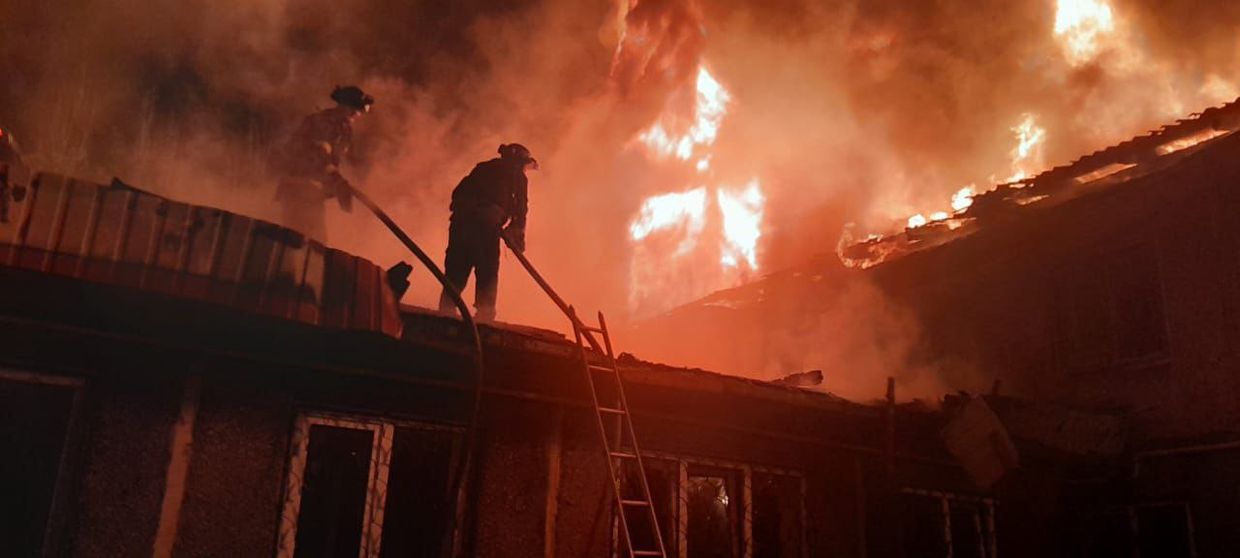
Firefighters work to extinguish a blaze at a residential building hit during a Russian attack in Donetsk Oblast, Ukraine. (Vadym Filashkin/Telegram)
Ground Combat Intensifies: Russian Advances Near Pokrovsk and Strategic Locations
Russian forces concentrated approximately 111,000 personnel in the Pokrovsk direction according to Ukrainian Commander-in-Chief General Oleksandr Syrskyi. Geolocated footage confirmed Russian advances along the T-0515 Pokrovsk-Andriivka highway northeast of Shevchenko, while Russian forces also advanced in northwestern Dyliivka near Toretsk and into central Kamyanske in western Zaporizhia Oblast.
Ukrainian forces achieved counteradvances in the Lyman direction, regaining positions in northwestern Ridkodub. Fighting continued across multiple fronts including Kursk Oblast, where Ukrainian forces conducted attacks toward Glushkovo and nearby settlements.
Chinese Journalist Wounded: International Media Caught in Crossfire
A 63-year-old Chinese television journalist from Phoenix TV sustained head injuries in a Ukrainian drone strike near Russia’s border in Kursk Oblast. Lu Yuguang was reportedly examining the border area when the strike occurred, marking the first publicly reported case of a Chinese journalist being wounded in the conflict zone. Russian acting governor Alexander Khinshtein warned international media to avoid the dangerous border region.
Ukraine Seeks Bangladesh Sanctions Over Stolen Grain Trade
Ukraine prepared to request EU sanctions against Bangladeshi entities for importing wheat stolen from Russian-occupied territories. Ukrainian ambassador to India Oleksandr Polishchuk revealed that Bangladesh failed to respond to diplomatic appeals to stop trading over 150,000 tonnes of allegedly stolen grain shipped from the Russian port of Kavkaz. Russian forces have stolen at least 180,000 tons of Ukrainian grain through Mariupol alone since the occupation began.
Military Justice Reform: Putin Grants Commanders Expanded Arrest Powers
Putin signed a decree allowing military commanders and police chiefs to directly administer disciplinary arrests of Russian servicemen without court orders. The new system permits commanders to detain servicemen for serious disciplinary offenses, with release periods ranging from three months for enlisted personnel to one year for officers. The reform eliminates previous requirements for garrison military court approval.
Expanding Chinese Military Cooperation: 600 Servicemen for Russian Training
Ukraine’s Main Military Intelligence Directorate reported that 600 Chinese servicemen will undergo training at Russian military bases in 2025. The program focuses on combat experience against Western military equipment, with emphasis on training Chinese tankers, artillerymen, engineers, and air defense specialists. The expanded cooperation demonstrates deepening military ties between Moscow and Beijing.
Looking Forward: Technology Shapes Tomorrow’s Battlefield
The events of June 27 demonstrated how rapidly military technology evolves during active conflict, with both sides adapting artificial intelligence, thermal imaging, and precision guidance systems to gain tactical advantages. Russia’s integration of Iranian drone technology and Ukraine’s deep-strike capabilities suggest that future phases of the conflict will be determined as much by technological innovation as by traditional military factors.
The day’s developments also highlighted the persistent gap between diplomatic rhetoric and battlefield reality, with Putin’s offers of negotiations contradicted by continued military operations and rejection of meaningful ceasefire proposals. As both sides invest heavily in advanced weapons systems and production capacity, the technological arms race appears likely to intensify before any sustainable peace emerges.