
As Russia Blames Others for Stalled Peace Talks, Ukrainian Forces Push Back from Sumy While Berlin Pledges Billions in Air Defense Amid Record-Breaking Drone Assaults
Summary of the Day – June 30, 2025
The final day of June crystallized the profound contradictions defining this war’s fourth year: while Russia blamed Ukraine and the United States for stalling peace negotiations, Moscow’s forces launched their 5,337th kamikaze drone of the month—smashing all previous records. Ukrainian defenders answered with territorial gains in Sumy Oblast, pushing Russian forces further from the regional capital and liberating the village of Andriivka. Germany’s Foreign Minister arrived in Kyiv with a €2 billion air defense pledge as international investigators confirmed what many suspected—that Russia deliberately orchestrated the deadly 2022 Olenivka prison explosion that killed over 50 Ukrainian prisoners of war. The day’s events underscored a fundamental reality: as diplomatic rhetoric intensifies, battlefield dynamics continue to determine the war’s true trajectory.
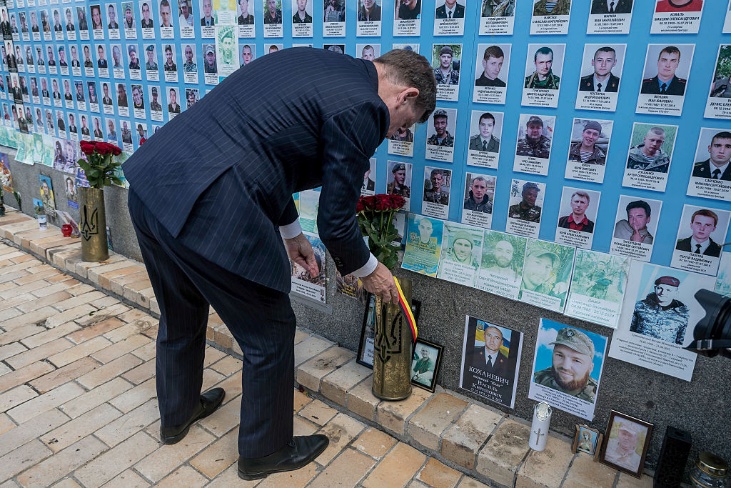
Foreign Minister Andriy Sybiha and German Foreign Minister Johann Wadephul lay flowers at the Wall of Remembrance for the Fallen for Ukraine in Kyiv. (Maxym Marusenko / NurPhoto via Getty Images)
The Blame Game Escalates: Moscow Points Fingers While Launching Record Attacks
Kremlin spokesperson Dmitry Peskov’s accusation that Ukraine and Washington were responsible for stalled peace talks arrived with bitter irony on a day when Russia unleashed yet another massive drone barrage against Ukrainian cities. Speaking to Belarus 1 TV, Peskov claimed the pace of negotiations depended on “the position of the Kyiv regime” and “how effectively Washington’s mediating efforts continue.”
The statement represented a stunning reversal of responsibility from a regime that has consistently rejected ceasefire proposals while escalating attacks on civilian infrastructure. Russia’s actions spoke louder than Peskov’s words: the country had just completed a month in which it launched 5,337 Shahed-type drones against Ukraine—a 27% increase over the previous record of 4,198 set in March.
U.S. Special Representative Keith Kellogg fired back immediately, calling Peskov’s comments “Orwellian” and emphasizing that “President Trump has been consistent and adamant about making progress to end the war.” The exchange highlighted the growing frustration among American negotiators with Russia’s pattern of diplomatic theater followed by military escalation.
“Russia cannot continue to stall for time while it bombs civilian targets in Ukraine,” Kellogg declared, capturing the central contradiction of Moscow’s approach to peace talks.
Sumy’s Liberation: Ukrainian Forces Turn the Tide in the Northeast
Against this backdrop of diplomatic recrimination, Ukrainian forces delivered their most significant tactical victory in weeks by stabilizing the situation in Sumy Oblast and pushing Russian forces further from the regional capital. The General Staff announced that Ukrainian troops had advanced near Oleksiivka—less than 30 kilometers from Sumy city—and completely liberated Andriivka, which Russia had captured in early June.
The success represented a critical reversal of Russia’s summer offensive momentum in the northeast. Moscow had deployed its best brigades to this sector, supported by long-range artillery, aircraft, and attack drones, yet Ukrainian defenders managed to halt the advance along the Yunakivka-Yablunivka-Novomykolayivka-Oleksiivka-Kindrativka line.
“The Russian plan for an offensive in Sumy Oblast is not succeeding—thanks to every Ukrainian unit operating in the area,” President Volodymyr Zelensky announced after meeting with military leadership and Defense Minister Rustem Umerov.
The victory carried particular significance because Sumy Oblast had become a testing ground for Russia’s broader strategy of creating buffer zones in northern Ukraine. The region’s proximity to the Russian border made it an attractive target for Moscow’s forces, but Ukrainian resistance demonstrated that geographical advantages alone could not guarantee success against determined defenders.
Germany’s €2 Billion Promise: Berlin Steps Forward as Washington Debates
German Foreign Minister Johann Wadephul’s surprise visit to Kyiv delivered both immediate assistance and a pointed message about European commitment to Ukraine’s defense. His pledge of €2 billion for air defense systems came as Russia’s drone attacks were reaching unprecedented levels, making air defense Ukraine’s most urgent military need.
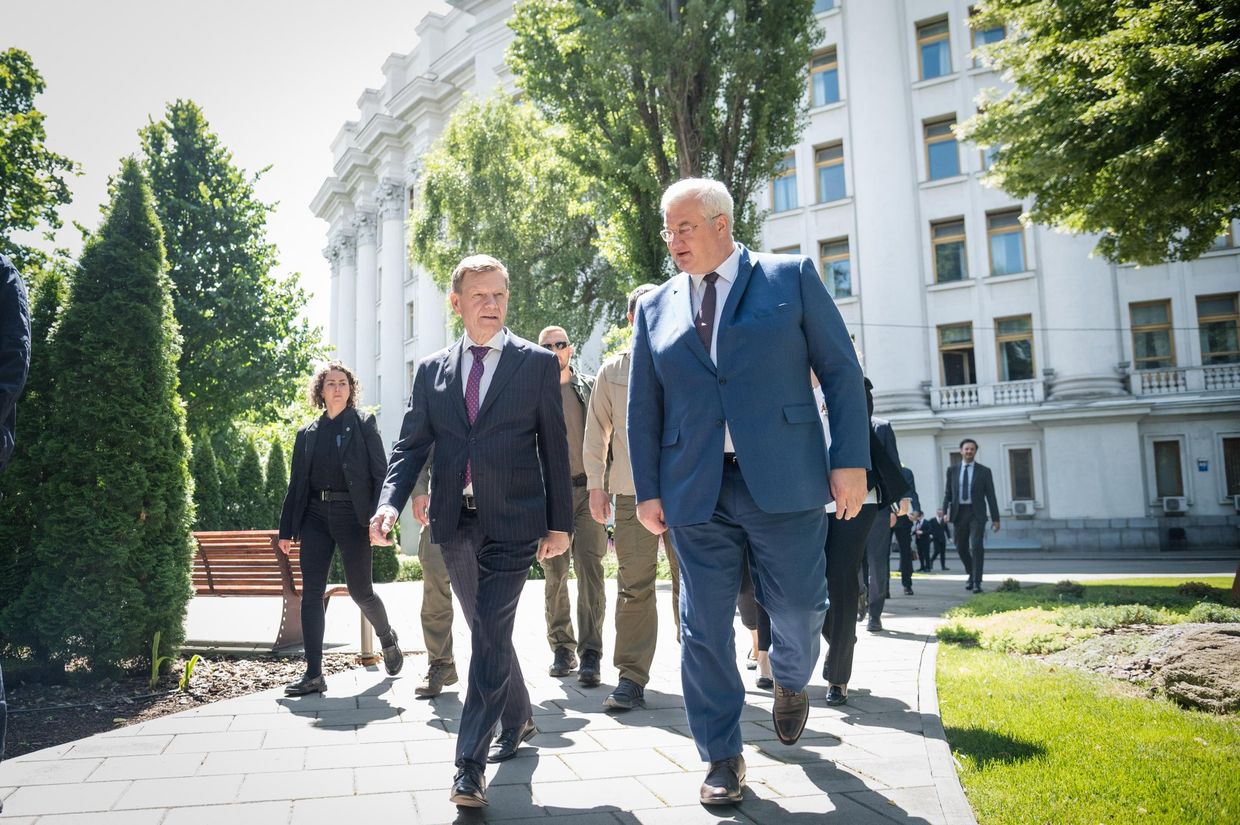
German Foreign Minister Johann Wadephul walks with Ukrainian Foreign Minister Andrii Sybiha during his visit to Kyiv, Ukraine. (Andrii Sybiha / X)
“Putin is not giving up on his maximalist demands—he doesn’t want negotiations, he wants capitulation,” Wadephul told reporters after arriving in the Ukrainian capital. His assessment directly contradicted Russian claims about seeking genuine dialogue, instead emphasizing Moscow’s continued pursuit of total victory.
The German minister’s visit reflected growing European frustration with American deliberation over military aid. While the Trump administration continued debating the scope of support for Ukraine, European allies were moving decisively to fill critical gaps. Wadephul announced that Germany had already earmarked nearly €2 billion for modern air defense systems and ammunition, with total planned defense support for Ukraine in 2025 standing at €9 billion.
“We are going down every path available,” Wadephul explained, describing coordination with German defense industry, European allies, and the United States to urgently secure more systems for Ukraine’s air shield. The minister also revealed plans for joint ventures to boost Ukraine’s domestic weapons production, recognizing that long-term defense required indigenous capabilities.
The Olenivka Revelation: UN Analysis Confirms Russian War Crime
Ukrainian Ombudsman Dmytro Lubinets revealed that an internal United Nations analysis had concluded Russia was responsible for the July 2022 explosion at Olenivka prison that killed over 50 Ukrainian prisoners of war. The finding, published by the Center for Human Rights in Armed Conflict, provided definitive confirmation of what Ukrainian officials had long maintained—that Moscow deliberately murdered POWs to prevent their exchange.
“An internal analysis of the U.N. showed that it was the Russian Federation that planned and carried out the attack,” Lubinets announced, though he noted the UN had not publicly acknowledged Russia’s responsibility despite reaching this conclusion.
The revelation carried particular weight because it demonstrated Moscow’s willingness to commit war crimes even against prisoners under international protection. Russian forces had deliberately placed Ukrainian Azov Regiment members in a separate part of the Olenivka building that was later destroyed, according to Ukrainian investigations. The timing—just days before a planned prisoner exchange—suggested calculated malice rather than battlefield accident.
Russia’s response to the UN finding followed its standard playbook: denial, deflection, and obstruction of international investigations. Moscow had prevented independent investigators from accessing the site and contaminated evidence, according to UN reports, making the internal analysis all the more significant as an authoritative assessment.
Dnipropetrovsk Denials: The Battle for Ukraine’s Industrial Heartland
Ukrainian military spokespeople spent considerable effort on June 30 refuting claims that Russian forces had entered Dnipropetrovsk Oblast, one of Ukraine’s most strategically important regions. The denials came after the DeepState monitoring group marked a “gray zone” near the village of Dachne, suggesting active fighting close to the regional border.
Viktor Trehubov, spokesperson for Ukraine’s Khortytsia group of forces, acknowledged “very active battles in the villages located near the administrative border” but insisted Ukraine was holding the defense line near Yalta, Komar, and Shevchenkove. The careful language reflected the intensity of fighting in the area while maintaining that no breakthrough had occurred.
The dispute over Dnipropetrovsk Oblast carried enormous significance beyond the immediate tactical situation. As a major industrial region in central Ukraine, its capture would represent a strategic victory for Russia and potentially open new avenues of advance toward Ukraine’s heartland. The fact that fighting was occurring near the regional border demonstrated how far Russian forces had pushed in Donetsk Oblast, even if they had not yet achieved their ultimate objective.
Kremlin propagandists’ premature claims of capturing Dachne reflected Moscow’s desperation to show progress in its summer offensive. These false announcements served dual purposes: boosting domestic morale while potentially influencing Western perceptions of the war’s trajectory.
Slovakia’s Troubling Stance: Calls for “Forgiveness” Draw Sharp Rebuke
Slovak Foreign Minister Juraj Blanár’s suggestion that the West should “forgive everything that has happened” to end the war provoked sharp condemnation from Ukrainian Foreign Minister Andriy Sybiha. Blanár’s comments, made during a domestic interview, reflected growing pressure on European unity as the war’s costs mounted.
“Russia’s sense of impunity is the root cause of its crimes,” Sybiha responded. “It’s naive to expect a criminal to stop if their crime is forgiven instead of punished. Russia will hit your other cheek as well. And those who have lost no one in this war have no right to make such statements.”
The exchange highlighted a dangerous trend among some European politicians toward accommodation with Russia, driven by war fatigue and economic concerns. Slovakia had already delayed adoption of the EU’s 18th sanctions package against Russia and halted military aid to Ukraine since Prime Minister Robert Fico took office in 2023.
Sybiha’s sharp response reflected broader Ukrainian frustration with allies who seemed willing to sacrifice Ukrainian sovereignty for the illusion of peace. The foreign minister’s reference to those “who have lost no one in this war” drew a clear distinction between countries that had paid the price of Russian aggression and those advocating compromise from safety.
Azerbaijan’s Message to Moscow: Sputnik Raids Signal Shifting Allegiances
Azerbaijani authorities’ raid on Russian state media outlet Sputnik’s Baku office delivered a pointed message about the changing dynamics in the South Caucasus. The detention of two alleged FSB agents during the operation came amid deteriorating Russian-Azerbaijani relations following extrajudicial killings of Azerbaijani citizens in Russia’s Yekaterinburg.
The incident reflected broader challenges to Russian influence in former Soviet territories. Azerbaijan’s decision to target a key tool of Russian soft power—its propaganda network—suggested growing confidence in challenging Moscow’s traditional dominance in the region. The timing was particularly significant as Russia’s military resources remained tied down in Ukraine, limiting its ability to project power elsewhere.
Sputnik’s continued operations despite having its accreditation revoked in February demonstrated Moscow’s determination to maintain influence through any means available. The Azerbaijani response showed that Russia’s information warfare tools were increasingly vulnerable to countermeasures by assertive neighbors.
The Drone War Intensifies: Record Numbers Reflect Russian Desperation
Russia’s launch of 5,337 kamikaze drones during June represented more than a statistical milestone—it revealed the evolution of Moscow’s strategic approach to the war. The figure, a 27% increase over the previous record, demonstrated Russia’s shift toward asymmetric warfare as its conventional capabilities proved insufficient for decisive victory.
The drone bombardments served multiple purposes beyond immediate military damage. They aimed to terrorize Ukrainian civilians, strain air defense resources, and create the appearance of momentum even as Russian ground forces struggled to achieve significant territorial gains. The psychological warfare component was particularly important as Russia sought to influence Western perceptions of the war’s trajectory.
Ukrainian air defenses had adapted remarkably to the drone threat, shooting down 74 of 107 drones launched on the night of June 29-30 alone. However, the sheer volume of attacks created inevitable gaps in coverage, allowing some strikes to reach their targets and maintain pressure on Ukrainian infrastructure and morale.
The Lithium Stakes: Critical Resources Under Fire
Reports that Russian forces had captured the Shevchenko lithium deposit in Donetsk Oblast highlighted the war’s implications for global supply chains and strategic resources. The deposit, containing an estimated 11-14 million tons of lithium ore, represented a significant portion of Ukraine’s critical mineral wealth.
The loss occurred just two months after Ukraine signed a landmark critical minerals agreement with the United States, underscoring how military developments continued to shape economic opportunities. While analysts suggested the specific deposit’s capture would not derail the broader agreement, it demonstrated the direct connection between battlefield outcomes and post-war reconstruction prospects.
The lithium deposits’ strategic importance extended beyond immediate economic value. As the world transitions toward electric vehicles and renewable energy storage, control over these resources could influence global technology development. Russia’s seizure of the deposits represented both an economic loss for Ukraine and a potential bargaining chip for future negotiations.
Canada’s Continued Support: G7 Commitment Delivers Results
Ukraine’s receipt of a $1.7 billion loan from Canada under the G7’s Extraordinary Revenue Acceleration initiative provided a practical counterpoint to diplomatic rhetoric. The funding, backed by profits from frozen Russian assets, demonstrated how creative financial mechanisms could sustain Ukrainian resistance even amid political uncertainties.
Prime Minister Denys Shmyhal’s announcement that Ukraine had received about $17.6 billion from Russia’s frozen assets since the beginning of the year showed the effectiveness of Western sanctions regimes. The irony was compelling: Russian aggression had triggered financial mechanisms that ultimately funded Ukrainian defense.
The loan structure—30 years at favorable terms—reflected long-term confidence in Ukraine’s eventual victory and reconstruction. Canada’s contribution to the broader $50 billion G7 commitment showed how multilateral cooperation could overcome individual countries’ political constraints.
The Human Cost: UN Documentation Reveals Systematic Abuse
The UN Office of the High Commissioner for Human Rights’ latest report provided stark documentation of the war’s human toll. The 968 Ukrainian civilians killed and 4,807 injured from December 2024 to May 2025 represented a 37% increase compared to the same period the previous year, reflecting the intensification of Russian attacks.
More disturbing was the systematic pattern of abuse revealed in the report. Credible allegations of 106 Ukrainian POW executions by Russian forces between August 2024 and May 2025 demonstrated the deliberate nature of Russian war crimes. The concentration of these executions in areas where Russian forces were advancing suggested a policy of eliminating potential witnesses and terrorizing Ukrainian defenders.
The contrast with Ukrainian conduct was stark: the UN verified execution of only one Russian soldier by Ukrainian forces in late 2024, with most verified Ukrainian violations occurring in 2022 or early 2023. The disparity highlighted the asymmetric nature of the conflict’s moral dimensions.
Technology and Control: Russia’s Digital Iron Curtain
Putin’s decree approving creation of a national messenger application represented another step in Russia’s construction of a digital iron curtain. The platform, combining social media functions with government services, would eliminate anonymous communication while increasing state surveillance capabilities.
The VKontakte-affiliated “Max” platform, described as potentially becoming “an analogue to the Chinese WeChat application,” revealed Russia’s admiration for China’s comprehensive social control mechanisms. The requirement that citizens access government services through the monitored platform created powerful incentives for adoption despite privacy concerns.
The initiative reflected broader authoritarian trends accelerated by the war. As external pressure mounted, authoritarian regimes typically increased internal control mechanisms to maintain stability. Russia’s digital surveillance expansion followed this pattern while potentially creating tools for post-war social control.
Putin’s Maximalist Vision: Kremlin Officials Reveal Territorial Ambitions
High-ranking Kremlin statements on June 30 demonstrated Russia’s territorial ambitions extending far beyond the four illegally annexed oblasts. Putin held a meeting on socioeconomic development of occupied territories, frequently referring to occupied Ukraine as “Donbas and Novorossiya”—a term Russian officials have defined as all of eastern and southern Ukraine.
Kremlin Spokesperson Dmitry Peskov responded to Odesa Mayor Gennadiy Trukhanov’s statement that Odesa is not a “Russian” city, claiming the city’s history is “inextricably linked” with Russia. Presidential Aide Vladimir Medinsky declared Russians and Ukrainians are “one people” with a “historical homeland,” referencing “ancient Russian lands on both sides of the Dnipro River, Novorossiya, and Crimea.”
These statements aligned with Ukrainian intelligence assessments that Russia intends to occupy the entirety of Ukraine east of the Dnipro River and seize Odesa Oblast by the end of 2026. The consistent commitment to these narratives demonstrated the Kremlin’s continued objective of destroying the Ukrainian state and subjugating the Ukrainian people.
Battlefield Dynamics: Russian Advances and Ukrainian Resistance
Russian forces recently advanced near Kupyansk and Novopavlivka while making gains in western Zaporizhia Oblast, according to geolocated footage. In the Kupyansk direction, Russian forces advanced west and northwest of Ivanivka, while near Novopavlivka, they seized Novomykolaivka entirely, with elements of the 30th Motorized Rifle Brigade raising their flag in the settlement.
In western Zaporizhia Oblast, Russian forces advanced in eastern Kamyanske, though Ukrainian defenders maintained that fighting continued with positions changing hands regularly. The commander of a Ukrainian drone company reported that while positions were “constantly changing hands,” Russian forces had not fully seized Malynivka despite claims to the contrary.
Fighting continued across multiple sectors on June 30. Russian forces conducted attacks in unspecified areas of Kursk Oblast, with Ukrainian forces conducting counterattacks in the Tetkino and Glushkovo directions. In northern Sumy Oblast, Russian forces conducted offensive operations northeast of Sumy City near Yunakivka but did not advance, with Ukrainian forces counterattacking near multiple villages including Yablunivka, Oleksiivka, and Andriivka.
In northern Kharkiv Oblast, Russian forces continued offensive operations near Hlyboke, Vovchansk, and Vovchanski Khutory but made no confirmed advances. Russian milbloggers claimed advances in Vovchansk, but these remained unconfirmed. In the Lyman direction, Russian forces attacked near Ridkodub, Shandryholove, Serednye, Novyi Myr, and Torske without advancing, while Ukrainian forces counterattacked in Ridkodub.
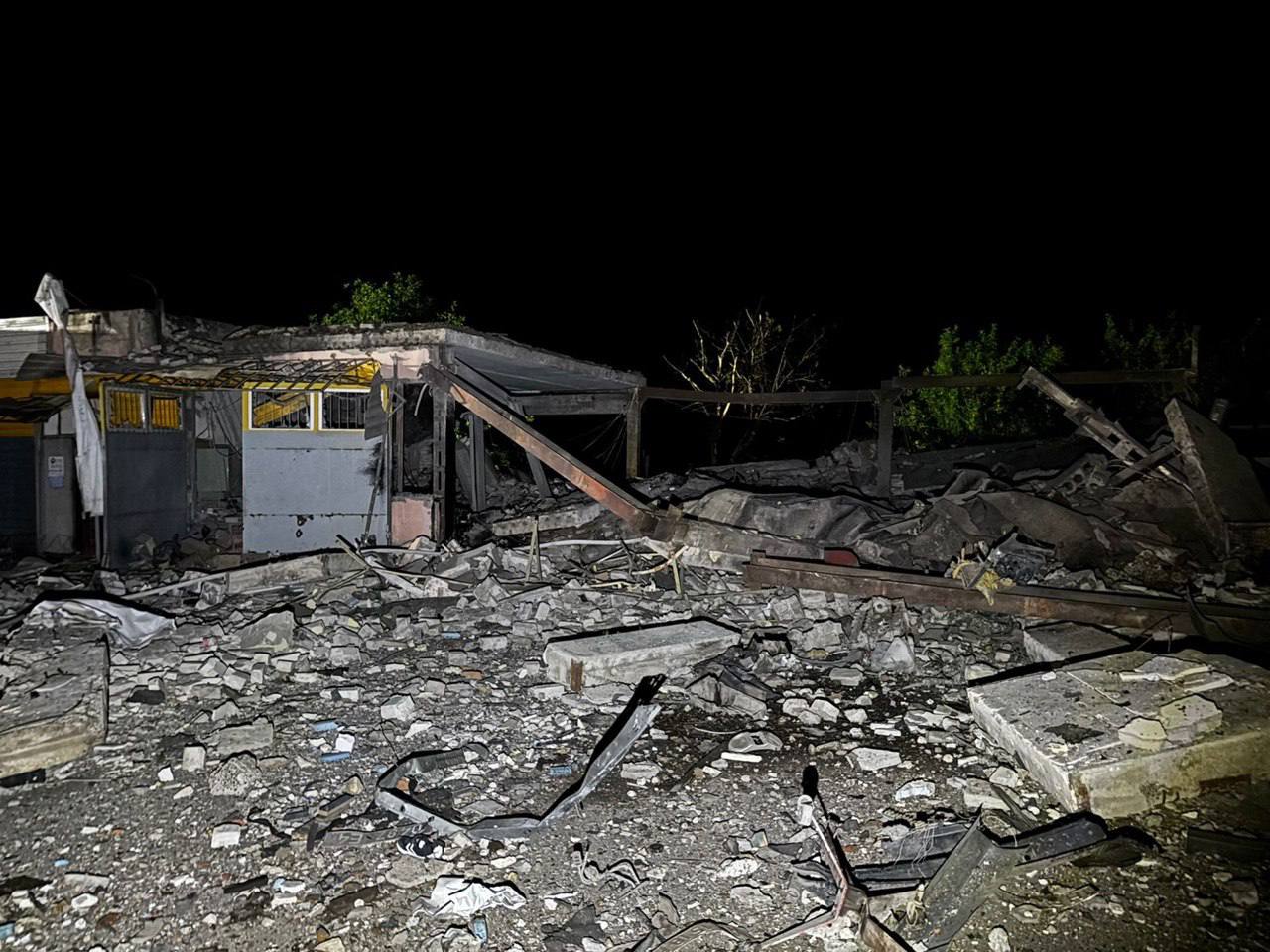
A building lies in ruins after a Russian strike on Pisochyn, Kharkiv Oblast. (Oleh Syniehubov / Telegram).
Russian forces continued assaults in the Siversk, Chasiv Yar, and Toretsk directions but achieved no confirmed territorial gains. In the Pokrovsk direction, Russian forces maintained pressure near multiple settlements including Malynivka, Myrne, Promin, and Myrolyubivka, with Russian military command reportedly redeploying personnel to other sectors while intensifying remote mining of Ukrainian supply routes.
The advances reflected Russia’s continued pressure across multiple fronts while demonstrating Ukrainian forces’ ability to contest territory and prevent complete Russian control. The tactical gains remained limited in scope but showed Moscow’s persistence in its summer offensive despite heavy casualties and limited strategic progress.
Russia’s Training Ultimatum: Moscow Demands End to Western Military Programs
Russia wants Ukraine to stop training its soldiers in the West as a key condition for ending the war, according to Russian Foreign Ministry Ambassador-at-Large Rodion Miroshnik. “The participation or complicity of other countries in the military conflict is a key point that must be stopped in any form—including arms supplies and the training of Ukrainian militants,” Miroshnik told Russian outlet Izvestia.
Since the start of the full-scale invasion, more than 200,000 Ukrainian troops have undergone training abroad, with Germany being one of the top training providers among over 30 nations supporting Ukraine’s military education needs. Training programs include bilateral initiatives such as US-led SAG-U missions in Germany, F-16 pilot training across multiple countries, and the EU Military Assistance Mission (EUMAM) to Ukraine, which has become the largest European training supplier.
The demand represented another maximalist Russian condition alongside requirements for Ukraine to hand over all Western-supplied weapons, downsize its Armed Forces, recognize Russia’s territorial claims, and renounce military alliances. Moscow’s insistence on ending military training programs revealed Russian recognition of their effectiveness in enhancing Ukrainian combat capabilities.
NATO Spending Triggers Russian Warnings: Lavrov Predicts Alliance “Collapse”
Russian Foreign Minister Sergei Lavrov warned that NATO’s increased defense spending would lead to the “collapse” of the alliance, despite Russian officials recently warning that Moscow’s own military expenditure was driving the country toward recession. Lavrov’s comments responded to NATO leaders’ approval of a new defense spending benchmark requiring members to spend at least 5% of GDP on defense by 2035.
“Since Polish Foreign Minister Radoslaw Sikorski is such a predictor, he probably foresees that a catastrophic increase in the budget of NATO countries will also lead to the collapse of this organization,” Lavrov reportedly said, referring to Sikorski’s earlier prediction that an arms race could lead to Putin’s downfall.
Putin had announced plans to cut Russian military expenditure beginning next year, asking rhetorically: “Europe is thinking about how to increase its spending, on the contrary. So, who is preparing for some kind of aggressive actions? Us or them?” The exchange highlighted competing narratives about military preparedness while Russian defense spending had reportedly risen 42% in real terms in 2024, reaching $462 billion.
Chinese Graphite Bomb Revelation: New “Blackout Weapon” Threatens Power Infrastructure
China’s state TV broadcaster revealed details of a new “graphite bomb” capable of causing “complete loss of electricity” across 10,000 square meters or knocking out entire power stations. An animated video released by CCTV showed a missile launching 90 small submunitions that bounce before exploding amid electrical infrastructure, causing equipment malfunctions through graphite particle clouds.
The weapon, similar to devices used by NATO against Serbia in 1999 and by the U.S. during the 1991 Gulf War, releases conductive graphite particles that short-circuit electrical equipment. The revelation came amid heightened global tensions and growing threats of Chinese invasion of Taiwan, while China remained a key ally to Russia during its full-scale war against Ukraine.
The timing of the disclosure appeared designed to demonstrate Chinese military capabilities while potentially providing technological insights to Russian forces, who had been systematically targeting Ukrainian energy infrastructure throughout the war. The weapon’s non-lethal classification belied its potential for causing civilian casualties through widespread power outages affecting hospitals, water systems, and other critical infrastructure.
Ukraine’s Air Defense Network: Military Intelligence Destroys Russian Systems
Ukraine’s military intelligence (HUR) destroyed three Russian air defense systems using drones in occupied Zaporizhzhia Oblast on June 14, according to delayed reports released June 30. Strike drone operators from HUR’s Department of Active Operations discovered and destroyed a Russian Buk-M3, a Pantsyr S1, and a 9S19 Imbir radar from the S-300V air defense system.
The successful strikes demonstrated Ukraine’s continued ability to target high-value Russian military assets deep in occupied territory despite extensive air defense coverage. The destruction of multiple systems in a coordinated operation reflected sophisticated intelligence gathering and precision strike capabilities that had evolved throughout the war.
Massive Civilian Casualties: Systematic Russian Attacks Across Ukraine
Russian attacks across multiple Ukrainian regions over the 24 hours ending June 30 killed at least six people and injured 26 others, with strikes involving drones, artillery, and guided bombs targeting residential areas and critical infrastructure. Ukrainian air defenses intercepted 74 of 107 drones launched overnight by Russia, but the remaining strikes demonstrated persistent threats to civilian populations.
In Kharkiv Oblast, two people were killed and eight injured following attacks on six settlements, with damage reported to houses, vehicles, and civilian infrastructure across Kharkiv, Kupiansk, and Chuhuiv districts. Russian forces struck residential areas and civilian infrastructure in over two dozen localities in Kherson Oblast, killing two people and injuring eight others, while damaging houses, utility systems, and communications infrastructure.
Zaporizhzhia Oblast saw one person killed in Vasylivka district as Russian forces launched 375 strikes on 10 settlements, damaging houses and vehicles. In Dnipropetrovsk Oblast, three people were injured in Kryvyi Rih following drone strikes and artillery attacks, with fires breaking out and damage recorded at farms and residential areas.
Donetsk Oblast suffered at least one death and four injuries, with multiple residential buildings, a church, and a pharmacy damaged across Pokrovsk, Kramatorsk, and Bakhmut districts. Sumy Oblast reported three civilian injuries from nearly 80 strikes targeting 29 settlements, damaging houses, educational institutions, and public buildings.
Russian Court Sentences Ukrainian POWs: 184 Kursk Captives Convicted of Terrorism
A Russian military court convicted 184 Ukrainian prisoners of war captured in Kursk Oblast of acts of terrorism, according to reports from Mediazona. The POWs were charged with carrying out grave terrorist acts by a group of individuals under the Russian Criminal Code, with Junior Lieutenant Yevhen Hoch among those convicted for allegedly participating in Ukraine’s Kursk Oblast incursion.
The mass convictions represented systematic violation of international conventions protecting prisoners of war rights and demonstrated Russia’s use of its judicial system to criminalize legitimate military operations. The charges appeared designed to justify harsh treatment of Ukrainian POWs while providing legal cover for potential war crimes.
European Cooperation Suspended: U.S. Agencies Halt Counter-Russia Operations
Some U.S. national security agencies suspended cooperation with international partners in countering Russian sabotage and cyber operations, according to Reuters reports citing undisclosed official sources. Under former President Biden, the National Security Council had coordinated efforts of at least seven security agencies working with European partners to disrupt Russia’s escalating hybrid activities across Europe.
Since Trump took office on January 20, the National Security Council reportedly ceased coordinating these efforts, with expected meetings with European partners not taking place. The development raised concerns in Europe that Washington might pursue a peace deal unfavorable to its allies, potentially undermining coordinated responses to Russian hybrid warfare.
Yale’s Lifeline: Critical Research Continues Against Administrative Odds
The Ukraine Conflict Observatory at Yale University’s Humanitarian Research Lab secured funding to continue operations until October 1, thanks to individual donations spurred by former Secretary of State Hillary Clinton’s public appeal. The development provided crucial continuity for the world’s leading organization tracking thousands of Ukrainian children abducted and taken to Russia.
Executive Director Nathaniel Raymond emphasized the program’s irreplaceable role: “We are the primary source of information about how many kids have been taken and where they are. Our information is currently some of the most actionable available.” The lab’s survival represented a victory of public engagement over administrative indifference, as the Trump administration had abruptly paused federal funding in February despite Congressional appropriations.
The funding extension carried particular significance as Russia had reportedly begun concealing information about Ukrainian children and using them as leverage for negotiations. Bipartisan Congressional support, including letters from leading lawmakers to Secretary of State Marco Rubio, demonstrated that child abduction transcended partisan politics even in a polarized environment.
British Sacrifice Honored: Budgie Burgess Remembered in Kyiv
Around 40 people gathered at Kyiv’s main crematorium to honor Ben “Budgie” Burgess, a British volunteer fighter who died in combat after two years of service with Ukrainian forces. The 32-year-old from southern England had specialized in First-Person-View drone operations, becoming among the best pilots in his regiment.
“A lot of people come to Ukraine for different reasons, but Budgie definitely came for the belief that Ukraine deserves to be free,” his friend and fellow British soldier “Azrael” said during the ceremony. The tribute highlighted the international dimension of Ukraine’s defense, as foreign volunteers continued arriving despite mounting casualties.
The ceremony at Maidan Square, where a flag was planted among hundreds honoring fallen soldiers, demonstrated how individual sacrifice contributed to collective resistance. Messages left by mourners—”Thank you for protecting,” “Ben was a true Cossack”—reflected the integration of foreign volunteers into Ukraine’s national story.
Crimean Bridge Under Fire: Explosions Disrupt Russian Supply Line
The strategically vital Crimean Bridge was temporarily closed late on June 29 following reports of explosions and active air defense fire in Kerch. Witnesses reported multiple blasts and observed Russian air defense systems in action, with the bridge’s lighting turned off as a precautionary measure.
Russia’s Defense Ministry claimed its air defenses shot down five Ukrainian drones overnight over the Sea of Azov, though it reported no damage to the bridge itself. The incident represented Ukraine’s continued ability to threaten this critical supply route for Russian forces despite intense air defense protection.
The attack followed Ukraine’s June 3 underwater strike that detonated 1,100 kilograms of explosives beneath the bridge’s supports. SBU Chief Vasyl Malyuk had described that operation as causing “severe” damage to the bridge’s foundations, demonstrating Ukrainian innovation in targeting seemingly impregnable infrastructure.
F-16 Reinforcements: New Fighter Jets Arrive Despite Russian Claims
President Zelensky confirmed the arrival of several new F-16 fighter jets in Ukraine, dismissing Russian claims that one had been shot down in Sumy Oblast. The delivery represented continued Western commitment to enhancing Ukraine’s air capabilities despite ongoing debates about escalation risks.
The fighters serve both offensive and defensive purposes, intercepting Russian missiles and drones during aerial strikes while launching attacks against Russian positions along the front line. With commitments from the Netherlands (24 aircraft), Denmark (19), and Norway (6-22), the F-16 program demonstrated sustained international cooperation.
The timing of the announcement, coinciding with Russia’s record drone attacks, underscored the urgent need for enhanced air defense capabilities. Ukrainian pilots and technicians training in multiple countries—including the U.S., Romania, Denmark, France, Belgium, the Netherlands, and Poland—reflected the program’s multilateral character.
Norway’s NATO Shield: F-35s Deployed to Protect Ukraine Aid Hub
Norway announced it would deploy F-35 fighter jets to Poland in the fall to protect the Rzeszow-Yasenka airport, a critical transportation hub for NATO military aid to Ukraine. The decision reflected growing recognition that supporting Ukraine required defending the logistics networks enabling that support.
Norwegian Defense Minister Tore Sandvik emphasized the mission’s importance: “We are helping ensure that support to Ukraine reaches its destination, and that Ukraine can continue its fight for freedom.” The deployment complemented Germany’s promised Patriot air defenses for the same facility.
The Rzeszow airport’s strategic importance could hardly be overstated—Polish Prime Minister Donald Tusk had revealed that 90% of aid for Ukraine transited through the facility as of November 2024. Its protection required international cooperation as Russian threats to NATO territory supporting Ukraine continued escalating.
Russian Logistics Ablaze: Strikes Target Occupied Territory Infrastructure
Ukrainian forces reportedly struck Russian logistics facilities and military installations in occupied Luhansk and Donetsk on June 30 and July 1, with fires breaking out in both cities. The attacks targeted a logistics hub and oil depot in Luhansk and a military base reportedly housing Russia’s 8th Combined Arms Army headquarters in Donetsk.
Leonid Pasechnik, the Russian occupation head in Luhansk Oblast, claimed air defenses shot down 35 of 40 drones, though acknowledging that debris hit an oil depot and injured a woman. Denis Pushilin, his counterpart in Donetsk, reported one death and three injuries from the strikes.
The operations demonstrated Ukraine’s continued ability to project force deep into occupied territory despite Russian air defenses. Targeting logistics and command facilities reflected a systematic approach to degrading Russian military capabilities rather than merely inflicting tactical damage.
EU-Ukraine Trade Framework: Long-Term Agreement Replaces Wartime Measures
The European Union and Ukraine reached a long-term trade agreement to replace wartime liberalization measures, though key details remained undisclosed. EU Trade Commissioner Maros Sefcovic and Agriculture Commissioner Christophe Hansen announced the “predictable” and “reciprocal” framework without revealing final quotas or volumes.
The three-tiered structure would modestly increase quotas for sensitive products like eggs, poultry, sugar, wheat, maize, and honey while fully liberalizing others such as whole milk powder and grape juice. Safeguard provisions would allow restrictions if domestic markets faced serious disruptions.
The agreement’s significance extended beyond immediate trade flows, as it included requirements for Ukraine to comply with EU agricultural standards by 2028. These provisions aligned with Ukraine’s EU accession path while addressing European farmers’ concerns about unfair competition.
Civilian Casualties Mount: Record Attacks Claim Six Lives
Russian attacks across multiple Ukrainian regions over the previous 24 hours killed at least six people and injured 26 others, according to local officials. The strikes involved drones, artillery, and guided bombs, hitting residential areas and critical infrastructure across Kharkiv, Kherson, Zaporizhzhia, Dnipropetrovsk, Donetsk, and Sumy oblasts.
Ukrainian air defenses successfully intercepted 74 of 107 drones launched overnight, but the remaining strikes demonstrated the persistent threat to civilian populations. In Kharkiv Oblast alone, attacks on six settlements killed two people and injured eight others, while Kherson Oblast saw similar casualty figures from strikes on over two dozen localities.
The geographic spread of the attacks—from northeastern Sumy to southern Kherson—illustrated Russia’s continued ability to threaten Ukrainian territory despite air defense improvements. The targeting of residential areas and civilian infrastructure reinforced the deliberate nature of Russia’s terror campaign against non-combatants.
Tanker Explosion Mystery: Oil Vessel Blast Raises Sabotage Questions
A tanker carrying 1 million barrels of oil experienced an explosion near Libya, with operator TMS Tankers confirming the vessel Vilamoura was being towed to Greece for damage assessment. The blast caused engine room flooding, though the crew remained safe and no pollution was reported.
The incident joined a series of unexplained explosions targeting oil tankers that had previously visited Russian ports. Maritime risk consultancy Vanguard Tech reported four other vessels damaged by explosions since the beginning of the year, each having recently docked at Russian facilities.
Vilamoura had visited Russian oil terminals twice since April, loading Kazakh-origin crude rather than Russian oil. The pattern of attacks on vessels connected to Russian ports suggested a systematic campaign, though attribution remained unclear.
Looking Forward: The Contradictions Deepen
As June ended, the fundamental contradictions defining this conflict had only intensified. Russia’s diplomatic rhetoric about seeking peace collided daily with its record-breaking attacks on Ukrainian cities. Ukrainian military successes in Sumy Oblast demonstrated continued resistance capacity while losses in Donetsk showed the ongoing threats to critical resources.
International support remained strong, with Germany’s €2 billion pledge and Canada’s loan demonstrating sustained commitment. However, voices like Slovakia’s foreign minister revealed growing pressure for accommodation with Moscow, potentially presaging more significant challenges to Western unity.
The month’s drone record established a new baseline for Russian aggression while Ukrainian air defenses proved their adaptability. The technological competition would likely continue escalating as both sides sought decisive advantages through innovation rather than overwhelming force.
Most importantly, the war’s impact on global systems—from critical minerals to digital governance—continued expanding beyond its immediate geographic boundaries. The outcome in Ukraine would influence not just European security but global resource flows, technological development, and authoritarian governance models.
The contradictions that defined June 30 seemed likely to persist: a war where diplomatic initiatives coexisted with record violence, where tactical victories occurred alongside strategic losses, and where international support confronted growing domestic pressures. In this environment, the side that could best manage these contradictions while maintaining focus on fundamental objectives would ultimately prevail.