
Ukrainian Drones Hit Russian Defense Plant 1,300km Away While Brigade Commander Dies in Dnipropetrovsk Strike as Pentagon Halts Weapons Shipments and Putin-Macron Hold First Call Since 2022
Summary of the Day – July 1, 2025
The opening day of July crystallized the war’s evolving dynamics with stunning precision strikes and tragic losses defining Ukraine’s reality. Ukrainian drones reached 1,300 kilometers into Russia to devastate the Kupol defense plant in Izhevsk, while simultaneously hitting multiple strategic targets from occupied Crimea to Saratov Oblast in coordinated long-range operations. The day’s victories came at a devastating cost: Russian missiles killed Brigade Commander Serhii Zakharevych and 30 others in Dnipropetrovsk Oblast, representing another loss of Ukraine’s new generation of combat-hardened officers. As Ukraine demonstrated its expanding strike capabilities, the Pentagon quietly halted weapons shipments due to stockpile concerns, while French President Emmanuel Macron broke over two years of silence to call Vladimir Putin—only to discover Moscow’s unchanged maximalist positions. The day’s events underscored a fundamental paradox: Ukraine’s tactical successes occurred against a backdrop of diminishing Western support and persistent Russian territorial claims.
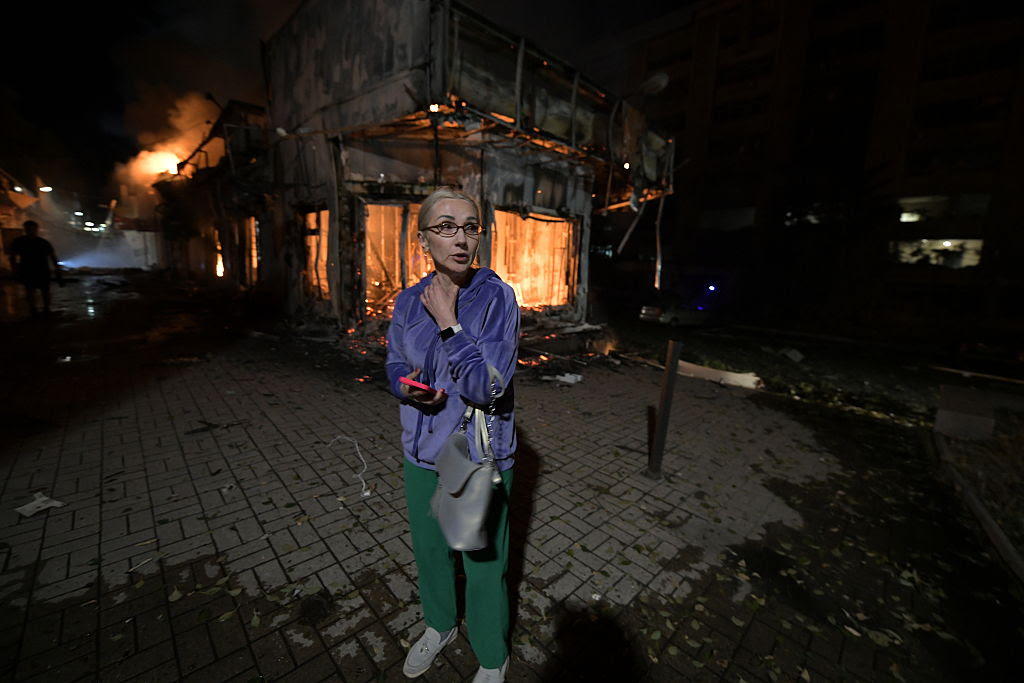
A view of a destroyed market following recent shelling in occupied Donetsk, which local Russian-installed authorities described as a Ukrainian military strike, in Donetsk, Ukraine. (Stringer/Anadolu via Getty Images)
“With Surgical Precision”: Ukraine’s 1,300-Kilometer Reach Devastates Russian Defense
Ukrainian Security Service drones executed what officials described as a masterpiece of precision warfare, striking the Kupol Electromechanical Plant in Izhevsk with devastating effect. The facility, located 1,300 kilometers from Ukrainian-held territory in Russia’s Udmurt Republic, produces Tor and Osa air defense systems alongside Garpiya attack drones—critical components of Russia’s military infrastructure.
“With surgical precision, the SBU continues to carry out strikes against Russia’s military-industrial enterprises contributing to the war effort against Ukraine,” an SBU source told the Kyiv Independent. “Each such operation weakens Russia’s offensive potential, disrupts weapons production chains, and proves that no part of Russia is a safe zone for its military infrastructure.”
The strike demonstrated Ukraine’s remarkable evolution in long-range capabilities. At least two drones penetrated Russian air defenses to hit production and storage facilities, igniting fires that forced temporary suspension of flights at Izhevsk airport. Russian officials reported casualties, including deaths and serious injuries, though specific figures remained undisclosed.
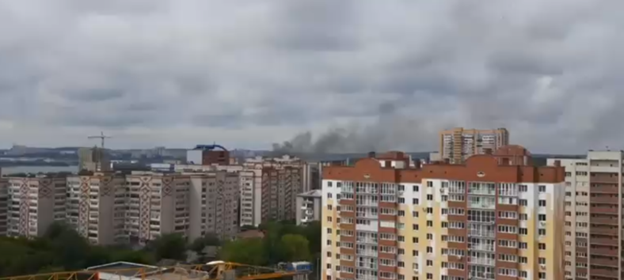
Smoke rising in the aftermath of a reported Ukrainian attack on Izhevsk, Russia. (Social media, SBU source)
The operation’s significance extended beyond immediate damage. Targeting a facility under international sanctions for its role in Russia’s defense-industrial complex sent a clear message that Ukraine could reach any corner of Russian territory supporting the war effort. The fact that no air raid sirens sounded before the attack, combined with mobile internet outages that prevented emergency communications, revealed critical vulnerabilities in Russia’s homeland defense.
The Coordinated Campaign: Multiple Russian Targets Under Fire
The Izhevsk strike formed part of a coordinated Ukrainian operation targeting Russian military infrastructure across vast distances. Ukraine’s General Staff announced successful strikes on the Saratovorgsintez oil refinery in Saratov Oblast—nearly 1,500 kilometers from Ukraine’s border—a facility owned by Russian energy giant Lukoil that supplies fuel to military units involved in the aggression.
“The occupiers use the capacity of this refinery to supply fuel and lubricants to Russian military units involved in the armed aggression against Ukraine,” the General Staff declared. The joint operation, carried out by military intelligence (HUR) and other units, caused fires and confirmed damage to technological installations.
Simultaneously, Ukrainian intelligence drones destroyed high-value targets in occupied Crimea, including a Pantsir-S1 air defense system with its crew, several radars, and an Su-30 aircraft at an airfield near Saky. The coordinated strikes across such vast distances—from Crimea to the Urals—demonstrated Ukraine’s sophisticated operational planning and growing confidence in its long-range capabilities.
The day’s operations followed Ukraine’s June 1 “Operation Spiderweb,” which had targeted four Russian air bases and damaged 34% of Russia’s cruise missile bombers. The pattern of sustained, coordinated strikes deep into Russian territory marked a strategic shift in Ukraine’s approach to the conflict.
Tragedy in Dnipropetrovsk: A Rising Commander Cut Down
The day’s military successes came at a heartbreaking cost with the death of Colonel Serhii Zakharevych, commander of the 110th Separate Mechanized Brigade, in a Russian missile strike on Huliaipole, Dnipropetrovsk Oblast. The attack, which occurred in the morning hours, also injured 30 people in the small village located roughly 70 kilometers from the front line.
“Our army has lost another representative of a new generation of Ukrainian officers who grew up in combat and became models of courage and proactive military leadership,” the General Staff announced. Zakharevych embodied the transformation of Ukraine’s military leadership during the war—a graduate of the Odesa Institute of Ground Forces who had risen through reconnaissance and special forces commands before taking charge of the 110th Brigade in February 2025.
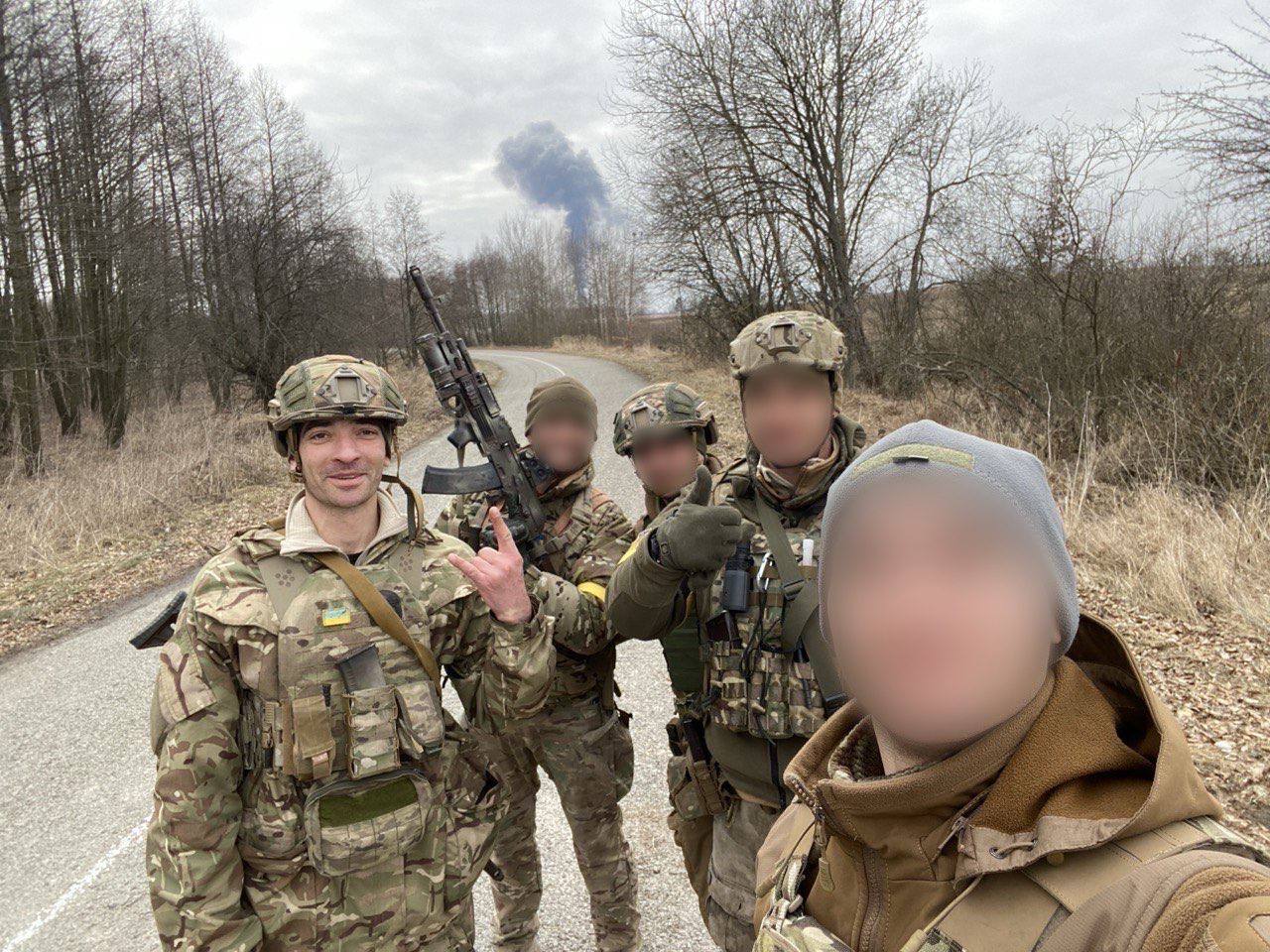
The commander of the 110th Separate Mechanized Brigade, Serhii Zakharevych, who was killed in the Russian missile strike on the village of Huliaipole in Dnipropetrovsk Oblast. (Ukraine’s Special Forces)
President Volodymyr Zelensky’s promise that “we will definitely respond to the Russians for this attack” reflected both personal loss and strategic calculation. The targeting of brigade commanders represented Russia’s deliberate effort to decapitate Ukraine’s emerging military leadership—officers who had proven their effectiveness in combat and represented the future of Ukrainian defense capabilities.
The loss highlighted a cruel irony: as Ukraine demonstrated its ability to strike deep into Russia, Russian forces continued targeting Ukrainian leadership and civilian populations with impunity. The attack on an evacuation vehicle in the same region, which killed a wounded civilian despite police efforts to save lives, underscored Russia’s systematic campaign against non-combatants.
Pentagon Pause: America’s Weapons Pipeline Disrupted
The Pentagon’s decision to halt shipments of air defense missiles and other weapons to Ukraine due to stockpile concerns revealed deep fissures in Western support at a critical moment. Policy chief Elbridge Colby’s review had concluded that U.S. munitions stocks required preservation, affecting deliveries of Patriot missiles, precision artillery rounds, Hellfire missiles, and F-16-compatible weapons.
The suspension came as Ukraine faced record Russian attacks—5,337 Shahed-type drones launched in June alone—making air defense capabilities more critical than ever. Among the held-back systems were precisely the Patriot missiles that President Trump had recently suggested the U.S. might provide to Ukraine, creating a stark contradiction between public statements and private policy.
“The strength of the United States Armed Forces remains unquestioned—just ask Iran,” White House Deputy Press Secretary Anna Kelly responded when questioned about the decision. The reference to Iran highlighted competing priorities as the U.S. balanced support for Ukraine against Middle Eastern commitments and domestic stockpile concerns.
Sources revealed that plans to reduce Ukrainian aid had been under consideration since March, with the administration looking to redirect artillery shells, tank shells, and air defense systems to Israel or back to Washington. The decision reflected Colby’s long-standing advocacy for reducing Ukrainian assistance to prioritize deterrence efforts in Asia.
Putin-Macron Call: Two Hours of Unchanged Positions
French President Emmanuel Macron’s decision to call Vladimir Putin for the first time since September 2022 represented a significant diplomatic gamble that yielded no meaningful progress. The two-hour conversation, followed by Macron’s “constructive” call with Zelensky, revealed the persistent gulf between diplomatic initiatives and battlefield realities.
Putin used the opportunity to repeat familiar narratives, describing the war as “a direct consequence of the policy of Western powers” that “ignored Russia’s security interests” and “created an anti-Russian bridgehead in Ukraine.” The Kremlin’s unchanged position demonstrated that tactical military pressure had not altered Moscow’s strategic objectives or negotiating stance.
Macron’s call for “a ceasefire to be established as soon as possible and for negotiations to begin” met Putin’s standard deflections about Western responsibility for the conflict. A source in Ukraine’s Presidential Office confirmed that Putin “does not show any willingness to end the war in Ukraine,” maintaining the same maximalist positions that had characterized previous diplomatic contacts.
The timing of the call—coinciding with continued Russian advances and Ukrainian counterstrike capabilities—suggested French frustration with the stalemate rather than genuine breakthrough potential. Macron’s subsequent conversation with Zelensky served to demonstrate continued French support for Ukrainian sovereignty while acknowledging the limits of diplomatic engagement with Moscow.
Russian Territorial Claims: Luhansk Oblast “Seized” Again
Russian occupation official Leonid Pasechnik’s claim that Russian forces had seized all of Luhansk Oblast for the second time during the full-scale invasion highlighted Moscow’s persistent propaganda needs versus battlefield realities. Russian milbloggers immediately contradicted Pasechnik’s assertion, noting that forces had not cleared Nadiya and Novoyehorivka, with some border areas remaining contested “gray zones.”
The false claim echoed then-Defense Minister Sergei Shoigu’s similar announcement on July 3, 2022, which proved premature when Ukrainian forces regained positions during the Fall 2022 Kharkiv counteroffensive. The Institute for the Study of War’s assessment that Russian forces controlled roughly 99% of Luhansk Oblast by late November 2024 made Pasechnik’s declaration technically possible but strategically meaningless.
The pattern of premature victory announcements reflected Russian domestic political needs rather than military reality. Seven months of struggle to capture the remaining one percent of Luhansk Oblast demonstrated the diminishing returns of Russian territorial gains and the resilience of Ukrainian defensive positions.
Motorcycle Warfare Evolution: Russia’s Tactical Adaptation
Russian military modernization efforts revealed both innovation and desperation in Moscow’s approach to battlefield mobility. The Defense Ministry’s investment in motorcycle training programs, combined with plans to purchase up to 200,000 Chinese-made motorcycles, represented a significant tactical shift driven by Ukrainian drone dominance.
Defense Minister Andrei Belousov’s orders to equip training schools with motorcycles and all-terrain vehicles reflected formal recognition of tactics that had emerged organically from battlefield necessity. The Russian military had modernized over 200 training centers to account for new tactics, including motorcycle assault techniques pioneered in the Pokrovsk direction.
However, a Russian milblogger and former Storm Z instructor complained that motorcycles remained vulnerable to Ukrainian FPV drone strikes, resulting in higher killed-to-wounded ratios than traditional assault methods. The critique highlighted the fundamental problem facing Russian forces: tactical innovation could not overcome systemic vulnerabilities to Ukrainian technological adaptation.
The motorcycle program’s scale—potentially 200,000 vehicles plus 60,000 other light vehicles—demonstrated Russian recognition that conventional armored warfare had reached diminishing returns. Yet as one analysis noted, “Russia’s rate of advance has yet to increase beyond a foot pace despite efforts to integrate faster-moving vehicles into assault tactics.”
Ukrainian Military Restructuring: Corps System and Enhanced Training
Commander-in-Chief Oleksandr Syrskyi announced significant Ukrainian military reforms designed to improve training effectiveness and force protection. The transition to a corps structure, combined with assignment of training battalions to newly created army corps, represented systematic military modernization amid ongoing combat operations.
Syrskyi’s categorical prohibition on concentrations of personnel and military equipment at training facilities reflected lessons learned from recent Russian strikes that had killed and injured numerous service members. The mandate to build protective structures at training areas while eliminating tent camps showed adaptive responses to evolving threat patterns.
“My categorical order is to ensure and increase the safety of service members at training centers and training grounds,” Syrskyi declared. “The concentration of personnel and military equipment, as well as the placement of service members in tent camps, is prohibited!”
The reforms reflected broader Ukrainian military evolution throughout the conflict. Enhanced counter-drone training for all personnel acknowledged the ubiquitous threat posed by Russian strike drones, while the corps structure promised improved command efficiency and operational coordination.
China’s Supply Chain: 80% of Russian Weapons Components Flow Through Beijing
EU special envoy on sanctions enforcement David O’Sullivan revealed the stark reality of Chinese complicity in Russia’s war machine, estimating that 80% of components used in Russian weapons production come via China. Speaking at the ‘Fair Play’ conference in Kyiv, O’Sullivan described this as “the biggest challenge for the EU’s sanctions policy.”
The revelation highlighted the systematic nature of sanctions evasion despite European efforts to control dual-use technology exports. O’Sullivan reported frustrating negotiations with Chinese leadership, including European Commission President Ursula von der Leyen and French President Emmanuel Macron, where Beijing consistently claimed ignorance of weapons component transfers.
Similar patterns emerged across Southeast Asia, where subsidiaries of European firms often facilitated transfers through Malaysia, Thailand, and Singapore. “None of the European companies, and likely none in the U.S., want to trade in goods that ultimately are used in manufacturing Russian weapons,” O’Sullivan explained, but maintaining complete supply chain control proved nearly impossible.
The sanctions enforcement official cited limited successes, including an Indian company that ceased Russian deliveries only after facing U.S. sanctions. However, the scale of the challenge remained enormous as seemingly innocuous products—optical readers, integrated circuits, microchips, and flash memory cards—found their way into Russian weapons systems.
North Korea’s Strategic Gain: Pantsir Systems Defend Pyongyang
Ukrainian military intelligence chief Kyrilo Budanov revealed that North Korea had begun using Russian Pantsir S-1 air defense systems to protect Pyongyang, marking a significant technology transfer in the expanding Moscow-Pyongyang alliance. The $15 million systems represented sophisticated capabilities previously unavailable to North Korean forces.
“I can tell you that, for example, the first Pantsir S-1 installations have already appeared in Pyongyang,” Budanov told Hromadske Radio. “They are already on combat duty there, guarding their capital. And the Russians are retraining Korean personnel, and soon the Koreans will be working autonomously on this technology.”
The technology transfer formed part of broader North Korean gains from the partnership, including “real combat experience” from personnel fighting alongside Russian troops against Ukraine. Budanov predicted “a significant increase” in North Korean citizens in Russia, with some signing up for the Russian military to obscure official personnel transfers.
The development coincided with Kim Jong Un’s public ceremony honoring North Korean soldiers killed fighting for Russia in Ukraine. State media footage showed an emotional Kim placing flags over coffins while Russian Culture Minister Olga Lyubimova attended, demonstrating the alliance’s deepening military cooperation.
Tragic Violence in Diaspora: Ukrainian Family Murdered in Germany
German authorities discovered the bodies of a 32-year-old Ukrainian woman and her 1-year-old daughter near their home in Dorsten, North Rhine-Westphalia, victims of violent deaths confirmed by autopsy results. A 16-year-old Ukrainian boy residing in the same city appeared at the crime scene and admitted involvement in the killings.
The murders highlighted the psychological toll of displacement on Ukrainian refugee communities. The relationship between the teenage suspect and victims remained under investigation, while Ukraine’s Consulate in Dusseldorf worked to contact relatives and provide support for affected families.
The incident followed a similar tragedy in Belgium, where a 46-year-old Ukrainian woman and her 6-year-old daughter were found murdered in Leuven, with the woman’s 16-year-old son confessing to the crimes after setting their home on fire. The pattern of familial violence within the Ukrainian diaspora suggested deeper trauma requiring systematic support.
German authorities collected evidence and analyzed public tips while maintaining special supervision through Ukrainian diplomatic missions. The crimes underscored how war’s psychological damage extended far beyond Ukraine’s borders, affecting vulnerable displaced populations across Europe.
IMF Confidence: $500 Million Tranche Reflects Economic Resilience
Ukraine received approximately $500 million from the International Monetary Fund as the ninth tranche under the Extended Fund Facility program, bringing total EFF disbursements to $10.6 billion since 2023. The payment reflected continued confidence in Ukrainian economic management despite wartime pressures.
Finance Minister Serhii Marchenko noted that total IMF assistance during the full-scale war had reached $13.3 billion, providing crucial budget support for government operations. The IMF confirmed Ukraine had met all quantitative performance criteria through March 2025, including submission of detailed State Customs Service reform plans.
However, the international body maintained pressure for continued anti-corruption reforms, including appointing a new Economic Security Bureau head and strengthening money laundering regulations. The IMF kept its 2025 growth forecast at 2-3% while warning of persistent inflationary pressures requiring tight monetary policy.
“The economy has remained resilient, but the war is weighing on the outlook, with growth tempered by labor market strains and damage to energy infrastructure,” stated First Deputy Managing Director Gita Gopinath. The assessment reflected Ukraine’s remarkable economic adaptation while acknowledging continued vulnerabilities.
Trump’s Watchful Eye: 50,000 Russian Troops Near Sumy
President Donald Trump confirmed he was “closely” monitoring the massing of Russian forces near Ukraine’s northeastern city of Sumy, where Moscow had assembled approximately 50,000 troops—equivalent to one-third of forces deployed at the 2022 invasion’s onset. The buildup represented Russia’s continued pressure despite Ukrainian defensive successes.
“We’ll see what happens. I’m watching it very closely,” Trump responded when asked about potential Russian offensive operations. The measured response reflected ongoing U.S. diplomatic efforts to secure ceasefire agreements while avoiding escalatory rhetoric that might derail negotiations.
Wall Street Journal reporting indicated Russian troops had advanced within 19 kilometers of Sumy after pushing most Ukrainian forces from Kursk Oblast. However, Ukrainian Commander-in-Chief Oleksandr Syrskyi had claimed the “Russian advance in the Sumy border zone has been stopped” with the front line stabilized.
The contradiction between U.S. intelligence assessments and Ukrainian official statements highlighted information warfare dimensions of the conflict. Trump’s attention to the Sumy situation suggested American concern about potential Russian breakthrough attempts while maintaining diplomatic engagement with Moscow.
Congressional Bipartisan Action: Ukrainian Children Resolution
A bipartisan Congressional resolution demanding the return of abducted Ukrainian children before any peace agreement demonstrated sustained American legislative support despite executive branch policy shifts. Representatives Michael McCaul and Gregory Meeks led the House resolution while Senators Chuck Grassley and Amy Klobuchar introduced companion Senate legislation.
“These children have been stripped of their national identity, adopted into Russian families, or indoctrinated as soldiers for the Kremlin,” McCaul declared. “Russia’s mass-scale child abduction is nothing short of evil; the United States must demonstrate moral leadership by demanding every child be returned to his or her family in Ukraine before true peace can be achieved.”
With Ukraine estimating 19,500 abducted children and some assessments reaching 200,000, the resolution condemned actions meeting UN genocide definitions. Only 1,274 children had been returned despite international efforts, highlighting the systematic nature of Russian deportation policies.
The resolution’s timing coincided with Trump administration defunding of Yale University’s Ukraine Conflict Observatory, which had tracked child abductions since May 2022. The contrast between legislative support and executive reluctance reflected broader tensions in American Ukraine policy approach.
Canada’s Financial Commitment: G7 ERA Delivers Results
Canada transferred CAD 2.3 billion (nearly $1.7 billion) to Ukraine under the G7 Extraordinary Revenue Acceleration initiative, demonstrating continued Western financial support despite political uncertainties. The funding, backed by proceeds from frozen Russian assets, provided direct state budget support.
Finance Minister Sergii Marchenko emphasized that CAD 4.8 billion ($3.5 billion) of Canada’s total CAD 5.0 billion commitment had already reached Ukraine’s State Budget. “We continue to work closely with our international partners to implement a mechanism that holds Russia financially accountable for its crimes in Ukraine,” Marchenko stated.
The transfer represented creative financial mechanisms circumventing traditional aid processes. Total G7 ERA commitments reached €45 billion ($50 billion), with $40 billion already disbursed through various national contributions. The program’s success demonstrated international resolve to use Russian assets for Ukrainian reconstruction.
Ottawa Treaty Withdrawal: Ukraine Seeks Anti-Personnel Mine Option
President Zelensky’s request to withdraw from the 1997 Ottawa Treaty banning anti-personnel landmines reflected battlefield realities where defensive mining had proven crucial against Russian infantry assaults. The decision aligned with similar actions by Finland, Baltic states, and Poland—countries facing direct Russian threats.
“Russia has never been a party to this treaty and uses anti-personnel mines with extreme cynicism,” Zelensky explained, justifying the withdrawal based on asymmetric compliance. International observers criticized the move, with Human Rights Watch warning about “flagrant violations of long-standing prohibitions.”
Lawmaker Roman Kostenko, who had advocated withdrawal for six months, emphasized solidarity with Eastern European countries understanding Russian threats. The decision would enable official anti-personnel mine production and acquisition from non-signatory countries like the United States.
Military experts described anti-personnel mines as “purely defensive weapons” critically necessary for outnumbered Ukrainian forces. The weapons had proven effective in areas like southern Donetsk Oblast, where Russian massive troop deployments struggled against well-mined defensive positions.
German Taurus Deliberations: Chancellor Merz Maintains Ambiguity
Chancellor Friedrich Merz confirmed that Taurus cruise missile deliveries remained “within the realm of possibility” while emphasizing training complexity and operational security concerns. The 500-kilometer range missiles could significantly enhance Ukrainian strike capabilities against Russian targets.
“The problem for us is that this system is extremely complex, and training soldiers on it takes at least six months,” Merz explained to Tagesschau. “Are they already being trained? We haven’t agreed on that yet.” The extended training requirements contrasted with immediate battlefield needs for long-range precision strikes.
Merz’s decision to withhold public details about military support reflected growing concern about Russian intelligence gathering. Germany’s position as Ukraine’s second-largest country donor—providing approximately €47.8 billion in total bilateral support—gave weight to decisions about advanced weapons systems.
Russian Aviation Losses: Su-34 Crash Claims Pilot’s Life
A Russian Su-34 fighter jet crashed during a training exercise in Nizhny Novgorod Oblast, killing one pilot despite successful ejection from the aircraft. The incident highlighted continued deterioration of Russian aviation safety amid Western sanctions and increased operational tempo.
Russian Defense Ministry reports indicated landing gear malfunction as the crash cause, with crew making multiple unsuccessful attempts to resolve the problem in flight. One pilot died after landing on a tree during ejection, with medics unable to save him despite emergency response efforts.
The loss represented another addition to mounting Russian aviation casualties throughout the conflict. U.K. intelligence assessments indicated Russia had lost over 30 Su-34 aircraft since the full-scale invasion began, reflecting both combat losses and mechanical failures.
Plane and helicopter crashes had become increasingly common in Russia since Western sanctions limited access to replacement parts and maintenance equipment. The pattern suggested systemic degradation of Russian aviation capabilities extending beyond frontline combat losses.
The Su-34, a Soviet-era medium-range fighter-bomber, formed a crucial component of Russian tactical aviation despite aging systems and maintenance challenges. Training accidents during wartime reflected pressures on pilot preparation and aircraft readiness amid sustained combat operations.
Oreshnik Deployment: Belarus Accepts Russian Strategic Weapons
Belarusian dictator Alexander Lukashenko’s announcement that Oreshnik missile systems would deploy to Belarus by year’s end represented another escalation in regional tensions. The experimental missiles, first used against Dnipro in November, would provide Russia with additional strategic strike capabilities against European targets.
“The first Oreshnik positions will be in Belarus,” Lukashenko declared during Independence Day ceremonies. “You’ve seen how Oreshnik works: the same missiles, the same strikes—but without nuclear warheads, without radioactive contamination of the land and air.”
The deployment served multiple Russian purposes: extending strike ranges against NATO territory, demonstrating alliance solidarity with Belarus, and providing psychological pressure against Western support for Ukraine. Lukashenko’s claim that hosting such weapons would not make Belarus a target contradicted fundamental strategic logic while serving Moscow’s narratives.
Russian-Azerbaijani Relations: Deterioration Accelerates
Russian Foreign Ministry protests against Azerbaijan’s “unfriendly actions” reflected broader challenges to Moscow’s influence in former Soviet territories. The detention of ethnic Azerbaijanis in Yekaterinburg had triggered Azerbaijani cancellation of Russian cultural events and official visits, demonstrating growing regional assertiveness.
President Zelensky’s phone call with Azerbaijani President Ilham Aliyev about the detentions highlighted Ukraine’s diplomatic efforts to capitalize on Russian relationship deterioration. The development reflected broader patterns of reduced Russian influence as military resources remained tied down in Ukraine.
The deterioration traced to Russia’s December 2024 downing of an Azerbaijan Airlines passenger plane—an incident for which Moscow refused to accept full responsibility. The pattern revealed how Russian military preoccupation in Ukraine created opportunities for neighboring states to assert greater independence.
Economic Resilience: Ukraine’s Energy Exports Surge
Ukraine’s 150% increase in electricity exports during June demonstrated remarkable recovery of energy infrastructure despite continued Russian attacks. The 237,000 megawatt-hours exported marked Ukraine’s return to net energy exporter status for the first time since October 2023.
Hungary’s decision to import 122,000 MWh—up from 34,000 MWh in May—reflected both Ukrainian generation capacity and European energy cooperation. The dramatic turnaround from June 2024, when Ukraine had no exports and imported 858,000 MWh, illustrated the resilience of Ukrainian energy systems.
The recovery occurred despite continued Russian targeting of energy infrastructure, including the June 27 strike on a critical facility in Kherson Oblast that caused widespread blackouts. The ability to export electricity while under systematic attack demonstrated both Ukrainian technical capabilities and strategic adaptation.
International Justice: Special Tribunal Ratification
President Zelensky’s ratification of the Special Tribunal for the Crime of Aggression against Ukraine marked a historic step toward accountability for Russian leadership. The tribunal, established through agreement with the Council of Europe, would specifically target Russia’s top political and military officials for the crime of aggression.
“Already this year, Russia must begin to feel that accountability for the crime of aggression is inevitable,” Zelensky declared. The tribunal designed to close legal gaps preventing the International Criminal Court from prosecuting Russia for aggression while complementing existing ICC arrest warrants for war crimes.
The ratification reflected sustained international pressure for accountability despite diplomatic stalemates. Ukrainian parliamentary approval would enable the tribunal to begin operations, providing a legal framework for prosecuting Russian leadership even if immediate enforcement remained challenging.
Congressional Action: Ukrainian Children Resolution
A bipartisan U.S. Congressional resolution demanding the return of abducted Ukrainian children before any peace agreement demonstrated continued American legislative support despite executive branch hesitation. The resolution, led by Representatives Michael McCaul and Gregory Meeks, condemned Russia’s “mass-scale child abduction” as “nothing short of evil.”
With Ukraine estimating 19,500 abducted children and some assessments reaching 200,000, the issue represented one of the war’s most heinous aspects. Only 1,274 children had been returned as of April, highlighting the scale of the humanitarian catastrophe.
The resolution’s timing coincided with the Trump administration’s defunding of Yale University’s Ukraine Conflict Observatory, which tracked child abductions. The contrast between legislative support and executive reluctance reflected broader tensions in American Ukraine policy.
Looking Forward: Precision Meets Uncertainty
As July opened, Ukraine demonstrated remarkable capabilities in precision strike operations while confronting growing uncertainties in international support. The day’s events revealed a conflict increasingly defined by technological innovation and strategic adaptation rather than traditional territorial exchanges.
Ukraine’s ability to coordinate strikes across thousands of kilometers—from Crimea to the Urals—represented a quantum leap in operational capabilities. However, these successes occurred against a backdrop of reduced Western weapons shipments, diplomatic stalemates, and continued Russian territorial gains in eastern Ukraine.
The loss of commanders like Zakharevych highlighted the human cost of Ukrainian resistance even as strategic capabilities expanded. The contrast between tactical victories and strategic challenges suggested that July would test Ukraine’s ability to sustain operations while managing diminishing international support.
Most critically, the day’s events demonstrated that neither side had achieved decisive advantage despite nearly three years of conflict. Ukraine’s expanding strike capabilities had not altered Russian maximalist objectives, while Russian territorial gains had not broken Ukrainian resistance or Western resolve.
The path forward seemed likely to test whether Ukrainian tactical innovation could overcome strategic pressures, whether Western support would stabilize at sustainable levels, and whether diplomatic initiatives could bridge the gap between current positions and acceptable outcomes. The opening of July suggested these questions would remain unresolved for the foreseeable future.