
As Washington halts critical weapons deliveries, Russia welcomes the news while Ukrainian forces advance in Sumy Oblast and repel claims of breakthrough into Dnipropetrovsk. North Korea prepares to triple its military support for Moscow.
Summary of the Day – July 2, 2025
The most consequential decision affecting Ukraine’s war effort in months emerged not from the battlefield but from Pentagon conference rooms, as the United States suspended shipments of critical air defense missiles and precision weapons to Ukraine amid concerns over dwindling American stockpiles. The halt includes dozens of Patriot interceptors, thousands of artillery shells, and over 250 GMLRS rockets—precisely the weapons Ukraine needs most as Russia intensifies its aerial campaign. Moscow’s immediate celebration of the decision underscored the strategic gift handed to the Kremlin, even as Ukrainian forces demonstrated their resilience by advancing in northern Sumy Oblast and denying Russian claims of breakthrough into Dnipropetrovsk Oblast. Meanwhile, intelligence emerged that North Korea is preparing to send up to 30,000 additional troops to aid Russia’s war effort, nearly tripling its military commitment.

A portrait of fallen U.S. volunteer fighters and flags among Ukrainian ones at a makeshift memorial to Ukrainian servicemen and international volunteers killed in action on Independence Square in central Kyiv. The White House announced on July 1, it was halting air defene shipments to Ukraine. (Genya Savilov/AFP via Getty Images)
Washington’s Strategic Retreat: The Arsenal Doors Close
The Pentagon’s decision to pause weapons deliveries to Ukraine represents the most significant American policy shift since President Donald Trump took office in January. Defense policy chief Elbridge Colby ordered the suspension in June following a comprehensive review of U.S. munitions stockpiles, according to sources familiar with the matter. The halt affects dozens of PAC-3 interceptors for Patriot air defense systems, over two dozen Stinger man-portable systems, thousands of 155mm high-explosive howitzer rounds, more than 100 Hellfire missiles, over 250 Guided Multiple Launch Rocket System rockets, and dozens of AIM air-to-air missiles crucial for Ukraine’s F-16 operations.
The timing could not be more devastating for Ukraine’s defense. June 2025 saw Russia launch a record 5,337 Shahed-type drones against Ukrainian targets—the highest monthly total since the full-scale invasion began. The weapons being withheld were already staged in Poland, ready for immediate delivery to Ukrainian forces desperately conserving their remaining interceptors.
White House Deputy Press Secretary Anna Kelly confirmed the decision was “made to put America’s interests first following a Defense Department review of global military assistance.” The statement’s pointed reference to Iran—”The strength of the United States Armed Forces remains unquestioned—just ask Iran”—highlighted the administration’s priorities in an increasingly multipolar conflict environment.
Ukrainian Deputy Prime Minister Oleksii Chernyshov, himself embroiled in corruption charges that saw him pay a record 120 million hryvnia bail to remain in office, found his ministry’s work overshadowed by the more pressing crisis of American weapons shortages. The timing of both crises illustrated Ukraine’s dual challenges: maintaining international support while addressing internal governance issues.
Moscow’s Celebration: The Kremlin Sees Victory in American Retreat
Kremlin spokesperson Dmitry Peskov could barely contain his satisfaction when responding to news of the American weapons suspension. “The fewer weapons that are supplied to Ukraine, the closer the end of the special military operation,” he declared, using Russia’s preferred euphemism for its invasion. The comment revealed how Moscow views American military assistance as the primary obstacle to achieving its war aims through attrition.
Russian Direct Investment Fund CEO Kirill Dmitriev, heavily involved in diplomatic efforts with the United States, seized on the suspension to question “the West’s ability to continue supporting Ukraine.” State Duma Defense Committee Deputy Chairman Dmitry Zhuravlev suggested the halt would degrade Ukraine’s ability to “hold out” against Russian offensive operations, while claiming the United States would not be able to “hide” future arms deliveries from Russia.
The Kremlin’s messaging revealed a sophisticated understanding of Western decision-making processes. Putin’s theory of victory—articulated in June 2024 and consistently emphasized since—assumes Russia can outlast Western security assistance through gradual, creeping advances. The American aid suspension validates this strategy, demonstrating that Moscow’s patience and willingness to absorb massive casualties can eventually wear down international resolve.
Putin himself used a phone call with French President Emmanuel Macron—their first conversation in nearly three years—to reiterate boilerplate narratives aimed at discouraging Western military assistance. The timing of the call, coinciding with the American aid suspension, suggested coordination in Russia’s diplomatic pressure campaign.
Ukraine’s Defiant Response: Advances Amid Adversity
Despite the looming weapons shortage, Ukrainian forces demonstrated their tactical resilience with confirmed advances in northern Sumy Oblast. Geolocated footage published on June 29 showed Ukrainian troops advancing west of Andriivka, north of Sumy City, pushing back Russian positions along the international border. The advance came as Russian forces continued attacks throughout the Sumy Oblast border area, employing elements of the 76th Airborne Division and multiple specialized brigades.
Ukrainian forces also struck deep into Russian territory, hitting the Saratovorgsintez oil refinery in Saratov Oblast with drones, causing significant fires and damaging technological installations crucial for Russian military fuel production. The plant, located over 1,300 kilometers from the front line, produces fuel and lubricants specifically for Russian armed forces, making it a high-value strategic target.
The successful strikes demonstrated Ukraine’s growing long-range capabilities even as questions mounted about future weapons supplies. Ukrainian drone operators have become increasingly sophisticated in their targeting, focusing on critical infrastructure that supports Russia’s war machine rather than purely symbolic targets.
Ukrainian Foreign Ministry summoned U.S. Chargé d’Affaires John Ginkel to emphasize the “critical importance” of continued American military support. Deputy Foreign Minister Mariana Betsa warned that “any delay or hesitation in supporting Ukraine’s defense capabilities will only encourage Russia to continue war and terror, rather than pursue peace.”
The Dnipropetrovsk Deception: Russian Propaganda Meets Ukrainian Reality
Russian forces attempted another propaganda victory by claiming breakthrough into Dnipropetrovsk Oblast, but Ukrainian military officials quickly exposed the deception. According to the General Staff, a small Russian reconnaissance group managed to briefly enter the village of Dachne on the edge of Dnipropetrovsk Oblast, took photographs with a Russian flag, but was subsequently “eliminated” by Ukrainian forces.
The incident echoed a similar propaganda attempt in May when Russian sources circulated fabricated photos purporting to show their troops at the Dnipropetrovsk border near Novomykolaivka. Ukrainian officials, including Governor Serhii Lysak, dismissed those images as staged propaganda, with monitoring group DeepState confirming the photos were taken in Donetsk Oblast using abandoned Ukrainian equipment.
Two Russian soldiers captured during a subsequent assault on Dachne provided tangible evidence of Moscow’s continued failures to achieve meaningful territorial gains. The prisoners, detained by Ukrainian Marines, were added to “Ukraine’s prisoner exchange pool”—a reminder that Russia’s much-vaunted offensive operations often result in tactical defeats despite propaganda claims.
The repeated attempts to fabricate breakthroughs into Dnipropetrovsk Oblast reflect Russian desperation to demonstrate progress toward their strategic objective of creating a “buffer zone” on Ukrainian territory. Kremlin spokesperson Peskov had claimed in June that Russian operations in Dnipropetrovsk were part of this buffer zone strategy, but the reality on the ground shows continued Ukrainian control.
The Korean Escalation: Pyongyang Triples Its Commitment
Intelligence assessments revealed North Korea’s plan to send an additional 25,000 to 30,000 soldiers to aid Russian forces—nearly tripling its military commitment from the initial 11,000 troops deployed in fall 2024. The fresh units are expected to arrive in coming months and engage in combat operations in Russian-occupied Ukrainian territories, including during “large-scale offensive operations.”
The expansion represents a significant escalation in North Korea’s involvement, with satellite imagery showing continued activity at transportation hubs used for troop movements. Russian military aircraft are being refitted to transport North Korean personnel across Siberia, while vessels similar to those used in last year’s deployment have been spotted at Russian Far East ports.
Ukrainian military intelligence noted that North Korean casualties from the initial deployment reached between 4,000 and 6,000 troops, suggesting Moscow’s urgent need for replacement forces. The willingness to accept such losses while demanding reinforcements indicates the intensity of fighting in areas where North Korean units are deployed, particularly in Kursk Oblast.
The deepening military partnership between Moscow and Pyongyang, formalized through their Comprehensive Strategic Partnership Agreement, provides both countries with strategic benefits. North Korea gains military technology and resources, while Russia secures a reliable source of manpower and artillery ammunition for its protracted war effort.
European Alarm: Allies Scramble for Clarification
European partners found themselves caught off guard by the American aid suspension, with Bloomberg reporting urgent requests for clarification from key allies. The timing particularly concerned European officials as Ukraine faces one of the most intense waves of Russian missile and drone attacks since the war began.
NATO Secretary General Mark Rutte attempted to balance understanding for American stockpile concerns with Ukraine’s urgent needs. “I totally understand that the U.S. always has to make sure its interests are covered,” he told Fox News. “When it comes to Ukraine, in the short term, Ukraine cannot do without all the support it can get.”
Some European allies hope the Trump administration will soften or reverse the decision, but the broader implications suggest a fundamental shift in American priorities. The administration has not approved any new military aid packages since January, and Defense Secretary Pete Hegseth has signaled future budgets will reduce assistance to Ukraine.
The European response highlighted the continent’s continued dependence on American military production capacity, particularly for sophisticated air defense systems. While Europe produces alternative systems, none match the effectiveness or scale of American Patriot missiles in countering Russian ballistic missile threats.
The Air Defense Crisis: Civilians Bear the Cost
The suspension of Patriot interceptor deliveries carries devastating implications for Ukrainian civilian protection. A deputy commander coordinating mobile air defense groups in Kyiv Oblast told the Kyiv Independent that “cutting off delivery of missiles for Patriot anti-air systems will mean a weaker air defense system over the country, and as a result, destruction of civilian infrastructure and major casualties among civilians.”
Russia has increasingly targeted densely populated cities with cluster munitions and sophisticated missile combinations designed to overwhelm Ukrainian air defenses. Recent attacks on Kyiv, Kryvyi Rih, and Sumy demonstrated Moscow’s tactical adaptation to inflict maximum civilian casualties while depleting Ukraine’s interceptor stocks.
The halt in deliveries forces Ukraine to make impossible choices about which cities and infrastructure to protect. Previous U.S. aid suspensions allowed Russia to conduct large-scale combined strikes specifically designed to exhaust Ukraine’s degraded air defense umbrella, a pattern likely to repeat as interceptor supplies dwindle.
Ukrainian forces already husband critical materiel, including air defense interceptors, GMLRS rockets, and artillery shells, during previous aid suspensions. Only the United States can provide certain weapons systems at the scale and speed Ukraine requires, making European alternatives insufficient for immediate needs.
The Battlefield Reality: Grinding Advances Continue
Despite weapons shortages, fighting continued across multiple fronts with mixed results for both sides. Russian forces made limited advances near Toretsk, with geolocated footage showing marginal progress north of the city. The advances came amid intense fighting as Russian units adapted tactics to use underground infrastructure, including sewage pipes, to accumulate personnel and supplies for assaults.
In the Pokrovsk direction, Russian forces maintained offensive operations but failed to achieve confirmed advances despite claims of progress near multiple settlements. Ukrainian commanders reported Russian adaptation to summer conditions, using foliage for concealment while deploying smaller fire teams on motorcycles and bicycles due to terrain constraints.
The Novopavlivka direction saw confirmed Russian advances east of Piddubne, with geolocated footage documenting tactical gains. However, Ukrainian officials reported that Russian forces had not consolidated positions in contested areas, suggesting continued instability along the front line.
Ukrainian forces demonstrated resilience across all sectors, conducting effective counterattacks and maintaining defensive positions despite material constraints. The deputy commander of a battalion operating in the Novopavlivka direction reported that Russian forces attack on flanks due to lack of cover in main directions, indicating continued Ukrainian control of key terrain.
The North Korean Naval Experiment: Moscow’s Maritime Failures
Military intelligence chief Kyrylo Budanov revealed unsuccessful Russian attempts to develop naval drones, with experimental models detonating before reaching Ukrainian territorial waters in early June. The failed operation targeted the port city of Yuzhne but demonstrated Russia’s continued inability to match Ukraine’s maritime drone capabilities.
Ukraine’s domestically developed Magura naval drones have proven devastatingly effective against Russian naval assets, including the unprecedented downing of two Russian Su-30 fighter jets using naval drones equipped with air-to-air missiles in May. The success of Ukrainian maritime operations has kept much of Russia’s Black Sea Fleet pinned in port, unable to operate freely in the western Black Sea.
Budanov also disclosed that Russia has enhanced Shahed drone capabilities by improving CRPA antenna systems, making them more resistant to GPS jamming. The 16-channel antennas are now produced in Russia by an engineer who formerly worked in Ukraine, highlighting the complex technological competition underlying the drone war.
The revelation that Russia can launch up to 500 Shahed drones in a single attack, though not sustainably on a daily basis, underscored the scale of the threat Ukrainian air defenses face. Recent attacks approaching this maximum demonstrate Moscow’s commitment to overwhelming Ukrainian defensive systems through sheer volume.
The Parliamentary Standoff: Chernyshov Survives Corruption Charges
Deputy Prime Minister Oleksii Chernyshov retained his position after paying a record 120 million hryvnia bail in a major corruption case, despite prosecution motions for his removal. The High Anti-Corruption Court’s decision to allow Chernyshov to remain in office while facing charges related to a “large-scale” illegal land grab raised concerns about potential influence on judicial proceedings.
The case represents the highest-ranking official in Ukrainian history to face such charges while in office, attracting significant attention as a test of Ukraine’s commitment to combating corruption during wartime. Chernyshov, considered a close ally of President Zelensky, faces allegations of undervaluing land plots to benefit developers in exchange for kickbacks totaling over 14.5 million hryvnia.
The National Anti-Corruption Bureau investigation suggests systematic corruption during Chernyshov’s tenure as communities and territories minister from 2020-2022, with actions allegedly costing Ukraine over 1 billion hryvnia. The timing of the charges, amid growing pressure on Ukraine to demonstrate governance reforms, highlighted ongoing challenges in balancing wartime priorities with anti-corruption efforts.
Several MPs speculated about dismantling Chernyshov’s National Unity Ministry, created in December with unclear responsibilities for strengthening diaspora ties. The ministry’s uncertain mandate and Chernyshov’s legal troubles raised questions about resource allocation during critical wartime periods.
The Energy War: Strikes Deep in Russian Territory
Ukrainian forces successfully targeted critical Russian energy infrastructure with a drone strike on the Kupol military plant in Russia’s Udmurt Republic. The facility, located over 1,300 kilometers from the front line, produces Tor and Osa air defense systems along with Harpy-type attack drones crucial to Russian defensive capabilities.
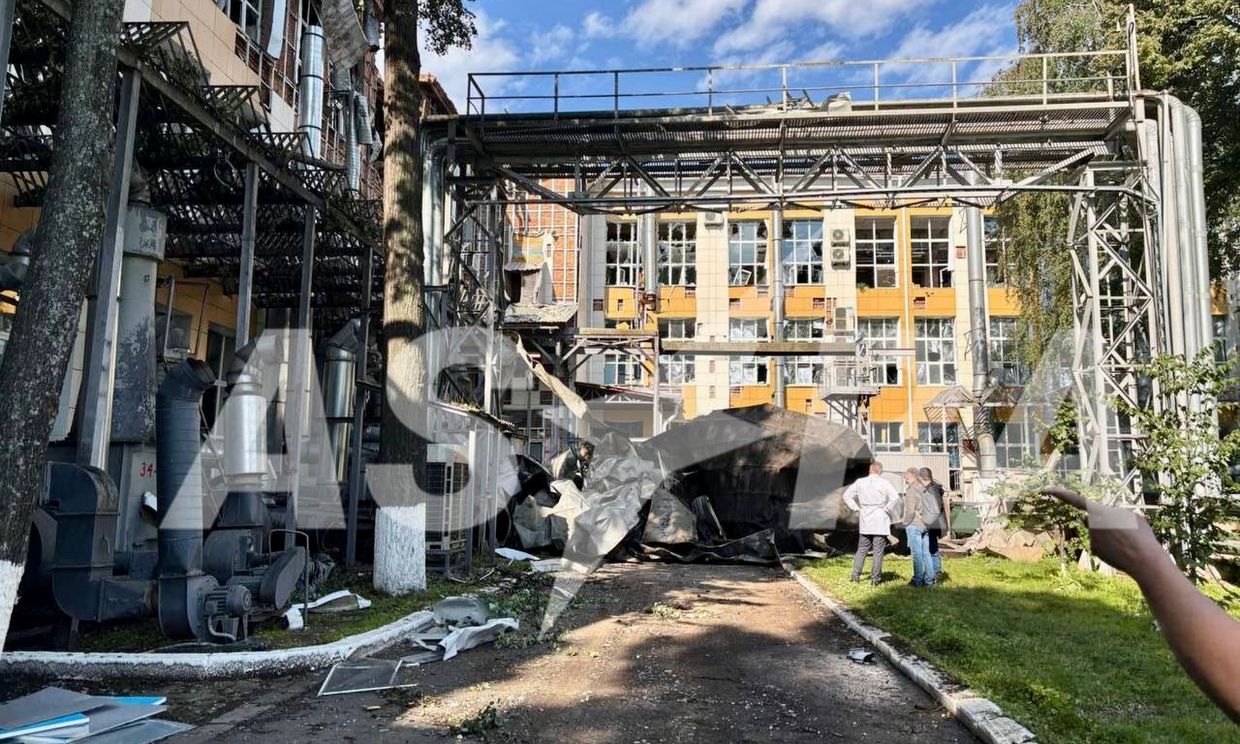
The consequences of a Ukrainian drone strike on the Kupol plant in Russia’s Udmurt Republic, published. (Astra / Telegram)
The strike caused significant damage, destroying four workshops responsible for metalworking, microchip soldering, and drone production. The resulting fire collapsed 1,300 square meters of roofing, effectively halting operations at a facility under international sanctions as part of Russia’s defense-industrial complex.
Udmurt Republic officials reported three deaths and 45 injuries from the attack, including 35 hospitalizations. The lack of air raid warnings prior to the strike highlighted vulnerabilities in Russian civilian defense systems, with residents unable to receive emergency alerts due to mobile internet outages.
The successful deep strike demonstrated Ukraine’s expanding capability to target Russian military production far from the front lines, complementing shorter-range attacks on energy infrastructure closer to the border. The plant had been previously targeted in November 2024, suggesting sustained Ukrainian focus on degrading Russian air defense production capabilities.
The Citizenship Controversy: Orthodox Church Leader Loses Status
Metropolitan Onufrii of Kyiv, primate of the Ukrainian Orthodox Church of the Moscow Patriarchate, had his Ukrainian citizenship suspended by presidential decree after the Security Service of Ukraine established he voluntarily received Russian citizenship in 2002 without informing Ukrainian authorities. The decision implemented new Ukrainian law on multiple citizenship that specifically targets Russian passport holders.
The SBU accused Onufrii of maintaining ties with the Russian Orthodox Church and actively resisting Ukraine’s efforts to secure ecclesiastical independence from Moscow. The action represented another step in Ukraine’s broader campaign to reduce Russian influence in religious institutions during wartime.
Since the full-scale invasion began, over 100 UOC-MP clergy members have faced criminal investigation for alleged collaboration with Russian forces or spreading pro-Kremlin propaganda. The church’s claims of independence from Moscow in 2022 have been viewed skeptically by Ukrainian authorities and much of the population.
The citizenship suspension highlighted ongoing tensions between Ukraine’s efforts to consolidate national identity and the complex legacy of Soviet-era institutional relationships. The timing, amid broader discussions about loyalty and collaboration, demonstrated the Ukrainian government’s commitment to addressing all forms of Russian influence.
The Diplomatic Front: Kellogg Denies Lukashenko’s Claims
U.S. Special Envoy Keith Kellogg forcefully denied Belarusian dictator Alexander Lukashenko’s claim that he agreed to “work on” halting Ukraine’s drone attacks on Russia during their June meeting in Minsk. Lukashenko had suggested Kellogg supported Russian proposals for Ukrainian concessions in exchange for ceasefire considerations.
Kellogg’s denial underscored the delicate nature of American diplomatic engagement with Russia’s allies while maintaining support for Ukraine. His clarification that discussions focused on “full and unconditional ceasefire” rather than Ukrainian operational restrictions reflected continued U.S. policy supporting Ukraine’s right to self-defense.
The exchange highlighted Belarus’s continued role as a conduit for Russian diplomatic pressure, with Lukashenko attempting to portray American flexibility where none existed. The timing of the clarification, amid broader questions about American aid commitments, demonstrated the importance of maintaining clear messaging on U.S. policy positions.
Kellogg’s June visit to Minsk marked the highest-level American engagement with Belarus since 2020, resulting in the release of opposition leader Siarhei Tsikhanouski. However, the diplomatic opening has not translated into reduced Belarusian support for Russian military operations or weakened alliance bonds.
The Recruitment Drive: Russia’s Manpower Mobilization
Russian Security Council Deputy Chairman Dmitry Medvedev announced that over 210,000 Russians signed Defense Ministry contracts from January to July 2025, with an additional 18,000 joining volunteer units. The figures reflected sustained Russian recruitment efforts despite massive casualties throughout the conflict.
Western intelligence suggests Russian forces recruit 30,000 to 45,000 new troops monthly—nearly twice Ukraine’s mobilization rate of 25,000 to 27,000 troops per month. The disparity in recruitment capabilities provides Russia with significant advantages in sustaining prolonged operations despite estimated casualties approaching one million personnel.
Putin’s decree increasing Armed Forces size to 2.38 million personnel, including 1.5 million military service members, demonstrated Moscow’s commitment to overwhelming Ukrainian forces through numerical superiority. The largest conscription drive in 14 years, targeting 160,000 men for mandatory service, supplemented contract-based recruitment efforts.
The recruitment success reflected Russian reliance on financial incentives and promises of pardons rather than patriotic motivation, suggesting vulnerabilities in sustaining long-term commitment. However, the immediate impact provides Russian commanders with continued personnel reserves for ongoing offensive operations.
Congressional Pushback: Bipartisan Opposition to Aid Halt
Republican Congressman Brian Fitzpatrick, co-chair of the Congressional Ukraine Caucus and a frequent visitor to Ukraine’s front lines, lambasted the Pentagon’s decision in strongly worded statements. “We must build up our own Defense Industrial Base here in the U.S. while simultaneously providing the needed assistance to our allies who are defending their freedom from brutal invading dictators,” Fitzpatrick declared, promising to “aggressively look into this matter” and demand accountability.
Fellow Republican Michael McCaul examined whether the Pentagon’s freeze breaches legislation on aid to Ukraine passed in 2024, calling the timing wrong as Trump seeks to bring Putin to negotiations. “If you want to get Putin to the negotiating table in good faith, you have to put leverage and pressure on him,” McCaul argued, emphasizing that weapons flow provides crucial negotiating leverage.
Democratic Senator Richard Blumenthal, a member of the Senate Armed Services Committee, warned of devastating humanitarian consequences. “More civilians are going to lose more lives, more people will be maimed and injured—more homes, hospitals, schools will be destroyed,” he said, calling the decision “fallacious and maybe even disingenuous.”
The bipartisan opposition highlighted the disconnect between Congress, which has consistently supported Ukraine aid, and the Trump administration’s more skeptical approach. Head of the Presidential Office Andriy Yermak held late-night phone calls with Representative Brian Mast, Chair of the House Committee on Foreign Affairs, illustrating Ukraine’s urgent diplomatic outreach to Capitol Hill.
The War Crimes Tally: Systematic Execution of Ukrainian POWs
Ukrainian prosecutors documented a horrifying milestone, revealing that Russian forces have summarily executed at least 273 Ukrainian prisoners of war since the full-scale invasion began. The figure, released by the Prosecutor General’s Office, represents only confirmed cases, with half recorded in 2025 alone, suggesting an acceleration in Russian war crimes.
Ombudsman Dmytro Lubinets reported another probable execution, describing a video showing a Ukrainian captive tied to a motorcycle and dragged along a road in an act of “demonstrative cruelty.” The incident added to growing evidence of systematic Russian violations of the Geneva Conventions, with intelligence agencies documenting explicit orders to kill prisoners rather than take them alive.
Seventy-seven criminal cases have been launched in connection with POW killings, though only two people have been convicted and a third faces ongoing trial. The low conviction rate reflects the challenge of prosecuting war crimes during active conflict, with most defendants tried in absentia.
The United Nations Independent International Commission of Inquiry confirmed growing numbers of incidents where Russian forces killed or maimed surrendering Ukrainian troops. Commission testimony from Russian deserters revealed instructions to “shoot prisoners on sight” rather than take them captive, indicating systematic policy rather than isolated incidents.
The rising execution toll coincided with broader Russian efforts to terrorize Ukrainian forces and undermine morale. Military intelligence separately reported over 150 confirmed executions, acknowledging the real number likely exceeds documented cases due to the challenges of gathering evidence in active combat zones.
USAID’s End: America’s Development Agency Shuttered
The Trump administration officially terminated USAID operations on July 1, ending the agency’s six-decade mission and transferring remaining programs to State Department control. Secretary of State Marco Rubio announced the closure as part of broader efforts to align foreign assistance with “America First” policies, criticizing USAID for creating a “globe-spanning NGO industrial complex.”
The decision affects billions in humanitarian and development aid worldwide, with potential consequences extending far beyond Ukraine. Research by The Lancet estimated USAID funding cuts could result in 14 million deaths by 2030, including 4.5 million children younger than five, highlighting the global stakes of American policy shifts.
Since Russia’s full-scale invasion, USAID provided $2.6 billion in humanitarian aid to Ukraine, $5 billion in development assistance, and over $30 billion in direct budget support. The agency’s termination raises questions about sustaining non-military assistance even as weapons deliveries face suspension.
Rubio’s justification—that USAID “had decades and a near-infinite taxpayer budget” with “little to show since the end of the Cold War”—reflected broader administration skepticism toward international engagement. The closure represents perhaps the most significant reduction in American global humanitarian capacity since World War II.
Explosions in Zhytomyr: Mystery Blasts Kill Two
Two people died and 24 others were injured in unexplained explosions near Zhytomyr, with the cause remaining under investigation by national police. The blasts occurred at an unspecified facility close to the M-06 highway, causing significant damage to homes and power lines while forcing highway closure.
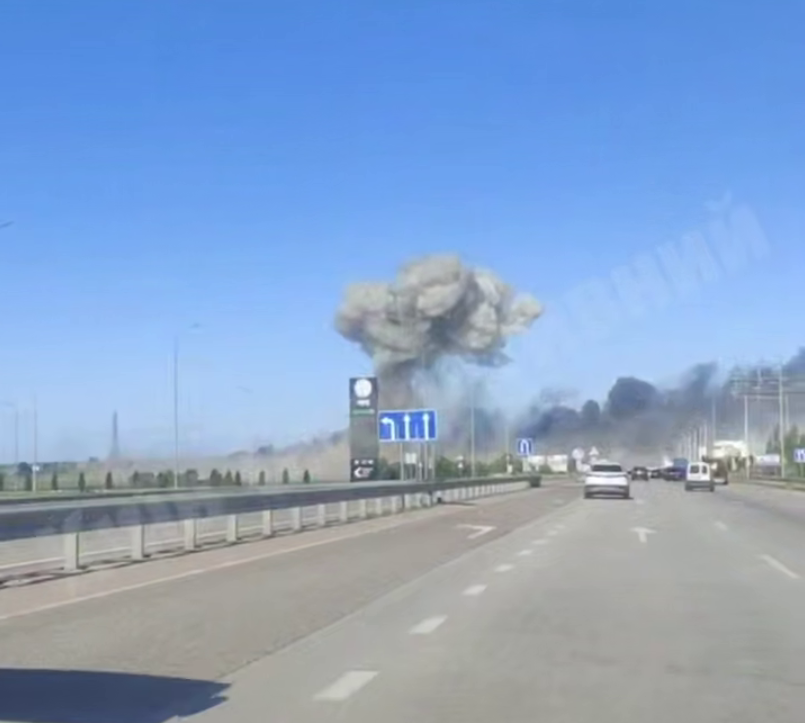
A screenshot of a video posted on social media showing a powerful explosions along the M-06 highway near Zhytomyr. The explosion, the cause of which is yet to be determined, killed two people and injured 24 others. (Kyiv Operational/Telegram)
Videos posted to social media showed large clouds of smoke billowing from the explosion site, located approximately 140 kilometers west of Kyiv. Local officials suggested the explosions may have occurred at an industrial warehouse near the town of Berezyna, though details remained unconfirmed pending investigation.
The incident highlighted ongoing vulnerabilities in Ukrainian rear areas, even regions considered relatively safe from direct Russian attack. Zhytomyr has faced occasional Russian missile and drone strikes, but the nature of these explosions—whether accidental or attack-related—remained unclear.
Emergency responders worked at the scene while authorities provided no immediate information about the condition of injured victims. The mystery surrounding the explosions reflected broader challenges in maintaining security across Ukraine’s extensive territory during ongoing conflict.
The Iranian Factor: Oil Prices and Russian Revenue
Intelligence reports indicated Iran’s preparation to mine the Strait of Hormuz, a development that could dramatically boost Russian oil revenues through global price increases. U.S. officials detected Iranian naval mines loaded onto vessels last month following Israel’s preemptive attack on Iran on June 13.
If implemented, Iranian mining of the strait would block one-fifth of global oil demand, spiking world energy prices and providing a significant boost to Russia’s oil-dependent economy. Russian crude prices would rise in line with global benchmarks, potentially offsetting Western sanctions and price cap measures that have constrained Moscow’s energy revenues.
The Iranian threat emerged as Brent crude prices had settled around $67.50 per barrel, well below levels that maximize Russian budget revenues. A disruption to Gulf supplies could push prices back toward the $75 range seen during peak Middle East tensions, providing Moscow with billions in additional revenue for its war effort.
Energy experts noted that Iran would sacrifice its own oil exports through such action, making it likely only as a last resort. However, the mere threat demonstrated how regional conflicts could indirectly benefit Russia’s war economy through energy market disruptions beyond Moscow’s direct control.
Regional Tensions Spillover: Russia-Azerbaijan Relations Fracture
The deteriorating relationship between Russia and Azerbaijan reached a new low following weekend detentions in Yekaterinburg where over 50 Azerbaijani nationals were arrested as part of a murder investigation, resulting in two deaths and several injuries. Azerbaijan’s Foreign Ministry condemned the killings as “ethnically motivated public and deliberate unlawful actions,” marking a dramatic escalation in tensions between the former Soviet allies.
The confrontation reflected broader geopolitical shifts in the South Caucasus, where Russia’s influence has waned following its failure to protect Armenia during Azerbaijan’s Nagorno-Karabakh operations. Azerbaijan President Ilham Aliyev’s growing assertiveness, particularly after military victories in 2020 and 2023, has strained traditional Moscow-Baku cooperation.
The crisis deepened when Azerbaijani police raided Sputnik Azerbaijan’s Baku offices, detaining several employees including two individuals identified as Russian FSB operatives. The Russian state media outlet called the spy allegations “absurd,” but the raid demonstrated Azerbaijan’s willingness to challenge Russian soft power projection in its territory.
Baku’s cancellation of all Russian-organized cultural events and suspension of parliamentary delegation visits to Moscow signaled the diplomatic rupture’s severity. The escalation comes months after Azerbaijan’s December plane crash, where Russian air defenses shot down an Azerbaijani airliner, and Aliyev’s May decision to skip Moscow’s Victory Day parade despite accepting the invitation.
Armenian Pivot: Parliament Speaker Calls for Russian Media Ban
Armenian Parliament Speaker Alen Simonyan recommended seriously considering banning Russian television broadcasts in Armenia, citing concerns over interference in domestic affairs. The suggestion reflected Armenia’s continued pivot away from Moscow following Russian failures to protect Armenian interests in Nagorno-Karabakh conflicts.
“If there are channels that allow themselves to interfere in Armenia’s domestic affairs, perhaps we ought to respond likewise, by at least banning their entry into the homes of our society,” Simonyan stated. He suggested individuals connected to Armenian-Russian oligarch Samvel Karapetyan may be financing interference efforts.
The media ban proposal followed Armenia’s April legislation initiating formal EU accession processes, marking a dramatic shift from traditional Russian alignment. Prime Minister Nikol Pashinyan has suspended Armenia’s membership in Russia’s Collective Security Treaty Organization while pursuing closer Western ties.
The deteriorating Moscow-Yerevan relationship illustrates Russia’s broader struggles to maintain influence in the South Caucasus, where traditional allies increasingly question the value of Russian security guarantees. Armenia’s experience during Nagorno-Karabakh conflicts demonstrated Russian unwillingness or inability to protect allies when their interests diverge from Moscow’s priorities.
Turkish-Russian Energy Partnership: Nuclear Plant Stake Sale
Russian nuclear giant Rosatom announced negotiations to sell a 49% stake in Turkey’s Akkuyu Nuclear Power Plant project, valued at $25 billion, despite international sanctions complicating financing arrangements. The 4.8-gigawatt facility represents Turkey’s first nuclear power installation and a cornerstone of Turkish-Russian energy cooperation.
Rosatom’s Turkish subsidiary chairman Anton Dedusenko confirmed the plant’s expected 2026 electricity generation timeline while acknowledging investor interest increases as operational dates approach. However, U.S. sanctions threats have complicated traditional financing mechanisms, prompting consideration of alternative payment systems including Russian rubles and Turkish lira.
The nuclear partnership highlights Turkey’s complex balancing act between NATO membership and practical cooperation with Russia. Despite supporting Ukraine through aid and hosting international mediation efforts, Turkey maintains significant economic ties with Moscow across multiple sectors.
A previous 2018 sale attempt collapsed over commercial disagreements, but current negotiations suggest both sides’ determination to complete the strategically important project. The facility’s completion would significantly enhance Turkey’s energy independence while providing Russia with crucial foreign currency revenues despite sanctions pressure.
As July 2 drew to a close, the strategic landscape had shifted measurably in Russia’s favor through American aid suspension and continued recruitment success. The combination of reduced Ukrainian defensive capabilities and enhanced Russian offensive potential creates conditions for accelerated territorial gains in coming months.
Previous American aid suspensions in late 2023 and early 2024 enabled Russian advances at rates of approximately three kilometers per day, demonstrating the direct correlation between Western weapons deliveries and Ukrainian battlefield performance. The current suspension, coinciding with record Russian aerial attacks, suggests even more significant challenges ahead.
Ukraine’s demonstrated resilience through tactical advances in Sumy Oblast and successful deep strikes on Russian territory provides some cause for optimism, but cannot offset the strategic implications of reduced American support. European efforts to fill the gap remain insufficient for Ukraine’s immediate defensive needs, particularly in air defense capabilities.
The day’s events illustrated the fundamental reality that Ukraine’s war effort depends critically on sustained Western support, while Russia’s strategy of patience and attrition shows signs of success in wearing down international resolve. The battle for Ukraine increasingly appears to be won or lost not on Ukrainian battlefields, but in American conference rooms and European capitals where difficult decisions about long-term commitment await.