
Russian President declares “will not back down” from war goals during heated call with Trump, while Ukrainian forces eliminate key naval commander and strike critical weapons facilities across enemy territory.
Summary of the Day – July 3, 2025
The diplomatic chasm between Washington and Moscow widened dramatically as Russian President Vladimir Putin flatly rejected Donald Trump’s calls for a quick peace during their hour-long phone conversation, declaring that Russia “will not back down” from its war objectives in Ukraine. Putin’s defiant stance came even as Ukrainian forces delivered devastating blows to Russian military leadership, killing Deputy Navy Commander Major General Mikhail Gudkov in a precision HIMARS strike in Kursk Oblast that eliminated over 20 senior officers. Meanwhile, Ukraine’s long-range capabilities reached deep into Russian territory, destroying the critical Energia missile battery plant in Lipetsk Oblast and eliminating former occupation mayor Manolis Pilavov in Luhansk. As diplomatic efforts stalled, Ukraine secured a major drone production agreement with U.S. company Swift Beat, promising hundreds of thousands of interceptor drones, while Russian forces continued targeting Ukrainian conscription offices in a systematic campaign to disrupt mobilization efforts. The day’s events underscored the growing disconnect between Trump’s peace aspirations and Putin’s unwavering commitment to achieving his maximalist goals through military force.
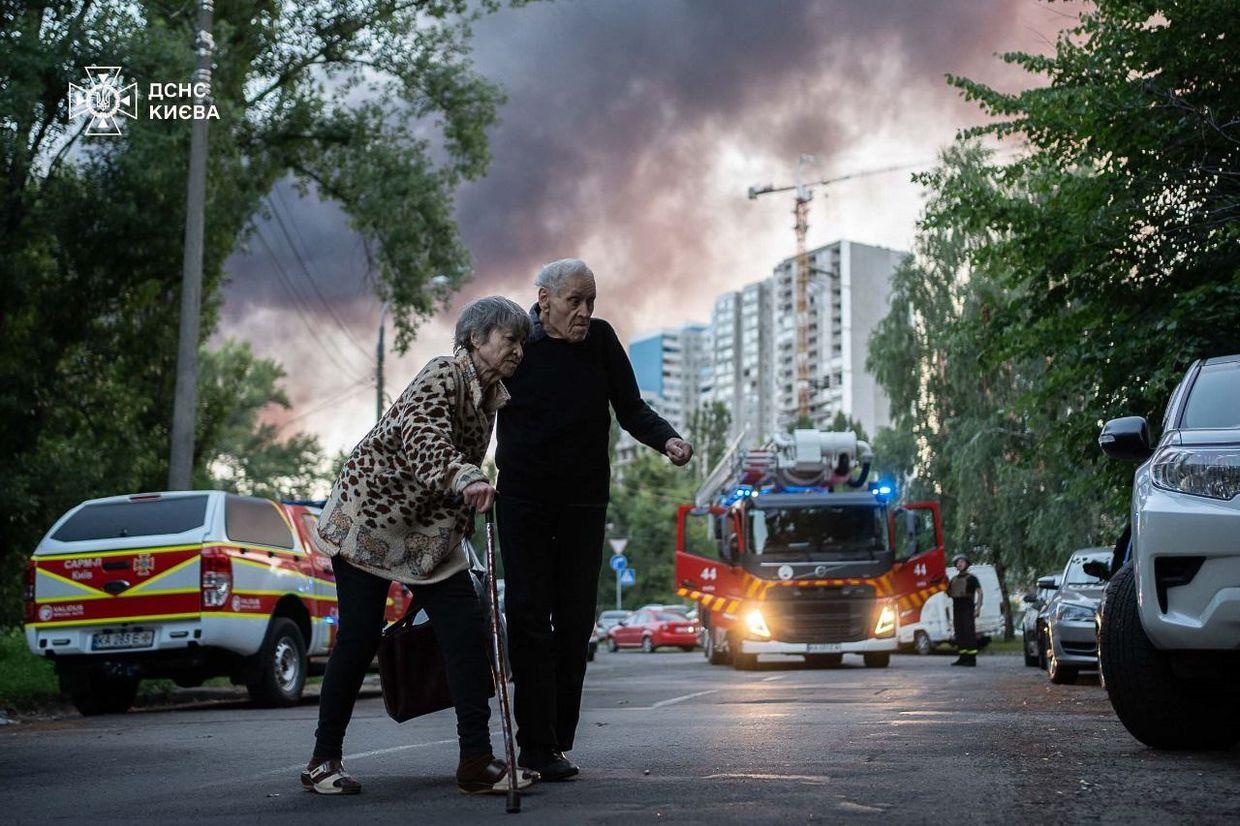
Kyiv residents and emergency crews at the site of Russian attack. Russia targeted the capital throughout the night with drones and missiles, causing fires across the city. (Ukraine’s State Emergency Service / Telegram)
The Failed Diplomacy: Putin Rejects Trump’s Peace Appeals, No Progress Made
Russian President Vladimir Putin delivered an uncompromising message to Donald Trump during their July 3 phone call, declaring that Russia “will continue to pursue its goals” and “will not back down from these objectives” despite American pressure for a quick resolution to the war. Trump later told reporters he “didn’t make any progress” with Putin “at all,” marking a stark contrast to his usually optimistic post-call assessments.
Kremlin aide Yury Ushakov revealed that Putin specifically emphasized Russia’s commitment to “eliminating the root causes” of the conflict—coded language for the Kremlin’s demands for regime change in Ukraine, Ukrainian neutrality, and fundamental changes to NATO’s open-door policy. The hour-long conversation, focused on Ukraine and the Middle East, exposed the fundamental incompatibility between Trump’s desire for expeditious peace and Putin’s determination to achieve his maximalist war aims.
“Trump once again emphasized the need to end military hostilities as soon as possible,” Ushakov stated, but Putin’s response demonstrated Moscow’s continued belief that time favors Russian interests. “We had a call. It was a pretty long call. We talked about a lot of things,” Trump said, but when asked about progress: “No, I didn’t make any progress with him today at all.”

U.S. President Donald Trump speaks to reporters at Joint Base Andrews in Maryland. (Andrew Caballero-Reynolds / AFP via Getty Images)
The failed diplomatic engagement occurred against the backdrop of intensified Russian attacks on Ukrainian cities, including a massive overnight assault on Kyiv that injured 23 people. Putin’s willingness to escalate violence while rejecting peace overtures underscored Moscow’s strategy of using military pressure to extract political concessions.
Ushakov claimed the leaders discussed potential Ukrainian-Russian negotiations in Istanbul and agreed to continue communication, though no specific dates were established. However, Putin’s uncompromising stance suggested little prospect for meaningful talks on terms acceptable to Ukraine or its Western partners.
Decapitation Strike: Ukrainian HIMARS Eliminates Russian Naval Leadership
Ukrainian forces achieved one of their most significant targeting successes of the war by killing Major General Mikhail Gudkov, Deputy Commander-in-Chief of the Russian Navy, in a precision HIMARS strike on a command post near Korenevo, Kursk Oblast. The attack, which occurred on July 2 but was confirmed July 3, eliminated over 20 Russian servicemembers including multiple senior officers, dealing a devastating blow to Moscow’s military leadership structure.
Gudkov, who had been promoted to his deputy navy commander position in March 2025, previously led the 155th Naval Infantry Brigade—a unit accused by Ukraine of committing numerous war crimes, including executing prisoners of war and humiliating captured Ukrainian soldiers. His elimination represented both tactical and symbolic victory, removing a key military leader while delivering justice for documented atrocities.
The strike targeted the 155th Naval Infantry Brigade’s command post, where Gudkov was coordinating operations alongside Captain Second Rank Nariman Shikhaliev, who also died in the attack. Russian sources confirmed the devastating impact, with the “Typhoon” All-Russian Organization of Naval Infantry stating that Ukrainian forces killed “over 10 servicemembers, including several senior officers.”
The successful elimination of such a high-ranking naval commander demonstrated Ukraine’s improved intelligence capabilities and precision strike capacity. Gudkov held the titles of Hero of Russia and Hero of Primorye, making his death a significant propaganda blow for Moscow as well as operational loss.
The HIMARS system, which became a game-changer for Ukraine when first delivered in summer 2022, continues proving its effectiveness against high-value targets. The weapon’s precision guidance and extended range have allowed Ukrainian forces to target Russian command structures far behind enemy lines, disrupting Moscow’s command and control capabilities.
Industrial Warfare: Ukraine Strikes Deep into Russian Military Complex
Ukrainian forces conducted a devastating strike on the Energia factory in Lipetsk Oblast’s Yelets city, halting production at one of Russia’s most critical defense facilities. The plant, located 250 kilometers north of the Ukrainian border, produces essential components for Iskander ballistic missiles, cruise missiles, and drone guidance systems—making it a strategic target of enormous importance.
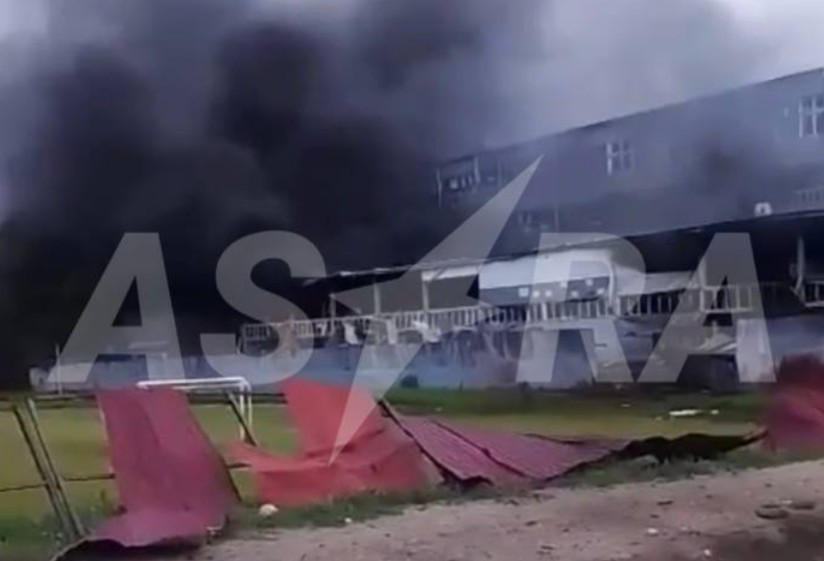
Smoke rising from what appears to be the Energia weapons factory in Yelets, Russia, early. (Astra/Telegram)
Andrii Kovalenko, head of Ukraine’s Counter-Disinformation Center, confirmed the strike and described Energia as “one of the most critical targets for Russia,” noting the facility’s production of batteries for missile guidance systems and glider modules used in advanced weaponry. The attack forced complete evacuation of nearby workshops and suspended all production operations.
Ukrainian General Staff officially confirmed the operation, stating that their Unmanned Systems Forces coordinated with other defense elements to execute the strike. “Explosions were recorded on the factory grounds and production had been halted,” the military announced, emphasizing continued efforts to “undermine the military and economic potential of Russian forces.”
The Energia plant had been targeted multiple times in May 2025, demonstrating Ukraine’s persistent focus on degrading Russian weapons production capabilities. The facility’s role in producing components for both ballistic and cruise missiles made it a high-priority target for Ukrainian long-range operations aimed at reducing Russia’s offensive capacity.
Lipetsk Oblast Governor Igor Artamonov confirmed the attack but also reported civilian casualties when drone wreckage allegedly crashed onto a residential building, killing one woman and injuring two others. Russian authorities claimed their air defenses intercepted 69 Ukrainian drones overnight across multiple regions, though the successful strike on Energia demonstrated continued Ukrainian penetration of Russian airspace.
Targeted Elimination: Former Occupation Mayor Killed in Luhansk
A midday explosion in occupied Luhansk city killed Manolis Pilavov, the former Russian-installed mayor who had led the occupation administration from December 2014 until November 2023. The assassination, reported by Russian state media TASS, wounded three others including one person in serious condition, marking another successful Ukrainian operation against collaboration networks.
Pilavov, wanted in Ukraine since 2015 on charges including attempting to violently overthrow constitutional order and violating territorial integrity, had been a key figure in establishing Russian control over Luhansk. Born in 1964, he served as a city council member representing the now-banned pro-Russian Party of Regions before actively supporting occupation structures following Russian-backed militants’ 2014 takeover.
Ukrainian authorities accused Pilavov of participating in separatist propaganda events and encouraging support for Moscow’s proxy administration during the critical early months of the occupation. His elimination represented both justice for collaboration activities and continued Ukrainian capability to target occupation officials deep in Russian-controlled territory.
The successful targeting of Pilavov followed a pattern of Ukrainian operations against collaborators and occupation officials that has intensified in recent months. Ukrainian intelligence services have demonstrated increasing capability to penetrate occupied territories and eliminate individuals involved in facilitating Russian control over Ukrainian populations.
While Ukraine has not officially commented on Pilavov’s death, the operation’s precision and timing suggest sophisticated intelligence gathering and operational planning. The elimination sends a clear message to other collaboration figures about the long-term consequences of supporting Russian occupation efforts.
Strategic Partnership: Ukraine Secures Major Drone Production Deal
President Volodymyr Zelensky announced a breakthrough agreement with U.S. company Swift Beat to co-produce hundreds of thousands of drones in 2025, with plans for massive scaling in 2026. The long-term strategic partnership, signed by Defense Minister Rustem Umerov and Swift Beat CEO Eric Schmidt in Denmark, promises to revolutionize Ukraine’s defensive capabilities against Russian aerial attacks.
The agreement prioritizes interceptor drones that have proven effective in shooting down Russian Shahed drones and missiles, addressing Ukraine’s urgent need for air defense capabilities amid record Russian aerial attacks. “We’ve tested models from several companies, and now we’re signing serious contracts,” Zelensky stated, emphasizing the practical validation behind the partnership.
Swift Beat will provide “modern drones to Ukraine as a priority, on special terms and at cost,” according to the agreement, while expanding production capacity to meet Ukraine’s massive requirements. The company already maintains significant presence in Ukraine, specializing in autonomous AI-powered systems and conducting testing on Ukrainian territory in cooperation with local engineers and military units.
The timing of the announcement, just days after the U.S. paused weapons deliveries including critical air defense systems, highlighted Ukraine’s efforts to secure alternative sources for defensive capabilities. The drone production agreement represents a shift toward long-term, sustainable defense partnerships rather than dependence on traditional weapons transfers.
Zelensky connected the agreement to Denmark’s assumption of the EU Council presidency, expressing expectations for Danish financial support for Ukraine’s drone and missile production initiatives. “What we’ve just signed requires significant funding. I’m counting on our relationship with Denmark,” the president stated, linking defense cooperation to broader European integration efforts.
Mobilization Under Fire: Russia Targets Ukrainian Military Recruitment
Russian forces conducted a deadly strike on Poltava that killed two people and injured 47 others, specifically targeting the city’s conscription office in what Ukrainian military officials described as a systematic campaign to disrupt mobilization efforts. The attack, occurring around 9 a.m. local time, sparked fires at both military facilities and nearby residential properties, demonstrating Moscow’s strategy of targeting civilian-military infrastructure.
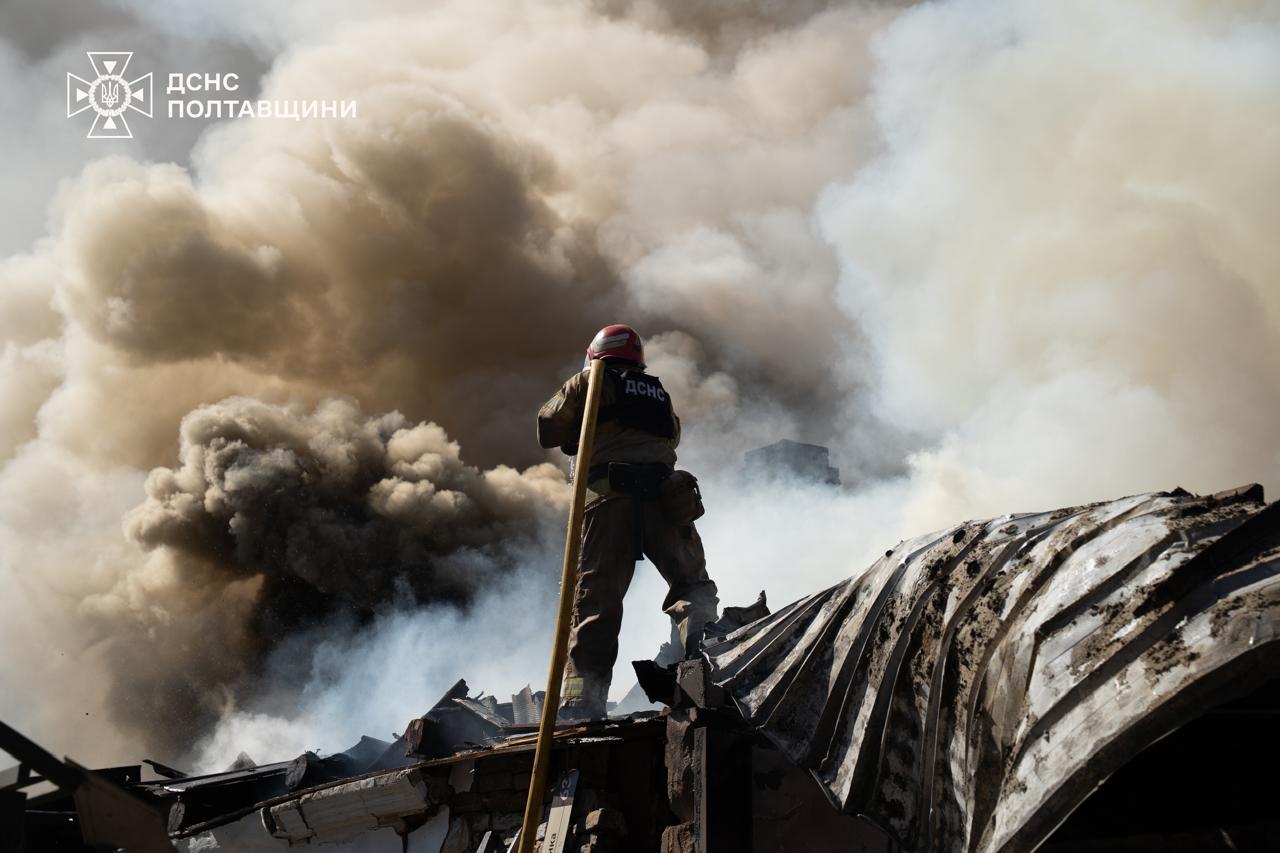
A firefighter works to extinguish a blaze following a Russian strike in Poltava, Ukraine. (Ukraine’s State Emergency Service / Telegram)
Ukraine’s Ground Forces confirmed that one strike directly hit the Poltava conscription office while another damaged private residential property nearby. Spokesperson Vitalii Sarantsev stated on national television that Russia was “deliberately targeting conscription offices to disrupt Ukraine’s mobilization efforts,” revealing the strategic nature of such attacks beyond simple terror tactics.
The Poltava strike followed established patterns of Russian targeting of military recruitment infrastructure, including a February bombing at a military enlistment office in Rivne that killed multiple people. Russian forces appear to be systematically identifying and attacking facilities crucial to Ukraine’s ability to process new military recruits and maintain force strength.
Emergency services deployed 84 workers including psychologists, pyrotechnicians, and medics to respond to the attack, while firefighters extinguished resulting fires and rescued 10 people from damaged buildings. The comprehensive response demonstrated both the attack’s severity and Ukrainian preparedness for such strikes on critical infrastructure.
Sarantsev emphasized Ukrainian determination to continue strengthening military capabilities despite Russian targeting efforts. “We will continue to strengthen our army, train our troops, and involve more people in defense to deliver a strong response to the enemy,” he declared, underscoring Ukraine’s commitment to maintaining recruitment operations under fire.
Massive Assault on Kyiv: Hours of Terror from Russian Drones
Russian forces launched a devastating overnight assault on Kyiv that lasted over five hours, injuring 23 people and damaging civilian infrastructure across multiple districts in one of the war’s longest sustained attacks on the capital. The massive operation began around 10 p.m. on July 3 and continued into the early morning hours of July 4, with ballistic missiles fired toward the city at 12:30 a.m. and again at 2:30 a.m.
The attack damaged apartment buildings, businesses, schools, medical facilities, railway infrastructure, and other civilian targets across the Obolon, Sviatoshynskyi, Dniprovskyi, Solomianskyi, Shevchenkivskyi, and Holosiivskyi districts. Fires blazed throughout the city, creating dangerous air pollution levels that forced authorities to warn residents to close windows due to “combustion products” in the atmosphere.
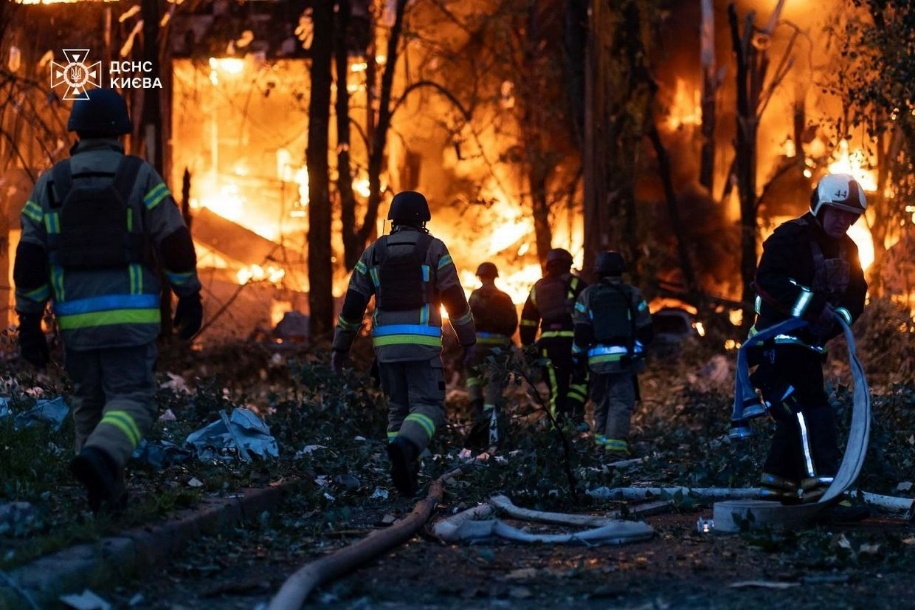
Firefighters respond at an attack site in Kyiv after Russia launched a mass attack overnight. (Ukraine’s State Emergency Service / Telegram)
Mayor Vitali Klitschko reported that 14 victims required hospitalization, while emergency services worked throughout the night to extinguish fires and rescue civilians from damaged buildings. The systematic targeting of residential areas, educational facilities, and transportation infrastructure demonstrated Russia’s continued strategy of terrorizing civilian populations.
Ukrainian Railways warned passengers to expect delays as the attack damaged rail infrastructure throughout the capital region, forcing route diversions and service interruptions. The transportation disruption illustrated the broader economic impact of Russian attacks beyond immediate casualties and property damage.
The timing of the massive assault, beginning shortly after the Trump-Putin phone call ended, suggested potential Russian messaging about consequences for continued Western pressure. The attack’s duration and intensity—among the longest sustained assaults on Kyiv since the war began—demonstrated Moscow’s commitment to inflicting psychological as well as physical damage on Ukrainian urban centers.
Intelligence Penetration: Ukrainian Air Force Officer Arrested as Alleged FSB Spy
Ukraine’s Security Service detained a Ukrainian Air Force major suspected of operating as a Russian FSB spy, revealing sophisticated enemy penetration of sensitive military installations. The officer, arrested during a special operation in Lviv Oblast, was allegedly recruited through his ex-wife, a former military officer now cooperating with Russian forces in occupied Melitopol.
The suspected spy was gathering coordinates of operational airfields, logistics hubs, and maintenance centers used by Ukrainian combat aircraft, with Russia planning to launch missile and drone strikes on those locations. The SBU reported that the operation was coordinated with Ukraine’s Commander-in-Chief and supervised by Aleksandr Belodedov, an officer in the FSB’s Alpha special operations unit.
Ukrainian authorities intercepted the agent before any damage occurred, documenting his communications with Russian intelligence and securing military sites at risk. The successful counterintelligence operation demonstrated Ukrainian capability to detect and neutralize foreign espionage networks operating within sensitive military structures.
The suspect faces charges of high treason committed during wartime by a group of individuals, carrying potential life imprisonment with asset seizure. His ex-wife was also charged in absentia for treason during wartime, highlighting the broader network of collaboration extending beyond active military personnel.
The case underscored ongoing Russian efforts to penetrate Ukrainian military command structures and obtain targeting information for their missile and drone campaigns. The FSB’s use of personal relationships and compromised former military personnel revealed sophisticated recruitment tactics requiring constant counterintelligence vigilance.
Economic Warfare: China’s Strategic Calculation Revealed
Chinese Foreign Minister Wang Yi reportedly told EU diplomat Kaja Kallas that Beijing “cannot afford for Russia to lose the war in Ukraine” due to fears that a Russian defeat would empower the United States to focus more pressure on China. The frank admission during their four-hour meeting in Brussels exposed the strategic calculation underlying Chinese support for Russia’s war effort.
Wang’s reported comments suggested that Russia’s war in Ukraine serves Chinese strategic interests by keeping the United States engaged in European conflicts rather than focusing on potential Taiwan scenarios. “One interpretation of Wang’s statement is that while China did not ask for the war, its prolongation may suit Beijing’s strategic needs,” the South China Morning Post reported.
The Chinese foreign minister’s unusual candor surprised EU officials accustomed to Beijing’s public statements favoring peace negotiations. Wang’s explanation provided insight into the realpolitik calculations driving Chinese policy, revealing how global power competition influences regional conflicts.
China has been a crucial ally to Russia during the invasion, helping Moscow evade Western sanctions and becoming the leading source of dual-use goods fueling the Russian defense industry. The EU estimates that about 80 percent of components Russia uses in weapons production come via China, making Chinese cooperation essential to sustaining Moscow’s war effort.
Wang’s admission came as the EU prepared to vote on blacklisting two Chinese banks for flouting sanctions on Russia, demonstrating growing European frustration with Beijing’s continued support for Moscow’s war machine despite diplomatic pressure for neutrality.
Congressional Resistance: Bipartisan Opposition to Aid Suspension
Fourteen Democratic lawmakers led by Senator Richard Blumenthal sent a forceful letter to Defense Secretary Pete Hegseth demanding reversal of the weapons shipment pause to Ukraine. “This decision places Ukraine’s future in jeopardy, encourages Vladimir Putin, and sows doubt among our closest allies,” the legislators declared, representing growing congressional frustration with administration policy.
The letter, signed by senators Chuck Schumer, Kirsten Gillibrand, Peter Welch, and Sheldon Whitehouse along with multiple House members, challenged the Pentagon’s justification for halting deliveries of PAC-3 Patriot interceptors, 155mm artillery shells, GMLRS systems, Stinger MANPADS, and AIM-7 air-to-air missiles. The lawmakers emphasized that “Ukraine’s fight for freedom is not hypothetical—it is happening now.”
The congressional intervention highlighted specific strategic concerns about emboldening U.S. adversaries and undermining allied trust. “While the Trump administration had repeatedly stressed the need to reallocate resources to the Indo-Pacific, Russia remains the most immediate and pressing threat to our security,” the letter stated.
The legislators requested detailed answers by July 31 about which munitions were being redirected, where they were being sent, and how long Ukraine could maintain current expenditure rates before exhausting reserves. Their demands for both written responses and classified briefings demonstrated serious congressional oversight intentions.
Simultaneously, three Democratic senators—Jeanne Shaheen, Elizabeth Warren, and Chris Coons—launched a separate investigation into Trump’s “five-month pause” on Russia sanctions. Former President Biden imposed an average of 170 new sanctions per month on Russia-related entities, while Trump has imposed virtually none since taking office, allowing over 130 Chinese companies to advertise sales of sanctioned computer chips to Russia.
Zhytomyr Tragedy: Industrial Explosion Details Emerge
New details emerged about the devastating July 2 explosions near Berezyna village in Zhytomyr Oblast that killed two people and injured 82 others, including 38 who required hospitalization. Regional administration head Vitaliy Bunechko confirmed that the incident involved an initial explosion at an industrial production building followed by a more massive secondary blast at a nearby gas station.
The explosions destroyed approximately 25 homes and damaged another 75 properties along with power infrastructure throughout the area. Among the injured were four children and a Japanese citizen, though none sustained life-threatening injuries according to medical officials. Emergency responders worked throughout the night to extinguish fires and restore highway access on the critical M-06/E40 route.
Bunechko promised full state compensation for lost housing while acknowledging that “the consequences of the two explosions could have been far more devastating.” The cause remained under investigation by national police, with detailed examinations ongoing to determine whether the incident resulted from industrial accident or external attack.
The tragedy highlighted vulnerabilities in Ukrainian rear areas even in regions considered relatively secure from direct Russian military action. Zhytomyr’s location approximately 140 kilometers west of Kyiv has made it an occasional target for Russian missile and drone strikes, though the nature of these specific explosions remained unclear.
Traffic flow on the vital M-06 highway was fully restored by July 3, allowing continued movement of civilian and military supplies through the strategic corridor. The swift infrastructure recovery demonstrated Ukrainian resilience in maintaining transportation networks despite continued security challenges.
Media Warfare: Russia Shuts Down Sputnik Azerbaijan
Russian state media conglomerate Russia Today announced the closure of Sputnik Azerbaijan operations following the deterioration of Moscow-Baku relations and detention of several employees on espionage charges. RT CEO Dmitry Kiselyov stated that “conditions for Sputnik Azerbaijan to continue its activities in this country are not in place,” marking another casualty of the diplomatic rupture.
The closure followed Azerbaijani police detention of several Sputnik employees on June 30, with authorities claiming two detainees were Russian FSB operatives. Kiselyov called the charges “far-fetched” and insisted the staff worked to “develop cooperation between Azerbaijan and Russia,” while promising legal action to defend them.
The Sputnik shutdown represented a significant blow to Russian information operations in the South Caucasus, where Moscow has traditionally maintained strong propaganda influence. The outlet served as a key pillar of the Kremlin’s global disinformation network, regularly accused by Western governments of spreading pro-Russian narratives.
The media closure escalated ongoing tensions stemming from the June 27 deadly operation in Yekaterinburg where Russian security forces killed two Azerbaijani nationals during a raid. Azerbaijan’s Foreign Ministry condemned the operation as “ethnically motivated” and part of a “systematic pattern” of unlawful treatment.
Subsequent Azerbaijani arrest of eight Russian citizens on organized crime charges, with suspects presented in court handcuffed and visibly injured, demonstrated the diplomatic relationship’s rapid deterioration. The media warfare dimension added another layer to the growing confrontation between the former Soviet allies.
Economic Indicators: Ukraine’s Labor Market Shows Resilience
Ukraine’s unemployment rate dropped to 12 percent—the lowest level since Russia’s 2022 full-scale invasion—according to new data from the Centre for Economic Strategy, though poverty levels remained stubbornly high with 25.2 percent of the population struggling to afford food. The mixed economic indicators reflected both wartime adaptation and continued structural challenges.
The unemployment improvement occurred despite massive workforce disruptions from migration, mobilization, and war-related displacement. An estimated 4.6 million people remained internally displaced as of January 2025, while over 5.2 million Ukrainians remained abroad as refugees, representing unprecedented demographic challenges.
Labor market activity remained 10-15 percent below pre-war levels, with both job demand and supply significantly constrained. The National Bank of Ukraine estimated that workforce mismatches continued creating pressure, with high demand for labor in sectors like drone manufacturing that previously required minimal workforce.
Enterprises increased salaries by 14.4 percent in real terms during 2024 to attract available workers, while 300,000 additional Ukrainians left the country due to ongoing conflict. The longer the war continues, the more likely Ukrainians will settle permanently abroad, with pessimistic projections suggesting up to 2.7 million may remain overseas.
The economic data illustrated Ukraine’s adaptation to wartime conditions while highlighting long-term demographic and economic challenges requiring sustained international support and eventual post-conflict reconstruction planning.
Ammunition Depot Destruction: Ukrainian Forces Hit Strategic Target
Ukrainian forces struck a Russian ammunition depot in occupied Khartsyzk, Donetsk Oblast, triggering massive secondary explosions that illuminated the night sky and severely damaged Russian logistics capabilities in the strategic rear area. The SBU confirmed the operation, noting that explosions began at 10 p.m. and continued with “powerful secondary detonation of ammunition and fire.”
The depot, located in the occupied city near Donetsk, serves as a crucial logistics hub for Russian forces operating across the eastern front. “The enemy has placed command posts, logistics centers, and ammunition depots there. All of them are legitimate military targets,” the SBU stated, emphasizing the facility’s strategic importance.
Unconfirmed videos posted on social media showed initial fires followed by massive explosions and shockwaves characteristic of large-scale ammunition detonations. The successful targeting of such a well-defended facility demonstrated Ukrainian intelligence capabilities and long-range strike precision.
The Khartsyzk strike complemented other Ukrainian operations against Russian logistics infrastructure, including the confirmed hit on the Velyke Orikhove ammunition depot that produced secondary explosions indicative of air defense missiles and ammunition storage. These coordinated strikes on ammunition storage facilities aimed to degrade Russian offensive capabilities by limiting available munitions.
The timing of the depot destruction, concurrent with major diplomatic efforts and military operations, illustrated Ukraine’s multi-domain approach to weakening Russian war-making capacity through sustained pressure on logistics networks supporting front-line forces.
Battlefield Dynamics: Confirmed Advances and Tactical Developments
Ukrainian forces achieved tactical advances in multiple sectors while Russian forces made limited gains, reflecting the continued grinding nature of front-line combat amid broader strategic developments. Geolocated footage confirmed Ukrainian advances within northeastern Zahryzove in the Borova direction and in eastern Serebryanka in the Siversk direction, demonstrating maintained offensive capability despite resource constraints.
Russian forces advanced into central Milove near the international border north of Kupyansk, though their ability to maintain enduring positions remained unclear. Additional geolocated footage showed Russian gains north of Toretsk and in both northwestern and eastern Kamyanske in western Zaporizhia Oblast, reflecting continued pressure across multiple front sectors.
The mixed battlefield results illustrated the attritional nature of current combat operations, with both sides achieving limited tactical gains without dramatic strategic breakthroughs. Ukrainian military observers noted that Russian forces continue struggling with coordination and sustaining advances despite numerical advantages.
Russian military bloggers complained about command exaggeration of successes, particularly regarding claims of territorial gains that prove temporary or illusory. The disconnect between official claims and battlefield reality suggested continued problems with Russian military reporting and assessment capabilities.
Ukrainian forces demonstrated continued ability to conduct effective counterattacks and maintain defensive positions despite material constraints from paused U.S. weapons deliveries. The tactical exchanges reflected broader strategic dynamics where neither side achieved decisive advantages through ground operations alone.
Russian Attacks Across Ukrainian Regions: Systematic Terror Campaign
Russian forces conducted widespread attacks across Ukrainian regions that killed at least three people and injured 34 others, demonstrating systematic targeting of civilian infrastructure and population centers. The attacks employed 52 drones launched from multiple directions, with Ukrainian air defenses destroying 40 including 22 shot down and 18 jammed electronically.
Donetsk Oblast suffered the heaviest casualties with three deaths and nine injuries across multiple settlements including Pokrovsk and Kostyantynivka. Governor Vadym Filashkin reported damage to residential buildings, vehicles, and utility infrastructure, reflecting continued Russian pressure on civilian areas near the front line.
Kherson Oblast faced intensive shelling of over 30 towns and villages that wounded nine civilians, with attacks hitting residential neighborhoods and critical infrastructure. One person required hospitalization in Kherson city after drone strikes, while regional authorities documented systematic targeting of populated areas.
Other regions including Dnipropetrovsk, Odesa, Zaporizhzhia, and Kharkiv oblasts all reported casualties and infrastructure damage from Russian strikes employing various weapons systems. The geographic spread of attacks demonstrated Moscow’s strategy of inflicting maximum psychological and economic pressure across Ukrainian territory.
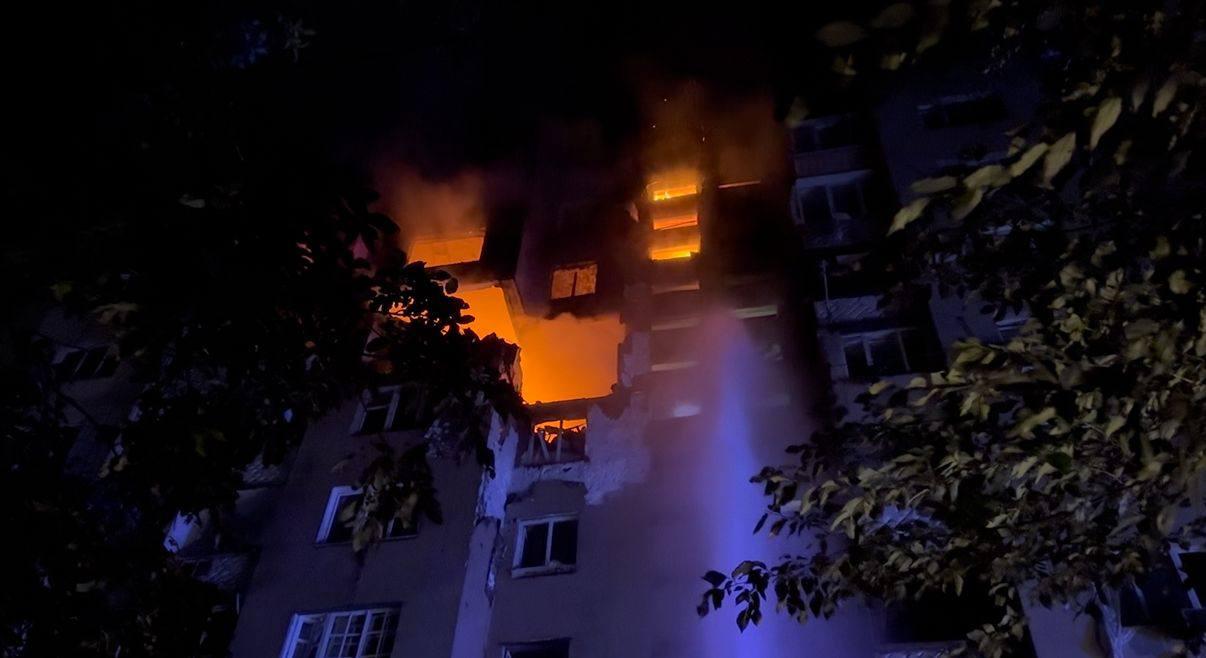
Fire engulfs a residential building after a Russian attack in Odesa, Ukraine, overnight. (Oleh Kiper / Telegram)
The systematic nature of attacks on civilian infrastructure, educational facilities, and residential areas constituted continued violations of international humanitarian law while serving Russia’s strategy of terrorizing Ukrainian populations into submission.
Banking Victory: Ukrainian Institution Wins Major Legal Battle
Ukraine’s Oschadbank achieved a significant legal victory against Russia when the Paris Court of Appeal upheld a 2018 arbitration ruling ordering Moscow to pay over $1.5 billion in damages for losses incurred during the 2014 Crimean annexation. The decision rejected Russian challenges to the original tribunal decision and added €300,000 in legal costs.
The ruling represents the first Ukrainian bank victory in such a case against Russia and demonstrates growing international legal pressure on Moscow for war-related damages. “The victory proves that efforts to force the aggressor state to answer legally for damages caused by the occupation of part of Ukraine’s territory have good prospects,” said supervisory board member Rosa Tapanova.
Oschadbank Chairman Serhii Naumov emphasized the precedential importance of the decision for other Ukrainian institutions pursuing compensation for Russian aggression damages. The bank has been pursuing Russian assets across multiple jurisdictions to enforce the arbitration award, recently seizing over €87 million in Russian assets in France.
The legal victory complemented similar Ukrainian successes, including Naftogaz’s $1.37 billion arbitration award against Gazprom for contract violations. These cases demonstrate growing international legal recognition of Russian liability for war damages and provide mechanisms for eventual compensation.
Deputy Chairman Arsen Miliutin acknowledged the long struggle ahead: “We understand that the Russian Federation will never voluntarily comply with the court’s decision, and we are prepared for a long struggle.” However, the legal framework established provides foundation for sustained pressure on Russian assets globally.