
Russia Launches 623 Aerial Weapons While Moscow Begins Hiding War Casualties and Ukraine Achieves First Civilian Flight Over Kyiv in 40 Months
Summary of the Day – July 12, 2025
The darkness brought no respite as Russia unleashed its third massive aerial assault in as many nights, launching 623 weapons including 597 drones and 26 cruise missiles across Ukraine in a devastating escalation that killed at least 13 civilians and wounded 46 others. Yet beneath the terror, a more ominous development emerged: Russia began concealing demographic statistics to hide catastrophic war casualties, with life expectancy plummeting and excess mortality reaching over 140,000 in 2024. The day crystallized a conflict where Russian desperation—from copying Ukrainian tank protection designs to arresting drivers unknowingly involved in Ukraine’s Operation Spiderweb—collides with Ukrainian resilience demonstrated through the first civilian aircraft over Kyiv in 40 months, precision elimination of those who murder children, and historic medical breakthroughs conducted under bombardment. From Wagner mercenaries seeking Finnish asylum to anti-corruption activists facing politically motivated charges, the war’s expanding scope touched every corner of society across multiple nations.

Surgeons at Kyiv’s Okhmatdyt children’s hospital perform a transplant operation during a Russian missile attack in Kyiv, Ukraine. (Okhmatdyt Hospital / Facebook)
The Arsenal Unleashed: 623 Weapons Target Ukrainian Cities
Russia launched another large-scale drone and missile strike against Ukraine on the night of July 11-12, marking the third combined strike with over 500 drones and missiles in July alone. The Ukrainian Air Force reported that Russian forces launched 339 Shahed-type drones and 258 decoy drones from Bryansk, Kursk, Oryol cities, Primorsko-Akhtarsk in Krasnodar Krai, and Millerovo in Rostov Oblast, complemented by 26 Kh-101 cruise missiles fired from airspace over Saratov Oblast.
Ukrainian air defenses demonstrated remarkable effectiveness, downing 319 Shahed-type drones and 25 Kh-101 cruise missiles while 258 drones were “lost” or suppressed by electronic warfare systems. The strikes nevertheless damaged critical electrical networks and administrative and civilian infrastructure across Chernivtsi, Cherkasy, Kharkiv, Kyiv, Lviv, Sumy, and Volyn oblasts.
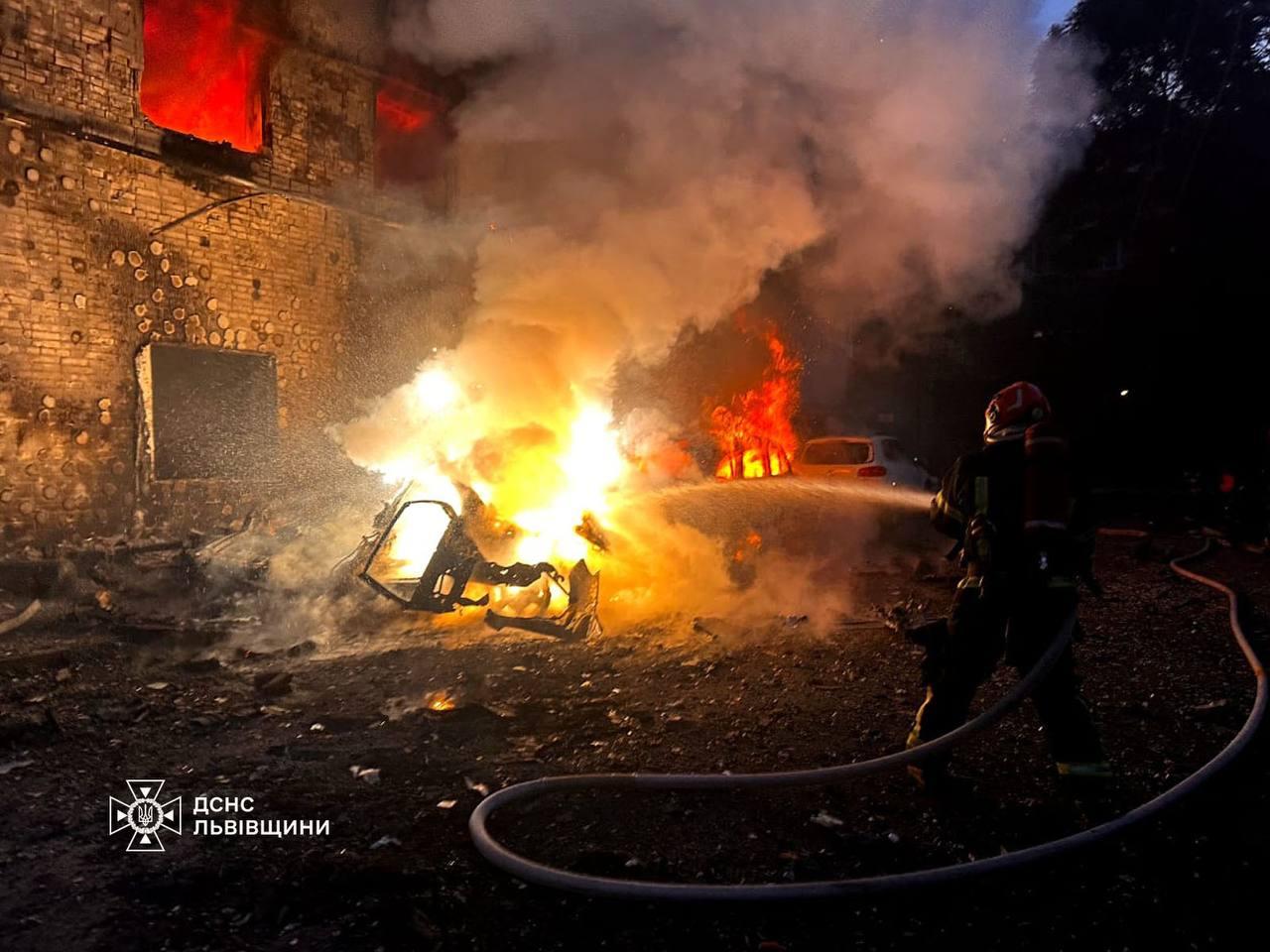
The aftermath of a Russian attack against Lviv, Ukraine. (State Emergency Service)
Ukraine’s State Emergency Service reported two civilians killed in Chernivtsi City with 14 injured. The Clean Sky program, utilizing interceptor drones to defend Kyiv Oblast, downed over 50 drones during the overnight strike, demonstrating the growing effectiveness of Ukraine’s homegrown air defense innovations.
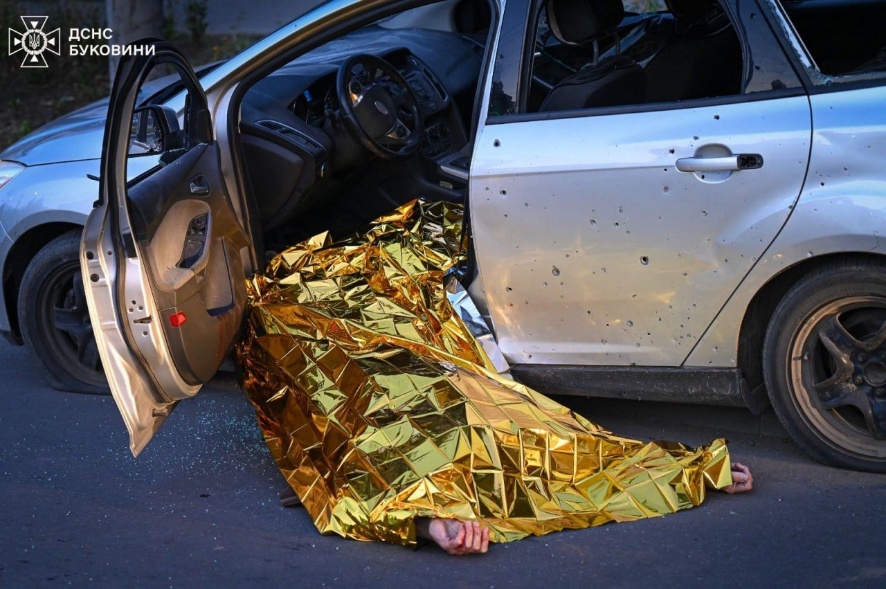
A civilian killed in a Russian attack against Chernivtsi, Ukraine. (State Emergency Service)
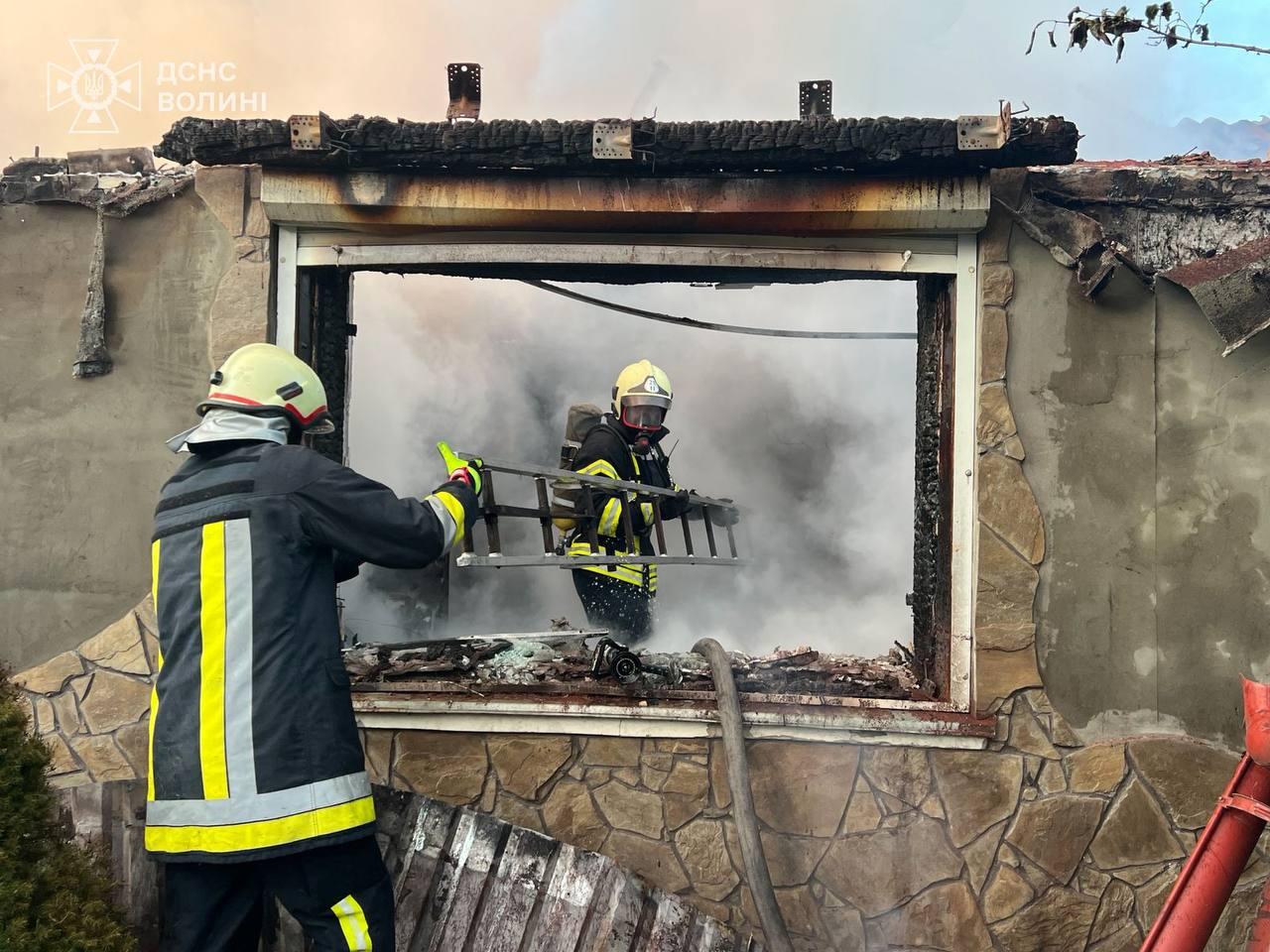
Ukrainian firefighters work to extinguish a blaze in a residential building damaged by Russian shelling in Volyn Oblast, Ukraine. (State Emergency Service of Ukraine / Telegram)
Russia’s Demographic Deception: Concealing the Human Cost of War
In a development that speaks to Moscow’s growing desperation to hide the war’s catastrophic toll, Russia’s Federal State Statistics Service stopped publishing demographic data on mortality, birth rates, marriages, divorces, and migration. The censorship followed demographer Alexei Raksha’s assessment that the first quarter of 2025 represented “the worst demographic situation since the 18th century.”
Russia’s population officially dropped from 147.1 million in January 2021 to 146.1 million by January 2025, despite artificially inflating numbers by including occupied Ukrainian territories whose populations have significantly decreased. The 2024 statistics revealed unprecedented demographic catastrophe with 600,000 more deaths than births—a 20% increase from 2023.
Between 2022-2024, excess mortality steadily escalated from 22,000 to over 140,000, with the sharpest increases in regions conducting active military mobilization including Tuva Republic, Altai, and Nenets Autonomous Okrug. Life expectancy plummeted to 72.8 years in 2024 from 73.5 in 2023, with men living only to 67 years compared to women’s 78 years. Russian healthcare officials confirmed that 50% of Russian men do not survive to age 65.
The demographic collapse extends beyond battlefield casualties, with between 500,000 and 1.5 million Russians fleeing the country due to war and rising authoritarianism, representing the exodus of young, skilled workers and entrepreneurs of reproductive age.
Innovation and Imitation: Russia Patents Ukrainian Tank Protection
In a revealing demonstration of technological desperation, Russia copied and patented Ukrainian lightweight, foldable anti-drone screens for tanks and armored vehicles—systems Ukrainian forces have nicknamed “hoods.” The Russian patent, registered by the Karbyshev Military Engineering Academy, describes nearly identical screens designed to protect armored vehicles from overhead drone threats.
Russian documentation praised the Ukrainian system’s effectiveness, stating it demonstrates a 1.2 to 1.5 times higher effectiveness-to-cost ratio compared to other known designs. Ukrainian tank crews successfully deploy the mesh screens against first-person-view drones and munitions dropped from unmanned aerial vehicles while maintaining visibility and enabling safe evacuation from damaged vehicles.
Since April 2024, Russian forces have increasingly relied on “barn tanks”—vehicles modified with bulky metal structures for drone protection. Russia’s Uralvagonzavod began factory production of T-72B3 tanks with built-in anti-drone canopies in October 2023, standardized versions inspired by earlier improvised designs that proved far less effective than Ukraine’s elegant solution.
Sky Breakthrough: Antonov Returns to Ukrainian Airspace
In a moment of profound symbolism, an Antonov An-124 “Ruslan” cargo plane flew over Kyiv, marking one of the first civilian aircraft seen in Ukrainian airspace since Russia’s full-scale invasion began in February 2022. The aircraft, registered UR‑82073 and operated under flight number ADB9154, eventually landed at Germany’s Leipzig/Halle Airport where Antonov relocated its operations hub.
The plane likely escaped the fate of the destroyed Antonov An-225 Mriya—the world’s largest aircraft—because it was stationed at Sviatoshyn Airfield for maintenance during the Russian assault on Hostomel airport. Russian forces deliberately destroyed the Mriya and Hostomel airport in the initial invasion days, with the aircraft’s commander later alleging that Antonov management “really wanted to help those who wanted to take Kyiv in three days.”
Currently, only military and governmental flights operate in Ukrainian airspace under heavy restrictions. The civilian flight represents a powerful symbol of Ukrainian aerospace resilience and defiance of Russian efforts to erase the country’s aviation capabilities.
The Semiconductor Spy: Netherlands Convicts Russian Agent
A Dutch court sentenced German Aksyonov, a 43-year-old Russian, to three years in prison for downloading sensitive technical information from ASML and NXP computer servers and transferring it to Russian intelligence agencies. ASML produces the world’s most advanced semiconductor manufacturing equipment while NXP creates microprocessors used in sophisticated communications systems.
Aksyonov systematically acquired information relating to semiconductor manufacturing processes and production line establishment, with prosecutors arguing that despite much data being considered outdated, the sheer volume would prove invaluable to Russia given its significantly inferior technological capabilities compared to Western nations.
The court emphasized that “providing advice to and sharing technology with Russia is extremely serious” and could contribute to strengthening Russia’s military and strategic capacities with direct consequences for Ukraine and international security. The prosecution noted that “it must be prevented that a country at war can benefit from advanced knowledge.” Aksyonov received a 20-year entry ban to the Netherlands following his prison sentence.
The Clean Sky Triumph: Interceptor Drones Prove Their Worth
Ukraine’s innovative Clean Sky program demonstrated exceptional effectiveness during the massive Russian assault, with Kyiv Oblast Military Administration Head Mykola Kalashnyk reporting that the interceptor drone system successfully downed over 50 Russian drones during the overnight barrage. The program represents a 260 million hryvnia ($6.2 million) investment in defending Kyiv Oblast against relentless nightly Russian strikes.
The comprehensive initiative includes funding for additional equipment, establishment of an interceptor drone training center, and deployment of several mobile interceptor drone units capable of rapid response across the region. Since testing began, the program has achieved remarkable results, intercepting 550 Russian drones over Kyiv City alone in the past four months, with broader Kyiv Oblast statistics approaching 650 drone intercepts.
Ukrainian Minister of Digital Transformation Mykhailo Fedorov confirmed that interceptor drones are downing dozens of Russian long-range drones each night, providing sustainable defense capability as Western air defense munitions face supply constraints and cost limitations.
The Border Gambit: Russian Forces Threaten Velykyi Burluk
Russian forces achieved significant tactical advances from the international border toward Velykyi Burluk in northeastern Kharkiv Oblast, with geolocated footage confirming Russian progress southwest of Milove. The advance represents a calculated strategic effort to connect Russian operations near Vovchansk with those near Dvorichna, potentially facilitating establishment of the buffer zone Moscow has long sought along the international border.
Elements of the Russian 83rd Motorized Rifle Regiment and 72nd Motorized Rifle Division, previously engaged in defending against Ukrainian cross-border operations and participating in retaking Kursk Oblast, have been systematically redeployed to this historically inactive border area. The substantial force redeployment indicates Russian military command preparation for a more concerted offensive operation designed to achieve strategic territorial objectives.
Russian forces have advanced approximately five kilometers from the international border over the past 10 days, currently maintaining positions roughly 16 kilometers northeast of Velykyi Burluk. The advance threatens to fundamentally complicate Ukraine’s defensive posture in both Vovchansk and Dvorichna directions, as successful Russian seizure of Velykyi Burluk would enable tube artillery to interdict Ukrainian ground lines of communication and strike frontline and rear positions in both operational sectors.
Ukrainian Tactical Success: Advances Near Strategic Pokrovsk
Ukrainian forces achieved meaningful tactical advances south of Udachne, southwest of Pokrovsk, according to geolocated footage published July 11. The advancement occurs amid sustained Russian pressure toward Pokrovsk itself, with enemy forces conducting multi-directional attacks across surrounding strategic positions in attempts to encircle or isolate the crucial logistical hub.
A Ukrainian brigade non-commissioned officer operating in the Pokrovsk direction reported that Russian forces are adapting their tactical approach to counter Ukrainian drone superiority, utilizing natural foliage to obscure movements from Ukrainian aerial observers and positioning drone operators progressively closer to front lines to facilitate strikes against Ukrainian rear areas. Russian units have also shifted from armored vehicles to motorcycles and light vehicles in attempts to reduce vulnerability to Ukrainian first-person-view drone strikes.
Russian forces simultaneously achieved confirmed advances into northwestern Novokhatske, southwest of Novopavlivka, according to geolocated footage, while maintaining offensive pressure across multiple front sectors including sustained attacks toward Novopavlivka itself and surrounding strategic settlements.
Cross-Border Operations: Kursk and Sumy Under Fire
Fighting continued in Kursk Oblast with Russian forces conducting attacks in unspecified areas while Ukrainian forces maintained tactical positions near Tetkino, regularly conducting small-unit attacks with groups of three to five personnel. Russian sources claimed Ukrainian forces attacked toward Tetkino southwest of Glushkovo, while other reports indicated Russian attempts to advance into northern Sumy Oblast from Guyevo.
In northern Sumy Oblast, Russian forces conducted offensive operations without achieving territorial advances, though Russian milbloggers claimed Ukrainian forces advanced into central Kindrativka north of Sumy City. Russian military command reportedly redeployed elements of the 155th Naval Infantry Brigade from Oleksiivka to Kindrativka to reinforce trapped elements of the 40th Naval Infantry Brigade and 30th Motorized Rifle Regiment.
The broader Sumy region suffered devastating consequences as Russian guided aerial bombs killed two people in the Sumy territorial community around 1 p.m., destroying and damaging residential buildings. Russian forces conducted more than 60 attacks on 35 settlements across Sumy region between July 11-12 mornings.
Aerial Defense Innovation: Skynex System Destroys Russian Drones
Ukraine’s Air Force released compelling new footage showing the German-manufactured Skynex air defense system successfully destroying multiple Russian drones at an undisclosed location and time. The video demonstrates Ukrainian soldiers operating the cutting-edge Rheinmetall system to shoot down at least seven Russian Shahed-type drones, with operators repeatedly confirming “Target hit. Target destroyed.”
A screenshot from the video of Skynex in action published by Ukraine’s Air Force. (Air Force / Telegram)
The sophisticated Skynex system’s Oerlikon Revolver Gun Mk3 can fire up to 1,000 rounds per minute with an effective range of 4,000 meters, utilizing specialized 35-mm Oerlikon Ahead rounds that explode just before reaching targets to release clusters of tungsten sub-projectiles, dramatically increasing destruction probability against drone targets.
Ukraine has received at least two Skynex systems from Germany, currently representing the only operational units of this advanced air defense technology worldwide. The systems provide crucial additional defensive capability as Ukrainian cities face unprecedented levels of Russian aerial bombardment requiring multi-layered defense approaches.
The Wagner Defector: Seeking Sanctuary in Finland
A former Wagner mercenary identified as Yevgeny illegally crossed into Finland near Kitee and formally applied for asylum after serving in assault units fighting across eastern Ukraine, including the devastating battles for Bakhmut and operations around Selydove. Finnish border authorities apprehended him on June 17 following sensor alarm activation detecting his unauthorized crossing through forested areas not protected by physical barriers.
Previously featured by Russian state media as a model soldier exemplifying patriotic service, Yevgeny has since late 2024 publicly criticized Russian military leadership through social media channels. In a video apparently filmed after his arrival in Finland, he accused Russian commanders of systematically abandoning soldiers “to rot in the fields” and deliberately deceiving families of killed servicemen about circumstances of their deaths.
The individual had been convicted of robbing a jewelry store in Omsk in 2023, receiving a six-year sentence before being recruited to fight in Ukraine as part of Russia’s systematic practice of offering convicts reduced sentences in exchange for military service. Finnish authorities have found no evidence linking him to specific war crimes, though Ukraine could potentially request extradition if sufficient evidence of command responsibility for atrocities is presented.
Justice for the Innocent: Eliminating Child Killers
Ukrainian forces successfully eliminated a crew of Russian drone operators directly responsible for the fatal attack on one-year-old Dmytro in Kherson Oblast on July 9. The precision operation targeted Russian forces operating from occupied Hola Prystan who had launched the Molniya-type kamikaze drone that directly struck the courtyard of a residential building, killing the infant and injuring his grandmother.
Ukrainian intelligence services established that the fatal drone had been launched from a five-story non-residential building situated in central Hola Prystan. Following comprehensive intelligence gathering, Ukrainian forces deployed five first-person-view drones in a coordinated strike, with four achieving precise impacts on the target structure. Post-operation monitoring confirmed the complete cessation of drone launches from the facility.
Regional Governor Oleksandr Prokudin responded to the successful operation: “Dmytro should never have been a target. I thank our soldiers for their just retribution. No occupier who brought death and destruction to our land will escape punishment.” The operation represents Ukrainian forces’ commitment to accountability for systematic attacks on civilians that UN investigators have characterized as crimes against humanity.
Medical Miracle Under Fire: Historic Organ Transplant During Bombardment
As Russian missiles rained down on Kyiv during the July 11 assault, doctors at Ukraine’s largest children’s hospital achieved a medical milestone by performing a historic lifesaving organ transplant from a deceased four-year-old girl, ultimately saving three critically ill children. The National Specialized Children’s Hospital Okhmatdyt conducted the extraordinarily complex 13-hour procedure involving simultaneous heart, liver, and kidney transplants.
The donor child from Zhytomyr Oblast was declared brain-dead overnight on July 10, with her parents providing consent for organ donation in an act of profound generosity amid unimaginable grief. A 16-year-old girl with Wilson’s disease in critical condition received the liver transplant; a 14-year-old boy who had endured dialysis for over seven months received the kidneys; and a 12-year-old girl received the heart transplant at the Health Ministry’s Heart Institute.
Dr. Oleh Hodyk, a transplant surgeon at Okhmatdyt, emphasized that this represented the hospital’s first complete cycle of brain death diagnosis, organ retrieval, and transplantation. The unprecedented operation was conducted under the constant threat of ongoing air raids and missile strikes, demonstrating Ukrainian medical professionals’ unwavering dedication to preserving life even amid the most challenging wartime conditions.
A Hungarian Hero Falls: Benjamin Aser’s Ultimate Sacrifice
Benjamin Aser, a 21-year-old Hungarian citizen, was killed on May 24 while fighting as a volunteer with Ukraine’s elite 3rd Separate Assault Brigade against Russian forces. Previously serving as a contracted soldier in the Hungarian Defense Forces, Aser went missing from his post in March 2023, prompting criminal proceedings before he made his way to Ukraine to join the fight.
His father Natan Aser, who has received political asylum in Canada, confirmed that Benjamin was a Hungarian citizen who lived in Canada from 2019 to 2021 before returning to Hungary. He noted that his son had autism and “should never have been accepted into the Hungarian army,” though Benjamin had harbored dreams of military service from childhood, drawing tanks and military equipment from age eight.
Natan expressed his desire to have his son buried in Kyiv or Toronto, as he cannot return to Hungary due to his asylum status. He emphasized that Benjamin’s “heart and soul belonged to Ukraine and the Ukrainian people,” adding that his son had “clearly taken a stand for Ukraine with his actions and decisions” and would never have returned to Hungary given his deep commitment to Ukrainian independence.
Industrial Defense Partnerships: Rome Conference Yields Strategic Agreements
Ukraine secured five crucial strategic defense sector agreements with international partners during the Ukraine Recovery Conference in Rome, Ukrainian Minister of Strategic Industries Herman Smetanin announced. The agreements represent significant long-term investments in Ukraine’s defense industrial base through direct international cooperation and technology transfer.
Ukraine signed a comprehensive agreement with D&M Holding Company, an American defense manufacturer specializing in ammunition and primers, to establish joint production of special chemicals essential for ammunition manufacturing, including gunpowder, within the United States. Additional agreements were concluded with the Italian Ministry of Defense to promote systematic cooperation between Ukrainian and Italian defense companies addressing component and raw material demands.
The Italian Industries Federation of Aerospace, Defense, and Security (AIAD) committed to establishing aviation cooperation initiatives with Ukrainian companies and creating joint working groups to integrate research and production initiatives. Ukraine also partnered with Italian company IDV, which specializes in armored vehicle production, for joint development and potential production of advanced military equipment meeting NATO standards.
The Anti-Corruption Crucible: Shabunin Faces Political Charges
Vitaliy Shabunin, head of the Anti-Corruption Action Center’s executive board and current military serviceman, was charged with military service evasion and fraud following extensive searches at his home and military unit lasting 15 hours from 2 p.m. July 11 until 5 a.m. July 12. The State Bureau of Investigation accused Shabunin of systematically evading military service under false pretenses of business trips and civilian institutional work.
The charges relate to a criminal case involving Viktor Yushko, former commander of the 207th territorial defense battalion where Shabunin initially served at the beginning of the full-scale war. Yushko allegedly abused his position to issue fictitious business trip orders for military personnel, including Shabunin’s secondment to the National Agency on Corruption Prevention between September 2022 and February 2023.
The Anti-Corruption Action Center dismissed the charges as “absurd” and characterized the case as a “vendetta” for Shabunin’s criticism of the Presidential Office and controversial Deputy Chief Oleh Tatarov. The organization highlighted procedural violations during the searches, including operations conducted without court orders or attorney presence, and seizure of personal devices belonging to Shabunin’s wife and children.
The Kubrakov Connection: Former Minister Under Investigation
State Bureau of Investigation officers conducted searches at the home of former Infrastructure Minister Oleksandr Kubrakov in connection with fraud charges against controversial lawmaker Yevhenii Shevchenko. Shevchenko faces accusations of embezzling Hr 14.5 million ($350,000) from a Ukrainian company involved in purchasing fertilizers from Belarus.
Kubrakov categorically denied any involvement with “Yevhenii Shevchenko, Belarus, purchase of fertilizers, or any fraud,” stating that his last contact with Shevchenko occurred before the full-scale invasion on strictly official business. He affirmed his complete readiness to cooperate with law enforcement agencies and emphasized his transparency throughout his government service.
Shevchenko, who was ejected from the Servant of the People party in 2021, frequently traveled to Belarus and maintained relationships with local business leaders, politicians, and dictator Alexander Lukashenko. He was previously charged with treason in November 2024 for allegedly causing harm to Ukraine’s defense capability and information security through his extensive Belarus connections.
Intelligence Intercepts: War Crimes Exposed Through Audio Evidence
Ukrainian military intelligence released audio recordings allegedly capturing a company commander from Russia’s infamous 155th Marine Brigade issuing explicit orders to “cut off the head” of a Ukrainian prisoner of war and “impale it on a pike.” The intercepted communication, attributed to the 2nd Air Assault Company commander, included detailed instructions for barbaric treatment of Ukrainian captives.
The 155th Marine Brigade, currently deployed in Ukraine’s northeast Sumy Oblast, has been systematically accused of numerous war crimes and atrocities throughout the full-scale invasion. Ukrainian forces successfully targeted the unit’s command posts with precision strikes, killing commander Colonel Sergey Ilyin on July 2 in Kursk Oblast along with 22 other personnel including Major General Mikhail Gudkov.
The intercepted orders provide compelling evidence of systematic policies encouraging war crimes against Ukrainian prisoners, supporting extensive documentation of at least 273 Ukrainian prisoners of war summarily executed by Russian forces. The recordings demonstrate the institutional nature of Russian violations of international humanitarian law and Geneva Convention protections.
Operation Spiderweb Consequences: Unwitting Accomplice Arrested
Russian authorities arrested Mikhail Ryumin, a 55-year-old resident of Chelyabinsk, for allegedly transporting drones in a truck during Ukraine’s audacious Operation Spiderweb on June 1. Ukraine’s unprecedented mass drone strike targeted four Russian air bases deep inside the country, reportedly damaging 41 aircraft using drones ingeniously concealed within trucks carrying apparent civilian cargo.
Ryumin was charged with committing a terrorist act and arrested on June 2, with the Ivanovo Regional Court upholding the arrest decision on June 26. A colleague confirmed that Ryumin served as the driver of one of the trucks but insisted he remained completely unaware that the vehicle carried drones hidden beneath frame house structures designed to appear as legitimate construction materials.
According to the source, Ryumin had recently changed employment and accepted what appeared to be a routine delivery order to transport frame house components from Chelyabinsk to Ivanovo Oblast using a rented truck, remaining ignorant of the sophisticated deception that transformed his vehicle into a weapon delivery system for one of the war’s most spectacular operations.
Germanic Innovation: Long-Range Systems Enter Production
Ukraine will begin receiving hundreds of domestically produced long-range weapon systems by the end of July under a German-financed agreement, German Major General Christian Freuding announced. The weapons will be supplied in “high triple-digit quantity” under agreements between Ukraine’s Defense Ministry and local producers funded by Berlin’s strategic investment.
The advanced systems aim to provide Ukraine with enhanced capability to strike deep into Russian territory, specifically targeting ammunition depots, command centers, airfields, and aircraft that support Russia’s war effort. Germany continues supporting Ukrainian domestic production capabilities while refusing to provide its own Taurus cruise missiles, focusing instead on enabling Ukrainian self-sufficiency in long-range strike capabilities.
Freuding confirmed ongoing negotiations with the United States regarding potential purchase and transfer of additional Patriot air defense systems to Ukraine, describing discussions as “ongoing for weeks at all levels” while acknowledging the militarily tense battlefield situation with Russian forces maintaining tactical initiative.
International Diplomatic Maneuvers: Multiple Strategic Developments
Slovakia announced hopes for striking a comprehensive deal with the European Commission on Russian gas import guarantees by July 15, potentially lifting its veto on the European Union’s 18th sanctions package against Russia. The sanctions specifically target Moscow’s energy revenues, banking sector, and military industries, requiring unanimous EU consent currently blocked by Slovakia’s energy security concerns.
The European Union considers implementing new Russian oil price caps as part of the sanctions package, potentially lowering the maximum price from $60 to $50 per barrel based on dynamic market calculations. Polish President-elect Karol Nawrocki called for full-scale exhumations of Polish victims of the Volyn massacres, despite the process having resumed in April after a seven-year hiatus.
Russian Foreign Minister Sergey Lavrov cautioned the United States, South Korea, and Japan against forming security partnerships specifically targeting North Korea during his visit to Pyongyang, where he conveyed greetings from Vladimir Putin and discussed expanding military cooperation between Russia and North Korea.
Presidential Considerations: Trump Weighs New Ukraine Aid
US President Donald Trump is considering authorizing additional funding for Ukraine for the first time since assuming office, according to multiple diplomatic sources familiar with high-level discussions. The potential financial commitment may represent part of a strategic message to Russia following dramatically intensified missile and drone attacks against Ukrainian civilian targets.
Trump retains approximately $3.85 billion from the Presidential Drawdown Authority inherited from former President Joe Biden, with officials noting that Trump also possesses authority to confiscate roughly $5 billion in frozen Russian assets and channel those funds directly to Ukraine’s defense efforts.
The developments precede Trump’s promised “major statement” on Russia scheduled for July 14, following his public expressions of disappointment with Putin’s response to peace overtures and escalating Russian attacks on Ukrainian civilians that have apparently strained Trump’s patience with Moscow’s intransigence.
Nuclear Diplomacy: Putin’s Surprising Iran Position
Russian President Vladimir Putin privately signaled support for a nuclear agreement preventing Iran from enriching uranium, encouraging Iranian leadership to accept “zero enrichment” despite extensive Iranian military support for Russia’s war effort including hundreds of attack drones and surface-to-surface missiles.
The notable position shift follows the recent 12-day war between Israel and Iran, with Moscow encouraging Iran to agree to complete cessation of uranium enrichment activities in order to facilitate negotiations with the United States and avoid further regional escalation that could complicate Russia’s strategic position.
Russian officials have publicly and privately indicated willingness to remove Iran’s existing highly enriched uranium stockpiles if a comprehensive nuclear agreement is reached, offering to supply Iran with 3.67% uranium suitable for nuclear power generation and small quantities of 20% enriched uranium specifically for the Tehran research reactor and medical isotope production.
Government Transformation: Defense Sector Leadership Changes
President Volodymyr Zelensky conducted extensive discussions with Defense Minister Rustem Umerov, subsequently announcing that Ukraine requires fundamental new approaches in managing its defense sector and implementing “changes in state institutions” to optimize effectiveness. The conversations emphasized Ukraine’s urgent need for “more positive momentum in relations with the United States” and continued weapons acquisition success.
The announcements occur amid broader speculation regarding significant personnel changes throughout Ukraine’s government structure, including comprehensive plans to replace diplomatic representatives in all G7 and G20 countries to maximize international relationship effectiveness. Zelensky confirmed actively considering appointing Umerov as Ukraine’s next ambassador to the United States, emphasizing requirements for strong representation focused specifically on weapons procurement and strategic cooperation.
The potential leadership changes reflect ongoing efforts to optimize Ukraine’s diplomatic and defense management structures for maximum effectiveness in securing continued international support and military aid during this critical phase of the conflict.
Looking Forward: Innovation Triumphs Over Imitation
The day’s events crystallize a conflict increasingly defined by the stark contrast between Russian desperation and Ukrainian innovation. From Moscow’s demographic concealment to copying Ukrainian tank protection designs, Russia demonstrates growing awareness of its fundamental strategic vulnerabilities while attempting to maintain tactical pressure through systematically terrorizing civilian populations.
Ukrainian resilience manifests through technological breakthrough, strategic partnership development, and sustained battlefield effectiveness despite overwhelming material and manpower constraints. The combination of interceptor drone programs, international defense industrial cooperation, and tactical ingenuity provides solid foundations for continued resistance against Russian aggression.
The war’s evolution toward systematic civilian targeting and technological competition suggests a prolonged conflict ahead, with ultimate outcomes depending on whether Ukrainian adaptation and international support can overcome Russia’s apparent commitment to inflicting unlimited civilian suffering in pursuit of territorial conquest and political subjugation.