
As Trump threatens “severe tariffs” on Russia and Patriots arrive within days, battlefield dynamics shift with Ukrainian advances near Lyman and Russian gains in Zaporizhzhia Oblast
Summary of the Day – July 14, 2025
President Donald Trump delivered his long-awaited “major statement” on Russia, setting a 50-day deadline for a Ukraine peace deal while threatening 100% secondary tariffs on Moscow if negotiations fail. The ultimatum came alongside concrete military commitments: Patriot air defense systems arriving in Ukraine “within days” through a new NATO financing arrangement, with the U.S. selling $10 billion in weapons to allies who will transfer them to Kyiv. Meanwhile, the battlefield revealed contrasting fortunes as Ukrainian forces advanced in the Siversk direction and western Zaporizhzhia Oblast, while Russian forces seized Malynivka near Hulyaipole for the first time since 2023. Trump’s shift from peace broker to military supplier reflected growing frustration with Putin’s continued attacks on Ukrainian cities and rejection of ceasefire calls, while Russian occupation authorities accelerated their Russification campaigns in occupied territories through SIM card registration deadlines and satellite TV installations.
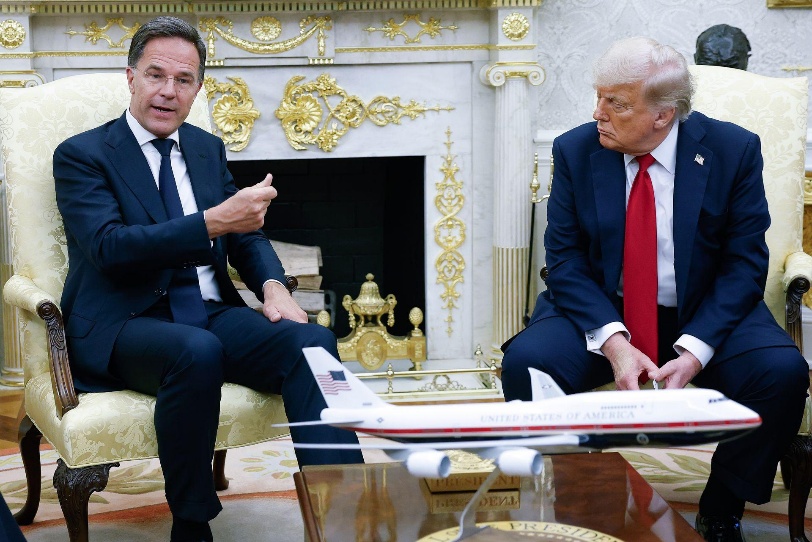
U.S. President Donald Trump meets with NATO Secretary General Mark Rutte (L) in the Oval Office at the White House, in Washington, DC. (Kevin Dietsch/Getty Images)
Trump’s 50-Day Ultimatum: From Diplomacy to Economic Warfare
President Trump’s appearance alongside NATO Secretary General Mark Rutte marked a decisive shift in American strategy toward Russia’s war in Ukraine. Speaking from the White House, Trump delivered an ultimatum that surprised even his closest allies: Russia has 50 days to agree to a peace deal or face “severe tariffs” of 100% on secondary imports.
“We’re gonna be doing very severe tariffs if we don’t have a deal in 50 days. Tariffs that are about 100%, we call them secondary tariffs,” Trump declared, his frustration with Putin evident. “I’m disappointed in President Putin because I thought we would have had a deal two months ago, but it doesn’t seem to get there.”
The president’s personal irritation was palpable as he described the disconnect between diplomatic conversations and battlefield realities. “I speak to Putin a lot about getting this done, and then missiles are launched into Kyiv or some other city. I go home and tell the First Lady, ‘I spoke with Vladimir today. We had a wonderful conversation.’ She says, ‘Oh, really? Another city was just hit.'”
Trump’s timeline appeared to fall short of the bipartisan Senate bill seeking 500% tariffs on countries purchasing Russian oil, though the threat represented a significant escalation from his previous approach. The announcement came as Axios reported that Putin had told Trump during their July 3 call that Russia intended to intensify operations in eastern Ukraine over the next 60 days—a timeline that directly challenged Trump’s negotiating efforts.
Patriots Within Days: NATO’s Revolutionary Financing Model
The military component of Trump’s announcement proved equally significant. Some Patriot air defense systems and missiles would arrive in Ukraine “within days,” with Trump explaining that “a couple of the countries that have Patriots are going to swap over and will replace the Patriots with the ones they have.” The president indicated that one unnamed state had “17 Patriots ready to be shipped” with a “big portion of the 17” heading to Ukraine quickly.
The delivery mechanism represented a revolutionary approach to military aid. Under the new NATO arrangement, the alliance would purchase $10 billion in weapons from the U.S. in the first wave, then distribute them to Ukraine while fully reimbursing Washington. “We’re gonna make top-of-the-line weapons, and they’ll be sent to NATO. NATO may choose to have a certain number of them sent to other countries,” Trump explained.
NATO Secretary General Rutte emphasized the scale of the commitment: “Ukraine will get its hands on massive numbers of military equipment, both for air defense, but also missiles, ammunition, etc.” The arrangement addressed Trump’s long-standing concerns about burden-sharing while dramatically increasing weapons flows to Ukraine.
European allies were moving beyond the immediate commitment, with German officials confirming discussions about “more than three” Patriot systems for Ukraine. The broader European response suggested coordinated Western policy adjustment following months of Russian escalation.
The Kellogg Mission: Intelligence Briefings and Strategic Assessments
U.S. Special Envoy Keith Kellogg’s arrival in Kyiv hours before Trump’s announcement provided crucial context for the policy shift. President Zelensky described their meeting as “productive,” focusing on strengthening Ukraine’s air defenses, joint weapons production, and pathways to peace.
“We discussed how to bring peace closer, and what we can actually do together—stronger air defense, joint production, and buying weapons with Europe,” Zelensky said. The Ukrainian president emphasized that “Moscow won’t stop unless it’s stopped by force,” reflecting the strategic assessment driving Washington’s harder line.
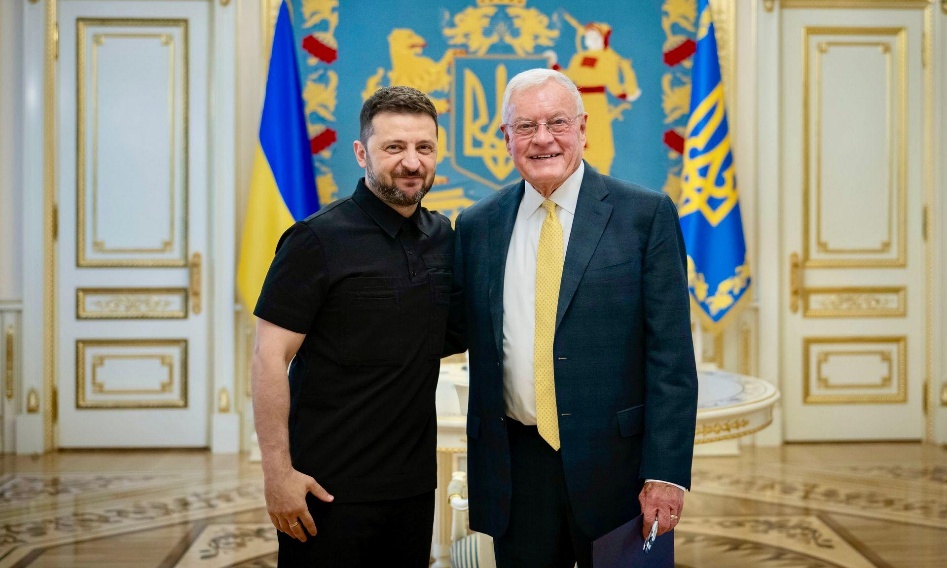
President Volodymyr Zelensky (L) meets U.S. Special Envoy for Ukraine Keith Kellogg (R) in Kyiv. (Volodymyr Zelensky / X)
Kellogg was scheduled to receive comprehensive intelligence briefings on Russia’s military capabilities and Ukraine’s battlefield outlook from top commanders Oleksandr Syrsky and Andriy Hnatov. The envoy would also meet with Ukraine’s intelligence and security chiefs, with Zelensky promising “the information will be complete.”
The intelligence sharing represented a significant deepening of U.S.-Ukraine strategic cooperation, moving beyond weapons transfers to comprehensive battlefield assessment and strategic planning.
Donetsk Oblast: Advances and Counterattacks
In the Siversk direction, Ukrainian forces achieved assessed advances in the Serebryanske forest area northeast of Hryhorivka, with geolocated footage confirming tactical success. Russian forces conducted offensive operations near Serebryanka, Hryhorivka, Verkhnokamyanske, Vyimka, and Ivano-Darivka.
Siversk Order of Battle: Elements of the 164th Motorized Rifle Brigade (25th Combined Arms Army, Central Military District) operated near Serebryanka, while the 14th Separate Tank Battalion (3rd Combined Arms Army, formerly 2nd Luhansk People’s Republic Army Corps) operated in the Serebryanske forest area.
The Chasiv Yar direction saw continued Russian offensive operations near Bila Hora, Stupochky, and Predtechyne without confirmed advances. In the Toretsk direction, Russian forces achieved assessed advances in western Novospaske and along Leninska Street in central Yablunivka, with additional unconfirmed claims of progress northwest of Dachne.
Toretsk Order of Battle: Elements of the 4th Motorized Rifle Brigade (3rd Combined Arms Army, Southern Military District) operated west of Dyliivka. Drone operators from the 68th Separate Reconnaissance Battalion (20th Motorized Rifle Division, 8th Combined Arms Army) struck Ukrainian positions near Stepanivka, while the Kaira Detachment of the 39th Motorized Rifle Brigade (68th Army Corps, Eastern Military District) operated near Sofiivka.
Russian forces in the Pokrovsk direction achieved assessed advances in northeastern Fedorivka, southwest of Razine, and northeastern Novoekonomichne. The Russian Ministry of Defense claimed seizure of Fedorivka and Mayak, with additional unconfirmed claims of advances toward Volodymyrivka and in central Boykivka.
Pokrovsk Order of Battle: Russian Chief of General Staff Valery Gerasimov inspected the Central Grouping of Forces in the Pokrovsk direction on July 14. Drone operators from the 5th Motorized Rifle Brigade (51st Combined Arms Army, formerly 1st Donetsk People’s Republic Army Corps) struck Ukrainian positions near Novoekonomichne.
Ukrainian forces demonstrated tactical initiative in the Novopavlivka direction, achieving assessed advances in eastern Tovste and western Piddubne. Russian forces maintained pressure toward Novopavlivka itself and surrounding settlements, with unconfirmed claims of advances toward Voskresenka and Oleksandrohrad.
Novopavlivka Order of Battle: Elements of the 336th Naval Infantry Brigade (Baltic Fleet), 37th Motorized Rifle Brigade (36th Combined Arms Army, Eastern Military District), 5th Tank Brigade (36th Combined Arms Army), and 30th Spetsnaz Company operated near Voskresenka. The 36th Motorized Rifle Brigade (29th Combined Arms Army, Eastern Military District) operated near Yalta.
Russian Strategic Positioning: The Zaporizhzhia Gambit
The capture of Malynivka represented more than tactical success—it suggested renewed Russian strategic ambitions toward Zaporizhzhia City. ISW assessed that Russian forces intended to leverage recent advances in western Donetsk Oblast to launch westward offensives into Dnipropetrovsk and Zaporizhzhia oblasts.
Russian forces had established a wide frontline spanning from Malynivka to Zelenyi Hai, creating potential launch points for operations toward Hulyaipole, Velykomykhailivka, and Havrylivka. The positioning suggested Russian military command confidence in their ability to extend operations beyond current axes of advance.
The strategic implications were sobering. Russian forces advancing westward from current positions would need to travel roughly 150 kilometers to reach Zaporizhzhia City, requiring a multi-year offensive effort given current advance rates. The city’s size and Ukrainian defensive preparations made rapid capture unlikely, but the Russian positioning indicated long-term territorial ambitions.
Frontline Stalemate: Continued Russian Pressure Without Breakthrough
Across major frontline sectors, Russian forces maintained intensive pressure while achieving only marginal gains. In the Kharkiv Oblast, Russian forces continued offensive operations toward Vovchansk and Zelene, with unconfirmed claims of advances within fields west of Vovchansk. Ukrainian brigade spokesperson reported Russian forces conduct up to 10 assaults daily, losing an average of 100 personnel per day in the Vovchansk direction.
Kharkiv Oblast Order of Battle: Elements of the 128th Motorized Rifle Brigade (44th Army Corps, Leningrad Military District) operated in Vovchansk, while the 18th Motorized Rifle Division (11th Army Corps, Leningrad Military District) operated near Hlyboke and Zelene.
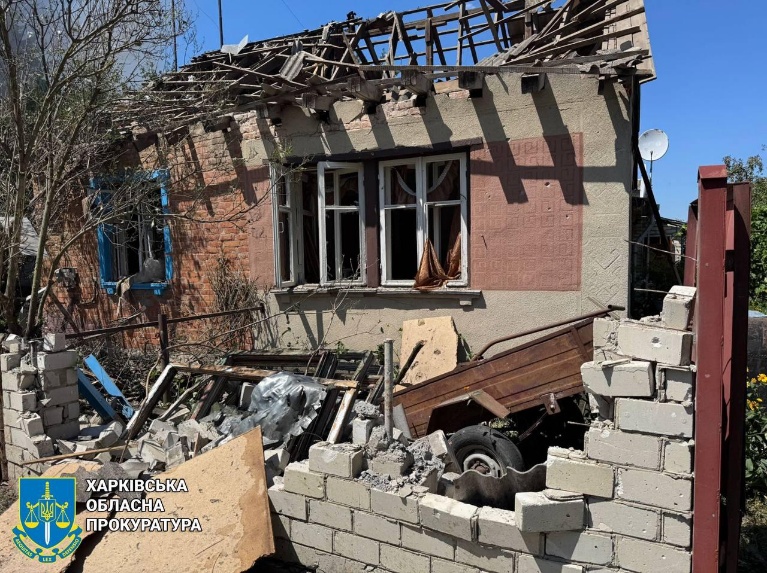
The aftermath of a Russian drone attack on Kharkiv Oblast. (Kharkiv Regional Prosecutor’s Office)
In the Velykyi Burluk direction, Russian milbloggers claimed advances west and south of Milove, with attacks aimed at creating a “buffer zone” and stretching Ukrainian reserves. The Kupyansk direction saw Russian forces attack multiple settlements including Kindrashivka, Holubivka, Radkivka, Synkivka, and Petropavlivka without confirmed advances.
Kupyansk Order of Battle: The 1st Tank Regiment and 27th Separate Motorized Rifle Brigade (both 1st Guards Tank Army, Moscow Military District) operated in the Kupyansk direction, while the 3rd Motorized Rifle Division (20th Combined Arms Army, Moscow Military District) operated in the Hrekivka-Druzhelyubivka direction.
Russian forces in the Lyman direction attacked toward Serednie, Shandryholove, Karpivka, Novomykhailivka, Ridkodub, and Torske, with Ukrainian forces counterattacking near Ridkodub and Katerynivka.
Lyman Order of Battle: Elements of the 1st and 15th Motorized Rifle Regiments (both 2nd Motorized Rifle Division, 1st Guards Tank Army) and 144th Motorized Rifle Division (20th Combined Arms Army) operated near Karpivka and Zelena Dolyna. The 37th Motorized Rifle Regiment (67th Motorized Rifle Division, 25th Combined Arms Army, Central Military District) operated in Torske.
Northern Axis: Sumy Oblast Under Pressure
Russian forces continued their summer offensive in northern Sumy Oblast, achieving assessed advances in western Yunakivka northeast of Sumy City. Ukrainian military observer Kostyantyn Mashovets reported that Ukrainian forces bypassed Russian positions near Oleksiivka from the east and northeast, breaking through to Novomykolaivka.
Unconfirmed Russian claims included advances in Kindrativka and Ryzhivka near the international border, with a Russian milblogger claiming elements of the 76th Airborne Division seized Yunakivka. However, another Russian source denied reports of Russian seizure of Sobolivka and Mosovka near Kupyansk.
Russian forces attacked northwest of Sumy City near Beszalivka and Ryzhivka, north near Andriivka and Kindrativka, and northeast near Yunakivka on July 13-14. Russian milbloggers claimed Ukrainian forces counterattacked near Kindrativka and Andriivka.
Order of Battle Analysis: Elements of the 51st VDV Regiment (106th VDV Division) and 810th Separate Naval Infantry Brigade (Black Sea Fleet) operated near Loknya. The 155th Naval Infantry Brigade (Pacific Fleet) and 30th Motorized Rifle Regiment (72nd Motorized Rifle Division, 44th Army Corps, Leningrad Military District) operated near Kindrativka. Drone operators from the Smuglyanka Detachment struck positions near Kindrativka, while the Anvar Spetsnaz Detachment targeted Ukrainian positions near Esman, Katerynivka, Novovasylivka, and Prohres.
Drone Warfare Evolution: Ukrainian Interceptor Mass Production
Defense Procurement Agency Director Arsen Zhumadilov revealed that Ukraine had contracted “tens of thousands” of interceptor drones now entering mass production. The technology represented a critical adaptation to Russia’s escalating drone warfare, with over 1,800 drones launched against Ukraine in the past week alone.
“Tens of thousands. This is what we have already contracted and will continue to contract,” Zhumadilov explained. The scale reflected Ukraine’s recognition that traditional air defense systems alone could not counter Russia’s volume-based drone strategy.
The interceptor drones offered cost-effective solutions to expensive Russian Shahed attacks, with Ukrainian forces reporting “hundreds” of Russian drones downed during recent operations. Ukraine’s military intelligence released footage of the Liut robotic platform conducting ground attacks in Sumy Oblast, demonstrating expanding unmanned warfare capabilities.
Russian Aerial Campaign: Sustained Terror Tactics
Russian forces maintained their intensive aerial campaign, launching 136 strike and decoy drones plus four S-300/400 missiles on the night of July 13-14. Ukrainian air defenses intercepted 61 Shahed-type drones while electronic warfare systems suppressed 47 decoys, but 28 drones reached their targets across 10 locations.
The attacks demonstrated Russia’s continued commitment to overwhelming Ukrainian air defenses through volume rather than precision. Industrial infrastructure in Kharkiv and Kyiv oblasts suffered damage, while civilian casualties continued mounting across multiple regions.
Russian drone attacks on July 14 killed one person and injured 21 others in Kharkiv and Sumy oblasts. In Zlatopil, Kharkiv Oblast, two Geran-2 drones struck residential buildings, killing a 57-year-old woman and injuring ten people including a 13-year-old girl. Subsequent strikes on educational and medical facilities in Sumy injured eleven more people.
Occupation Intensifies: Digital Control and Cultural Suppression
Russian occupation authorities accelerated their Russification campaigns across occupied territories. In Mariupol, occupation officials set a November 1 deadline for residents to re-register SIM cards using Russian documents, with the Phoenix mobile operator conducting home visits for residents with limited mobility.
The SIM card registration drive represented more than administrative control—it created comprehensive databases of occupied territory residents while privileging Russian-controlled telecommunications operators. The Donetsk People’s Republic reported over 850,000 residents had confirmed personal data, suggesting widespread possession of Russian passports under coercion.
Occupation authorities simultaneously expanded the “Russkiy Mir” satellite television project, with Kherson Oblast residents able to exchange banned “Gorynych” satellite dishes for Russian systems until November 30. The project had already installed 89,000 satellite kits across occupied territories, with plans for 155,000 total installations.
Veteran Administration: Militarizing Occupied Governance
Russian occupation authorities installed veteran Vladimir Oganesov, a finalist in the “Heroes of Kherson” program, as occupation head of Nova Kakhovka. Oganesov had commanded assault units during Kherson City’s 2022 seizure, representing the systematic installation of war veterans into civilian administrative positions.
The “Heroes of Kherson” program mirrored Putin’s federal “Time of Heroes” initiative, seeking to place war veterans throughout Russian government structures. The appointments further militarized occupied Ukraine while strengthening Kremlin control over governance systems.
Russian educational advisors would begin working in occupied Kherson Oblast schools during the 2025-2026 academic year, ensuring adherence to Russian curricula focused on “traditional values” and Great Patriotic War mythology. The educational oversight represented systematic efforts to erase Ukrainian identity among occupied territory children.
Government Reshuffle: Svyrydenko’s Elevation
President Zelensky announced his proposal for First Deputy Prime Minister Yulia Svyrydenko to succeed Denys Shmyhal as prime minister, launching anticipated government changes. Zelensky met with Svyrydenko to discuss cooperation with the U.S. and Europe, economic strengthening, arms production boosting, and executive branch reform.
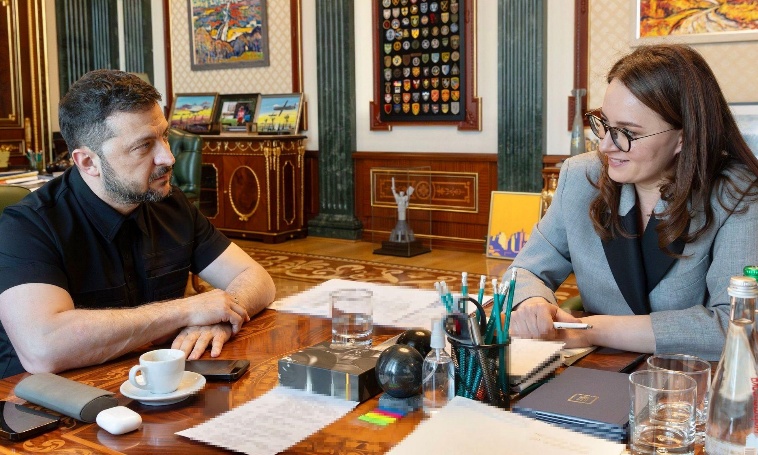
President Volodymyr Zelensky (L) met with First Deputy Prime Minister Yulia Svyrydenko (R) in Kyiv. (Volodymyr Zelensky / X)
The reshuffle reflected Zelensky’s adaptation to changing international dynamics, with Svyrydenko’s economic expertise potentially valuable for managing reconstruction funds and defense industrial development. Parliament was reportedly planning to vote on dismissing the current government on July 16, with new appointments expected July 17.
Zelensky hinted that Shmyhal might be considered for defense minister, noting his “extensive experience will definitely be valuable” in a position where “the country’s resources are currently concentrated.” The potential appointment suggested recognition of resource management skills in defense procurement and production.
Economic Crimes Investigation: Anti-Corruption Standoff
The Economic Security Bureau selection commission reaffirmed its choice of Oleksandr Tsyvinsky as agency head, rejecting the government’s demand for alternative candidates. The commission unanimously supported their decision and returned the government’s request for a repeat vote.
“The selection commission had already completed its mandate—our work is finished,” said commission chair Laura Stefan. The standoff highlighted tensions between independent oversight and government control over anti-corruption institutions.
The controversy surrounding Tsyvinsky’s nomination—allegedly over his estranged father’s Russian passport—reflected broader concerns about democratic institution independence during wartime. International observers noted the potential precedent for government interference in reform commitments.
European Integration Challenges: Trade Agreement Opposition
Five EU member states expressed opposition to Ukraine’s new trade agreement within the Deep and Comprehensive Free Trade Area framework. Poland, Slovakia, Hungary, Bulgaria, and Romania worried the agreement could destabilize European agricultural markets.
The opposition reflected ongoing tensions over Ukrainian agricultural exports, with Polish truckers maintaining protests at border crossings. President-elect Karol Nawrocki stated he would not agree to “unfair competition with Ukraine for Polish agriculture or the logistics sector.”
The trade challenges illustrated Ukrainian integration difficulties beyond military support, with economic relationships proving equally complex amid war pressures.
Sanctions Breakthrough: Slovakia’s Conditional Agreement
Slovak Prime Minister Robert Fico hinted at approval for the EU’s 18th sanctions package against Russia following assurances from Brussels. “I only just received the draft guarantees, and tomorrow we are approaching the final,” Fico stated, suggesting resolution of the bloc’s prolonged deadlock.
Slovakia’s opposition had centered on concerns about transitioning away from Russian gas, with Fico’s government increasingly aligned with Moscow. The potential breakthrough would allow implementation of new sanctions including reduced Russian oil price caps.
The sanctions package represented continued European commitment to economic pressure on Russia despite individual member state concerns about energy security and economic impacts.
Baltic Tensions: Estonia’s HIMARS Test Provokes Russian Response
Russia vowed to “firmly defend” its interests in the Baltic region following Estonia’s test of HIMARS multiple launch rocket systems over the Baltic Sea. Kremlin spokesperson Dmitry Peskov described the Baltic as “tense due to the aggressive policies of European coastal states.”
Estonia’s first use of HIMARS against maritime targets represented expanding NATO defensive capabilities near Russian borders. The U.S.-made systems, with 300-kilometer range, potentially reached parts of Russia’s Leningrad Oblast.
Lithuania had ordered eight HIMARS systems with deliveries expected in 2025, while Latvia signed agreements for six launchers plus ATACMS missiles by 2027. The Baltic rearmament reflected regional recognition of Russian threats following Ukraine’s invasion.
Diplomatic Outreach: Dmitriev’s Constructive Dialogue Appeal
Russian sovereign wealth fund head Kirill Dmitriev called for “constructive dialogue” between Washington and Moscow amid rising tensions. “Constructive dialogue between Russia and the U.S. will always achieve more than the tired, destructive language of pressure,” Dmitriev wrote on X.
The appeal came as Trump’s policy shifted toward increased military support for Ukraine and economic pressure on Russia. Dmitriev’s message suggested Russian recognition of deteriorating relations with the Trump administration.
Previously appointed as Putin’s special envoy for economic affairs with the Trump administration, Dmitriev’s statement reflected Moscow’s concern about Washington’s hardening stance following diplomatic failures.
Intelligence Operations: SBU Strikes and Partisan Actions
Ukraine’s Security Service eliminated alleged Russian killers of SBU Colonel Ivan Voronych within three days of his July 10 assassination. SBU head Vasyl Maliuk revealed the killers—a man and woman—had been ordered by Russia’s FSB to establish Voronych’s routine before executing their mission.
The rapid response demonstrated Ukrainian counter-intelligence capabilities while highlighting Russian intelligence operations’ scope within Ukraine. Maliuk’s statement that “the only prospect of the enemy on the territory of Ukraine is death” reflected operational doctrine rather than rhetoric.
In occupied Mariupol, pro-Ukrainian partisans destroyed an Akhmat unit vehicle, with the Atesh group claiming overnight sabotage operations. The attack demonstrated continuing resistance networks in deeply occupied territories despite intensive Russian control measures.
North Korean Escalation: Artillery Shell Estimates
South Korean Defense Intelligence estimated North Korea had provided over 12 million rounds of 152mm artillery shells to Russia in approximately 28,000 containers. The scale reflected North Korea’s critical role in sustaining Russian ammunition supplies amid domestic production shortfalls.
Kim Jong Un’s pledge of “unconditional support” for Russia’s war during Foreign Minister Lavrov’s visit reinforced the expanding Moscow-Pyongyang alliance. Reports suggested an additional 25,000-30,000 North Korean soldiers were being prepared for deployment to aid Russian forces.
The partnership represented a fundamental shift in global conflict dynamics, with North Korea providing both human and material resources while reportedly receiving nuclear technology and economic support in return.
Looking Forward: Ultimatum Politics and Strategic Patience
Trump’s 50-day ultimatum to Russia represented a calculated gamble that economic pressure combined with enhanced military support for Ukraine could force Putin toward meaningful negotiations. The timeline suggested Trump’s recognition that his initial diplomatic approach had failed to produce results.
EU diplomat Kaja Kallas criticized the 50-day timeframe as “very long” given daily civilian casualties, reflecting European preference for immediate pressure escalation. The transatlantic coordination challenge highlighted differing approaches to balancing diplomacy with coercion.
Putin’s reported intention to intensify eastern Ukraine operations over the next 60 days directly challenged Trump’s timeline, setting up a confrontation between American ultimatums and Russian military objectives. The coming weeks would determine whether economic threats could overcome battlefield momentum.
For Ukraine, the convergence of enhanced military support, diplomatic backing, and economic pressure on Russia offered hope for shifting war dynamics. However, the 50-day timeline created new pressures for Ukrainian forces to demonstrate battlefield success while managing increased Russian offensive operations.
The revolution in NATO weapons financing promised sustained military support beyond immediate political timelines, potentially providing strategic stability for Ukrainian planning. Whether this support could translate into operational advantages sufficient to force Russian strategic recalculation remained the war’s central question.