
As Moscow Dismisses Washington’s Latest Ultimatum and Launches Record Drone Barrages, Ukraine Faces Government Reshuffling While Russian Forces Advance on Multiple Fronts
Summary of the Day – July 15, 2025
The day began with the echo of explosions across Ukraine as Russian forces launched yet another massive drone assault, this time targeting cities from Kharkiv to Kryvyi Rih with devastating precision. But it was the diplomatic theater in Washington and Moscow that captured global attention, as President Donald Trump’s latest 50-day ultimatum to Russia met with calculated indifference from the Kremlin and skeptical fatigue from Ukrainians who have heard such promises before. While Russian officials dismissed Trump’s threatened “severe tariffs” as theatrical posturing, Ukraine’s parliament moved to reshape its government, suspending participation in the Ottawa Convention on anti-personnel mines and preparing for a major cabinet reshuffle that could see Prime Minister Denys Shmyhal become defense minister.
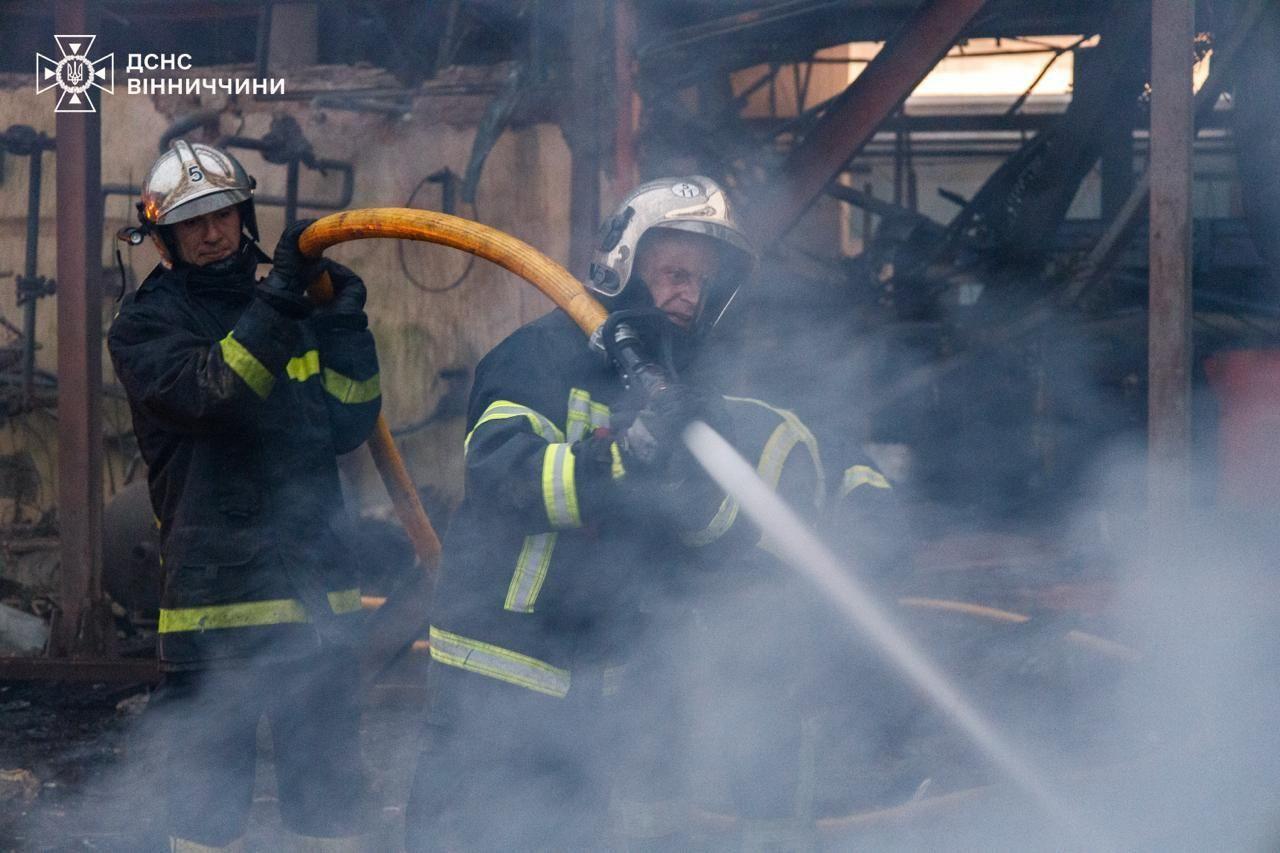
Firefighters putting out fires following Russian attacks against Vinnytsia Oblast, Ukraine, overnight. (State Emergency Service/Telegram)
Moscow’s Calculated Dismissal: The Kremlin’s Response to Trump’s Theater
Russian officials delivered a masterclass in diplomatic contempt as they responded to President Trump’s latest threat to impose “severe tariffs” on Russia unless Moscow agrees to a peace deal within 50 days. Deputy Foreign Minister Sergei Ryabkov told TASS that Russia views any attempt to make demands of Russia, “especially ultimatums,” as “unacceptable.” His words carried the weight of a nation that has weathered three years of sanctions and believes it can outlast Western pressure indefinitely.
Kremlin Spokesperson Dmitry Peskov echoed these sentiments while maintaining diplomatic courtesy, claiming Russia remains ready to participate in negotiations but blamed Ukraine for the lack of progress. The most dismissive response came from Security Council Deputy Chairman Dmitry Medvedev, who posted on X that “Russia didn’t care” about Trump’s “theatrical ultimatum.”
Foreign Minister Sergei Lavrov expressed confidence that Russia would cope with any new US tariffs, noting that Moscow is already “coping” with existing sanctions. This confidence reflects Moscow’s belief that its economy has adapted to Western pressure and that new tariffs would prove ineffective.
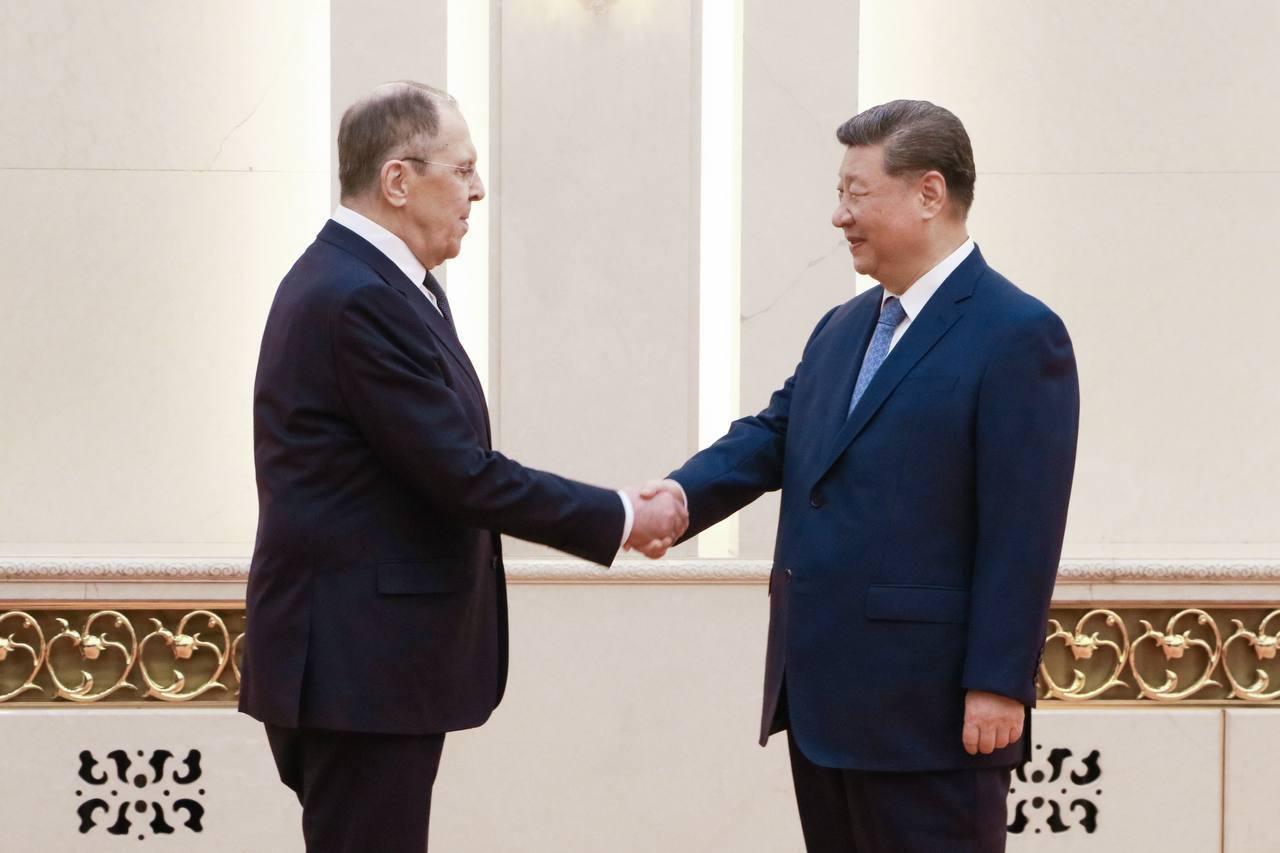
Russian Foreign Minister Sergey Lavrov (L) and Chinese President Xi Jinping in Beijing, China. (Russian Foreign Ministry/Telegram)
Putin’s Unwavering Vision: The Theory of Victory That Drives Russian Strategy
Behind the diplomatic dismissals lies a deeper strategic calculation. According to Reuters, citing three sources close to the Kremlin, Putin intends to continue the war until the West concedes to his demands, unfazed by Trump’s threats and potentially expanding territorial demands as Russian forces advance. One source revealed that Putin believes none of Russia’s diplomatic engagements have included detailed discussions on a peace plan, so he “will continue until he gets what he wants.”
Putin’s demands remain unchanged from 2021 and early 2022: Ukraine’s effective capitulation, recognition of Russian territorial claims, and guarantees against NATO membership. His theory of victory rests on the belief that Russia can achieve these goals through indefinite creeping advances while outlasting Western support for Ukraine. This calculation explains why no amount of economic pressure or diplomatic ultimatums has moved Putin toward substantive negotiations.
The Drone Apocalypse: Russia’s Escalating Aerial Campaign
Even as diplomatic discussions continued, Russian forces demonstrated their commitment to military pressure through a devastating overnight assault on July 16. The attack targeted multiple Ukrainian cities, with Kharkiv suffering at least 17 explosions in just 20 minutes. Russian Shahed drones struck civilian enterprises, igniting fires and injuring at least three people in Kharkiv alone.
Kryvyi Rih in Dnipropetrovsk Oblast faced waves of drone attacks resulting in large-scale power outages and injury to a 17-year-old boy. In Vinnytsia Oblast, eight people were wounded and hospitalized following drone strikes that hit two industrial facilities and caused massive fires. The attacks demonstrated Russia’s ability to strike deep into Ukraine while maintaining pressure across multiple fronts.
This escalation comes as President Zelensky reported that Russia had launched over 1,800 long-range drones, more than 1,200 glide bombs, and 83 missiles of various types in just one week. The Ukrainian Air Force reported that Russian forces launched 267 strike and decoy drones on the night of July 14-15, with Ukrainian forces shooting down 178 drones while 23 hit seven unspecified locations.
Government in Transition: Ukraine’s Cabinet Reshuffle Takes Shape
Amid the military pressure, Ukraine’s parliament moved to reshape the government’s leadership structure. The Verkhovna Rada scheduled a vote on dismissing Prime Minister Denys Shmyhal’s government for July 16, with a vote on the new cabinet expected the following day. Shmyhal announced his resignation, thanking President Zelensky for his trust and Ukraine’s defenders holding the front lines.
Zelensky has proposed First Deputy Prime Minister and Economy Minister Yuliia Svyrydenko to lead the new government, signaling a significant shift in Ukraine’s economic and political direction. The president met with Svyrydenko and Deputy Prime Minister Mykhailo Fedorov on July 15, outlining the “renewed” government’s key priorities: increasing domestic weapons production, contracting required drone volumes for Ukraine’s Defense Forces, substantial deregulation to unlock economic potential, and ensuring full implementation of social support programs.
Intelligence suggests that Shmyhal, who has served as prime minister since 2020, might be appointed the new defense minister, while current defense chief Rustem Umerov is being considered as a possible ambassador to the United States. This reshuffling reflects Ukraine’s need to optimize its leadership structure for the prolonged war effort.
The Mine Field Decision: Ukraine Exits the Ottawa Convention
In a strategic move that underscores the harsh realities of modern warfare, Ukraine’s parliament passed legislation suspending the country’s participation in the Ottawa Convention banning anti-personnel mines. The decision, supported by 305 lawmakers with 40 abstaining and none voting against, reflects Ukraine’s need to achieve “parity in forces and means necessary to defend against Russian aggression,” as Zelensky explained.
The president noted that “Russia has never been a party to this convention and uses anti-personnel mines extremely cynically,” highlighting the asymmetric nature of the conflict. This decision follows similar moves by the Baltic states and Poland, who announced their intention to withdraw from the convention in March, demonstrating how Russia’s aggression is forcing democratic nations to reconsider humanitarian restrictions on warfare.
The move comes after the Biden administration approved provision of anti-personnel mines to Ukraine in 2024, recognizing their necessity in stalling Russian advances. While the decision may take six months to implement under the convention’s Article 20, it signals Ukraine’s determination to use all available defensive tools.
Cyber Warfare Victory: Ukraine Cripples Russian Drone Production
Ukraine’s military intelligence achieved a significant victory in the cyber domain, “paralyzing” operations at Gaskar Group, one of Russia’s largest drone suppliers. The cyberattack, conducted in coordination with Ukrainian cyber volunteers, targeted the company’s internal network and server infrastructure, gaining access to over 47 terabytes of technical data related to Russian drone production.
According to HUR sources, all data stored on Gaskar’s servers was destroyed, including confidential employee questionnaires and complete technical documentation on drone production. The attack disabled the company’s internet services, production software, and accounting systems, effectively crippling operations at its development center. This technical intelligence was reportedly handed over to Ukrainian Defense Forces specialists for analysis.
The operation demonstrates Ukraine’s growing capability in cyber warfare, complementing its physical strikes against Russian defense infrastructure. Such attacks represent a cost-effective way to disrupt Russian military production while avoiding the risks associated with physical strikes deep in Russian territory.
Battlefield Dynamics: Russian Advances and Ukrainian Resilience
Russian forces continued their methodical advance across multiple fronts, with confirmed gains in the Kupyansk, Borova, and Toretsk directions. Geolocated footage showed Russian forces raising a flag in northwestern Novospaske, west of Toretsk, indicating the settlement’s capture. Additional footage revealed Russian advances in northwestern Yablunivka and southeast of Rusyn Yar, both northwest of Toretsk.
In the Kupyansk direction, Russian forces advanced north of Krasne Pershe, while in the Borova direction, they gained ground northeast of Hrekivka. These tactical gains reflect Russia’s strategy of making incremental advances while maintaining pressure across the entire front line.
Ukrainian forces demonstrated their own offensive capabilities, with recent advances in northern Sumy Oblast and continued operations in Kursk Oblast. Fighting continued in unspecified areas of Kursk Oblast, with Russian milbloggers claiming Ukrainian counterattacks toward Tetkino and near Novyi Put.
The Ukrainian spokesperson for a border guard detachment operating in northern Sumy Oblast noted that Russian forces in July 2025 are primarily attacking on foot, having exhausted their motorcycle and all-terrain vehicle resources used extensively in June. This tactical shift suggests Russian adaptation to Ukrainian defensive measures while indicating resource constraints.
The International Dimension: US-NATO Weapons Deal and European Support
Despite skepticism about Trump’s ultimatum, the United States and NATO unveiled a significant weapons delivery scheme that could provide Ukraine with advanced American military systems. Trump announced that some Patriot air defense systems and missiles could arrive in Ukraine “within days,” with NATO allies financing the deliveries through a swap system where European countries would transfer their systems to Ukraine and receive replacements from the United States.
The first wave of this program reportedly includes $10 billion worth of weapons, including missiles, air defense systems, and artillery shells. Denmark and Sweden announced their willingness to participate in the scheme, with Danish Foreign Minister Lars Lokke Rasmussen stating that Copenhagen should “lean into” providing money to acquire Patriot systems for Ukraine.
This development represents a practical response to Ukraine’s immediate defensive needs, regardless of the diplomatic theater surrounding Trump’s ultimatum. The program’s structure allows for rapid delivery while maintaining NATO’s defensive capabilities, demonstrating alliance solidarity even amid uncertainty about long-term US commitments.
The Economic Battlefield: Sanctions, Tariffs, and Financial Warfare
While Trump’s tariff threats captured headlines, the economic warfare between Russia and the West continued through other channels. The European Union failed to approve its 18th package of sanctions against Russia due to continued obstruction from Slovakia, which seeks exemptions related to the planned phase-out of Russian gas.
Slovak Prime Minister Robert Fico explicitly rejected the European Commission’s proposal to stop Russian gas flows by 2028, calling it “imbecile” and demanding exemptions until Slovakia’s contract with Gazprom expires in 2034. This opposition demonstrates how Russian energy dependence continues to fracture European unity, providing Moscow with leverage despite broader sanctions.
Meanwhile, Euroclear CEO Valerie Urbain warned against EU plans to generate more money for Ukraine by investing frozen Russian assets in riskier investments, calling such moves “expropriation” that could trigger sanctions from Moscow. With 191 billion euros in Russian central bank assets held by Euroclear, the debate over how to maximize returns while minimizing legal risks remains contentious.
The US-Ukraine Investment Partnership: Building Tomorrow’s Economy
The United States government’s development finance agency began searching for a company to manage the joint US-Ukraine investment fund, marking a crucial step in implementing the critical minerals agreement signed on April 30. The U.S. International Development Finance Corporation (DFC) issued a Request for Information to select a fund administrator, with responses due by July 27.
The fund, structured as a partnership between the DFC and Ukraine’s Public-Private Partnership Agency, will develop projects in Ukraine’s natural resources including oil and gas, lithium, graphite, and critical minerals. Initial capital will be drawn from 50% of royalties from new Ukrainian extraction permits, U.S. contributions, and Ukraine’s startup funding, with current U.S. military aid classified as a conditional American contribution.
According to commercial terms, the fund’s governing board will include three representatives from each country, with all investment decisions requiring unanimous approval. Profits generated during the fund’s first decade will be fully reinvested in Ukrainian projects, with income distribution between partners only allowed after 2035. Economy Minister Yuliia Svyrydenko aims to launch at least three projects within 18 months, with the pilot project expected to be a lithium deposit in Dobra.
China’s Deepening Alliance: Xi and Lavrov Strengthen Ties
Chinese President Xi Jinping told Russia’s top diplomat that their countries should “strengthen mutual support” during Shanghai Cooperation Organisation talks in Beijing. Meeting with Foreign Minister Sergey Lavrov, Xi declared that mutual trust between the two countries had “deepened” and called on both sides to “strengthen mutual support on multilateral forums.”
The meeting came just hours after Trump’s ultimatum to Russia, with Xi stating that Beijing and Moscow should work to “unite countries of the global South and promote the development of the international order in a more just and reasonable direction.” China’s foreign ministry spokesman Lin Jian rejected U.S. pressure, stating that “coercion and pressure will not solve problems” and that China “firmly opposes all illegal unilateral sanctions.”
This diplomatic alignment demonstrates China’s commitment to supporting Russia despite mounting Western pressure, with Beijing positioning itself as a key partner in Moscow’s resistance to Western sanctions and diplomatic isolation.
The Shabunin Affair: Ukraine’s Anti-Corruption Crusader Under Fire
Ukraine’s anti-corruption establishment faced a significant challenge as the State Bureau of Investigation (SBI) charged Vitaliy Shabunin, head of the Anti-Corruption Action Center, with evading military service and fraud. The Kyiv Pechersk District Court placed Shabunin under personal recognizance until August 20, allowing him to remain free without bail while the case proceeds.
Shabunin, a 27-year-old current member of Ukraine’s Armed Forces, faces accusations linked to Viktor Yushko, a serviceman and former commander of the 207th battalion of the Kyiv territorial defense. The SBI alleges that Yushko authorized fictitious business trips for military personnel, including Shabunin, allowing him to avoid combat duties while receiving a monthly military allowance of 50,000 hryvnias ($1,200).
The charges have sparked controversy, with Shabunin’s team describing them as politically motivated and linked to Presidential Office Head Andriy Yermak and Deputy Chief of Staff Oleh Tatarov. If convicted, Shabunin faces up to 10 years in prison, raising concerns about the state of civil society and press freedom during wartime.
Agricultural Resilience: Kherson’s Farmers Harvest Hope
Despite continued Russian shelling and drone attacks, farmers in Ukraine’s Kherson region harvested the third batch of watermelons since parts of the region were liberated from Russian occupation. The first 500 tons were collected this season, demonstrating remarkable resilience in the face of ongoing military pressure.
“Our farmers continue to fight for every sprout of wheat under the scorching sun, Russian artillery fire, and drone attacks,” said Dmytro Butriy, the first deputy head of the Kherson Regional Administration. In 2025, local farmers have already gathered over 46,000 tons of grain and legumes, along with nearly 5,000 tons of rapeseed and around 2,000 tons of vegetables.
Local farmers sowed nearly 220,000 hectares of land for the 2025 season, though frost and drought damaged or destroyed crops on more than 50,000 hectares. Preliminary losses to farmers exceed 1 billion hryvnias ($23.9 million), with 300 farms applying for formal recording of their losses. The challenges include not only weather but also Russian attacks that burned around 5,000 hectares of fields in June alone.
France Names Russia Primary Threat: New Strategic Assessment
France named Russia the “most direct” threat to the country’s interests and European stability in its new National Strategic Review published on July 14. The document, commissioned by President Emmanuel Macron to evaluate strategic goals until 2030, stated that support for Ukraine against Russian aggression “has remained the immediate strategic priority for almost all Europeans.”
The review warned that “in the years to come, and by 2030, the main threat to France and Europeans is the risk of open warfare against the heart of Europe.” It noted that Moscow has stepped up cyberattacks, sabotage, and espionage activities while employing “the full spectrum of its conventional capabilities” against Ukraine.
France further warned that Russia seeks to discourage Ukraine’s allies from increasing military support while strengthening partnerships with China, Iran, and North Korea. The document noted that Moscow continues rearmament with aims to increase its army by 300,000 soldiers, 3,000 tanks, and 300 combat aircraft by 2030, with military spending accounting for nearly 40% of its budget.
The human toll of Russia’s intensified campaign became starkly apparent through casualty reports across multiple regions. Russian attacks killed at least five civilians and injured at least 53, including four children, across Ukrainian regions over the past day. In Sumy Oblast alone, 12 people were injured during attacks on Sumy, including a 14-year-old girl, while three Russian drones “deliberately targeted” a university, injuring five staff members and a 19-year-old student.
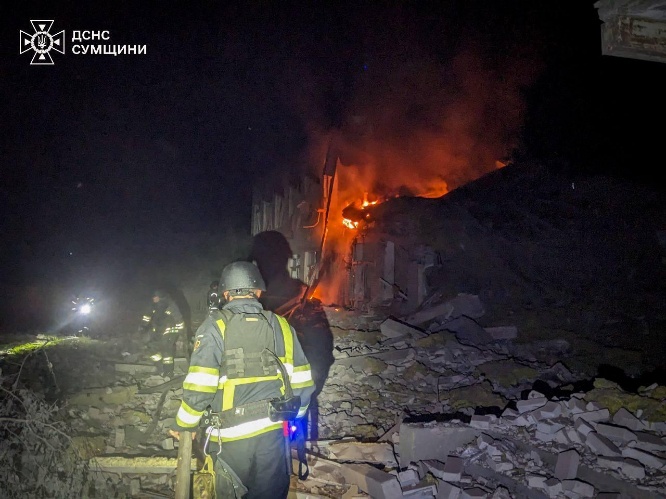
The aftermath of a Russian attack against Sumy Oblast, Ukraine, overnight. (State Emergency Service/Telegram)
The attacks extended beyond military targets to civilian infrastructure, with Russian forces damaging medical facilities, schools, and residential buildings. In Kherson Oblast, two people were killed and 18 wounded, with damage to high-rise buildings, houses, and agricultural companies. These systematic attacks on civilian targets reflect Russia’s strategy of undermining Ukrainian society’s ability to function while maintaining military pressure.
The escalation has created what UN officials describe as the deadliest month for civilians since May 2022, with July bringing at least 139 civilian deaths and 791 wounded according to preliminary UN monitoring. The true toll is likely far higher, as the UN can only verify casualties that meet its strict documentation standards.
Strikes Deep in Russia: Ukrainian Forces Target Defense Infrastructure
Ukrainian forces struck multiple targets across Russian territory, with smoke rising near the Energia plant in Yelets, Lipetsk Oblast, following an overnight drone attack. The facility manufactures batteries for missile guidance and glider modules, including components for the Iskander system and cruise missiles that Russia uses to target Ukrainian cities.
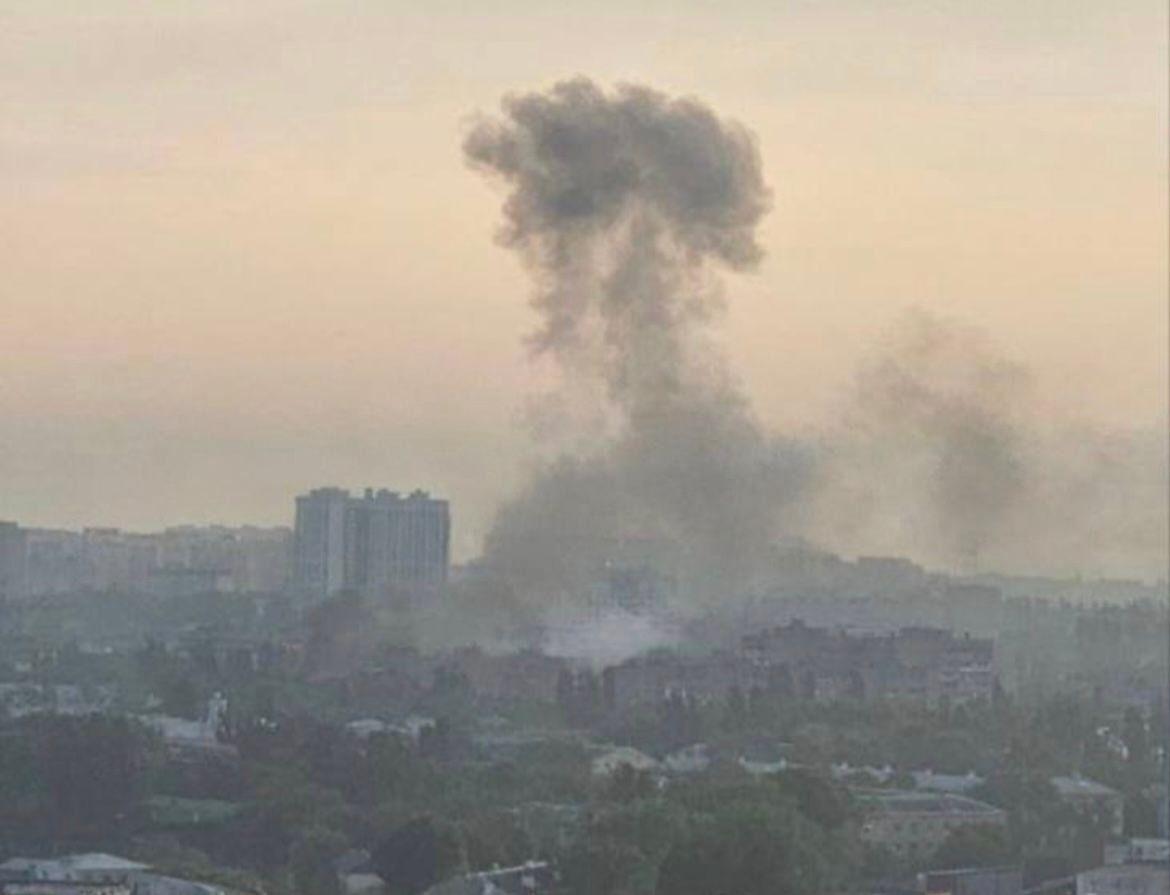
Smoke rising from what appears to be the area of Energia weapons factory in Yelets, Russia. (Astra/Telegram)
Russia’s Defense Ministry claimed its air defenses intercepted 55 drones across multiple regions, including 32 over Belgorod Oblast, 12 over Voronezh Oblast, and three over Lipetsk Oblast. Lipetsk Oblast Governor Igor Artamonov confirmed the attack, stating that a drone fell in the industrial zone of Yelets, injuring one person.
In Voronezh Oblast, debris from intercepted drones allegedly damaged residential buildings and injured 15 people in the city center and surrounding areas, with two in critical condition. The attacks demonstrate Ukraine’s continued capability to strike Russian military-industrial targets despite Moscow’s air defense efforts, targeting facilities crucial to Russia’s missile production capabilities.
UN Calls for Accountability: Demands for War Crimes Justice
The United Nations insisted that any peace talks on Russia’s war must include full accountability for the conflict’s violations of international law. UN rights chief Volker Turk’s spokesperson emphasized that “work on a lasting peace, in line with international law must intensify — a peace that ensures accountability for gross violations of international human rights law and serious violations of international humanitarian law.”
The call came as UN monitoring revealed July as potentially the deadliest month for civilians since May 2022, with at least 139 civilians killed and 791 wounded so far this month due to “intense and successive waves of missile and drone strikes” launched by Russian forces. The UN acknowledged that the true toll is far higher than what it can verify to its standards.
The emphasis on accountability reflects growing international concern about systematic Russian attacks on civilian targets, including deliberate strikes on universities, hospitals, and residential areas. The UN’s position suggests that any future peace negotiations must address war crimes rather than simply ending hostilities.
Russian military bloggers and official media responded to Trump’s ultimatum with characteristic dismissiveness, treating the announcement as validation of their belief that the West lacks the resolve for sustained confrontation. The blogger known as “Two Majors” described Trump as “the biggest chatterbox of the planet” engaged in “self-promotion,” while others noted that Trump’s position might gradually harden.
Moscow’s stock exchange rose 2.7% following Trump’s announcement, indicating that investors viewed the 50-day deadline as less threatening than immediate sanctions. This market reaction reflects broader Russian confidence that the country can weather economic pressure while maintaining its military campaign.
The information warfare dimension extended to Trump’s own statements, with the president reportedly asking Zelensky during a phone call whether Ukraine could strike Moscow or St. Petersburg if provided with long-range weapons. While the White House dismissed these reports as taking words “wildly out of context,” they reflect the complex dynamics of US-Russia-Ukraine relations as Trump navigates between supporting Ukraine and avoiding direct confrontation with Moscow.
Strategic Implications: The Fifty-Day Countdown
As the fifty-day countdown begins, Putin’s calculation appears straightforward: continue military pressure while diplomatic initiatives exhaust themselves, betting that Western resolve will weaken before Russian resources are depleted. The Kremlin’s dismissive response to Trump’s ultimatum reflects confidence that Russia can achieve its war aims through persistence rather than negotiation.
For Ukraine, the period represents both opportunity and danger. The promised weapons deliveries could significantly enhance defensive capabilities, particularly against aerial attacks that have devastated civilian infrastructure. However, the timeline also provides Russia with a window for intensified offensive operations, potentially capturing additional territory before any diplomatic resolution.
The broader international implications remain uncertain. European allies welcomed Trump’s tougher rhetoric while questioning the timeline, with EU envoy Kaja Kallas noting that “50 days is a very long time if we see that they are killing innocent civilians.” This tension between diplomatic timelines and military realities will likely define the coming weeks.
Looking Forward: The Path Through Winter
As Ukraine prepares for another winter of war, the government reshuffle signals adaptation to prolonged conflict rather than preparation for peace. The emphasis on domestic weapons production, drone procurement, and economic deregulation reflects understanding that the war will continue regardless of diplomatic initiatives.
The decision to exit the Ottawa Convention on anti-personnel mines, while controversial, demonstrates Ukraine’s pragmatic approach to defending its territory. Combined with increased Western weapons deliveries and continued innovation in areas like autonomous drones, Ukraine appears to be positioning itself for a prolonged struggle rather than hoping for quick diplomatic resolution.
Putin’s theory of victory assumes that time favors Russia, but the past three years have shown Ukraine’s remarkable capacity for adaptation and resilience. As the phantom fifty days begin, the question remains whether economic pressure, military support, or battlefield dynamics will ultimately force a recalculation in Moscow’s strategic thinking. For now, the thunder of drones over Ukrainian cities provides the only certainty in an uncertain countdown to an uncertain deadline.