
As the EU Unleashes Its Strongest Sanctions Package Yet, Ukrainian Soldiers Raise Battle Flags in Contested Territory While Moscow’s Energy Giant Faces Massive Cyberattack
Summary of the Day – July 18, 2025
The war’s economic battlefield witnessed a seismic shift as the European Union delivered its most comprehensive sanctions package to date, slashing Russia’s oil price cap and targeting the shadow fleet that has kept Moscow’s war machine funded. While diplomatic pressure mounted from Brussels, Ukrainian cyber specialists struck deep into the heart of Gazprom’s network infrastructure, crippling the energy giant’s operations across nearly 400 subsidiaries. On the ground, Ukrainian forces demonstrated resilience by reclaiming territory near the Dnipropetrovsk border that Russia had claimed to capture, even as Moscow continued its relentless assault on civilian infrastructure. The day also brought tragic confirmation of systemic abuse within Ukraine’s mobilization system, as investigators revealed the death of a conscripted man beaten by an enlistment officer, highlighting the human cost of wartime recruitment pressures.
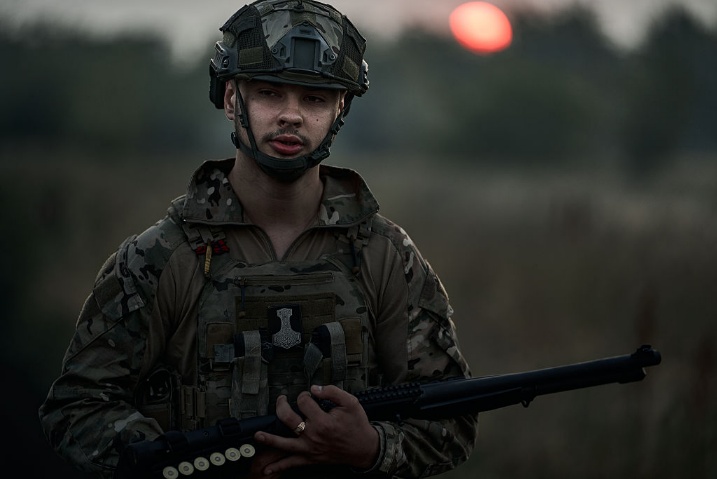
A soldier holds a gun as the air defense unit of the 28th Mechanised Brigade, named after Knights of the Winter Campaign, searches for Russian reconnaissance drones using anti-aircraft first-person-view (FPV) drones in Donetsk Oblast, Ukraine. (Kostiantyn Liberov/Libkos/Getty Images)
Europe’s Economic Sledgehammer: The 18th Sanctions Package Targets Russia’s Lifelines
The European Union struck at the core of Russia’s war financing capabilities with its most aggressive sanctions package since the invasion began, lowering the oil price cap from $60 to $47.6 per barrel and targeting 105 vessels in Russia’s shadow fleet. The measures, delayed for weeks due to objections from Slovakia and Hungary, finally gained approval after Slovak Prime Minister Robert Fico withdrew his veto following assurances about gas pricing.
“The EU just approved one of its strongest sanctions packages against Russia to date,” declared EU foreign policy chief Kaja Kallas, emphasizing that oil revenues constitute one-third of Russia’s overall revenue.
Hungary also withdrew its objections in recent days, paving the way for Friday’s approval after being a consistent critic of sanctions on Russia. The breakthrough came after Slovakia reached an agreement with Brussels on phasing out Russian gas, with Prime Minister Fico stating that “negotiating options have been exhausted for now, and continuing our blocking position would now endanger our interests.”
The package introduces unprecedented measures, including a floating oil price cap set at 15 percent below average market prices that will automatically adjust semi-annually. For the first time, the EU banned all transactions related to the Nord Stream 1 and 2 pipelines, preventing their completion, maintenance, and operation. The sanctions also ended Czechia’s exemptions for Russian oil imports after the country declared independence from Russian supplies.
Beyond energy, the package targets Russia’s financial infrastructure by fully banning EU-based specialized financial messaging services from conducting transactions with 22 additional Russian banks, bringing the total to 45 sanctioned institutions. The measures also impose a complete transaction ban on the Russian Direct Investment Fund and embargo arms imports from Belarus.
Digital Warfare: Ukrainian Hackers Paralyze Gazprom’s Network Infrastructure
Ukrainian military intelligence cyber specialists executed a devastating attack against Russian energy giant Gazprom, destroying vast amounts of data and crippling information systems across nearly 400 subsidiary companies. The operation, conducted on July 17, targeted systems used by Gazprom and its subsidiaries that Ukraine claims directly support Russia’s war effort.
“The degradation of Russian information systems to the technological Middle Ages continues,” a HUR source told the Kyiv Independent, describing how access to internal systems was disabled for nearly 20,000 system administrators.
According to Ukrainian intelligence, the cyberattack destroyed records of contracts, schedules, tariffs, payment data, financial balances, and critical operational information for managing pressure, costs, and gas and oil distribution networks. The attackers reportedly downloaded hundreds of terabytes of data before destroying clusters of servers running essential business software and disabling operating systems across multiple facilities.
The strike represents one of the most significant cyber operations against Russian energy infrastructure since the war began, potentially disrupting Gazprom’s ability to coordinate gas and oil supplies across its vast network of subsidiaries including Gazprom Teplo Energo, Gazprom Obl Energo, and Gazprom Energozbyt.
Flags of Defiance: Ukrainian Forces Reclaim Territory Russia Claimed to Control
Ukrainian soldiers raised battle flags in the settlements of Voskresenka and Yalta in Donetsk Oblast, directly contradicting Russian claims of capturing the territory near the administrative border with Dnipropetrovsk Oblast. The 31st Separate Mechanized Brigade and 505th Separate Marine Battalion conducted the operations, demonstrating Ukraine’s continued ability to contest Russian advances.
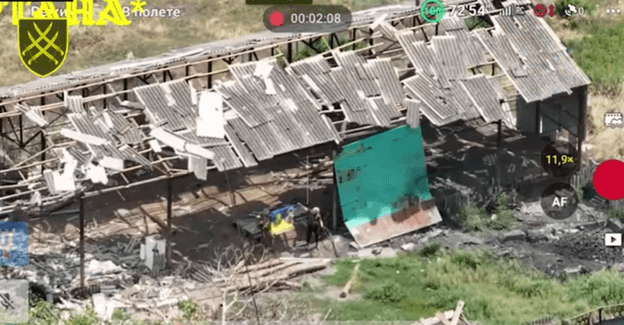
Ukrainian soldiers raise their battle flag in Voskresenka, Donetsk Oblast, Ukraine, in footage released. (20th Corps/Facebook)
“While Russian propagandists report daily on their ‘advances’ and ‘capture of new positions,’ our warriors quietly, without fanfare, enter these so-called ‘captured’ territories and raise Ukrainian flags over them,” the 20th Corps stated, publishing footage of the flag-raising ceremonies.
Russia had claimed to capture Yalta on June 25 and Voskresenka on July 15, but Ukrainian forces’ ability to operate in these areas reveals the contested nature of the front lines. The villages lie at the western edge of Donetsk Oblast, close to the administrative border where Russian forces have been attempting to break into Dnipropetrovsk Oblast for months.
The territorial gains come as Ukraine continues largely defensive operations in the east, where Russia’s summer offensive has ground forward since May. Despite concerns about potential Russian advances toward strategically important towns like Pokrovsk and Kostiantynivka, Ukrainian forces demonstrated they retain the capability to launch successful counterattacks in key areas.
Czech Ammunition Pipeline Accelerates: 850,000 Shells Delivered in 2025
Czech-arranged shipments of artillery ammunition to Ukraine reached 850,000 shells in 2025, including 320,000 NATO-standard 155mm projectiles, according to Director Aleš Vytečka of the defense ministry’s AMOS international cooperation agency. The figures compare favorably to the 1.5 million shells delivered throughout all of 2024, including 500,000 155mm rounds.
The Czech initiative, which leverages traditional arms trading contacts to locate available ammunition stocks worldwide, has become a flagship program for supporting Ukraine’s defense. Donor countries finance specific ammunition batches offered through the program, with contributions rising 29 percent compared to the entirety of 2024.
Countries increasing their contributions include Canada, Germany, Norway, Sweden, Netherlands, and Denmark, reflecting growing international commitment to maintaining Ukraine’s artillery capabilities. The program faces political uncertainty, however, as opposition leader Andrej Babiš has vowed to scrap the initiative if his ANO party returns to power following October elections.
Vytečka rejected criticism of the program’s transparency and pricing, noting that “clear and undeniable proof of the satisfaction of our partners is the fact that in 2025, donors’ contributions have significantly risen.”
Tragedy in Transit: Death of Conscript Reveals Systemic Abuse in Mobilization
Ukraine’s State Investigation Bureau revealed the death of a conscripted man from Kyiv who died in May after being allegedly beaten by an enlistment officer during transport from a western training center to the capital. The case, only recently disclosed, has resulted in criminal charges against two officers and highlights persistent problems within Ukraine’s mobilization system.
The enlistment officer who carried out the beating faces charges of abuse of power under martial law with grave consequences, carrying up to 12 years in prison. A second officer is accused of failing to prevent the crime, punishable by up to 10 years imprisonment. Both men remain in custody following a court decision to extend their detention.
According to court records, the deceased had been considered a violator of military registration rules since February 6 and was deemed fit for service despite repeated returns from military units due to health problems including varicose veins and hip injury complications. The fatal incident occurred after the man consumed alcohol during a rest stop and became agitated, prompting the violent response that included stun gun use and repeated head trauma.
The case underscores ongoing challenges with Ukraine’s mobilization process, which has faced criticism for abuse and corruption within enlistment offices. As the war continues and mobilization rules tighten, calls for reform and oversight have intensified amid reports of systemic problems in military recruitment.
Kremlin’s Dismissive Response: Russian Officials Downplay Sanctions Impact
Russian officials responded to the EU’s new sanctions package with familiar dismissive rhetoric, claiming immunity to Western restrictions while threatening escalation in response to economic pressure. Kremlin Spokesperson Dmitry Peskov declared the sanctions “illegal” and asserted that Russia had “already gained immunity and adapted to life under restrictive measures.”
“We will certainly analyze the new package in order to minimize its impact,” Peskov told reporters, adding that “every new package adds to the negative effect on the very countries that join in on them.”
Deputy Security Council Chairman Dmitry Medvedev escalated the rhetoric by threatening to target Kyiv and other Ukrainian cities with “increasing force” in response to the sanctions. Medvedev claimed Russia must learn to “hate” the EU and its “Russophobia” as much as Russia’s ancestors did.
However, cracks in the official narrative emerged from other Russian officials acknowledging sanctions’ impact. Energy Minister Sergei Tsivilev recently told the Federation Council that Russian oil companies struggle to procure refinery repair parts due to Western sanctions. Central Bank Chairperson Elvira Nabiullina stated at the St. Petersburg Economic Forum that Russia has exhausted many “free resources” since the war began, while Economic Development Minister Maxim Reshetnikov warned Russia is on the “brink of recession.”
Umerov’s New Role: From Defense Minister to Security Council Secretary
President Volodymyr Zelensky appointed former Defense Minister Rustem Umerov as Secretary of the National Security and Defense Council, marking a significant shift in Ukraine’s security leadership structure. The appointment comes as part of Ukraine’s first full wartime cabinet reshuffle, with Umerov replacing current Secretary Oleksandr Lytvynenko.
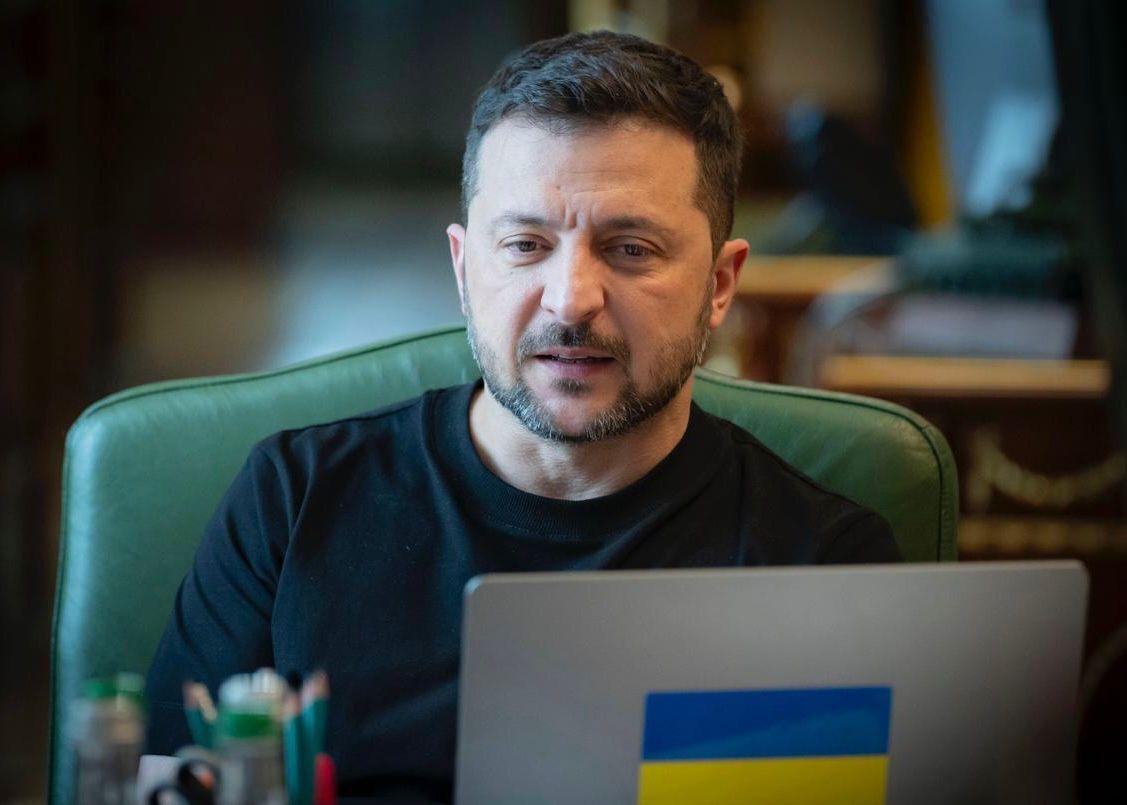
President Volodymyr Zelensky during a video call with French President Emmanuel Macron to discuss defense needs and joint initiatives in Kyiv, Ukraine. (Volodymyr Zelensky/Telegram)
“I will continue to coordinate all arms deliveries, joint production efforts, and defense partnerships—including the most sensitive areas,” Umerov wrote on social media, outlining his mandate to oversee coordination of the security and defense sector.
Umerov’s tenure as defense minister had drawn criticism from Ukrainian activists who dubbed him “the minister of chaos,” citing poor management and stalled reforms. However, his experience leading Ukraine’s delegation in peace talks with Russia in Istanbul and his extensive international contacts positioned him for the influential National Security and Defense Council role.
The National Security and Defense Council serves as a powerful coordinating body responsible for shaping military, security, and foreign policy. Umerov’s appointment signals continuity in Ukraine’s approach to international defense partnerships while potentially addressing management issues that plagued his tenure at the Defense Ministry.
Australia Delivers First Abrams Tanks Despite U.S. Resistance
The first group of 49 decommissioned M1A1 Abrams tanks pledged by Australia arrived in Ukrainian hands, marking the culmination of a delivery process delayed nine months due to U.S. resistance. Australian Defense Minister Richard Marles confirmed the delivery of the first tranche, with the remainder expected “in the coming months.”
“The M1A1 Abrams tanks will make a significant contribution to Ukraine’s ongoing fight against Russia’s illegal and immoral invasion,” Marles stated, emphasizing Australia’s steadfast support despite American objections.
The transfer required formal U.S. permission due to the tanks’ American origin, with officials in Washington initially questioning their battlefield utility in Ukraine. The Australian Broadcasting Corporation reported that U.S. officials had warned against sending the tanks even before Australia announced the aid package in October 2024.
The tanks underwent modifications before delivery and represent part of a broader $163 million Australian military aid package. Ukraine previously received 31 Abrams tanks from the Biden administration in late 2023, though the current operational status of those vehicles remains unclear. The Australian delivery addresses Ukraine’s pressing need for armored capabilities as Russian forces continue their offensive operations in eastern regions.
Parliamentary Expansion: Ukraine Broadens Military Service Eligibility
On July 16, the Ukrainian parliament expanded military service eligibility by allowing individuals over 60 to sign military service contracts, marking another step in Ukraine’s ongoing efforts to grow its military ranks. The decision came four months after Ukraine launched an initiative encouraging people aged 18 to 24—those below the conscription age—to enlist voluntarily.
The expansion reflects Ukraine’s systematic approach to strengthening its military capabilities throughout the full-scale war, with multiple mobilization drives and continuous updates to enlistment procedures. After lowering the conscription age from 27 to 25 in 2023 and passing a revised mobilization bill in 2024, Ukraine has pursued several avenues to expand recruitment while transitioning toward electronic military services.
The new legislation addresses Ukraine’s ongoing need for military personnel as the war enters its fourth year, while Russian forces continue offensive operations across multiple fronts. The measure allows older individuals with valuable skills and experience to contribute to Ukraine’s defense efforts through formal military service contracts rather than auxiliary roles.
This development comes amid broader discussions about Ukraine’s mobilization capacity and the need to balance military recruitment with maintaining civilian workforce capabilities essential for wartime economic stability and post-war reconstruction planning.
Romania announced preparations for a joint drone production project with Ukraine, aiming to manufacture drones domestically for both military use and European export. Romanian Defense Minister Ionut Mosteanu will hold talks with his Ukrainian counterpart about establishing a factory, likely in Brasov, where Ukrainian and Romanian teams would collaborate on drone manufacturing.
The initiative mirrors similar joint ventures Ukraine has signed with Denmark and Norway, reflecting growing European recognition of Ukrainian drone technology developed through wartime experience. Most production would supply Romania’s military, with additional units designated for European export markets.
Limited Romanian funding could delay implementation until 2026 when a new defense budget is expected for approval. The project underscores Ukraine’s emerging role as a leading drone technology developer, building on experience that has enabled Ukrainian companies to achieve production capacity of up to 4 million drones annually.
Partnership Proposals: Romania Plans Joint Drone Production with Ukraine
Moscow Under Fire: Third Consecutive Night of Drone Attacks
Ukrainian drones reportedly targeted Moscow for the third consecutive night on July 19, with Russian air defense units intercepting 13 drones flying toward the capital in under two hours. Mayor Sergey Sobyanin reported the intercepts around 1:46 a.m. local time, with eyewitnesses describing drones shot down near Zelenograd, 37 kilometers northwest of central Moscow.
The attacks follow two previous nights of reported drone strikes on Moscow, part of a broader pattern of Ukrainian operations against Russian territory. The strikes occurred as U.S. President Donald Trump offered the Kremlin 50 days to reach a peace deal or face “severe tariffs” from Washington.
The timing of the Moscow attacks coincides with Trump’s reported inquiry to Zelensky about Ukraine’s capability to strike the Russian capital. According to the Financial Times, Zelensky allegedly replied that such attacks would be possible with appropriate U.S. weapons supplies, though Trump subsequently stated that Zelensky should not target Moscow.
The repeated strikes on Moscow demonstrate Ukraine’s growing capability to project force deep into Russian territory, potentially influencing both public opinion in Russia and international diplomatic calculations about the war’s trajectory.
Frontline Realities: Russian Assaults Continue Across Multiple Sectors
Russian forces maintained offensive operations across multiple fronts on July 18, with confirmed advances in the Pokrovsk direction where Russian forces seized Lysivka southeast of the city. Commander-in-Chief Oleksandr Syrskyi reported that Ukrainian defenders successfully repelled Russian infantry group attempts to penetrate Pokrovsk’s defenses, destroying a sabotage and reconnaissance group that attempted to break through to the city.
In northern Sumy Oblast, Russian forces advanced west of Varachyne, continuing efforts to create defensible buffer zones along the international border. The Russian military deployed sabotage and reconnaissance groups to Ukrainian rear areas to disrupt logistics routes, with drone operators providing supply drops to established positions.
Ukrainian counterattacks occurred near Kindrativka and Andriivka north of Sumy City, with Ukrainian forces also conducting successful operations near Novopavlivka where they retook Yalta and advanced southwest of Komar. The Institute for the Study of War noted that Ukrainian forces are counterattacking in key frontline areas to slow Russian advances.
Russian casualties continued mounting with Ukraine reporting 1,180 Russian troops killed over the past day, bringing total Russian losses since February 24, 2022, to 1,039,830 troops. Equipment losses included nine armored fighting vehicles, 111 vehicles and fuel tanks, 47 artillery systems, and 135 drones destroyed in the previous 24 hours.
International Weapons Support: U.S. Facilitates Patriot Deliveries Through Germany
The United States announced it will send its next Patriot air defense system to Germany rather than Switzerland to expedite Berlin’s promised delivery of two Patriot batteries to Ukraine. The move represents the first time the Pentagon has facilitated weapons deliveries to Ukraine since President Trump expressed support for additional military aid on July 7.
Under the arrangement, Washington will deliver the next Patriot system off the production line to Germany, replacing two Patriots from Berlin’s arsenal that will be shipped to Kyiv. The decision addresses Ukraine’s desperate need for air defense capabilities as Russia dramatically escalates aerial terror campaigns against Ukrainian cities.
Swiss Defense Ministry confirmed that expected Patriot deliveries would be delayed due to U.S. State Department decisions to prioritize Ukraine. The Trump administration plans to negotiate individual deals with NATO members on weapons purchases for Ukraine, with participating countries including Germany, Norway, Denmark, Netherlands, Sweden, United Kingdom, Canada, and Finland.
Trump previously stated that some Patriot systems and missiles could arrive in Ukraine “within days,” though Germany’s Defense Ministry denied knowledge of any immediate shipments. Ukraine currently operates six Patriot batteries from previous U.S. and German deliveries, though not all remain operational due to maintenance requirements.
Wagner’s African Losses: Russian Mercenary Commander Killed in Mali
Russian mercenary Igor Nesterov, who previously fought in Ukraine and coached boxing champion Alexander Povetkin, was killed in combat in Mali, according to Ukrainian military intelligence sources. Nesterov, described as a war criminal and Wagner company member, participated in Moscow’s full-scale invasion from its beginning and was photographed with other Russian soldiers.
The World of Boxing promotion company confirmed Nesterov’s death on July 16, stating he was killed in combat. Nesterov had been part of Povetkin’s team since the late 1990s and headed the boxing federation in Chekhov, Moscow Oblast. Povetkin, an Olympic boxing champion, has echoed Russian propaganda justifying the war against Ukraine.
Ukrainian intelligence noted that the Wagner company continues suffering losses in Mali despite claims of leaving the West African country. The mercenary group, known for its deployment in Ukraine and short-lived 2023 rebellion against the Kremlin, maintains a strong presence across Africa supporting Russian business interests and Moscow-friendly regimes.
Recent investigations revealed that since 2021, Wagner mercenaries have detained, tortured, and forcibly disappeared hundreds of civilians in secret prisons across Mali, adding to accusations of numerous atrocities during the group’s African deployment.
Corporate Corruption: Poltava Mining Executive Faces Massive Tax Evasion Charges
The head of Ukraine’s Poltava Mining faces criminal charges for allegedly evading over Hr 1.7 billion ($41 million) in corporate taxes through fraudulent export pricing schemes. The Economic Security Bureau forwarded an indictment to court against the mining executive, though the specific individual was not named in the announcement.
Poltava Mining, a subsidiary of London-listed Ferrexpo majority-owned by sanctioned oligarch Konstantin Zhevago, serves as one of Ukraine’s largest iron ore exporters and a major regional employer. Viktor Lotous is listed as chairman of the board, having been charged in February 2025 with illegal mining and accused of causing Hr 157 billion ($3.78 billion) in damages.
The latest charges include large-scale tax evasion and issuing deliberately falsified official documents as part of a criminal scheme, potentially resulting in up to 10 years imprisonment. The case involves suspected illegal mining of minerals of national importance over a six-year period, with prosecutors from the Prosecutor General’s Office overseeing proceedings.
In February, the State Bureau of Investigation announced plans to nationalize 49.5% of Poltava Mining as part of a broader wartime crackdown on sanctioned oligarch assets. Zhevago was arrested in absentia in July 2024 on separate embezzlement charges involving $33.6 million from Finance and Credit Bank.
Reform Resistance: Civil Society Demands Anti-Corruption Investigator’s Appointment
Over 60 Ukrainian civil society and business groups urged newly appointed Prime Minister Yulia Svyrydenko to appoint anti-corruption investigator Oleksandr Tsyvinsky as head of Ukraine’s Economic Security Bureau. The appeal followed the Cabinet of Ministers’ July 8 dismissal of Tsyvinsky’s nomination by an independent selection commission.
The rejection cited allegations from Ukraine’s security services about ties to Russia through Tsyvinsky’s father, though civic watchdogs argue the candidacy was rejected because the President’s Office views him as too independent. Tsyvinsky, who has not maintained contact with his father for ten years, had been successfully vetted by the Security Service during the selection process.
“Appoint Oleksandr Tsyvinsky as head of the Economic Security Bureau and start a real reboot of the body that the whole country is waiting for,” the statement read, warning against repeating predecessor missteps and urging adherence to EU-backed selection processes.
The selection commission rejected demands to choose a new candidate and reaffirmed Tsyvinsky as the winner in a July 14 meeting. Legal experts noted no legal basis exists to reject a candidate who passed all formal procedures, warning that the government’s rejection could signal Kyiv’s backsliding on reform commitments to international partners.
Erdogan’s Diplomatic Push: Turkey Seeks Third Round of Ukraine-Russia Talks
Turkish President Recep Tayyip Erdogan told Russian President Vladimir Putin during a July 18 phone conversation that launching a third round of direct negotiations between Ukraine and Russia is important, with Turkey prepared to host discussions in Istanbul once both sides agree on a date. The call also addressed broader bilateral relations and regional issues.
The latest direct talks between Ukraine and Russia occurred in Istanbul on June 2, following a May 16 meeting after more than three years without negotiations. During the second round, Ukraine proposed a 30-day ceasefire, but Russia rejected the offer, pushing instead for a 2-3-day truce in limited areas to collect its dead.
Ukrainian Defense Minister Rustem Umerov said on June 26 that Kyiv aims to secure a direct meeting between President Zelensky and Putin. While Zelensky has expressed readiness for face-to-face talks, Putin has repeatedly declined personal participation, sending lower-level officials instead.
Turkey previously facilitated peace talks in March 2022 and remains one of few countries maintaining open channels with both Kyiv and Moscow. Erdogan said on June 26 that Turkey is working to organize a Zelensky-Putin meeting with possible U.S. President Donald Trump participation.
Digital Government Reform: Fedorov Plans Ukrainian DOGE Equivalent
Digital Transformation Minister Mykhailo Fedorov announced plans to create a Ukrainian counterpart to the U.S. Department of Government Efficiency (DOGE), stating that Ukraine needs such an agency “to urgently reduce costs and evaluate efficiency” across government projects. Fedorov, who also serves as deputy prime minister, said he will seek a person to lead the initiative.
DOGE, an informal task force with broad authority granted by President Trump, has been tasked with slashing government spending and dismissing staff deemed redundant. Billionaire Elon Musk, who headed the department until May 30, initially pledged to cut “at least $2 trillion” in federal spending through attacks on agencies like USAID and proposals to dismantle entire departments.
Despite significant repercussions for federal agencies and employees, DOGE’s actions have been criticized as falling short of bold cost-cutting goals, with initial aims of saving $2 trillion reduced to $150 billion by April. Fedorov’s announcement signals intent to mirror aggressive streamlining policies in Kyiv as Ukraine faces mounting wartime fiscal pressure.
The initiative reflects broader efforts to modernize Ukrainian government operations while managing wartime resource constraints and international donor expectations for efficient fund utilization.
Zelensky’s Drone Diplomacy: Floating “Mega-Deal” with Trump Administration
President Zelensky floated a potential “mega-deal” with U.S. President Trump to sell Ukrainian drones to the American military, telling the New York Post that “the people of America need this technology, and you need to have it in your arsenal.” While no formal agreement exists, the proposal represents a major potential breakthrough for Ukraine’s drone industry.
The deal would mark a significant rollback of export controls that have kept almost all Ukrainian wartime technology in-country, despite mass Western interest in the Ukrainian drone industry. For the U.S., such an agreement would breach the notoriously territorial military procurement network that rarely purchases foreign equipment outside NATO allies.
Ukrainian drone industry leaders cheered the potential agreement as dismantling two major barriers: Ukraine’s export controls and American defense reluctance to buy from abroad. “The U.S. gets effective, tested solutions with the necessary electronic-warfare resistance,” said Maksym, who heads drone maker DCU, while “Ukrainian producers get investment and access to one of the biggest markets.”
The proposal acknowledges that Ukraine’s wartime drone industry may have surpassed U.S. competitors in battlefield applications. “The U.S. cannot compete with Ukraine in battlefield drones because of the deep separation between combat commands and the defense industry,” explained Perry Boyle of MITS Capital, which invests in Ukrainian defense tech companies.
Humanitarian Crisis: U.S. Funding Cuts Threaten Ukrainian Children Tracking
U.S. foreign assistance cuts and sanctions against the International Criminal Court are obstructing efforts to track and recover thousands of Ukrainian children taken by Russian forces, according to senior European official Thordis Gylfadottir. The Trump administration’s March freeze on foreign assistance led to defunding of key child-tracking initiatives operated by Yale University and others.
More than 19,500 Ukrainian children have been unlawfully deported or forcibly transferred to Russia since its full-scale invasion, with only 1,399 brought back to Ukraine as of July 2025. The Yale University-based Humanitarian Research Lab has transferred its data to the U.S. State Department and Ukraine’s government, preparing for closure.
“Right now, we are running on fumes,” Nathaniel Raymond, the lab’s executive director, told CNN on June 12, noting that as of July 1, all staff across Ukraine and other teams would be laid off. While the State Department initially announced resumption of short-term funding, Secretary of State Marco Rubio reversed the decision.
“European countries will have to fund it,” Gylfadottir said. “We cannot stop tracking them and then just re-track them in the months ahead.” The Yale initiative narrowly avoided cuts thanks to last-minute private donations expected to last only through October.
Britain’s Strategic Response: UK Sanctions Russian Military Intelligence Units
The British government sanctioned three Russian military intelligence units and 18 officers for their involvement in long-running cyberattacks and reconnaissance campaigns. The sanctions target GRU operatives responsible for widespread malicious cyber activity in the UK and Europe, including online reconnaissance that helped coordinate Russian missile strikes on Mariupol in 2022.
One sanctioned unit conducted reconnaissance that assisted the March 16 bombing of Mariupol’s drama theater where hundreds of civilians, including children, were sheltering. Estimates put the death toll between 300 and 900, according to Associated Press investigations and exiled local officials.
“GRU spies are running a campaign to destabilize Europe, undermine Ukraine’s sovereignty, and threaten the safety of British citizens,” Foreign Secretary David Lammy stated, emphasizing that the Kremlin “should be in no doubt: we see what they are trying to do in the shadows and we won’t tolerate it.”
The sanctions also target officers allegedly involved in infecting Yulia Skripal’s device with X-Agent malware years before the 2018 Novichok assassination attempt on her and former double agent Sergei Skripal in Salisbury. The UK simultaneously joined the EU initiative to lower the Russian oil price cap to $47.6 per barrel.
Civilian Casualties Mount: Russian Strikes Kill Seven Across Ukraine
Russian forces killed at least seven people and injured 25 others across multiple Ukrainian regions over the past 24 hours, with attacks targeting both civilian infrastructure and transportation networks. In Dnipropetrovsk Oblast, Russian drones struck the Pavlohrad district overnight, killing a train driver and injuring two others, according to Governor Serhii Lysak and railway company Ukrzaliznytsia.
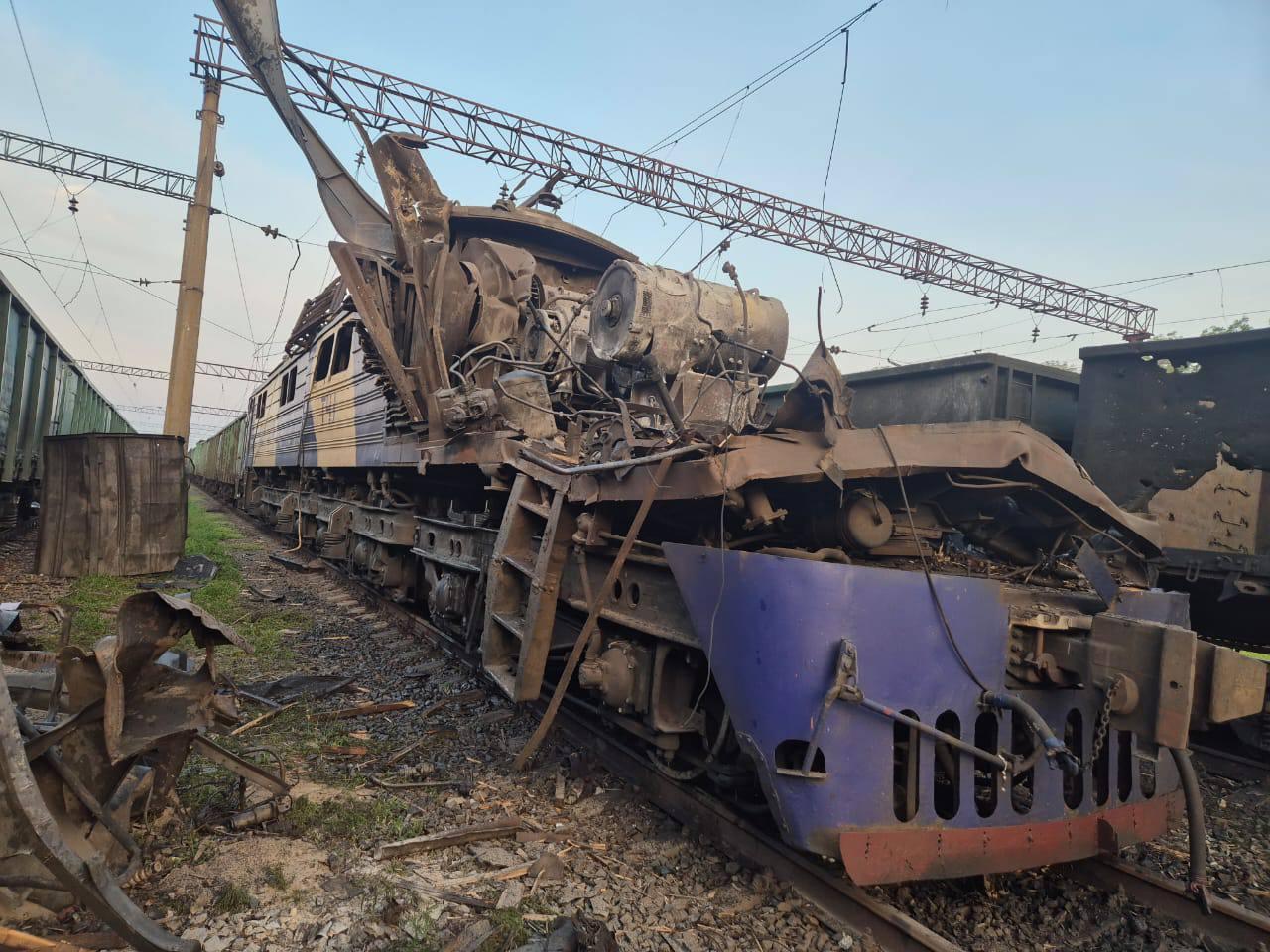
A damaged locomotive sits on the tracks after a second Russian strike on the Prydniprovska railway in Ukraine. (Andriy Yermak / Telegram)
A separate attack in western Dnipropetrovsk Oblast’s Kamianske district killed two civilians and injured 11, starting fires and damaging administrative buildings, houses, a school, shop, and cars. The 11 injured victims were hospitalized, with a 29-year-old woman in serious condition.
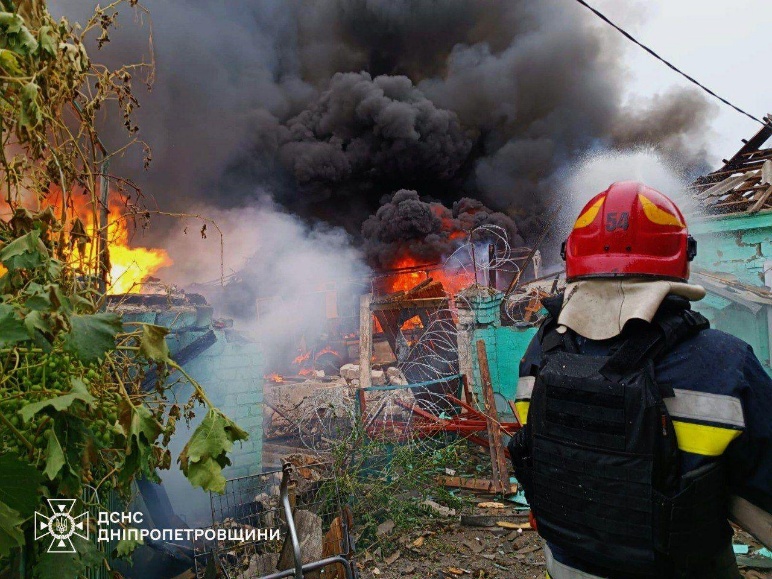
Firferighters battling a fire following a Russian attack against the Kamienske district, Dnipropetrovsk Oblast, Ukraine (State Emergency Service/Telegram)
In Zaporizhzhia Oblast, one person was killed and one injured in attacks across 15 settlements, with overnight strikes on the Stepnohirsk community igniting fires in residential areas and damaging at least 15 homes. Kherson Oblast saw one killed and nine injured in widespread drone and artillery attacks, with Russian forces hitting houses, a public transport stop, and a humanitarian aid hub.
Donetsk Oblast recorded four deaths and 12 wounded, with two fatalities each in Kostiantynivka and Pokrovsk. A Russian attack also damaged a Nova Post branch in Sloviansk, though no employees were hurt and parcels remained undamaged.
Artistic Resistance: Marta Syrko’s Tribute to Wounded Warriors
Ukrainian artist Marta Syrko’s “Sculpture” series celebrates the resilience of Ukrainian soldiers after sustaining severe injuries in war, stripping away uniforms and weapons to compel viewers to see these individuals as human beings with rich personal histories deserving dignity. The work draws upon classical traditions while challenging perceptions of loss and vulnerability.
Rendered in soft blue and amber hues, the photographs evoke a dream-like atmosphere offering space for introspection and symbolizing soldiers’ journeys toward accepting life with injuries. Images of rain serve as metaphors for purification, suggesting the washing away of war’s scars and gradual return to normalcy.
Particularly powerful are images of soldiers draped in fabric, cradling newborns reminiscent of Renaissance Madonna and Child depictions. The positioning of metal prosthetic limbs with fragile infant presence symbolizes profound reconnection to civilian life through fatherhood, representing hope for Ukraine’s post-war cultural transformation.
The series contributes to an emerging narrative in Ukrainian society that redefines the concept of returning to “normal” for thousands who have lost limbs either on the front line or in Russian attacks. Through recovery, self-reinvention, and resolve, a new cultural movement is quietly shaping Ukraine’s future beyond the battlefield.
Looking Forward: The Economic War Intensifies While Diplomacy Stalls
As Europe delivers its most comprehensive sanctions package targeting Russian oil revenues and shadow fleet operations, the war’s economic dimensions have assumed critical importance alongside military operations. The EU’s 18th package represents the most extensive effort yet to degrade Russia’s war-making capacity through economic pressure, while Ukrainian cyber operations against Gazprom demonstrate Kyiv’s growing capability to strike at Russian state infrastructure.
The contradiction between Moscow’s dismissive public rhetoric about sanctions and private acknowledgments of economic strain reveals growing pressure on the Kremlin’s war economy. With Russian energy revenues already declining 35 percent year-over-year and officials warning of recession, new sanctions threaten to accelerate Russia’s economic deterioration.
On the battlefield, Ukrainian forces’ ability to reclaim territory previously claimed by Russia, combined with successful counterattacks near Novopavlivka, suggests that while Russia maintains offensive momentum in eastern regions, Ukrainian resistance remains effective in contested areas. The coming weeks will test whether Ukraine can sustain defensive operations while mounting limited counteroffensives to slow Russian advances toward strategically important cities.