
As Zelensky Calls for New Talks and Russia Claims Readiness for “Quick” Negotiations, Moscow Prepares Unprecedented Drone Assault Capabilities While Ukrainian Forces Strike Back at the Heart of Russia
Summary of the Day – July 20, 2025
The war’s contradictions reached new heights as President Volodymyr Zelensky proposed fresh peace talks for next week while Germany revealed Russia’s chilling ambition to launch 2,000 drones in a single night by November. Moscow claimed readiness to “move quickly” on negotiations yet made clear its maximalist demands remain unchanged, even as Ukrainian drones struck the Russian capital for the fourth consecutive night. On the battlefield, Ukrainian forces advanced in key sectors while Russia pressed its own offensives, and cultural life persevered as Atlas Festival brought international music back to war-torn Kyiv. The day underscored the complex dance between diplomacy and destruction that defines this conflict’s current phase.
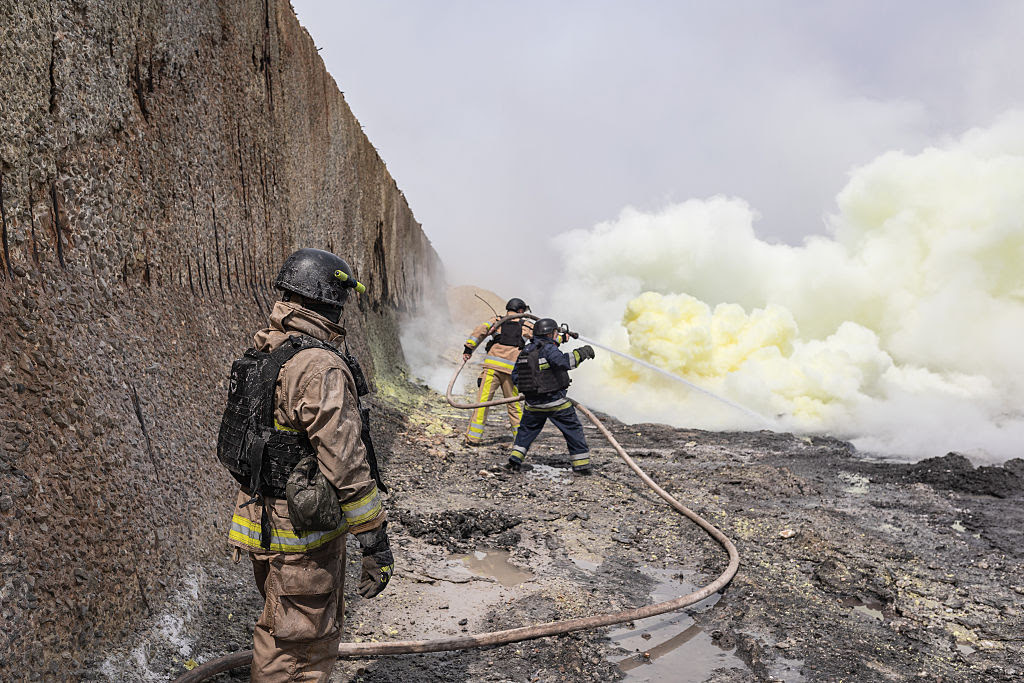
Ukrainian emergency service workers and firefighters extinguish a fire after Russian shelling of a former chemical factory in Kostiantynivka. (Diego Herrera Carcedo/Anadolu via Getty Images)
The Diplomatic Gambit: Zelensky’s Call for Leadership-Level Talks
President Zelensky announced Ukraine’s proposal for a new round of peace talks with Russia next week, marking the third potential meeting since bilateral negotiations resumed in Istanbul earlier this year. National Security and Defense Council Secretary Rustem Umerov extended the offer to Russia, with Zelensky emphasizing Ukraine’s readiness for talks “at the leadership level.”
“Dialogue with the Russian side on prisoner exchanges is ongoing — we are continuing to implement the agreements reached during the earlier meeting in Istanbul,” Zelensky stated in his nightly address. “Our team is currently working on another exchange.”
The proposal emerged one day after Russian President Vladimir Putin and Turkish President Erdogan reportedly discussed resuming Ukraine-Russia talks in Istanbul. The previous two rounds of bilateral negotiations, held on May 16 and June 2, resulted in significant prisoner exchanges but failed to produce meaningful steps toward a ceasefire.
Zelensky stressed the urgency of accelerating negotiations, calling for “prisoner exchanges, return of children, end to the killings.” He emphasized that “a meeting at the level of leaders is needed to truly ensure peace — a really lasting one. Ukraine is ready for such a meeting.”
Moscow’s Hollow Promise: “Quick” Talks with Unchanged Goals
Even as diplomatic activity intensified, Kremlin Spokesperson Dmitry Peskov revealed the fundamental contradiction at the heart of Russian policy. Speaking to state media, Peskov claimed Russia is ready to “move quickly” with peace negotiations but insisted that Moscow must achieve its goals, which he declared are “obvious” and “do not change.”
“President Putin has repeatedly spoken of his desire to bring the Ukrainian settlement to a peaceful conclusion as soon as possible. This is a long process, it requires effort, and it is not easy,” Peskov stated. “The main thing for us is to achieve our goals. Our goals are clear.”
Those goals remain as maximalist as ever, reflecting demands presented in Russia’s so-called “peace memorandum” during the June 2 Istanbul talks. The document calls for Ukraine to recognize Russia’s annexation of Crimea and four partially occupied regions — Kherson, Donetsk, Zaporizhzhia, and Luhansk — while demanding full Ukrainian troop withdrawal and demobilization. The Kremlin has also insisted that Ukraine dismantle and destroy all Western-supplied weapons as part of any ceasefire deal.
The Drone Apocalypse: Germany Warns of 2,000-Drone Assault Capability
German Major General Christian Freuding delivered a stark warning that revealed the true scale of Russia’s drone warfare ambitions. Speaking to the Bundeswehr podcast Nachgefragt, Freuding, who heads the Ukraine task force at the German Defense Ministry, assessed that Russia plans to achieve the capability to launch 2,000 drones toward Ukraine simultaneously.
Ukrainian and German officials determined that Russia continues expanding its production of Shahed-type drones specifically to enable these massive strike packages. Russian forces may be able to strike Ukraine with up to 2,000 drones in a single night by November 2025 if current growth patterns continue.
Ukrainian intelligence previously reported that Russia could produce roughly 170 Shahed-type drones per day and plans to increase production capacity to 190 drones daily by the end of 2025. Russia has dramatically escalated its drone usage, rarely launching more than 200 drones per night between January and May 2025, but then increasing from 250 in late May to over 700 in early July. The growth rate of one-way attack drones in nightly strike packages averaged 31 percent monthly in both June and July 2025.
Russia’s largest drone strike package thus far included 728 drones on the night of July 8 to 9. Ukrainian Unmanned Systems Forces Commander Major Robert Brovdi had warned on July 4 that Russia could launch 1,000 drones in a single strike package due to increased production and stockpiles.
Moscow Under Fire: Fourth Night of Ukrainian Drone Strikes
For the fourth consecutive night, Ukrainian drones targeted the Russian capital, with Moscow Mayor Sergey Sobyanin reporting that at least 21 Ukrainian drones were launched toward Moscow since 6 p.m. local time on July 19. The attacks caused fires in Moscow Oblast and triggered temporary flight restrictions at all four Moscow airports.
Russian Telegram channels reported that a fire broke out in Zelenograd, a satellite city 37 kilometers northwest of central Moscow, with videos showing vehicles burning near a residential building. Security camera footage shared by Russian channels appeared to show drone debris striking the top floors of a residential building.
The Russian Defense Ministry claimed its air defenses shot down 93 Ukrainian drones overall, including 19 over Moscow Oblast and another 16 en route to the region. An additional eight drones were allegedly downed over Moscow Oblast during daylight hours on July 20.
Temporary restrictions were imposed at all Moscow airports amid the ongoing attacks, with arriving flights diverted to Pulkovo airport in St. Petersburg. All flight restrictions were lifted around 4 a.m. local time.
The overnight attacks marks the fourth consecutive night that the Russian capital has come under fire. The region faced a similar attack the night prior as Ukraine’s military reportedly launched 13 drones towards Moscow.
The Human Cost: Seven Dead as Russian Attacks Continue
Russian attacks across Ukraine killed seven people and injured at least 28 others over the past day, regional authorities reported. Ukrainian forces managed to down 18 out of 57 drones launched by Russia overnight, including Shahed-type attack drones and decoys, while seven additional drones were intercepted by electronic warfare or disappeared from radars.
In Zaporizhzhia Oblast, a Russian drone strike on a house injured two women aged 64 and 73 in Prymorske village. Near Zaporizhzhia city, Russian attacks damaged seven houses and injured one more woman. Three men aged 45, 59, and 73 were injured in a Russian attack on Kupiansk in Kharkiv Oblast, while a 42-year-old man was injured in Nechvolodivka and two women, aged 50 and 76, were injured in Izium.
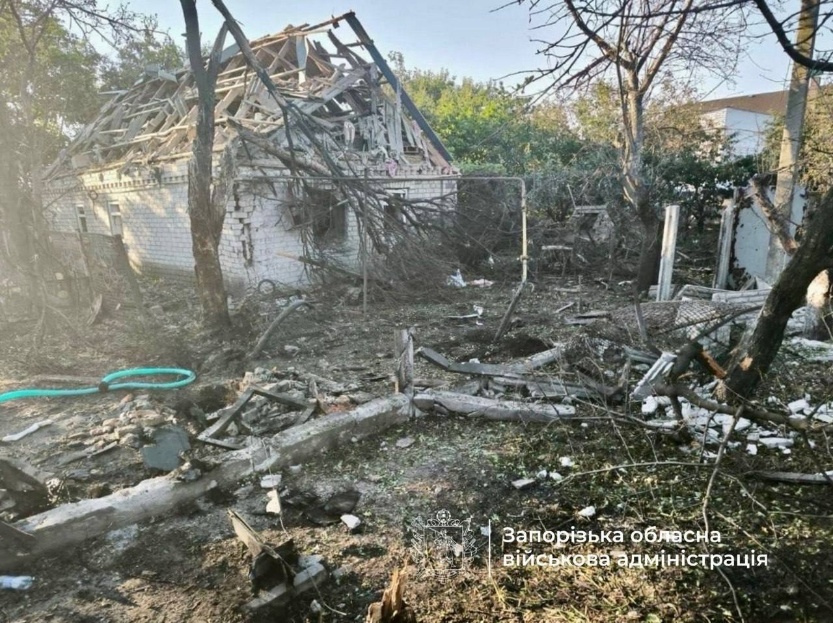
The aftermath of a Russian attack near the city of Zaporizhzhia. (Zaporizhzhia regional military administration)
Russian drones targeted the Svesa community in Sumy Oblast, setting fire to three houses and killing a 78-year-old woman. Two more people were injured near Shostka. A Russian missile strike near Synelnykove in Dnipropetrovsk Oblast killed two people and injured five others.
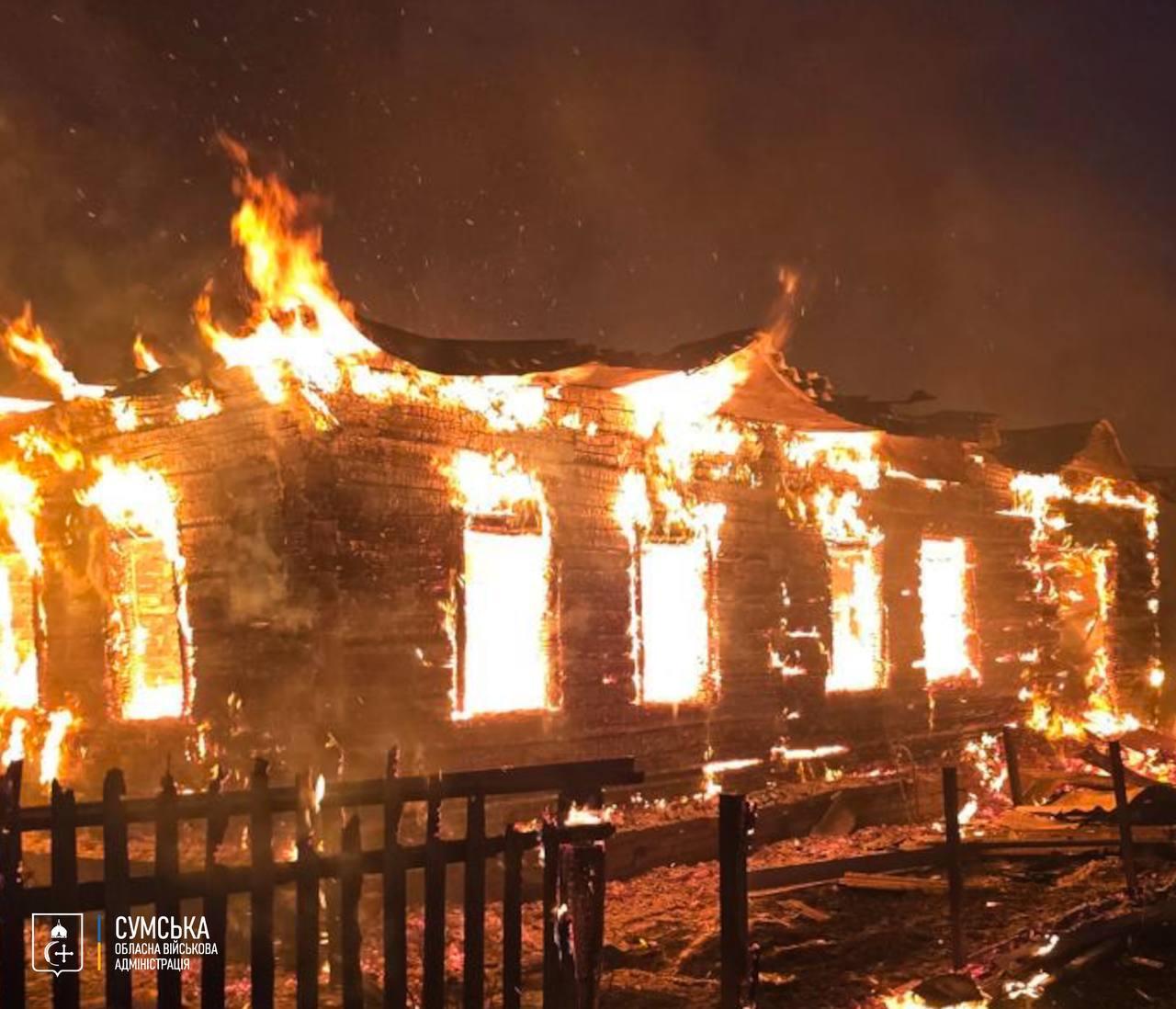
The aftermath of a Russian drone strike on Sumy Oblast. (Sumy regional military administration)
In Donetsk Oblast, people were killed in Kostiantynivka, Pokrovsk, and Raiske, with six others suffering injuries. Kherson Oblast saw one person killed and six others injured, including a child, as Russian forces targeted 34 settlements including the regional center of Kherson.
Battlefield Dynamics: Advances and Counterattacks Across Multiple Fronts
Ukrainian forces achieved notable advances in several sectors while Russian forces pressed their own offensive operations. In northern Sumy Oblast, geolocated footage published on July 20 confirmed that Ukrainian forces recently advanced in eastern Kindrativka, while Russian forces seized Yablunivka according to Ukrainian strikes on Russian positions in the settlement.
In western Zaporizhia Oblast, Ukrainian forces regained positions in northwestern Kamyanske according to verified footage, even as Russian forces conducted offensive operations across the area.
Russian forces made confirmed advances northwest of Lypove north of Lyman and in eastern Zelenyi Hai in the Novopavlivka direction. A Ukrainian reserve officer noted the presence of elite Russian units in the Sumy direction, including elements of the 40th and 155th naval infantry brigades, 810th Naval Infantry Brigade, 177th Naval Infantry Regiment, 76th and 106th airborne divisions, and 11th and 83rd separate airborne brigades.
The deployment of these more capable units suggests Russian military command is not simply trying to pin Ukrainian forces but is preparing for significant advances in the area. Ukrainian forces continue to face intensified Russian assaults, with servicemembers reporting that Russian units often submit inaccurate reports claiming they have seized settlements when they have not.
Cultural Defiance: Atlas Festival Brings International Music Back to Kyiv
In a powerful demonstration of cultural resilience, Ukraine’s largest music event, the Atlas Festival, took place in Kyiv over the weekend, marking the second time the festival has been held during Russia’s full-scale invasion. Finnish rock band The Rasmus became the first prominent international act to perform in Kyiv in over three and a half years.
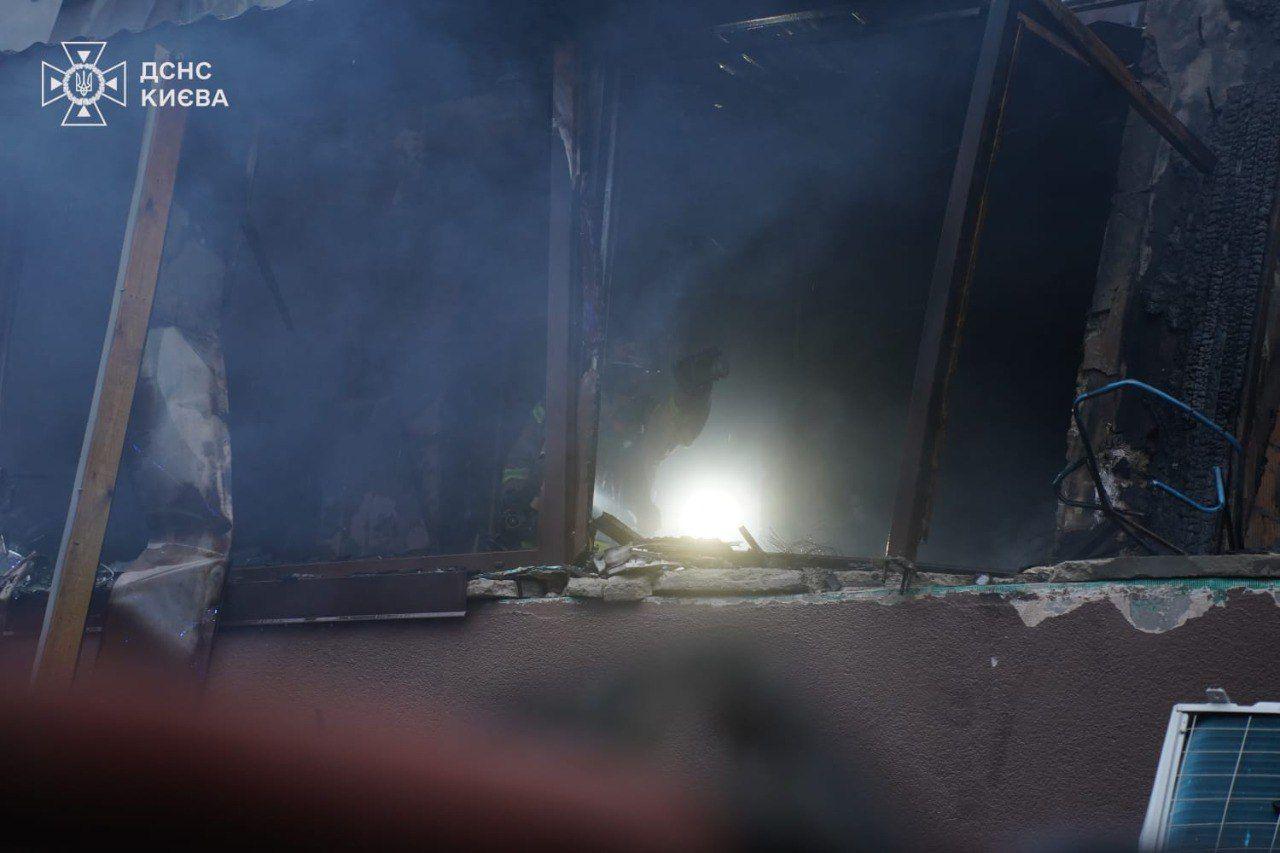
Emergency responders inside of a damaged building in Kyiv amid a mass Russian drone and missile strike overnight. (State Emergency Service)
“It’s a big honor for us to be here,” said bass guitarist Eero Heinonen. “This isn’t an opportunity that comes to everyone, but we love Ukraine very much. When we received the invitation, we immediately felt that we had to do this — because we want to support the people, support this country, and show that we care.”
The venue was chosen with safety in mind at a Kyiv shopping mall courtyard with an underground parking lot serving as a shelter for 30,000 people. On the festival’s opening day, the crowd was evacuated twice due to ballistic missile threats, but each time the audience returned and music resumed once the all-clear was given.
The Rasmus arrived in Kyiv on July 18 and immediately experienced the reality of life under threat. While visiting Independence Square to honor Ukrainian soldiers killed in the war, they heard an air raid alert and sought shelter, staying there until 5 a.m. rather than returning to their hotel.
“It was scary, I gotta say — to wake up to the alarm,” lead singer Lauri Ylönen said. “For us, it’s all shocking and new — we’ve only been here for 37 hours or so. But for you guys, it’s normal life. It’s been everyday life for years already.”
The festival also served as a charitable event, raising funds for the Armed Forces through ticket sales and auctions, with a goal of collecting at least 100 million hryvnias for the Dronefall project to buy interceptor drones protecting Kyiv’s skies.
The UK-Germany Air Defense Initiative: 50-Day Drive to Arm Ukraine
As London pushed a “50-day drive” to support Ukraine, the UK and Germany announced plans to pledge new air defense systems to Kyiv. UK Defense Secretary John Healey, set to announce the initiative on July 21, declared that “as members of the Ukraine Defense Contact Group, we need to step up in turn with a ’50-day drive’ to arm Ukraine on the battlefield and force Putin to the negotiating table.”
Using 170 million euros from Germany, the two countries will obtain additional air defense munitions for Ukraine. London has already sent Ukraine 150 million pounds worth of air defense systems and munitions in the last two months. Healey and German Defense Minister Boris Pistorius will chair a virtual meeting of the Ukraine Defense Contact Group on July 21.
The initiative aligns with US President Donald Trump’s announcement that Russia has 50 days to agree to a peace deal or face “severe tariffs” of about 100 percent.
Rostov Under Attack: Ukrainian Drones Target Russian Infrastructure
Amid reported Ukrainian drone attacks on Russia, a fire broke out at a train station in Kamenolomni village in Rostov Oblast overnight. The settlement, located 38 kilometers from Ukraine’s border and 200 kilometers from Ukrainian-controlled territory, saw its railway station roof catch fire from falling drone debris according to Russian officials.
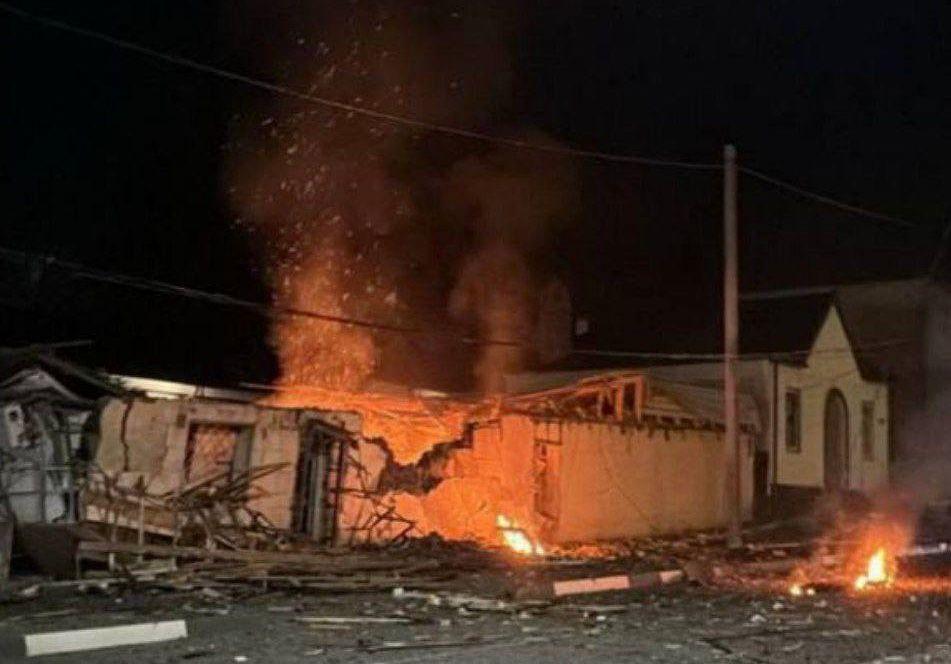
A building burns in the aftermath of a reported Ukrainian drone attack in Russia’s Rostov Oblast. (Astra/Telegram)
Three people were evacuated from the dispatch point with no injuries reported. A flower shop also caught fire in Kamenolomni, while Russian authorities claimed drones were downed over Novoshakhtinsk, Shakhty, and Novocherkassk cities.
The attacks on Russian transportation infrastructure reflect Ukraine’s strategic campaign to disrupt Russian logistics and military supply lines while demonstrating the expanding reach of Ukrainian drone capabilities deep into Russian territory.
Azerbaijan’s Legal Pursuit: International Court Action Against Russia
Azerbaijani President Ilham Aliyev announced preparations to submit documents to international courts over the December 2024 crash of an Azerbaijan Airlines aircraft. The Embraer 190AR plane crashed in Kazakhstan after coming under fire over Grozny, Chechnya, killing 38 people.
Aliyev stated that despite seven months passing since the incident, Azerbaijan has received no clear response from Russian authorities. An investigation pointed to a Russian Pantsir-S1 air defense system mistakenly targeting the plane amid a reported Ukrainian drone attack.
“We understand that this may take time. In the Malaysian airline Boeing case, it took more than ten years. We are ready to wait ten years, but justice must be done,” Aliyev said, referencing the MH17 case where the European Court of Human Rights found Russia responsible for the 2014 downing.
The case has created significant tension in Russian-Azerbaijani relations, with Aliyev accusing Moscow of suppressing evidence and criticizing Putin for not openly admitting guilt.
Sanctions and Digital Control: Targeting Voices and Restricting Apps
President Zelensky imposed sanctions on five individuals, including Russian exiled journalist Yulia Latynina, who initially presented herself as anti-war but later aligned with Kremlin propaganda. The sanctions also targeted former Ukrainian lawmakers and a blogger promoting Russian narratives.
Meanwhile, Putin instructed his government to develop new restrictions targeting foreign messaging apps and software from “unfriendly countries.” Ukrainian intelligence reported that WhatsApp is a likely target for blocking, as Russia seeks to reduce dependence on technologies from hostile nations.
Russian authorities have created the Max messenger from VK as part of a centralized digital surveillance system, with all Russian officials ordered to switch to the app that has full access to users’ microphones, cameras, contacts, and files.
Military Equipment Developments: Destroying Russian Innovation
The 424th “Svarog” Battalion of Ukraine’s Unmanned Systems Forces published video showing successful destruction of an experimental Russian “KOP-2” electronic warfare system. The “drone hunter” equipment scans radio frequencies and emits interference signals, typically used to protect high-value targets like air defense systems.
“It’s a costly and rare piece of equipment,” the battalion claimed, noting that two strikes were conducted to completely destroy the jamming system. The operation demonstrates Ukraine’s continued ability to target and eliminate advanced Russian military technology.
Fashion’s Defiant Return: Ukrainian Fashion Week Announces September Dates
Ukrainian Fashion Week announced dates for its 57th season, set for Kyiv from September 4 to 8, marking the third edition held since Russia’s full-scale invasion began in 2022. For 28 years, Ukrainian Fashion Week has served as the country’s primary fashion platform and a key cultural institution.
“Today, fashion — like culture as a whole — has been entrusted with the mission of protecting our identity,” said Iryna Danylevska, Founder and CEO of Ukrainian Fashion Week. The ongoing war has created a new atmosphere for fashion shows, with each runway presentation beginning with a moment of silence honoring those who have lost their lives, and announcements about nearest bomb shelters in case of airstrikes.
Ukrainian designers continue to reinterpret national heritage, demonstrating how a country at war can continue to create and innovate. Their collections reflect the emotions of a nation fighting to defend its identity and existence, conveying Ukrainian values, spirit, and strength through the universal language of fashion.
Despite the war’s challenges, Ukrainian designers have gained international recognition, with brands like Ivan Frolov, Ksenia Schnaider, Bevza, Elenareva, and Ienki Ienki being worn by celebrities including Beyoncé, Dua Lipa, Bella Hadid, Kendall Jenner, and Emily Ratajkowski.
Voices from the Fields: Life Under the Drone Highway
In a village between Kyiv and the Russian border, 60-year-old Lyuda tends her small field of potatoes, corn, and vegetables while pointing northeast toward Russia. “That’s where they come from,” she says, wiping sweat from her forehead, then pointing west. “That’s where they fly to — every night.”
This unnamed village sits directly beneath Russia’s aerial assault corridor, where hundreds of drones, rockets, and cruise missiles pass overhead nightly, targeting cities like Kyiv, Lutsk, Lviv, and Chernivtsi. Here, Ukrainian air defense makes its first attempts to minimize the nightly madness.
“Starshiy Sergeant,” a 41-year-old former entrepreneur turned air defense commander, leads a volunteer unit positioned strategically in this corridor. Before the war, he ran a furniture business, played “romantic classic rock,” and traveled to opera houses in Barcelona, Madrid, Rome, and Vienna. Today, he commands five groups totaling around 20 men defending this critical sector.
The unit operates on a 20-day paid work, five-day service rotation, except for the commander who works full-time. When Russian drones enter their five-to-six-kilometer zone, they can hear the distinctive buzzing and humming sounds. “Some people just hear better than others,” he says, claiming he can discern flight altitude and direction by sound alone.
His band once sang in Russian — a language he grew up with. Today, speaking in Ukrainian, he declares: “These lunatics think they have to protect people like me. I don’t want to be protected by Russia.” After the war, he plans to travel with his three-year-old son, drink Prosecco, eat pizza, and “enjoy every moment.”
The Grim Accounting: 119,000 Russian Dead Confirmed
Russian independent media outlet Mediazona, collaborating with BBC Russian service, confirmed the identities of 119,154 Russian military personnel killed in Ukraine from February 24, 2022, to July 17, 2025. Since early July, 2,436 additional Russian military deaths have been verified.
The toll includes 32,100 volunteers, 17,800 recruited prisoners, 13,000 mobilized soldiers, and nearly 5,400 officers. Ukraine’s Coordination Headquarters for POW Treatment reported that more than 100,000 Russian families have contacted a Ukrainian-run initiative seeking information about missing Russian soldiers.
Ukraine’s General Staff estimates total Russian losses at 1,041,990 troops since the war began, figures largely aligned with Western intelligence assessments.
Midnight in Kyiv: The Capital Under Assault
At least one person was killed and six were injured as repeated explosions rocked Kyiv during a mass Russian drone and missile attack overnight on July 21. The assault continued throughout the night despite President Zelensky’s invitation to hold peace talks with Moscow next week, underscoring the contradictions defining this phase of the war.
All of Ukraine came under threat of attack from Russian missiles and drones several times during the night. Head of Kyiv City Military Administration Tymur Tkachenko reported fires breaking out across the capital, with a non-residential building’s roof catching fire in the Darnytskyi district at 1:52 a.m. local time.
Explosions erupted continuously from 2:16 a.m. until 4 a.m., with outdoor kiosks burning in the Dniprovskyi district and smoke engulfing Lukianivska subway station as residents took shelter. The entrance of the metro station was damaged, though no casualties were reported there.
Several fires burned across Kyiv, including residential buildings in the Shevchenkivskyi and Dniprovskyi districts. A children’s daycare caught fire amid the attack, though no casualties occurred. By 8:30 a.m., Kyiv police reported six injured, including one teenager.
“Unfortunately, we have information about one person killed as a result of the attack,” Tkachenko confirmed, later adding details about the injuries from fires in residential buildings.
In Ivano-Frankivsk, Mayor Ruslan Martsinkiv declared it “the largest attack since the full-scale invasion,” with infrastructure damaged in three villages and reports of injuries. The western city faced continued strikes throughout the morning hours.
Economic Warfare: Ukraine Pursues $6.9 Billion from Gazprom
Ukraine announced intentions to secure $6.9 billion in international arbitration rulings against Russian energy giant Gazprom. President Zelensky cited a report from state energy company CEO Serhii Koretskyi, calling the decisions “absolutely fair” and demonstrating “the responsibility of Russia and Gazprom.”
In June, international arbitration in Switzerland ordered Gazprom to pay $1.37 billion in damages to Naftogaz. A French court authorized enforcement of a $5 billion arbitration award against Russia for damages caused during Crimea’s occupation. Ukrainian ambassadors will receive detailed instructions on recovering the awarded funds.
Looking Forward: The Week Ahead
As diplomatic channels remain tentatively open with proposed talks next week, the war continues its deadly course. Russia’s preparation for 2,000-drone assault capabilities while claiming readiness for “quick” negotiations captures the contradictions that define this conflict’s current phase.
Ukraine’s cultural resilience, demonstrated by the Atlas Festival’s success amid air raid alerts, stands in contrast to Russia’s expanding digital authoritarianism and unchanged territorial demands. The coming week will test whether diplomatic momentum can overcome incompatible war aims, or whether the cycle of violence will continue across the Ukrainian landscape.