
As Ukraine Secures $30 Billion Drone Deals and Trump Hints at Earlier Sanctions, Musk’s Past Sabotage Revelations Cast Shadow Over Critical Communications Infrastructure
Summary of the Day – July 25, 2025
The twenty-fifth day of July crystallized the fundamental contradictions defining Ukraine’s struggle: even as diplomatic efforts intensified with Trump suggesting sanctions could arrive sooner than his 50-day ultimatum, the battlefield reality told a starkly different story. Ukrainian forces struck deep into Russian territory, targeting a chemical plant that produces explosives for artillery shells, while securing transformative defense contracts worth up to $30 billion with the United States. Yet shadowing these developments came explosive revelations that Elon Musk had deliberately sabotaged Ukrainian military operations during the critical 2022 Kherson counteroffensive, raising profound questions about the reliability of communications infrastructure. Meanwhile, President Zelensky set an ambitious goal of producing 1,000 interceptor drones daily as Russia escalates toward launching 2,000 attack drones nightly, and domestic political turmoil continued over controversial anti-corruption legislation that has sparked four consecutive days of protests across the nation.

Relatives and community members react as they kneel before the funeral procession of 12 Ukrainian servicemembers and prisoners of war (POWs) who died in Russian captivity, during a ceremony in Lviv, Ukraine on July 25, 2025. (Yuriy Dyachyshyn/AFP via Getty Images)
The Arsenal of Tomorrow: Ukraine’s $30 Billion Drone Revolution and Production Goals
President Volodymyr Zelensky announced that Ukraine had secured agreements with the United States for drone contracts valued between $10 billion and $30 billion, marking Ukraine’s emergence as a major defense technology exporter even while fighting for survival. “This agreement is in place,” Zelensky declared, outlining a “win-win” arrangement where Washington would purchase Ukrainian-made drones in exchange for Kyiv acquiring U.S. weapons systems.

President Volodymyr Zelensky visited drone manufacturing site on July 25, 2025. (Presidential office/Website)
Simultaneously, Zelensky announced an equally ambitious domestic production goal: ensuring Ukraine can launch at least 1,000 interceptor drones daily to counter Russia’s escalating aerial threat. “I met with representatives of this production and with other manufacturers. Our request is 1,000 interceptors per day,” he said, emphasizing the urgent timeframe for scaling up production.
This dual approach—exporting advanced drones while rapidly expanding defensive capabilities—reflects the escalating nature of the conflict. Russia launched 741 aerial weapons in a single day on July 9 and aims to produce 30,000 long-range drones and 2 million FPV drones in 2025, with intelligence indicating Moscow hopes to launch up to 2,000 drones each night.
Ukraine has reached agreements extending beyond bilateral U.S. deals. Denmark will establish joint production lines for long-range drones under a 50/50 partnership with the private sector, providing 100-300 million euros in funding. Denmark will produce drones for Ukraine during the war while stockpiling them for its own forces afterward. Similar negotiations are underway with Norway and Germany as Ukraine relocates elements of its weapons production abroad.
Since Russia’s invasion, Ukraine has expanded drone production across air, land, and sea domains, with plans to manufacture 30,000 long-range drones in 2025. The country’s hybrid strike platforms—including the Palianytsia and Peklo missile-drones—demonstrated their capabilities during Operation Spiderweb on June 1, when Ukrainian forces targeted four Russian air bases deep inside Russia with first-person view drones.
Defense Minister Denys Shmyhal told allies during a Ramstein-format meeting that Ukraine will need $6 billion in 2025 to cover its weapons production gap, while Zelensky separately announced he is working with Western partners to secure $65 billion in annual assistance to support military spending and cover a $40 billion annual deficit.
The Starlink Sabotage: When Allies Become Obstacles
In perhaps the most shocking revelation of the day, Reuters reported that billionaire Elon Musk ordered the deactivation of Starlink satellite coverage over parts of Ukraine’s Kherson Oblast during a major counteroffensive in fall 2022. According to three sources familiar with the matter, Musk instructed a senior SpaceX engineer to shut down coverage near Beryslav, where Ukrainian forces were attempting to encircle Russian troops.
The consequences were immediate and devastating. Front-line units lost connectivity, disabling drones and disrupting artillery coordination. A Ukrainian military source told Reuters that the outage directly contributed to the failure of the encirclement operation. Musk’s decision reportedly stemmed from fears that a successful Ukrainian advance might provoke a Russian nuclear response.
The timing of these revelations, emerging just one day after Starlink suffered a global outage on July 24, has renewed concerns about Ukraine’s dependence on communications infrastructure controlled by a single individual whose judgment may not align with Ukrainian or allied strategic interests. Hospitals, schools, and front-line military units across Ukraine rely heavily on Starlink technology, making them vulnerable to unilateral decisions by its owner.
The Diplomatic Theater: Sanctions, Summits, and Trump’s Timeline
Trump signaled that secondary sanctions against Russia could be imposed earlier than his announced 50-day deadline, telling reporters, “We’re looking at that whole situation. It could be that we’ll have to impose secondary sanctions on you,” adding “maybe” when asked whether they could come sooner than 50 days.
Before departing the White House for Scotland to visit his golf properties and meet with UK Prime Minister Keir Starmer, Trump offered a specific timeline for peace negotiations: “It’s going to happen, but it’s going to happen two or three months from now,” when asked about a potential Zelensky-Putin summit.

U.S. President Donald Trump speaks to members of the media before departing the White House en route to Turnberry, Scotland on July 25, 2025, in Washington DC. (Yasin Ozturk/Anadolu via Getty Images)
These remarks followed the third round of Ukraine-Russia peace talks in Istanbul on July 23, which lasted less than an hour and ended with Russia again rejecting a full ceasefire. Ukraine proposed a summit between Zelensky and Putin before the end of August—a proposal the Kremlin has yet to accept.
Kremlin spokesperson Dmitry Peskov argued that a Zelensky-Putin summit is unlikely within 30 days, claiming detailed agreements must first be developed at the expert level. Turkish President Recep Tayyip Erdogan announced plans to speak with both Trump and Putin about convening talks in Turkey, with Foreign Minister Hakan Fidan confirming that during July 23 peace talks, a meeting was “agreed upon in principle.”
The secondary sanctions would target third parties doing business with Russia, imposing penalties such as 100% tariffs on goods entering the U.S., potentially forcing countries like China to choose between Russian oil and American market access. Treasury Secretary Scott Bessent told CNBC that Washington hopes European allies will join in applying secondary tariffs.
Patriots and IRIS-T: The Critical Air Defense Gap
Ukraine’s desperate need for advanced air defense systems remained acute, with Zelensky confirming the country has secured only three of the ten Patriot systems it requested. “I have officially received confirmation from Germany for two systems, and from Norway for one,” he said, adding that Ukraine is working with the Netherlands on securing another. Complete Patriot systems with interceptor missiles cost upwards of $1 billion each.
German support continued with Ukrainian Ambassador Oleksii Makeiev confirming that Berlin is preparing to send its eighth IRIS-T air defense system. “Seven systems have already arrived, and the eighth is on its way,” he said, as part of Germany’s pledge to provide 17 IRIS-T systems total.
The IRIS-T represents a crucial component of Ukraine’s layered air defense, capable of hitting targets at distances of 12-40 kilometers with altitudes up to 20 kilometers. Its mobility and infrared guidance make it particularly effective against cruise missiles and drones, though it cannot intercept ballistic missiles—underscoring the critical importance of Patriot systems.
Zelensky revealed he is “fighting to get a production license” for Patriot interceptor missiles, a move that could dramatically reduce costs and increase availability. Washington has sent three Patriot batteries to Ukraine, with Germany providing three more and an additional battery from a European coalition, though not all systems are currently operational due to maintenance rotations.
Chemical Warfare by Proxy: Ukrainian Strikes Deep in Russia
Ukrainian drones demonstrated growing reach and precision by attacking the Nevinnomyssky Azot chemical plant in Russia’s Stavropol Krai, approximately 250 kilometers from the Ukrainian border. The facility supplies nitric acid used in producing high explosives such as octogen and hexogen—key components in artillery shells.
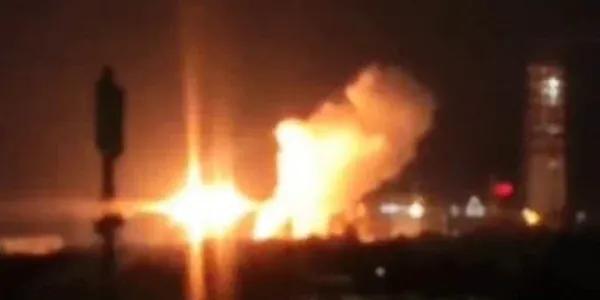
This marked the second attack on the facility in two months, following a previous strike in June that had suspended operations. Mayor Mikhail Minenkov said the situation was “under control” with no casualties, though he urged residents not to share photos or videos of the aftermath.
The Russian Defense Ministry claimed to have intercepted 105 Ukrainian drones during the night, with highest concentrations over Belgorod Oblast (26), Bryansk (25), and Rostov Oblast (23). Airports in several southern Russian cities, including Vladikavkaz, Grozny, Mineralnye Vody, Nalchik, Stavropol, Tambov, and Sochi, were temporarily closed.
The New Weapons of War: UMPB-5 Bombs and Escalating Civilian Casualties
Russian forces potentially deployed newly developed UMPB-5 long-range guided bombs against Kharkiv, marking what Ukrainian prosecutors believe may be the first combat use of these weapons. The attack injured at least 33 people, including four children and a pregnant woman, with the youngest victim being a 28-day-old infant.
Spartak Borysenko, a spokesperson for the Kharkiv Regional Prosecutor’s Office, described the UMPB-5 as weighing around 250 kilograms with thicker metal casing than previously used Russian bombs. The weapon features a planning and guidance module allowing launch from long distances.
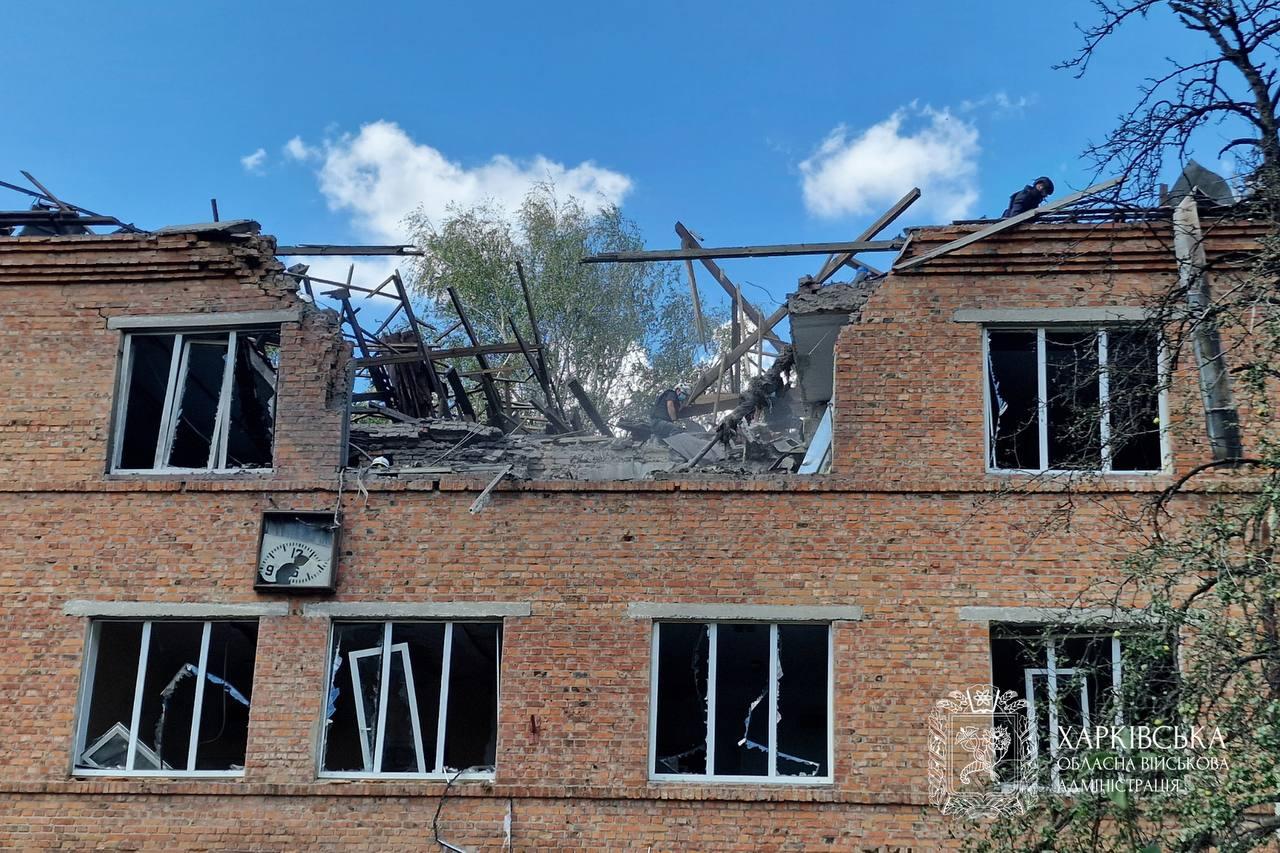
A separate Russian glide bomb attack on Kharkiv at 11:40 a.m. killed at least one person and injured 17 others, including a child. The strike targeted a medical facility in the Industrialnyi district, partially destroying the third floor and roof.
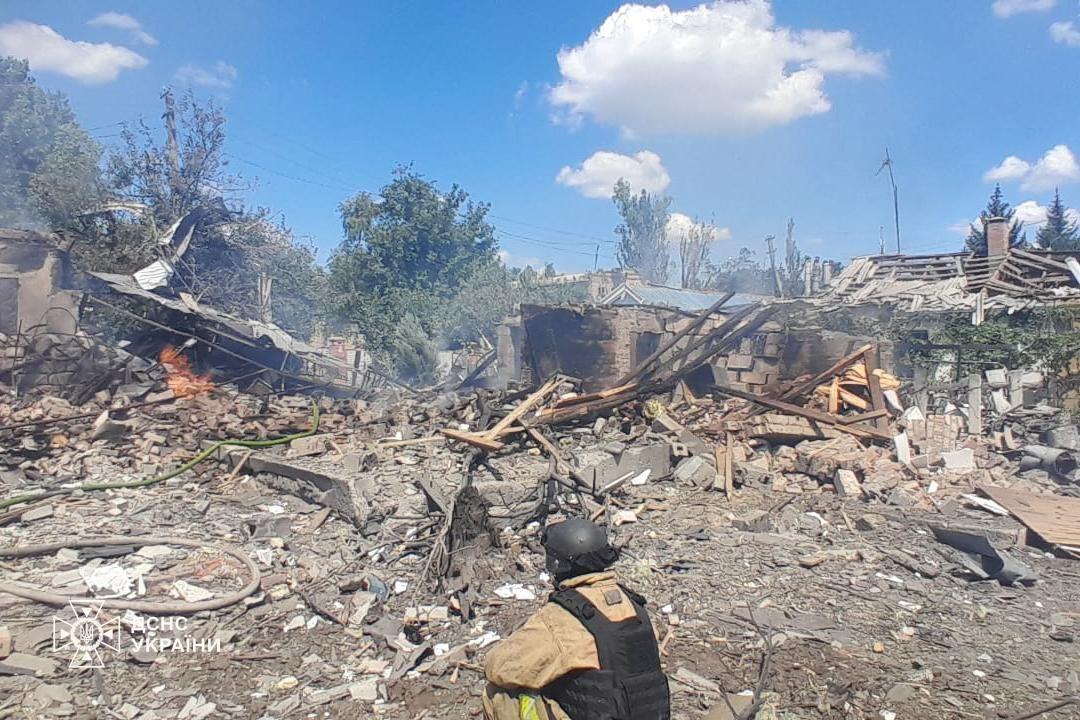
Despite diplomatic negotiations, Russian forces launched massive overnight assaults using two Iskander-M/KN-23 ballistic missiles from Voronezh Oblast and 61 Shahed-type drones. The attacks killed at least three civilians and injured 69 others across multiple regions. In Donetsk Oblast, attacks killed two people and injured 14 in Kostiantynivka, while three more were injured in Myrnohrad. Sumy Oblast saw one woman killed and another injured in artillery strikes, while Kharkiv Oblast reported 43 injuries from residential building strikes.
The Battle for Strategic Towns: Pokrovsk and Kupyansk Under Pressure
Russian forces likely seized Novoekonomichne, northeast of Pokrovsk, while conducting limited sabotage and reconnaissance missions into the strategic town itself. Elements of the Russian 51st Combined Arms Army appear to be the main force attacking northeast and east of Pokrovsk, maintaining sufficient combat capabilities after months of rest and reconstitution.
The 1st and 3rd battalions of the 5th Motorized Rifle Brigade participated in seizing Novoekonomichne, with the 30th Motorized Rifle Brigade involved in capturing Zvirove, southwest of Pokrovsk. Ukrainian forces conducted limited counterattacks, retaking positions west of Hrodivka.
Russian forces also advanced into and northwest of Kupyansk, with geolocated footage showing advances in southern Holubivka and northern Kupyansk itself. Elements of the Russian 121st Motorized Rifle Regiment seized Holubivka, while additional forces operated in Myrne, northwest of the city.
Military analysts identified three potential courses of action following a future Russian seizure of Kupyansk: pushing west toward Shevchenkove or northwest toward Velykyi Burluk to establish a buffer zone; reprioritizing seizure of the east bank of the Oskil River in Borova and Lyman directions; or redeploying forces to higher priority areas like Kostyantynivka, Pokrovsk, or Novopavlivka directions.
Across the Frontlines: Multi-Sector Battlefield Developments
Russian forces continued offensive operations across multiple sectors. In the Toretsk direction, geolocated footage showed advances west of Popiv Yar, while milbloggers claimed seizure of Oleksandro-Kalynove by elements of the 33rd Motorized Rifle Regiment. In Chasiv Yar, Russian forces engaged in house-by-house fighting while Ukrainian commanders reported Russian Molniya drones complicating rear area logistics.
The Siversk direction saw elements of the 7th Motorized Rifle Brigade advancing south of Hryhorivka, while Russian forces maintained pressure in the Novopavlivka direction with milbloggers claiming advances across the Vovcha River near Yalta. In the Velyka Novosilka direction, assault groups of the 36th Motorized Rifle Brigade operated alongside Russian 11th Air Force units.
Russia’s Disturbing Innovation: Child Labor and Technological Adaptation
Perhaps most disturbing were revelations of Russia’s systematic use of child labor and youth indoctrination in weapons production. The Kremlin launched several programs introducing Russian schoolchildren to combat drone production and operations, with the Berloga training program alone claiming over 600,000 participants.
The program teaches children to operate virtual drones for logistics support and defend against aerial targets, with developers claiming participants will eventually transition into programming and assembling real drones. Successful students move to the Kremlin-linked Sirius Educational Center, where over 80 percent of partners have direct links to Russia’s defense industrial base.
Russia continues using child and youth labor at the Alabuga Special Economic Zone in Tatarstan, where a Defense Ministry documentary showcased “boys and girls” from Alabuga Polytech College actively involved in Shahed drone production. The Republic of Tatarstan unsuccessfully attempted to change legislation allowing schoolchildren as young as 14 to work at defense enterprises.
Beyond child labor, Russian forces deployed increasingly sophisticated technological adaptations. A new reconnaissance drone entirely composed of Chinese components appeared on the battlefield, while the Airborne Forces introduced optical navigation systems and machine learning capabilities to Chernika-2 drones.
Russian developers modernized Lancet loitering munitions with increased range from 35-40 kilometers to 80-110 kilometers, though high costs ($35,000 each) limited large-scale deployment. New electronic warfare systems included the experimental KOP-2 complex and Radion-O anti-drone system, while Russian forces tested the Posokh laser air defense system, successfully hitting targets at 500 meters in 0.2 seconds.
Economic Strain and Industrial Adaptation
Signs of economic stress emerged as Russian truck manufacturer Kamaz announced a reduction to a four-day working week due to a nearly 60% drop in demand for commercial trucks. The company cited oversupply from foreign imports and tight monetary policy, with over 30,000 imported trucks sitting unsold. This followed similar announcements from automaker Avtovaz.
The Central Bank lowered its key interest rate from 20% to 18%, attempting to make capital more available for the defense industrial base. Governor Elvira Nabiullina cited faster than expected decreases in inflationary pressures, though monetary conditions remain tight.
The Kremlin dismissed TASS Deputy Director-General Mikhail Gusman without explanation, likely continuing efforts to control media affecting Russian-Azerbaijani relations. The Defense Ministry also cancelled its Army-2025 international military forum scheduled for August, with sources citing security concerns following Ukrainian drone strikes against Moscow.
Ukraine’s Domestic Political Crisis: Anti-Corruption Turmoil
Ukraine’s domestic political crisis entered its fourth day as protesters continued demonstrating against controversial anti-corruption legislation. Zelensky submitted a new draft law aimed at restoring independence to the National Anti-Corruption Bureau (NABU) and Specialized Anti-Corruption Prosecutor’s Office (SAPO), just two days after signing legislation that effectively destroyed their autonomy.
“Probably, there should have been a dialogue. Communication is always necessary,” Zelensky told journalists, acknowledging the political miscalculation. Parliamentary Speaker Ruslan Stefanchuk announced lawmakers would consider the new bill during an emergency session on July 31, proposing immediate adoption without amendments.
The new bill includes provisions requiring law enforcement employees with access to classified information to undergo polygraph tests every two years. European Commission President Ursula von der Leyen had raised “strong concerns” with Zelensky over the original law, while protesters hung banners asking, “How much is your signature worth, Mr. President?”
The controversy demonstrated how wartime centralization of power can lead to overreach, with immediate international consequences as the European Commission announced Ukraine would receive only 3.05 billion euros instead of the anticipated 4.5 billion euros in EU assistance due to failure to complete key reforms.

European Acceleration: Energy Independence and Strategic Positioning
The European Parliament considered proposals to accelerate the planned phaseout of Russian gas by one year, moving the start date to January 2027. Lead lawmakers from the European People’s Party and Greens both proposed the earlier deadline, along with requirements for governments to penalize companies violating the gas ban.
EU reliance on Russian gas has dropped from around 45% to approximately 19% as of May 2025, though 2024 saw a modest rebound prompting urgent calls for coordinated action. Slovakia and Hungary cannot veto the phaseout directly but have repeatedly stalled sanctions packages due to their heavy reliance on Russian pipeline gas.
Serbian European Integration Minister Nemanja Starovic announced that Serbia would support imposing sanctions on Russia once EU accession becomes imminent, defining this as “a few months before the accession date.” The statement reflects Belgrade’s ongoing balancing act between Russia and the West, with Starovic emphasizing that current non-participation reflects economic pragmatism rather than political alignment.
American Reassurance: NATO Commitments and Allied Support
Defense Secretary Pete Hegseth hosted Baltic Defense Ministers at the Pentagon, directly citing Trump while reiterating that the U.S. “remains fully committed to NATO.” The meeting aimed to achieve “peace through strength in Europe by setting conditions for a negotiated lasting peace in Ukraine.”
The State Department announced a $4 billion Foreign Military Financing loan guarantee to Poland, recognizing the country as “one of America’s strongest and most dependable allies in NATO.” Poland has significantly increased defense investment since 2023, acquiring Apache helicopters, radar systems, HIMARS, and Patriot batteries—all American-made systems promoting what officials called “peace through strength.”