
As Trump shortens Putin’s deadline to 10-12 days, Russian forces continue battlefield advances while diplomatic incidents multiply across Europe’s eastern frontier
Summary of the Day – July 28, 2025
President Donald Trump’s growing frustration with Vladimir Putin crystallized into action on July 28, as the American leader dramatically shortened his peace ultimatum from 50 days to just 10-12 days, declaring “I already know the answer” to Russian intentions. The announcement came as Russian Foreign Minister Sergei Lavrov proclaimed Russia was “fighting alone against the entire West,” while Russian forces launched 324 drones and multiple missiles against Ukrainian cities, ignoring previous ceasefire pledges. Against this backdrop of escalating military pressure, Ukraine secured vital defensive reinforcements with 11 additional IRIS-T air defense systems promised by Germany, continued energy sector preparations with a Hr.4.7 billion loan to Naftogaz, and marked the solemn third anniversary of the Olenivka prison massacre that killed over 50 Ukrainian prisoners of war.
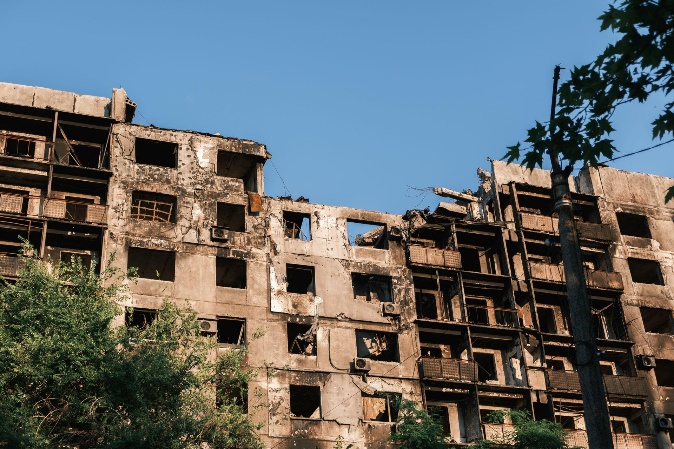
A ruined building in Pokrovsk, Donetsk Oblast. (Francis Farrell/The Kyiv Independent)
The Shrinking Clock: Trump’s Ultimatum Loses Its Generosity
Standing alongside British Prime Minister Keir Starmer at Scotland’s Turnberry golf club, President Trump delivered his starkest warning yet to Vladimir Putin, slashing the Russian leader’s negotiation deadline from 50 days to a mere 10-12 days. The dramatic reduction reflected Trump’s mounting exasperation with Putin’s duplicity—speaking of peace while continuing to rain missiles on Ukrainian cities.
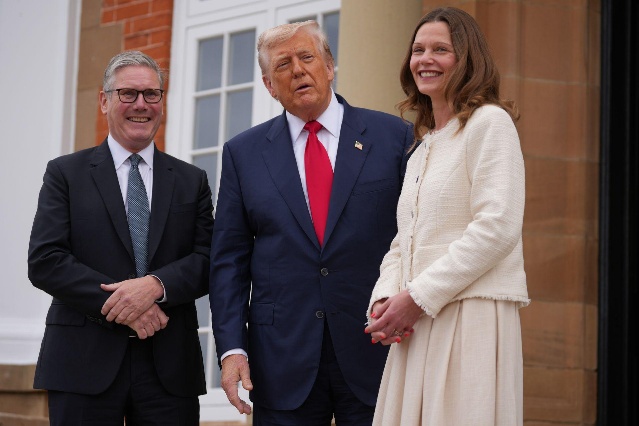
U.S. President Donald Trump meets with British Prime Minister Keir Starmer (L) and his wife Victoria Starmer at Trump Turnberry golf club, in Turnberry, Scotland. (Christopher Furlong/Getty Images)
“We thought we had that settled numerous times, and then President Putin goes out and starts launching rockets into some city like Kyiv and kills a lot of people in a nursing home or whatever,” Trump stated, his tone betraying frustration with Putin’s pattern of promising one thing while doing another.
The president’s decision to compress the timeline stemmed from a growing realization that Putin was using diplomatic overtures as cover for continued military aggression. “I wanted to be generous, but we just don’t see any progress being made,” Trump explained, adding pointedly, “There’s no reason in waiting.”
Most telling was Trump’s apparent shift in attitude toward direct engagement with the Russian president. When asked whether he still wanted to meet with Putin, Trump replied, “I’m not so interested in talking anymore. He talks with such nice conversations, such respectful and nice conversations, and then people died the following night.”
Zelensky’s Strategic Embrace: Welcoming Pressure on Moscow
President Volodymyr Zelensky quickly embraced Trump’s shortened timeline, recognizing an opportunity to align Ukrainian interests with American impatience. In his evening address, Zelensky praised the “extremely significant statement by President Trump,” emphasizing that “it is Russia who is doing everything to undermine peace efforts and drag out this war.”
The Ukrainian president’s response demonstrated his growing skill at leveraging Trump’s transactional approach to foreign policy. Rather than resisting the pressure of accelerated timelines, Zelensky positioned Ukraine as the reasonable partner ready to work toward peace, while framing Russia as the obstinate party prolonging conflict.
“Peace through strength is possible. Ukraine, as always, is ready to work with America, with President Trump, in the most productive way possible, to end this war with dignity and lasting peace,” Zelensky declared, striking the precise tone likely to resonate with Trump’s preference for decisive action over prolonged negotiation.
The Kremlin’s Defiant Rhetoric: Lavrov Proclaims Lonely War Against the West
Russian Foreign Minister Sergei Lavrov delivered one of his most sweeping condemnations of Western involvement in Ukraine, claiming at a Russian youth forum that “Russia is fighting alone against the entire West… for the first time in history.” Lavrov’s declaration that Russia “must rely on [itself]” and has “no allies on the battlefield” represented a calculated attempt to frame the conflict as an existential struggle against Western aggression.
The foreign minister’s claims ignored the substantial support Russia receives from North Korea, Iran, and China, including ballistic missiles, artillery shells, North Korean troops, Iranian Shahed drones, and Chinese dual-use components for military technology. Lavrov’s selective blindness to these alliances suggested the rhetoric was designed for domestic consumption rather than international persuasion.
Lavrov’s insistence that Russia had “no alternative” to launching its war in Ukraine, citing the need to protect Russian-language speakers, recycled familiar justifications while reinforcing the Kremlin’s commitment to its stated war aims of Ukrainian “denazification,” demilitarization, and neutrality. The foreign minister’s demands included preventing Ukrainian NATO membership, halting NATO expansion entirely, and recognizing Russia’s illegal annexation of Ukrainian territories.
The timing of Lavrov’s remarks, coinciding with Trump’s ultimatum, demonstrated Moscow’s determination to project strength and ideological conviction despite mounting international pressure.
The Nuclear Chess Move: America Returns Weapons to Britain
In a development that underscored the West’s determination to project strength amid Russian threats, the United States likely stationed nuclear weapons in the United Kingdom for the first time since 2008, according to Bloomberg reporting. The deployment of B61-12 thermonuclear bombs to RAF Lakenheath represented a significant escalation in America’s commitment to European defense.
A U.S. C-17 transport aircraft from Kirtland Air Force Base in Albuquerque, New Mexico delivered the weapons to the English airbase on July 16, flying with its transponder active and involving the U.S. Air Force’s Prime Nuclear Airlift Force. The open nature of the flight suggested deliberate signaling rather than covert operations.
The timing of the nuclear deployment, coinciding with Trump’s meeting with Prime Minister Starmer, sent an unmistakable message to Moscow about Western resolve. After months of Russian nuclear saber-rattling, the American response demonstrated that intimidation would be met with enhanced deterrence rather than accommodation.
The Aerial Onslaught: 324 Drones Launch Despite Ceasefire Pledges
Russian forces conducted one of their largest drone attacks of the conflict on the night of July 27-28, launching 324 Shahed-type drones and decoys alongside four Kh-101 cruise missiles and three Kh-47 Kinzhal aeroballistic missiles. The massive barrage demonstrated Moscow’s determination to maintain military pressure despite diplomatic discussions about ceasefires.
Ukrainian air defenses successfully intercepted 309 drones and two Kh-101 missiles, while the three Kinzhal missiles failed to reach their targets. However, Russian forces struck multiple locations, with drone debris falling across several regions. The attacks injured eight people in Kyiv City, including a three-year-old child, and damaged civilian and residential infrastructure in Kharkiv, Kirovohrad, and Mykolaiv oblasts.
The scale and intensity of the attack contradicted any notion that Russia was prepared to scale back military operations in response to diplomatic pressure. Russian forces primarily targeted Starokostyantyniv in Khmelnytskyi Oblast, continuing the pattern of infrastructure attacks designed to degrade Ukrainian defensive capabilities and civilian morale.
German Generosity: IRIS-T Systems Strengthen Ukrainian Skies
Germany’s commitment to deliver 11 additional IRIS-T air defense systems provided Ukraine with crucial defensive capabilities as Russian aerial attacks intensified. Ukrainian Ambassador to Germany Oleksii Makeiev confirmed that seven of 18 total systems had already been delivered, with the remainder expected as production continued.
Each IRIS-T system includes three medium-range SLM launchers and two short-range SLS launchers, creating a comprehensive defensive network capable of intercepting cruise missiles, drones, and aircraft. The systems have proven particularly effective against the Shahed drones that Russia launches in nightly barrages against Ukrainian cities.
The German commitment represented more than military aid; it demonstrated European determination to maintain support for Ukraine even as American policy potentially shifted under Trump’s pressure-focused approach. With Berlin emerging as Kyiv’s top European defense supplier, German reliability provided crucial stability amid uncertainty about long-term American commitments.
The IRIS-T systems’ advanced capabilities, including infrared guidance and vertical launch capacity, made them particularly valuable for defending against Russian attempts to overwhelm Ukrainian air defenses through mass attacks. However, Makeiev acknowledged that only American Patriot systems could reliably intercept ballistic threats like Russian Iskander and Kinzhal missiles.
The Energy Lifeline: Naftogaz Secures Funding and New Supply Routes
Ukraine’s state energy giant Naftogaz secured a Hr.4.7 billion ($113 million) loan from Ukrgasbank to purchase natural gas and build underground storage reserves for the approaching winter heating season. The loan represented crucial financial backing as Russian attacks had devastated Ukraine’s domestic gas production capacity, with Naftogaz losing nearly half its production capabilities during winter strikes.
CEO Serhii Koretskyi emphasized the loan’s importance for ensuring Ukrainian energy security, stating, “This is our joint investment in warmth and light for millions of Ukrainians.” The collaboration between Naftogaz and Ukrgasbank, ongoing since 2009, demonstrated the domestic financial sector’s commitment to supporting critical infrastructure during wartime.
In a parallel development that could reshape Ukraine’s energy import strategy, Naftogaz signed its first agreement to import natural gas from Azerbaijan through the newly established Trans-Balkan route. The inaugural shipment through the Bulgaria-Romania-Ukraine corridor opened an alternative supply pathway, reducing dependence on traditional European routes while providing access to Azerbaijani natural gas.
The Trans-Balkan route’s strategic importance extended beyond immediate supply needs, offering potential access to Greek and Turkish LNG terminals as well as Romanian offshore production. Koretskyi characterized the Azerbaijan deal as “a small volume but strategically important step that paves the way for long-term cooperation.”
The Prisoner Exchange Milestone: Nearly 6,000 Ukrainians Freed
President Zelensky announced that Ukraine has brought home 5,857 people from Russian captivity through exchanges since February 2022, with an additional 555 freed through other means. The figures highlighted both the scale of Russian detention practices and Ukraine’s persistent efforts to secure releases through diplomatic channels.
The announcement coincided with the solemn third anniversary of the Olenivka prison massacre, where over 50 Ukrainian prisoners of war were killed in a Russian-orchestrated explosion on July 28-29, 2022. Ukraine’s Prosecutor General’s Office investigation revealed that over 11,000 Ukrainians had been illegally detained by Russia in places of deprivation of liberty during the war, with 176 stationary and 120 temporary detention points established.
Ukrainian prosecutors documented systematic torture practices, including beatings, electric shocks, use of service dogs, strangulation, hanging, simulated executions, and sexual violence. The investigation has resulted in charges against 534 people, with 117 convicted of crimes related to prisoner mistreatment.
Over 1,000 prisoners had been freed based on agreements reached during recent Istanbul peace talks, demonstrating that even limited diplomatic engagement could produce humanitarian benefits. However, the broader pattern of Russian detention practices revealed the systematic nature of Moscow’s violations of international humanitarian law.
The Eastern Grind: Russian Forces Advance Between Key Towns
Russian forces achieved tactical advances between the strategic towns of Pokrovsk and Kostiantynivka in Donetsk Oblast, creating what Ukrainian military spokesman Victor Tregubov described as a “partial wedge” that threatened to complicate Ukrainian defensive positions. The advances represented Russia’s continued ability to make incremental gains despite heavy casualties.
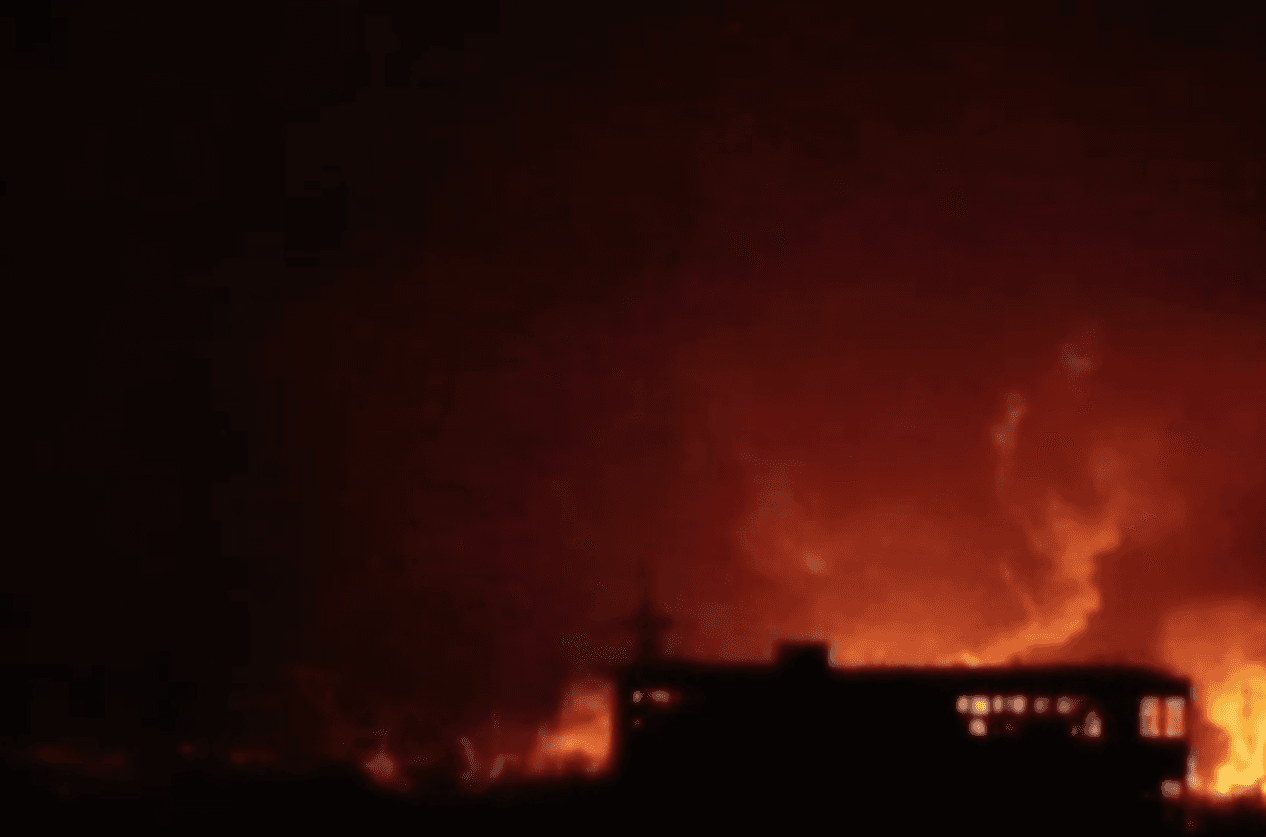
A fire reportedly burns in Donetsk amid a Ukrainian drone attack on the occupied city late. (Screenshot/Typychnyi Donetsk/Telegram)
The Pokrovsk direction remained the primary focus of Russian offensive operations, with Moscow concentrating 110,000-112,000 troops in attempts to envelop both Pokrovsk and Myrnohrad. However, Ukrainian forces were successfully destroying significant Russian manpower and equipment while slowing the offensive pace through systematic defensive operations.
Tregubov emphasized that no immediate threat of direct assault on Pokrovsk existed, as such attacks would incur prohibitive losses for Russian forces. Instead, Moscow appeared focused on encirclement tactics designed to force Ukrainian withdrawal without engaging in costly urban combat reminiscent of Mariupol or Bakhmut battles.
Russian forces also continued offensive operations across multiple fronts, making confirmed advances northwest of Zelena Dolyna in the Lyman direction, west of Poltavka in the Toretsk direction, west of Horikhove in the Novopavlivka direction, and northwest of Novosilka in the Velyka Novosilka direction. The simultaneous pressure across multiple axes demonstrated Russia’s continued offensive capabilities despite mounting casualties.
The Northern Recovery: Ukrainian Forces Liberate Kindrativka
Ukrainian forces successfully liberated the village of Kindrativka in Sumy Oblast, pushing back Russian attempts to establish permanent positions in Ukraine’s northeastern border region. The recapture represented the second settlement recovered since Russia opened its northern front in early June, following the earlier liberation of Andriivka.
The liberation operation inflicted “heavy losses” on Russia’s 40th, 150th, and 30th battalions, with reports indicating the death of the 30th Battalion commander. Such tactical victories demonstrated Ukrainian forces’ continued ability to conduct successful counterattacks despite being stretched across multiple fronts.
Stabilization measures in the village were currently underway, according to Kursk military group spokespersons, indicating Ukrainian forces’ commitment to consolidating gains rather than simply conducting hit-and-run operations. The methodical approach to territorial recovery reflected lessons learned from earlier phases of the conflict.
The fighting in Sumy Oblast reflected Putin’s declared intention to create a “security buffer zone” along Ukraine’s northeastern border. However, Ukrainian resistance had largely thwarted these ambitions, with most attempts to establish lasting Russian presence being reversed through determined counterattacks.
The Digital Disruption: Cyber Warriors Ground Russian Aviation
A massive cyberattack on Aeroflot, Russia’s largest airline, forced the cancellation of nearly 50 flights and demonstrated the growing sophistication of Ukrainian cyber warfare capabilities. The pro-Ukrainian hacker group Silent Crow claimed responsibility for the attack, allegedly conducted in cooperation with Belarusian opposition hacktivists Cyber Partisans BY.
The hackers claimed to have spent a year developing access to Aeroflot’s corporate network before launching their comprehensive assault on 7,000 physical and virtual servers while accessing 20 terabytes of data. Such patient, methodical operations suggested Ukrainian cyber capabilities had evolved beyond opportunistic attacks toward systematic infrastructure targeting.
Flights to and from Moscow’s Sheremetyevo airport were canceled, including connections to Astrakhan, Grozny, Kaliningrad, Minsk, and Yerevan. The disruption’s scale suggested successful coordination between technical expertise and strategic planning, hallmarks of mature cyber warfare capabilities.
Aeroflot announced that specialists were working to minimize risks to flight operations and restore normal service operations, while sister airlines Rossiya and Pobeda reported no disruptions. The selective targeting demonstrated the attackers’ precision in choosing maximum-impact targets while avoiding unnecessary collateral damage.
The Railway Strike: Ukrainian Drones Target Russian Logistics
Ukrainian forces launched a large-scale drone attack on Russia’s Rostov Oblast, striking railway infrastructure crucial to Moscow’s military logistics. The attack on Salsk railway station demonstrated Ukraine’s continued ability to target Russian supply lines despite increased air defense presence.
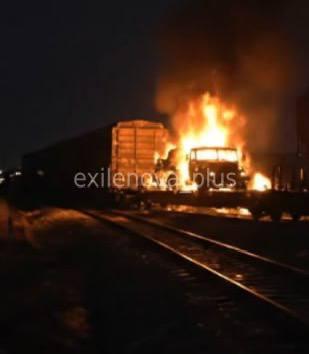
A purported image of a burning train car at the Salsk railway station in Rostov Oblast, a large-scale Ukrainian drone attack on the region. (Elilenova_plus/Telegram)
Russian Railways reported damage to overhead power lines, forcing suspension of train traffic through the strategic junction. Local officials claimed civilian casualties, with Acting Governor Yuri Slusar reporting the death of a vehicle driver and damage to homes and automobiles throughout Salsk.
Additional strikes targeted a traction substation near Orlovsky village, disrupting electrical power to railway infrastructure across the region. The coordinated nature of the attacks suggested sophisticated intelligence about Russian transportation vulnerabilities and the importance of specific nodes in the logistics network.
Russia’s Defense Ministry claimed that 74 Ukrainian drones were intercepted over various regions overnight, but the successful strikes on key infrastructure demonstrated that Ukrainian forces maintained the ability to penetrate Russian air defenses when targeting critical objectives.
The Detention Operation: Security Service Arrests Belarusian Agent
Ukraine’s Security Service (SBU) detained a 24-year-old unemployed resident of Volyn Oblast accused of gathering intelligence on Ukraine’s border defenses for the Belarusian KGB. The arrest demonstrated continued efforts by Belarus to conduct espionage operations against Ukrainian defensive positions along the northern border.

The Security Service of Ukraine (SBU) detained a 24-year-old man accused of spying for the Belarusian KGB and gathering intelligence on Ukraine’s border defenses. (The Security Service of Ukraine)
The suspect had sought quick money through Telegram messaging platforms and agreed to carry out assignments for Belarusian intelligence, including monitoring checkpoints and fortified positions of Ukrainian Armed Forces along the northern border. He also attempted to track military trains moving through the region or stationed at railway transit hubs.
SBU officers seized a phone containing an anonymous chat allegedly used to communicate with Belarusian intelligence handlers. The suspect recorded Ukrainian defensive positions and marked their geolocations using Google Maps, providing Belarus with detailed intelligence about Ukrainian border security measures.
The arrested agent faces life imprisonment with confiscation of property under Ukrainian law. The case highlighted the continued threat posed by Belarusian intelligence services, which have increasingly targeted Ukrainians since the full-scale war began, operating under the direction of dictator Alexander Lukashenko, who has expressed full support for Russia’s attack on Ukraine.
The Diplomatic Provocations: Baltic States Face Russian Pressure
Estonia summoned Russia’s charge d’affaires after a Russian border patrol vessel violated Estonian territorial waters near Vaindloo Island, marking the first such incident in 2025. The Russian vessel Sochi 500 entered Estonian waters for approximately 35 minutes without required notification, violating international maritime law and Estonia’s sovereign rights.
Estonian Foreign Minister Margus Tsahkna characterized the incident as “serious and unacceptable,” delivering a formal note of protest through diplomatic channels. The measured response demonstrated Baltic states’ determination to maintain clear boundaries while avoiding unnecessary escalation of tensions.
In a separate incident, an unidentified drone entered Lithuanian airspace from the direction of Belarus, prompting enhanced border security measures. Lithuanian Defense Minister Dovile Sakaliene suggested the drone may have been jammed by Ukrainian defenses and strayed off course during Russia’s massive 324-drone attack on Ukraine.
Lithuanian authorities warned residents not to approach the unmanned aircraft under any circumstances while relevant services worked to locate possible crash sites. The incident highlighted the increasingly complex aerial environment created by Russia’s massive drone attacks and the potential for navigational errors to cause international incidents.
The Sanctions Standoff: China Demands Reversal of Ukrainian Measures
China demanded the immediate reversal of Ukrainian sanctions targeting 53 individuals and entities accused of supporting Russia’s war effort, threatening retaliatory measures against what Beijing called a “mistake” requiring urgent correction. Chinese Foreign Ministry spokesperson Guo Jiakun characterized the sanctions as violations of international law lacking U.N. Security Council authorization.
“China will firmly safeguard the legitimate and lawful rights and interests of Chinese companies,” Guo declared, threatening unspecified retaliatory measures. The confrontation highlighted growing tensions between Kyiv and Beijing over Chinese support for Russian military capabilities despite Beijing’s claims of neutrality.
Ukraine’s willingness to sanction Chinese entities despite potential economic consequences reflected Kyiv’s determination to expose and disrupt supply chains sustaining Russian military capabilities. Ukrainian intelligence had previously identified China as supplying “special chemicals, gunpowder, and components” to 20 Russian military-industrial manufacturing facilities.
The diplomatic confrontation revealed the limitations of Chinese influence over Ukrainian policy, with Kyiv prioritizing security concerns over economic relationships. Such Ukrainian independence complicated Chinese efforts to maintain profitable relationships with both sides while avoiding accountability for Russia’s military support.
The Sporting Controversy: Russian Military Officers Compete Despite Sanctions
Ukraine’s fencing team won bronze medals at the World Championships in Tbilisi amid protests over Russian and Belarusian participation, including military officers directly involved in the war effort. Sabre fencer Alina Komashchuk and epee fencer Nikita Koshman each earned bronze medals, demonstrating Ukrainian athletic excellence despite competing alongside representatives of the aggressor nation.
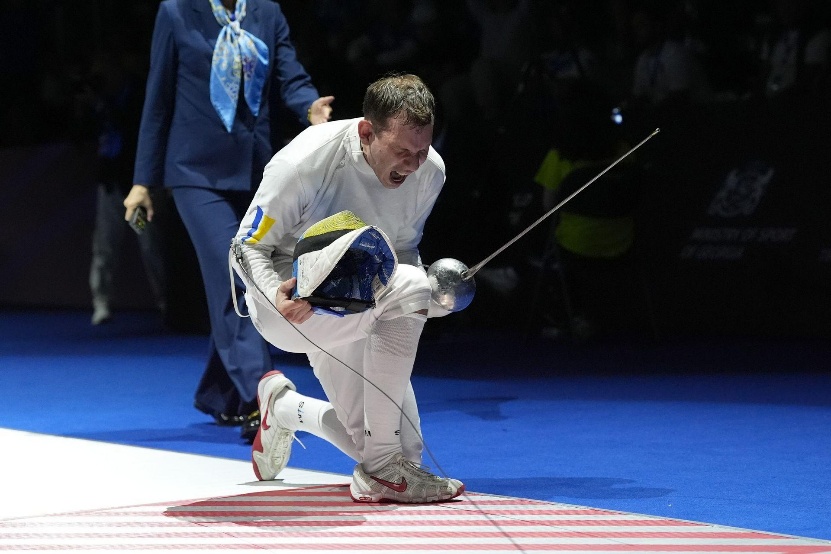
Ukrainian epee fencer Nikita Koshman won the bronze medal at the World Fencing Championships in Tbilisi, Georgia. (International Fencing Federation)
The International Fencing Federation allowed 40 Russian and Belarusian athletes to participate, including Russian Army Major Sofia Velikaya and Lieutenant Yana Yegoryan, directly contradicting International Olympic Committee recommendations regarding military-linked athletes. Velikaya has also been a close confidante of President Putin since 2024.
Local Georgian protests outside the competition venue demonstrated public opposition to Russian participation, with demonstrators displaying banners warning that “Russian pigs, you are not welcome here!” and threatening that “Today there will be fireworks, and tomorrow there will be the Grads.”
Georgian Fencing Federation President Merab Bazadze acknowledged awareness of Russian athletes’ military ranks but stated that Georgia was obligated to accept all competitors approved by the FIE. The controversy highlighted ongoing challenges in maintaining international sanctions while preserving cultural and athletic exchanges.
The Defense Industry Surge: Ukrainian Arms Production Accelerates
Ukraine’s Defense Procurement Agency signed contracts worth Hr 158 billion ($3.8 billion) more with domestic weapons manufacturers in the first six months of 2025 compared to the same period last year, representing a dramatic acceleration in military production capabilities. The increase elevated domestically-produced arms and equipment to 71.4% of total procurement, up from 44.1% during the same period in 2024.
Unmanned systems drove much of this transformation, with 95% of drone purchases now sourced domestically within Ukraine. The shift demonstrated Ukraine’s rapid evolution into a defense technology center, with domestic manufacturers adapting quickly to wartime production requirements.
President Zelensky indicated that domestic military production requires $25 billion annually to function effectively, and he is actively coordinating with Western allies to secure this funding. The substantial investment in domestic capabilities reflected Ukraine’s determination to achieve strategic autonomy in critical defense technologies.
The Defense Ministry announced that Ukraine funded contracts with 155 Ukrainian manufacturers throughout 2024 with an annual budget of Hr 306.1 billion ($7.62 billion). The dramatic increase in 2025 contracting demonstrated both growing production capacity and expanding governmental commitment to supporting domestic industry.
Looking Forward: The Compressed Timeline’s Strategic Implications
As Trump’s shortened deadline approaches, the strategic landscape reflects a fundamental shift in American approach to the Ukraine conflict. The president’s move from patient negotiation to imposed urgency suggests growing recognition that Putin responds only to pressure, not persuasion, while the simultaneous deployment of nuclear weapons to Britain demonstrates Western resolve.
The next 10-12 days will test whether concentrated diplomatic and economic pressure can achieve what months of broader engagement could not. Trump’s threat of 100% secondary tariffs on Russian trade partners represents the most severe economic coercion yet attempted, with potential to fundamentally alter Moscow’s cost-benefit calculations.
However, the compressed timeline also creates risks of premature conclusions or inadequate preparation for complex negotiations. The challenge for American policymakers will be maintaining pressure while preserving flexibility for genuine diplomatic opportunities should they emerge, particularly as Russian military pressure continues across multiple fronts.
For Ukraine, the shortened timeline offers both opportunity and danger. While increased American pressure on Russia serves Ukrainian interests, rushed negotiations could produce agreements failing to address fundamental security concerns. Zelensky’s challenge will be leveraging American impatience while ensuring any eventual settlement protects Ukrainian sovereignty and territorial integrity, as evidenced by his careful calibration of support for Trump’s new deadline.