
As Trump Orders Nuclear Submarines Closer to Russia and Putin Demands Ukraine’s Surrender, the War’s Deadliest Month Claims Record Casualties While Peace Talks Collapse
Summary of the Day – August 1, 2025
The specter of nuclear confrontation loomed larger than at any point since the war began as President Donald Trump ordered two American nuclear submarines deployed to “appropriate regions” in response to Russian Security Council Deputy Chairman Dmitry Medvedev’s escalating nuclear threats. Putin’s August 1 press conference with Belarus President Alexander Lukashenko revealed an uncompromising stance—Russia’s territorial demands remain unchanged, the fortress belt of eastern Ukraine must fall, and any peace negotiations will proceed only on Moscow’s terms. Meanwhile, July emerged as the deadliest month for civilians since the invasion began, with Russia launching a record 6,297 drones against Ukraine. As Trump’s August 8 deadline approaches, both sides appear to be preparing for prolonged conflict rather than compromise.
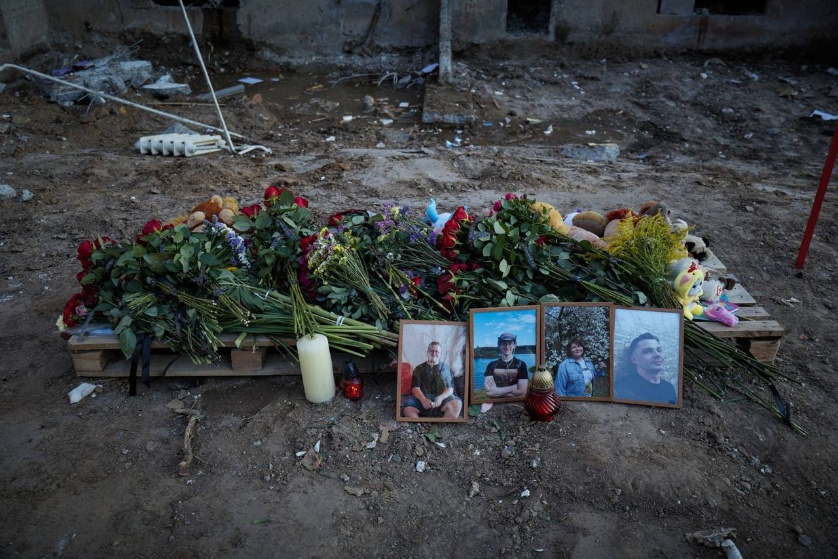
A small memorial of flowers, candles, and photographs outside an apartment building hit by a Russian missile attack after search-and-rescue operations ended on Aug. in Kyiv, Ukraine. The overnight attack on July 31 was the deadliest strike on the capital this year. (President Volodymyr Zelensky / Telegram)
Nuclear Brinkmanship: Trump’s Submarine Gambit Against Russian Threats
The most dramatic escalation came when President Trump announced the deployment of two nuclear submarines in response to what he called Dmitry Medvedev’s “highly provocative statements” and “foolish and inflammatory” nuclear rhetoric. Trump’s decision marked the first concrete military response to Russia’s intensifying nuclear saber-rattling campaign, which has included veiled references to Moscow’s “Dead Hand” automated nuclear response system.
“Just in case these foolish and inflammatory statements are more than just that,” Trump wrote on Truth Social, adding ominously that “words are very important, and can often lead to unintended consequences.”
Medvedev had warned that Trump’s escalating ultimatums could drive Russia and the United States toward direct conflict. “Each new ultimatum is a threat and a step toward war—not with Ukraine, but with his own country,” the former Russian president wrote, explicitly invoking the specter of nuclear conflict between the superpowers.
Russian milbloggers responded with calls for Moscow to deploy nuclear-capable ships to Cuba, deliberately echoing the 1962 Cuban Missile Crisis. The Kremlin’s nuclear threats form part of what intelligence analysts describe as a reflexive control campaign designed to instill fear among Western decision-makers and discourage military aid to Ukraine.
Putin’s Ultimatum: The Fortress Belt Must Fall
In a carefully staged press conference with Lukashenko, Putin revealed the iron logic driving Russia’s war strategy. Moscow will accept nothing less than Ukraine’s complete withdrawal from four illegally annexed oblasts and the capture of Ukraine’s fortress belt—the chain of fortified cities that forms the backbone of eastern Ukraine’s defenses.
“Russian forces will ‘return’ the fortress belt, which belongs to Russia,” Putin declared, using language that frames Ukraine’s sovereign territory as rightfully Russian. Lukashenko claimed Russian forces would “slowly gnaw” at and seize these defensive positions, with Chasiv Yar serving as “the road” to Kramatorsk.
Putin’s demands haven’t shifted since June 2024: Ukrainian forces must completely withdraw from Luhansk, Donetsk, Zaporizhzhia, and Kherson oblasts, Ukraine must abandon NATO membership aspirations, and the “root causes” of the war—including Russian language rights and Orthodox Church conditions—must be addressed. These maximalist demands essentially require Ukraine’s capitulation.
The fortress belt operation will constitute a multi-year endeavor requiring Russian forces to seize Siversk, Lyman, advance through Svyati Hori national park, and contend with major water barriers before even threatening Slovyansk. A Kremlin-affiliated milblogger noted it took Russian forces 14 months to seize Chasiv Yar, while Kostyantynivka is three times larger, underscoring the massive undertaking Putin envisions.
Record Death Toll: July Becomes the War’s Deadliest Civilian Month
Russia’s aerial campaign reached unprecedented levels of lethality in July, with Moscow launching 6,297 long-range drones—a 16 percent increase from June and the highest monthly total since the invasion began. The Kremlin also fired 198 missiles, triggering air raid sirens every single night of the month.
The escalation culminated in the war’s deadliest single attack on Kyiv, killing 31 people including five children—the youngest just two years old—and injuring 159 others. The July 31 strike employed coordinated waves of drones and missiles designed to overwhelm Ukrainian air defenses, hitting residential buildings, schools, and medical facilities across multiple districts.
Kharkiv City Mayor Ihor Terekhov reported 103 Russian strikes against his city in July alone, mostly using Shahed-type drones launched from low altitudes. Russian forces employed “double tap” tactics, striking the same targets twice to hit emergency responders—a war crime under international law.
The death toll reflects Putin’s strategy of terrorizing Ukrainian civilians to break national morale, even as his forces make minimal territorial gains. Villages surrounding Kyiv have become transit routes for Russian drones, with residents describing nights filled with the buzzing of Iranian-made Shaheds and the thunder of interceptions.
Trump’s Diplomatic Deadline: Eight Days to Peace or Economic War
Trump’s frustration with Putin’s intransigence became increasingly evident as his August 8 deadline approaches. The president warned that Russia has eight days to agree to peace terms or face “severe” secondary tariffs targeting countries that purchase Russian oil, including China, India, and Brazil.
To demonstrate his seriousness, Trump imposed 25 percent tariffs on India, effective August 1, specifically citing New Delhi’s purchases of Russian energy and arms. Within hours, Indian state-owned refineries suspended Russian oil purchases, with at least four tankers carrying Russian crude now idling off India’s western coast as refiners seek alternative supplies.
“I have just been informed that almost 20,000 Russian soldiers died this month in the ridiculous War with Ukraine,” Trump posted on Truth Social, citing casualty figures that underscore the war’s enormous human cost. “Russia has lost 112,500 soldiers since the beginning of the year. That is a lot of unnecessary DEATH!”
The rapid Indian response suggests Trump’s tariff threats carry real economic weight, though economists warn that rising oil prices could paradoxically benefit Russia by increasing export revenues even as volumes decline.
Military Innovation: Russia’s Jet-Powered Drone Threat
Russia continues advancing its long-range strike capabilities despite international sanctions, with intelligence reports confirming deployment of new high-speed Geran-3 drones equipped with jet engines capable of reaching 800 kilometers per hour. These Iranian-derived weapons function like cruise missiles in their ability to evade air defense systems.
Ukrainian columnist Vadym Kushnikov reported that the Geran-3’s jet propulsion makes it nearly impossible for Ukrainian mobile fire groups and interceptor drones to counter effectively. The Ukrainian Air Force confirmed Russian forces launched eight jet-powered drones on July 29-30, marking one of the first official acknowledgments of this new threat.
Russia’s drone innovations underscore the critical importance of Western-supplied air defense systems and F-16 fighter jets, which have become Ukraine’s primary defense against long-range strikes. However, Russian electronic warfare has reportedly reduced HIMARS rocket accuracy from 90 percent to just 20 percent, forcing Ukraine to rely increasingly on shorter-range systems.
The Geran-3 production remains limited by Russia’s dependence on Iranian and Chinese turbojet engine supplies, but past patterns suggest Moscow will eventually scale production with foreign assistance.
Germany’s Defense Surge: €3.3 Billion and Constitutional Changes
Germany announced its largest single military aid package for Ukraine, releasing €3.3 billion in assistance after months of political deadlock. The breakthrough came as outgoing Chancellor Olaf Scholz’s government agreed to finance the package through additional borrowing, overcoming previous budgetary constraints.
More significantly, the German parliament approved constitutional changes exempting future defense spending from strict deficit limits, potentially unlocking up to €500 billion for defense over the next decade. The legislation passed with a commanding 513-207 vote, signaling broad German consensus on military modernization.
Finance Minister Joerg Kukies also authorized approximately €8.252 billion in military aid for Ukraine between 2026 and 2029, ensuring sustained support regardless of political changes. Germany will also deliver two additional Patriot air defense systems to Ukraine “in the coming days,” with more components arriving within three months.
The constitutional changes position Germany to potentially rival Russia for military dominance in Europe, representing a fundamental shift in German strategic thinking since World War II.
Chasiv Yar’s Contested Fall: Propaganda Victory or Strategic Reality?
Russian claims of capturing the strategic town of Chasiv Yar sparked competing narratives about frontline progress. While Moscow’s Defense Ministry declared the city seized, Ukrainian officials dismissed the reports as “fakes” and “disinformation,” with President Zelensky stating that Ukrainian forces maintain defensive positions.
Open-source analysis suggests Russian forces control the majority of Chasiv Yar after 14 months of grinding urban warfare, though Ukrainian defenders may hold portions of the city’s southern and western neighborhoods. The battle’s outcome matters less than its strategic implications—Chasiv Yar’s elevated position provides natural defensive advantages and commands key supply routes to Ukrainian fortress cities.
Russian forces repeatedly raised flags in captured areas for propaganda videos, with Ukrainian officials describing these as “performances” for domestic Russian consumption. The street-by-street fighting has cost enormous casualties while yielding minimal territorial gains, illustrating the unsustainable nature of Russian offensive operations.
A Ukrainian brigade spokesperson noted that Russian forces now rely on cheaper equipment like motorcycles and all-terrain vehicles rather than armored vehicles, suggesting equipment shortages after three years of intensive combat.
Battlefield Casualties: Daily Toll Continues Mounting
Russian forces killed at least three civilians and injured 37 others across Ukraine in the past day, regional authorities reported August 1. The casualties spread across multiple oblasts as Russia maintained its systematic bombardment campaign targeting civilian infrastructure and populated areas.
In Donetsk Oblast, Russian attacks killed two people and injured 11 in Kramatorsk, while six more suffered injuries in embattled Pokrovsk. Kostiantynivka and Sviatohorivka also reported casualties from the continuing offensive operations.
Zaporizhzhia Oblast saw one death—a 63-year-old man—with five additional injuries from 614 Russian strikes across 12 localities. Kherson Oblast faced attacks on 32 settlements including the regional center, resulting in six injuries. These daily casualty figures underscore the relentless nature of Russian targeting against Ukrainian civilians.
Kharkiv Under Fire: Children Among Latest Drone Attack Victims
Russian drones struck a residential building in Kharkiv on the evening of August 1, injuring at least 11 people including three children—a 5-month-old baby, a 9-year-old boy, and a 10-year-old boy. Five victims required hospitalization following the Molniya kamikaze drone attack on the city’s Kyivskyi district.
The strike damaged a car and building glazing near the apartment complex, continuing Russia’s pattern of targeting densely populated neighborhoods in Ukraine’s second-largest city. Located less than 30 kilometers from the Russian border, Kharkiv has suffered relentless aerial bombardment throughout the full-scale war.
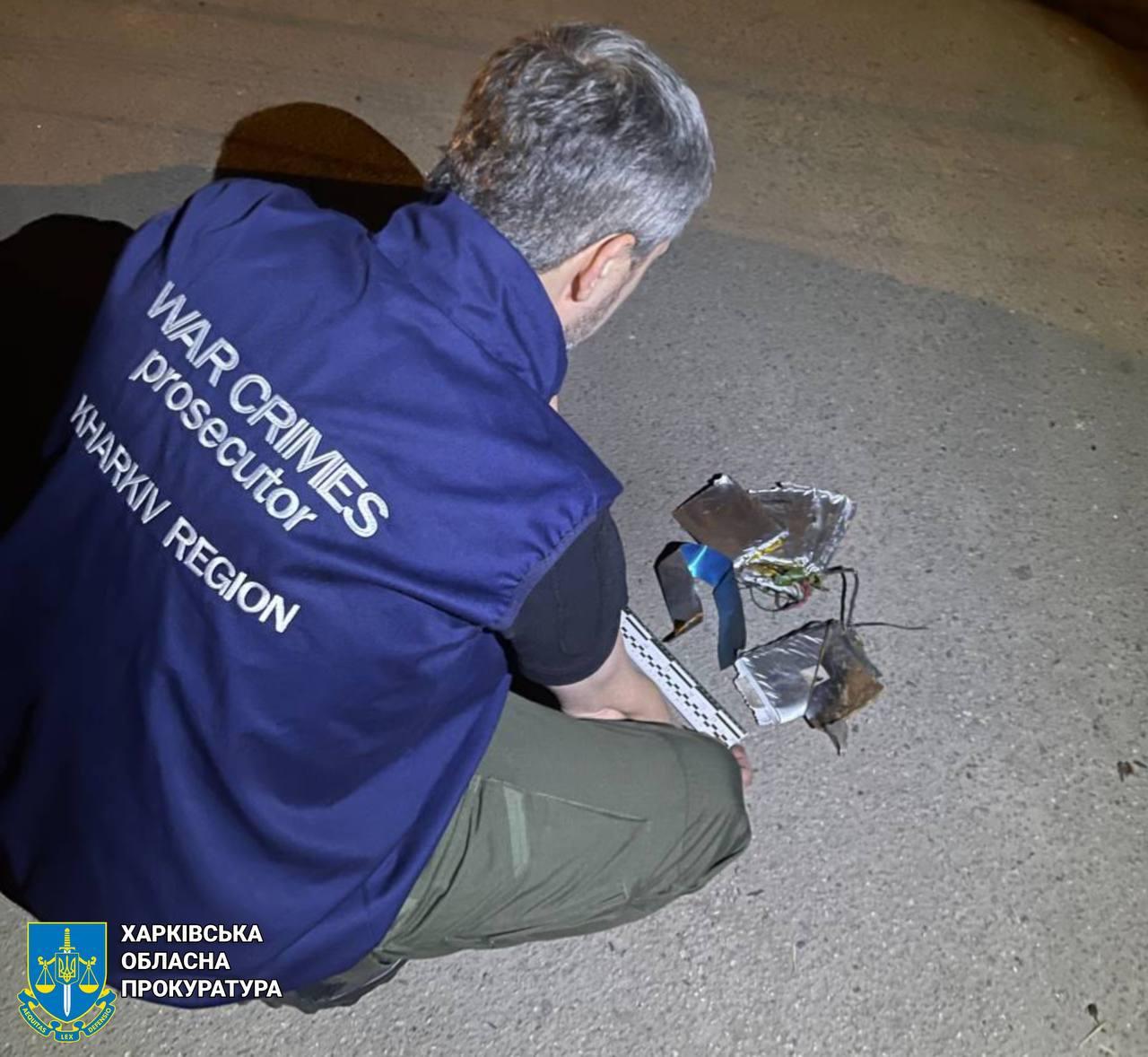
A representative from the Kharkiv Oblast Prosecutor’s Office examines the scene of a Russian drone attack in Kharkiv. (Kharkiv Oblast Prosecutor’s Office / Telegram)
The attack follows the deadliest Russian strike on Kyiv this year, which killed 31 people and injured 159 in the capital on July 31. That assault injured more children than any strike against Kyiv since the invasion began, according to Mayor Vitali Klitschko.
Manufacturing Collapse: Russian Industrial Output Hits Two-Year Low
Russia’s manufacturing sector recorded its weakest performance in over two years during July, with the S&P Global Purchasing Managers’ Index dropping to 47.0—the second consecutive monthly decline. Despite heavy militarization and surge in defense orders, industrial production growth has begun slowing significantly.
Surveyed firms reported weakening demand, rising financial pressure on clients, and increasing payment delays. New orders experienced their steepest drop since March 2022, while business confidence sank to its lowest point in nearly three years. Companies blame economic uncertainty and reduced customer purchasing power for dampened sentiment.
The decline contradicts expectations that defense spending would sustain industrial growth indefinitely. Combined with the Central Bank’s 18 percent key interest rate—among the world’s highest—the data suggests Russia’s war economy faces mounting structural challenges despite massive military expenditures.
Economic Pressure Campaign: Secondary Sanctions Take Effect
Trump’s secondary sanctions strategy gained momentum as initial measures against India demonstrated the potential economic leverage against countries supporting Russia’s war economy. The 25 percent tariff on Indian goods immediately triggered market responses, with four oil tankers carrying Russian crude idling off India’s coast as refiners reassess procurement strategies.
Indian state-owned companies, which account for over 60 percent of the country’s 5.2 million barrel-per-day refining capacity, suspended Russian oil purchases within days of Trump’s announcement. Private refiners like Reliance Industries continue importing Russian crude, but the shift by state companies represents a significant blow to Moscow’s energy revenues.
The broader sanctions framework targets China as Russia’s largest energy customer and supplier of dual-use components for weapons production. However, economists warn that comprehensive secondary sanctions against major trading partners could trigger global economic disruption while potentially increasing Russian revenues through higher oil prices.
Trump’s approach represents a departure from traditional sanctions policy by directly threatening major U.S. trading partners rather than focusing solely on Russian entities.
Putin’s Police State: Preparing for Domestic Opposition
Russian domestic legislation reveals Putin’s preparation for prolonged war and potential societal backlash. New laws impose fines for “intentional” searches of “extremist” content on VPNs and expand citizenship revocation powers to include “unlawful influence” on Russia’s information space and cooperation with foreign states against Russian security.
The Kremlin is systematically eliminating independent communication platforms, with plans to ban WhatsApp and replace it with state-controlled MAX messaging. Officials are also targeting Telegram and other platforms that facilitate anti-war sentiment or counter-narratives to official propaganda.
Legal changes allow authorities to classify domestic opposition as threats to national security, mirroring Soviet-era population control mechanisms. These measures suggest Putin anticipates significant domestic resistance to continued war mobilization and economic hardship.
The transformation into a police state indicates Putin’s commitment to sustaining the war regardless of casualties or economic costs, while preparing to suppress any internal challenges to his authority.
Battlefield Technology: Ukraine’s Push Beyond the Radio Horizon
Ukrainian drone manufacturers are scrambling to reach Russian equipment beyond the 20-kilometer range where current FPV drones can operate effectively. The “near deep” strike zone between 20-50 kilometers has become a sanctuary for high-value Russian assets including artillery, air defense systems, and logistics hubs.
Ukrainian companies are developing solutions including signal repeaters, “mothership” drones that deploy smaller attack drones closer to targets, and fiber-optic controlled systems with ranges up to 40 kilometers. The MAX 15 quadcopter from manufacturer Vyriy represents the latest attempt to bridge this capability gap with extended battery life and payload capacity.
Shield AI’s V-BATs have identified 140 high-value Russian targets beyond current Ukrainian strike range, including a $15 million SA-22 Pantsir system that Ukrainian forces couldn’t reach despite tracking it for over an hour. This limitation demonstrates the critical need for extended-range precision strike capabilities.
The technological race reflects broader challenges in modern warfare, where electronic warfare systems have degraded GPS-guided weapons effectiveness while drone technology continues rapid evolution.
Humanitarian Crisis: Villages Bear the Brunt of Russia’s Terror Campaign
Kyiv Oblast’s villages have become both transit routes and targets for Russian drone swarms, suffering attacks in relative obscurity compared to strikes on the capital. The Lypko family’s experience in Hora village exemplifies civilian vulnerability—fleeing their home for the first time in three years of war, only to watch it destroyed by a missile strike minutes later.
Twenty-six houses suffered damage from over 20 drone strikes in a single night against Hora village, with three homes completely destroyed. Rural areas lack adequate shelter infrastructure, forcing residents to rely on basements or root cellars that offer minimal protection against direct strikes.
Eighty-year-old Ivan Fedorenko survived his house’s destruction in Markhalivka village by crawling from beneath a collapsed roof, losing three dogs and a lifetime of possessions including state awards. Despite the devastation, he continues maintaining his lawn—a strip of green near the scorched ruins—as a symbol of normalcy amid destruction.
The escalating attacks on civilian areas reflect Putin’s strategy of terrorizing Ukrainian society while making minimal military progress, violating international humanitarian law through deliberate targeting of non-combatants.
Bipartisan Push: $54.6 Billion Aid Package Aims to Strengthen Trump’s Hand
Senators Jeanne Shaheen and Lisa Murkowski introduced the “Supporting Ukraine Act of 2025,” a comprehensive two-year plan providing $54.6 billion in military, humanitarian, and governance assistance. The legislation proposes financing up to a third of the aid through seized Russian assets and weapons sales to European allies rather than relying solely on American taxpayer money.
The bill would reestablish “Task Force KleptoCapture” to enforce sanctions and seize assets from Russian officials and oligarchs. It also raises presidential drawdown authority to $6 billion for each fiscal year 2025-2027, giving the White House more flexibility to transfer weapons without lengthy congressional approval.
The legislation explicitly links US support for Ukraine to deterring Chinese aggression, noting that Beijing watches American commitment to gauge US resolve in the Indo-Pacific. This reflects growing recognition that the Ukraine conflict serves as a test case for authoritarian challenges worldwide.
HIV Crisis: Russian Military Faces 2,000% Surge in Cases
A Carnegie Politika report revealed that HIV cases among Russian soldiers have soared 2,000 percent since the full-scale invasion began, with infections increasing 13-fold by end-2022 and 20-fold by end-2024. The surge stems from blood transfusions for wounded soldiers, reusing syringes in field hospitals, and troops engaging in unprotected sex and drug use.
The demographic and economic losses from this outbreak may ultimately exceed damage from the invasion itself, according to the report. Russia has become one of the top five countries worldwide for new HIV cases, behind only South Africa, Mozambique, Nigeria, and India.
The Kremlin’s emphasis on “traditional values” has worsened the crisis, including placing Elton John’s AIDS foundation on its list of “undesirable organizations” for allegedly promoting “non-traditional sexual relations.” This political interference with health programs has contributed to Russia’s distinction as the only major country where HIV isn’t decreasing globally.
Tsunami Strikes Russian Nuclear Base: Natural Disaster Hits Strategic Facility
An 8.8 magnitude earthquake near Russia’s Kamchatka peninsula on July 30 triggered tsunami waves that struck the Rybachiy naval base, home to the bulk of Russia’s Pacific Fleet nuclear submarines. Satellite imagery shows a section of pier bent away from its original position, suggesting detachment from moorings.
The base houses nuclear submarines critical to Russia’s Pacific deterrence strategy, positioned closer to the United States than any other Russian submarines except those on forward deployment. While damage to surface infrastructure appears limited, the full extent of impact on submarine operations remains unclear.
The incident occurred shortly before Trump’s nuclear submarine deployment order, highlighting the strategic importance of naval assets in current tensions between nuclear powers.
Iran Sanctions Expansion: US Targets Drone Supply Network
The Treasury Department’s Office of Foreign Assets Control imposed sanctions on five companies and one individual across Iran, China, Hong Kong, and Taiwan for supporting Iran’s drone program. The network allegedly sourced sensitive technology for the Iranian Aviation Manufacturing Company (HESA), which produces Shahed kamikaze drones supplied to Russia.
Sanctioned entities include Control Afzar Tabriz Co. Ltd. for procuring CNC machine tools, Hong Kong-based Clifton Trading Limited as an intermediary, and Taiwanese firms Mecatron Machinery Co. Ltd. and Joemars Machinery. The measures freeze all US-jurisdiction assets and bar American persons from transactions with designated parties.
Foreign financial institutions conducting business with sanctioned entities risk secondary sanctions, including limits on US correspondent account access. The action reflects continued efforts to disrupt the Iran-Russia military partnership that has provided thousands of drones for strikes against Ukrainian cities.
Cultural Victory: Brooklyn Museum Corrects Ukrainian Artist Attribution
The Brooklyn Museum changed the description of an Illia Repin painting to reflect that the landscape depicted is Ukrainian rather than Russian, following nearly two years of advocacy by art historian Oksana Semenik. The correction replaces “Russia” with “Ukraine” for the painting formerly titled “Winter Landscape – Russia.”
The canvas portrays Repin’s birth city of Chuhuiv in northeastern Ukraine’s Kharkiv Oblast, which the artist himself identified in his writings. The museum also removed nationality designations, listing only Repin’s birth and death locations to avoid political conflict.
This represents a broader effort to counter Russian cultural appropriation of Ukrainian artists and heritage, a campaign that has intensified since the full-scale invasion began. The change took two years of communication between Semenik and museum officials to achieve.
Anti-Corruption Breakthrough: Economic Security Bureau Chief Nomination Advances
Prime Minister Yulia Svyrydenko announced that Oleksandr Tsyvinsky will likely be appointed head of the Economic Security Bureau next week after agreeing to take a polygraph test to prove he has no ties to Russia. The reversal follows weeks of controversy after the government initially rejected his candidacy over alleged Russian connections.
Tsyvinsky said the truth is that no compromising information exists, and the polygraph will resolve all questions. The decision comes after intense domestic and international pressure, including a July 31 European Commission letter urging his appointment and noting no real evidence of security risks.
Created in 2021 to investigate economic crimes, the bureau has faced accusations of inefficiency and political meddling. Reforming the agency is required under Ukraine’s IMF loan program and EU accession commitments.
Customs Reform Initiative: Finance Ministry Tasked with Leadership Selection
Prime Minister Svyrydenko directed Finance Minister Serhii Marchenko to establish a commission for selecting a new State Customs Service head as part of broader institutional reforms. The overhaul represents a key requirement under Ukraine’s commitments to international partners, including the International Monetary Fund.
The selection process must be transparent and professional, with the new customs service meeting European Union standards and operating with full integrity. Ukraine’s parliament passed customs reform legislation in fall 2023, but implementation has stalled for nearly a year.
The law mandates transparent competition for the customs chief position with international organization involvement, plus re-certification of all customs staff within 18 months. Political independence safeguards stipulate dismissal only based on audit results.
Looking Ahead: The Logic of Prolonged Conflict
As Trump’s August 8 deadline approaches, both sides appear committed to strategies incompatible with immediate peace. Putin’s demands for Ukrainian capitulation, combined with his willingness to pursue multi-year operations against fortified positions, suggest Moscow views time as favoring Russian victory through Western fatigue.
Trump’s nuclear submarine deployment and escalating economic pressure indicate American readiness for sustained confrontation, while Ukrainian resistance shows no signs of weakening despite record casualty levels. The contradiction between Russian maximalist demands and Ukrainian survival imperatives makes meaningful negotiations unlikely.
The war’s transformation into a contest of industrial capacity, technological innovation, and societal resilience suggests that August 8 will mark not peace, but rather another milestone in what increasingly appears to be a generational conflict. Putin’s belief that Russia can outlast Western support faces its greatest test as economic pressure mounts and military costs escalate beyond sustainable levels.