
As Putin discusses water catastrophe with Donetsk puppet leader and Russian gasoline prices hit record highs, Ukraine destroys five fighter jets in Crimea while Trump’s envoy prepares for Moscow mission before Friday’s sanctions deadline
Summary of the Day – August 4, 2025
The fourth day of August exposed the deepening contradictions of Russia’s occupation project as Vladimir Putin met with Denis Pushilin to discuss a catastrophic water crisis engulfing occupied Donetsk Oblast, where major cities receive water for only a few hours every few days while children beg the Russian president for basic sanitation. Meanwhile, Ukraine’s Security Service struck deep into occupied Crimea, destroying a Su-30SM fighter jet and damaging four others at Saky Airfield in a precision drone operation that demonstrated Kyiv’s expanding reach into Russian-held territory. On the diplomatic front, Trump’s envoy Steve Witkoff prepared for a Wednesday or Thursday mission to Moscow as the August 8 sanctions deadline approaches, while Russia formally abandoned its moratorium on intermediate-range missile deployments in response to American pressure. The day’s most sobering revelation came through gasoline prices hitting record highs on Russian exchanges following Ukrainian drone strikes on refineries, underscoring how Kyiv’s deep-strike campaign continues to pressure Moscow’s war economy even as the Kremlin struggles to provide basic services to populations under its control.
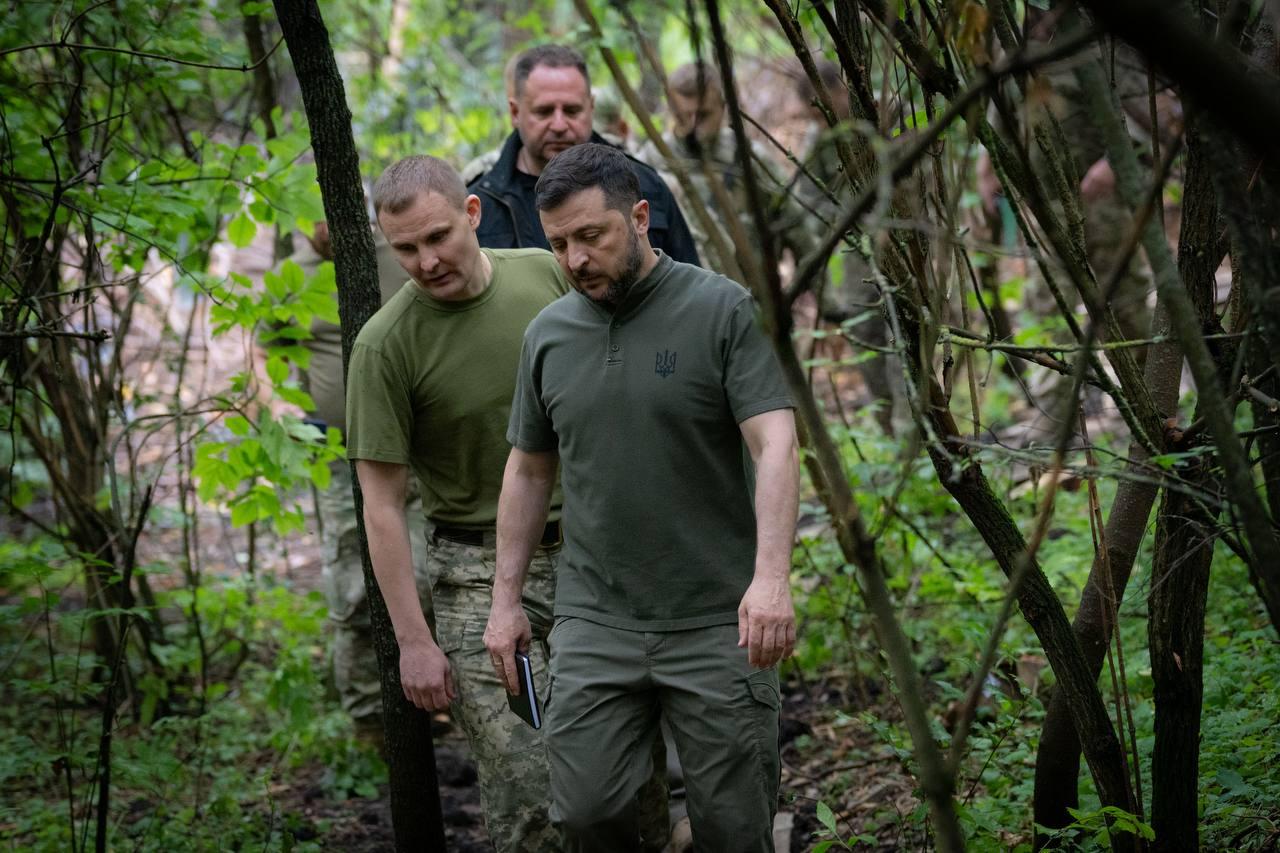
President Volodymyr Zelensky visits front-line positions near Vovchansk in Kharkiv Oblast. (Zelensky/Telegram)
Putin’s Water Disaster: Children Beg for Basic Sanitation in Occupied Donetsk
In a meeting that starkly illustrated the failure of Russia’s occupation project, Vladimir Putin sat across from Denis Pushilin, head of the so-called Donetsk People’s Republic, to address what Pushilin admitted was the “most difficult and serious challenge” facing occupied territories: a complete breakdown of water infrastructure that has left millions without reliable access to basic sanitation.
The conversation revealed the extent of the humanitarian catastrophe Putin’s war has created in territories under Russian control. Major settlements including Donetsk City, Makiivka, Yenakiyeve, and Mariupol now receive water for mere hours every few days, with Yenakiyeve reduced to a four-day cycle. Social media footage published on August 4 showed desperate residents collecting water from rainfall, puddles, and leaking pipes using plastic buckets—scenes that would be shocking in a developed nation but have become routine under Russian occupation.
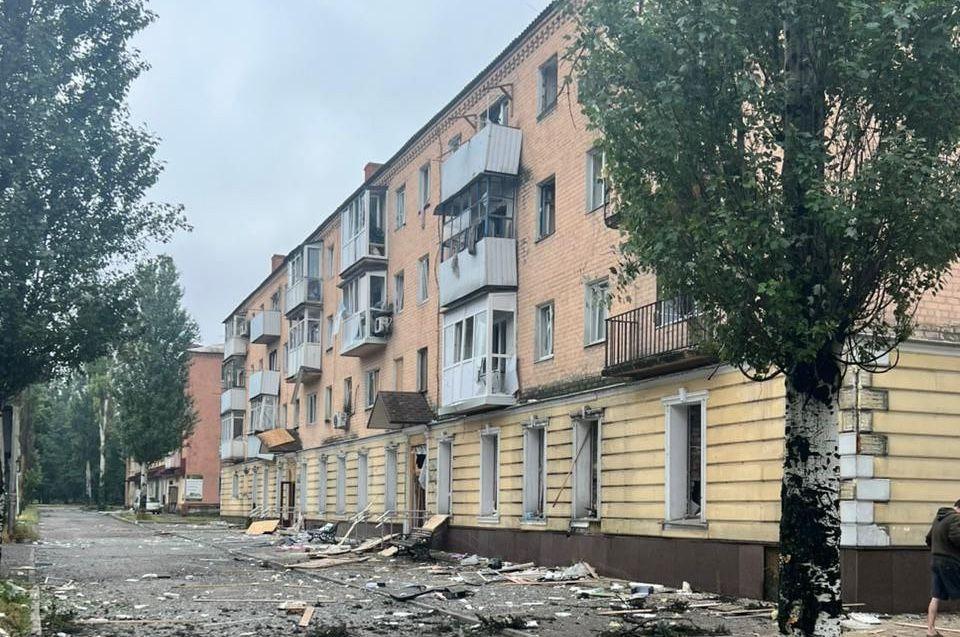
The aftermath of the Russian attacks against Ukraine’s Donetsk Oblast overnight. (Donetsk Oblast Governor Vadym Filashkin)
Perhaps most heartbreaking was a video appeal from late July, where young children directly addressed Putin, begging him to restore water supplies “so that we can simply wash ourselves, drink, and live.” The plea highlighted how Russia’s invasion has reduced basic human dignity to a luxury in territories the Kremlin claims to be “liberating.” Water losses in occupied areas sometimes reach 60 percent due to irregular supply schedules and degraded infrastructure, while sanitation issues proliferate as residents lack clean drinking water, flushable toilets, or access to bathing facilities.
Pushilin’s desperate measures—reducing water payments to 7 rubles 47 kopecks (around $0.09)—address symptoms rather than causes of infrastructure destruction that Russian military activities have systematically created. Ukrainian sources report that Russian officials provide adequate water to their forces and loyalists while abandoning civilian populations, violating international law requiring occupying powers to sustain life for populations under their control.
Five Fighter Jets Destroyed: Ukraine’s Crimean Dawn Raid Devastates Russian Air Power
Ukrainian drones struck with surgical precision at Saky Airfield in occupied Crimea overnight, delivering a devastating blow to Russian air capabilities by destroying one Su-30SM fighter jet, damaging another, hitting three Su-24 tactical bombers, and striking an aviation weapons depot. The Security Service’s Special Operations Center “A” executed the mission with characteristic Ukrainian ingenuity, penetrating Russian air defenses to target aircraft worth between $35-50 million each.
The strike represented more than tactical success; it demonstrated Ukraine’s ability to project power deep into Russian-occupied territory despite extensive air defense networks. Saky Airfield plays a critical role in Russian military operations across the Black Sea region, making the damage assessment “significant” according to the SBU, which noted that the successful operation marked “another step toward weakening the enemy’s capacity to wage its war of aggression.”
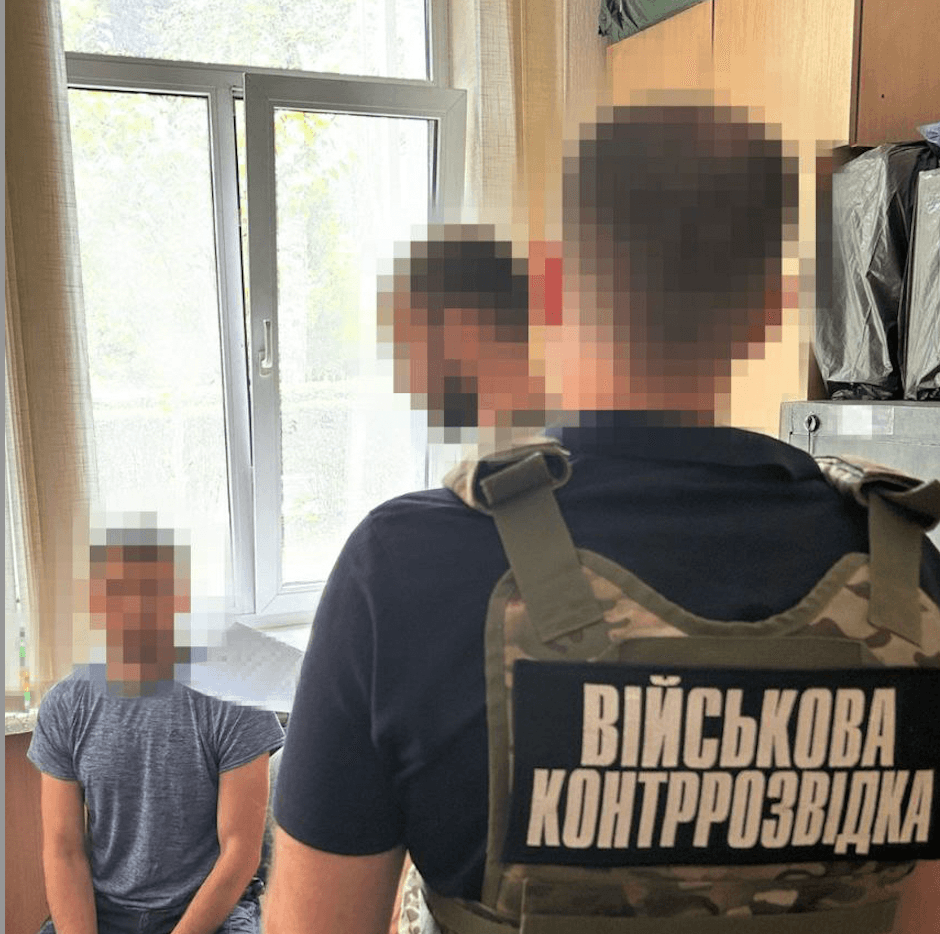
A man being detained on suspicion of being a Russian “mole” in a picture released by the Security Service of Ukraine (SBU). (Security Service of Ukraine)
The attack followed Ukraine’s unprecedented Operation Spiderweb on June 1, when Ukrainian forces reportedly damaged 41 aircraft across four Russian air bases using drones concealed in trucks. Such operations have systematically degraded Russian air capabilities while demonstrating the vulnerability of supposedly secure military installations to Ukrainian innovation and determination.
Trump’s Moscow Gambit: Witkoff Mission as Sanctions Clock Ticks Toward Friday
President Trump confirmed that his special envoy Steve Witkoff would likely travel to Russia on Wednesday or Thursday—just days before the August 8 deadline for Moscow to accept a ceasefire or face comprehensive secondary sanctions targeting Russian oil exports. “They would like to see him. They’ve asked that he meet, so we’ll see what happens,” Trump told reporters, his tone suggesting both diplomatic opportunity and skeptical caution.
The timing carries extraordinary significance as Trump’s patience with Putin appears increasingly strained after months of escalating Russian attacks on Ukrainian civilians. Witkoff’s mission comes against the backdrop of Trump’s deployment of nuclear submarines to “appropriate regions” and threats of sweeping tariffs that could reshape global energy markets by targeting countries importing Russian oil and gas.
“There’ll be sanctions, but they seem to be pretty good at avoiding sanctions,” Trump observed with characteristic bluntness. “They’re wily characters, and they’re pretty good at avoiding sanctions, so we’ll see what happens.” The proposed secondary tariffs would dramatically affect major trading partners like China and India, potentially forcing a choice between Russian energy and American market access.
The diplomatic dance reflects broader tensions as Russia formally abandoned its moratorium on intermediate-range missile deployments in response to what Moscow termed “destabilizing actions” from Washington, marking another escalation in nuclear posturing that gives Witkoff’s mission added urgency.
Railway Sabotage in Volgograd: Ukrainian Drones Strike Deep into Russian Heartland
Ukrainian forces demonstrated their expanding operational reach by conducting a precision drone strike against the Archeda railway station in Frolovo, Volgograd Oblast—nearly 900 kilometers southeast of Moscow and 120 kilometers from the Ukrainian border. The overnight attack on August 3-4 caused significant disruption to Russian logistics, with Volgograd Oblast Governor Andrei Bocharov describing the strike as “massive” and reporting damage to high-voltage power lines and railway infrastructure.
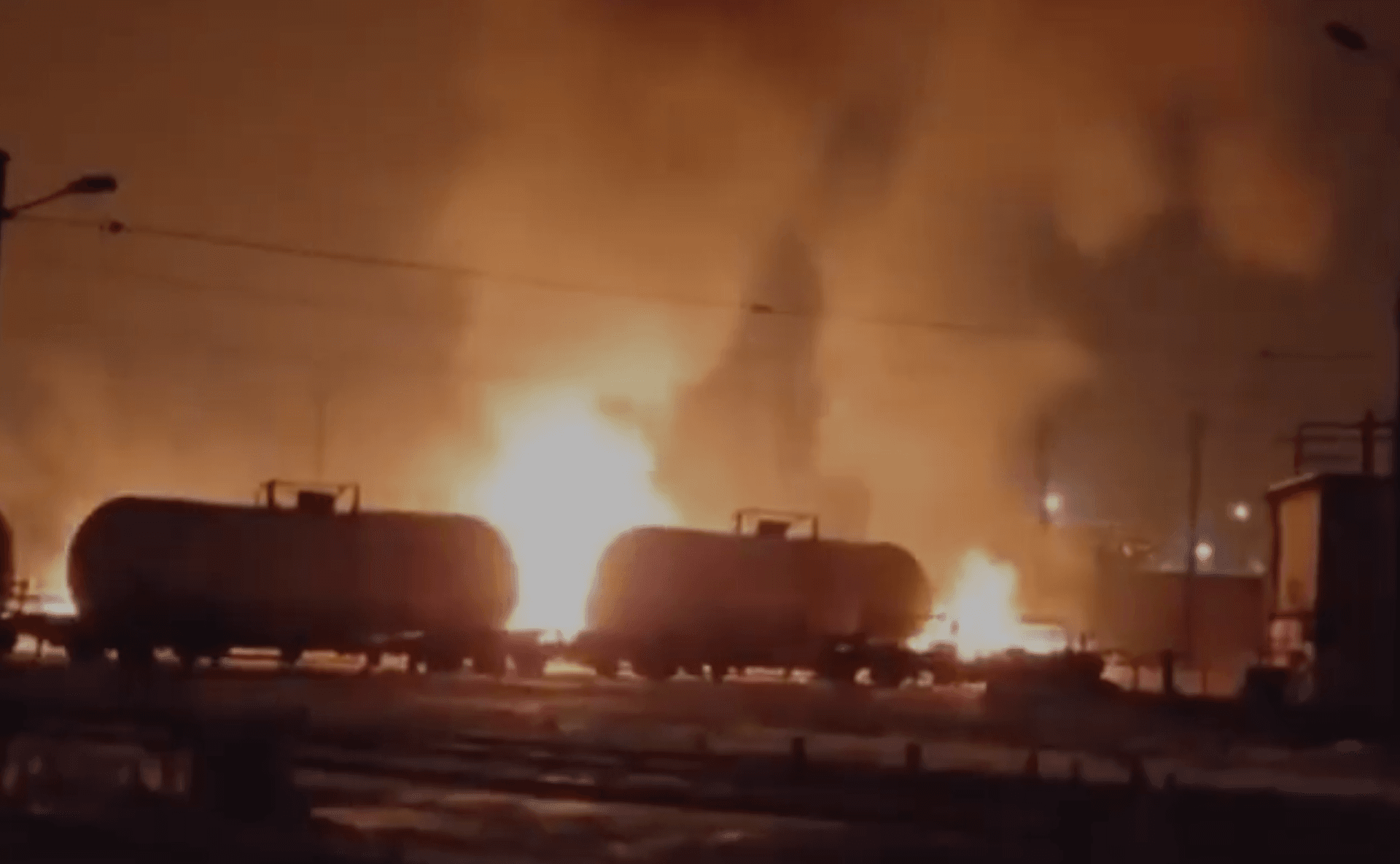
A screenshot of a video purporting to show the aftermath of a Ukrainian drone strike on theArcheda railway station in the town of Frolovo in Russia’s Volgograd Oblast overnight.
The strategic targeting of railway facilities reflects Ukraine’s systematic campaign to disrupt Russian military logistics while demonstrating that no part of the Russian Federation remains beyond Ukrainian reach. Geolocated footage showed drone strikes and subsequent explosions at the railway control station, while Russian Railways reported suspension of train services and five delays at Archeda Station due to debris.
The Volgograd strike, combined with simultaneous attacks on industrial facilities in Ryazan, Penza, and Samara oblasts, illustrates Ukraine’s capacity for coordinated deep-strike operations that pressure Russian war production while disrupting transportation networks critical to military supply chains.
Russian Ai-95 gasoline prices surged to over 77,000 rubles ($946.6) per ton on the St. Petersburg International Mercantile Exchange, hitting record highs directly linked to Ukrainian drone attacks on oil refineries across Russia. The price spike followed overnight strikes on August 2 that targeted industrial facilities in Ryazan, Penza, Samara, and Voronezh oblasts, damaging refineries processing approximately 40,000 tons of crude per day.
Market sources told Kommersant that repairs to damaged facilities could take one to six months, creating sustained pressure on Russian fuel supplies despite the country’s annual gasoline production exceeding 40 million metric tons. The crisis forced Russia to impose a sweeping gasoline export ban through August—the latest in a series of emergency measures reflecting how Ukrainian deep strikes are systematically undermining the war economy.
The fuel crisis illustrates the strategic effectiveness of Ukraine’s campaign against Russian energy infrastructure, forcing Moscow to choose between domestic stability and export revenues that fund the war machine. Each successful strike creates ripple effects throughout the Russian economy, demonstrating how asymmetric warfare can pressure a larger adversary through targeted infrastructure attacks.
The Netherlands Delivers: €500 Million Arms Package Boosts Ukrainian Air Defenses
Dutch Defense Minister Ruben Brekelmans announced a €500 million military aid package consisting of U.S.-made weapon systems, including Patriot missile components, marking the first implementation of Trump’s NATO procurement scheme designed to enhance Ukrainian air defenses. “Ukraine needs more air defence and ammunition now,” Brekelmans declared, positioning the Netherlands as the initial NATO ally to purchase advanced American arms for direct delivery to Ukraine.
President Zelensky welcomed the decision as providing “greater protection from Russian terror,” expressing gratitude for the “substantial contribution to strengthening Ukraine’s air shield.” The package represents practical implementation of agreements reached during the June NATO summit in The Hague, demonstrating how alliance coordination can rapidly translate into battlefield capabilities.
U.S. Ambassador to NATO Matthew Whitaker confirmed that the Netherlands is “the first of many” to utilize the new procurement facility, noting that multiple allies are “coming together in groups to pool their money and their resources” for weapons purchases. The coordinated approach reflects growing recognition that Ukraine’s air defense requirements exceed any single nation’s capacity while providing mechanism for burden-sharing among NATO members.
Water, Phones, and Banks: Russia’s Digital Occupation Tightens Grip on Controlled Territories
Moscow unveiled comprehensive plans to digitally integrate occupied Ukrainian territories through the Kremlin-controlled MAX messaging platform, with Kherson Oblast occupation head Vladimir Saldo ordering all administration employees to transfer communications to the system by August 7. The mandate extends to Zaporizhia Oblast, where occupation authorities similarly required the transition “to protect official information” from external pressure.
MAX represents more than communication tool; it functions as digital surveillance apparatus that prevents anonymous online presence while collecting personal information transferred to Russian security services through VKontakte servers. The platform allows Russian officials greater control over information spaces in occupied areas while severing connections to the outside world, supporting broader integration efforts.
Simultaneously, Russia’s Sberbank expanded operations in occupied Kherson and Zaporizhia oblasts through its Sbermobile subsidiary, becoming the first Russian federal operator providing services in occupied Ukraine. The financial integration, coordinated with VEB.RF development corporation investments, forces occupied populations to rely on Russian systems while generating profit from territorial control—making future reintegration with Ukraine increasingly difficult.
The Passportization Campaign: Coercion Through Administrative Control
Russian occupation authorities intensified efforts to force Ukrainian citizens into accepting Russian citizenship through administrative coercion and violence. The Luhansk People’s Republic Ministry announced fee waivers for Russian passport applications targeting vulnerable populations including stateless former Soviet citizens and orphaned children—removing financial barriers to citizenship acquisition.
More ominously, Russian authorities in occupied Askania-Nova, Kherson Oblast, began forcing parents to apply for Russian passports to retain parental rights and legal control of their children. The Ukrainian Resistance Center reported that residents cannot access basic social services, move freely, or avoid forced military mobilization without Russian documentation—creating systematic pressure that violates international law.
The campaign extends to vehicle registration, with occupation authorities conducting patrols checking for Russian car insurance obtainable only with Russian passports. New laws requiring Russian driver’s licenses by January 1, 2026, create additional administrative pressure supporting Moscow’s long-term goal of eradicating Ukrainian identity through bureaucratic integration.
Corruption Exposed: Ukrainian Officials Jailed for Looting Defense Procurement
Ukraine’s High Anti-Corruption Court ordered MP Oleksii Kuznetsov and former Luhansk Governor Serhii Haidai held in custody for 60 days with bail options of Hr 8 million and Hr 10 million respectively, following revelations of systematic corruption in military procurement during wartime. The charges stem from schemes involving inflated contracts for drones and electronic warfare equipment, with officials allegedly receiving up to 30% kickbacks from state funds.
The corruption network demonstrates the dual challenges Ukraine faces—fighting Russian aggression while battling internal corruption that undermines military effectiveness. The investigation revealed officials employed coordinated schemes to inflate government contracts, receiving up to 30 percent kickbacks from state funds intended for drone and electronic warfare equipment procurement. Officials systematically inflated electronic warfare system contracts and manipulated FPV drone procurement during 2024-2025, stealing resources desperately needed by soldiers whose lives depend on reliable equipment.
The investigation’s timing, following parliament’s restoration of anti-corruption agency independence after public protests, underscores the critical importance of institutional integrity during existential conflict. Every stolen hryvnia represents potential lives lost through inadequate equipment, making corruption prosecution a national security imperative.
The Mole Hunt: Ukrainian Soldier Exposed as Russian Intelligence Asset
Ukraine’s Security Service detained a mobilized soldier accused of working as a Russian “mole” for military intelligence (GRU), revealing the ongoing counterintelligence challenges facing Ukrainian forces. The suspect, undergoing training with the State Special Transport Service, was recruited by GRU shortly after mobilization and identified through “pro-Russian comments on social networks.”
The agent’s primary mission involved correcting Russian air attacks on Defense Forces in Dnipropetrovsk region by sending detailed target coordinates through Google Maps with comprehensive descriptions of potential targets. The case underscores how Russian intelligence services exploit social media monitoring and recruitment opportunities created by mass mobilization.
The detention highlights Ukraine’s vulnerability to internal security threats while demonstrating the effectiveness of counterintelligence operations in identifying and neutralizing enemy agents before they can inflict significant damage on military operations.
President Zelensky revealed that Ukrainian soldiers defending Vovchansk report encountering foreign mercenaries from China, Tajikistan, Uzbekistan, Pakistan, and several African countries fighting alongside Russian forces. The disclosure, made during a visit to the 57th Separate Motorized Infantry Brigade, highlights the increasingly international character of Russia’s military campaign as Moscow struggles to maintain force levels.
The foreign fighter presence reflects Russia’s deepening recruitment crisis as domestic casualties mount and mobilization resistance grows. Chinese nationals reportedly pay middlemen 300,000 rubles ($3,500) for enlistment opportunities leading to Russian citizenship, while independent investigations have identified over 1,500 foreign fighters from 48 countries joining Russian military ranks.
Vovchansk’s strategic position just five kilometers from the Russian border makes it a critical testing ground where international mercenaries face Ukrainian defenders equipped with advanced drone technology and Western training. The battle illustrates how Russia’s imperial ambitions increasingly depend on foreign recruitment to sustain operations against determined Ukrainian resistance.
Frontline Dynamics: Ukrainian Advances Counter Russian Pressure
Ukrainian forces demonstrated tactical flexibility by advancing northeast of Krasnyi Lyman and into southeastern Lysivka near Pokrovsk, countering sustained Russian pressure across multiple fronts. The advances came despite continued Russian operations targeting Kupyansk, where Moscow achieved marginal gains along the P-79 highway while Ukrainian forces maintained defensive positions.
In the Siversk direction, Russian forces seized Novoselivka through concentrated assault operations, while Ukrainian forces in the Toretsk area faced pressure as Russian claims emerged of seizing both banks of the Kleban-Buk Reservoir. The tactical exchanges reflect ongoing attritional warfare where neither side achieves decisive breakthrough despite sustained combat operations.
Ukrainian spokesmen reported that Russian forces are employing “drone swarms” where reconnaissance platforms drop multiple FPV drones near Ukrainian positions, demonstrating continued tactical innovation. The 10-kilometer “kill zone” along frontlines reflects how drone warfare has fundamentally altered combat dynamics, requiring constant adaptation from both forces.
Sanctions Effectiveness Debate: Former State Department Official Warns of Enforcement Challenges
Brad Brooks-Rubin, former senior adviser in the State Department’s Office of Sanctions Coordination from 2022 to 2024, warned that Trump’s threatened secondary sanctions would prove effective only with consistent enforcement and monitoring. “There are lots of technical ways to make secondary sanctions useful, but they’re only going to be as useful as there is willingness to implement and enforce,” Brooks-Rubin told Kyiv Post, emphasizing that monitoring rather than specific technical details determines success.
The former official identified three critical pillars for sanctions success: monitoring, political will, and enforcement. He questioned whether government employees would inform senior officials when sanctions programs fail to work as intended, noting the challenge of decreasing government personnel while demanding closer oversight of sanctions violations.
Brooks-Rubin’s analysis suggests that unilateral American enforcement could prove effective despite traditional multilateral approaches, stating “If the Trump administration is willing to unilaterally and strongly monitor, implement and enforce the sanctions on their own… I don’t think that’s inherently a problem.” The assessment provides professional validation for Trump’s aggressive approach while highlighting implementation challenges that could determine ultimate success or failure.
Russian authorities intensified their use of bribery charges as political weapon, with cases increasing 52% in bribe-taking and 84% in bribe-giving since Russia’s full-scale invasion began in 2022. The surge reflects Kremlin efforts to scapegoat regional officials for military failures while targeting defense industry officials and information space actors who threaten central control.
Acting Kursk Oblast Governor Alexander Khinshtein announced plans to liquidate the state-owned Kursk Oblast Development Corporation following embezzlement charges against executives involved in constructing defensive fortifications. The decision represents systematic scapegoating of regional officials for failing to repel Ukraine’s Kursk incursion, with similar arrests occurring in Bryansk and Belgorod oblasts.
The Kremlin’s targeting of high-ranking border region officials, defense industry personnel, and media figures demonstrates how authoritarian systems deflect responsibility for systemic failures onto individual actors. The liquidation of development corporations and prosecution of regional leaders serves Putin’s narrative that local incompetence, rather than strategic miscalculation, explains military setbacks along the Ukrainian border.
Russia’s formal abandonment of its intermediate-range missile deployment moratorium marked a significant escalation in nuclear posturing, with Moscow citing “destabilizing actions” from Washington including potential U.S. missile deployments in Europe and Asia-Pacific regions. The decision reflects broader deterioration in U.S.-Russia relations as Trump’s diplomatic overtures meet Putin’s military escalation.
China’s defiant stance against American pressure to reduce Russian oil purchases complicated Trump’s sanctions strategy, with Beijing insisting it will “ensure its energy supply in ways that serve our national interests” despite threats of punitive tariffs. Chinese refusal to treat energy purchases as negotiable creates potential for broader trade confrontation as secondary sanctions implementation approaches.
The three-way dynamic between Washington, Moscow, and Beijing reflects how Ukraine’s conflict has evolved into fundamental contest over international order, with energy flows serving as both economic lifeline and geopolitical weapon. Trump’s willingness to enforce threats through action—demonstrated by Indian tariff implementation—suggests Friday’s deadline carries genuine consequences for global trading relationships.
The Drone Army Revolution: Austrian Expert Validates Ukrainian Innovation
Colonel Markus Reisner, head of the Officer Training Institute at Austria’s Theresian Military Academy, provided authoritative validation of Ukraine’s “drone army” as the key to its military success against larger Russian forces. “Russian invaders are not facing tens of thousands of soldiers but hundreds of thousands of drones operated by military personnel from a safe distance,” Reisner observed, highlighting how Ukraine has fundamentally transformed modern warfare.
The Austrian military expert explained Ukraine’s three-tier drone strategy: FPV drones at the tactical level, medium-range drones at the operational level, and long-range strike drones at the strategic level. This systematic approach, supported by decentralized production networks that make disruption “extremely difficult, if not impossible,” has created what Reisner called “a major problem, if not a nightmare, for Russian invaders.”
Reisner’s analysis validates Ukraine’s asymmetric warfare approach, where “a side with significantly greater military power faces a smaller, more flexible, and technologically innovative force.” The integration of artificial intelligence for autonomous drone swarms and precise trajectory calculations demonstrates how Ukrainian innovation has achieved “impressive results” in countering Russian numerical advantages through technological superiority.
Russian drone strikes in Kharkiv Oblast claimed three civilian lives on August 4, with attacks targeting residential areas in the Chuhuiv district southeast of Kharkiv. In Losivka village, a drone strike hit a residential building, causing a fire that killed a 47-year-old man whose body was recovered from the rubble after firefighters extinguished the blaze.
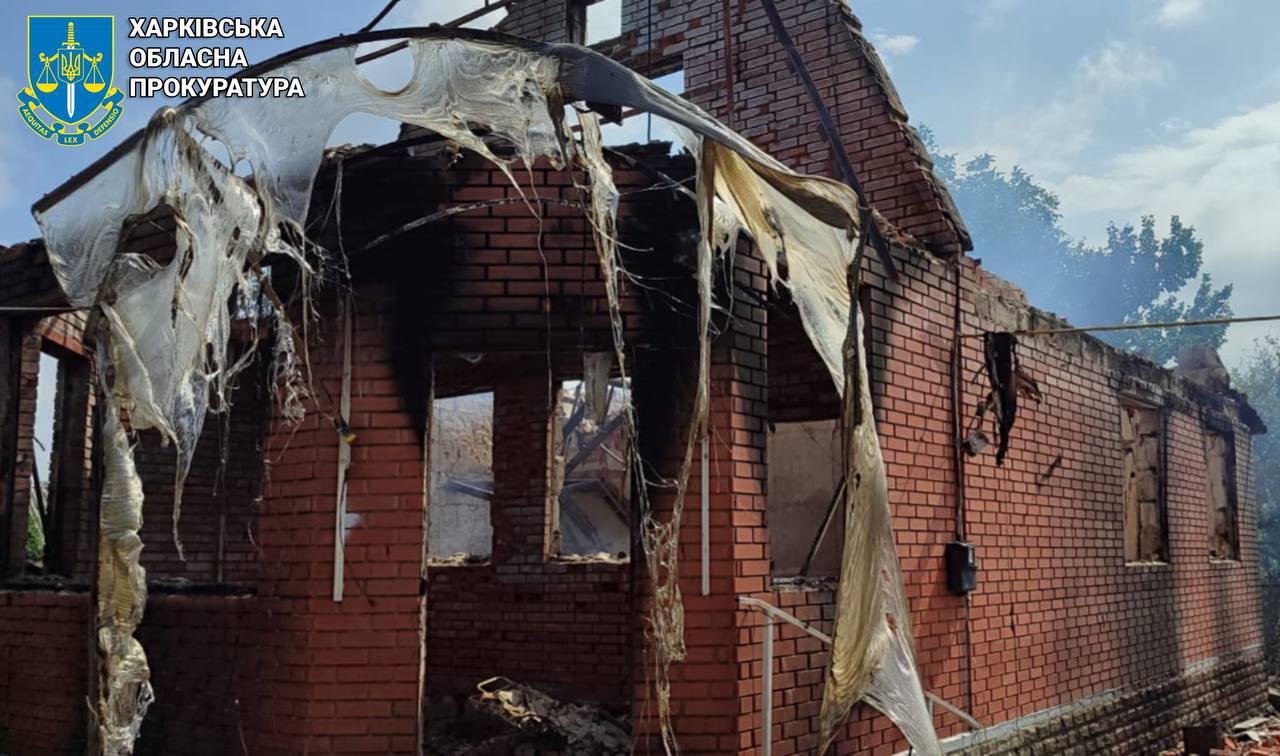
A residence in Kharkiv Oblast’s Chuhuiv district after being struck by a Russian drone attack. (Kharkiv Oblast Prosecutor’s Office / Telegram)
In the Volchanska community, a Russian first-person-view (FPV) drone deliberately targeted a moped traveling along a road, killing a 49-year-old man and a woman whose burns were so severe that identification remained impossible. The targeted nature of the attack reflects Russia’s systematic use of FPV drones to “hunt and kill civilians” in what Kherson residents have termed “human safari”—a war crime that demonstrates the deliberate targeting of non-combatants.
Across Ukraine, Russian attacks killed at least seven civilians and injured 13 others over the past day, with Zaporizhzhia Oblast suffering three deaths in Stepnohirsk community and Kherson Oblast reporting two killed and five injured from 405 strikes across 10 localities. The systematic targeting of civilian areas contradicts any claims of precision military operations.
As diplomatic and military pressures converge before Friday’s deadline, multiple critical developments suggest the coming days will determine whether Trump’s ultimatum produces breakthrough or escalation. Witkoff’s Moscow mission carries enormous stakes, with failure potentially triggering the most comprehensive sanctions regime imposed on Russia since the war began while success could establish framework for broader negotiations.
The water crisis in occupied Donetsk Oblast serves as microcosm of Russia’s imperial project—promises of liberation delivering humanitarian catastrophe while Ukrainian strikes on Russian territory demonstrate expanding reach and technological sophistication. The contrast between children begging for clean water in Donetsk and precision strikes on Crimean airfields illustrates the war’s fundamental character as contest between occupation and liberation.
Whether through diplomatic breakthrough, economic warfare escalation, or continued military attrition, the August 8 deadline represents inflection point in a conflict that began as regional invasion but has evolved into global contest over fundamental principles of sovereignty, territorial integrity, and international law. The flames consuming Russian gasoline supplies and the desperation of occupied populations suggest that time increasingly favors Ukraine’s patient strategy of systematic degradation over Russia’s imperial ambitions built on coercion and control.