
The Alaska Gambit: Trump’s Last-Ditch Diplomacy as Putin Demands Ukraine’s SurrenderWith Just Two Days Before the Historic Alaska Summit, Russian Officials Declare Unchanging War Objectives While Ukrainian Forces Launch Strategic Counteroffensives Across Multiple Fronts
Summary of the Day – August 13, 2025
Two days before the most consequential diplomatic encounter since the war began, the chasm between Russia’s unchanging demands for Ukraine’s capitulation and America’s growing commitment to Ukrainian sovereignty has never been clearer. While Russian officials reiterated that Moscow’s objectives in Ukraine remain “unchanged” since Putin’s June 2024 ultimatum—demanding complete Ukrainian withdrawal from four oblasts, denazification, and alliance neutrality—President Trump clarified that the United States will pursue no agreements without an immediate ceasefire and Ukraine’s formal participation. Meanwhile, Ukrainian forces scored tactical victories in Sumy and Zaporizhzhia oblasts, even as Russian sabotage groups penetrated deeper toward Pokrovsk. The diplomatic stakes could not be higher: Europe fears being sold out, Ukraine demands territorial integrity, and Russia shows no signs of genuine peace-seeking as it prepares to produce 79,000 Shahed drones in 2025.
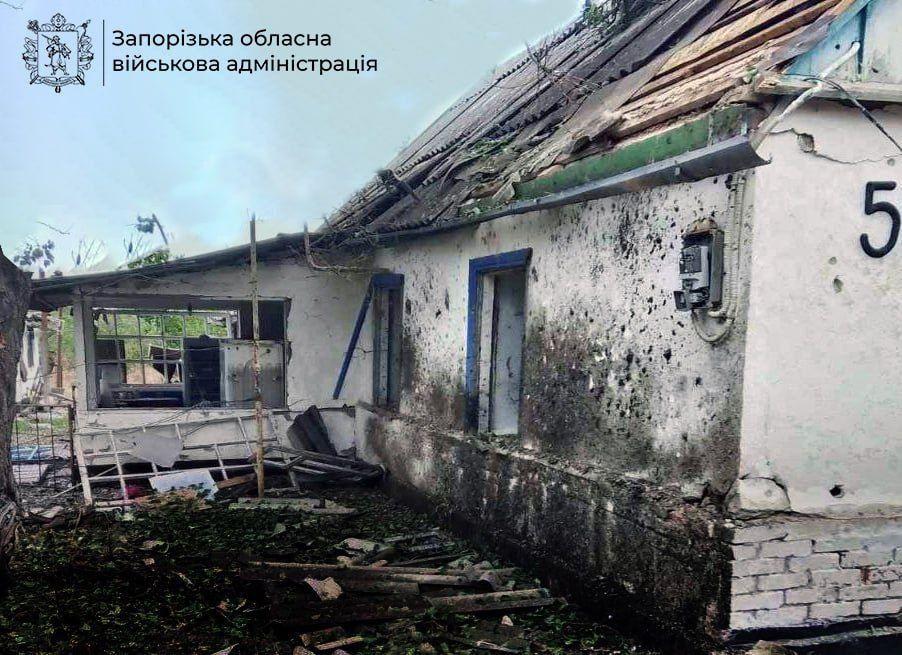
A damaged house after a Russian strike, in Zaporizhzhia Oblast, Ukraine. (Governor Ivan Fedorov/Telegram)
Putin’s Unchanging Ultimatum: Russia Rejects Any Territorial Concessions
Russian Foreign Ministry Deputy Director Alexei Fadeev delivered a stark reminder on August 13 that Moscow’s position remains “unchanged” since Putin’s June 14, 2024 speech outlining Russia’s uncompromising demands. Those demands—Ukraine’s complete withdrawal from Luhansk, Donetsk, Zaporizhzhia, and Kherson oblasts, including areas Russia doesn’t currently occupy, along with “denazification” and “demilitarization”—amount to nothing less than Ukraine’s complete capitulation.
“The goals for Russia’s delegation to the Alaska summit are defined exclusively by national interests,” Fadeev stated, implying Russia will not consider any territorial concessions. The Kremlin’s hardened stance arrives as Moscow attempts to project equality with the United States at the August 15 summit, with leading Russian negotiator Kirill Dmitriev comparing the meeting to the 1945 Yalta Conference and claiming Putin and Trump will “prevent World War III.”
These grandiose comparisons reveal Russia’s desperation to present itself as a global power equal to the United States, despite the reality that this bilateral meeting will produce no agreements about Ukraine’s future without Kyiv’s participation.
Trump’s Red Lines: No Deals Without Ukraine at the Table
The Trump administration has drawn clear boundaries around the Alaska summit that directly contradict Russian expectations. Following a virtual summit with European leaders and President Zelensky on August 13, German Chancellor Friedrich Merz confirmed that Trump “reaffirmed that Trump would not negotiate territorial issues with Putin.”
French President Emmanuel Macron revealed the president’s position with striking clarity: “territorial issues that fall under Ukraine’s jurisdiction cannot be negotiated and will only be negotiated by the Ukrainian president.” Trump warned there will be “very severe consequences” if Putin refuses to engage in serious peace talks after Alaska, though he declined to specify what those consequences might entail.
US Treasury Secretary Scott Bessent signaled the administration’s leverage, stating that sanctions against Russia could be increased or loosened depending on the summit’s outcome, while urging European allies to prepare harsher measures should diplomacy fail.
Europe’s United Front: Security Guarantees Without NATO
European leaders emerged from their August 13 call with Trump having secured significant commitments, despite concerns about being sidelined. Most notably, Trump agreed that the United States will provide Ukraine with security guarantees once peace is established—but ruled out NATO membership as part of those guarantees.
“President Trump expressed this clearly,” Macron told reporters. “He even said that NATO should not be part of these security guarantees, which we know is a key point for the Russian side, but that the United States and all the allies that are willing should be part of them.”
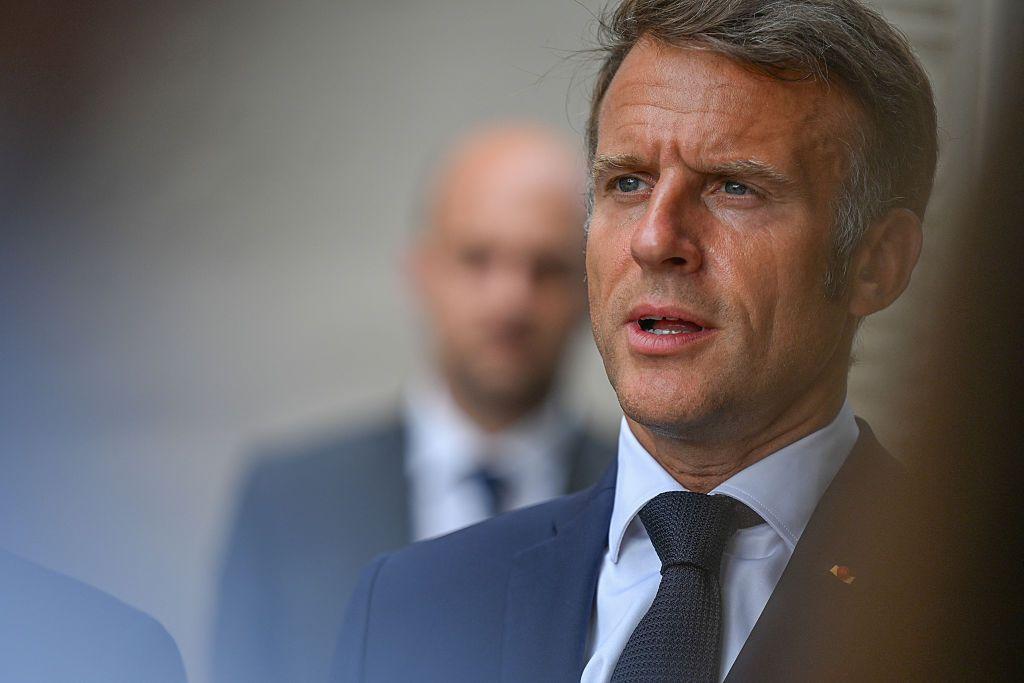
France’s President Emmanuel Macron speaks following a video conference on Ukraine from the Fort de Bregancon presidential holidays residence in Bormes-les-Mimosas, in southern France. (Philippe Magoni/PoolL/AFP via Getty Images)
In a joint statement, the leaders of France, Britain, and Germany declared that “Russia could not have a veto against Ukraine’s pathway to EU and NATO,” while reaffirming readiness to deploy “a reassurance force once hostilities have ceased.” The coalition also agreed to strengthen sanctions if Putin refuses a ceasefire following the Alaska talks.
The Economic Sweetener: Minerals, Oil, and Arctic Resources
Trump reportedly plans to present Putin with a package of economic incentives designed to entice Russian cooperation, according to The Telegraph. The proposals include granting Russia access to Alaska’s natural resources, lifting certain aviation sector sanctions, and—most controversially—allowing Russian access to rare earth minerals in Ukrainian territories currently under occupation.
The mineral proposal directly conflicts with the April 2024 US-Ukraine minerals agreement that grants Washington access to Ukraine’s significant lithium reserves—approximately one-third of Europe’s deposits. Trump is also considering allowing Russia to develop natural resources in the Bering Strait, which holds an estimated 13% of the world’s oil reserves and would support Putin’s Arctic ambitions.
UK officials suggested these measures might be acceptable to European leaders as long as they’re not perceived as rewarding Russian aggression, though the prospect of legitimizing territorial occupation through economic deals raises profound questions about the West’s commitment to international law.
Ukraine’s Tactical Victories: Successful Counterattacks Amid Strategic Pressure
While diplomats prepared for Alaska, Ukrainian forces demonstrated their continued battlefield effectiveness through successful counterattacks that reclaimed territory in multiple sectors. In the northern Sumy region, Ukraine’s 71st Air Assault Jaeger Brigade confirmed the recapture of Bezsalivka, a border hamlet adjacent to Russia’s Belgorod region, ejecting Russian forces who retreated back into Russian territory.
More significantly, Ukrainian forces in Zaporizhzhia Oblast achieved a notable success when the 210th Assault Infantry Regiment cleared Russian assault groups from the village of Stepanohirsk. The operation, which began after sunset on August 12, showcased evolving Ukrainian tactics as drone operators systematically hunted down individual Russian soldiers attempting to establish positions in the village.
“Each assault is a carefully planned operation,” the 210th Regiment stated. “Before assault infantry attacks a position, it is worked over by artillery and drones…the enemy tried to infiltrate and accumulate troops inside built-up areas, but they were observed and ruthlessly destroyed.” The unit claimed to have cleared Stepanohirsk without friendly casualties.
The Dobropillia Breakthrough: Russian Infiltration Tactics Succeed
Ukrainian tactical successes elsewhere could not mask the concerning Russian penetration near Dobropillia in Donetsk Oblast, where Russian sabotage and reconnaissance groups reportedly advanced 10-17 kilometers into Ukrainian positions. This breakthrough represents one of the most significant Russian tactical advances in recent months, achieved through infiltration tactics rather than large-scale mechanized assaults.
Ukrainian General Staff Spokesperson Andriy Kovalev confirmed that three Russian groups conducted the penetration, with Ukrainian forces destroying two groups and elements of the third. However, Russian forces continue to attempt consolidation in settlements including Vesele, Rubizhne, Kucheriv Yar, and Vilne, though they do not yet control these areas.
The Institute for the Study of War emphasized that this represents limited infiltration rather than established control, noting that Russian forces have not yet reinforced or consolidated their positions. Nevertheless, the penetration demonstrates Russia’s adaptation to battlefield conditions and the ongoing strain on Ukrainian defensive positions.
Pokrovsk Under Siege: Civilians Trapped as Strikes Intensify
Russian forces continued their methodical approach toward Pokrovsk, using small sabotage and reconnaissance groups to probe the town’s defenses while subjecting it to intensive artillery, rocket, and air strikes. Over 1,300 civilians remain trapped in Pokrovsk, with evacuation efforts severely hampered by Russian precision strikes against “everything that moves” along access roads.
Pokrovsk City Military Administration Head Serhiy Dobryak reported that Russian forces are forcing civilians to walk to evacuation vehicles rather than drive, as Russian drones systematically target civilian vehicles attempting to reach the town. This battlefield air interdiction effect demonstrates Russia’s increasingly sophisticated use of drone technology to isolate Ukrainian positions.
The humanitarian crisis extends beyond Pokrovsk, with Donetsk Oblast authorities announcing mandatory evacuation of families with children from settlements north, northwest, and west of Dobropillia, affecting roughly 1,150 children in these areas.
The Drone War Escalates: 79,000 Shaheds Planned for 2025
Ukrainian military intelligence revealed the staggering scale of Russia’s drone production ambitions, with plans to manufacture 79,000 Shahed-type drones in 2025. Deputy HUR Chief Vadym Skibitskyi detailed the breakdown: 40,000 Geran-2 drones, 5,700 Garpiya-A1 drones, and 34,000 Gerber and decoy drones, representing a massive escalation from previous production levels.
Russia has dramatically expanded its manufacturing capacity, opening new production lines in Izhevsk and Yelabuga while working to replace foreign components with domestically produced alternatives. “Today, the glider is theirs, and the internal combustion engine they install is also theirs,” Skibitskyi explained, noting that only chips and microelectronics remain foreign-sourced.
Ukraine responded with strategic strikes against Russian production facilities, hitting the Alabuga Special Economic Zone in Tatarstan twice in recent days and targeting the Unecha oil pumping station in Bryansk Oblast overnight on August 13. The Unecha facility, part of the 9,000-kilometer Transneft Druzhba pipeline with an annual capacity of 60 million tons, suffered significant damage and sparked a large fire.
Mobilization by Coercion: Russia’s Exploitation of Migrants
Disturbing evidence emerged of Russia’s systematic coercion of Central Asian migrants into military service, with at least 20,000 naturalized citizens potentially forced to fight in Ukraine. Russian law enforcement and military officials are exploiting recent anti-migrant legislation to threaten citizenship revocation and family deportation, while fabricating criminal cases to pressure migrants into signing military contracts.
Russian Investigative Committee Head Alexander Bastrykin revealed that authorities detained 80,000 naturalized citizens who failed to register for military service, with approximately 20,000 now fighting in Ukraine. The coercion extends to physical raids in regions including Krasnodar Krai and Moscow and Saratov oblasts, where police force citizens to sign contracts under threat.
This systematic abuse highlights Russia’s desperation to maintain recruitment levels without declaring general mobilization, exploiting society’s most vulnerable populations to fuel its war machine.
Nuclear Saber-Rattling: Zapad-2025 Exercises as Diplomatic Pressure
Belarus announced that the upcoming Zapad-2025 military exercises will include planning for tactical nuclear weapons and Oreshnik ballistic missile deployment, clearly designed to pressure Trump ahead of the Alaska summit. Belarusian Defense Minister Viktor Khrenin revealed that over 13,000 participants will practice nuclear employment scenarios, though NATO estimates suggest the exercises may involve up to 150,000 troops.
The timing is no coincidence. Russian officials frequently use nuclear demonstrations as part of their reflexive control campaigns designed to extract Western concessions. The Kremlin hopes to use the Oreshnik announcement—missiles banned under the INF Treaty that Russia publicly violated—to pressure Trump into arms control discussions that distract from Ukraine.
However, Ukrainian intelligence chief Vadym Skibitskyi dismissed the exercises as lacking significant threat to Ukraine, noting that Lukashenko does not want direct involvement in Russia’s war, despite Belarus’s role in forcing Ukraine to defend its northern border.
Resistance in Alaska: Americans Reject Putin’s Presence
Even as diplomatic preparations intensified, Americans in Alaska organized protests against Putin’s visit to U.S. soil. Erin Jackson-Hill, Executive Director of Stand UP Alaska, announced rallies with the clear message “Alaska Supports Ukraine,” stating that Putin “is a war criminal, and he has no place on American soil.”
The protests, planned for August 14 and 15 at Anchorage’s Midtown Mall, will deliver direct messages to both leaders: Putin must “stop his aggression” and “get out of Ukraine,” while emphasizing that “there is no way to make a peace deal without Ukraine at the table.” The last Stand UP Alaska rally drew approximately 7,000 participants, suggesting significant public opposition to legitimizing Putin’s presence on American territory.
Casualty Mathematics: The Human Cost of Stalemate
President Zelensky provided rare detailed casualty figures during a meeting with journalists, claiming Russian forces suffer approximately 1,000 casualties daily compared to Ukraine’s 340—a ratio of nearly 3-to-1 in Ukraine’s favor. On August 11 specifically, Zelensky claimed Russia lost 531 killed, 428 wounded, and nine captured, while Ukraine suffered 18 killed, 243 wounded, and 79 missing.
Despite this favorable casualty exchange, Zelensky acknowledged Russia’s significant advantages: 1-to-3 in overall manpower and 1-to-2.4 in artillery. Ukraine maintains only a 1-to-1.4 advantage in FPV drones, though this could reach 1-to-4 with additional European funding. These stark disparities explain Russia’s continued territorial gains despite massive losses, as Moscow maintains operational reserves for rotation and reinforcement.
Germany’s Continued Commitment: $500 Million for American Weapons
Germany demonstrated Europe’s sustained support by pledging $500 million to NATO’s Prioritized Ukraine Requirements List, enabling purchases of U.S.-made weapons and equipment from American stockpiles. NATO Secretary General Mark Rutte praised Germany as “the largest European contributor of military aid to Ukraine,” with the contribution following similar commitments from the Netherlands, Denmark, Norway, and Sweden.
The funding represents a tangible manifestation of Trump’s July 14 agreement allowing European nations to purchase American arms for Ukraine, providing a mechanism for continued support even as diplomatic efforts intensify.
Energy Warfare: Naftogaz Secures €500 Million Emergency Deal
Ukraine’s energy crisis deepened as gas storage reserves fell to their lowest level in 11 years—just 32% full with 10 billion cubic meters—prompting Naftogaz to secure a record €500 million loan from the European Bank for Reconstruction and Development. The financing, guaranteed 90% by the European Union, will fund emergency gas purchases from more than 30 suppliers meeting European standards.
The crisis stems from Russian attacks that destroyed nearly 50% of Naftogaz Group’s production capacity, forcing Ukraine to increase imports dramatically. Before the invasion, Ukraine produced 52 million cubic meters daily but required 110-140 million cubic meters in winter, covering shortfalls from storage that Russian strikes have systematically depleted.
Sanctions Tightening: Switzerland and Estonia Act Against Moscow
International pressure on Russia intensified as Switzerland extended its sanctions to align with the EU’s 18th package, lowering the oil price cap from $60 to $47.6 per barrel and targeting 105 vessels in Russia’s shadow fleet. The measures specifically target Moscow’s largest budget revenue source while imposing asset freezes on 14 individuals and 41 entities supporting Russia’s war effort.
Estonia declared Russian diplomat Dmitry Prilepin persona non grata for attempting to undermine the country’s constitutional order, marking another diplomatic expulsion in Europe’s campaign against Russian subversion. Foreign Minister Margus Tsahkna emphasized that “Estonia will not allow any actions orchestrated and organized by a foreign state on its territory.”
Digital Warfare: Russia Restricts Western Messengers
Russia’s domestic control campaign escalated with “partial restrictions” on Telegram and WhatsApp voice and video calls, officially justified as countering fraud and terrorism but clearly aimed at forcing adoption of the state-controlled Max messenger. The restrictions align with Putin’s broader “sovereign internet” strategy and follow pressure from telecom operators citing equipment costs and sanctions impacts.
The timing coincides with intensified internet shutdowns in Russian regions to disrupt Ukrainian drone navigation, demonstrating how the Kremlin weaponizes digital infrastructure for both domestic control and military purposes.
Georgia’s Cynical Exploitation: Ukrainian Suffering as Campaign Material
Georgia’s ruling party sparked Ukrainian outrage by releasing a campaign video contrasting black-and-white images of Ukrainian destruction with colorful Georgian development scenes. The Georgian Dream party’s exploitation of Ukrainian suffering—including bombed buildings, military cemeteries, and grieving parents—prompted Ukraine’s Foreign Ministry to condemn the “cynical” use of Ukrainian tragedy for political gain.
The controversy highlighted Georgia’s continued drift toward Russia under Bidzina Ivanishvili’s influence, as the country faces EU sanctions and suspended visa privileges following disputed elections and democratic backsliding.
Zelensky’s Berlin Mission: Coordinating the European Response
President Zelensky arrived in Berlin on August 13 for critical meetings with German Chancellor Friedrich Merz before joining the broader video conference with Trump and European leaders. The in-person consultation with Europe’s economic powerhouse demonstrated the importance of maintaining unified Western positions ahead of the Alaska summit.
The Ukrainian president’s presence in Germany underscored the coordination efforts among European capitals, with Zelensky having conducted over 30 consultations with international partners in recent days. “Pressure must be exerted on Russia for the sake of a just peace,” he emphasized, warning that “there is no sign that the Russians are preparing to end the war.”
Ukraine’s Aerial Ceasefire Opening: A Potential First Step
Ukrainian presidential advisor Mykhailo Podolyak revealed Ukraine’s willingness to consider a ceasefire in the sky with Russia, despite Moscow’s previous rejections of similar proposals. “Ukraine is ready to discuss and consider this scenario, and sees it as the initial phase in reaching realistic negotiating positions,” Podolyak told Italian newspaper Corriere della Sera.
The proposal aligns with previous U.S. suggestions for a comprehensive 30-day truce, which Ukraine supported during March talks in Saudi Arabia but Russia repeatedly refused. Bloomberg reported that the Kremlin is weighing a proposal to pause long-range strikes while maintaining ground offensives, though Ukrainian sources dismissed these claims as likely Russian misinformation.
Daily Toll: Six Civilians Dead in Ongoing Russian Attacks
Russian forces killed at least six civilians and injured 15 others across multiple Ukrainian regions on August 13, maintaining their relentless campaign against civilian targets. The Ukrainian Air Force reported that Russia launched 49 Shahed-type drones and two Iskander-M ballistic missiles overnight, with air defenses destroying 32 drones and both missiles.
In Kherson Oblast, Russian forces killed three people through various attacks, including drone strikes on Chornobaivka and a targeted attack on a civilian vehicle in Beryslav district. Zaporizhzhia Oblast suffered 529 attacks including six air strikes and over 380 drone attacks, while Donetsk Oblast lost two civilians in Kostiantynivka with 10 others injured across the region.
Oil Refineries Under Fire: Strategic Strikes Disrupt Russian Industry
Ukrainian forces expanded their strategic bombing campaign against Russian energy infrastructure, striking multiple refineries overnight. The Volgograd Oil Refinery, owned by Lukoil, suffered an oil spill and fire from falling drone debris, marking another successful attack on Russia’s war-funding petroleum sector.
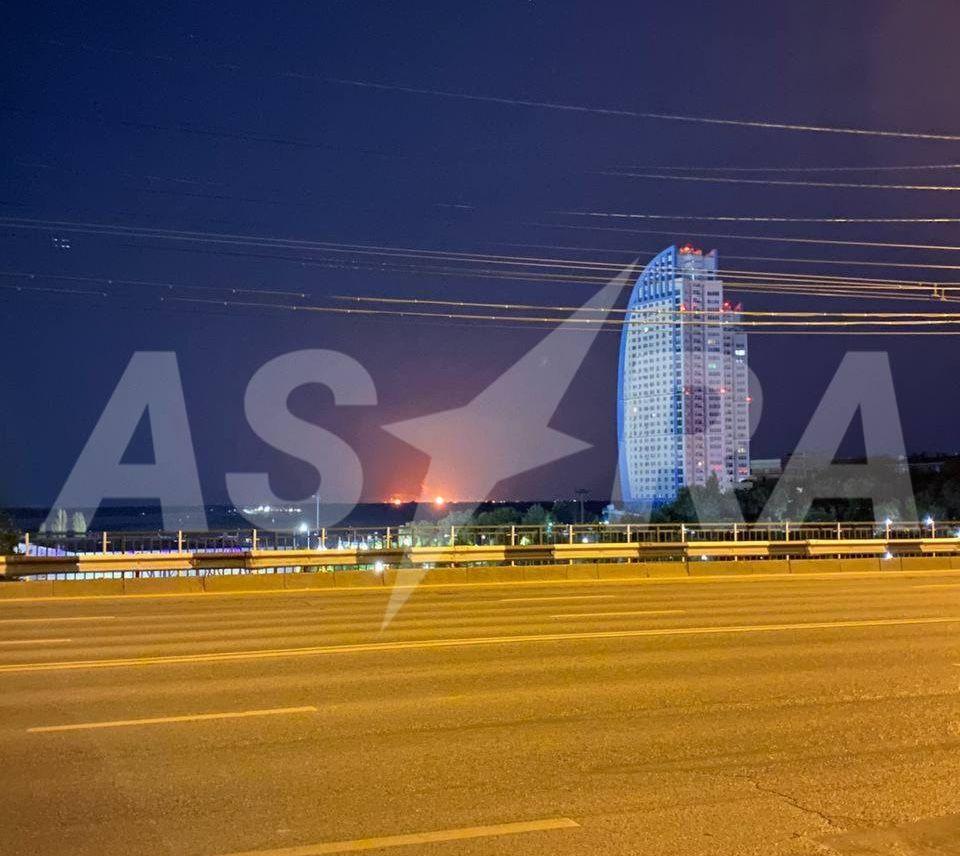
Photo reportedly shows flames rising from an oil refinery in the Russian city of Volgograd after a drone attack. (Astra / Telegram)
Three Russian refineries have cut or suspended operations this month due to Ukrainian strikes. Bloomberg reported that a Rosneft facility in Saratov Oblast halted oil intake after an August 10 strike, while the Ryazan refinery decreased production by half and the Novokuibyshevsk refinery completely suspended operations on August 2.
Diplomatic Flexibility: U.S. Temporarily Suspends Alaska Summit Sanctions
The U.S. Treasury Department issued a temporary authorization suspending certain sanctions on Russian transactions required to organize the upcoming Alaska peace negotiations. The license, effective until August 20, allows transactions normally prohibited under Russian sanctions if they support the summit’s organization.
The authorization applies to sanctions under the Russian Harmful Foreign Activities Sanctions Regulations and Ukraine-/Russia-Related Sanctions Regulations, though it does not authorize the release of blocked or frozen properties. The move demonstrates American commitment to facilitating diplomatic engagement despite maintaining broader economic pressure on Moscow.
Legal Victory: Canadian Court Upholds Ukraine Airlines Compensation Order
An Ontario appeals court upheld a ruling requiring Ukraine International Airlines to pay unlimited compensation to families of those killed in Flight PS752’s downing by Iran in January 2020. The court rejected UIA’s appeal of a 2024 decision finding the airline negligent for failing to properly assess risks before operating the Tehran-to-Kyiv flight.
The ruling removes UIA’s right to limit payouts to the standard $180,000 per passenger, opening the possibility for significantly higher compensation to the 176 victims’ families. International law typically caps airline liability unless negligence is proven, making this decision a significant legal precedent for carrier responsibility in conflict zones.
Georgian Provocation: Exploiting Ukrainian Suffering for Political Gain
Georgia’s ruling Georgian Dream party sparked diplomatic outrage by releasing a campaign video contrasting black-and-white images of Ukrainian war destruction with colorful Georgian development scenes. The video exploited footage of bombed buildings, military cemeteries, and grieving Ukrainian parents under the caption “No to war!” while promoting Georgian infrastructure with “Choose peace!”
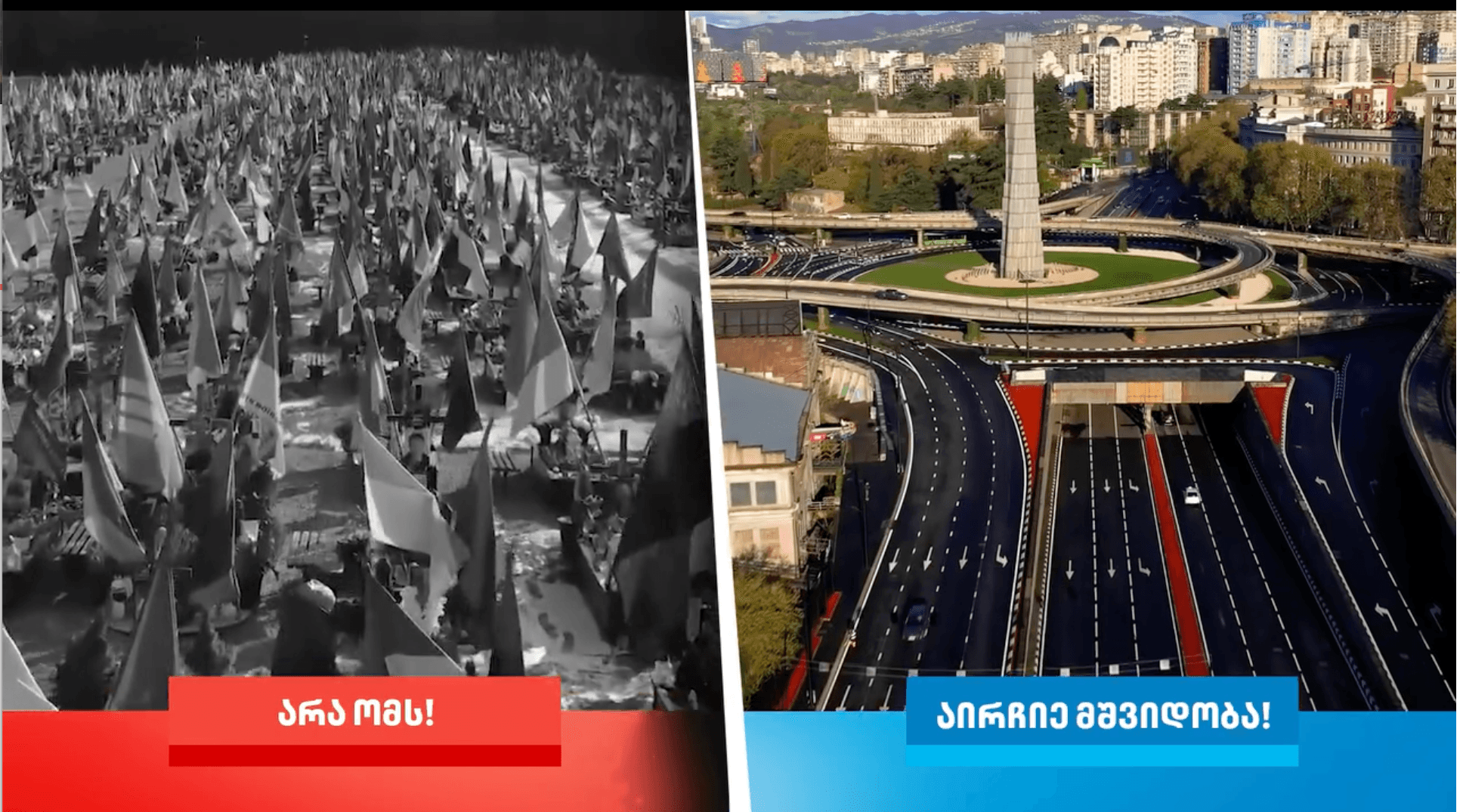
A screenshot of a video posted by the Georgian Dream party. (Georgian Dream / Facebook)
Ukraine’s Foreign Ministry condemned the “cynical” exploitation of Ukrainian suffering for political purposes, calling it “disrespectful for the Ukrainian people and the victims of Russian aggression.” The ministry advised Georgian strategists to display “a more truthful picture: the Russian tricolor on the right and the closed doors of the EU and NATO on the left.”
Recruitment by Force: Russia’s 105% Military Quota Achievement
Ukrainian intelligence revealed that Russia is exceeding its military recruitment targets, reaching 105-110% of monthly requirements while planning to increase goals by 15-17%. Deputy HUR Chief Vadym Skibitskyi confirmed that Russia planned to recruit 343,000 people in 2025 and has already fulfilled over 60% of that target through lucrative contracts and extensive campaigns.
“One of the strengths of the Russian armed forces is that they have operational reserves,” Skibitskyi explained. “They use them to rotate troops and reinforce the most critical areas of the front line.” Current recruitment of 30,000-40,000 people monthly sufficient to offset front-line losses, enabling Russia to maintain sustained pressure across multiple fronts.
Multi-Front Military Operations: Confirmed Advances and Tactical Shifts
Ukrainian forces achieved verified advances in northern Kharkiv Oblast, with geolocated footage showing progress within central Vovchansk, while Russian forces made confirmed gains north of Poltavka in the Toretsk direction. In the Lyman direction, Ukrainian forces advanced in southeastern Ridkodub, while fighting continued across the Kupyansk, Chasiv Yar, and Novopavlivka directions.
Ukrainian operations in Russian territory continued with fighting in unspecified areas of Kursk Oblast, while Ukrainian forces advanced in central Yunakivka in northern Sumy Oblast. Russian forces conducted attacks across multiple directions but failed to make significant confirmed advances in most sectors despite intensive pressure.
Ukraine’s Strategic Strike Campaign: Hitting Russian Military Infrastructure Deep
Ukrainian forces conducted successful long-range strikes against Russian defense infrastructure, with the Ukrainian General Staff confirming attacks on several major facilities. The State Security Service reported striking over 200 Russian defense industrial and logistics facilities, command posts, and oil refineries in the Russian deep rear since February 2022.
Elements of Ukraine’s Missile and Artillery Forces, Unmanned Systems Forces, and Main Intelligence Directorate targeted the Unecha oil pumping station in Bryansk Oblast, causing significant damage and large fires. The facility, with an annual pumping capacity of 60 million tons, serves as a critical supply point for Russian military operations.
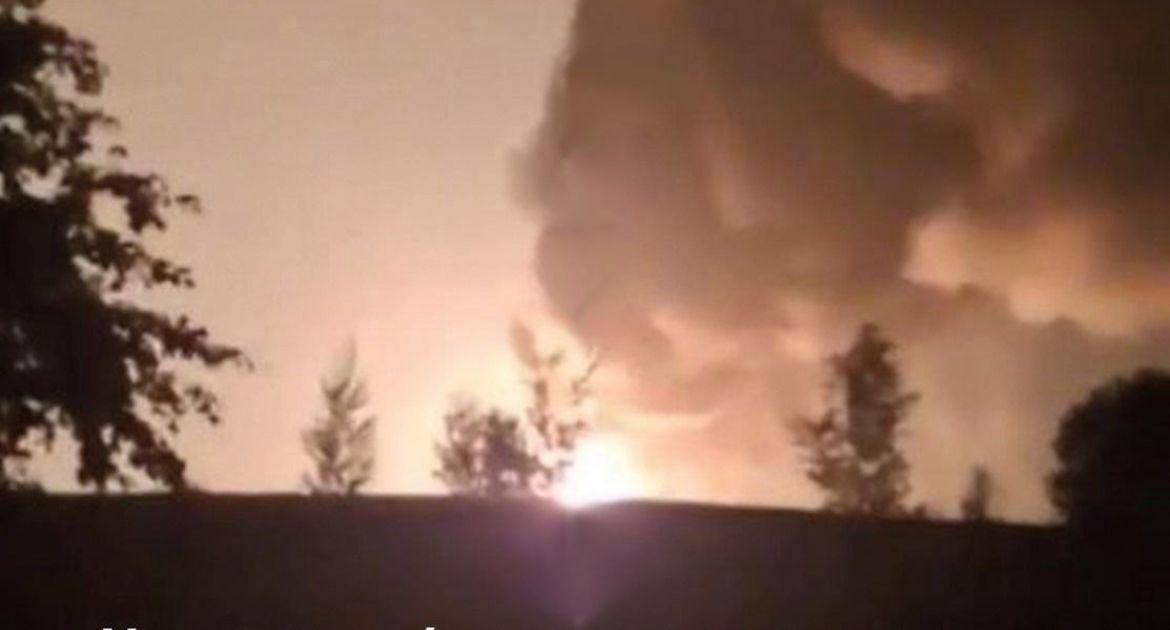
Smoke seen near Unecha oil pumping station in Bryansk Oblast, Russia. (General Staff/Telegram)
Russian Force Generation: Military School Expansion and Veteran Integration
Russia announced plans to reopen 15 higher military schools between 2025 and 2034 to address shortages of junior and field-grade officers. The expansion includes the Nizhny Novgorod Higher Military Engineering Command School opening in September and the Saratov Higher Military Engineering School for Radiological, Chemical, and Biological Defense.
Simultaneously, Russia continues integrating veterans into civilian roles, with 951 Russian veterans nominated for 2025 elections across all government levels. The Kremlin also launched neurological profiling of 10,000 Russian children aged 12-18 to identify “leaders and anti-leaders” and improve patriotic education among youth.
Communication Warfare: Russia Restricts Western Digital Platforms
Russian authorities imposed “partial restrictions” on Telegram and WhatsApp voice and video calls, claiming the platforms facilitate fraud and terrorist activities. The move aligns with Putin’s broader “sovereign internet” strategy centered on the state-controlled Max messenger, launched in June to consolidate information control over Russian citizens.
The restrictions coincide with systematic internet shutdowns in Russian regions to disrupt Ukrainian drone navigation, demonstrating the Kremlin’s weaponization of digital infrastructure for both domestic control and military purposes. Officials recommend citizens use wired internet, Wi-Fi, offline maps, and cash payments during jamming periods.
International Legal Developments: Estonian Expulsions and Sanctions Extensions
Estonia declared Russian diplomat Dmitry Prilepin persona non grata for allegedly attempting to undermine the country’s constitutional order and legal system. Foreign Minister Margus Tsahkna emphasized that “Estonia will not allow any actions orchestrated and organized by a foreign state on its territory.”
Switzerland extended its sanctions to align with the EU’s 18th package against Russia, lowering the oil price cap from $60 to $47.6 per barrel and targeting 105 “shadow fleet” vessels. The measures impose asset freezes on 14 individuals and 41 entities while tightening export controls on 26 entities for circumventing drone restrictions.
Looking Ahead: The Moment of Truth Approaches
As the Alaska summit approaches, the fundamental contradictions remain irreconcilable. Russia demands Ukraine’s capitulation while the United States insists on Ukrainian participation in any meaningful negotiations. Europe fears abandonment while Ukraine refuses territorial concessions. Economic incentives may sweeten diplomatic discussions, but they cannot bridge the chasm between Putin’s imperial ambitions and Ukraine’s right to exist as a sovereign nation.
The next 48 hours will reveal whether Trump’s diplomatic gambit can generate genuine momentum toward peace or merely provide Putin with another platform to project Russian power while continuing his war of conquest. For Ukraine, the stakes could not be higher: the Alaska summit may determine whether American support remains steadfast or whether Kyiv must prepare for a much longer, lonelier struggle against Russian aggression.
The battlefield continues to render its own verdict, with Ukrainian forces demonstrating tactical skill even as they face overwhelming odds. Whether diplomacy can match military resilience remains the central question as the war enters this crucial diplomatic phase.