
As Ukraine Celebrates 34th Independence Day with Liberation of Four Villages and Prisoner Exchange, Russian Foreign Minister Dismisses Zelensky’s Legitimacy While Moscow’s Energy Infrastructure Burns
Summary of the Day – August 24, 2025
Ukraine’s 34th Independence Day unfolded as a stark tableau of defiance and determination, as President Volodymyr Zelensky declared that Ukraine would never be “forced into a compromise” while his forces liberated four villages in Donetsk Oblast and brought home 146 prisoners of war. The celebrations occurred against the backdrop of Russian Foreign Minister Sergey Lavrov’s devastating rejection of Zelensky’s legitimacy to sign peace documents, calling him merely a “de facto head” rather than Ukraine’s legitimate leader. Meanwhile, Ukrainian forces struck deep into Russian territory, hitting a major gas terminal in Leningrad Oblast and the Syzran oil refinery in Samara Oblast, as Moscow’s energy infrastructure continued to burn. Canadian Prime Minister Mark Carney arrived in Kyiv with over $700 million in military aid, while U.S. Special Envoy Keith Kellogg joined Independence Day celebrations amid ongoing efforts to forge security guarantees. The day crystallized the fundamental contradiction driving the conflict: as Ukraine demonstrated resilience through military victories and international support, Russia doubled down on maximalist demands that would render any meaningful peace impossible.
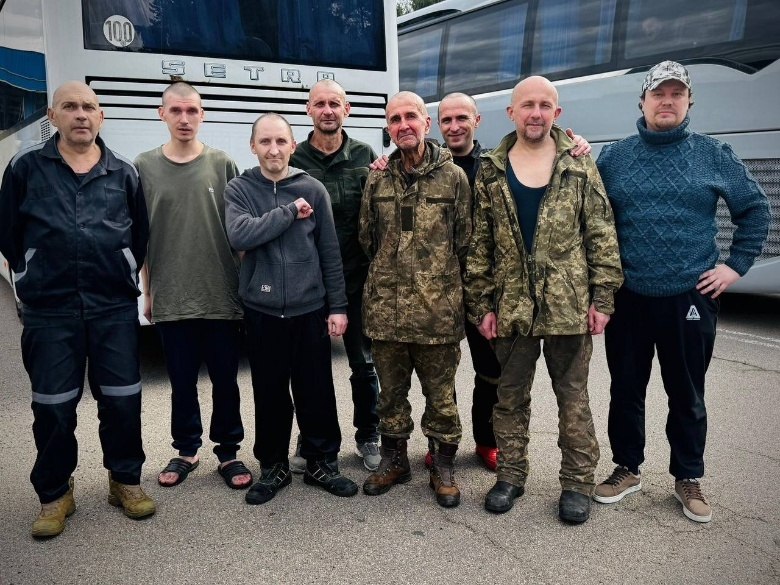
Ukrainian prisoners of war released from Russian captivity. (President’s Office)
Lavrov’s Diplomatic Demolition: The Kremlin Rejects Zelensky’s Authority
Russian Foreign Minister Sergey Lavrov delivered a diplomatic death blow to peace negotiations on August 24, telling NBC News that the Kremlin will not accept President Zelensky’s signature on legal documents establishing terms for ending Russia’s war against Ukraine.
“When we come to a stage when you have to sign documents, we would need a very clear understanding by everybody that the person who is signing is legitimate, and… Mr. Zelensky is not at the moment,” Lavrov declared. The Russian foreign minister claimed the Kremlin views Zelensky as the “de facto head of the regime” but not Ukraine’s legitimate leader.
Lavrov’s statement represents a devastating escalation of Russian propaganda efforts to undermine Ukrainian statehood by exploiting the legally mandated inability to hold elections during martial law. In the same NBC interview, Lavrov reiterated Russia’s explicit rejection of US-proposed peace initiatives, claiming Russia will achieve its aims: removal of security threats from Ukrainian territory, protection of ethnic Russians who “belong to Russian culture,” and Ukrainian neutrality. These demands amount to Ukraine’s complete capitulation.
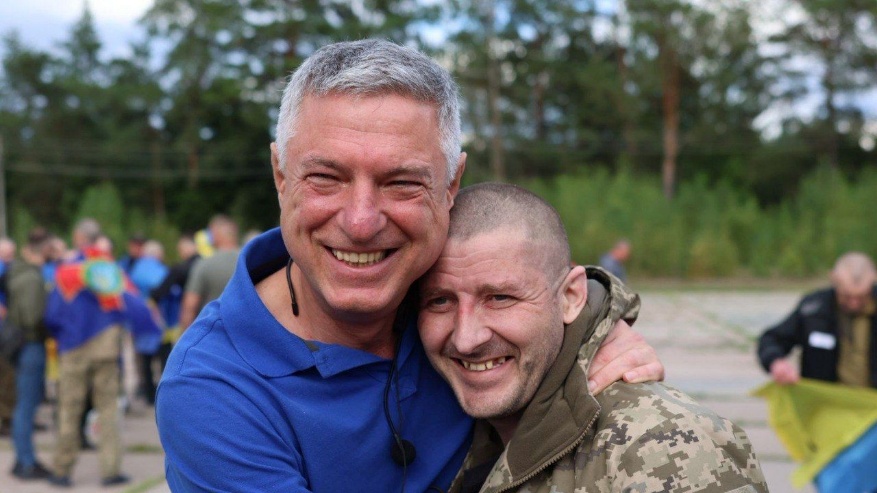
Ukrainian prisoners of war released from Russian captivity. (Coordination Headquarters for the Treatment of POWs)
Four Villages Liberated: Ukraine’s Independence Day Military Victories
Ukrainian forces delivered a powerful Independence Day message through military action, successfully liberating four villages in Donetsk Oblast during coordinated counterattacks that demonstrated Ukraine’s continued offensive capabilities.
Commander-in-Chief Oleksandr Syrskyi announced that Ukrainian forces “successfully counterattacked and cleared” the villages of Zelenyi Hai, Mykhailivka, Volodymyrivka, and Novomykhailivka. The liberation of Novomykhailivka proved particularly significant, with Ukraine’s Military Intelligence Directorate reporting that a joint operation between HUR’s Artan unit and the Third Assault Brigade “took the occupiers by surprise.”
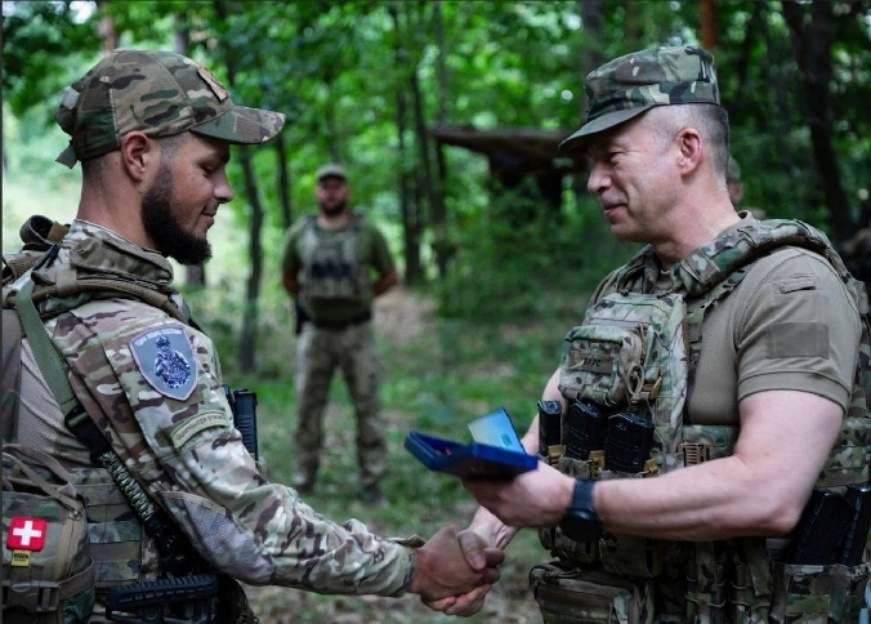
Oleksandr Syrskyi (R), Commander-in-Chief of Ukraine’s Armed Forces, presents an award to a front-line Ukrainian soldier in Donetsk Oblast on Independence Day. (General Staff / Facebook)
Russian forces lost “about a company of personnel” and had to transfer reserves from other front areas. These tactical victories occurred as Russia continues concentrating 111,000 troops near Pokrovsk, demonstrating that despite Russian numerical superiority, Ukrainian forces maintain the ability to conduct successful offensive operations.
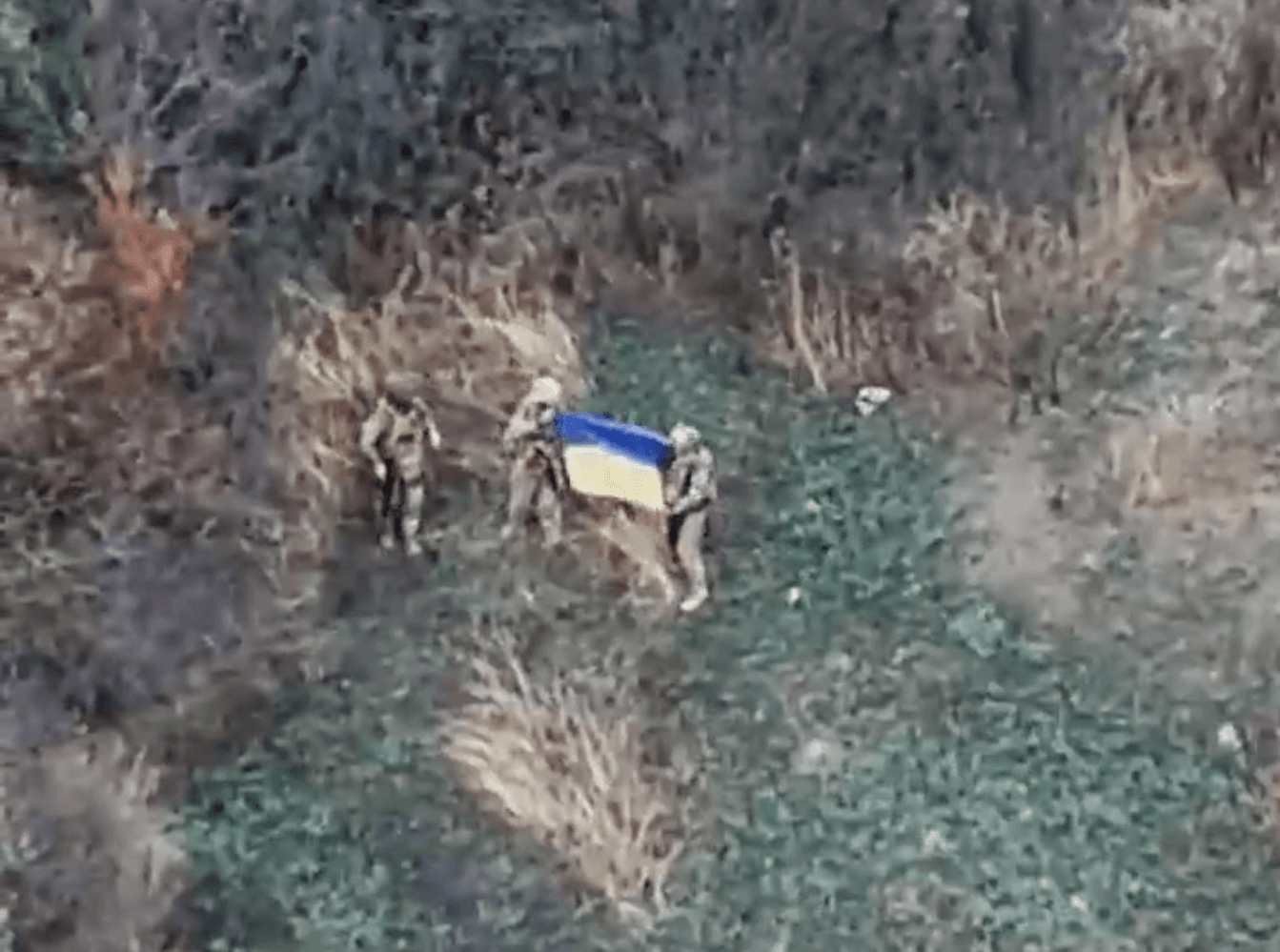
Ukrainian soldiers raise their nation’s flag in liberated Novomykhailivka in Donetsk Oblast in footage published. (Screenshot / HUR / Telegram)
146 Souls Come Home: Independence Day Prisoner Exchange
Ukraine marked Independence Day by bringing home 146 prisoners of war in another substantial exchange with Russia, with both sides releasing equal numbers of captives in a UAE-mediated deal.
Among the released Ukrainians were eight civilians, including journalists Dmytro Khyliuk and Mark Kaliush, and former Kherson mayor Volodymyr Mykolaienko. Khyliuk, a UNIAN news agency journalist, was kidnapped alongside his father from Kyiv Oblast in March 2022. Mykolaienko had spent more than three years in captivity after voluntarily refusing an earlier exchange in favor of a seriously ill fellow prisoner.
The exchange included medic Serhiy Kovalov from the Hospitallers Medical Battalion, who “saved the lives of both defenders and civilians during the siege at the Azovstal steel plant in Mariupol.” Russia also returned eight Kursk Oblast residents, reflecting territorial complications from Ukraine’s cross-border operations.
Energy Infrastructure Ablaze: Ukrainian Strikes Hit Russian Fuel Sources
Ukrainian forces delivered devastating blows to Russian energy infrastructure on Independence Day, striking the Ust-Luga gas terminal in Leningrad Oblast and the Syzran oil refinery in Samara Oblast in coordinated attacks that threatened Moscow’s war financing.
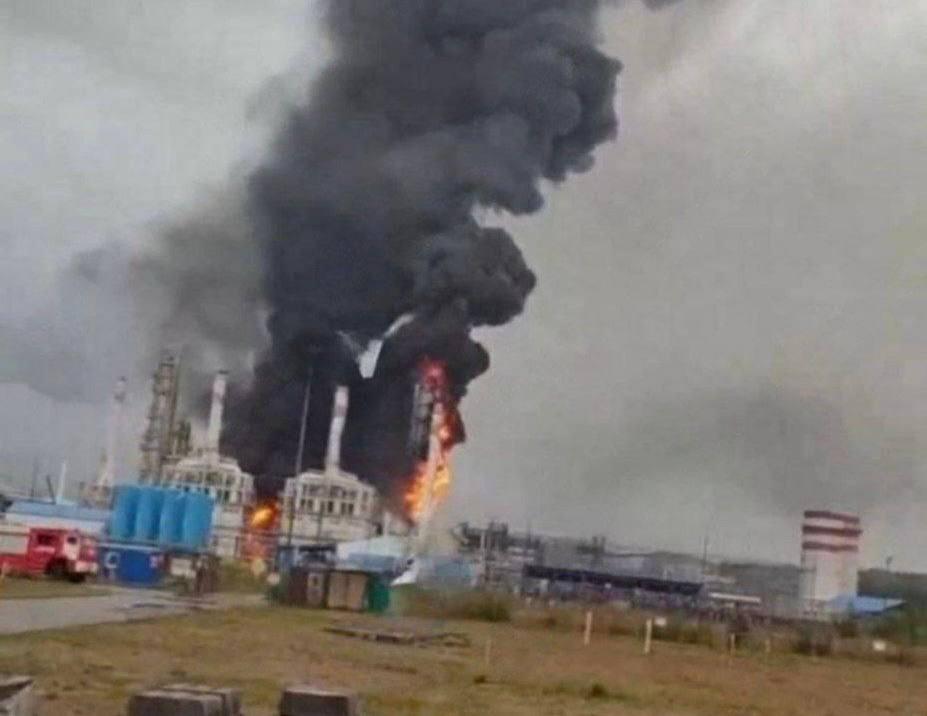
The aftermath of drone strikes on a Russian gas terminal in Lenengrad Oblast. (Courtesy)
The Ukrainian Security Service and Special Operations Forces struck the Novatek gas processing complex at Ust-Luga port, Russia’s largest LNG producer capable of processing 6.9 million tons annually. The strikes damaged the cryogenic gas condensate and gas fractionation unit—the “heart” of the complex’s technological processes.
Ukrainian Military Intelligence and Unmanned Systems Forces struck the Syzran Oil Refinery in Samara Oblast, which refines 8.5 million tons annually—3.08 percent of Russia’s total refining volume. The facility specializes in producing gasoline, diesel fuel, and petroleum products for Russian military forces. The Russian Defense Ministry claimed shooting down 95 Ukrainian drones, indicating the operation’s scale.
Carney’s $700 Million Commitment: Canada Steps Up Military Support
Canadian Prime Minister Mark Carney arrived in Kyiv for Independence Day celebrations, announcing over $700 million in military aid with September deliveries as part of Canada’s broader $1.5 billion support package.
“Over one billion of this sum will be directed to strengthening your arsenal through the supply of drones, ammunition, and armored vehicles, which will arrive next month,” Carney declared. The aid represents part of Canada’s June 2025 G7 summit commitment of two billion Canadian dollars in military funding.
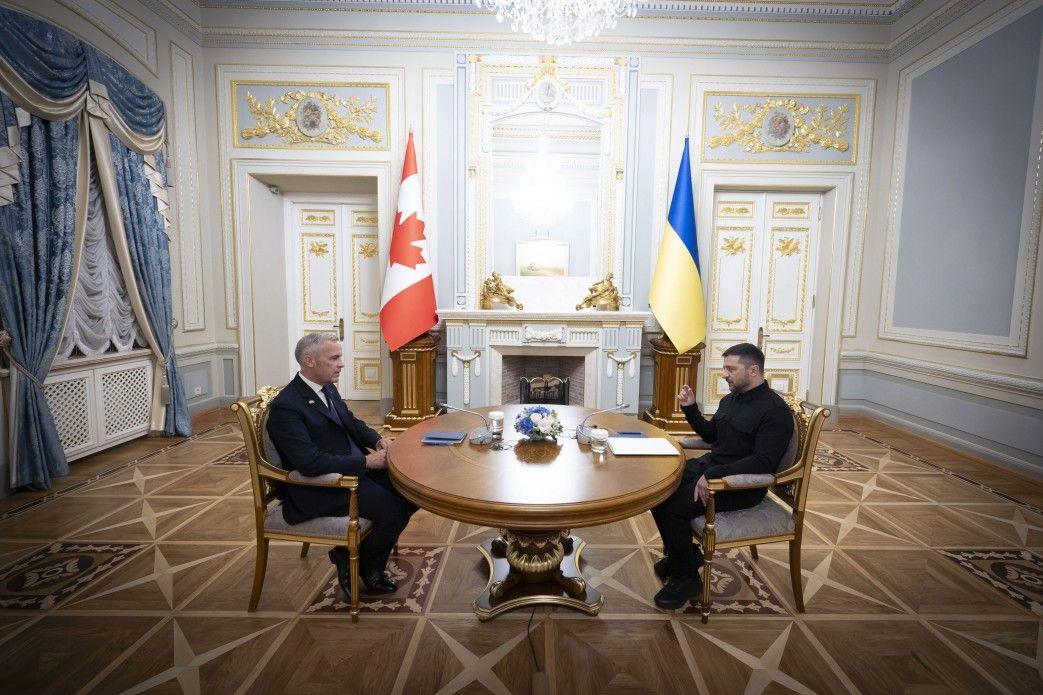
Canadian Prime Minister Mark Carney (L) meets with President Volodymyr Zelensky (R) in Kyiv, Ukraine. (Presidential Office)
Carney and Ukrainian Prime Minister Denys Shmyhal signed an agreement on joint defense equipment production, aimed at deepening bilateral cooperation and expanding production capacities. The agreement facilitates establishing Ukrainian defense companies in Canada while providing Ukraine modern weapons long-term.
Kellogg’s Independence Day Diplomacy: US Envoy Arrives for Security Talks
US Special Envoy Keith Kellogg arrived in Kyiv for Independence Day celebrations, joining discussions on post-war security guarantees as Washington continues pushing for negotiated settlement. Kellogg’s visit coincided with ongoing efforts to develop security architecture, with teams from the US and European allies working alongside NATO representatives.
Defense ministers from Sweden, Denmark, Romania, Lithuania, and Latvia, plus the UK Minister for Veterans Affairs, also attended celebrations, demonstrating continued European commitment to Ukrainian sovereignty. Kellogg was spotted during downtown celebrations standing next to Ukrainian Presidential Office Head Andriy Yermak, highlighting high-level diplomatic engagement.
ERAM Missile Approval: Washington Authorizes $850 Million European Arms Package
The United States approved the sale of 3,550 Extended Range Attack Munition air-launched missiles to Ukraine as part of an $850 million mostly European-funded arms package, with systems expected in mid-October 2025.
The ERAM missiles, with 241-450 kilometer range, represent quick-to-produce, low-cost weapons designed to enhance Ukraine’s long-range strike capabilities. Norway simultaneously announced allocating seven billion kroner ($694 million) to purchase two Patriot air defense systems for Ukraine, with Germany contributing financially.
The arms approvals came after being postponed until Trump’s diplomatic meetings with Putin and Zelensky, suggesting coordination between military aid and peace negotiation efforts.
Zelensky’s Domestic Production Declaration: Independence from US Strike Restrictions
President Zelensky declared that Ukraine uses domestically produced weapons to strike Russian targets without coordinating with the United States, signaling growing independence from American restrictions.
“At the moment, we are using our long-range domestically produced weapons, and we haven’t been discussing such matters with the U.S. lately,” Zelensky stated. His comments followed Wall Street Journal reports that the Pentagon has quietly implemented review processes blocking Ukrainian long-range strikes inside Russia with American missiles.
Zelensky announced Ukraine’s plans to begin mass production of the domestically developed Flamingo cruise missile this winter, with capabilities up to 3,000 kilometers. “By December, we’ll have more of them. Mass production should begin by January-February,” he declared.
72 Drones and Death: Russia’s Independence Day Assault
Russian forces launched 72 drones and an Iskander-M ballistic missile against Ukraine during Independence Day celebrations, killing three civilians and injuring at least three more across multiple oblasts.
Ukraine’s Air Force shot down 48 drones while 24 struck ten locations. One person died in Kostiantynivka, Donetsk Oblast, while another was killed in Kherson Oblast attacks that also injured two including a child. In Dnipropetrovsk Oblast, Russian attacks killed a 47-year-old woman, with a missile striking Pavlohrad. A 45-year-old man was injured in Sumy Oblast airstrikes.
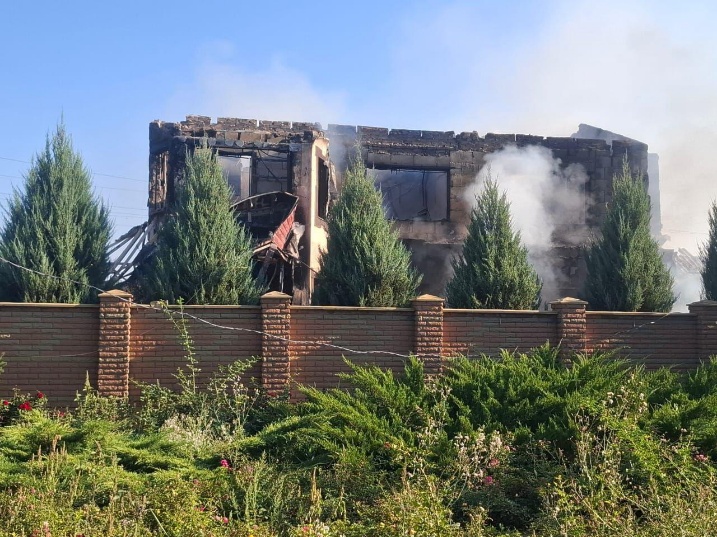
The aftermath of Russian attacks on Donetsk Oblast. (Vadym Filashkin/Telegram)
In Zaporizhzhia Oblast alone, Russian forces conducted 478 attacks on 11 settlements using drones, artillery, and aerial bombs, injuring two civilians.
Young Victim: 15-Year-Old Wounded in Russian Drone Hunt
Russian soldiers dropped explosives from a drone on a 15-year-old boy in Novoraisk, Kherson Oblast, around 11:30 AM August 24, wounding the minor with explosive injuries, brain trauma, and shrapnel wounds.
Kherson Oblast Governor Oleksandr Prokudin reported that the wounded boy was hospitalized with doctors assessing his condition as moderately severe. The attack represented Russia’s systematic use of drones to hunt civilians in Kherson Oblast, a war crime that has become tragically routine.
Partisan Strike: Ukrainian Resistance Hits Russian Railway Infrastructure
Pro-Ukrainian partisans destroyed an electrical transformer near a railway route used for military cargo transport in Russia’s Karachay-Cherkess Republic overnight, according to the Atesh resistance group.
“An agent destroyed a transformer cabinet on the railway branch near Cherkessk. Military cargo is transported along this road,” the group reported. Cherkessk is located 435 kilometers from Ukraine’s Azov Sea coast, demonstrating the expanding reach of Ukrainian resistance operations.
The Atesh group characterized the destruction as “a sign to the Putin regime that its end is near,” claiming growing discontent within Russia.
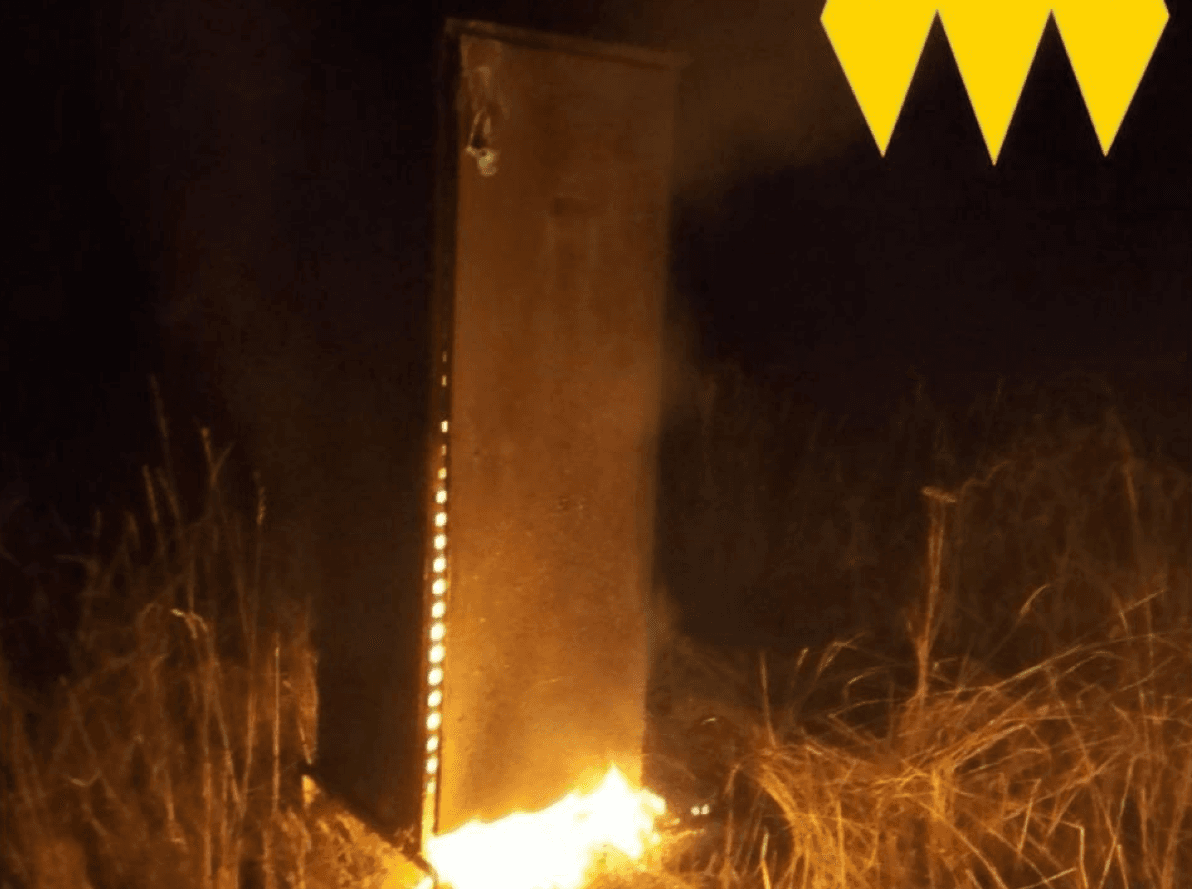
An electrical transformer is reportedly destroyed by the Pro-Ukrainian Atesh partisan group near Cherkessk in Southern Russia. (Atesh/Telegram)
Russian Battlefield Advances: Continuing Pressure Despite Ukrainian Victories
Russian forces continued offensive operations across multiple fronts on August 24, making confirmed advances in northern Kharkiv Oblast while maintaining pressure despite Ukrainian counterattacks.
Geolocated footage confirmed Russian advances within central Vovchansk northeast of Kharkiv City. In Sumy Oblast, a Russian milblogger claimed forces from the 237th VDV Regiment lost approximately 80 percent of personnel during assaults to enter eastern Yunakivka, forcing withdrawal for reconstitution.
Russian forces continued attacks in the Kupyansk direction without confirmed advances, facing Ukrainian strikes that prevent equipment movement across the Oskil River. Russian forces must cross in small groups using makeshift boats, indicating successful Ukrainian interdiction.
Prison Break Discovery: Russian Commander Reportedly Killed in Soledar
Ukrainian military intelligence reportedly struck a command post of the Russian 5th Motorized Rifle Brigade in occupied Soledar, killing the brigade commander and five other Russian officers in a strike that demonstrated Ukraine’s ability to target high-value Russian leadership.
The strike against the brigade, part of the 51st Combined Arms Army, represented significant tactical success in degrading Russian command capabilities near Chasiv Yar. Such targeted eliminations create operational disruptions and force Moscow to replace experienced leadership.
Trump’s Independence Day Message: Support Amid Diplomatic Push
President Donald Trump sent a letter of support to Ukraine on Independence Day, expressing respect for Ukrainian courage while reiterating commitment to negotiating peace that “safeguards Ukraine’s sovereignty.”
“The people of Ukraine have an unbreakable spirit, and your country’s courage inspires many,” Trump wrote. “Now is the moment to bring an end to the senseless killing. The United States supports a negotiated settlement that leads to durable, lasting peace.”
However, former CIA Director David Petraeus cast doubt on Putin-Zelensky meeting prospects in an ABC News interview, identifying “President Putin” as “the obstacle to peace at this point in time.”
Vance’s Optimistic Assessment: Vice President Claims Russian Concessions
US Vice President JD Vance expressed optimism about diplomatic efforts in an NBC interview, claiming Russia has made “significant concessions” for the first time in 3.5 years of conflict.
“The Russians have made significant concessions to President Trump,” Vance stated. “They’ve recognized that Ukraine will have territorial integrity after the war” and cannot “install a puppet regime in Kyiv.” When asked about Russian strikes on American facilities in Ukraine, Vance dismissed attacks saying “this is a war.”
Vance’s assessment contradicted recent Russian statements rejecting Ukrainian territorial integrity and demanding sweeping concessions.
Hungarian-Ukrainian Pipeline Dispute: Zelensky Links Druzhba to EU Support
President Zelensky suggested that Hungary’s position on Ukraine’s EU accession could determine the future of the Druzhba oil pipeline delivering Russian crude to Budapest.
“The existence of ‘Druzhba’ depends on the position of Hungary,” Zelensky declared. His comments followed Ukrainian drone strikes that temporarily disrupted Russian oil deliveries to Hungary and Slovakia on August 18.
Hungarian Foreign Minister Peter Szijjarto accused Zelensky of “threatening Hungary,” while Ukrainian Foreign Minister Andrii Sybiha countered: “You don’t need to tell the Ukrainian President what to do. He is the President of Ukraine, not Hungary.”
Merz’s Measured Assessment: German Chancellor Sees Limited Progress
German Chancellor Friedrich Merz described peace negotiation efforts as covering only “the first 200 meters” of a 10-kilometer journey, offering a sobering assessment of diplomatic progress.
“We are at a distance of 10 kilometers and have passed, maybe, the first 200 meters, no more,” Merz stated. “But we are moving in the right direction.” Merz noted that Russia’s position continues making negotiations “difficult,” while emphasizing unprecedented European diplomatic efforts in recent weeks.
Looking Ahead: Independence Day Paradoxes
As Ukraine’s 34th Independence Day concluded, the fundamental contradictions driving the conflict remained starkly apparent. While Ukrainian forces demonstrated continued offensive capabilities through village liberations and successful prisoner exchanges, Russia simultaneously rejected the basic framework for peace negotiations by denying Zelensky’s legitimacy to sign agreements.
Lavrov’s rejection of Zelensky’s authority represents perhaps the most significant obstacle to Trump’s peace efforts, essentially rendering meaningless any bilateral Putin-Zelensky meeting. This Russian position, combined with continued maximalist demands, suggests Moscow views military victory as more achievable than negotiated settlement.
For Ukraine, Independence Day 2025 crystallized both the nation’s resilience and challenges ahead. Military successes in liberating villages and striking Russian infrastructure demonstrated enduring capabilities, while international support remained robust despite shifting American approaches. Yet Russia’s fundamental rejection of Ukrainian sovereignty indicates that genuine peace negotiations remain distant prospects.
The coming weeks will test whether Trump’s diplomatic initiatives can overcome Russian intransigence or whether the war’s logic will continue overriding peace rhetoric, as Ukraine marked another Independence Day under fire but unbowed.