
As Gerasimov Inflates Russian Territorial Gains by 1,200 Square Kilometers and Ukrainian Forces Strike Deep, the Murder of Andriy Parubiy Shocks Ukraine While 582 Missiles and Drones Rain Down
Summary of the Day – August 30, 2025
Russia’s propaganda apparatus reached new heights of deception on August 30 as Chief of General Staff Valery Gerasimov delivered wildly exaggerated claims of territorial conquests, inflating Russian gains by nearly 1,200 square kilometers and 19 settlements while ignoring the devastating casualty toll that made such pyrrhic advances possible. The day’s grim calculus became clear as independent analysis revealed Russian forces suffer an average of 938 casualties daily for gains measured in mere kilometers, while Ukraine demonstrated its expanding reach with strikes on oil refineries in Krasnodar and Samara and the destruction of an explosives depot near Moscow. Yet the most shocking development was the assassination of former Ukrainian parliament speaker Andriy Parubiy in Lviv – eight shots from a delivery courier’s disguise that eliminated one of EuroMaidan’s key architects. As 582 Russian missiles and drones struck Ukrainian cities overnight, killing at least three civilians and injuring 47 others, the stark contrast between Moscow’s fabricated triumph narratives and battlefield reality became impossible to ignore.
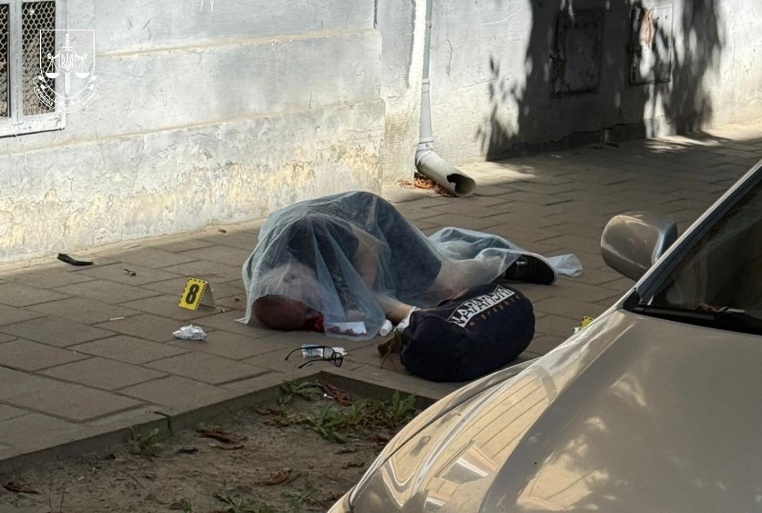
Andrii Parubii’s body after he was shot dead in Lviv, Ukraine. (Prosecutor General’s Office)
The Numbers Game: Gerasimov’s Statistical Deception
Russian Chief of General Staff Army General Valery Gerasimov’s comprehensive briefing on August 30 represented perhaps the most ambitious attempt yet to rewrite the war’s narrative through manipulated statistics. Speaking with the authority of Russia’s highest military command, Gerasimov claimed Russian forces had seized 3,500 square kilometers of territory and 149 settlements since March 2025—figures that independent analysis reveals to be grossly inflated.
The reality behind Gerasimov’s boastful presentation tells a dramatically different story. Independent assessment shows Russian forces have actually gained only roughly 2,346 square kilometers and seized 130 settlements since March 1—meaning Gerasimov inflated Russian territorial gains by approximately 1,200 square kilometers and 19 settlements. His claim that Russian forces control 50 percent of Kupyansk is particularly egregious, with actual Russian control assessed at only 6.3 percent of the strategic city.
This statistical manipulation extends to specific regional claims. Gerasimov asserted Russian forces seized 210 square kilometers and 13 settlements in northern Sumy Oblast, while independent analysis shows Russian gains of 212 square kilometers but control of only nine settlements. His percentage claims for occupied territories—99.7 percent of Luhansk Oblast, 79 percent of Donetsk Oblast, 76 percent of Kherson Oblast, and 74 percent of Zaporizhia Oblast—similarly inflate actual Russian control by several percentage points across all regions.
The Kremlin’s coordinated informational effort extends beyond mere battlefield statistics. This represents a deliberate attempt to shape Western thinking and falsely portray Russian victory as inevitable, using large amounts of quantitative data to create false impressions of unstoppable Russian advances and convince Western policymakers that Ukraine should concede to Russian demands.
The Blood Price of Propaganda: Russia’s Casualty Crisis Exposed
Behind Gerasimov’s triumphant statistics lies a human catastrophe that Moscow desperately seeks to conceal. Russian opposition outlets Meduza and Mediazona reported data from the Russian Register of Inheritance Cases suggesting at least 93,000 Russian military personnel died in 2024—nearly double the approximately 50,000 deaths in 2023. Their predictive model estimates at least 56,000 Russian soldiers have died since the start of 2025.
The inheritance data reveals a sharp acceleration in death rates, with cases rising to 2,000 per week by mid-2025. There was a dramatic increase in the second half of 2024 of court cases recognizing missing persons as dead, with this phenomenon occurring exclusively among men—a pattern consistent only with massive military casualties. These losses have come at disproportionately small territorial gains, with Russian forces suffering an average of 938 casualties daily throughout August for advances measured in mere square kilometers.
The gradual, creeping nature of Russian advances—achieved through light motorized vehicles, infiltration tactics, and human wave assaults—represents the antithesis of modern mechanized warfare. Russian forces have consistently failed to consolidate and exploit their infiltrations, demonstrating the fundamental weakness underlying Moscow’s statistical triumph narratives.
Terror in Lviv: The Assassination of Andriy Parubiy
The most shocking development of August 30 was the cold-blooded assassination of Andriy Parubiy, former Ukrainian parliament speaker and a key architect of the EuroMaidan Revolution. The 54-year-old politician was gunned down in Lviv’s Frankivskyi district at approximately noon by an assailant dressed as a delivery courier who fired eight shots before fleeing on an electric bicycle.
Security camera footage released online shows the methodical nature of the killing: the shooter waiting near Parubiy’s car before approaching from behind and opening fire at point-blank range. Seven shell casings were found at the crime scene, with investigators determining the weapon was a short-barreled firearm. The assassination was “carefully prepared,” President Volodymyr Zelensky acknowledged, with authorities launching a comprehensive investigation involving the Prosecutor General’s Office and Security Service of Ukraine.
Parubiy’s murder represents the elimination of one of modern Ukraine’s most significant political figures. Born in 1971 near Lviv, he organized anti-government demonstrations during Soviet times and was twice arrested for his activism. After independence, he became a driving force behind both the Orange Revolution in 2004 and the EuroMaidan Revolution in 2013-2014, leading self-defense volunteer groups during the pivotal protests that ousted pro-Russian President Viktor Yanukovych.
His role as National Security and Defense Council secretary from February to August 2014—precisely when Russia occupied Crimea and initiated the war in Donbas—made him a frequent target of Russian propaganda and disinformation. Interior Minister Ihor Klymenko, Prosecutor General Ruslan Kravchenko, and law enforcement agencies are investigating the circumstances, with officials examining whether Parubiy received threats before his death and investigating the unauthorized release of street camera recordings.
The Third Massive Barrage: 582 Weapons Target Ukrainian Cities
Russia launched its third large-scale combined strike exceeding 500 weapons since the August 15 Alaska summit, deploying 582 missiles and drones against Ukrainian cities overnight on August 29-30. The devastating barrage included eight Iskander-M/KN-23 ballistic missiles from Rostov Oblast and Krasnodar Krai, 37 cruise missiles of various types launched from multiple locations including over Saratov Oblast, the Black Sea, and occupied Zaporizhia Oblast, and 537 Shahed-type attack drones and decoys launched from six different directions.
Ukrainian air defenses achieved remarkable success, intercepting 510 drones, six ballistic missiles, and 32 cruise missiles. However, five missiles and 24 drones struck seven locations across Ukraine, while drone debris fell at 21 additional sites. The human toll was significant: at least three civilians killed and 47 injured across multiple regions.
Zaporizhzhia bore the brunt of casualties, with one person killed and 30 injured, including three children aged 9, 10, and 16. Eight of the wounded were hospitalized, while rescue workers extinguished fires in two five-story residential buildings, five private houses, a car service station, and a café. Flames spread across more than 700 square meters of property, with emergency teams pulling six people from damaged buildings. Approximately 25,000 consumers were left without electricity due to the attack.
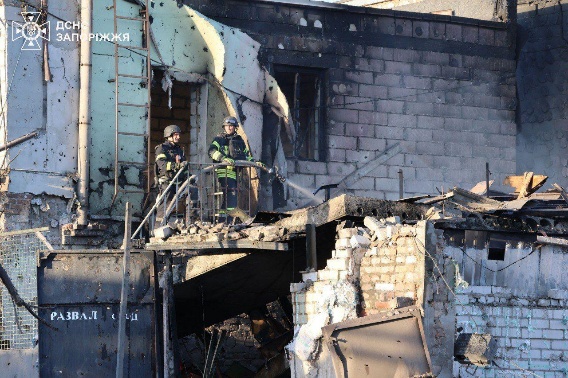
Firefighters working on the site of a Russian attack in Zaporizhzhia, Ukraine. (State Emergency Service/Telegram)
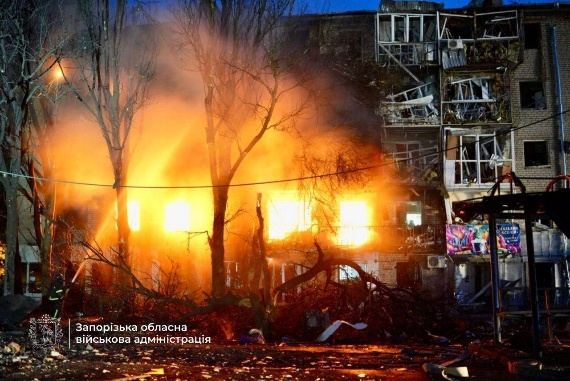
A fire burns at a residential building in Zaporizhzhia amid a Russian missile attack on the city. (Zaporizhzhia Oblast Military Administration)
In Donetsk Oblast, Russian attacks killed one person and injured three in Kostiantynivka, with three others injured elsewhere in the region. Kherson Oblast saw one death and seven injuries from Russian attacks, with damage to residential buildings, infrastructure, and vehicles. Mykolaiv Oblast reported a 66-year-old woman injured and hospitalized after drone strikes. Sumy Oblast recorded injuries to two women and one man from air strikes and drone attacks.
The attack also disrupted transportation infrastructure, with Ukrzaliznytsia reporting railway damage in Kyiv Oblast causing multi-hour delays in train departures. Kyiv Oblast Military Head Mykola Kalashnyk reported that strikes on the capital region lasted 10 hours and damaged both civilian and energy infrastructure.
Deep Strike Capabilities: Ukrainian Forces Hit Russian Infrastructure
Even as Russian missiles rained down on Ukrainian cities, Ukrainian forces demonstrated their expanding operational reach with coordinated strikes across multiple Russian regions. The most significant success was the destruction of an explosives warehouse at the Aleksinsky Chemical Plant in Tula Oblast, approximately 130 kilometers south of Moscow.
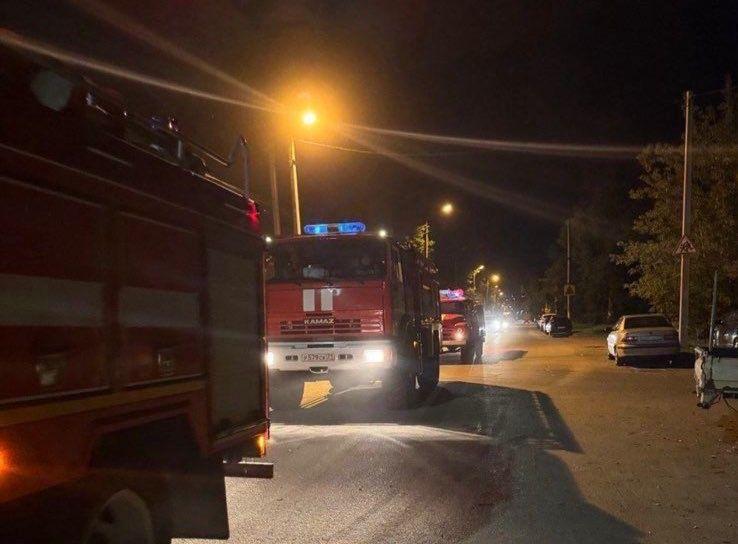
Fire trucks arriving at the scene after of a reported explosion in Alexin, Tula Oblast, Russia, overnight. (HUR source)
Ukrainian military intelligence sources confirmed the underground depot stored pyroxylin gunpowder—a smokeless powder used in small arms, artillery, and rocket engine production. The successful strike against such a strategically important facility, located relatively close to Moscow, demonstrates Ukraine’s ability to target critical military-industrial infrastructure deep within Russian territory. Local Telegram channels reported a series of loud explosions and emergency vehicles heading to the scene.
Simultaneously, Ukrainian drones struck oil refineries in Krasnodar Krai and Samara Oblast, with commander Robert “Magyar” Brovdi confirming his 14th regiment of Unmanned Systems Forces, coordinating with Special Operations Forces, targeted the Krasnodar Oil Refinery and Syzran Oil Refinery. The Ukrainian General Staff reported that the Syzran Refinery can produce 8.5 million tons of gasoline, diesel fuel, jet fuel, fuel oil, and bitumen per year, while the Krasnodar Refinery produces three million tons of gasoline, diesel, and jet fuel annually.
Geolocated footage published on August 30 shows fires at both refineries, with the Krasnodar Krai Operation Headquarters claiming drone debris damaged a processing unit and caused a 300-square meter fire. These facilities combine for 4.1 percent of Russian oil production and directly supply the Russian Armed Forces with aviation fuel and other petroleum products.
Battlefield Dynamics: Ukrainian Resilience Amid Russian Pressure
Despite Russian propaganda claims of inevitable victory, battlefield developments on August 30 revealed a more complex reality of tactical exchanges and significant Ukrainian successes. Ukrainian forces achieved major operational success near Dobropillia in Donetsk Oblast, with military spokesperson Viktor Trehubov announcing that Russian units advancing on the city had been “cut off and surrounded.”
“At least for now, the Russian units that were advancing on Dobropillia—these ‘crab claws’—have been cut off and surrounded,” Trehubov explained, describing how Ukrainian forces exploited Russian overextension in the strategically important area northeast of Pokrovsk. The encirclement represents a significant tactical victory, demonstrating Ukrainian forces’ continued ability to conduct effective operations despite facing superior Russian numbers.
In the Kupyansk direction, Ukrainian forces recaptured Myrove, with Dnipro Group spokesperson Colonel Viktor Trehubov confirming the successful operation. “As of now, Russians have been pushed out of Myrne. There is no information on wounded or killed Russian soldiers. Our forces are advancing further,” Trehubov reported. The liberation effectively restored Ukrainian control over positions that Russian forces had previously claimed, contradicting Moscow’s narrative of inevitable advance.
Ukrainian forces also recaptured Zelenyi Hai in the Novopavlivka direction, with military observer Kostyantyn Mashovets confirming the successful operation and a Ukrainian battalion operating in the area corroborating the seizure of the settlement.
Russian forces did achieve some confirmed advances, particularly in the Toretsk direction with geolocated footage indicating gains in western Rusyn Yar, and in the Velykomykhailivka direction with advances in eastern Komyshuvakha, though the Russian Ministry of Defense’s claim to have seized the entire settlement remains unconfirmed.
Military Operations Across Multiple Fronts
Russian forces continued offensive operations across multiple directions on August 30, demonstrating the breadth of Moscow’s military effort while revealing tactical limitations. In northern Sumy Oblast, Russian attacks near Bezsalivka and Yunakivka failed to achieve territorial gains, with a Russian milblogger affiliated with the Northern Grouping of Forces complaining that Ukrainian drone and artillery strikes prevented elements of the Russian 2nd Motorized Rifle Regiment from attacking near Novyi Put.
In northern Kharkiv Oblast, Russian forces attacked near Hlyboke, Kozacha Lopan, and Vovchansk without advancing, though a Russian milblogger claimed increased Russian activity along the Kharkiv-Belgorod railway line toward Prudyanka, Hraniv, and Slatyne stations.
The Lyman direction saw continued Russian offensive operations without confirmed advances, despite unconfirmed Russian claims of seizing Hlushchenkove and Ridkodub. Ukrainian counterattacks were reported near Shandryholove, Ridkodub, and Novomykhailivka, indicating active defensive operations.
Ukrainian tactical innovations continued to demonstrate adaptability to Russian methods. A Ukrainian brigade spokesperson reported that Russian infantry are leveraging Chinese-produced thermal imaging tents to conceal heat signatures when approaching forward positions. Ukrainian commanders noted Russian forces’ continued reliance on infiltration tactics, simultaneous assaults against forward positions, and attempts to penetrate Ukrainian rear areas.
The Kremlin’s Internal Purge: Kozak’s Looming Dismissal
Amid external propaganda efforts, Putin’s decree on August 29 abolishing the Presidential Administration’s Department for Interregional and Cultural Relations with Foreign Countries and Department for Cross-Border Cooperation effectively set conditions to remove Deputy Presidential Administration Head Dmitry Kozak—a senior official who reportedly advised Putin to end the war in Ukraine.
Russian outlet Vedomosti reported that Kozak is being considered for the position of Presidential Plenipotentiary Representative in the Northwestern Federal Okrug—effectively a demotion that would remove him from Putin’s inner circle. Two sources indicated discussions within the Kremlin about Kozak’s resignation from his current Presidential Administration post.
The New York Times previously reported that Western and Russian sources indicated Kozak lost influence after advising Putin to immediately stop fighting in Ukraine, start peace negotiations, and reduce the power of Russia’s security services. This internal purge of officials advocating for peace negotiations provides clear evidence that the Kremlin has no genuine interest in ending the war, despite diplomatic theater and propaganda claims.
In contrast, Russian Investigative Committee Chairperson Alexander Bastrykin received a term extension until August 27, 2026, after reportedly refusing Putin’s offer to become chairperson of the Russian Supreme Court and requesting to remain in his current position for another year.
War Crimes Documentation: Systematic Civilian Targeting
The systematic nature of Russian war crimes received fresh documentation with the 1st Azov Corps releasing footage allegedly showing a Russian soldier shooting dead an elderly Ukrainian civilian in his own yard in southeastern Novoekonomichne, northeast of Pokrovsk. The victim was clearly in civilian clothes and unarmed, representing a direct violation of the Geneva Convention on civilian protection.
Preliminary information suggests the crime was committed by a serviceman of Russia’s 95th Motorized Rifle Regiment, part of the 5th Motorized Rifle Brigade. The Rome Statute of the International Criminal Court states that “intentionally direct attacks against the civilian population or against individual civilians not taking direct part in hostilities” constitutes a serious violation of international law.
This documented atrocity adds to over 150 cases of Ukrainian prisoners of war being executed after surrendering to Russian forces, demonstrating the comprehensive nature of Russian violations of the laws of armed conflict and Geneva Conventions.
International Responses: Military Aid and Strategic Calculations
U.S. NATO Ambassador Matt Whitaker confirmed on August 29 that President Trump is ensuring Ukraine can defend itself by providing “deeper strike capabilities,” referencing the recent $1 billion in approved military sales including 3,350 Extended Range Attack Munition missiles capable of striking targets at 240-450 kilometers range.
“They’ve already taken about 20% of Russia’s oil refining capacity last month,” Whitaker noted, highlighting the success of Ukrainian deep-strike campaigns against Russian energy infrastructure. The ambassador expressed optimism about the NATO-led Prioritized Ukraine Requirements List initiative, stating the U.S. is “selling about a $1 billion a month through our NATO allies that are being provided to Ukraine.”
However, tensions within the Western alliance became apparent through Axios reporting that senior White House officials have accused European leaders of prolonging the war by pushing Ukraine to hold out for a “better deal.” A senior White House official told Axios that “Europeans don’t get to prolong this war and backdoor unreasonable expectations, while also expecting America to bear the cost.”
The Trump administration is reportedly considering stepping back from diplomatic efforts until one or both sides demonstrates greater flexibility, with one official stating: “We are going to sit back and watch. Let them fight it out for a while and see what happens.”
European Financial Warfare: The Frozen Assets Strategy
EU foreign policy chief Kaja Kallas announced that all member states agreed “it was unthinkable that Russia will ever see this money again unless it fully compensates Ukraine” for war damages, referring to approximately 210 billion euros in frozen Russian assets. While immediate confiscation remains politically unrealistic due to concerns about financial instability and legal challenges, European leaders are developing “exit strategies” for using these assets when the war ends.
Belgian Foreign Minister Maxime Prevot stressed that seizure of the funds is not an option at present, stating that “those assets are solidly protected under international law” and that “confiscating them would trigger systemic financial instability and also erode trust in the euro.”
The G7 agreement to channel profits from frozen assets into a $50 billion loan for Ukraine provides an interim mechanism, though Ukraine and several EU members continue pushing for more aggressive seizure of Russian funds. This financial pressure represents a long-term strategic weapon against Russian war financing, even as immediate implementation faces legal and political obstacles.
Baltic Preparations and Hybrid Warfare Warnings
Lithuania continued concrete defensive preparations by installing “dragon teeth” concrete anti-tank obstacles at unused border crossings with Russia and Belarus, part of the broader Baltic Defense Line initiative. Lithuanian military chief Raimundas Vaiksnoras described the barriers as “part of a large, integrated picture” combining tactical-level obstacles with broader engineering plans.
The installations at Sumskas, Lavoriskes, Raigardas, and Latezeris border crossings with Belarus, plus the Romaniskes checkpoint with Kaliningrad, represent practical preparations for potential ground-based invasion scenarios.
Ukrainian military intelligence chief Kyrylo Budanov warned that the upcoming Russian-Belarusian joint strategic military exercise beginning September 12 will trigger a major wave of disinformation and cognitive pressure against Ukraine and European countries. Budanov predicted “enormous wave of information escalation” with roughly 90 percent of disinformation coming from Russia, designed to fuel hysteria and create provocations particularly targeting Baltic states.
German Chancellor Friedrich Merz delivered particularly strong rhetoric, denouncing Russian attacks on German infrastructure and declaring that “we are already in conflict with Russia.” Merz accused Putin of attempting to “restore the Soviet Union” and destabilizing German society through hybrid operations and sabotage attacks.
Military Reforms and Recruitment Issues
Ukrainian military officials addressed persistent rumors about force restructuring, with General Staff spokesperson Andrii Kovalov rejecting claims of mass transfers of air defense personnel to infantry roles. Kovalov acknowledged reassignments among service members not critical for their air defense units, but emphasized this does not concern specialists protecting Ukrainian skies.
The clarification came after activist Serhii Sternenko claimed continued transfers of air defense specialists, including interceptor drone operators, to infantry roles following large-scale air attacks. The issue reflects broader challenges with Ukraine’s mobilization system and the persistent shortage of infantry personnel to maintain defensive lines against Russian advances.
Polish-Ukrainian Relations: Deportations and Political Tensions
Poland expelled 15 Ukrainian citizens after detentions for various offenses including drug possession, drunk driving, theft, and illegal border crossings, with authorities banning their re-entry for 5-10 years. The deportations reflect deteriorating Polish-Ukrainian relations under President Karol Nawrocki, who has set a decisively different tone on Ukraine than his predecessor.
The expulsions follow Poland’s deportation of 57 Ukrainians and six Belarusians after concert violence earlier in August, indicating a pattern of increasingly strict enforcement against Ukrainian nationals amid growing political tensions between the two countries.
Asian Diplomatic Developments: Putin’s China Visit
Russian President Vladimir Putin arrived in Tianjin, China, to attend a major Shanghai Cooperation Organisation summit, marking a rare trip abroad that underscores Beijing-Moscow efforts to counter Western influence. Chinese state broadcaster CCTV described China-Russia relations as at their “best in history,” calling them “the most stable, mature and strategically significant among major countries.”
Chinese President Xi Jinping will host about 20 world leaders at the two-day summit, providing Putin with a diplomatic platform to promote alternatives to U.S.-led international order while demonstrating that Russia maintains significant international partnerships despite Western sanctions and isolation efforts.
Looking Forward: The Propaganda War’s Real Stakes
As August 30 concluded, the day’s events revealed the multi-dimensional nature of Russia’s war against Ukraine. Gerasimov’s statistical manipulation represents more than simple propaganda—it’s a systematic attempt to influence Western policymaking by creating false impressions of Russian inevitability while concealing the massive human and material costs of Moscow’s territorial gains.
The assassination of Andriy Parubiy adds a sinister dimension to Russian strategy—the potential targeting of Ukrainian political leadership through clandestine operations. Whether conducted directly by Russian agents or through proxy networks, such killings represent escalation beyond conventional warfare into systematic terrorism against Ukrainian society.
The contrast between Russian propaganda claims of inevitable victory and the desperate measures required to maintain even current operational tempo—from motorcycle infantry to statistical manipulation to political assassinations—suggests a military and political system under severe strain. Ukraine’s continued success in deep strikes, territorial recoveries, and defensive operations, combined with sustained international support despite diplomatic tensions, indicates that Moscow’s victory narrative remains largely fictional.
As Ukrainian forces demonstrate expanding capabilities and Russian casualty rates continue climbing, the gap between Moscow’s propaganda triumph and battlefield reality may become increasingly impossible to conceal, regardless of how dramatically Russian officials inflate their territorial gains or eliminate dissenting voices within their own ranks.