
Ukrainian Officials Warn of Massive Russian Troop Buildup in Donetsk Oblast While Moscow Deploys Over 100,000 Forces Near Pokrovsk for ‘Decisive Breakthrough’
Summary of the Day – September 6, 2025
Ukrainian military officials sounded urgent alarms on September 6 as intelligence revealed a massive Russian military buildup across western Donetsk Oblast, with over 100,000 troops massing near Pokrovsk in preparation for what Moscow calls a “decisive breakthrough.” The warning came as Russian forces demonstrated their expanding capabilities by dropping propaganda leaflets offering cash bribes to Ukrainian civilians for targeting coordinates, while continuing deadly strikes that killed at least two civilians. Meanwhile, diplomatic tensions escalated as Slovak Prime Minister Robert Fico revealed that Putin expressed interest in meeting Zelensky outside Moscow, even as the Kremlin simultaneously threatened foreign peacekeepers and Ukraine faced its largest drone assault of the war. Against this backdrop of mounting military pressure and diplomatic complexity, Ukrainian authorities detained a fugitive pro-Russian lawmaker wanted for treason, while Poland activated emergency airspace protection during the massive Russian aerial bombardment.
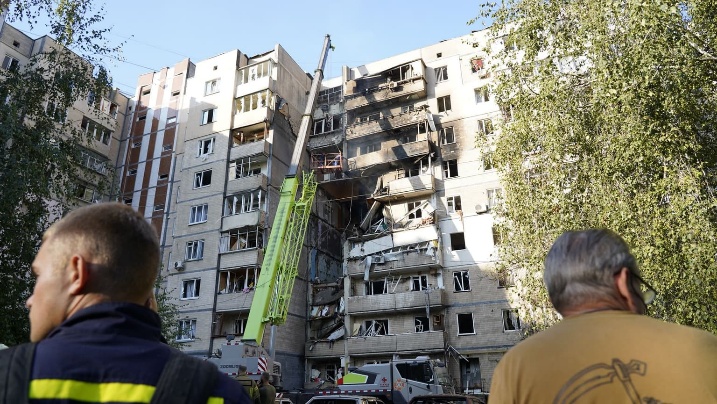
The aftermath of Russia’s large-scale drone and missile attack on a residential building in Kyiv, Ukraine. (Olena Zashko/The Kyiv Independent)
The Russian War Machine Mobilizes: Over 100,000 Troops Mass for Breakthrough
Ukrainian military intelligence revealed the most significant Russian force concentration since the war’s opening phases, with officials warning that Moscow is regrouping and reinforcing troops across western Donetsk Oblast for a major offensive operation. Lieutenant Colonel Oleksiy Belskyi, spokesperson for Ukraine’s Dnipro Group of Forces, reported that Russian forces are concentrating “significant forces” in Donetsk Oblast, with the most intense fighting occurring in the Pokrovsk direction.
Russian forces have accumulated over 100,000 troops south of Pokrovsk specifically to break through to Dnipropetrovsk Oblast, representing a fundamental shift from gradual territorial gains to preparation for large-scale breakthrough operations. After failing to seize Pokrovsk and Myrnohrad during summer 2025, Russian forces have accumulated significant numbers of drones and heavy armored vehicles in the area.
The buildup extends beyond Pokrovsk, with five to six naval infantry brigades redeploying to the Dobropillya direction alongside a tank regiment, an infantry regiment, and two motorized rifle brigades. Elements of the 70th Motorized Rifle Division have moved to Chasiv Yar, while experienced naval infantry units have been redeployed specifically to the Pokrovsk direction.
Russian forces are implementing sophisticated new tactical approaches, using small-team infiltration tactics to penetrate Ukrainian drone and artillery positions while intensifying operations on Pokrovsk’s flanks using armored and motorized vehicles to interdict ground communications and achieve tactical encirclement. Russian drone operators have escalated interdiction efforts along the E-40 Izyum-Slovyansk highway, claiming to have struck 10 Ukrainian military vehicles in recent days.
Psychological Warfare Escalates: Bribery Leaflets and Information Operations
Russian forces dropped leaflets disguised as 100-hryvnia bills across Chernihiv, offering real money in exchange for coordinates to help target Ukrainian forces. The sophisticated operation represents a significant escalation in Russian efforts to recruit Ukrainian civilians for intelligence gathering, reflecting broader Russian intelligence efforts to recruit citizens through messenger services and financial incentives.
Chernihiv police warned residents about criminal liability for disseminating information about Ukrainian Armed Forces locations and movements. The leaflet operation coincides with the massive troop buildup, suggesting coordinated preparation for large-scale operations requiring detailed intelligence on Ukrainian defensive positions.
Meanwhile, Reuters withdrew video footage showing Putin and Xi Jinping discussing human longevity after China’s state broadcaster revoked permission to use the material. CCTV criticized Reuters’ “editorial treatment” of the footage, which showed Putin telling Xi that biotechnology could extend human life indefinitely during Beijing’s military parade. The incident highlights growing Chinese sensitivity to international media coverage of high-level diplomatic exchanges.
Diplomatic Contradictions: Mixed Signals on Peace Talks
Slovak Prime Minister Robert Fico revealed that Putin expressed interest in meeting President Zelensky outside Moscow, contradicting the Russian leader’s previous insistence on holding any meeting in the Russian capital. Putin reportedly told Fico he would be willing to meet Zelensky “anywhere else” but Moscow during their September 2 meeting in China.
However, Putin’s diplomatic signals remain contradictory. On September 3, he again invited Zelensky to Moscow, and on September 5, he declared he “doesn’t see much point” in meeting the Ukrainian president at all. This pattern suggests Russian diplomatic messaging designed to confuse rather than clarify intentions.
President Trump signaled that Washington would assist with providing security guarantees for Ukraine while emphasizing Europe’s leading role. “We’ll work that out. We’ll help them. Europe will be first in by far, and they want to be first,” Trump stated, following the September 4 Coalition of the Willing summit where 26 countries committed to deploying a multinational reassurance force after any ceasefire.
Trump announced plans to host Russian and Chinese leaders at the 2026 G20 summit in Miami, stating he would “love” to include Putin and Xi Jinping. The invitation reflects his strategy of engaging Moscow despite ongoing tensions, though this approach has shown limited success as Russian-Chinese cooperation continues deepening.
Record Assault: 810 Drones Launched Against Ukraine
Russia launched its largest drone attack of the full-scale war on the night of September 6-7, deploying 810 Shahed-type drones alongside 13 cruise and ballistic missiles in an unprecedented assault. The attack began during the evening of September 6, representing the largest single drone deployment since the invasion began.
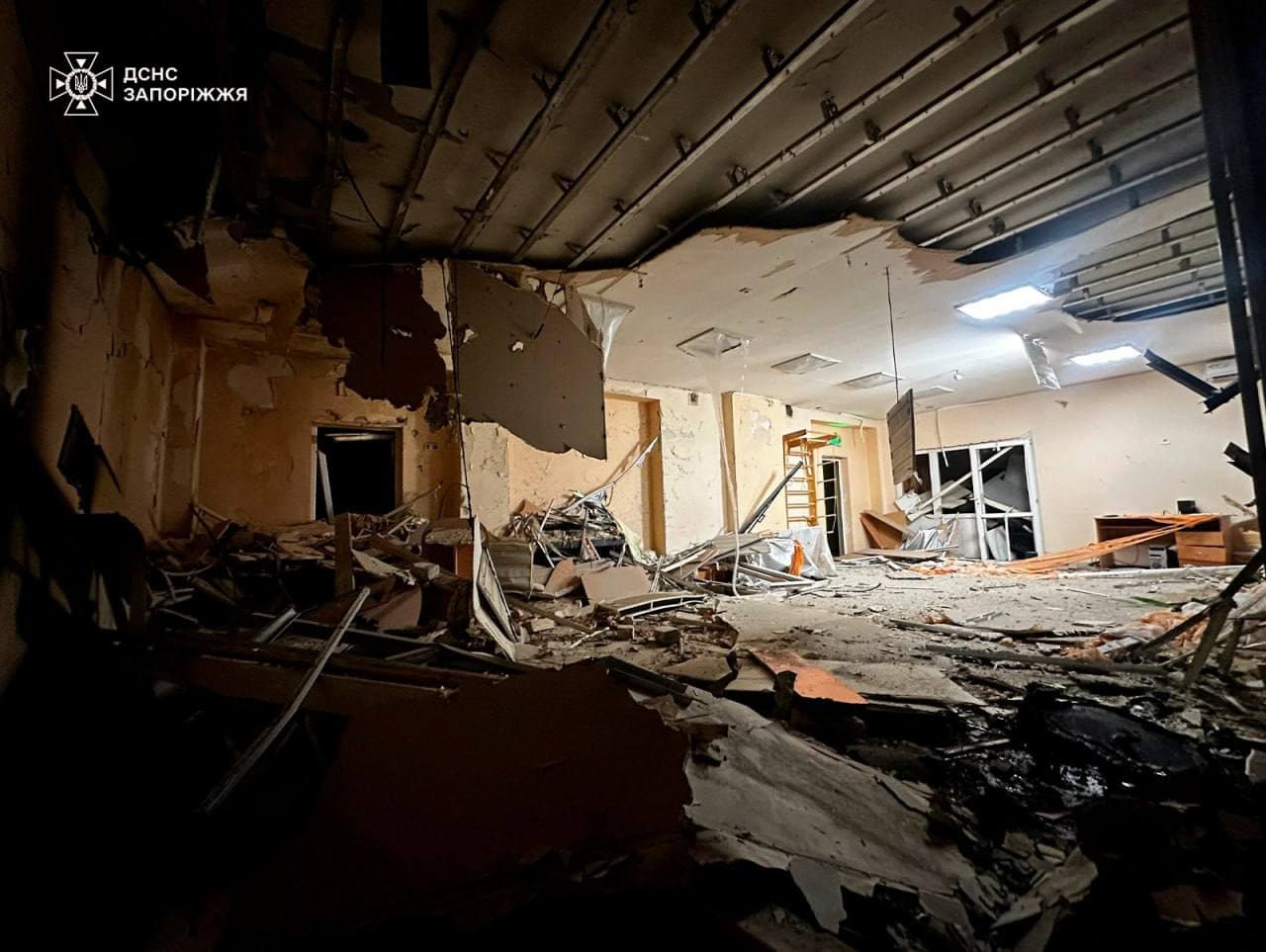
Aftermath of the Russian drone strike on Zaporizhzhia. (State Emergency Services / Telegram)
Poland’s Air Force scrambled fighter jets with Dutch F-35 assistance to protect Polish airspace as Russian drones repeatedly violated borders during the assault. The scale demonstrates Russia’s industrial capacity to sustain massive aerial campaigns while simultaneously preparing ground offensives.
Ukrainian intelligence revealed that Russia can produce 2,700 Shahed-type drones monthly, plus significant numbers of decoy variants designed to overwhelm air defenses. This production capacity enables massive aerial campaigns while maintaining stockpiles for sustained operations.
Intelligence Operations and Domestic Production Surge
Ukrainian authorities detained fugitive lawmaker Fedir Khrystenko, a former member of the banned pro-Russian Opposition Platform — For Life party, who is wanted for treason. The Security Service identified Khrystenko as a “top agent” responsible for “strengthening Russian influence” over the National Anti-Corruption Bureau, having reportedly left Ukraine 10 days before the February 24, 2022 invasion.
The detention occurs amid growing tensions between the SBU and NABU, with agencies exchanging accusations and launching investigations targeting each other’s officials. Sources suggest Khrystenko was “simply handed over” to the SBU from the UAE based on a high-level political agreement rather than formal extradition.

A Ukrainian lawmaker, identified by the Kyiv Independent’s source as Fedir Khrystenko, in detention in Ukraine. Photo published. (Prosecutor General’s Office)
President Zelensky announced that nearly 60% of weapons used on the front line are now produced in Ukraine, representing a dramatic increase in domestic defense capabilities. Ukrainian defense company Fire Point announced development of two new ballistic missiles alongside air defense systems, following the recent serial production launch of its Flamingo cruise missile.
Ukraine’s 2025 budget allocated 55 billion hryvnias ($1.3 billion) to defense manufacturing, enabling significant expansion of production capabilities. Ukrainian military intelligence reported that nearly 700,000 Russian service members are currently deployed in Ukraine, with the majority concentrated in Donetsk Oblast.
Rescue Operations and Border Tensions
Ukrainian Navy Commander Oleksii Neizhpapa announced the successful evacuation of four servicemen who had been hiding in a Russian-occupied hospital for more than three years. The Angels special forces unit rescued a marine, three National Guard servicemen, and a medical worker who had helped conceal them from Russian security services.
The complex multi-stage operation overcame intense Russian filtration measures in occupied territory. The rescued soldiers had been protected by sympathetic doctors who helped them avoid detection. The Angels unit has now rescued 88 people total, demonstrating the effectiveness of Ukrainian special operations capabilities behind enemy lines.
Polish protesters temporarily blocked truck traffic at the Medyka-Shehyni border checkpoint with Ukraine for six hours, citing low grain prices and EU trade agreements. The protest stranded 681 trucks attempting to enter Poland, highlighting persistent economic tensions between the allies despite broader cooperation.
Lithuanian Interior Minister Vladislav Kondratovic announced new procedures for activating sirens when potentially dangerous drones enter Lithuanian airspace, following July incidents when two Russian Gerbera drones crashed in the Baltic country. The measures reflect growing security concerns among NATO members bordering Russia.
Limited Battlefield Gains Amid Major Preparations
Despite the massive military buildup, Russian forces achieved only limited territorial gains on September 6, suggesting current operations remain preparatory for larger offensives. Geolocated footage confirmed Russian advances north of Myrolyubivka northeast of Pokrovsk and in northwestern Udachne southwest of Pokrovsk.
Russian forces also reached the east bank of the Netryus River in southern Shandryholove near Lyman, positioning themselves to force Ukrainian withdrawals. Ukrainian forces achieved a marginal advance in western Zarichne northeast of Lyman, while Ukrainian military observer Kostyantyn Mashovets reported successful Ukrainian counterattacks in the Dobropillya tactical area.
The limited nature of current advances contrasts sharply with the scale of Russian preparations, suggesting major operations remain imminent rather than ongoing. Russian forces appear to be positioning for coordinated breakthrough attempts across multiple axes once preparations are complete.
Looking Ahead: The Approaching Storm
The massive Russian troop concentration in western Donetsk Oblast, combined with sophisticated tactical preparations and the largest drone assault of the war, suggests that major offensive operations are imminent. Russia’s accumulation of over 100,000 troops near Pokrovsk represents the most significant concentration since the war’s opening phases, indicating Moscow’s commitment to achieving decisive breakthrough results.
The simultaneous diplomatic maneuvering, with Putin’s contradictory signals about meeting Zelensky, appears designed to create confusion while Russian forces complete military preparations. Ukrainian defensive preparations, including 60% domestic weapons production and successful special operations capabilities, demonstrate growing resilience, but the scale of Russian preparations presents unprecedented challenges.
The approaching confrontation will likely determine whether Russia can achieve the “decisive breakthrough” it seeks or whether Ukrainian defensive capabilities can withstand the largest military challenge since the war began, with implications extending far beyond territorial control to fundamental questions about the international order and Western security guarantees.