
How a Sleepless Night in Poland Changed Everything – The Day Europe Woke Up to a New Kind of War
The Dawn of a New Reality – September 10, 2025
At 6:45 AM Warsaw time, Polish air defenses shot down the last Russian drone over their territory. The sun was rising on a Europe that had fundamentally changed overnight. For the first time since World War II, NATO forces had opened fire on Russian military assets—not in some distant theater, but in the skies above a member nation’s homeland. As Polish Prime Minister Donald Tusk would tell his parliament hours later, “The situation brings us the closest we have been to open conflict since World War II.” By day’s end, Poland had invoked Article 4 of the NATO Treaty, Russia was denying everything, and Europe had pledged €6 billion for an unprecedented drone war that was now quite literally hitting home.
The Debris Fields Tell Their Story
Across the Polish countryside, farmers and police officers spent September 10 picking through twisted metal and electronics scattered in fields from the Baltic coast to the Czech border. In the village of Czosnówka, 60 kilometers from Ukraine, officers cordoned off a crash site at 5:40 AM. Near Łódź, 260 kilometers from the nearest fighting, locals stared at drone fragments that had somehow traveled deeper into NATO territory than anyone thought possible.
The mathematics of the violation were staggering. Nineteen separate drone incursions in a single night—more than triple the total number of projectiles that had fallen on Polish soil during the entire war. Polish officials confirmed their forces, working alongside Dutch F-35s and Italian surveillance planes, had successfully intercepted at least three, possibly four, of the intruders. But sixteen had gotten through, crashing or being shot down across three provinces in what amounted to the largest foreign military operation on Polish soil since 1939.
In Wyryki village, near the Ukrainian border, 73-year-old Anna Kowalczyk surveyed the damage to her roof where a drone had struck during the night. “I thought it was thunder,” she told local reporters. “Then I saw the hole in my roof and the metal pieces in my garden. My neighbor said it was Russian. I asked him, ‘Russian what?’ He said, ‘Russian war, Anna. The war is here now.'”
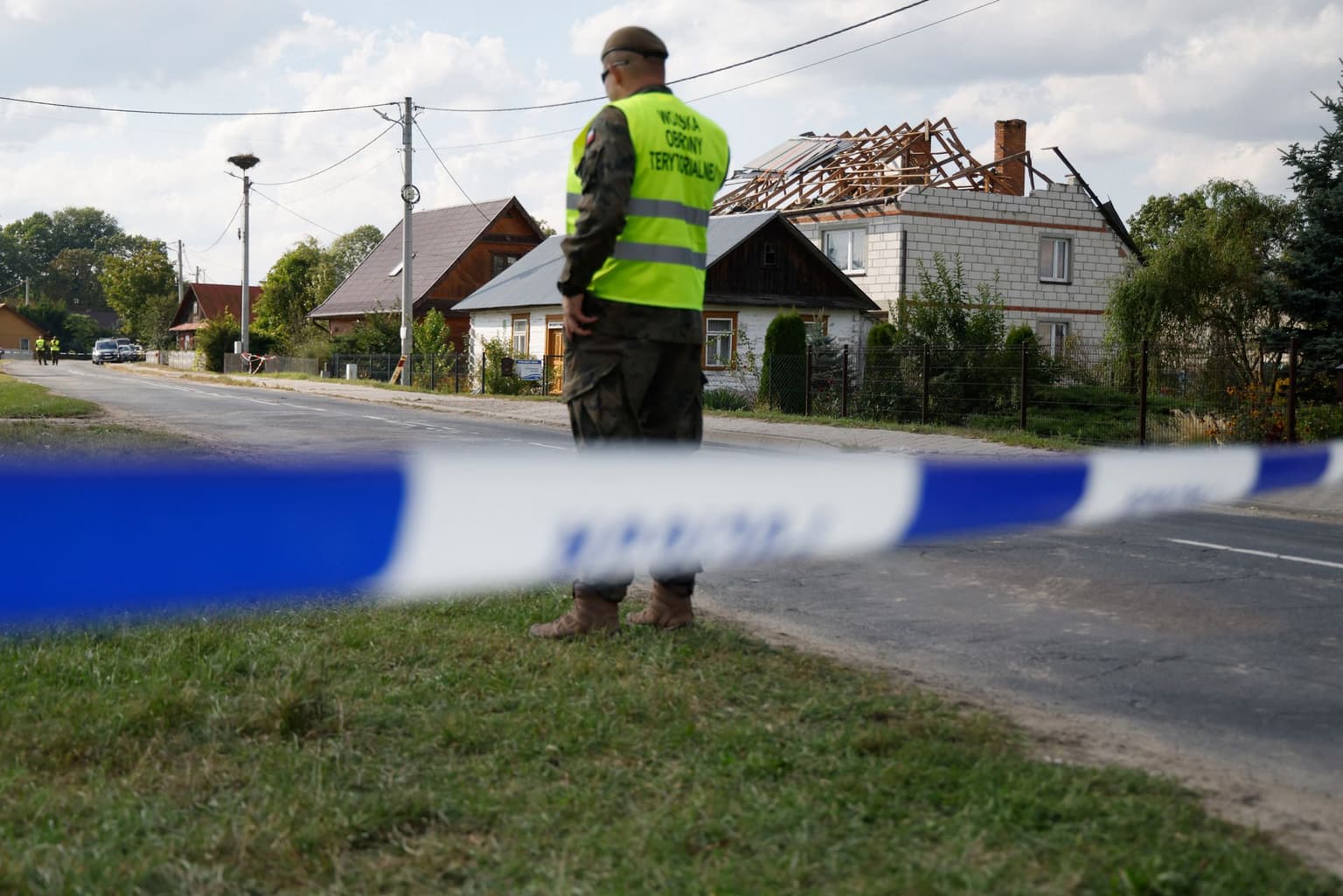
Police and army inspect damage to a house destroyed by debris from a shot down Russian drone in the village of Wyryki-Wola, eastern Poland. (Wojtek Radawanski/AFP via Getty Images)
Moscow’s Midnight Calculations
The attack had been no accident of war. Intelligence analysts poring over flight patterns on September 10 concluded that many drones had entered Polish airspace from Belarus—not Ukraine—suggesting coordination between Moscow and Minsk despite frantic denials from both capitals. Even more telling, several drones appeared to have been programmed to fly toward Rzeszów-Jasionka Airport, the sprawling facility in southeastern Poland that serves as NATO’s primary pipeline for weapons flowing to Ukraine.
Ukrainian electronic warfare expert Serhiy Beskrestnov made a chilling discovery among the wreckage: at least some of the drones were Gerbera decoy models, specifically designed not to destroy targets but to overwhelm air defenses. Worse, he had documented Russian drones carrying Polish SIM cards in recent months—evidence that Moscow had been preparing this operation since summer, methodically testing the routes their metal messengers would follow into the heart of Europe.
“This wasn’t a mistake or electronic warfare interference,” German Defense Minister Boris Pistorius told the Bundestag. “There is absolutely no reason to believe that this was a course correction error or anything of the sort. Putin is probing. He’s testing how far he can push.”
When Diplomats Become War Planners
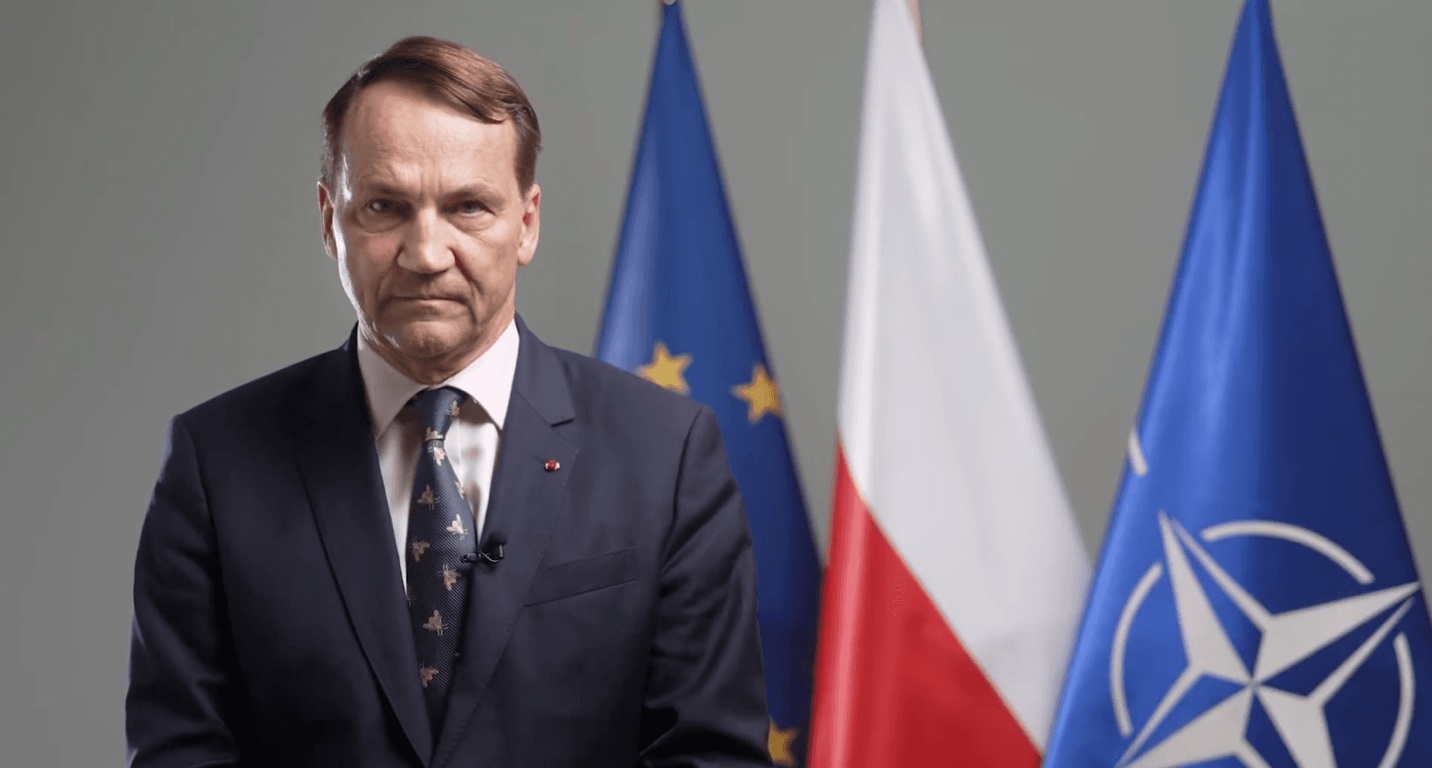
Polish Foreign Minister Radoslaw Sikorski appears in a video. (Radoslaw Sikorski/X)
The morning of September 10 found Polish Prime Minister Donald Tusk facing a decision no NATO leader had confronted since the alliance’s founding: how to respond when Russia deliberately attacks your territory without quite starting World War III. After emergency consultations with President Karol Nawrocki, Tusk made the call that would define the day.
Standing before the Polish parliament, Tusk announced that Warsaw was formally invoking Article 4 of the NATO Treaty—the provision that allows member states to demand alliance consultations when they feel threatened. It was only the seventh time in NATO’s 76-year history that any nation had pulled this particular diplomatic fire alarm, and the first time anyone had done so after actually shooting down Russian aircraft.
“Allied consultations have now taken the form of a formal request to activate Article 4 of the North Atlantic Treaty,” Tusk declared. “We will expect significantly greater support during the consultations. This is a confrontation that Russia has declared against the free world.”
The words carried weight beyond their diplomatic language. Unlike Article 5, which triggers automatic collective defense, Article 4 creates no obligations—only the requirement to talk. But those talks would now take place in NATO headquarters while Polish and Dutch pilots were cleaning gunpowder residue from aircraft that had just engaged Russian forces in active combat.
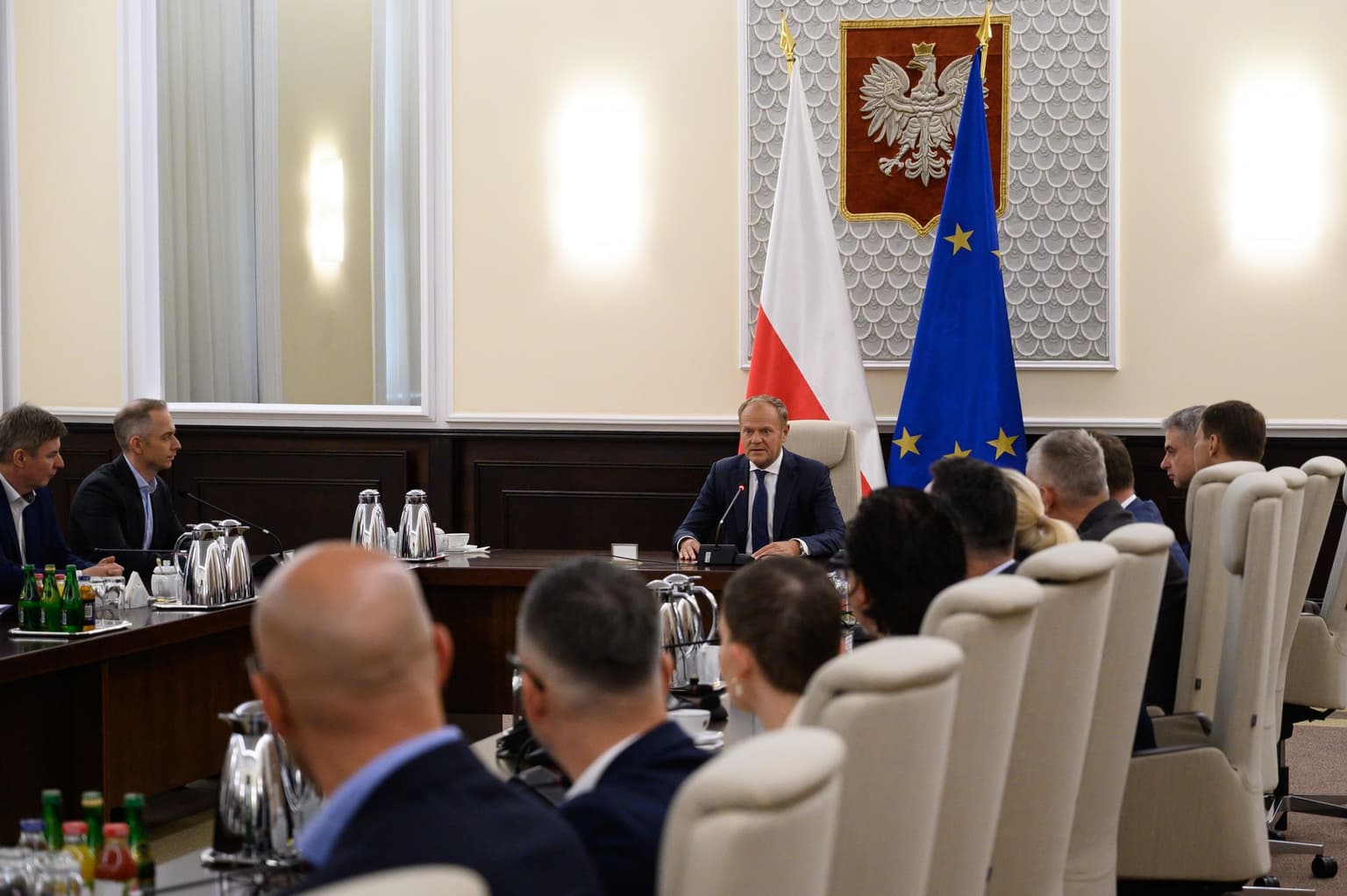
General Wieslaw Kukula, chief of the General Staff of the Polish Armed Forces, arrives for an extraordinary government cabinet meeting at the Chancellery of the Prime Minister, following violations of Polish airspace during a Russian attack on Ukraine in Warsaw, Poland. (Aleksander Kalka/NurPhoto via Getty Images)
The Kremlin’s Theater of Denial
As Polish officials counted drone fragments, Russia’s diplomatic machine cranked into overdrive with a performance that would have impressed Soviet propagandists. The Defense Ministry issued a statement so brazen it bordered on the absurd: Russian drones, they claimed, had a maximum range of 700 kilometers and therefore could not possibly have reached Polish territory. This ignored the inconvenient fact that the Shahed/Geran drones Moscow had been using against Ukraine for months could travel 2,000 kilometers—enough to reach virtually any European capital.
Andrei Ordash, Russia’s charge d’affaires in Warsaw, delivered his lines with practiced indignation after being summoned to the Polish Foreign Ministry. “No evidence has been presented that these drones are of Russian origin,” he declared to Russian journalists, apparently unaware that Polish investigators were simultaneously examining Russian-manufactured electronics scattered across his host country’s farmland.
In Moscow, Kremlin spokesman Dmitry Peskov perfected the art of saying nothing while saying everything: “EU and NATO leaders accuse Russia of provocation on a daily basis, most often without even attempting to present any arguments.” It was classic Putin-era doublespeak—deny the undeniable while suggesting the accusers were unreasonable for making accusations about things that definitely didn’t happen but would be justified if they had.
Belarus offered its own creative interpretation. First Deputy Defense Minister Pavel Muraveiko spun a tale of helpful cooperation, claiming Belarusian forces had tracked “lost” drones affected by electronic warfare and generously shared information with Polish and Lithuanian authorities. The story carefully omitted that many of the drones had launched from Belarusian territory in the first place.
Europe Finds Its Voice
While Moscow crafted its denials, European leaders responded with a unity that surprised even seasoned diplomats. French President Emmanuel Macron called the incursion “simply unacceptable.” EU foreign policy chief Kaja Kallas labeled it “the most serious European airspace violation by Russia since the war began.” European Commission President Ursula von der Leyen declared it “a reckless and unprecedented violation of Poland and Europe’s airspace.”
But von der Leyen did more than offer words. In her State of the Union address hours after the attack, she announced that Europe would provide €6 billion from interest earned on frozen Russian assets to support Ukrainian drone production. The message was unmistakable: if Russia wanted to wage drone warfare against Europe, Europe would ensure Ukraine could wage it right back.
“Before the war, Ukraine had no drones,” von der Leyen told the European Parliament. “Today, Ukrainian drones are responsible for over 23% of Russian equipment losses.” The funding would help Ukraine scale up production of the very weapons that had been striking deep into Russian territory, hitting oil refineries and military bases hundreds of kilometers from the front lines.
The timing was deliberate political theater. As Polish authorities counted Russian drone fragments, Europe’s most powerful leader was promising to flood Ukraine with the means to send more fragments raining down on Russian soil.
America’s Mixed Signals
While Europe rallied around Poland, the response from Washington offered a study in strategic confusion. President Trump’s only public comment came via Truth Social: “What’s with Russia violating Poland’s airspace with drones? Here we go!” The exclamation point seemed oddly casual for what some congressional leaders were calling an act of war.
More troubling was the message coming from Vice President JD Vance, who chose September 10 to tell One America News Network that President Trump “doesn’t see any reason why we should economically isolate Russia except for the continuation of the conflict.” Vance emphasized Russia’s resource wealth—”a lot of oil,” “a lot of gas,” “a lot of mineral wealth”—suggesting the administration viewed sanctions as temporary inconveniences rather than strategic tools.
The comments landed like a diplomatic bomb in European capitals already nervous about American commitment. Here was the vice president essentially promising Moscow that economic isolation would end the moment fighting stopped, even as Russian drones were being scraped off Polish soil. The timing suggested either remarkable diplomatic tone-deafness or a deliberate signal that America’s patience with confronting Russia had limits.
The Shadow of Belarus
As diplomats parsed statements and investigators analyzed wreckage, intelligence analysts were studying satellite images that revealed an even more disturbing picture. Throughout 2024 and into 2025, Belarus had been rapidly expanding military infrastructure near the Ukrainian border, including facilities that appeared designed to host Russian Oreshnik intermediate-range ballistic missiles.
One site south of Minsk was being rebuilt on the grounds of a former Soviet missile base. A second complex near Homel sat just 30 kilometers from Ukraine—close enough that missiles launched from there could strike Kyiv in minutes rather than the hours it would take from Russian territory. The construction timeline perfectly matched Belarus’s deepening military cooperation with Moscow, which had accelerated dramatically since allowing Russian forces to use Belarusian territory for the initial invasion.
The drone attack took on new significance in this context. With the massive Zapad-2025 Russian-Belarusian military exercises scheduled to begin in just two days, the incursion looked less like a tactical probe and more like a strategic test. How would NATO respond when Russia expanded the war’s geographic scope? How far could Moscow push before triggering a military response that could spiral into the broader European conflict Putin seemed increasingly willing to risk?
The Bloody Arithmetic of War
While diplomats debated and investigators collected evidence, Ukrainian Commander-in-Chief Oleksandr Syrskyi released numbers that put the drone crisis in brutal perspective. Russian military losses in 2025 had reached 299,210 troops—nearly 300,000 dead and wounded in nine months of fighting. The figure represented roughly 30% of Russia’s total losses since the invasion began, meaning the killing was accelerating even as Putin’s forces made minimal territorial gains.
The human cost extended beyond military casualties. On September 9, Russian forces had struck the village of Yarova in Donetsk Oblast while residents waited in line to collect pensions, killing 25 civilians and wounding 18 more. Across Ukraine, 29 civilians died and 30 were injured in Russian attacks over the 24-hour period, with fifteen regions coming under fire.
Ukrainian President Volodymyr Zelensky tied the violence directly to the Polish incursion: “Moscow always tests the limits of what is possible and, if it does not encounter a strong reaction, remains at a new level of escalation.” The drone attack on Poland, he suggested, was Putin’s way of expanding the war’s boundaries while testing Western resolve.
The Front Lines Grind On
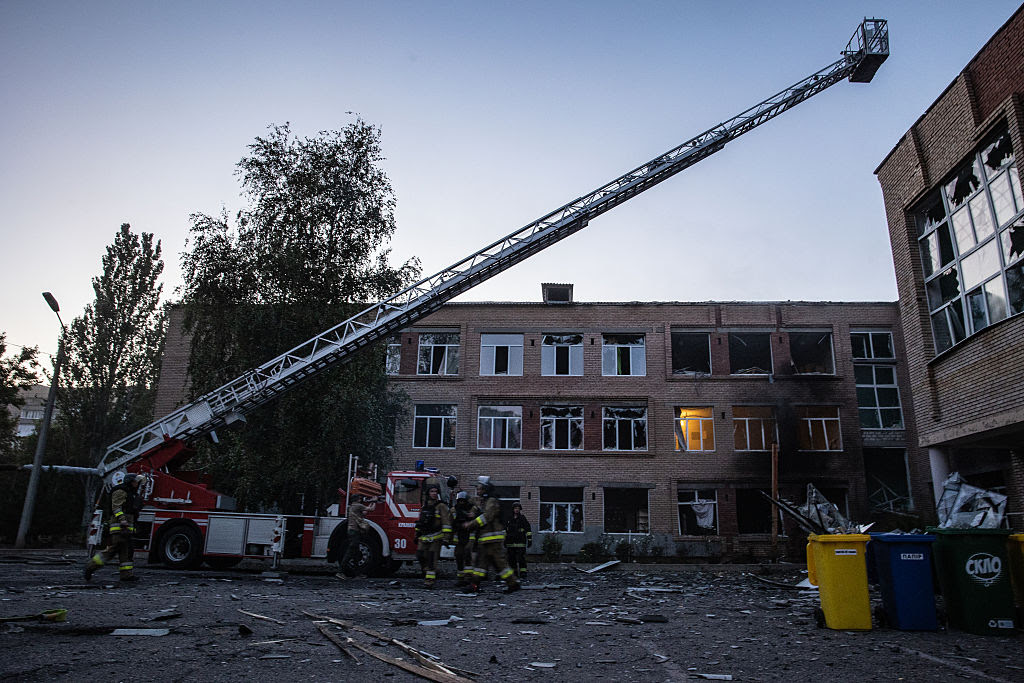
Firefighters stand near aerial ladder damaged as result of double tap strike in the yard of damaged school after a Russian drone attack in Kramatorsk. (Roman Chop/Global Images Ukraine via Getty Images)
Even as diplomatic crisis consumed headlines, the war’s eastern front continued its deadly rhythm. Russian forces advanced in northern Zarichne near Lyman, raising flags in footage that confirmed their control of strategic positions along key supply routes. In the Dobropillya tactical area, geolocated videos showed Russian troops moving through eastern Nove Shakhove, marking another incremental gain purchased with enormous casualties.
Ukrainian commanders reported that Russian tactics were evolving, abandoning large mechanized assaults in favor of smaller infantry groups that could exploit improved weather conditions and reduced visibility from Ukrainian drone surveillance. In one troubling development near Lyman, a Ukrainian regiment commander accused Russian forces of entering the settlement disguised as civilians—a potential war crime that suggested Moscow’s rules of engagement were continuing to deteriorate.
Despite tactical adjustments, the broader picture remained one of grinding attrition. Russian forces continued offensive operations across multiple fronts—Kupyansk, Lyman, Pokrovsk, Kherson—while Ukrainian forces maintained defensive positions and struck back with long-range attacks. Ukrainian drones hit Russia’s Deep Space Communications Center in occupied Crimea, demonstrating that the war’s geographic scope was expanding in both directions.
Echoes of EuroMaidan
The day’s events gained historical resonance as Ukraine announced criminal charges against current Russian FSB Director Alexander Bortnikov and Internal Affairs Minister Vladimir Kolokoltsev for their roles in the 2014 EuroMaidan crackdown. According to Ukraine’s State Bureau of Investigation, Russian officials had personally visited Kyiv’s Independence Square during the protests, assessed the situation firsthand, and provided tactical equipment including gas grenades and riot control gear to suppress Ukrainian demonstrators.
The charges highlighted the continuity between Putin’s 2014 intervention in Ukraine and his current full-scale invasion. The same officials now overseeing Russia’s war against Ukraine had previously helped plan the violent suppression of Ukrainian protesters seeking closer ties with Europe. It was a reminder that the current conflict’s roots stretched back over a decade to the moment Ukrainians first chose Europe over Russia.
Former CIA Director William Burns, speaking at a Carnegie Endowment event, revealed that American intelligence had possessed “exquisite intelligence” about Putin’s invasion plans as early as late 2021. Burns described Putin as a “combustible combination of grievance and ambition and insecurity” whose decision-making circle had grown increasingly narrow, filled with advisors who either shared his hardline views or had learned it was not “career-enhancing to challenge his judgments.”
Testing the Alliance’s Future
As September 10 drew to a close, the day’s events crystallized around a single uncomfortable truth: Russia had successfully expanded the war’s geographic scope without triggering the massive Western response that might have deterred future escalation. The drone attack on Poland represented more than a tactical provocation—it was a strategic test of whether NATO’s collective defense promises meant anything when Putin chose to test them gradually rather than through a Pearl Harbor-style surprise attack.
The successful NATO response demonstrated impressive technical capabilities and alliance coordination. Polish F-16s working alongside Dutch F-35s and Italian surveillance aircraft had proved that NATO could defend alliance airspace when challenged. But the broader strategic picture was more ambiguous. Russian drones had penetrated hundreds of kilometers into NATO territory, crashed in multiple member states, and prompted Article 4 consultations—yet Moscow faced no immediate consequences beyond diplomatic protests and frozen assets that were already frozen.
Reports that U.S. intelligence agencies had suspended cooperation with European partners on countering Russian hybrid warfare operations since Trump took office added another layer of uncertainty. Combined with Vance’s comments about ending Russian economic isolation, the signals from Washington suggested that America’s commitment to confronting Russian aggression had clear limits—limits that Putin was obviously calculating as he planned his next moves.
The Morning After the Morning After
As Polish farmers continued finding drone fragments in their fields and NATO ambassadors prepared for emergency consultations, September 10 would be remembered as the day Europe woke up to a new reality. The war in Ukraine was no longer confined to Ukraine. Russian military assets were now falling from European skies, not as accidents of war but as deliberate acts of escalation designed to test Western resolve.
The successful defense had demonstrated NATO’s capabilities while highlighting its vulnerabilities. Alliance forces could shoot down Russian drones—but they couldn’t prevent Russia from launching them in the first place. The episode raised fundamental questions about deterrence in an era when adversaries could gradually expand conflicts through hybrid warfare techniques that fell below traditional thresholds for military response.
Most critically, the crisis revealed the dangerous gap between European determination to resist Russian aggression and American ambivalence about the costs of prolonged confrontation. As Belarus completed preparations for massive military exercises and Russia continued grinding forward in eastern Ukraine despite horrific casualties, the events of September 10 marked not the resolution of a crisis but the beginning of a new and more dangerous phase of the war.
Whether September 10 would ultimately be remembered as the day NATO successfully defended Europe, or the day Russia successfully called NATO’s bluff remained to be seen. What was certain was that the morning after had arrived, and nothing would be quite the same.