
How a Ukrainian strike on Russia’s oil lifeline and Moscow’s first attack on Alliance territory transformed September 12, 2025, into the most dangerous day since the invasion began
September 12: The Day Ukraine Struck Back
Picture this: at 3:47 AM on September 12, 2025, a Ukrainian drone operator somewhere near the front lines pressed a button that would send shockwaves through the Kremlin’s war machine. Nine hundred kilometers away in Russia’s Leningrad Oblast, explosions erupted at the Primorsk oil terminal—the beating heart of Putin’s energy empire. This devastating strike came just two days after Russian drones had violated NATO airspace for the first time since World War II, triggering the Alliance’s biggest military response since the Cold War.
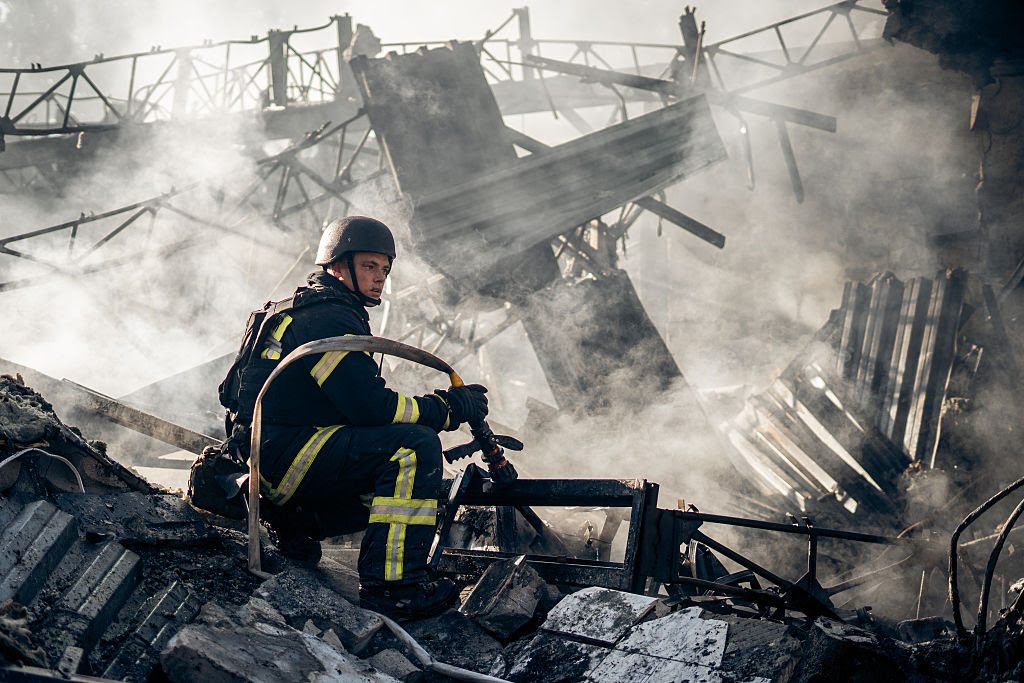
Firefighters work at the site of a Russian drone strike in Sumy, Ukraine. In the morning, Russia attacked the city with two drones. The strike destroyed a car repair shop. Rescuers pulled the body of a 65-year-old security guard from the rubble. (Yehor Kryvoruchko / Kordon.Media / Global Images Ukraine via Getty Images)
This wasn’t just another day in a war that had already raged for over three years. September 12 marked the moment when Ukraine proved it could strike deep into Russia’s economic core while NATO finally launched its first major military response to Russian aggression against Alliance territory. By sunset, Ukrainian forces had achieved their most successful prisoner captures since 2024, American senators had introduced legislation targeting Russia’s child deportation campaign, and President Zelensky could claim complete victory over Russia’s northern offensive.
The shadow of escalation loomed larger than ever before, but for the first time in months, it was Moscow feeling the pressure.
The Billion-Dollar Gamble: Ukraine’s Deepest Strike
The mission began in darkness. Ukrainian Security Service drones, each roughly the size of a small motorcycle, lifted off from concealed positions and began their journey toward the Baltic Sea. Their destination: Primorsk, a sprawling industrial complex that processes more oil in a single day than many countries use in a month.
At exactly 4:23 AM local time, the first drone found its target. Video footage would later show massive fireballs erupting from storage tanks as 60 million tons worth of annual oil processing capacity went up in smoke. A second drone struck the main pumping station. A third hit a loaded tanker ship. Within minutes, the entire facility was in flames.
“This is one of the most significant strategic strikes Ukraine has conducted,” a Security Service source would later tell reporters, barely containing his satisfaction. The mathematics were staggering: each day of shutdown would cost Russia $41 million in lost revenue from a facility that generates $15 billion annually for Putin’s war chest.
But the Ukrainians weren’t finished. Three additional strikes hit oil pumping stations feeding the nearby Ust-Luga terminal, creating a cascade of chaos across Russia’s western energy export network. For the first time since the invasion began, Ukraine had demonstrated the ability to reach out and touch Russia’s most vital economic infrastructure, nearly 1,000 kilometers from the front lines.
In Moscow, the response was immediate and furious. Russian officials claimed their air defenses had intercepted 221 Ukrainian drones—a number so large it seemed designed more to save face than reflect reality. The strikes were so successful that residents of Leningrad Oblast reported it was the most massive attack on their region since the war began.
Putin’s oil empire, the foundation of his war machine, was no longer untouchable.
Diplomatic Aftermath: Poland Demands Answers While Rejecting Russian Denials
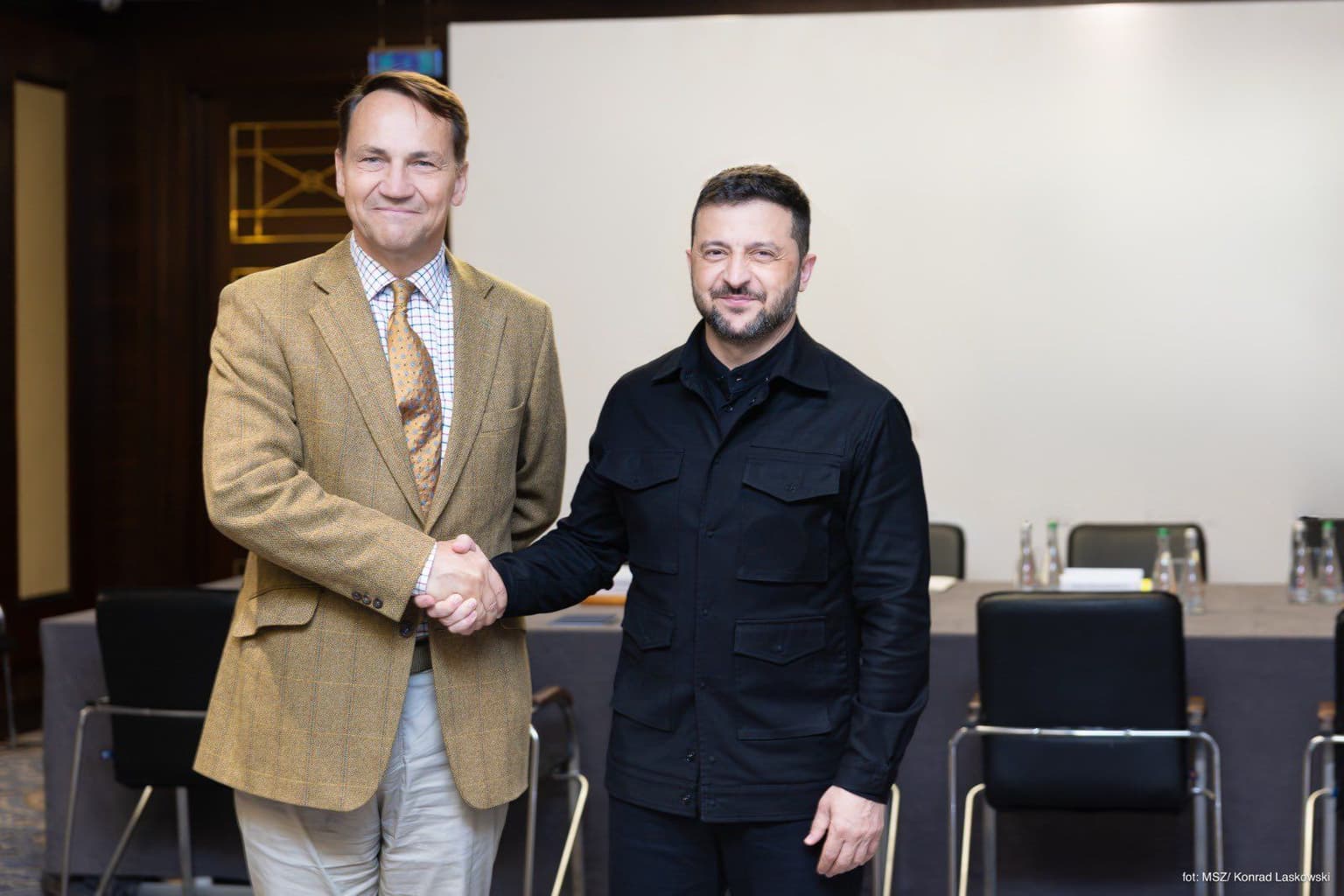
Polish Foreign Minister Radoslaw Sikorski met with President Volodymyr Zelensky in Kyiv, Ukraine. (Radoslaw Sikorski/X)
Two days after Russian drones violated Polish airspace, the diplomatic fallout continued reverberating through NATO capitals. Polish Foreign Minister Radoslaw Sikorski, arriving in Kyiv on September 12 with the drone wreckage analysis fresh in his mind, delivered an uncompromising message: “Last night, Poland’s airspace was breached 19 times by drones manufactured in Russia. The assessment of Polish and NATO air forces is that they did not veer off course, but were deliberately targeted.”
At the United Nations Security Council on September 12, Polish officials displayed twisted metal and circuit boards recovered from the crash sites. Each piece bore Russian markings, definitively refuting Moscow’s denials of responsibility. Polish Secretary of State Marcin Bosacki held up photographs of the wreckage, pointing to Russian identification markings as he declared: “We know, and I repeat, we know that it was not a mistake.”
Slovenia’s UN Ambassador Samuel Zbogar pushed back against suggestions the violation was accidental: “It is hard to imagine that so many drones flew so deep over Polish territory, unintentionally.” Russian Ambassador Vassily Nebenzia insisted Moscow had no intention of striking Polish territory, claiming the drones’ maximum range made it “physically impossible” for them to reach Poland—an assertion immediately contradicted by the physical evidence displayed before the Security Council.
Despite the tensions, Poland indicated it would not sever diplomatic relations with Russia. During his Kyiv meetings, Sikorski explained that Poland saw no reason for complete diplomatic rupture, noting existing limitations on Russian diplomatic activities while calling for reduced Russian mission sizes across Europe.
NATO’s Answer: Operation Eastern Sentry
Inside NATO headquarters in Brussels, emergency meetings lasted through the night. By the afternoon of September 12, Secretary General Mark Rutte stood before the world’s media with an announcement that would reshape European security: “Eastern Sentry will add flexibility and strength to our posture and make clear that, as a defensive alliance, we are always ready to defend.”
Operation Eastern Sentry represented NATO’s most significant military response since the invasion began. Danish F-16s would patrol Polish skies alongside French Rafales and German Eurofighters. British naval assets would reinforce the Baltic Sea. For the first time since the Cold War, NATO was actively defending its territory against Russian attack.
Supreme Allied Commander Europe General Alexus Grynkewich made the stakes clear: “This situation transcends the borders of one nation. What affects one Ally affects us all.” The operation would integrate air and ground-based defenses, rapidly deploy new counter-drone technologies, and send an unmistakable message to Moscow.
Yet the incident had exposed a troubling reality. NATO’s sophisticated air defense network, designed to counter advanced fighters and ballistic missiles, struggled against swarms of cheap drones. The Alliance now faced the same cost-effectiveness crisis that Ukraine had learned to solve through innovative interceptor drones—knowledge that would soon become invaluable to NATO members.
At the UN Security Council, U.S. Ambassador Dorothy Shea delivered a message directly to Moscow: “The United States stands by our NATO allies in the face of these alarming airspace violations.” Forty-three nations signed a joint statement condemning Russian aggression, but everyone understood that words alone wouldn’t stop the next incursion.
Trump’s Dangerous Dance: Defending Nobody While Threatening Everything
President Trump’s response to the Polish crisis revealed the contradictions at the heart of American foreign policy. In a Fox News interview that would be dissected for days, he declared “I’m not gonna defend anybody” when asked about the Russian drone attack—before immediately pivoting to threats of economic warfare against Moscow.
“My patience with Putin is running out fast,” Trump continued, outlining potential retaliation including “hitting hard with sanctions to banks and having to do with oil and tariffs.” Yet for all his bluster, Trump’s administration had imposed virtually no new sanctions since taking office eight months earlier, limiting action to secondary tariffs on Indian oil purchases.
Trump’s frustration with the diplomatic deadlock was palpable: “It’s amazing. When Putin wants to do it, Zelensky didn’t. When Zelensky wanted to do it, Putin didn’t. Now Zelensky wants to do it and Putin is a question mark.” The statement revealed Trump’s fundamental misunderstanding of the conflict’s dynamics. Zelensky has consistently sought peace since the invasion began, but never at the price of surrendering sovereign territory or rewarding Russia’s genocidal aggression. Putin, by contrast, has only offered “peace” on terms that would amount to Ukraine’s unconditional capitulation—hardly peace at all, but conquest dressed in diplomatic language. The president who had promised to end the war in 24 hours was discovering that peace requires genuine compromise, not capitulation, and Putin had shown zero willingness to negotiate anything less than total victory.
Polish Prime Minister Donald Tusk’s response was swift and cutting: “We would also wish that the drone attack on Poland was a mistake. But it wasn’t. And we know it.” The rebuke highlighted growing tensions within the Alliance about America’s commitment to collective defense.
Behind closed doors, European allies worried that Trump’s mixed signals were emboldening Putin to test NATO’s resolve further. The president who claimed to want peace was inadvertently encouraging the very escalation he sought to avoid.
The Gathering Storm: Military Exercises on NATO’s Border
As if the airspace violation wasn’t provocative enough, September 12 marked the beginning of Russia and Belarus’s joint Zapad-2025 military exercises—30,000 troops conducting mock warfare uncomfortably close to NATO borders. The timing was no coincidence.
Russian tank divisions, motorized rifle units, and airborne forces that had been bleeding in Ukraine were suddenly practicing coordinated operations near Poland, Lithuania, and Latvia. The 98th Airborne Division, previously fighting house-to-house in Bakhmut, was now rehearsing attacks just kilometers from NATO territory.
Poland’s response was immediate and total: complete closure of its border with Belarus. Lithuanian Interior Minister Vladislav Kondratovic issued a stark warning that his country was prepared to slam shut its borders “at any time, if there is any provocation.” The message was clear: NATO’s eastern members would not wait for permission to defend themselves.
The exercises represented a dramatic scaling back from Zapad-2021’s 200,000 participants, reflecting Russia’s desperate need for troops in Ukraine. Yet even this reduced force served as a menacing reminder that Putin’s war machine, though bloodied, remained capable of threatening multiple fronts simultaneously.
Belarusian officials, perhaps sensing they had pushed NATO too far, began walking back earlier nuclear threats. What had been planned as saber-rattling about Oreshnik missiles and nuclear strikes became defensive rhetoric about “purely defensive” exercises moved “deep inside” Belarus. Even Putin’s most loyal ally was having second thoughts about escalation.
Diplomatic Deadlock: The Phantom Peace Process
Behind the military posturing and economic warfare, diplomacy remained frozen. Kremlin spokesperson Dmitry Peskov’s admission that peace talks were “on pause” came as no surprise to anyone following the conflict, but it crystallized the fundamental problem: Russia wanted surrender, not negotiation.
Three rounds of talks in Istanbul between May and July had produced prisoner exchanges but little else. Moscow’s demands remained unchanged: Ukraine must abandon its occupied territories, dismantle its military, accept Moscow’s veto power over its future leadership, and rely solely on Russian “security guarantees” rather than NATO protection. The terms weren’t negotiation—they were instructions for national suicide. No democratic nation could accept such conditions and continue to exist as a sovereign state.
The hollowness of Russian diplomatic overtures was exposed by their actions. Even as Peskov spoke of “peaceful dialogue,” Russian drones were violating NATO airspace and missiles were striking Ukrainian civilians. The contradiction wasn’t accidental—it was strategic.
President Zelensky captured the absurdity with characteristic Ukrainian humor during U.S. Special Envoy Keith Kellogg’s visit: “Every time you are here, General, we can sleep a little more. We would like you to travel to all Ukrainian cities.” The dark joke masked a grim reality: Russian forces avoided striking Kyiv only when high-profile Americans were present—a twisted form of diplomatic immunity.
Zelensky’s offer to provide Kellogg with Ukrainian citizenship and an apartment if it would stop Russian strikes highlighted the desperate search for any leverage against Moscow’s campaign of terror. When humor becomes a diplomatic tool, the situation has moved far beyond normal statecraft.
America’s Moral Awakening: Targeting Russia’s Child Trafficking Network
While diplomats struggled with ceasefires, American legislators focused on war crimes. Four senators—Lindsey Graham, Richard Blumenthal, Katie Britt, and Amy Klobuchar—introduced bipartisan legislation targeting Russia’s systematic deportation of Ukrainian children, a campaign so extensive it amounted to cultural genocide.
The numbers were staggering: at least 19,000 Ukrainian children forcibly removed from their homes, with Yale researchers estimating the true figure exceeded 35,000. This wasn’t the chaos of war—it was the methodical destruction of Ukrainian identity, one child at a time.
The senators’ solution was elegant in its simplicity: label Russia and Belarus as state sponsors of terrorism if they refused to return the children. The designation would carry severe economic and diplomatic consequences, creating meaningful pressure for the children’s release.
The legislation represented something remarkable in Washington’s polarized environment: bipartisan recognition that some actions transcend politics. Putin’s child deportation campaign was so fundamentally evil that it united senators who agreed on little else.
The International Criminal Court had already issued an arrest warrant for Putin over the deportations, but words on paper meant nothing without enforcement mechanisms. The American legislation provided those teeth—the threat of economic isolation so severe it could cripple Russia’s ability to function on the world stage.
European Unity: Winter Preparations and Strategic Innovation
Britain’s Foreign Secretary Yvette Cooper arrived in Kyiv carrying more than diplomatic pleasantries—she brought $193 million in aid specifically designed to help Ukraine survive another winter of Russian energy warfare. The package included $135 million for humanitarian support and $57 million for energy infrastructure protection, acknowledging the grim reality that Putin would continue targeting civilian power systems.
Cooper’s visit coincided with Polish Foreign Minister Sikorski’s arrival, creating an opportunity for unprecedented cooperation. The two NATO allies announced plans for Ukrainian specialists to train Polish forces in anti-drone systems on Polish territory—a transfer of hard-won battlefield knowledge that could prove invaluable as Russian drone attacks spread beyond Ukraine’s borders.
“Ukraine is ready to share its experience, assist with the training of Polish military personnel, and jointly build a defense system,” Zelensky declared. The statement marked a remarkable reversal: Ukraine, the nation seeking NATO membership, was now teaching Alliance members how to defend themselves.
Prince Harry’s unannounced arrival added an unexpected human dimension to the diplomatic carousel. His meeting with Ukrainian veterans at the National Museum of the History of Ukraine in World War II and announcement of new Invictus Games initiatives demonstrated that support for Ukraine extended beyond government channels to include the most recognizable faces in the world.
French, German, and Italian officials also descended on Kyiv, prompting Presidential Office head Andriy Yermak to describe them as the “coalition of the willing” shaping Europe’s new security architecture. The message was clear: even if America wavered, Europe would stand with Ukraine.
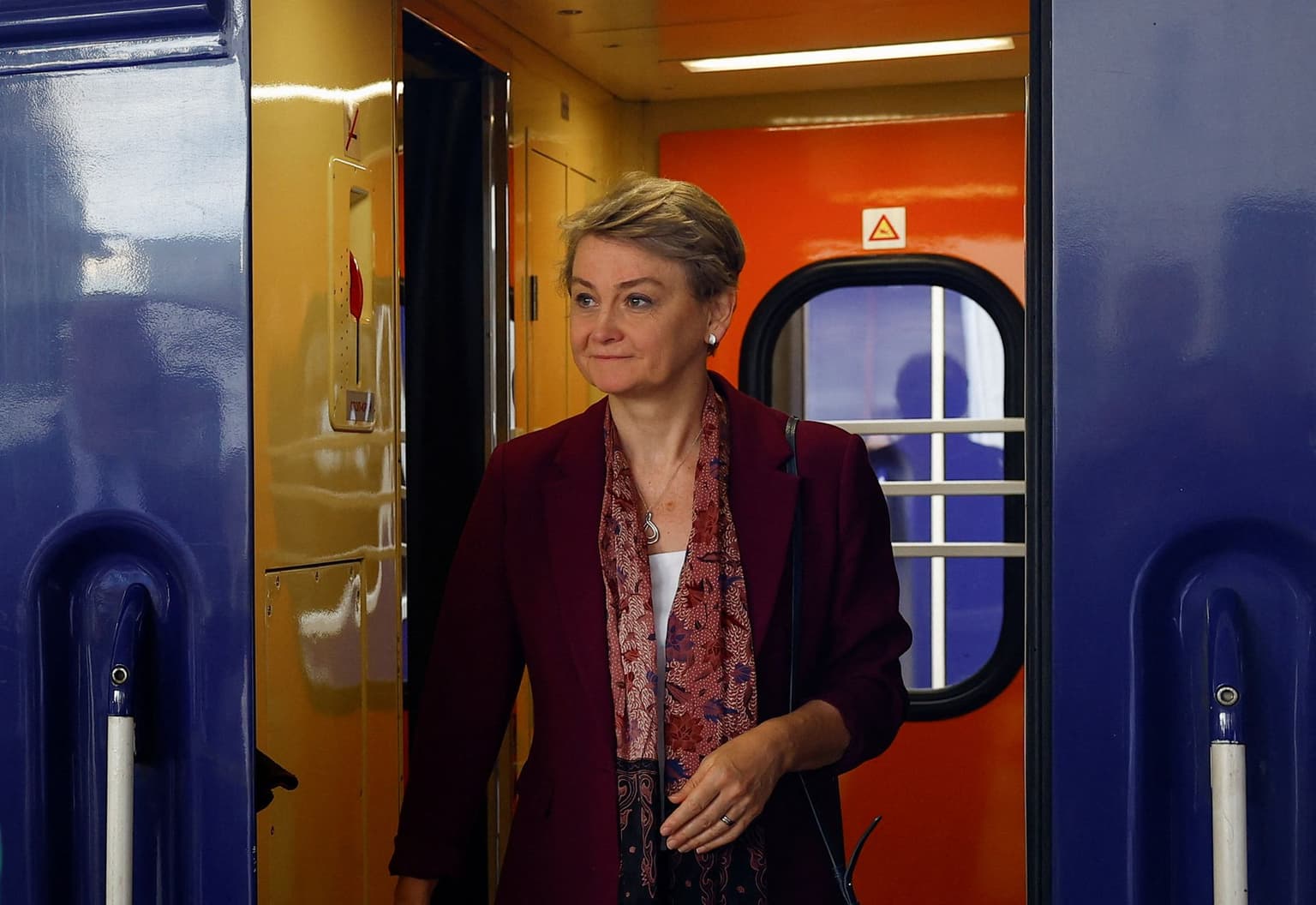
U.K. Foreign Secretary Yvette Cooper arrives at a railway station in Kyiv, Ukraine. (Valentyn Ogirenko/ Pool/Getty Images)
Global Sanctions Coordination: Economic Pressure Intensifies
The European Union’s decision to extend sanctions against over 2,500 Russian individuals and entities nearly collapsed due to Hungarian and Slovak resistance—a reminder that unity requires constant tending. Yet the extension maintained pressure on Putin’s inner circle, from the president himself to the oligarchs funding his war machine.
Japan and New Zealand coordinated their response, lowering oil price caps from $60 to $47.60 per barrel while targeting Russian cyber-warfare operations. The synchronized approach reflected growing international consensus about the need to strangle Russia’s war economy systematically.
Russia’s Central Bank responded with desperation disguised as confidence, lowering interest rates for the third time since June despite 8.2 percent annual inflation. The cuts represented a dangerous gamble—prioritizing short-term political stability over long-term economic survival.
Bank officials acknowledged that Russia’s economy remained “highly susceptible to pro-inflationary rises” with deteriorating foreign trade conditions. Translation: the sanctions were working, and Moscow was running out of ways to hide the damage.
Britain’s addition of 100 new sanctions targeting military suppliers and shadow fleet operators demonstrated the West’s evolving understanding of economic warfare. Rather than broad penalties that might harm civilians, these measures precisely targeted the networks keeping Putin’s war machine operational.
Victory in the North: Ukraine’s Sumy Triumph
Amid the diplomatic chaos and military tensions, Ukraine achieved something increasingly rare: unambiguous victory. President Zelensky’s announcement that Russia’s summer offensive in Sumy Oblast had been “completely thwarted” represented the kind of tactical success that had become precious in a war of grinding attrition.
“As of today, we can state that the Russian offensive operation on Sumy has been completely thwarted by our forces,” Zelensky declared, citing reports from Commander-in-Chief Oleksandr Syrskyi. Russian forces that had once threatened the regional capital now operated in four-man teams without armored vehicles, reduced to using unmanned ground vehicles for basic logistics.
The victory demonstrated Ukraine’s growing tactical sophistication. Rather than simply holding ground, Ukrainian forces had systematically degraded Russian offensive capabilities while liberating previously occupied territory. It was a masterclass in defensive operations that NATO military academies would study for years.
The success stood in stark contrast to continued Russian pressure around Pokrovsk in Donetsk Oblast, highlighting the localized nature of military victories in modern warfare. Yet for Ukrainian forces and civilians in Sumy Oblast, the triumph was total and deeply personal.
The Human Harvest: Ukraine’s Prisoner Bonanza
Ukrainian forces achieved something remarkable in August: their most successful prisoner capture operation since the 2024 Kursk offensive. At least 69 Russian soldiers fell into Ukrainian hands during fighting around Dobropillia, with some reports suggesting the total exceeded 100—numbers not seen since the war’s early days.
The captures revealed the human cost of Russia’s increasingly desperate tactics. Elite Ukrainian units including the 1st “Azov” Corps, 79th and 82nd Air Assault Brigades, and 92nd Assault Brigade had systematically surrounded Russian positions, trapping soldiers ordered to advance on foot in small groups and wait for reinforcements that never came.
The interrogations that followed painted a grim picture of Russian military life. Sergei Nesterenko from the 110th Motor Rifle Brigade explained he had joined the military due to unemployment, debts, and tax problems—a story repeated by dozens of captured soldiers. Another prisoner, a 49-year-old from southwestern Russia, admitted he had volunteered while drunk to escape $35,000 in debt.
Most disturbing were the three captured soldiers who identified themselves as GRU intelligence operatives—evidence that Russia was throwing even its most valuable personnel into hopeless infantry assaults. Many prisoners were Ukrainian citizens from occupied territories who had been forcibly conscripted, fighting against their own country under threat of death.
One Russian soldier’s statement captured the tragedy of it all: after his assault squad was destroyed by Ukrainian drones and artillery, he expressed regret about joining the invasion and apologized to his wife and mother-in-law living in central Ukraine—family members he hadn’t spoken to since 2014.
The Killing Fields: Counting the Uncountable
Russian independent media outlet Mediazona, working with the BBC’s Russian service, confirmed the identities of 130,150 Russian military personnel killed in Ukraine through September 11—an increase of 4,469 deaths since their last update. The verified casualties included 36,568 volunteers, 18,261 recruited prisoners, 14,797 mobilized troops, and 2,777 mercenaries.
These numbers, staggering as they were, represented only confirmed deaths from public sources. Ukraine’s General Staff estimated total Russian casualties exceeded one million, with Commander-in-Chief Syrskyi claiming Russia had lost nearly 300,000 troops in 2025 alone.
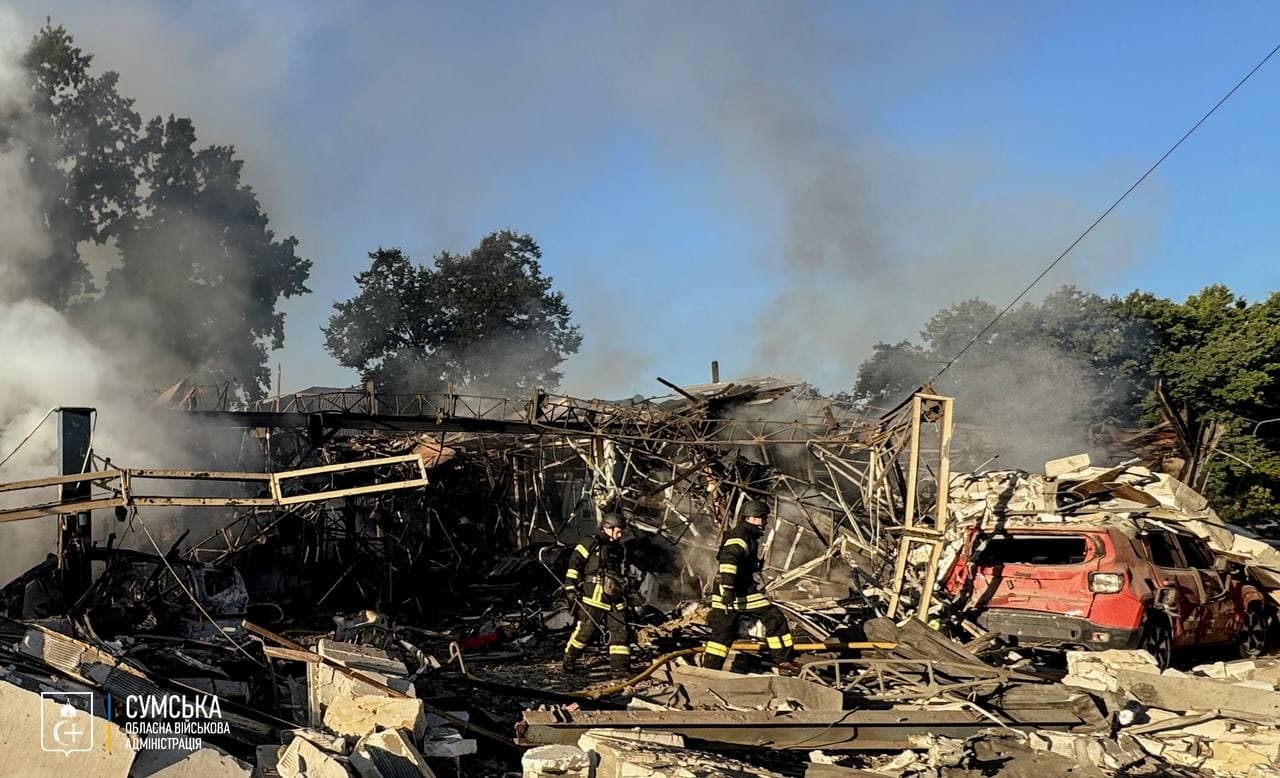
The human cost extended far beyond soldiers to civilians caught in Russia’s deliberate campaign against non-combatants. September 12’s Russian attacks killed at least six people and injured 26 others across Ukraine, part of a systematic pattern of war crimes that showed no sign of ending.
Ukrainian air defenses shot down 33 of 40 Russian drones launched overnight, but the six that got through struck industrial zones in Sumy Oblast and residential areas across multiple regions. Each successful strike was a reminder that Ukraine’s air defense network, impressive as it was, could never be perfect—and Russian planners counted on those gaps.
The Grinding Machine: Battles Across a Thousand-Mile Front
While diplomats debated and sanctions tightened, the war’s daily reality continued across a front line stretching from the Baltic to the Black Sea. Russian forces maintained pressure from Kharkiv to Zaporizhzhia, probing for weaknesses with the mechanical persistence of a machine designed for one purpose: grinding forward regardless of cost.
In the critical Pokrovsk sector, Ukrainian forces achieved a remarkable tactical success by liberating Filiya after Russian forces had held central positions since August. The victory demonstrated Ukraine’s ability to conduct successful counterattacks even while defending against relentless pressure.
Russian forces responded by advancing in the Velykomykhailivka direction, seizing Ternove and likely Komyshuvakha as well. The see-saw nature of the fighting reflected the war’s fundamental character: neither side possessed the strength for decisive breakthrough, leaving both armies locked in a deadly embrace of attrition.
Near Lyman, Russian forces continued their infiltration tactics, hiding in building basements while awaiting reinforcements supplied by drones. Ukrainian defenders reported increasing Russian attempts to bypass forward positions and strike at artillery crews and drone operators—evidence of tactical adaptation born from bloody experience.
The most disturbing development came from Russian Major General Apti Alaudinov, who admitted using deception tactics that violated the Geneva Convention. His forces had deliberately worn blue identification tape knowing Ukrainian forces used the same system—a war crime designed to sow confusion and facilitate ambushes.
Such perfidy reflected Russia’s increasing willingness to violate international humanitarian law as military pressure mounted. When conventional tactics failed, Moscow’s forces resorted to deception, knowing that Ukrainian soldiers’ adherence to legal warfare put them at a disadvantage against an enemy with no moral constraints.
The Day That Almost Changed Everything
As September 12 drew to a close, the implications of the day’s events began crystallizing. Ukraine had demonstrated the ability to strike deep into Russia’s economic core while achieving significant tactical victories on the battlefield. NATO continued building its defensive response to Russia’s September 10 attack on Polish territory, with the Alliance announcing new deterrence measures and planning enhanced protection for its eastern flank.
The simultaneous success of Ukrainian deep strikes and Russian violations of NATO airspace suggested the war was entering a new phase where geographical boundaries mattered less than political resolve. Ukraine’s growing capabilities threatened Russia’s ability to conduct the war from sanctuary, while Russian recklessness risked dragging NATO into direct confrontation.
President Trump’s contradictory signals—from declaring he wouldn’t “defend anybody” to threatening massive economic retaliation—reflected America’s internal struggle between isolationist impulses and alliance obligations. European unity held firm despite Hungarian and Slovak resistance, but the cracks were visible to anyone willing to look.
Meanwhile, the human cost continued mounting on both sides. Russian casualties approached levels not seen since World War II, while Ukrainian civilians endured another day of deliberate targeting by an enemy that had abandoned any pretense of fighting a conventional war.
The question hanging over everything was simple yet terrifying: would September 12, 2025, be remembered as the day Ukraine turned the tide through strategic strikes and tactical victories, or as the day a regional conflict began its transformation into something far more dangerous? The answer would depend on whether political resolve could match the courage displayed by soldiers and civilians on both sides of an increasingly expanding war.
In the end, September 12 proved that in the modern age, no conflict remains contained forever. The war that began in Ukrainian fields and cities had reached NATO’s doorstep, touched America’s Congress, and drawn in nations from Japan to New Zealand. What started as Putin’s regional gamble had become a global test of whether democracies possessed the will to defend themselves against authoritarian aggression.
The test was far from over.