
As Russian President Oversees Final Day of Zapad-2025 Exercises in Military Uniform, Ukrainian Forces Strike Deep Into Enemy Territory While Massive Drone Campaign Targets Civilian Areas
Summary of the Day – September 16, 2025
September 16 witnessed Russian President Vladimir Putin personally overseeing the final day of Zapad-2025 military exercises while wearing military uniform, as 100,000 personnel from six countries participated in the drills. Ukrainian forces struck the Saratov oil refinery and carried out explosions at a Russian military facility near Vladivostok. Russia launched 113 Shahed-type drones overnight, with 89 intercepted by Ukrainian defenses. At least seven civilians died and 49 were injured in Russian attacks across Ukraine, including a daylight drone strike on central Kharkiv that damaged a university. The Trump administration approved its first weapons aid packages for Ukraine funded by NATO allies, while the EU announced plans to accelerate its phase-out of Russian energy purchases.
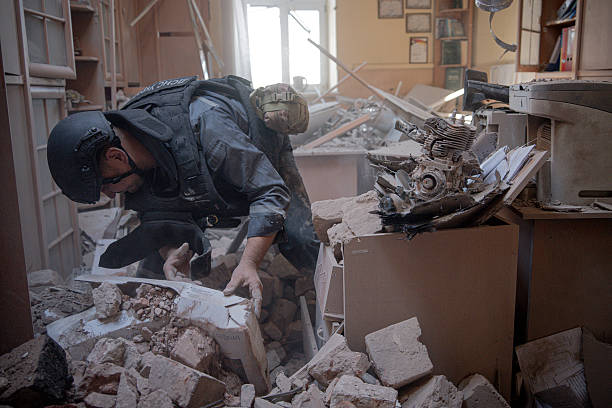
State Emergency Service workers retrieve the engine of a Russian Geran-2 attack drone after the strike on an educational facility in Kharkiv.The attack left at least four people injured, Mayor Ihor Terekhov reported. (Ivan Samoilov/Global Images Ukraine via Getty Images)
Putin Takes Center Stage: Russian President Personally Oversees Zapad-2025 Finale
Russian President Vladimir Putin visited the Mulino training ground in Nizhny Novgorod Oblast on September 16 to oversee the final day of the Zapad-2025 joint military exercises. Putin appeared in military uniform — only the second time he has worn military attire at a public event since February 2022.
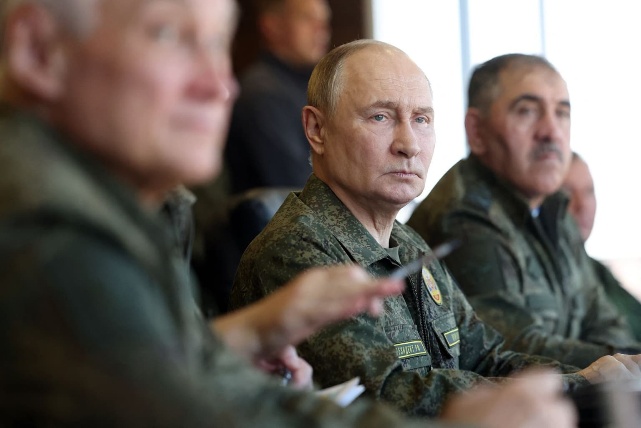
Russia’s President Vladimir Putin inspects the “Zapad-2025” (West-2025) joint Russian-Belarusian military drills at a training ground in the Nizhny Novgorod Oblast. (VALERY SHARIFULIN/POOL/AFP via Getty Images)
Defense Minister Andrei Belousov reported to Putin that 100,000 military personnel participated in the exercises, including forces from Russia’s Leningrad and Moscow military districts, Aerospace Forces, Airborne Forces, Northern and Baltic fleets, and Belarusian elements. Personnel from Bangladesh, India, Burkina Faso, the Democratic Republic of the Congo, Mali, and Iran also participated.
“Plans for the exercises are based on the experience gained in the course of [war in Ukraine],” Putin stated. At the training ground, Putin inspected military equipment including motorcycles, quad bikes, radar systems, and anti-drone weapons. Over 400 samples of arms and technology were showcased, with some already deployed in Ukraine.
The exercises began September 12 and involved over 10,000 weapons systems and 247 naval vessels across 41 training grounds in Russia and Belarus. Belarusian First Deputy Defense Minister Pavel Muraveiko reported that Belarusian forces practiced deployment of Oreshnik ballistic missile systems and non-strategic nuclear weapons during the exercises.
Deep Strike Campaign: Ukraine Hits Saratov Refinery and Vladivostok Facility
Ukrainian forces conducted a strike against the Saratov oil refinery overnight on September 16, causing explosions and a fire at the facility. The General Staff confirmed the attack was carried out by Special Operations Forces alongside other Ukrainian units. The refinery produces over 20 types of petroleum products and has a processing capacity of 4.8 million metric tons annually, helping supply the Russian military.
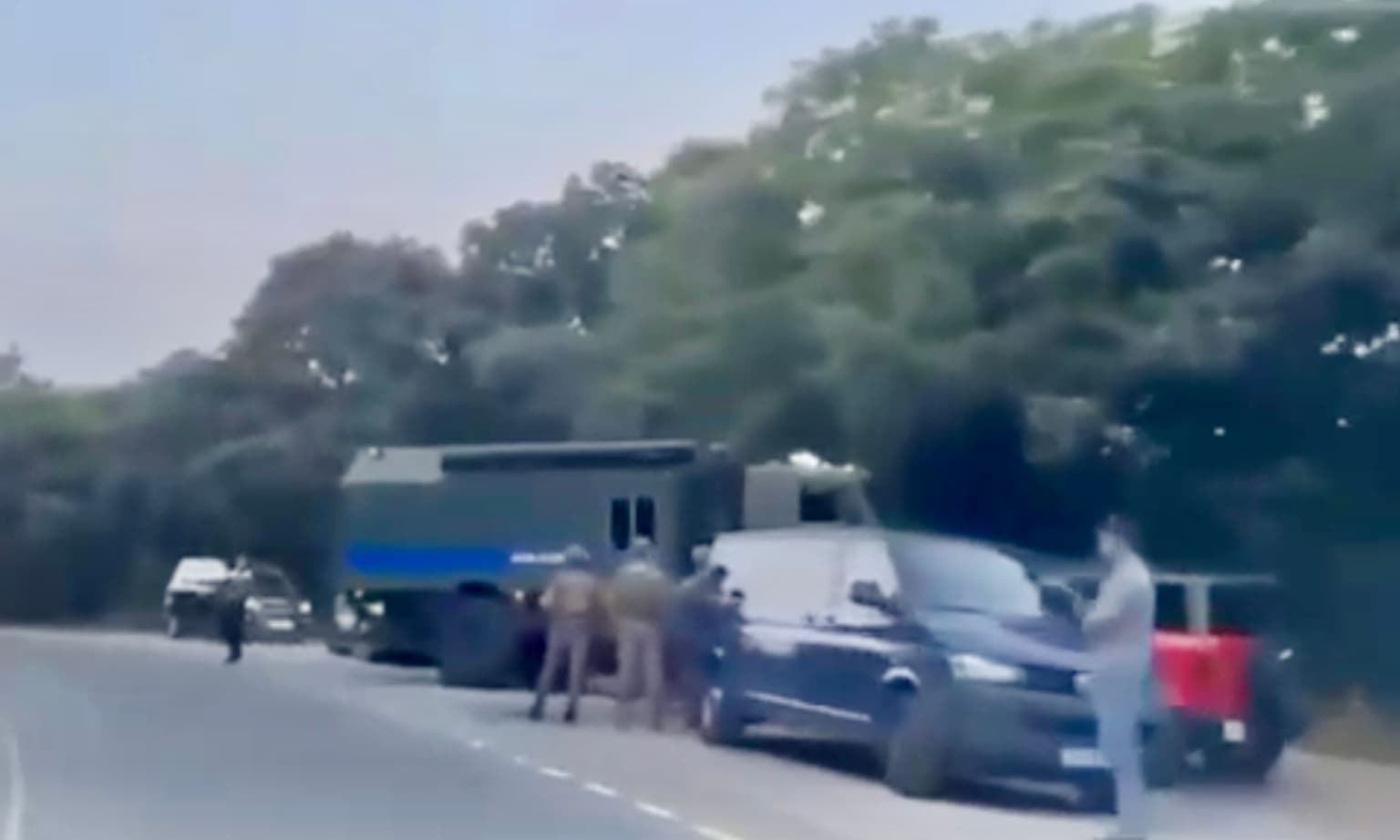
Russian authorities started inspecting vehicles following the reported explosions. (HUR)
Saratov Oblast Governor Roman Busargin reported emergency services were on full alert due to the drone attack. Russia’s Defense Ministry claimed air defenses intercepted 87 Ukrainian drones overnight, including 18 over Saratov Oblast.
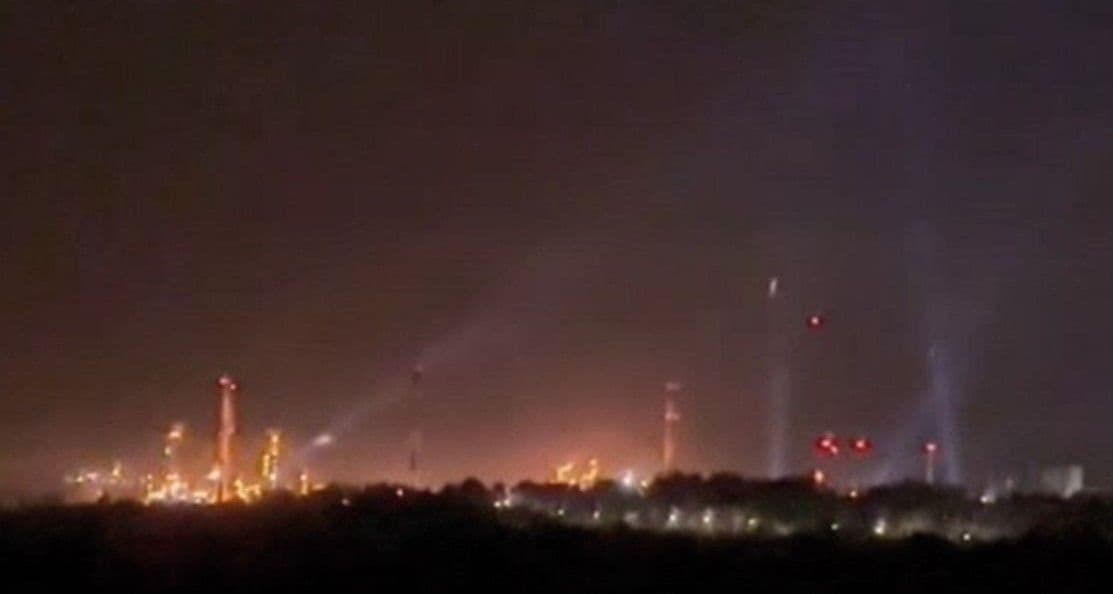
Purported footage of the Saratov Oil Refinery in Saratov Oblast, Russia, during a Ukrainian strike overnight. (General Staff of Ukraine’s Armed Forces/Telegram)
In a separate operation, Ukrainian military intelligence carried out explosions at a Russian military facility near Vladivostok in Primorsky Krai. The strike targeted the 47th Airborne Assault Battalion of the 155th Guards Marine Brigade stationed in Shchitovaya village. A HUR source reported powerful blasts in the parking lot followed by a second explosion, with emergency services and helicopters dispatched to the scene.
Local authorities claimed the explosions resulted from gas equipment malfunction, reporting no casualties though several vehicles suffered minor damage. The targeted battalion has operated in areas near Kyiv, Vuhledar, Mariupol, Kursk, and Pokrovsk.
Massive Drone Campaign: Russian Forces Launch 113 Attack Drones
Russian forces conducted their largest drone campaign in recent days, launching 113 Shahed-type, Gerbera-type, and other drones from Kursk, Bryansk, Millerovo in Rostov Oblast, and Primorsko-Akhtarsk in Krasnodar Krai. Ukrainian air defenses intercepted 89 drones, but 22 drones struck six locations with debris falling in two additional areas.
President Volodymyr Zelensky reported that Russian forces launched over 100 drones and 150 glide bomb strikes against civilian infrastructure in Kyiv, Sumy, Kharkiv, Donetsk, and Kherson oblasts. He stated that Russia has used more than 3,500 drones, almost 190 missiles, and over 2,500 glide bombs against Ukraine in September 2025.
Daylight Terror: Russian Drone Strikes Central Kharkiv University
A Russian drone struck the Ukrainian Institute of Advanced Qualification of Pharmacy Specialists of the National Pharmaceutical University in central Kharkiv City during daylight hours on September 16. The strike heavily damaged the roof of an administrative building and caused a fire covering 150 square meters.
Four people were injured in the attack: three women aged 51, 52, and 54, and an 89-year-old man. All victims were in stable condition. The Kharkiv Oblast Prosecutor’s Office reported preliminary data suggesting Russian forces used a Geran-2 drone for the strike.
University Vice-Rector Oleksandr Kukhtenko confirmed employees hid in shelters during the attack. The strike occurred around 11 a.m. local time near the city center, with some incoming drones shot down by local air defenses.
Civilian Casualties: Seven Killed, 49 Injured in Russian Attacks
At least seven civilians died and 49 were injured in Russian attacks across Ukraine over the 24-hour period ending September 16. Donetsk Oblast reported one death in Kostiantynivka and 14 injuries. Zaporizhzhia Oblast suffered two deaths and 14 injuries, including two children, with 10 apartment buildings damaged.
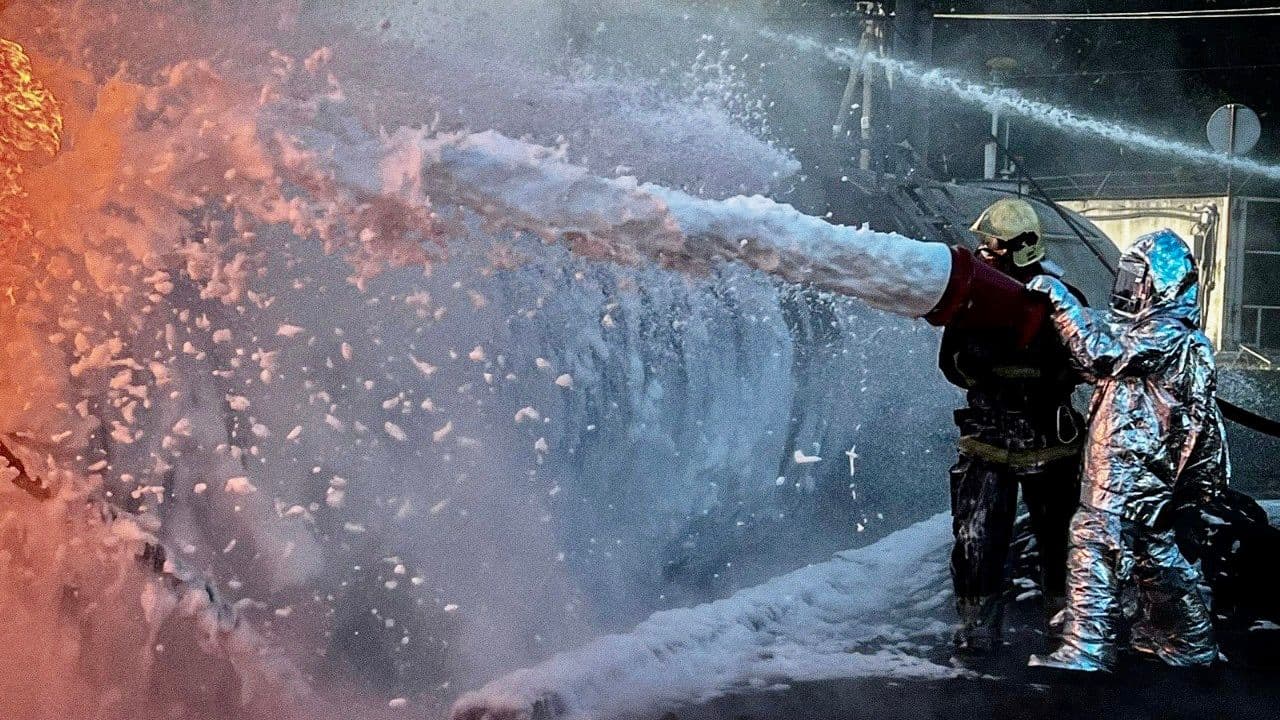
A Russian strike on Donetsk Oblast sparked a fire, hitting civilian infrastructure. (State Emergency Service / Telegram)
Sumy Oblast recorded nine injuries from Russian attacks, while Kharkiv Oblast reported one death and five injuries as Russian forces attacked 12 villages. Kherson Oblast saw two killed and six injured, with two apartment buildings and 17 houses damaged.
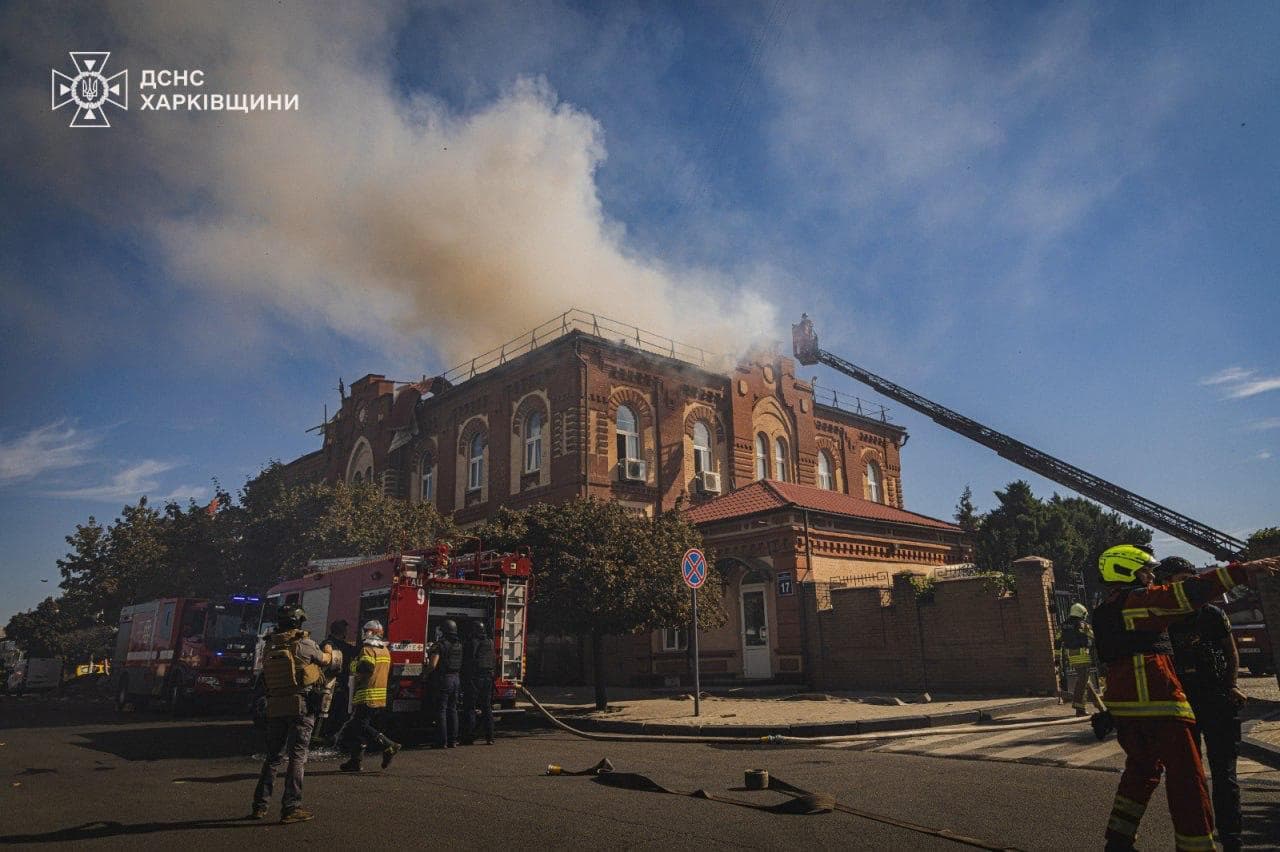
An educational institution damaged in a Russian drone attack against Kharkiv, Ukraine. (State Emergency Service/Telegram)
In Mykolaiv Oblast, a Russian attack drone struck a farm, killing a 58-year-old man. Dnipropetrovsk Oblast reported one injured and two houses destroyed. Kyiv Oblast experienced a double-tap attack against a shopping center parking lot, damaging two fire trucks while emergency services worked on site.
Historic Weapons Aid: Trump Administration Approves First PURL Packages
The Trump administration approved its first U.S. weapons aid packages for Ukraine funded by NATO allies under the Prioritized Ukraine Requirements List (PURL) mechanism. Undersecretary of Defense for Policy Elbridge Colby authorized up to two shipments valued at $500 million each.
The packages include air defense systems and represent the first aid initiated during Trump’s second term. PURL allows NATO members to pool contributions to purchase American weapons, munitions, and equipment from U.S. stockpiles, with the program potentially providing up to $10 billion in weaponry.
The mechanism was developed to coordinate and fund Ukraine’s most urgent battlefield needs through allied contributions rather than direct U.S. funding.
Energy Pressure: EU Accelerates Russian Phase-Out Plans
European Commission President Ursula von der Leyen announced plans to phase out Russian energy purchases sooner than the originally planned 2027 deadline. The announcement followed a phone call with President Trump focused on “strengthening joint efforts to increase economic pressure on Russia through additional measures.”
Bloomberg and Politico reported that the EU postponed plans to table its 19th sanctions package on September 17 as the U.S. demands tougher European steps before proceeding with its own measures. Von der Leyen stated the new sanctions package would be presented “soon” and target Russia’s crypto, banks, and energy sectors.
Treasury Secretary Scott Bessent confirmed the U.S. would not impose new tariffs on Chinese goods over Russian oil purchases unless European countries first adopt steep tariffs. “We expect the Europeans to do their share now, and we are not moving forward without the Europeans,” Bessent stated.
Military Operations: Russian Advances and Ukrainian Resistance
Russian forces made confirmed advances in several sectors on September 16. Geolocated footage showed Russian forces advancing to Sadova Street in Kupyansk and into southeastern Novoivanivka northeast of Hulyaipole in Zaporizhia Oblast. Additional footage confirmed Russian advances within southeastern Kostyantynivka and along the T-0504 Bakhmut-Kostyantynivka highway.
Ukrainian forces confirmed striking Russian command posts in occupied Donetsk Oblast on September 8, targeting the “Center” group of forces and 41st Combined Arms Army command posts. The strikes occurred after Russian Defense Minister Andrei Belousov’s August 28 visit to the headquarters.
Russian forces conducted offensive operations across multiple fronts, including near Siversk, in the Pokrovsk direction where over 50 daily assaults continued, and in the Novopavlivka area. Ukrainian officials reported Russian forces moving all available personnel to the Pokrovsk direction, including redeployments from Kursk Oblast.
North Korean Deployment: Reports of Forces in Kursk Oblast
A Russian military blogger affiliated with the Northern Grouping of Forces reported on September 16 that North Korean forces are deployed to the second echelon of Russia’s defense along the international border in Kursk Oblast. The blogger stated North Korean forces are participating in demining operations alongside elements of the Russian 89th, 90th, and 91st sapper-engineer regiments.
EU Migration Policy: Plans for Ukrainian Temporary Protection Transition
The European Council adopted a recommendation on September 16 for gradually phasing out temporary protection for Ukrainians displaced by Russia’s war. The plan calls for preparing their eventual return and reintegration while offering national residence permits based on employment, training, education, or family ties.
The recommendation includes support for voluntary return programs, exploratory visits to Ukraine, and reintegration assistance. Member states are urged to set up “Unity Hubs” financed through EU programs to serve as contact points for Ukrainians seeking assistance with documents, employment advice, and return planning.
Temporary protection for Ukrainians currently runs until March 4, 2027, covering more than 4 million displaced Ukrainians under the program.
Battlefield Operations: Multiple Front Activities Continue
Russian forces conducted offensive operations on September 16 across multiple fronts. In northern Sumy Oblast, Russian forces attacked near Kindrativka, Andriivka, Oleksiivka, and Varachyne but did not advance. A Russian milblogger claimed Ukrainian forces counterattacked near Andriivka and Oleksiivka.
The Russian Ministry of Defense posted footage claiming FPV drone operators struck the Romny Compressor Station near Nadyarne northwest of Sumy City on September 16.
In the Lyman direction, Russian forces conducted operations near Shandryholove, Serednie, Zarichne, Kolodyazi, Torske, and in the Serebryanske forest area. Geolocated footage published September 15 showed Russian forces in civilian clothing operating on Molodizhna Street in Yampil during an infiltration mission.
Russian forces attacked in the Kostyantynivka-Druzhkivka area near Orikhovo-Vasylivka, Mykolaivka, Stupochky, Bila Hora, Pleshchiivka, Ivanopillya, Shcherbynivka, Katerynivka, Poltavka, Rusyn Yar, Volodymyrivka, and Sofiivka.
International Diplomacy: Potential Trump-Zelensky Meeting and Child Deportation Report
U.S. Secretary of State Marco Rubio indicated President Trump may meet with President Zelensky next week in New York during the U.N.’s annual high-level session. “The president had multiple calls with Putin, multiple meetings with Zelensky, including probably next week again in New York,” Rubio stated.
The Yale School of Public Health’s Humanitarian Research Lab published a report confirming Ukrainian children have been taken to at least 210 facilities inside Russia and occupied territories since 2022. The report found children were subjected to re-education at nearly two-thirds of sites and underwent militarization at almost one-fifth.
Ukraine’s government reports Russia has abducted at least 19,546 children since the full-scale war began, with just 1,605 returned. The International Criminal Court issued arrest warrants for Putin and Maria Lvova-Belova in March 2023 regarding forced deportations of Ukrainian children.
Defense Innovation: Ukrainian Startup Raises Record Funding
Ukrainian startup Swarmer raised $15 million in funding, representing the largest investment in a Ukrainian defense company since 2022. The company develops artificial intelligence for managing drone swarms, with software allowing single operators to coordinate multiple drones.
The funding round included U.S. firms Broadband Capital Investments, R-G.AI, D3 Ventures, Green Flag Ventures, Radius Capital, and Network VC. CEO Serhii Kupriienko reported the software has proven itself “in live combat across tens of thousands of missions.”
Parliamentary Transparency: Live Broadcasts Resume
The Ukrainian parliament held a plenary session on September 16 that was broadcast live for the first time since Russia’s full-scale invasion began in 2022. Parliament had suspended live coverage for security reasons, though committee meetings resumed broadcasting in January 2025.
Parliament Speaker Ruslan Stefanchuk signed a resolution on September 9 restoring plenary broadcasts after lawmakers submitted a draft resolution arguing the current security environment permitted their return without creating additional risks.
Energy Security: Ukraine’s Gas Storage Exceeds Previous Levels
Ukraine’s underground gas storage facilities reached 12.055 billion cubic meters as of September 14, surpassing 2024 levels of 12.05 billion cubic meters on the same date. The achievement marked progress in Ukraine’s race to fill reserves ahead of winter following Russian attacks that destroyed critical energy infrastructure.
Since the injection season began on April 17, nearly 6.68 billion cubic meters of gas has been stored — 1.67 times the volume injected over the same period in 2024. Ukraine needs to accumulate at least 13 billion cubic meters by November 1 for the heating season.
Political Developments: Public Opinion and Prisoner Releases
A Kyiv International Institute of Sociology poll published September 16 found 74% of Ukrainians would accept a peace deal freezing hostilities along the current front line with Western security guarantees. The survey found 18% said they could “easily agree” to this option, while 56% said it would be difficult but acceptable, and 15% ruled it out completely.
The poll found 75% of Ukrainians said Russia’s conditional peace proposal would be “completely unacceptable.” Only 17% of respondents said they could accept Russia’s demands. The poll was conducted between September 2-14 using phone interviews with 1,023 respondents in Ukraine-held territories.
Belarusian dictator Alexander Lukashenko pardoned 25 people convicted of “extremist crimes” ahead of the country’s Unity Day holiday. The decree freed 12 women and 13 men, most under age 40, with all reportedly admitting guilt and expressing remorse.
Infrastructure Concerns: Polish Missile Investigation
Political pressure mounted in Poland amid reports that damage to a home during Russia’s September 10 drone incursion may have been caused by a Polish AIM-120 missile fired by an F-16 fighter jet. Rzeczpospolita reported the missile failed to properly deploy while defending against Russian drones, with safety devices preventing explosion.
President Karol Nawrocki’s office demanded immediate government clarification of the incident, while Prime Minister Donald Tusk deflected responsibility to Russia for the original airspace violation.
Military Doctrine Update: Belarus Clarifies Union State Defense Framework
Belarusian First Deputy Defense Minister Pavel Muraveiko presented a draft proposal on September 16 clarifying Belarus’ military doctrine. The proposal defines the content, scope, and timeframe for Belarus to respond to military aggression and the responsibilities of Belarusian officials during such events.
The proposal states that any act of military aggression against any state within the Russian-Belarusian Union State will be considered an attack on Belarus and justification to introduce martial law. The doctrine also accounts for information operations during military conflicts.
Looking Forward: September 16 Military and Diplomatic Developments
September 16 demonstrated the war’s multiple dimensions, from Putin’s personal involvement in military exercises to Ukraine’s continued capability for deep-strike operations across vast distances. The day’s events highlighted both the persistent threat to Ukrainian civilians through Russian drone campaigns and the ongoing international efforts to support Ukraine through weapons aid and economic pressure on Russia.
The combination of military operations, diplomatic initiatives, and economic measures reflected the multifaceted nature of the conflict as it approaches its fourth year, with both sides adapting tactics while international stakeholders navigate complex decisions regarding support levels and sanctions regimes.