
When 700,000 Russian soldiers couldn’t prevent Ukrainian liberation, and drones carried fire to refineries 1,300 kilometers from the front
The Story of a Single Day
September 18, 2025, began with Vladimir Putin standing before cameras, declaring that over 700,000 Russian soldiers were advancing on “practically all fronts” in Ukraine. It ended with Ukrainian drones streaking through Russian skies toward oil refineries that had never expected the war to reach them, while Ukrainian forces quietly celebrated the liberation of 160 square kilometers and seven settlements in a counteroffensive that made Putin’s confident proclamations sound like wishful thinking.
This was the 1,303rd day of a conflict that had transformed from a conventional invasion into something far stranger—a war where soldiers crawled through underground pipes, where precision drones could strike targets deeper inside Russia than most people drive on vacation, and where the removal of a single Kremlin aide could reveal more about Moscow’s strategic direction than battlefield reports.
On this single September day, the mathematics of warfare collided with the reality of modern conflict, revealing that Putin’s theory of inevitable victory through numerical superiority was being undermined by Ukrainian innovation, international cooperation, and Russia’s own internal contradictions.
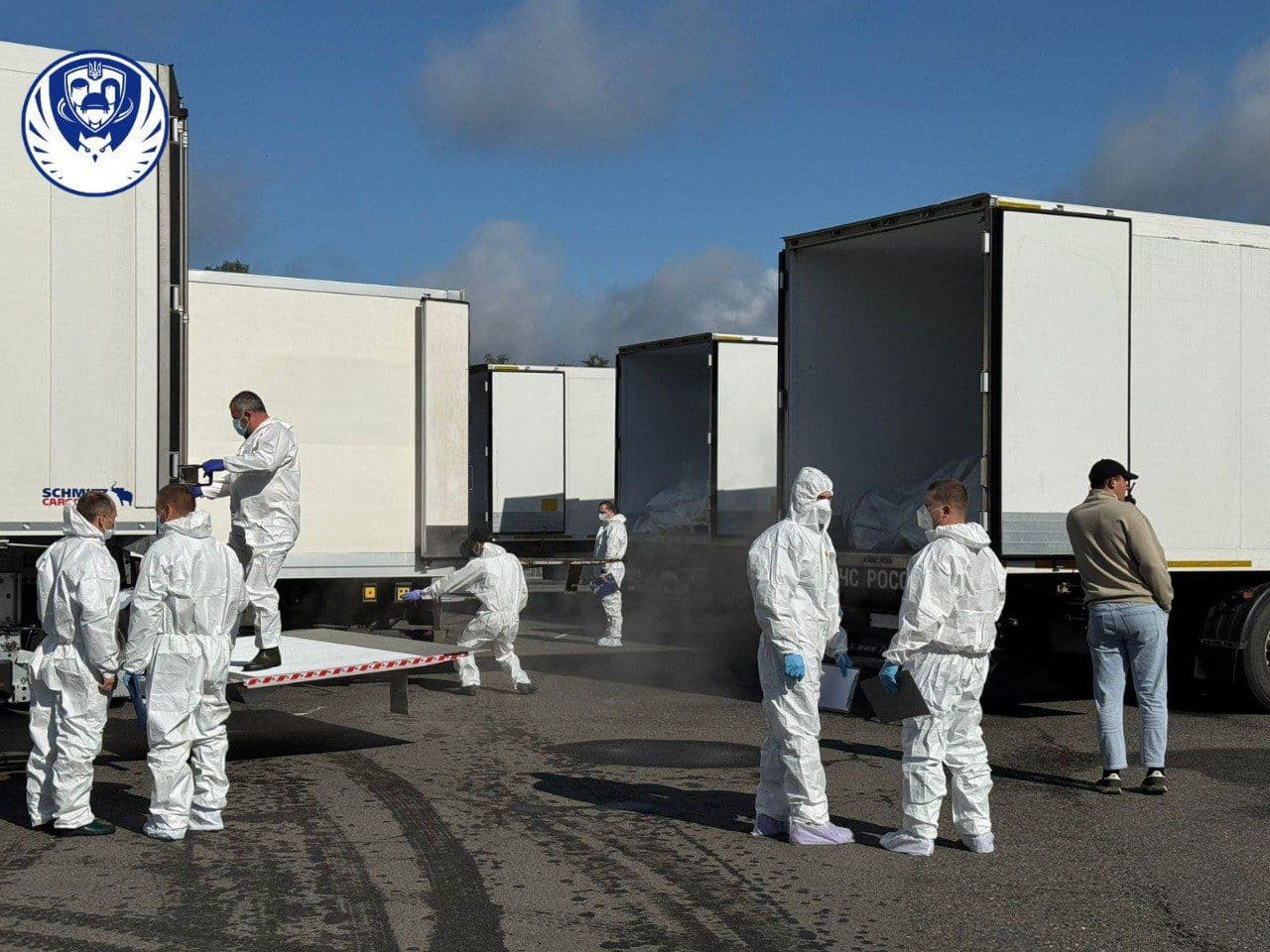
Ukrainian authorities said, that it has received 1,000 bodies from Russia, which Moscow says are fallen Ukrainian soldiers. (Coordination Headquarters for the Treatment of POWs/Telegram)
The President’s Arithmetic: When 700,000 Isn’t Enough
Picture Vladimir Putin in his familiar pose—standing before the cameras, projecting confidence through numbers that sound impressive until you examine what they actually mean. On September 18, the Russian president declared that over 700,000 of his soldiers were fighting in Ukraine, advancing on “practically all fronts.” It was classic Putin mathematics: massive figures designed to intimidate, progress claims meant to demoralize, and an underlying assumption that sheer mass would eventually overwhelm any opposition.
Chief of General Staff Valery Gerasimov reinforced this narrative with his own claims about Russian forces advancing on “practically all fronts,” creating an echo chamber of confident proclamations designed to make Russian victory seem inevitable. The message was clear: Putin’s war machine was grinding forward inexorably, and Ukrainian resistance was merely delaying mathematical certainty.
But Putin’s arithmetic contained a fatal flaw that even Gerasimov’s supporting statements couldn’t disguise. Since January 2025 alone, those 700,000 soldiers had suffered 299,210 casualties killed and wounded—a number that represented not just statistics, but the systematic destruction of military experience and leadership. Russian advances were coming at what analysts called “disproportionately high” casualty rates compared to territory seized, creating a mathematical progression that led toward exhaustion rather than victory.
The president’s theory of victory had always been elegantly simple: Russia possessed more men, more equipment, and more resources than Ukraine could match, therefore even incremental advances would compound into decisive territorial gains. Western support would wane, Ukrainian morale would crack, and eventually Kyiv would accept Russian terms because continuing the fight would become mathematically impossible.
What Putin hadn’t calculated was that his own economy couldn’t sustain the mathematics of his war machine. Russian government sources were discussing raising the VAT rate from 20% to 22% just to control the budget deficit, forcing ordinary Russians to pay higher prices while military spending hollowed out civilian economic sectors. The war that was supposed to demonstrate Russian strength was revealing Russian weakness, creating the very instability that could undermine Putin’s ability to continue fighting.
Even Donald Trump had noticed these structural contradictions, observing that Russia was incurring more losses than Ukraine and warning that Putin would have to “drop out” if oil prices declined. When even Trump was questioning Russian staying power, Putin’s confident arithmetic began to look less like strategic assessment and more like mathematical delusion.
Fire Across a Continent: The 1,300-Kilometer Reach
While Putin was touting his 700,000 soldiers, Ukrainian Special Operations Forces were preparing to demonstrate that numbers meant nothing if you couldn’t protect what mattered. As darkness fell across Russia, Ukrainian drones began their journey toward targets that had seemed safely beyond the reach of enemy action—massive oil refineries that formed the economic backbone of Putin’s war machine.
The first explosion lit up the night sky above the Lukoil-Volgogradneftepererabotka Oil Refinery in Volgograd Oblast, where Ukrainian drones struck the heart of Russia’s largest petroleum production facility in the Southern Federal District. The refinery processed 15.7 million tons of crude oil annually—5.6 percent of Russia’s total refining capacity—and its sudden halt sent shockwaves through supply networks that stretched across the country.
But the most stunning strike occurred 1,300 kilometers from the Ukrainian border, where Security Service drones found their target at the Gazprom Neftekhim Salavat petrochemical plant in Bashkortostan Republic. The long-range aircraft struck the ELOU-AVT-4 crude oil processing unit at the center of the facility, triggering what sources described as a “massive explosion” that sent towering plumes of black smoke across the regional capital.
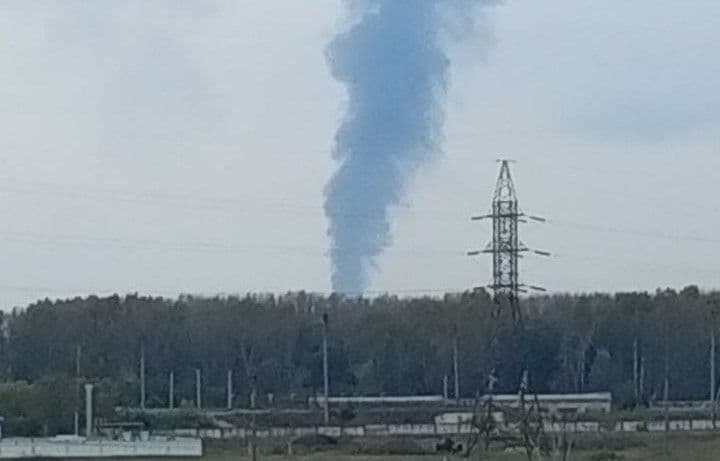
Footage purported to show smoke rising after a drone attack on the Gazprom Neftekhim Salavat company in Salavat, Bashkortostan Republic, Russia. (Social media)
Local residents posted footage of the fires on social media before Russian authorities could suppress the images, showing flames that could be seen from kilometers away. Governor Radiy Khabirov confirmed that two drones had targeted the facility, while regional authorities scrambled to close airports and suspend mobile internet services as emergency responders rushed to contain industrial fires that threatened to spread to surrounding infrastructure.
These weren’t random attacks but precisely selected targets that struck at the economic foundation of Russian military operations. The Bashkortostan facility didn’t just produce fuel—it manufactured the industrial chemicals and materials that supported Russia’s broader defense production, making it a strategic target whose destruction would ripple through multiple sectors of the war economy.
The psychological impact was as devastating as the physical damage. Every successful strike deep inside Russia reminded ordinary citizens that their government’s war had consequences that reached far beyond distant battlefields. The conflict that had seemed safely contained to Ukraine was now generating explosions and evacuations in cities where residents had assumed they were beyond the reach of enemy action.
The Counteroffensive Nobody Expected: 160 Square Kilometers of Surprise
In a war room somewhere in eastern Ukraine, Commander-in-Chief Oleksandr Syrskyi was preparing to deliver news that would shatter assumptions about the war’s momentum. As international observers focused on Russian proclamations of inevitable victory, Ukrainian forces had been quietly executing a counteroffensive that liberated 160 square kilometers and seven settlements in operations that caught Moscow’s military planners completely off guard.
President Volodymyr Zelensky’s announcement of the successful operations came as Ukrainian units were still consolidating their gains in the Dobropillia and Pokrovsk sectors. For months, Russian forces had been grinding forward in these areas, advancing 15-20 kilometers toward the strategic Dobropillia-Kramatorsk highway and threatening to cut crucial Ukrainian supply lines.
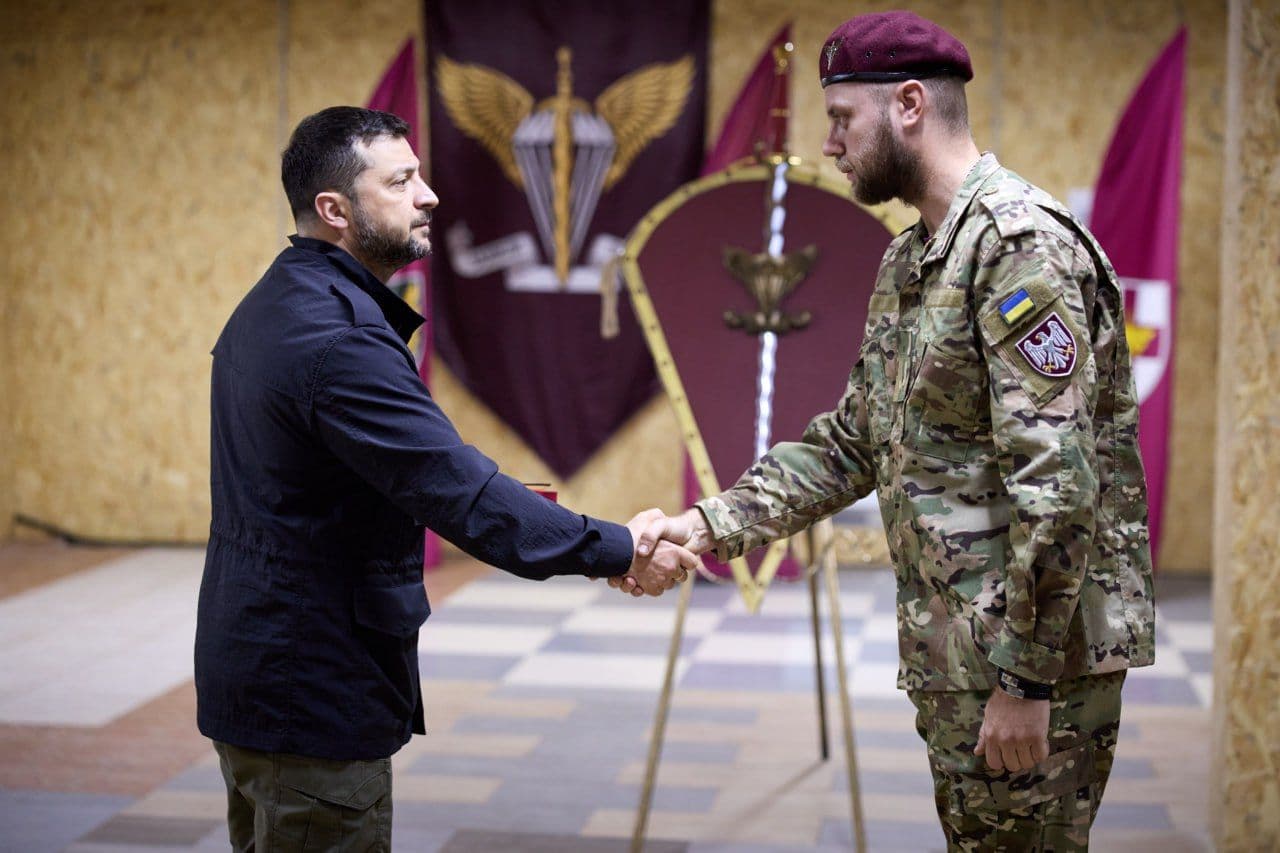
President Volodymyr Zelensky met with Ukrainian soldiers in Donetsk Oblast. (Volodymyr Zelensky/Telegram)
But Ukrainian commanders had been practicing what military theorists call “strategic patience”—allowing Russian advances to extend their supply lines while carefully preparing counterattacks designed to exploit the vulnerabilities created by overextension. Since late August, Ukrainian units had been systematically reclaiming villages, culminating in operations that not only liberated territory but captured nearly 100 Russian prisoners and inflicted over 2,500 casualties, including more than 1,300 killed.
The numbers told a story of tactical sophistication that contradicted assumptions about Ukrainian capabilities after nearly three years of grinding warfare. Syrskyi’s report revealed that Ukrainian forces had not only liberated 160 square kilometers but had “cleared” an additional 170 square kilometers of Russian forces—a distinction that suggested systematic operations to ensure territory could be held rather than simply seized.
The counteroffensive represented more than tactical success—it demonstrated that Ukrainian forces retained the capability to seize initiative even as Putin’s 700,000 soldiers were supposedly advancing on all fronts. While Russian theory assumed Ukrainian capabilities would remain static, the Donetsk operations showed that Ukraine was still capable of strategic surprise and operational innovation that could reshape battlefield dynamics faster than Moscow’s planners anticipated.
Underground Shadows: The Hidden War Beneath Kupyansk
Deep beneath the streets of Kupyansk, a different kind of warfare was unfolding—one that revealed how the conflict had literally gone underground as both sides adapted to a battlefield where surface movement meant almost certain death. The commander of a Ukrainian drone regiment reported on September 18 that Russian forces were still attempting to infiltrate the city through underground gas pipelines, using the same tactics that had gained international attention when soldiers spent four days crawling through pipes to emerge behind Ukrainian lines.
Ukrainian forces had discovered Russian sabotage and reconnaissance groups using urban underground infrastructure to establish positions on the western bank of the Oskil River, forcing defenders to fight a hidden war beneath city streets while maintaining vigilance against surface attacks. The underground infiltrations weren’t isolated incidents but part of systematic Russian adaptation to an environment where drone surveillance made conventional movement increasingly lethal.
Ukrainian engineers had responded by damaging pipeline systems to prevent further infiltrations, but the battle revealed something profound about the war’s evolution. Russian forces were being driven underground not by choice but by necessity, forced to develop increasingly desperate methods of advance because conventional tactics had become suicidal. It was innovation born of weakness rather than strength, adaptation driven by the inability to achieve objectives through normal means.
The Ukrainian commander noted that the number of Russian sabotage groups operating on the west bank was “very high,” suggesting that underground infiltration had become a major component of Russian tactical planning. But the fact that these groups had to crawl through pipes for days to reach their objectives revealed the fundamental contradiction in Russian strategy—even tactical successes required methods that were inherently unsustainable and could be countered by simply damaging the infrastructure they depended on.
The underground war had become a metaphor for the broader conflict: a grinding, desperate struggle where apparent innovation masked strategic failure, where tactical adaptation couldn’t overcome fundamental disadvantages, and where victory remained as elusive as ever despite increasingly creative attempts to achieve it.
When Allies Learn from Students: The Polish Partnership
The scene at Kyiv’s Wall of Remembrance on September 18 would have seemed impossible three years earlier—a Polish Defense Minister laying flowers while preparing to learn military tactics from the country his forces had once expected to assist. Władysław Kosiniak-Kamysz’s visit to Ukraine came just eight days after Russian drones had violated Polish airspace in an unprecedented incursion, but rather than treating the incident as an isolated provocation, Warsaw was using it as an opportunity to acknowledge a new reality.
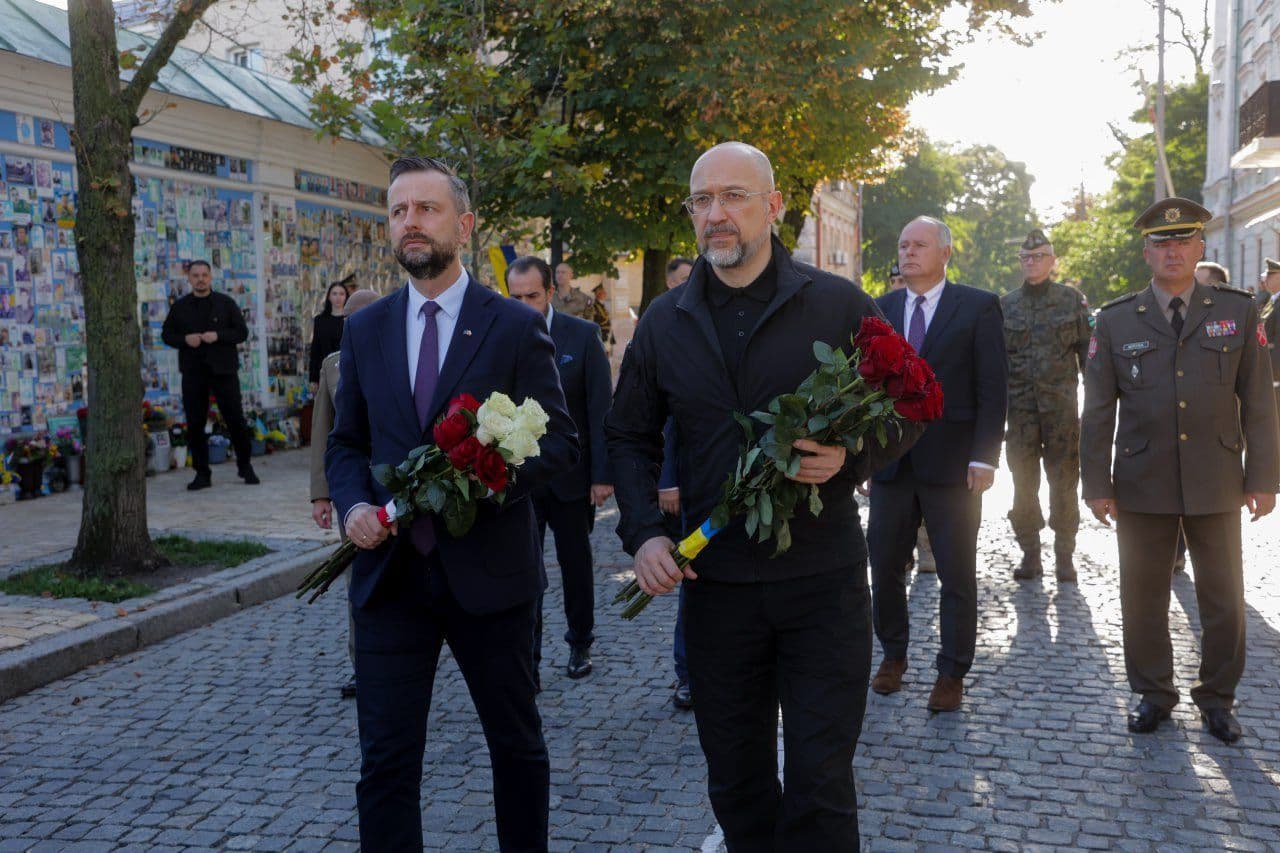
Polish Deputy Prime Minister and Defense Minister Wladyslaw Kosiniak-Kamysz (L) and Ukraine’s Defense Minister Denys Shmyhal paying respects to the killed Ukrainian soldiers at the Wall of Remembrance of the Fallen for Ukraine in Kyiv. (Denys Shmyhal/X)
Ukrainian Defense Minister Denys Shmyhal announced the creation of a joint task force for unmanned systems that would fundamentally reverse traditional relationships between NATO and Ukraine. Instead of receiving one-way assistance, Ukraine would now teach Polish forces how to defend against the drone and missile attacks that had become routine along NATO’s eastern border.
The partnership made strategic sense because Ukraine possessed something no NATO member could match—unparalleled experience in drone warfare gained through nearly three years of constant aerial combat. While Polish forces had trained for conventional conflicts, Ukrainian units had developed tactical innovations and defensive countermeasures through daily survival against threats that alliance planners were only beginning to understand.
Kosiniak-Kamysz outlined cooperation that went far beyond simple training. Poland would establish dedicated training grounds where Ukrainian instructors would teach Polish personnel how to use air defense systems against swarms of small, low-flying threats that conventional radar struggled to track. Ukraine would help Poland create integrated “drone lines” that combined unmanned systems with electronic warfare capabilities, while providing access to monitoring programs that tracked Russian strike patterns and tactical evolution.
The memorandum of understanding signed during the visit represented a new model for NATO-Ukraine cooperation—one based on Ukrainian expertise rather than Western charity. After years of receiving military aid, Ukraine was now positioned to teach alliance members about modern warfare innovations that they had never experienced firsthand. The country under invasion had become the teacher, and its former mentors had become students.
Arsenal of Innovation: The PURL Program Delivers
In the corridors of power in Kyiv on September 18, President Volodymyr Zelensky stood before cameras to announce news that would reshape Ukraine’s military capabilities for months to come. The country would receive Patriot and HIMARS missiles as part of the first weapons packages under the Prioritized Ukraine Requirements List (PURL) program—a revolutionary approach to military assistance that allowed NATO allies to fund American-made weapons based on Ukraine’s own strategic priorities.
The announcement represented more than just another aid package. The first two deliveries, worth $500 million each, demonstrated that innovative financing mechanisms could sustain Ukrainian military capabilities even as traditional government-to-government aid faced increasing political pressures in donor countries. With total contributions already exceeding $2 billion and expectations of reaching $3-3.5 billion, the PURL program offered a pathway for continued support that bypassed many of the legislative obstacles that had complicated earlier assistance efforts.
Zelensky’s joint press conference with European Parliament President Roberta Metsola emphasized how the program reflected Ukraine’s evolving relationship with its Western partners. Rather than simply receiving whatever equipment donors were willing to provide, Ukraine now participated in structured prioritization processes that matched weapons deliveries to specific operational requirements identified by Ukrainian military commanders.
The program’s success demonstrated that seven countries—the Netherlands, Norway, Sweden, Denmark, Canada, Belgium, and Latvia—had recognized the strategic value of allowing Ukraine to determine its own defense needs rather than having assistance programs dictated by donor country priorities or available surplus equipment.
The Loyalty Calculation: Gerasimov’s Five-Year Extension
In a Kremlin office on September 18, Vladimir Putin signed documents that revealed his fundamental approach to leadership: loyalty trumped competence, predictability mattered more than effectiveness, and personal comfort took precedence over military success. The president’s decision to extend Valery Gerasimov’s service as Chief of General Staff for five more years, despite the general’s recent 70th birthday, demonstrated how an aging regime increasingly feared change more than failure.
Gerasimov had reached mandatory retirement age on September 8, but Putin used a 2021 decree removing age limits for senior appointees to keep the general in position. The decision came despite widespread criticism of Gerasimov’s military leadership from veterans, ultranationalists, and military bloggers who blamed him for slow progress and massive casualties in Ukraine. The general’s award of the Order of Courage on his birthday seemed almost satirical given the criticism of his strategic competence.
Putin’s choice reflected a broader pattern of prioritizing familiar faces over fresh thinking. Gerasimov was reportedly at least the fourth senior military official to maintain his position past mandatory retirement age, suggesting that the president’s reluctance to change leadership extended throughout the security apparatus. While Putin spoke publicly about raising a new, younger elite, he continued retaining aging loyalists whose primary qualification was unwavering support for his policies.
Kremlin sources justified the extension by claiming Putin wanted to maintain “stability in the chain of command,” but the real message was more troubling. The president valued predictability over innovation, loyalty over competence, and personal relationships over military effectiveness. In a war where tactical adaptation could mean the difference between victory and defeat, Putin was choosing familiarity over the possibility of improvement.
The Militarization Blueprint: Veterans as Future Elite
The meeting between Putin and political party leaders on September 18 produced what initially sounded like a mundane administrative proposal but actually revealed the blueprint for fundamentally transforming Russian society. A Just Russia Party leader Sergey Mironov’s suggestion to establish a three percent quota for veterans in government positions received Putin’s enthusiastic support, setting the stage for the systematic militarization of civilian administration.
Putin’s response revealed the true scope of his ambitions for post-war Russian society. The president spoke of ensuring that veterans would form the “future elite” through careful selection via the Time of Heroes program—the Kremlin’s initiative to prepare loyal military personnel for government careers. With 700,000 servicemembers fighting in Ukraine, Putin was essentially announcing plans to place hand-selected soldiers throughout the Russian government apparatus.
The proposal went far beyond rewarding military service—it represented institutionalizing the merger of civilian and military authority. Putin needed to ensure that surviving veterans remained loyal to the regime rather than becoming sources of criticism based on their battlefield experiences. By offering government positions to carefully vetted military personnel, the Kremlin could simultaneously reward loyalty and ensure that civil administration remained under the control of people whose careers depended on continued support for Putin’s policies.
Putin’s warning about avoiding “formalism” in implementing the quota revealed his understanding that this wasn’t really about administrative efficiency—it was about ensuring that military values and priorities became embedded in every level of government. If Russia was to remain in permanent confrontation with NATO, as Putin’s rhetoric increasingly suggested, then the distinction between military and civilian leadership needed to disappear entirely.
The Purge of Dissent: Kozak’s Calculated Removal
The confirmation of Dmitry Kozak’s departure as Kremlin Deputy Chief of Staff came with the bland language of bureaucratic transition—Kremlin spokesperson Dmitry Peskov claimed Kozak had resigned “voluntarily” and was considering business opportunities. But the circumstances surrounding his exit told a different story about Putin’s tolerance for dissenting voices, even from longtime loyalists who had earned their positions through decades of faithful service.
Kozak had reportedly been one of the few senior officials to oppose the full-scale invasion in February 2022, warning Putin about the likely consequences of attacking Ukraine and predicting fierce resistance that would make victory far more difficult than Moscow anticipated. More recently, he had pushed for peace talks and developed plans for ending the war while implementing domestic reforms—proposals that Putin had consistently rejected as premature or unrealistic.
The timing of Kozak’s departure revealed Putin’s methodical approach to removing potential sources of internal criticism. The president had abolished the departments Kozak oversaw on August 29, effectively eliminating his power base weeks before forcing his resignation. The bureaucratic maneuvering allowed Putin to claim that Kozak’s departure was voluntary while ensuring that no institutional support remained for policies the president opposed.
The transfer of Kozak’s responsibilities to Sergei Kiriyenko strengthened the position of an official whose loyalty to Putin’s maximalist war aims was unquestioned. For other potential dissidents within the Kremlin, Kozak’s fate sent a clear message: advocating restraint or suggesting alternative approaches would not be tolerated, regardless of past loyalty or current position.
The Daily Toll: Four Civilians and a Rescuer’s Death
The overnight Russian attacks of September 17-18 painted a familiar picture of indiscriminate violence against civilian targets, killing at least four people and injuring 24 others across multiple Ukrainian regions. But one death carried particular symbolic weight—the killing of a 45-year-old emergency worker in Chernihiv Oblast during what Ukrainian officials called a “cynical and cruel” attack that deliberately targeted rescue personnel.
The timing was especially bitter: the drone strike occurred on September 17, the day Ukraine commemorated Rescuer’s Day, turning a celebration of heroism into a funeral for someone who had dedicated his life to saving others. Two other emergency workers were injured in the same attack, which demonstrated Russia’s systematic targeting of first responders—a tactic designed to compound the effects of initial strikes by preventing effective rescue operations.
Across Ukraine, the night’s attacks revealed the geographic spread of Russian capabilities. In Poltava Oblast, drone strikes targeted railway infrastructure, causing temporary power outages and delaying passenger trains in attacks designed to disrupt both civilian transportation and military logistics. In Kharkiv Oblast, a 73-year-old man was killed and a 70-year-old woman injured in Slatyne, while Donetsk Oblast suffered two deaths in Kostiantynivka along with eleven more injuries from attacks across the region.
The Grinding Front: Lyman’s Measured Advance
While dramatic long-range strikes captured international attention, the war’s fundamental character remained visible in places like Shandryholove, northwest of Lyman, where Russian forces were demonstrating that tactical patience could still produce territorial gains despite massive casualties. Geolocated footage published on September 18 confirmed that Russian units had advanced to central Shandryholove, representing the kind of incremental progress that formed the backbone of Putin’s theory of victory.
The advance came at enormous cost, as Ukrainian forces had inflicted heavy casualties on attacking Russian units while conducting fighting withdrawals designed to maximize enemy losses while preserving Ukrainian strength. Chief of General Staff Gerasimov had claimed that Russian forces were nearly seizing Zarichne, east of Lyman, while other reports suggested advances near multiple settlements in the area.
Ukrainian commanders reported that Russian forces had recently attempted an unusual tactic—tying electronic warfare systems to 25 motorcycles during an assault—but Ukrainian defenses had repelled the attack, destroying both the unusual equipment and the personnel attempting to employ it. The reported abundance of Russian personnel in the Lyman direction suggested that Moscow was still willing to commit significant resources to achieving incremental gains, but the tactical innovations revealed the desperation underlying apparent Russian confidence.
Rails Under Fire: The War Against Ukrainian Logistics
The pre-dawn strikes against railway infrastructure in Poltava Oblast on September 18 represented more than random targeting—they were part of Russia’s systematic campaign to sever the transportation networks that kept Ukrainian military and civilian life functioning. The attacks caused temporary power outages across parts of the region and delayed several passenger trains, demonstrating how infrastructure strikes could create cascading effects that reached far beyond the immediate target area.
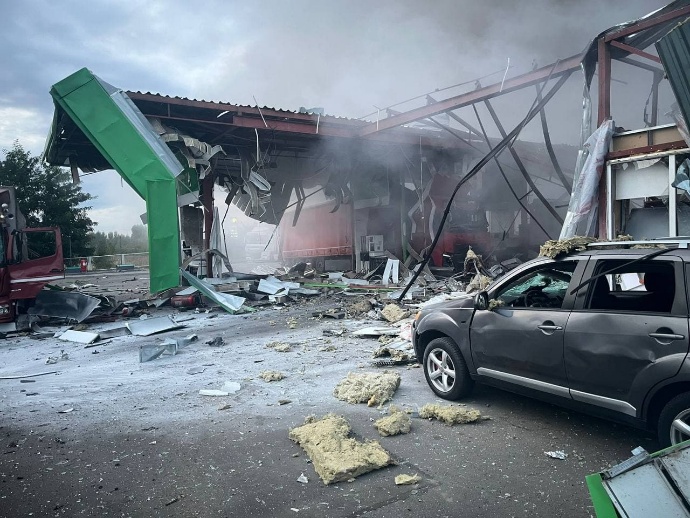
The aftermath of a Russian attack on a gas station in Poltava Oblast, Ukraine. (Volodymyr Kohut/Telegram)
One person was injured in the railway attacks, while a separate drone strike on a gas station wounded another civilian, showing how Russian forces were expanding their definition of legitimate targets to include virtually any facility that supported normal economic activity. The strikes reflected Moscow’s calculation that attacking civilian infrastructure would eventually break Ukrainian morale and force political concessions that military operations alone had failed to achieve.
The Silent Exchange: 1,000 Bodies Across the Border
The trucks that crossed the border on September 18 carried cargo that spoke to the war’s most fundamental cost—1,000 bodies that Russia claimed were fallen Ukrainian soldiers, returned as part of agreements that represented one of the few areas where the warring sides maintained operational cooperation. Ukraine’s Coordination Headquarters announced that investigators would conduct examinations to identify the remains, a process that had become grimly routine after nearly three years of fighting.
The body exchanges were among the only concrete results of peace talks conducted in Istanbul earlier in the year, reflecting agreements that transcended the political rhetoric and military confrontation that dominated most interactions between the two countries. The numbers told their own story about the war’s disproportionate costs—the largest previous exchange had involved 6,057 Ukrainian bodies returned as part of phased agreements, while Russia had received just 78 of its dead.
The silent procession of hearses and military vehicles carrying the dead across the border represented the war’s most honest accounting—a body count that no amount of political rhetoric could disguise or strategic theory could justify. In the mathematics of modern warfare, these were the only numbers that ultimately mattered.
The Day’s Meaning: When Numbers Lie
September 18, 2025, exposed the fundamental flaw in Vladimir Putin’s approach to modern warfare. The Russian president’s confident proclamation about 700,000 soldiers advancing on all fronts sounded impressive until measured against the day’s actual developments: Ukrainian forces liberating 160 square kilometers while Russian troops crawled through underground pipes to avoid drone surveillance, Ukrainian drones striking targets 1,300 kilometers inside Russia while Russian officials considered tax increases to fund their war machine.
The underground battles in Kupyansk had become a perfect metaphor for Russia’s broader strategic position—driven to desperate expedients not by strength but by the inability to achieve objectives through conventional means. The counteroffensive success in Donetsk Oblast demonstrated that Ukrainian innovation and strategic patience could still reshape battlefield dynamics faster than Russian mass could compensate for tactical disadvantages.
But perhaps most significantly, the day’s events revealed how the war was reshaping the societies fighting it. Putin’s plans to staff his government with hand-selected veterans, the removal of advisors who advocated moderation, and the economic pressures forcing tax increases all pointed toward a Russia that was becoming more militarized, more isolated from dissenting voices, and more dependent on continued conflict to justify the sacrifices it was demanding from its citizens.
Ukraine’s emergence as a teacher of modern warfare—training Polish forces in tactics that NATO had never experienced—represented the complete reversal of relationships that had existed when the war began. The country under invasion had become the instructor, while its former protectors had become students learning how to defend against threats they were only beginning to understand.
The question was no longer simply how the war would end, but how fundamentally it would transform the institutions and societies it touched. On this single day in September, those transformations were already visible in the smoking ruins of Russian refineries, the liberated villages of eastern Ukraine, and the conference rooms where new forms of cooperation were being forged between allies who had learned that survival required constant adaptation to an enemy that would never stop evolving.