
When Putin’s escalation theory met the largest aerial assault in weeks, and Ukrainian forces struck deep into Russia’s oil heartland
The Story of a Single Day
September 20, 2025, was the day Vladimir Putin’s commitment to military escalation manifested in the skies above Ukraine with unprecedented fury. As the night gave way to dawn, Russian forces unleashed one of their largest drone and missile barrages in recent weeks—579 Shahed and decoy drones, 32 Kh-101 cruise missiles, and 8 Iskander ballistic missiles—in an assault that stretched Ukrainian air defenses to their limits while killing two civilians and injuring 36 others across ten locations.
This was the 1,305th day of a war that had evolved from conventional battlefield confrontation into a technological arms race where success was measured in intercepted missiles, destroyed refineries, and the resilience of civilian infrastructure under bombardment. As Ukrainian F-16s joined the defense against cruise missiles and Polish NATO jets scrambled to protect alliance airspace, the conflict demonstrated how Putin’s theory of victory through sustained escalation was being answered by Ukrainian innovation and international solidarity.
But perhaps most significantly, September 20 revealed the war’s expanding geographic footprint as Ukrainian drones struck oil refineries in Saratov and Samara oblasts, Kremlin sources leaked Putin’s strategic calculations to Bloomberg, and cyber disruptions affected airports across Europe—proving that the boundaries between battlefield and broader international confrontation had effectively disappeared.
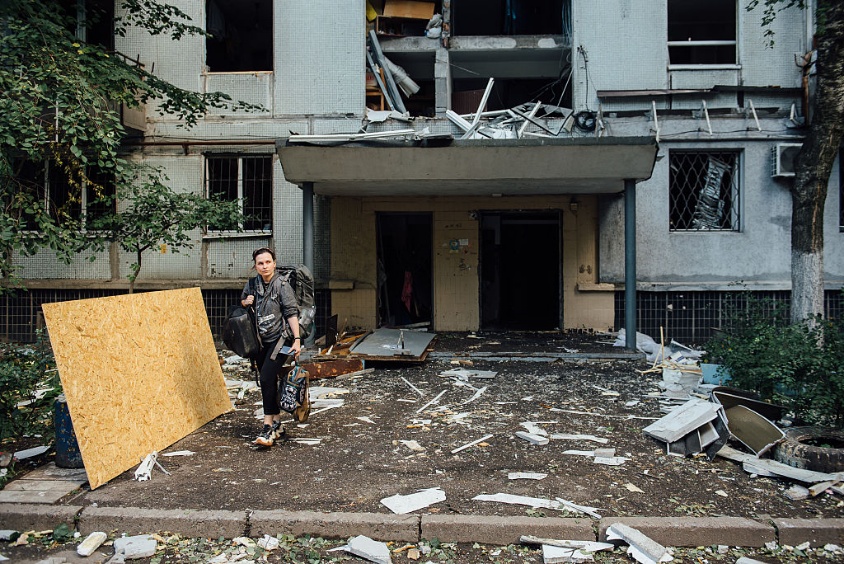
People clean up the aftermath of a Russian missile attack in Dnipro. The Russian army launched a missile attack on the city during a massive strike on Ukraine, hitting a high-rise building. One person was killed and 30 others were injured. (Denys Poliakov/Global Images Ukraine via Getty Images)
Putin’s Leaked Logic: The Bloomberg Revelation
In the corridors of power where information becomes weaponry, September 20 brought one of the most revealing glimpses into Vladimir Putin’s strategic thinking since the war began. Bloomberg’s report, citing undisclosed sources “close to the Kremlin,” revealed that Putin had concluded military escalation represented the best path toward forcing Ukraine into negotiations on Russian terms—a calculation reportedly reinforced by his assessment that Donald Trump was unlikely to “do much” to bolster Ukrainian defense.
The Kremlin sources’ emphasis on Putin’s conclusion that the August 15 Alaska talks had convinced him of Trump’s disinterest in meaningful intervention represented either genuine strategic miscalculation or deliberate information warfare designed to exploit transatlantic friction. The sources claimed Putin intended to continue targeting Ukraine’s energy network and critical infrastructure while remaining engaged in bilateral dialogue with the United States—a position that revealed the Russian president’s confidence that he could escalate militarily while maintaining diplomatic cover.
The timing and content of the Bloomberg revelations suggested Putin’s willingness to allow his strategic logic to reach Western audiences, potentially as part of a broader information campaign designed to create fear in Ukrainian society ahead of winter while feeding narratives about inevitable Russian victory. The sources’ statements that Putin remained committed to defeating Ukraine militarily despite recent US mediation efforts contradicted any suggestion that diplomatic pressure was moderating Russian objectives.
Putin’s leaked assessment that recent redeployment of Russian forces to Donetsk Oblast and ongoing incursions into NATO airspace were part of his commitment to continued military aggression revealed a strategic mindset that viewed escalation as the solution to tactical limitations rather than evidence of strategic failure. The Bloomberg article served multiple Russian objectives: exploiting US-European friction, reinforcing narratives about Russian inevitability, and creating psychological pressure on Ukrainian society.
The 579-Drone Assault: When the Sky Fills with Death
The pre-dawn hours of September 20 witnessed the materialization of Putin’s escalation theory in the most comprehensive aerial assault Ukraine had faced in recent weeks. Russian forces deployed 579 Shahed and decoy drones alongside 32 Kh-101 cruise missiles and 8 Iskander ballistic missiles in a coordinated strike that stretched from Kursk and Bryansk to Primorsko-Akhtarsk in Krasnodar Krai—a geographic span that demonstrated the industrial scale of Russian drone warfare capabilities.
Ukrainian air defenses rose to meet the challenge with remarkable effectiveness, downing 552 drones, 29 cruise missiles, and 2 ballistic missiles through a combination of traditional air defense systems and tactical aviation that included F-16 fighters intercepting cruise missiles. The use of F-16s in active air defense roles represented a significant evolution in Ukrainian capabilities, demonstrating how Western aircraft had been integrated into comprehensive defensive strategies rather than simply supplementing existing systems.
President Volodymyr Zelensky’s report that Russian forces had directly struck a high-rise residential building in Dnipro City with a missile equipped with cluster munitions revealed the deliberate targeting of civilian infrastructure that characterized Russian aerial warfare. Footage showing a Kh-101 cruise missile striking the residential building provided visual evidence of how precision-guided weapons were being used against non-military targets in violation of international humanitarian law.
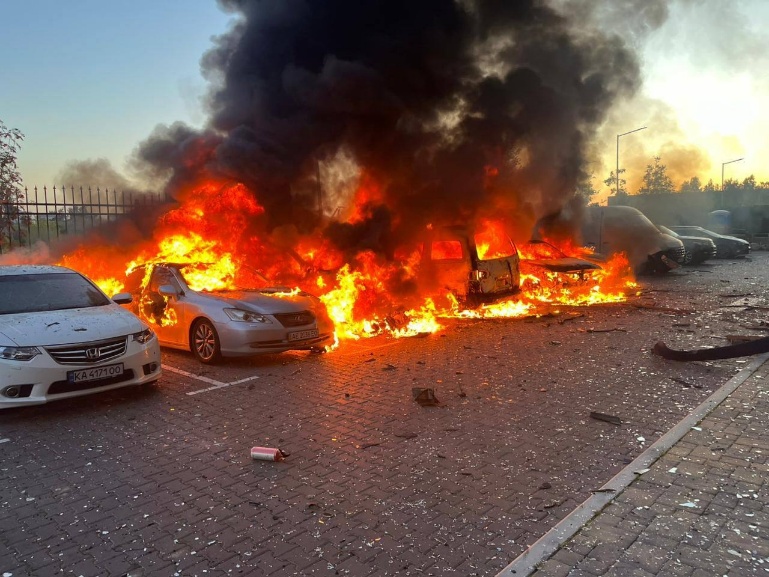
The aftermath of the attack in Kyiv Oblast. (Kyiv Oblast Military Administration/Telegram)
The geographic scope of the attacks—spanning Dnipro, Dnipropetrovsk, Mykolaiv, Chernihiv, Zaporizhia, Poltava, Kyiv, Odesa, Sumy, and Kharkiv oblasts—demonstrated Russian determination to maintain pressure on civilian infrastructure across the entire country rather than focusing attacks on military objectives near the front lines. The breadth of targeting reflected Putin’s calculation that undermining civilian morale and infrastructure would prove more effective than conventional military operations in forcing Ukrainian capitulation.
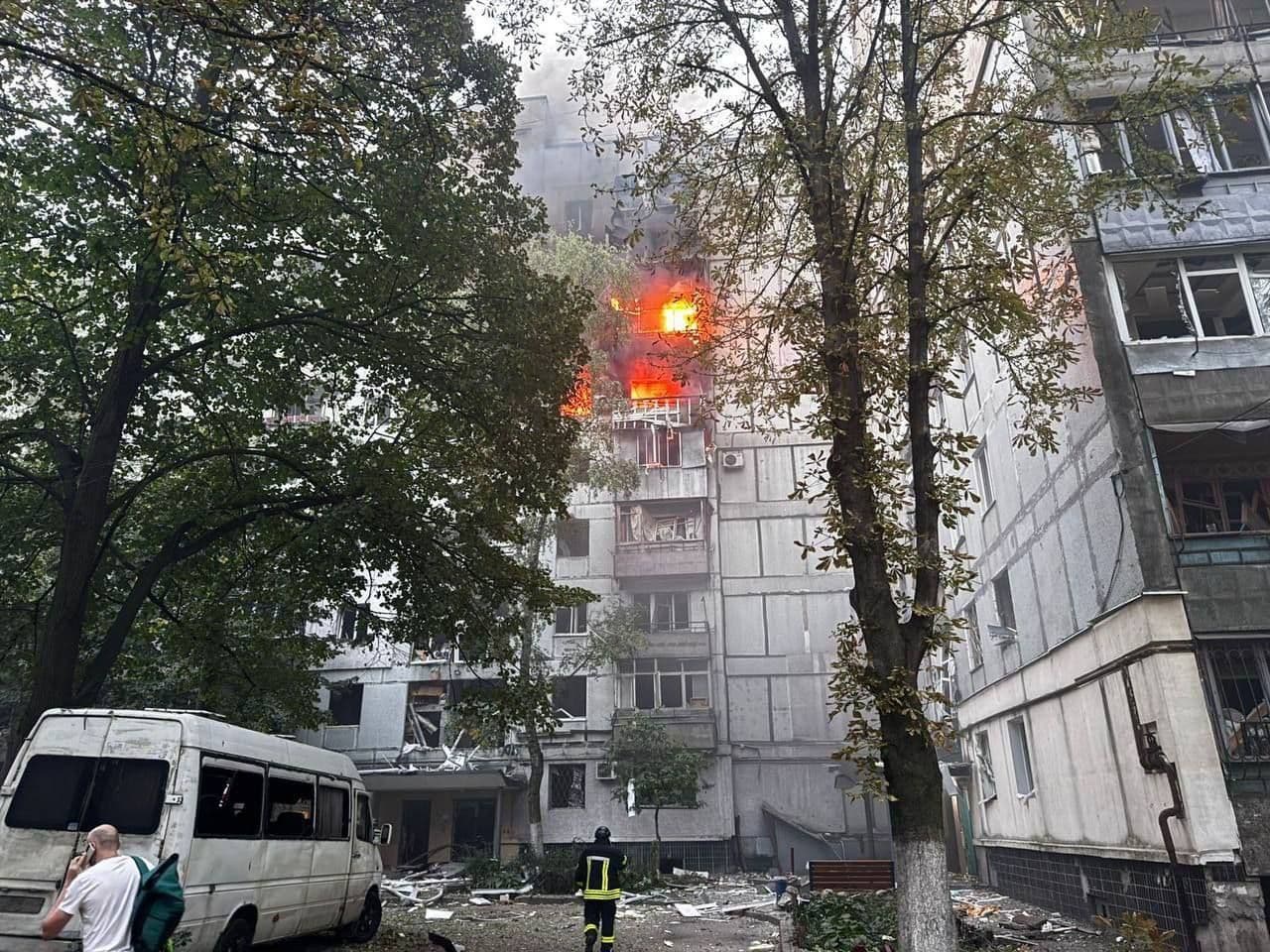
The aftermath of an attack on Dnipropetrovsk Oblast during a large-scale missile and drone attack on Ukrainian cities overnight. (Governor Serhii Lysak/Telegram)
Ukraine’s Strategic Strikes: Oil Infrastructure Under Attack
While Russian missiles were striking Ukrainian cities, Ukrainian forces were demonstrating their capacity to project retaliatory power deep into Russian territory through coordinated strikes against oil infrastructure that funded Moscow’s war machine. The Ukrainian General Staff’s confirmation on September 20 of successful attacks on the Saratov Oil Refinery and Novokuibyshevsk Oil Refinery represented the latest phase in Ukraine’s systematic campaign to degrade Russian energy revenues through precision targeting of strategic infrastructure.
A source in Ukraine’s Security Service confirmed to the Kyiv Independent that Ukrainian long-range drones had also struck oil pumping stations along the Kuibyshev-Tikhoretsk pipeline, resulting in shutdown of pumping operations that affected oil exports through the port of Novorossiysk. The SBU and Special Operations Forces operation targeted facilities in Volgograd and Samara oblasts that were integral to Russian oil export infrastructure.
The Saratov facility, processing over 7 million tons of oil annually and representing roughly 2.54 percent of Russia’s total processing output, had become a frequent target as Ukrainian drone technology enabled strikes at distances impossible when the war began. The Novokuibyshevsk facility refined over 8.8 million tons annually, while Ukrainian forces also struck the Samara Linear Production and Dispatching Station that combined oil from various fields to create Urals crude blend accounting for up to 50 percent of Russia’s total exports.
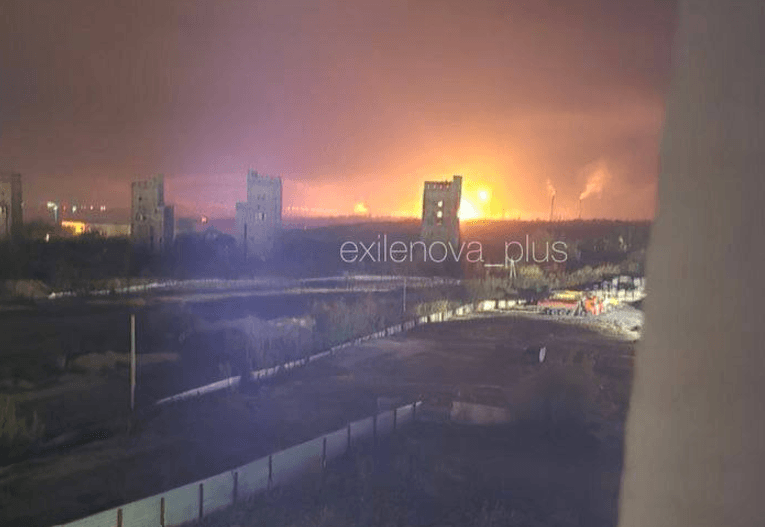
A purported image of the aftermath of a Ukrainian drone strike on an oil refinery in the Russian city of Saratov. (Exilenova_plus/Telegram)
The SBU source’s statement that “work on blocking these money flows will continue” revealed Ukrainian commitment to sustained campaigns against the “petrodollar surpluses” that were fueling the war rather than purely tactical strikes. Geolocated footage published on September 20 provided visual confirmation of the precision and effectiveness of these long-range Ukrainian capabilities.
Ukrainian Weapons Export Revolution: From Recipient to Supplier
In a development that would have seemed impossible when the war began, President Volodymyr Zelensky announced on September 20 that Ukraine would begin financing its defense industrial base funding deficit through managed exports of surplus Ukrainian weapons systems. The announcement represented Ukraine’s transformation from aid recipient to arms supplier, capable of producing modern weapons systems in quantities that exceeded domestic requirements.
Zelensky’s statement that the Ukrainian defense industrial base produced surpluses of naval drones and anti-tank weapons revealed how wartime innovation and production scaling had created capabilities that could now support other nations’ defense requirements. The managed export program would allow Ukraine to generate revenue for additional drone production while maintaining priority focus on supplying Ukrainian forces and replenishing domestic stockpiles.
The president’s announcement that Ukraine would present three export platforms by October 4—one each for the United States, European partners, and other international allies—demonstrated systematic planning for sustained defense industrial development that extended far beyond immediate wartime requirements. The export program represented Ukraine’s confidence in its technological advantages and production capabilities developed through nearly three years of intensive combat experience.
The timing of the announcement, coming as Russian forces conducted massive aerial attacks against Ukrainian cities, highlighted the paradox of modern warfare where the invaded country was simultaneously defending against aggression while emerging as a global supplier of the defensive technologies that conflict had forced it to perfect. Ukraine’s transition from weapons recipient to weapons exporter represented one of the war’s most significant strategic reversals.
Zelensky’s Diplomatic Offensive: UN Meeting and Sanctions Strategy
In Kyiv on September 20, President Volodymyr Zelensky confirmed his upcoming meeting with U.S. President Donald Trump during the UN General Assembly, setting the stage for what could become a pivotal moment in determining Ukraine’s security guarantees and future international support. Zelensky’s announcement that the meeting would encompass “business, technology, defense, the minerals deal” combined with “a large economic meeting” revealed Ukraine’s systematic approach to leveraging international engagement for comprehensive strategic advantage.
The confirmation came as Presidential Office head Andriy Yermak conducted a phone call with Secretary of State Marco Rubio, discussing preparations for security guarantees and expanding cooperation in military, defense, and economic areas. The diplomatic coordination demonstrated Ukraine’s careful preparation for meetings that could determine the trajectory of international support as the war entered its fourth year.
Simultaneously, Zelensky issued a presidential decree imposing sanctions against 83 individuals and 13 entities involved in disseminating Russian propaganda and conducting business operations in occupied Ukrainian territories. The sanctions packages targeted citizens of Ukraine, Russia, and Moldova, including Russian First Deputy Minister of Internal Affairs Andrei Kikot, propagandist Ekaterina Mizulina, and historian Aleksandr Dyukov, who had been criticized for downplaying Soviet repressions.
The inclusion of 11 Moldovan citizens whom Zelensky accused of attempting to “destabilize Moldova in the interests of Moscow” demonstrated Ukraine’s recognition that Russian hybrid warfare extended far beyond bilateral Ukrainian-Russian confrontation into broader regional destabilization campaigns. Zelensky’s statement that “Ukraine supports Moldova, and we are invested in the stability of our neighbor” revealed strategic thinking that connected Ukrainian security to broader regional stability.
Bakhmach Under Fire: Russian Strikes on Ukrainian Fuel
The war’s tit-for-tat nature became evident through Russian drone strikes on a Ukrainian oil depot at a military facility in Bakhmach, Chernihiv Oblast, representing Moscow’s attempt to respond to Ukrainian attacks on Russian energy infrastructure with corresponding strikes on Ukrainian fuel supplies. Pro-Russian Telegram channels reported that Geran drones had struck the depot used to deliver fuel to motorized units in Sumy Oblast, creating fires that disrupted Ukrainian logistics networks.
Chernihiv City Military Administration head Dmytro Bryzynsky’s warning of attacks on the region, followed by reports of damage to transport infrastructure, demonstrated how Russian forces were targeting the logistical networks that enabled Ukrainian military operations rather than focusing exclusively on frontline positions. The attack forced Ukrzaliznytsia to delay multiple trains, showing how infrastructure strikes created cascading effects that extended far beyond immediate military impact.
The targeting of fuel storage facilities represented Russian recognition that Ukrainian military effectiveness depended on sustained logistics rather than simple manpower or equipment advantages. By striking at fuel supplies that supported Ukrainian operations in Sumy Oblast, Russian forces were attempting to degrade Ukrainian operational tempo in areas where Ukrainian forces had been conducting successful counterattacks.
The timing of the Bakhmach attack, coming just hours after Ukrainian forces had struck multiple Russian oil facilities, suggested either coordinated Russian retaliation or coincidental escalation that demonstrated how both sides were increasingly targeting the energy infrastructure that enabled sustained military operations.
UK Financial Innovation: Reparation Loans and Frozen Assets
British Chancellor Rachel Reeves’ announcement on September 20 that the UK was exploring new mechanisms to unlock frozen Russian assets for Ukraine’s benefit represented a significant evolution in Western approaches to financing Ukrainian defense and reconstruction. The proposal for “reparation loans” that Ukraine would receive immediately but repay only after Russia paid war reparations demonstrated innovative financial engineering designed to circumvent legal obstacles to outright asset seizure.
Reeves’ statement that “this is Russia’s war—and Russia should pay” accompanied by her emphasis that the UK would “only consider options in line with international law” revealed the careful balance between maximizing support for Ukraine and maintaining legal legitimacy that had characterized Western approaches to frozen asset utilization. The reparation loan concept offered a mechanism for immediate Ukrainian assistance while preserving legal frameworks that protected property rights.
The announcement came as European Commission President Ursula von der Leyen had floated equivalent schemes earlier in the week, suggesting coordinated Western development of financial mechanisms that could sustain Ukrainian support even as traditional government-to-government aid faced increasing political pressures. The UK’s willingness to explore “all options to support Ukraine” demonstrated British commitment to maintaining assistance levels despite domestic economic pressures.
The timing of Reeves’ announcement at a Copenhagen meeting with European counterparts revealed how frozen asset utilization had become a priority agenda item for Western finance ministers seeking sustainable mechanisms for long-term Ukrainian support that didn’t require continuous legislative appropriations or budget reallocations.
Frontline Dynamics: Russian Advances and Ukrainian Resilience
Geolocated footage published on September 20 confirmed multiple Russian territorial gains that demonstrated Moscow’s continued ability to achieve incremental advances despite enormous casualties and Ukrainian defensive improvements. Russian forces had advanced within the Vovchansk Oil Extraction Plant in western Vovchansk, into eastern Shandryholove northwest of Lyman, and seized multiple locations in Berezove south of Velykomykhailivka, with the Ministry of Defense crediting the 36th Motorized Rifle Brigade with the latter success.
The geographic spread of Russian advances—from Kharkiv Oblast in the north to Zaporizhia Oblast in the south—demonstrated Moscow’s ability to maintain offensive pressure across hundreds of kilometers of front line despite the massive resource requirements such operations demanded. The confirmation of advances through geolocated footage rather than claims alone revealed the concrete nature of territorial changes that Russian forces were achieving through sustained pressure.
But Ukrainian forces were simultaneously demonstrating their capacity for successful counterattacks, with Russian milbloggers acknowledging Ukrainian advances to the northern outskirts of Novotoretske and west of Boikivka northeast of Pokrovsk. The Russian acknowledgment of Ukrainian gains was particularly significant because milbloggers had no incentive to report false Ukrainian successes, suggesting that Ukrainian forces retained tactical initiative in select areas despite overall Russian offensive pressure.
Ukrainian Dnipro Group spokesperson Lieutenant Colonel Oleksiy Belskyi’s statement that Russian forces were unable to transport heavy equipment across the Oskil River near Kupyansk, forcing them to rely exclusively on FPV drones for support, revealed how Ukrainian defensive innovations were constraining Russian operational capabilities even in areas where Moscow had achieved territorial gains.
North Korean Complications: Friendly Fire in Kursk
Reports from Russian milbloggers on September 20 revealed growing complications in Russian-North Korean military cooperation as North Korean forces operating in Kursk Oblast’s Gornal-Guyevo border area closed the border without notifying Russian forces and subsequently fired on a Russian transport vehicle. The friendly fire incident highlighted the coordination challenges inherent in integrating foreign forces with different military cultures and command structures into Russian operations.
The milblogger’s complaint that elements of the 30th Motorized Rifle Regiment were receiving “vague orders from Russian military command” and experiencing “poor operational planning” suggested that North Korean integration problems were symptomatic of broader Russian command and control difficulties rather than simply cultural misunderstandings between allied forces.
The incident occurred in an area where North Korean forces were officially conducting “security and demining operations,” but the closed border and subsequent firing on Russian vehicles suggested operational confusion that could have strategic implications for Russian defensive operations in Kursk Oblast. The friendly fire revealed how international military cooperation could create vulnerabilities rather than simply multiplying capabilities.
The Russian milblogger’s willingness to publicize friendly fire incidents involving North Korean forces suggested either genuine frustration with operational coordination or deliberate information warfare designed to pressure North Korean commanders to improve integration procedures.
Czech Leadership: Pavel’s Call for Military Response
Czech President Petr Pavel’s declaration on September 20 that NATO must “act firmly” and respond “militarily” to Russian airspace violations provided the clearest articulation yet of how alliance members should address escalating Russian provocations. Pavel’s statement that “giving in to evil is simply impossible” while acknowledging that NATO was “balancing on the brink of conflict” captured the strategic dilemma facing alliance members as Russian violations escalated beyond traditional boundaries.
Pavel’s reference to Turkey’s previous decision to shoot down a Russian jet in response to repeated airspace violations offered a historical precedent for military responses that had successfully deterred further violations without escalating to broader conflict. The Czech president’s warning that Putin and the Kremlin “will behave the way we allow them to” reflected growing European understanding that Russian calculations were influenced by perceived alliance resolve rather than abstract deterrence theories.
The timing of Pavel’s statement, coming just one day after Russian MiG-31s had violated Estonian airspace and Russian jets had threatened Polish offshore infrastructure, demonstrated how accumulating provocations were generating political support for more robust NATO responses. Pavel’s observation that Russia was “provoking NATO countries in an unprecedented manner” while “seeking to test our resolve and ability to defend ourselves” revealed European recognition of Russian strategic objectives.
Pavel’s warning that verbal responses alone would encourage continued provocations while military responses could quickly convince Russia it had “made a mistake and overstepped its bounds” represented a significant shift from diplomatic protest toward credible deterrence through demonstrated willingness to use force in response to violations of sovereign airspace.
Ukrainian Foreign Intelligence Service reporting on September 20 revealed the mounting economic pressure facing Russia as the number of registered businesses operating in the country fell to levels not seen since 2010. The loss of approximately 486,000 businesses since 2022, leaving just 3.17 million enterprises operating across the country, represented a significant contraction in Russian economic activity despite initial defense industry-driven growth following the invasion.
The SZRU’s analysis that businesses in trade, construction, and industrial sectors were closing most frequently reflected the comprehensive impact of sanctions, high interest rates, and increased tax control on Russian economic activity. The assessment that 1.5 times more businesses were shuttering operations than entering the market revealed an economy in contraction rather than the growth that Kremlin propaganda consistently claimed.
The intelligence service’s attribution of business failures primarily to Russia’s high interest rates and increased tax control revealed how Putin’s economic management was creating domestic pressures that contradicted his projection of strength and stability. The Central Bank’s reduction of key interest rates from 18% to 17% on September 12 represented the third cut of the year but failed to address underlying structural problems created by war spending and sanctions.
The economic data contradicted Putin’s confidence about Russia’s ability to sustain prolonged military operations while maintaining domestic stability. The systematic degradation of civilian economic sectors through military prioritization was creating exactly the kind of domestic pressure that Putin’s theory of victory assumed would affect Ukraine and the West rather than Russia itself.
Ukrainian Advances in the North: Sumy Oblast Success
Geolocated footage published on September 20 confirmed Ukrainian forces’ recent advancement northeast of Kindrativka in northern Sumy Oblast, representing a successful counteroffensive operation that demonstrated Ukrainian forces’ continued ability to seize and hold initiative in select areas despite overall Russian offensive pressure. The advance occurred in an area where Russian forces had been attempting to establish buffer zones along the international border.
The Ukrainian success came despite Russian attacks across Sumy and Kursk oblasts, including continued pressure near Oleksiivka, Kindrativka, and Yunakivka. Russian sources’ acknowledgment of Ukrainian counterattacks near multiple locations suggested that Ukrainian forces were maintaining operational tempo that prevented Russian consolidation of territorial gains even in areas where Moscow had committed significant resources.
The advance represented more than tactical success—it demonstrated Ukrainian forces’ ability to conduct successful offensive operations while simultaneously defending against massive aerial attacks and maintaining defensive positions across hundreds of kilometers of front line. The operational complexity required for simultaneous defensive and offensive operations reflected the sophisticated command and control capabilities Ukrainian forces had developed through nearly three years of intensive combat.
Reports of Russian milbloggers affiliated with the Northern Grouping of Forces complaining about poor operational planning and vague orders from Russian military command suggested that Ukrainian pressure was creating stress within Russian command structures that extended beyond simple tactical setbacks to broader questions about strategic coherence and military competence.
The Tendra Spit Factor: Special Operations Continue
Ukraine’s continued special operations activities, including the overnight raid on Tendra Spit that destroyed a Russian DT-10 Vityaz vehicle, demonstrated how Ukrainian forces maintained pressure on Russian logistics and morale in areas far from main battle lines. The HUR operation, conducted by soldiers from the “Viking” Maritime Operations Center, represented the kind of precision special warfare that had become a Ukrainian specialty.
The destruction of the multi-purpose tracked vehicle used for transporting troops and supplies to front-line positions struck at the specialized equipment that enabled Russian operations in difficult terrain. By forcing Russian forces to divert resources toward protecting rear-area logistics that should have been secure from enemy action, Ukrainian special forces were multiplying the costs of Russian occupation across vast geographic areas.
The HUR’s statement that this represented a continuation of operations begun in July, when Ukrainian forces had destroyed Russian weaponry and personnel during previous Tendra Spit raids, revealed the systematic nature of Ukrainian special operations designed to make Russian occupation of isolated positions prohibitively costly. The pattern of repeated successful operations suggested Ukrainian forces had established intelligence networks and operational procedures that could be replicated across multiple isolated Russian positions.
Czech Clarity: Pavel’s Call for NATO Resolve
Czech President Petr Pavel’s statement on September 20 that NATO must “act firmly” and respond “militarily” to Russian airspace violations provided one of the clearest articulations of how alliance members should address escalating Russian provocations. Pavel’s warning that “giving in to evil is simply impossible” reflected growing European recognition that accommodation would only encourage further Russian aggression.
Pavel’s reference to Turkey’s previous decision to shoot down a Russian jet in response to repeated airspace violations provided a historical precedent for military responses to Russian provocations that had successfully deterred further violations without escalating to broader conflict. The Czech president’s observation that Russia was “not only waging aggressive war against a sovereign state, but also provoking NATO countries in an unprecedented manner” captured the dual nature of Russian strategy.
The timing of Pavel’s statement, coming just one day after Russian fighters had violated Estonian airspace and Russian jets had threatened Polish offshore infrastructure, demonstrated how accumulating provocations were generating political support for more robust responses within NATO. Pavel’s warning that Putin and the Kremlin “will behave the way we allow them to” reflected understanding that Russian calculations were influenced by perceived alliance resolve rather than abstract principles.
Pavel’s acknowledgment that NATO was “balancing on the brink of conflict” while insisting that accommodation was impossible captured the strategic dilemma facing alliance members as Russian provocations escalated beyond traditional boundaries of acceptable state behavior. The statement represented European recognition that deterrence required credible threats of military response rather than purely diplomatic protests.
The Day’s Meaning: When Escalation Becomes Strategy
September 20, 2025, crystallized Vladimir Putin’s commitment to escalation as strategic doctrine rather than tactical adaptation. The massive aerial assault of 579 drones and dozens of missiles represented the implementation of Putin’s calculation that sustained pressure on Ukrainian civilian infrastructure would prove more effective than conventional military operations in forcing political concessions.
But the day also revealed the limitations of escalation as strategy when opponents possessed the capacity to respond asymmetrically. As Russian missiles struck Ukrainian cities, Ukrainian drones were striking Russian oil refineries. As Russian jets violated NATO airspace, alliance members were developing more robust rules of engagement. As Putin leaked his strategic thinking to Bloomberg, his own intelligence services were documenting the collapse of Russian businesses and economic contraction.
The war had evolved beyond simple territorial contest into comprehensive confrontation where success required sustained innovation, international cooperation, and strategic patience rather than overwhelming force. Ukraine’s announcement of weapons export programs while under massive attack demonstrated resilience that contradicted Putin’s assumptions about the relationship between military pressure and political capitulation.
Perhaps most significantly, September 20 revealed how the conflict’s geographic and technological boundaries continued expanding faster than anyone’s ability to contain them. From cyber attacks on European airports to special operations in the Black Sea, from oil refinery strikes deep in Russia to NATO jets scrambling over the Baltic, the war had become a comprehensive test of international systems rather than a localized territorial dispute.
The question was no longer how to end the conflict, but how to manage its transformation into a permanent feature of international relations where traditional boundaries between war and peace, domestic and international, military and civilian had effectively disappeared. On this single day in September, that transformation was already complete.