
A day when America reversed its Ukraine policy, Russian missiles struck during peace talks, and Moscow’s territorial claims expanded beyond previous declarations
The Story of a Single Day
On September 23, 2025—the 1,308th day of a war that began with tanks rolling across borders—the conflict’s diplomatic landscape underwent its most dramatic transformation yet. In a conference room overlooking Manhattan’s East River, two presidents met for what would become the most consequential bilateral discussion since the invasion began. At that very moment, thousands of miles away in Ukraine, Russian missiles were striking civilian targets even as Moscow’s defense ministry issued unprecedented public declarations about territorial objectives that extended far beyond anything previously acknowledged.
This was the day when three years of grinding warfare finally produced the diplomatic breakthrough that no battlefield victory had achieved. American policy underwent a complete reversal that sent shockwaves through global capitals, while Russian strategic overreach revealed itself through the Kremlin’s own admissions. Ukrainian drones struck targets deep inside Russia as Ukrainian officials discovered listening devices in government offices and international investigators documented systematic torture in Russian detention facilities.
The day began with routine diplomatic protocol at the United Nations and ended with fundamental alterations to the war’s trajectory. By nightfall in New York, the strategic landscape of the conflict had been transformed in ways that three years of combat had failed to accomplish.
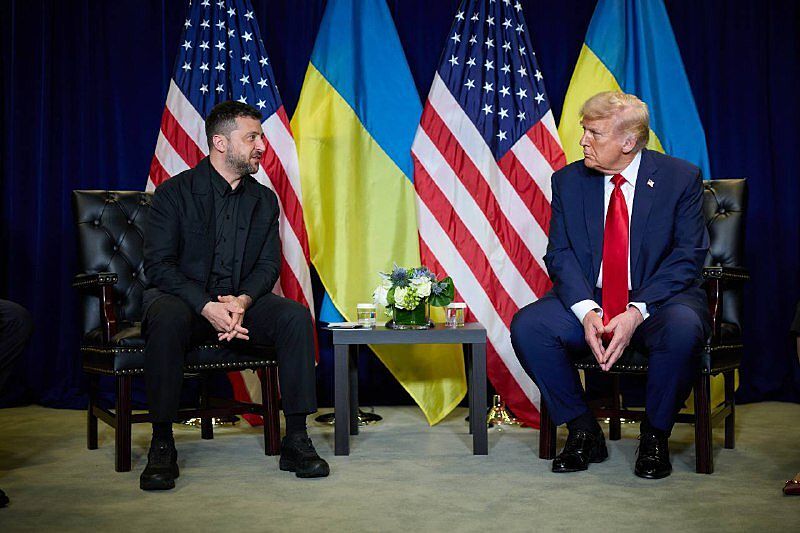
President Volodymyr Zelensky (L) attends a bilateral meeting with U.S. President Donald Trump (R) at the 80th session of the U.N. General Assembly (UNGA) at the U.N. headquarters in New York City. (Presidential Office/Anadolu via Getty Images)
Trump’s Revolutionary About-Face: When America Changes Course
The most stunning moment occurred not on any battlefield, but in the carefully choreographed setting of the United Nations, where Donald Trump delivered a policy reversal that reverberated across continents. Following his bilateral meeting with Volodymyr Zelensky, Trump posted a declaration on Truth Social that shattered three years of diplomatic assumptions: “I think Ukraine, with the support of the European Union, is in a position to fight and WIN all of Ukraine back in its original form.”
The statement continued with even greater specificity: “With time, patience, and the financial support of Europe and, in particular, NATO, the original Borders from where this War started, is very much an option.” Trump characterized Russia as having been fighting “aimlessly for three and a half years” and described the country as looking like “a paper tiger.”
During their joint press conference, Trump revealed the calculations behind his transformation. “Well, the biggest progress is that the Russian economy is terrible right now,” he explained. “It’s crashing. And frankly, Ukraine is doing a very good job of stopping this very large army. It’s pretty amazing.”
The American president noted that the conflict was “supposed to be quick, three or four days, but it’s been three and a half years of very hard fighting. Russia doesn’t look very distinguished.” The war that Putin had promised would be a swift victory had become an embarrassing demonstration of military incompetence on the global stage.
Zelensky seized the moment to brief Trump on recent battlefield developments, reporting that Ukrainian troops had advanced 360 kilometers in recent weeks while inflicting significant losses on Russian forces. “Thanks to our soldiers, we have this possibility, this opportunity, and we will continue until Russia stops this war,” Zelensky told the assembled press corps.
Trump’s social media post concluded with a direct challenge to Moscow: “Putin and Russia are in BIG Economic trouble, and this is the time for Ukraine to act.” He promised that “the United States will continue to supply weapons to NATO for NATO to do what they want with them.”
Moscow’s Fatal Admission: When Ambitions Exceed Capabilities
While Trump was reversing American policy in New York, Russia’s Ministry of Defense chose this moment to make an unprecedented public declaration that exposed the regime’s true territorial ambitions. In a social media statement that contradicted years of Russian diplomatic positions, the ministry claimed Russian forces were “continuing their offensive operation aimed at seizing Kupyansk” and had “partially enveloped Ukrainian forces in the city.”
More significantly, the ministry outlined plans to “leverage the seizure of Kupyansk to attack further into eastern Kharkiv Oblast in several directions simultaneously,” specifying advances toward Chuhuiv, Izyum, and Vovchansk. The statement declared Russian intentions for Western and Northern groupings of forces to “unite the Vovchansk and Kupyansk efforts” to establish a “buffer zone” near the international border in northern Kharkiv Oblast.
The ministry also claimed that seizing Kupyansk would support Russian efforts to advance toward Slovyansk and Kramatorsk in Donetsk Oblast and capture “Ukraine’s fortress belt.” These objectives extended far beyond the four oblasts Russia had previously claimed represented its maximum territorial demands.
The battlefield reality told a different story than Russian propaganda. Ukrainian military spokesperson Victor Tregubov denied Russian claims of encirclement around Kupyansk, stating that Russian forces were attempting to advance toward the city from the north but had achieved none of their stated objectives.
Fire in the Russian Heartland: When War Comes Home
Ukrainian forces demonstrated their deepest strike capabilities yet, conducting extensive attacks against Russian territory that reached the very heart of Putin’s empire. During the night of September 22-23, Ukraine’s Unmanned Systems Forces struck two Russian linear production and dispatch stations along main oil pipelines in Bryansk and Samara oblasts—targets that supplied fuel directly to Russian military forces and processed crude oil for international export.
The Bryansk Oblast facility was part of the strategically crucial 8-N “Steel Horse” pipeline system that served as a lifeline for Russian military logistics. The Samara dispatching station, located approximately 800 kilometers from the front line, processed crude oil from various Russian fields to produce Urals export-grade oil for global markets.
Moscow City Mayor Sergei Sobyanin reported Ukrainian drone attacks throughout the night, with thirty-four drones shot down approaching the capital by 9 a.m. local time. Russian authorities imposed temporary restrictions at Sheremetyevo Airport as the attacks unfolded, forcing ordinary Russians to confront the reality that their country’s war had consequences reaching into their daily lives.
The Russian Defense Ministry claimed downing sixty-nine Ukrainian drones across nine regions, including Moscow Oblast and occupied Crimea. The scale of the defensive effort revealed the extent of Ukrainian operational reach, forcing Russia to divert resources from frontline positions to protect industrial infrastructure hundreds of kilometers from the fighting.
For residents of the Russian capital, air raid sirens and airport closures transformed an abstract “special military operation” into a lived reality of disrupted travel and industrial fires visible from residential areas.
The United Nations Stage: When Diplomacy Meets Warfare
The surreal juxtaposition of diplomatic negotiations occurring simultaneously with active warfare reached its peak during Zelensky’s address to the UN Security Council. As Russian missiles struck Ukrainian cities in real time, the Ukrainian president presented an unprecedented proposal that challenged fundamental assumptions about Western non-involvement in the conflict.
“If we could strengthen our skies with a joint system to shut down Russian missiles and drones, it would force Russia to stop its attack from the sky,” Zelensky declared to the assembled diplomats. His reasoning was stark: “Because everything could be shut down and so Putin would be forced to sit here, or in another respectable venue, and look for a truce on the ground.”
Zelensky’s logic was simple and compelling: “If there is no war in the sky, Russia can’t keep fighting on the ground.” The Ukrainian president added that he had discussed this concept with Trump and other European leaders, though he provided no specific details about implementation or commitments received.
“We expect America’s actions to push Moscow towards peace,” Zelensky concluded. “Moscow fears America and always pays attention to it.” The statement reflected growing Ukrainian confidence that American pressure could accomplish what European diplomacy had failed to achieve.
When NATO Finally Says Enough: Authorization to Shoot Down Russian Aircraft
The most significant shift in NATO policy occurred during Trump’s press conference with Zelensky, when the American president directly authorized alliance members to use lethal force against Russian aircraft. When asked whether NATO allies should fire on Russian planes entering their airspace, Trump replied with remarkable brevity: “Yes, I do.”
Trump qualified his position by stating that U.S. backing would depend on circumstances, but emphasized: “We are very strong toward NATO.” The statement marked a dramatic escalation in authorized responses to Russian provocations.
Estonian Foreign Minister Margus Tsahkna immediately announced his country’s readiness to implement exactly such measures. “The message must be unequivocal: future violations will meet a response—including, if necessary, the interception and downing of intruding aircraft,” he told reporters. “This is not only about defending Estonia’s borders—it’s about defending NATO’s borders.”
Lithuania’s parliament approved amendments allowing military forces to more quickly shoot down drones threatening Lithuanian airspace. Defense Minister Dovile Sakaliene explained that the new rules addressed legal gaps that had prevented swift responses to modern aerial threats.
NATO issued its strongest statement yet: “Russia bears full responsibility for these actions, which are escalatory, risk miscalculation and endanger lives. They must stop.” The alliance declared that “Russia should be in no doubt: NATO and allies will employ all necessary military and non-military tools to defend ourselves.”
The Energy War: When Economic Pressure Meets Military Objectives
Trump’s address to the UN General Assembly contained his most direct economic ultimatum to European allies, delivered with characteristic bluntness. “Europe has to step it up. They can’t be doing what they’re doing. They’re buying oil and gas from Russia while they’re fighting Russia,” he declared to the assembled world leaders.
The American president’s frustration boiled over as he condemned NATO members specifically: “Think of it: they’re funding the war against themselves. Who the hell ever heard of that one?”
Trump announced his intention to personally pressure European leaders, specifically mentioning plans to contact Hungarian Prime Minister Viktor Orbán about stopping Russian energy purchases. “He’s a friend of mine,” Trump said. “I have a feeling that, if I did, he might stop. And I think I’ll be doing that.”
The president also accused China and India of being “the primary funders” of the war through continued Russian oil purchases, indicating that American pressure would extend beyond European allies to include major Asian economies.
The Spy Among Us: When Trust Breaks Down
A bizarre subplot emerged from western Ukraine that illustrated the paranoia and mistrust pervading Ukrainian society after more than three years of conflict. Lviv Mayor Andrii Sadovyi revealed that a listening device had been discovered in his office phone charging stand after the phone malfunctioned and was sent for repairs.
Sadovyi acknowledged the device could have recorded conversations held in his office with senior Ukrainian officials and foreign visitors. “If those conversations go public, it’s not great. Although, to be honest, we didn’t say anything particularly special,” he commented with remarkable equanimity given the circumstances.
No court order authorizing the surveillance had been confirmed, raising disturbing questions about whether the device represented foreign intelligence operations, unauthorized domestic surveillance, or criminal activity. The Security Service of Ukraine opened an investigation into the incident.
The Price of Resistance: When Funding Needs Explode
Behind the diplomatic breakthroughs and military operations lay an economic reality that would determine the war’s ultimate sustainability. The International Monetary Fund convinced Ukrainian officials to raise their external funding projections from thirty-eight billion to sixty-five billion dollars through 2027—a staggering increase that reflected the true cost of sustained resistance against Russian aggression.
President Zelensky met with IMF Managing Director Kristalina Georgieva during his New York visit to discuss “possibilities of using frozen Russian assets for the benefit of Ukraine and all potential avenues of cooperation.” The meeting concluded with agreements for “further close cooperation between the Government of Ukraine and the IMF” in developing new financing mechanisms.
Systematic Torture: When War Crimes Become State Policy
The most disturbing revelations came from UN investigators who documented the systematic nature of Russian war crimes against Ukrainian civilians. The UN Office of the High Commissioner for Human Rights released a report based on interviews with 216 civilians released from Russian custody since June 2023.
The findings were stark and uncompromising: ninety-two percent of interviewed former detainees “gave consistent and detailed accounts of having been subjected to torture or ill-treatment during their captivity.” The methods documented included “severe beatings with a variety of instruments, such as batons and sticks, electric shocks to various body parts, mock executions.”
UN rights chief Volker Türk stated that “people have been arbitrarily picked off the streets in occupied territory, charged under shifting legal bases and held for days, weeks, months and even years.”
The systematic nature of the abuse indicated that torture had become official Russian policy rather than isolated incidents of misconduct.
The Daily Death Toll: When Civilians Pay the Price
Even as diplomats negotiated in New York conference rooms, Russian forces continued their systematic targeting of Ukrainian civilian infrastructure and population centers. Russian attacks killed at least seven Ukrainian civilians and injured twenty-seven others across multiple regions.
A Russian missile strike on civilian infrastructure in Tatarbunary, Odesa Oblast, killed a woman and injured three others. The target had no military significance—it was simply another manifestation of Russia’s campaign to break Ukrainian morale through indiscriminate attacks on civilian facilities.
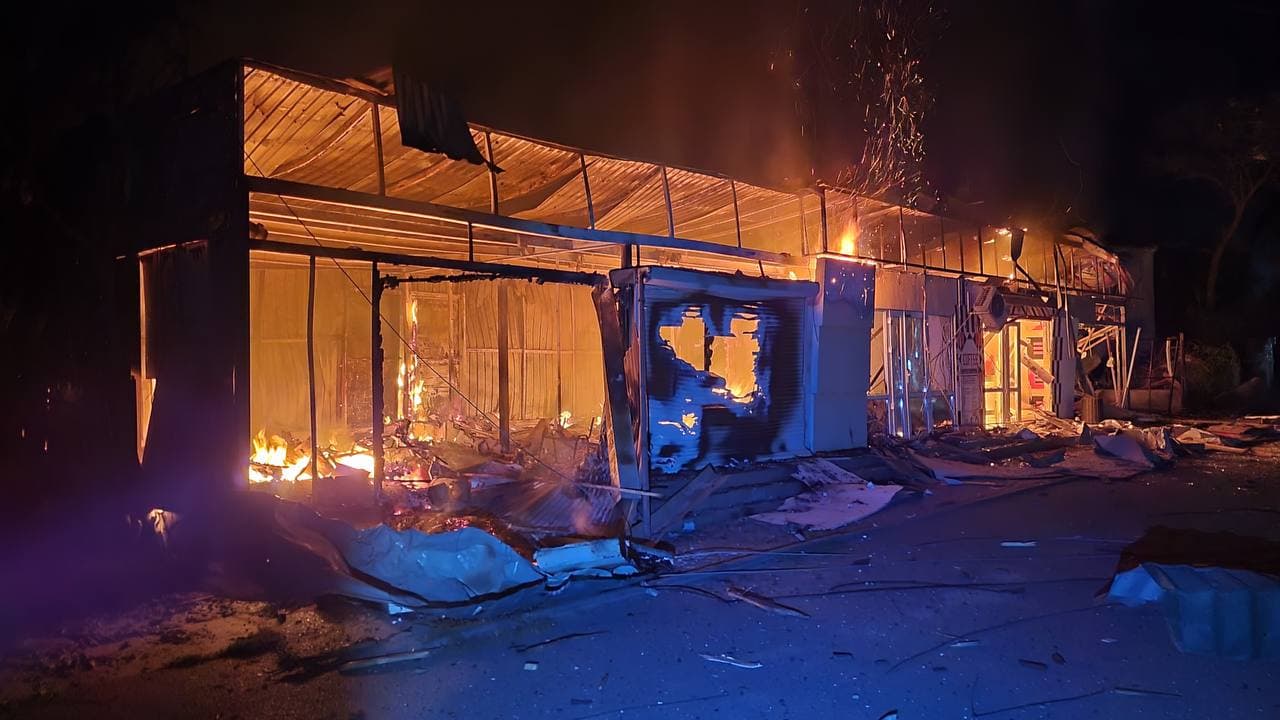
The aftermath of a Russian attack on Odesa Oblast, Ukraine, overnight. (Oleh Kiper/Telegram)
Russian aircraft bombed Zaporizhzhia with five high-explosive bombs, killing one man in an attack that deliberately targeted civilian infrastructure. The timing was particularly cruel, occurring as Trump and Zelensky were meeting to discuss peaceful solutions to the conflict.
A sixty-five-year-old woman died in a Russian attack on Kupiansk, the same city where Russian forces claimed to be conducting “liberation” operations. Russian strikes in Donetsk Oblast killed three people in Bilozerske and Kostiantynivka, while thirteen additional residents suffered injuries across the region.
Putin’s Propaganda Coup: When Former American Officials Become Russian Citizens
In a move calculated to embarrass American democracy, Russian President Vladimir Putin granted citizenship to Tara Reade, a former aide to Joe Biden who had fled to Russia after making harassment allegations during the 2020 presidential campaign.
Reade had worked in Biden’s Senate office in the early 1990s and accused him of harassment during his presidential campaign. Biden denied the allegations and no formal charges were filed, but Reade’s subsequent journey to Russia provided Putin with a propaganda opportunity he couldn’t resist exploiting.
After moving to Russia, Reade appeared on Kremlin-controlled media to apologize for America’s “aggressive stance” toward Russia and Washington’s support for Ukraine. The citizenship grant violated standard naturalization requirements, indicating special provisions for politically useful defectors.
Ukrainian Air Defense Excellence: When Technology Meets Determination
The night provided a dramatic demonstration of Ukrainian air defense capabilities as Russian forces launched their most extensive aerial barrage in weeks. The Ukrainian Air Force reported that Russian forces launched three Iskander-M/KN-23 ballistic missiles and 115 drones in a coordinated attack designed to overwhelm defensive systems.
Ukrainian air defenses shot down or suppressed 103 drones—a success rate of nearly ninety percent that demonstrated the effectiveness of Western-supplied air defense systems operated by expertly trained Ukrainian personnel. Only three missiles and twelve drones struck six locations, with debris falling in eight additional areas.
The limited damage compared to the scale of the Russian assault showed how Ukrainian defensive capabilities had evolved during three years of constant bombardment.
Counterstrikes: When Ukraine Hits Back
Ukrainian forces demonstrated their own deep-strike capabilities with precision attacks on high-value Russian military targets across occupied territories. Satellite imagery revealed Ukrainian attacks against the Russian 40th Separate Command and Measuring Complex near occupied Vityne in Crimea, along with strikes on the Russian 31st Air Defense Division command post.
Ukrainian military intelligence confirmed strikes on two Russian Be-12 Chayka amphibious aircraft at the Kacha military airbase in occupied Crimea, eliminating valuable reconnaissance and transport assets. Ukrainian forces also destroyed a Russian ammunition depot in occupied Bohdanivka, Luhansk Oblast, eliminating stored drones, batteries, communication modules, and video transmitters along with conventional munitions.
The Battlefield Reality: When Claims Meet Evidence
While Russian propaganda proclaimed imminent victories and territorial gains, the battlefield evidence revealed a different story entirely. Ukrainian forces advanced in multiple tactical areas, with geolocated footage confirming advances into southern Novomykolaivka in the Novopavlivka direction and territory retaken south of Stepnohirsk in western Zaporizhzhia Oblast.
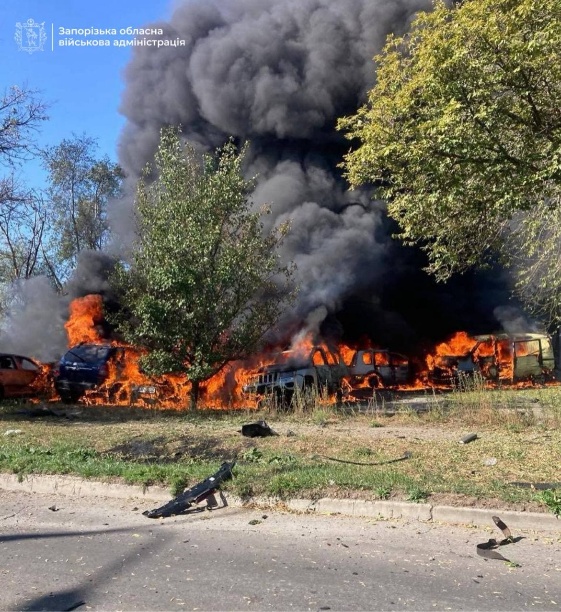
Burning vehicles and thick smoke rise after Russian strikes hit Zaporizhzhia, Ukraine. (Ivan Fedorov / Telegram)
Russian forces conducted extensive attacks across all major front sectors without achieving significant territorial gains in most areas. Geolocated footage confirmed Russian advances into southern Pleshchyivka and central Nelipivka in the Kostyantynivka-Druzhkivka tactical area, while Russian forces seized Pereizne south of Siversk.
Ukrainian forces conducted counterattacks near Smorodkivka northwest of Kupyansk and near Boikivka and Novotoretske in the Dobropillya area, demonstrating continued capacity for offensive operations despite defensive pressures across multiple sectors.
The Day’s Revolutionary Significance
This watershed moment marked the transformation of a conflict that had already reshaped international relations across multiple continents. Trump’s complete policy reversal from territorial concessions to supporting Ukraine’s complete victory occurred simultaneously with Russia’s public admission of territorial objectives extending far beyond previously acknowledged boundaries.
These diplomatic transformations unfolded as Ukrainian forces demonstrated deep-strike capabilities reaching the heart of Russian territory while Russian attacks continued killing Ukrainian civilians in a systematic campaign of terror. The day illustrated how military operations, diplomatic negotiations, economic pressure, and information warfare had become inseparable elements of a single comprehensive struggle.
The events established new parameters for future negotiations while demonstrating that three years of sustained resistance had fundamentally altered international perceptions of the conflict’s trajectory. What had begun as a presumed Russian steamroller had become a grinding demonstration of democratic resilience against authoritarian aggression.
The 1,308th day of war had produced changes that no previous military victory had achieved, suggesting that persistence and innovation could overcome even the most entrenched geopolitical assumptions. The revolution was diplomatic, but its implications were entirely practical: the war’s outcome was no longer predetermined, and Ukraine’s complete victory had become not just possible, but probable.