
When Trump’s meeting with Zelensky transformed American policy, Moscow responded with nuclear threats, and Ukrainian drones reached deep into Russian territory while a tortured journalist’s death exposed the war’s true cost
The Story of a Single Day
On the 1309th day of war, the conflict’s trajectory shifted in ways that would have seemed impossible just hours earlier. In a Manhattan conference room at the United Nations, President Trump emerged from his private meeting with Volodymyr Zelensky to declare that Ukraine could “fight and win all of Ukraine back”—words that shattered months of diplomatic assumptions about territorial concessions and frozen conflicts. Within hours, Moscow deployed its most dangerous weapon: nuclear blackmail, with Dmitry Medvedev warning that America must abandon sanctions or face “high risk of direct conflict.”
As diplomats scrambled to process these seismic shifts, Ukrainian drones were already demonstrating a different kind of power projection, striking the massive Gazprom Neftekhim Salavat petrochemical plant 1,300 kilometers inside Russia while naval drones exploded in the Black Sea port of Novorossiysk. Meanwhile, Spanish Defense Minister Margarita Robles discovered that even European skies were no longer safe from Russian interference, as her aircraft lost GPS navigation near Kaliningrad. And in the war’s darkest revelation, investigators finally exposed the horrific details of journalist Viktoriia Roshchyna’s torture and death in Russian captivity—a story that illuminated the true cost of bearing witness to this conflict.
This was more than another day of war; it was the moment when nuclear diplomacy collided with precision technology, when presidential patience met its limits, and when the world witnessed how far this conflict had evolved beyond anything resembling traditional warfare.
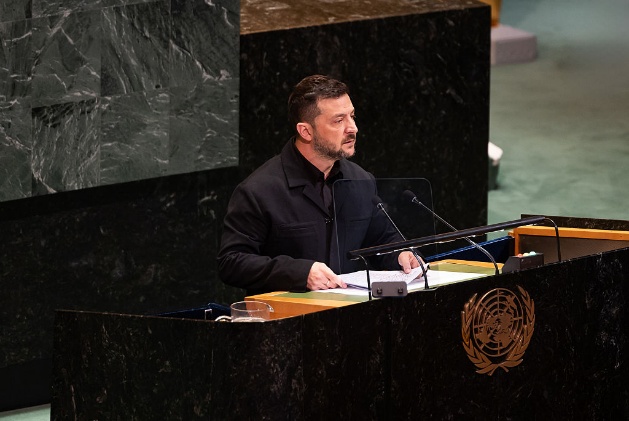
President Volodymyr Zelensky speaks during the United Nations General Assembly (UNGA) at the U.N. headquarters, in New York City. (Presidential Office/Anadolu via Getty Images)
The Manhattan Moment: When Everything Changed
The private meeting between Donald Trump and Volodymyr Zelensky at the UN General Assembly lasted less than an hour, but its aftermath reverberated across continents. When Trump emerged to declare that Ukraine was “in a position to fight and win all of Ukraine back in its original form,” he wasn’t just making a statement—he was abandoning months of carefully constructed diplomatic positions about territorial realities and negotiated settlements.
Zelensky, clearly caught off guard by the transformation, told reporters he was “a little bit surprised by Trump’s shift but welcomed the support.” The Ukrainian president’s surprise was understandable; just a month earlier, Trump had hosted Vladimir Putin in Alaska with promises of facilitating direct negotiations based on current territorial control. Now Trump was suggesting Ukraine could reclaim everything, including Crimea.
“He wants to support Ukraine to the very end,” Zelensky explained, his voice carrying a mixture of relief and amazement. “He understands that Putin doesn’t want this and doesn’t acknowledge that he’s not winning.” The Ukrainian president emphasized that both leaders wanted to “finish this war as quickly as possible,” but now Trump appeared to understand that Putin remained the primary obstacle to any meaningful resolution.
Vice President JD Vance provided the clearest explanation for Trump’s dramatic pivot, telling reporters that the president was “growing incredibly impatient with the Russians right now because he doesn’t feel like they’re putting enough on the table to end the war.” Vance’s words carried the weight of months of frustration, reflecting how Russian intransigence had slowly eroded even Trump’s considerable patience for deal-making.
Secretary of State Marco Rubio reinforced the new American position by announcing that Trump retained “the opportunity and the options” to impose additional sanctions on Russia. Gone was the previous administration’s reluctance to escalate economic pressure; in its place stood a clear warning that America’s “extraordinary patience” had limits, and those limits were rapidly approaching.
Perhaps most dramatically, Trump declared that NATO allies should shoot down Russian aircraft that violated their airspace—a position that drew immediate support from nations on Russia’s borders. Polish Foreign Minister Radoslaw Sikorski’s terse “Roger that” and Estonian Parliament Chairman Marko Mihkelson’s equally brief “we got it” signaled that Eastern European allies had been waiting for precisely this kind of American leadership.
Moscow’s Nuclear Gambit: When Threats Replace Diplomacy
The Kremlin’s response to Trump’s transformation came with the speed and precision of a military operation, but its weapon of choice was the most dangerous in Russia’s arsenal: nuclear coercion. Russian Security Council Deputy Chairman Dmitry Medvedev’s statement appeared calculated to maximum effect, announcing that Russia would honor New START nuclear arms limitations for exactly one year after the treaty’s February 2026 expiration—but only if America abandoned “sanctions and tariffs” targeting Russia.
Medvedev’s warning that otherwise “the risk of direct conflict remains high” represented the kind of nuclear blackmail that had been avoided even during the Cold War’s most dangerous moments. By explicitly tying nuclear arms control to sanctions relief, Moscow was attempting to force Trump into an impossible choice: nuclear stability or economic pressure on Russia.
The threat revealed Moscow’s growing desperation more than its strength. If Russia truly possessed the military and economic advantages that Kremlin propaganda claimed, nuclear coercion would be unnecessary. The ultimatum suggested that sanctions were inflicting damage severe enough to warrant risking nuclear escalation for relief.
Kremlin spokesman Dmitry Peskov launched a coordinated information campaign designed to reinforce the nuclear threat with claims of Russian strength. Russia was “more closely associated with a bear” than Trump’s “paper tiger” characterization, Peskov insisted, while claiming that Ukraine’s military position had deteriorated dramatically since spring 2022. Russian volunteer recruitment was proceeding magnificently, the economy was outperforming the West, and Putin remained “open to the settlement process”—if only America would recognize these supposed realities.
Russian Direct Investment Fund CEO Kirill Dmitriev even claimed Russia’s economy was outperforming those of the EU, UK, and United States, while Medvedev dismissed Trump as living in an “alternate reality.” The coordinated messaging aimed to convince American leadership that Russia possessed both the economic resilience and military capacity to sustain indefinite conflict, making accommodation preferable to continued confrontation.
But the very intensity of the information campaign contradicted its message. If Russia truly held the advantages its officials claimed, such desperate attempts to change American policy would be unnecessary.
Fire Across the Frontier: Ukrainian Precision Strikes
While diplomats traded ultimatums in Manhattan, Ukrainian forces were demonstrating their own form of strategic communication through precision strikes that reached deeper into Russia than ever before. The attack on the Gazprom Neftekhim Salavat petrochemical plant in Bashkortostan Republic represented more than tactical success—it was a statement about Ukraine’s transformation from a nation pleading for weapons to one capable of projecting power across continental distances.
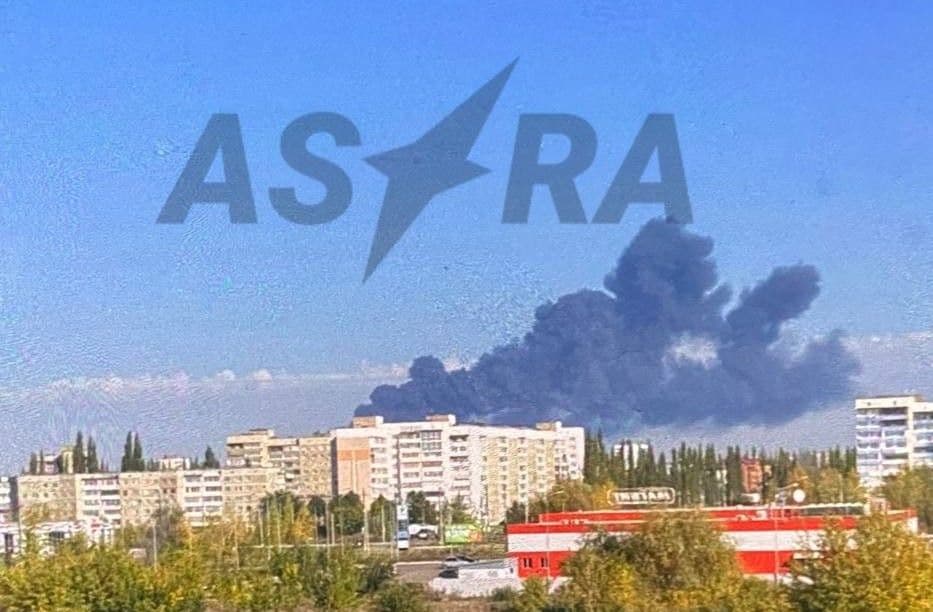
Footage that purports to show the aftermath of a Ukrainian drone strike against Salavat, Russia. (Astra/Telegram)
Ukrainian Security Service sources confirmed that multiple drones had struck the facility, which processed ten million tons of oil annually and served as one of Russia’s key producers of liquid rocket fuel. The plant’s location, 1,300 kilometers from the Ukrainian border, meant the attacking drones had traveled farther than most commercial flights, navigating Russian air defenses and electronic warfare systems to reach their target with lethal precision.
The Salavat strike formed part of a coordinated campaign that demonstrated sophisticated operational planning and technical capability. Ukrainian forces simultaneously hit the Kuzmichi-1 oil pumping station in Volgograd Oblast, which supplied crude oil to southern Russia, and the Zenzevatka pumping station serving the Kuybyshev-Tikhoretsk pipeline used for exports through Novorossiysk. Each target represented a critical node in Russia’s energy export network, chosen not for dramatic effect but for maximum economic impact.
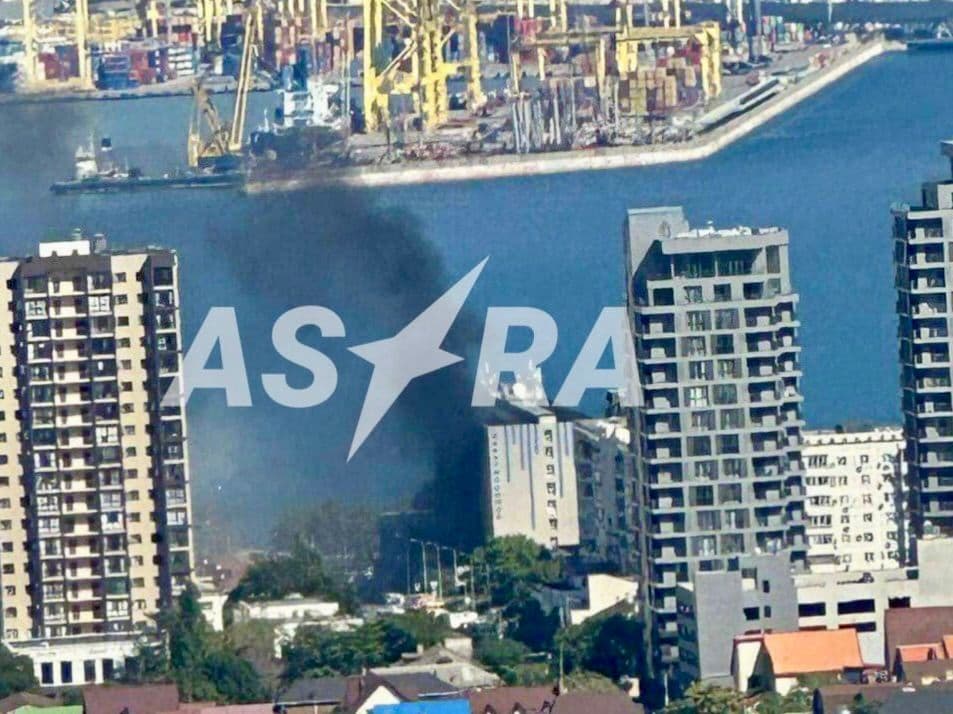
Ukraine reportedly attacked the Russian port city of Novorossiysk, damaging Caspian Pipeline Consortium office. (Astra / Telegram)
Ukrainian naval drones added a maritime dimension to the assault, striking Novorossiysk port in broad daylight with the kind of audacity that would have seemed impossible in the war’s early phases. The attacks damaged buildings throughout the city center, including the Novorossiysk Hotel located two kilometers from the port, while forcing the temporary suspension of Caspian Pipeline Consortium operations that handled over two million barrels of Russian and Kazakh oil daily.
Krasnodar Krai Governor Veniamin Kondratyev’s confirmation that the attacks had killed two people and wounded six others provided a human cost to what was fundamentally an economic warfare campaign. Russian authorities’ matter-of-fact reporting of the casualties suggested they had grown accustomed to Ukrainian strikes reaching previously safe territory, a normalization that itself represented a strategic victory for Kyiv.
Additional strikes at Tuapse port and the drone production facilities in Valuyki, Belgorod Oblast, demonstrated the breadth of Ukrainian targeting capabilities. The coordination required to simultaneously hit facilities separated by thousands of kilometers revealed operational sophistication that rivaled major military powers, achieved by a nation that had been begging for basic weapons just years earlier.
When GPS Goes Dark: Electronic Warfare in European Skies
The moment Spanish Defense Minister Margarita Robles’ aircraft lost GPS navigation while approaching Kaliningrad Oblast, it became clear that the war’s electronic dimensions had expanded far beyond traditional battlefields. The A330 carrying Robles and relatives of Spanish air force personnel to Lithuania’s Siauliai air base experienced the same type of jamming that had previously targeted European Commission President Ursula von der Leyen and other senior European officials.
Spanish defense officials’ casual acknowledgment that such disruptions were “common on routes near Kaliningrad” revealed how thoroughly Russian electronic warfare had normalized attacks on European infrastructure. The fact that the aircraft maintained encrypted military communications throughout the incident demonstrated both Russian targeting precision and the sophisticated nature of the interference—this wasn’t accidental spillover from military operations but deliberate targeting of specific navigation systems.
Robles’ measured response emphasized “the essential right to freely move throughout European territory without experiencing such disruptions,” language that carried diplomatic weight precisely because of its understatement. Lithuanian Defense Minister Dovile Sakaliene’s confirmation that “many civilian aircraft had faced similar disturbances in recent weeks” suggested a systematic campaign rather than isolated incidents.
The GPS jamming represented a form of hybrid warfare that operated below the threshold of direct military confrontation while still demonstrating Russia’s capability to disrupt critical European infrastructure. Kaliningrad’s position as a heavily militarized exclave surrounded by NATO territory made it an ideal platform for such operations, allowing Moscow to project electronic warfare capabilities deep into European airspace without crossing recognized red lines.
Digital Victory in Occupied Territory: The Crimea Hack
Ukrainian military intelligence achieved what conventional military operations had struggled to accomplish—complete penetration of the administrative heart of Russian occupation. The hack of Sergey Aksyonov’s administration yielded over 100 terabytes of classified data, but the quantity mattered less than the quality of intelligence obtained and the strategic implications of the breach.
The most devastating evidence concerned Ukrainian children forcibly removed from occupied territories in Donetsk, Luhansk, Kherson, and Zaporizhia oblasts. The data included personal details, guardian information, and current locations—intelligence that could prove invaluable for future recovery efforts and war crimes prosecutions. With 19,546 Ukrainian children confirmed deported since February 2022 and only 1,605 returned, the hack provided the first comprehensive picture of the systematic nature of these crimes.
Beyond the humanitarian intelligence, the breach exposed practical vulnerabilities in Russian occupation structures. Correspondence files confirmed fuel shortages following Ukrainian strikes on oil refineries, providing real-time assessment of how the drone campaign was affecting Russian logistics. Lists of Russian military personnel with detailed personal and family information offered counterintelligence opportunities that extended far beyond Crimea.
The successful operation marked Ukraine’s second major penetration of Crimean administration systems in recent months, suggesting sustained cyber capabilities that matched the sophistication of the country’s drone warfare innovations. Russian Federal Security Service investigations following the earlier July hack had failed to identify security vulnerabilities, a failure that likely facilitated the September operation.
The Price of Truth: A Journalist’s Final Story
The investigation into Viktoriia Roshchyna’s death revealed not just individual tragedy but systematic brutality designed to silence independent journalism. Ukrainian outlet Slidstvo’s determination that she died on September 19, 2024, at a detention center in Kizel, Perm Krai, provided the final chapter in a story that embodied the war’s assault on truth itself.
The details were devastating in their precision: eight days before her death, Russian authorities had transported Roshchyna 2,500 kilometers from Taganrog to the remote Perm facility, a journey that appeared deliberately designed to inflict maximum suffering. A Ukrainian soldier identified only as Danylo described encountering Roshchyna in detention, severely exhausted with visible signs of systematic abuse that spoke to months of deliberate torture.
A female former detainee’s testimony about witnessing knife wounds and evidence of electric shock torture on Roshchyna’s body provided horrific confirmation of Russian methods. The accounts suggested that Roshchyna had been specifically targeted for harsh treatment due to her profession and determination to document the war’s realities in occupied territory.
Russian authorities’ decision to return Roshchyna’s body falsely labeled as an “unidentified man” with several organs missing revealed premeditated efforts to conceal evidence of torture and murder. The deliberate mislabeling and organ removal suggested systematic attempts to hide the circumstances of her death, efforts that were only defeated by DNA testing and persistent investigative work.
Slidstvo investigators identified senior officials at the Kizel detention center who remained in their positions despite likely involvement in Roshchyna’s death. The lack of accountability suggested that her murder was not an aberration but part of a broader system designed to eliminate independent witnesses to Russian war crimes.
A Commander’s Harsh Verdict: The Kursk Assessment
Valerii Zaluzhnyi’s first public assessment of Ukraine’s 2024 Kursk operation delivered a verdict that cut through official optimism with surgical precision. Writing in Mirror of the Week, the former commander-in-chief acknowledged that while he couldn’t quantify the operation’s exact cost, “it is clear that it was too high.”
The assessment carried particular weight given Zaluzhnyi’s role as the architect of Ukraine’s successful defense during the war’s first two years and his current position as ambassador to the United Kingdom. His critique that “an isolated tactical breakthrough on a narrow section of the front does not bring the necessary success to the attacking side” challenged prevailing narratives that emphasized enemy casualties over strategic objectives.
Zaluzhnyi’s analysis focused on fundamental limitations revealed by the Kursk experience. Despite achieving complete tactical surprise and seizing 1,300 square kilometers of Russian territory, the operation ultimately failed to deliver lasting strategic advantages. Russian forces, reinforced by North Korean troops, had managed to leverage “technological and tactical advantages” to blunt Ukrainian gains and launch successful counterattacks that reclaimed most captured territory.
The former commander’s assessment suggested that future Ukrainian operations would require fundamentally different approaches to achieve sustainable success against Russian defensive capabilities that had evolved significantly since the war’s early phases.
Diplomatic Breakthrough: Syria’s New Direction
The restoration of Ukrainian-Syrian diplomatic relations represented more than bureaucratic formality—it symbolized the broader realignment occurring as the Assad regime’s collapse reverberated across international relationships. President Zelensky’s meeting with Syrian leader Ahmed al-Sharaa at the UN General Assembly produced a Joint Communique restoring diplomatic ties that Damascus had severed when it recognized Russian-occupied Donetsk and Luhansk regions as “independent.”

Ukrainian President Volodymyr Zelensky and Syrian President Ahmed al-Sharaa agree to restore diplomatic ties after meeting in New York. (X/@ZelenskyyUa)
Zelensky’s announcement that Ukraine was “ready to support the Syrian people on the path to stability” carried implications far beyond bilateral relations. The meeting demonstrated Ukraine’s evolution from aid recipient to potential donor, capable of offering expertise in reconstruction, veteran rehabilitation, and resistance to authoritarian influence.
Al-Sharaa’s presence at the UN marked the first time in six decades that a Syrian leader had attended the General Assembly, symbolizing Damascus’s break from Russian influence following Assad’s flight to Moscow. The diplomatic breakthrough provided Ukraine with another international partner while demonstrating the global consequences of the Assad regime’s alignment with Russian aggression.
European Support for Moldova: The Next Battleground
Zelensky’s appeal for increased Western support for Moldova carried urgency that transcended diplomatic courtesy. Speaking to the UN General Assembly, the Ukrainian president warned that “Europe cannot afford to lose Moldova too,” comparing potential Russian influence to “what Iran did to Lebanon.”
The timing was critical, with Moldova facing parliamentary elections on September 28 amid documented Russian interference campaigns. Zelensky’s emphasis that supporting Moldova would require minimal European Union investment while warning that inaction costs could be far greater reflected strategic calculations about preventing another country from falling under Moscow’s sphere of influence.
“The EU needs to help Moldova now with funding and energy support, not only with words or political gestures,” Zelensky declared, his words carrying the weight of someone who had watched Russia systematically target neighboring democracies. The appeal represented Ukraine’s transformation from a nation focused solely on its own survival to one capable of strategic thinking about regional security architecture.
Zelensky’s UN Address: Weapons and Reality
President Zelensky’s formal address to the UN General Assembly delivered a stark assessment of international relations that abandoned diplomatic niceties for uncomfortable truths. “The 21st century isn’t much different than the past,” he declared to the partially empty chamber. “If a nation wants peace, it still has to work on weapons. It’s sick but that’s the reality, not international law, not cooperation—weapons decide who survives.”
The Ukrainian president’s announcement that his country had decided to increase defense production and begin arms exports to other countries represented a complete transformation from the nation that had been pleading for basic weapons just years earlier. Ukraine was now offering “modern weapons” as “modern security” to potential partners, having become an arms exporter through necessity and innovation.
Zelensky’s call for new global rules governing artificial intelligence in weapons systems reflected Ukraine’s position at the forefront of military technological development. His warning that the world was experiencing “the most destructive arms race in human history” carried the authority of someone whose country had become an unwilling laboratory for advanced warfare techniques.
Moscow’s Internal Arrangements: New Leadership and Old Methods
Russia’s unanimous confirmation of Igor Krasnov as Supreme Court chairman completed his transition from prosecutor general to the country’s highest judicial position, but the appointment’s significance extended beyond judicial administration. Krasnov’s record as one of the primary architects of domestic repression—overseeing Alexei Navalny’s arrest and the designation of Navalny-linked organizations as “extremist”—signaled preparation for managing increased domestic pressure.
Putin’s simultaneous appointment of Alexander Gutsan as the new prosecutor general maintained continuity in the legal apparatus that had overseen both domestic repression and war-related prosecutions. The personnel changes suggested Moscow was preparing institutional mechanisms for managing social tensions as the war’s costs became increasingly apparent to Russian society.
The Federation Council’s approval of legislation extending combat veteran status to volunteers in assault formations reflected ongoing efforts to legitimize the use of irregular forces, including prisoners, while managing the political challenges posed by unconventional recruitment methods.
Economic Reality: The Tax of War
The Russian Finance Ministry’s proposal to raise the value-added tax rate from 20 to 22 percent provided concrete evidence of the budget pressures that contradicted official claims of economic stability. The explicit justification—”funding defense and security needs”—represented an acknowledgment that the war’s costs had become unsustainable without additional revenue sources.
The tax increase, which would affect all Russian consumers through higher prices on goods and services, contradicted Finance Minister Anton Siluanov’s June assurance that the government had no plans to revise taxes. The reversal suggested that economic pressures had accelerated beyond official projections, validating Trump’s assessment of Russia as a “paper tiger” facing genuine economic difficulties.
The broader draft budget introducing new taxes on bookmakers and other revenue-generating measures revealed the systematic nature of Moscow’s search for additional funding sources. The changes, scheduled to take effect January 1, 2026, would require ordinary Russians to bear increased costs for sustaining military operations that showed no signs of achieving decisive success.
Conscription Reform: The Machinery of War
Russia’s parliamentary approval of year-round conscription legislation represented more than administrative efficiency—it reflected the systematic expansion of military mobilization capabilities that suggested preparation for sustained conflict. The bill allowing military commissariats to conduct examinations and screenings throughout the year would eliminate the bottlenecks that had previously limited conscription to spring and fall cycles.
Defense Committee Chairman Andrei Kartapolov’s explanation that the reform would “ease pressure on military commissariats” acknowledged the administrative strains created by current mobilization requirements. The change suggested that Russia was preparing institutional mechanisms for potentially larger-scale conscription while maintaining the fiction that current operations relied primarily on volunteers.
Hybrid Warfare Reaches Europe: The Airport Attacks
British authorities’ arrest of a man in his 40s for cyberattacks that disrupted major European airports demonstrated how hybrid warfare had evolved beyond state actors to include individual operators whose motivations remained unclear. The attacks on Brussels, Berlin, and London Heathrow that forced manual check-in procedures and handwritten boarding passes revealed critical infrastructure vulnerabilities that extended far beyond traditional military targets.
The National Crime Agency’s investigation under the Computer Misuse Act reflected law enforcement’s adaptation to threats that blurred lines between criminal activity and strategic operations. While authorities had not determined Russian involvement in the specific incident, the timing amid increasing hybrid warfare activities across Europe suggested coordination that transcended individual action.
Diplomatic Engagement Continues: The Rubio-Lavrov Channel
Secretary of State Marco Rubio’s meeting with Russian Foreign Minister Sergey Lavrov on the UN sidelines demonstrated American willingness to maintain diplomatic channels even as tensions escalated dramatically. The State Department’s report that Rubio had “reiterated President Trump’s call for the killing to stop and the need for Moscow to take meaningful steps toward a durable resolution” suggested continued hope for negotiated settlement despite the day’s harsh exchanges.
Trump’s declaration that the U.S. would “continue to supply weapons to NATO for NATO to do what they want with them” provided concrete backing for the administration’s transformed position. The commitment to arms supplies through NATO channels offered European allies direct access to American weapons while maintaining some distance from bilateral U.S.-Ukraine military cooperation.
Battlefield Evolution: The Technological Arms Race
Valerii Zaluzhnyi’s assessment of battlefield developments revealed how technological innovation was fundamentally altering the nature of ground combat. Russian drone strikes and innovations had forced Ukrainian forces to operate in scattered small groups with autonomous decision-making authority, creating what Zaluzhnyi described as “kill zones” extending 20 kilometers from front lines where concentrated forces became vulnerable to immediate attack.
The dispersal necessitated by drone dominance was blurring traditional frontline concepts while forcing both sides to adapt tactics and equipment to new realities. Russian forces had developed infiltration techniques specifically designed to exploit the gaps created by Ukrainian defensive dispersal, particularly near Dobropillya and Kupyansk where underground approaches had achieved tactical success.
Ukrainian electronic warfare expert Serhiy “Flash” Beskrestnov’s report that some Russian drones now operated without communication channels, navigating and striking targets autonomously, represented a significant technological advancement that threatened to undermine Ukrainian defensive advantages based on electronic warfare capabilities.
The evolution toward artificial intelligence-enabled autonomous weapons, which Zaluzhnyi identified as a new battlefield threat, suggested that both sides were racing to deploy technologies that would have been science fiction just years earlier.
Training Under Fire: The Persistent Threat
Russian forces’ Iskander ballistic missile strike against a Ukrainian Ground Forces training ground demonstrated the persistent vulnerability of rear-area facilities despite extensive security measures. The Ground Forces’ acknowledgment that “despite security precautions, a direct hit against a shelter made it impossible to fully prevent casualties” revealed the limitations of passive defense against precision weapons.
The military’s decision not to disclose the strike location while emphasizing ongoing efforts to “fortify training centers with reinforced shelters” reflected the adaptation required to maintain essential training functions under constant threat of attack. The strike highlighted Russian capabilities for surveillance and targeting of military installations far from traditional front lines.
The Daily Toll: Combat Across All Fronts
The day’s combat operations across multiple sectors demonstrated the war’s evolution into a complex multi-front conflict where tactical gains measured in meters came at enormous cost in human life and material resources.
Northern Operations: Russian forces continued attacks in Kursk and northern Sumy oblasts without achieving confirmed territorial gains, while elements of the 810th Naval Infantry Brigade were redeployed from defensive positions to assault operations near Kindrativka—a tactical shift that suggested either opportunity or desperation.
Eastern Front Dynamics: Ukrainian forces achieved assessed advances north of Torske in the Lyman direction while Russian forces made confirmed progress south of Novoselivka in the Siversk sector. The mixed results reflected the attritional character of operations where both sides achieved limited gains through sustained pressure rather than breakthrough operations.
Kostyantynivka Pressure: Russian advances to the eastern outskirts of Kostyantynivka represented continued pressure on Ukrainian defensive lines in a tactically significant area, with unconfirmed claims of enveloping positions near the Kleban-Byk Reservoir suggesting potential operational developments.
Pokrovsk Complexity: The direction witnessed advances by both sides—Ukrainian forces moving east of Kozatske and into eastern Novopavlivka while Russian forces gained ground within western Udachne. The mixed results demonstrated how tactical success had become increasingly difficult to translate into operational advantage.
Southern Adaptations: Russian advances into southwestern Stepnohirsk in western Zaporizhia Oblast contrasted with limited operations elsewhere along the southern front, suggesting concentration of resources in specific sectors rather than broad offensive pressure.
The Air War’s Human Cost
Russian forces’ overnight launch of 152 Shahed-type and decoy drones against Ukrainian targets represented the kind of mass attack that had become routine but no less devastating for its familiarity. Ukrainian air defenses’ successful interception of 126 attacking aircraft demonstrated improved capabilities while the remaining 26 strikes that found their targets reminded everyone that perfect defense remained impossible.
The targeting of energy infrastructure in Kharkiv City, which created power outages affecting 80,000 customers, exemplified the systematic campaign against civilian infrastructure designed to break Ukrainian morale while degrading essential services. The civilian casualties reported across multiple regions—from a 70-year-old woman killed in Dnipropetrovsk Oblast to 15 injured in Zaporizhia City—provided the human cost of Russia’s strategy of terrorizing Ukrainian population centers.
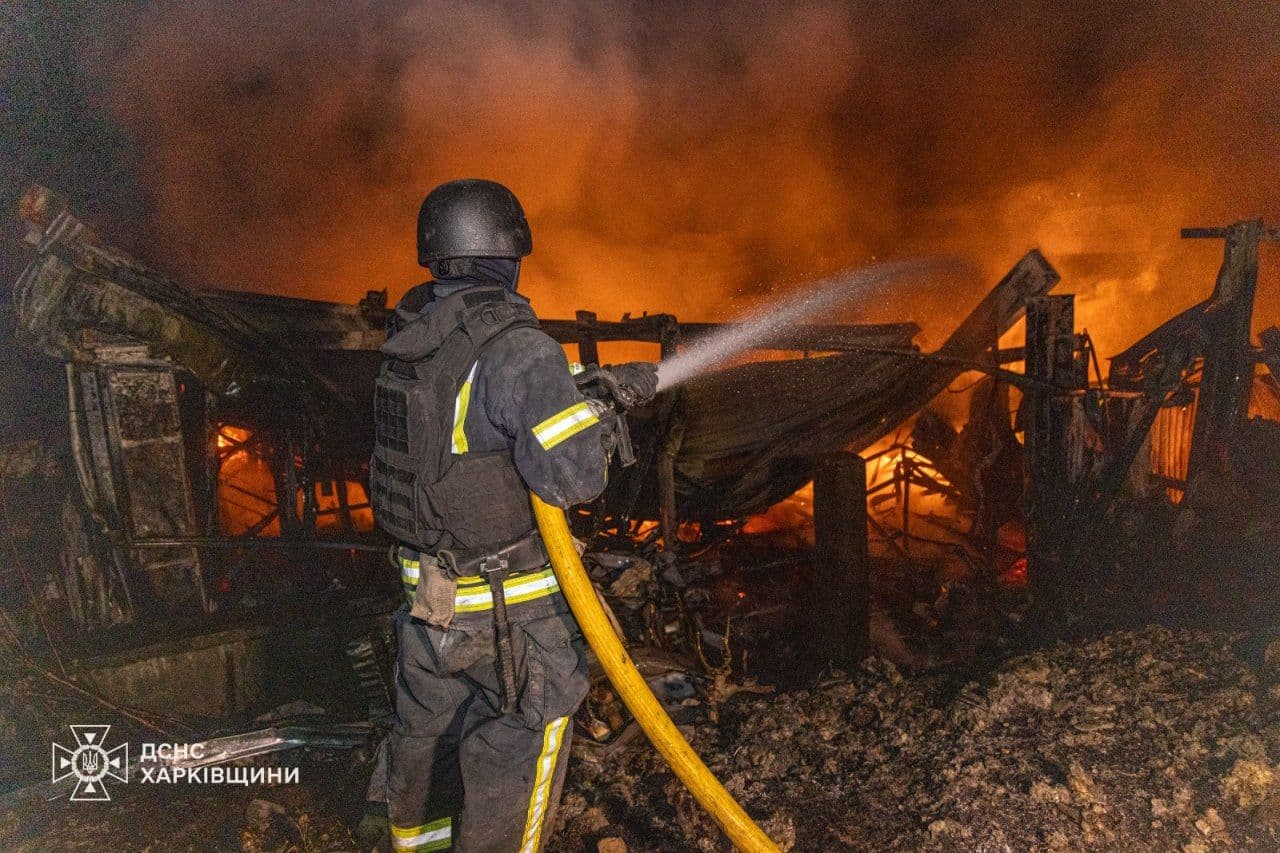
The aftermath of Russian attacks against Kharkiv Oblast overnight. (State Emergency Service/Telegram)
The Day That Changed Everything
September 24, 2025, marked the day when nuclear ultimatums met presidential impatience, when precision technology challenged nuclear coercion, and when the war’s true character emerged from diplomatic shadows. Trump’s transformation at the UN didn’t just change American policy—it forced both Moscow and Kyiv to recalculate strategies based on new realities about Western commitment and Russian vulnerability.
The Kremlin’s resort to nuclear threats revealed desperation that contradicted claims of military and economic strength, while Ukrainian strikes across thousands of kilometers demonstrated technological capabilities that had evolved far beyond anyone’s expectations. The electronic warfare targeting European officials and successful cyber operations against Russian administration showed how the conflict had expanded into domains that traditional warfare concepts could barely comprehend.
From the tortured death of journalist Viktoriia Roshchyna to the diplomatic breakthrough with Syria, from Zaluzhnyi’s harsh assessment of the Kursk operation to the daily toll of combat across multiple fronts, the day revealed a war that had transformed all its participants and would continue reshaping international relations long after the fighting ended. Nuclear shadows and precision strikes, cyber warfare and diplomatic innovation had converged to create a new reality where yesterday’s impossible had become today’s inevitable.