
A day when Russia’s foreign minister claimed NATO had declared war, Ukrainian cyber warriors crippled Moscow’s payment systems, and Europe’s largest nuclear plant balanced on the edge of catastrophe
The Story of a Single Day
On the 1310th day of war, the conflict exploded across dimensions that traditional military doctrine could barely comprehend. Russian Foreign Minister Sergey Lavrov stood before G20 foreign ministers and declared that “NATO and the European Union have declared war on Russia through Ukraine”—words that transformed diplomatic meetings into theaters of open confrontation. Meanwhile, Ukrainian military intelligence launched the most devastating cyber attack yet seen, disabling Russia’s SPB payment system and leaving millions of citizens unable to complete basic financial transactions worth $30 million.
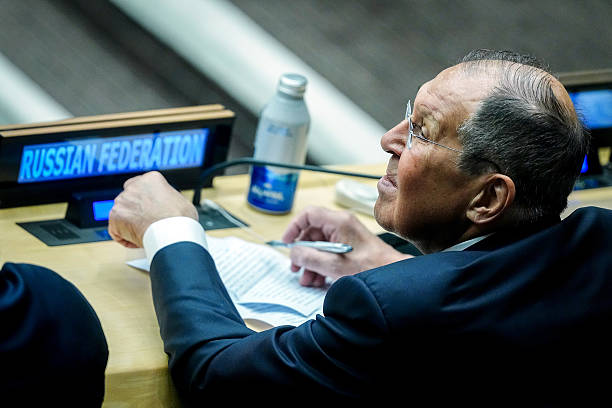
Sergey Lavrov, Foreign Minister of Russia, takes part in the G20 Foreign Ministers’ Meeting on the margins of the General Debate of the UN General Assembly. Lavrov claimed during the session that NATO and the EU have “declared war” on Russia through Ukraine. (Kay Nietfeld/picture alliance via Getty Images)
As diplomatic rhetoric reached wartime levels and cyber operations paralyzed Russian infrastructure, the occupied Zaporizhzhia Nuclear Power Plant entered its second day without external electricity, forcing Europe’s largest nuclear facility to rely on failing diesel generators. Simultaneously, European diplomats delivered private ultimatums to Russian officials in Moscow, warning that NATO was prepared to shoot down Russian aircraft violating member airspace, while President Zelensky conducted a diplomatic marathon across the UN, meeting leaders from five continents to secure support for Ukraine’s war effort.
This was the day when multiple crises converged: nuclear facilities teetered on the edge of catastrophe, cyber warfare reached civilian populations, diplomatic language abandoned all pretense of restraint, and international meetings became venues for declaring the undeclared. The war had evolved beyond recognition into something that challenged every assumption about modern conflict.
Digital Devastation: The $30 Million Cyber Strike
The moment Ukrainian military intelligence launched its distributed denial-of-service attack against Russia’s SPB payment system at 7:00 a.m. Moscow time, millions of ordinary Russians discovered that their daily lives had become legitimate targets in a war they thought was happening far from their cities. The cyber operation didn’t just disrupt financial infrastructure—it paralyzed the mundane transactions that modern society required to function.
Passengers found themselves stranded at public transport stops in Yekaterinburg as QR code payment systems failed completely. Gas stations across multiple regions rejected electronic payments, creating cascading disruptions that forced citizens to carry cash or abandon essential purchases. The attack on the National Payment Card System left hundreds of thousands of subscribers without internet access or interactive television, creating information blackouts that reminded everyone how thoroughly digital infrastructure had become weaponized.
A HUR source confirmed to the Kyiv Independent that the operation specifically targeted systems supporting Russia’s war economy, but the effects rippled far beyond military financing into civilian life. Downdetector registered massive spikes in service disruptions between 7:00 and 11:00 a.m., creating a real-time map of Ukrainian cyber capabilities that extended across vast distances and multiple systems simultaneously.
Transtelekom’s official acknowledgment of service outages due to “reasons beyond our control” provided euphemistic confirmation of what Russian citizens were experiencing directly: their country’s digital infrastructure was vulnerable to foreign attack in ways that made everyday life uncertain. The estimated $30 million in economic damage represented more than financial loss—it was a demonstration that Ukraine could impose immediate costs on Russian society without deploying a single soldier or conventional weapon.
The psychological impact exceeded the technical disruption. For Russians far from any traditional battlefield, the attack demonstrated that their government’s war had consequences that could reach into their wallets, their commutes, and their access to basic services with surgical precision and devastating effect.
Nuclear Brinkmanship: When Power Grids Become Weapons
The Zaporizhzhia Nuclear Power Plant’s entry into its second day without external electricity transformed recurring nuclear safety concerns into an immediate continental crisis. Russian forces had deliberately severed the plant’s final connection to Ukraine’s electrical grid, leaving Europe’s largest nuclear facility dependent on backup diesel generators designed only for short-term emergency use.
Energoatom’s stark warning that the situation threatened “not only Ukraine but European countries” carried weight that extended far beyond diplomatic language into the realm of potential catastrophe affecting millions of people across multiple nations. The diesel generators maintaining critical safety functions were operating beyond their intended parameters, creating possibilities for reactor control failures that could trigger radiological releases affecting vast areas.
The crisis marked the plant’s tenth blackout since Russian occupation began, but this incident carried particular danger because it occurred during active combat operations that prevented normal repair procedures. Ukrainian grid operator Ukrenergo confirmed that the damaged power line remained operational on Ukrainian-controlled territory, but Russian military forces were deliberately blocking reconnection efforts—a decision that prioritized short-term tactical advantage over continental nuclear safety.
International Atomic Energy Agency monitoring teams remained stationed at the facility but continued facing Russian restrictions on their access and operations. The restrictions meant that international observers could document but not prevent actions that endangered nuclear security norms developed over decades of international cooperation and hard-learned experience.
The plant’s vulnerability highlighted how thoroughly military objectives had superseded safety considerations in ways that challenged fundamental assumptions about nuclear facility protection during armed conflict. Each hour that passed with emergency generators running increased the probability of system failures that could create radiological emergencies affecting multiple countries.
Lavrov’s Declaration: When Diplomats Abandon Diplomacy
Russian Foreign Minister Sergey Lavrov’s declaration at the G20 foreign ministers’ meeting that “NATO and the European Union have declared war on Russia through Ukraine” marked the moment when diplomatic language abandoned all pretense of restraint. His claim that Western alliances were “directly participating” in war represented an escalation in rhetoric that transformed international meetings into forums for open confrontation.
The timing of Lavrov’s statement, following his meeting with U.S. Secretary of State Marco Rubio, suggested calculated escalation rather than spontaneous outburst. Rubio had reiterated President Trump’s calls for Russia to take “meaningful steps toward a durable resolution,” but Lavrov’s response indicated Moscow’s rejection of any negotiated settlement that required Russian concessions.
Lavrov’s characterization of the “crisis in Ukraine” as “provoked by the collective West” represented systematic narrative reversal that blamed victims for their own victimization while portraying Russian aggression as defensive response to Western provocation. The language suggested that Moscow was prepared to frame any alliance support for Ukraine as direct military confrontation justifying expanded Russian retaliation.
The declaration occurred as multiple NATO members were experiencing Russian airspace violations and cyber attacks, creating context where Lavrov’s words carried implications for immediate military escalation rather than theoretical future confrontation. His statement that alliances had “already declared” war suggested Russian officials were preparing justifications for actions that would formalize the undeclared conflict already underway.
The G20 setting gave Lavrov’s declaration global audience while positioning Russia as responding to Western aggression rather than initiating military action. The rhetorical strategy aimed to justify Russian escalation while claiming defensive necessity, but the language’s extremity suggested Moscow was preparing for confrontation levels that would abandon remaining diplomatic constraints.
European Ultimatum: Private Warnings, Public Consequences
The private meeting between European and Russian diplomats in Moscow delivered the bluntest warning yet about NATO’s readiness to use force against Russian provocations. British, French, and German officials told their Russian counterparts that further airspace violations would meet military response, including the shooting down of Russian aircraft—an ultimatum that crossed previous diplomatic red lines.
Bloomberg’s reporting revealed that European diplomats had concluded Russia’s September 19 Estonian airspace violation was deliberately ordered by Russian commanders, despite Moscow’s claims about routine training flights. The private delivery of consequences avoided public escalation while ensuring Moscow understood that NATO patience with provocations had ended.
German Chancellor Friedrich Merz’s public confirmation that European ambassadors had demanded an end to violations provided official acknowledgment of the warning’s seriousness. His coordination with Paris, London, and Warsaw on “all necessary measures” demonstrated unprecedented European unity about defending alliance airspace with force if required.
The warning gained urgency from the context of escalating Russian provocations across multiple domains simultaneously. Danish Defense Minister Troels Lund Poulsen’s consideration of invoking NATO Article 4 following repeated drone incursions provided another escalation mechanism that could formalize alliance responses to continued Russian testing of NATO resolve.
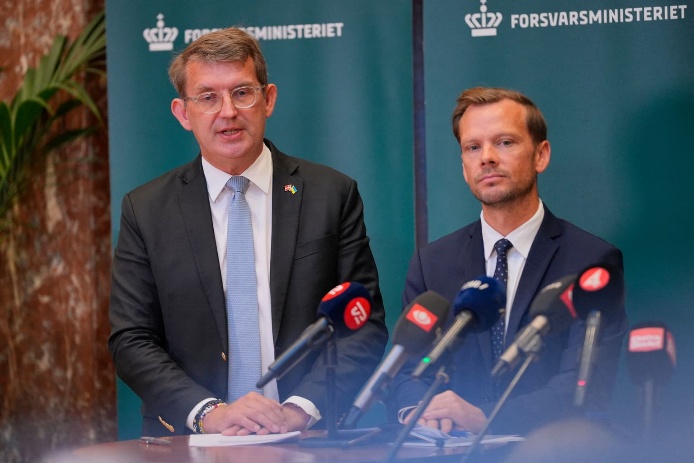
Denmark’s Minister of Defence Troels Lund Poulsen and and Denmark’s Minister of Justice Peter Hummelgaard address a press conference. (Emil Helms/Ritzau Scanpix/AFP via Getty Images)
The private nature of the ultimatum carried diplomatic weight precisely because it avoided public posturing while delivering clear consequences for continued violations. The message represented a fundamental shift from diplomatic protest to military threat, marking the point where European patience with Russian boundary-testing had been exhausted.
Zelensky’s Diplomatic Marathon: Building Global Coalitions
President Zelensky’s meetings with leaders from five continents on September 25 demonstrated Ukraine’s transformation from aid recipient to diplomatic power capable of building global coalitions against Russian aggression. His encounter with French President Emmanuel Macron focused on Russian escalation against European countries, including drone incidents in Poland, Romania, and Denmark, while discussing frozen Russian assets and strengthened sanctions against Moscow’s shadow tanker fleet.
The meeting with NATO Secretary-General Mark Rutte highlighted expanding military support through the PURL initiative, which had already raised $2.1 billion for American weapons transfers to Ukraine. Zelensky’s observation that “violations of NATO member countries’ airspace are not mistakes, but deliberate actions by Russia” provided Ukrainian perspective on Russian provocations while building alliance unity around coordinated responses.
Zelensky’s encounter with Swedish King Carl Gustaf explored humanitarian support and reconstruction partnerships, including backing for school meal reform programs under First Lady Olena Zelenska’s patronage. The meeting represented Ukraine’s evolution from crisis management to long-term development planning, demonstrating confidence in eventual victory and post-war recovery.
The meeting with Syrian acting President Ahmed al-Sharaa restored diplomatic relations through a joint communiqué signed by foreign ministers, representing both countries’ liberation from Russian influence spheres. The restoration symbolized broader realignments as Russian client states reassessed relationships following Moscow’s weakening position.
Encounters with leaders from Spain, Brazil, Panama, Angola, and South Africa demonstrated Zelensky’s global outreach extending beyond traditional Western allies into developing world relationships. His appeals for sanctions against Russia’s shadow fleet and support for Ukrainian children reflected systematic diplomatic campaigns designed to isolate Moscow while building international support for Ukrainian positions.
Georgian Defiance: Kavelashvili’s Diplomatic Balance
Georgian President Mikheil Kavelashvili’s address to the UN General Assembly struck carefully calibrated tones that acknowledged Ukrainian suffering while defending his government’s pro-Russian orientation. His statement that Georgia “understands the war in Ukraine better than many” carried weight given his country’s 2008 experience with Russian invasion, but his emphasis on “sparing our people from another war no matter the cost” justified accommodation with Moscow.
Kavelashvili’s expression of “firm and unwavering support for the Ukrainian people” while praising Trump’s peace mediation efforts demonstrated diplomatic positioning designed to maintain Western relationships without antagonizing Russia. His acknowledgment of “horrific bloody war” and “immense human suffering” provided humanitarian cover for policies that critics characterized as abandoning democratic principles.
The Georgian president’s diplomatic tone contrasted sharply with his government colleagues’ vitriolic responses to Zelensky’s earlier criticism. Prime Minister Irakli Kobakhidze’s dismissal of Ukrainian concerns and Parliamentary Speaker Shalva Papuashvili’s harsh personal attacks on Zelensky revealed internal tensions between diplomatic positioning and domestic political rhetoric.
Kavelashvili’s UN address represented Georgian Dream’s attempt to maintain international legitimacy while consolidating authoritarian control domestically. His praise for dialogue and peace carried international appeal while providing justification for policies that restricted opposition activities and limited democratic institutions.
First Ladies’ Meeting: Humanitarian Diplomacy and Child Protection
The meeting between First Ladies Olena Zelenska and Melania Trump focused on Ukrainian children suffering due to Russian war crimes, representing humanitarian diplomacy that transcended traditional political channels. Zelenska’s emphasis on “shared values, foremost among them the protection of children and their childhood” established common ground that could influence broader policy discussions.
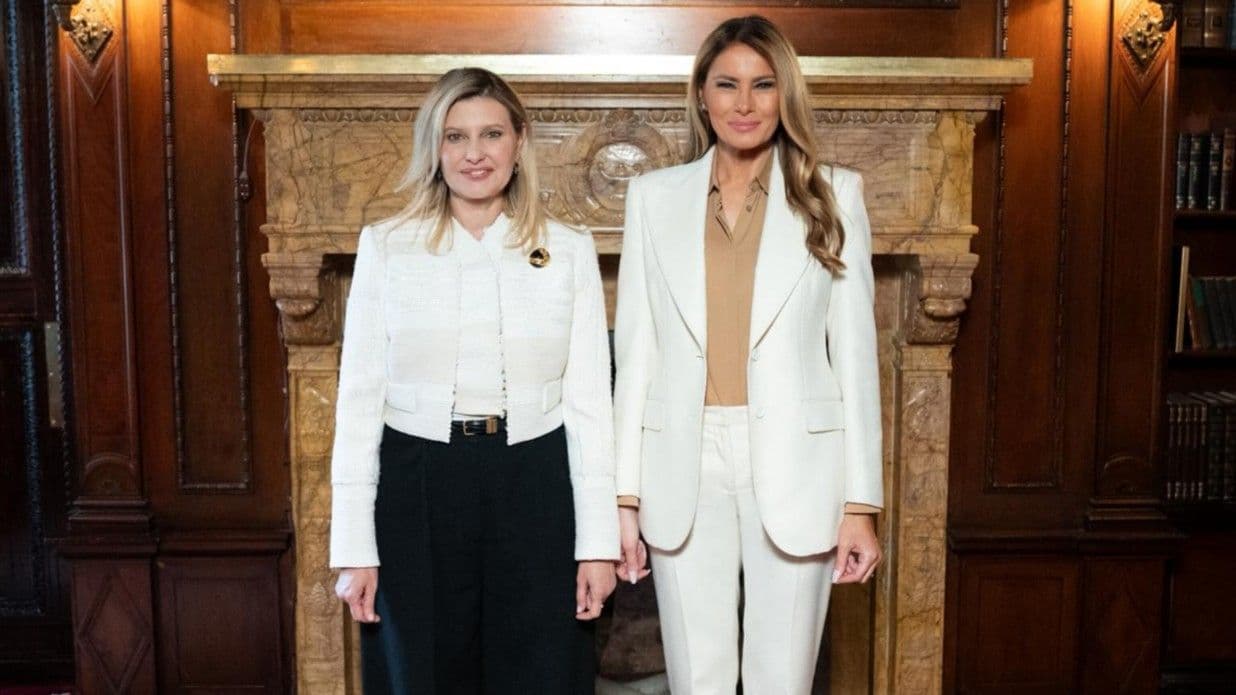
A photo published, showing the meeting between Ukraine’s First Lady, Olena Zelenska, and her U.S. counterpart, Melania Trump. (Ukraine’s Presidential Office)
Melania Trump’s reported letter to Vladimir Putin concerning Ukrainian children provided context for the meeting’s significance, though the letter’s specific content remained disputed between media reports claiming focus on abducted children versus more general humanitarian concerns. The uncertainty reflected ongoing debates about American policy approaches to specific Russian war crimes.
Zelenska’s gratitude for American “attention to children who have become victims of Russia’s brutal war” acknowledged U.S. support while highlighting ongoing needs for international intervention. With 19,546 Ukrainian children confirmed deported and only 1,605 returned according to official databases, the humanitarian crisis required sustained international attention and resources.
The meeting’s timing during UN General Assembly proceedings provided international context for broader discussions about war crimes accountability and humanitarian protection. The first ladies’ engagement represented soft power diplomacy that could complement formal government negotiations while building public support for Ukrainian positions.
German Financial Initiative: The €140 Billion Proposal
German Chancellor Friedrich Merz’s proposal for a €140 billion interest-free loan to Ukraine backed by frozen Russian assets represented a fundamental shift in Berlin’s position on using Russian funds for Ukrainian support. Writing in the Financial Times, Merz acknowledged German caution about confiscating Russian central bank assets while arguing that such concerns should not prevent action.
Merz’s plan would provide Ukraine with massive financial resources secured by frozen Russian assets, with repayment only required after Moscow compensated Kyiv for wartime damages. The proposal addressed legal and financial concerns about asset confiscation while ensuring Ukrainian access to resources necessary for sustained resistance.
The German chancellor’s argument that Europe needed “systematic and massive” cost increases for Russian aggression reflected strategic calculations about changing Moscow’s war calculations through economic pressure. His emphasis on raising stakes for Russia while providing “effective leverage” for negotiations demonstrated sophisticated understanding of economic warfare’s strategic applications.
The proposal’s timing amid escalating NATO-Russia tensions provided context for broader European efforts to support Ukraine while deterring further Russian aggression. Merz’s willingness to overcome previous German resistance to using Russian assets suggested European recognition that traditional approaches were insufficient for current challenges.
Polish Warning: Exodus from Belarus
Poland’s embassy in Minsk issued urgent warnings for Polish citizens to “immediately leave” Belarus, citing rising tensions and “repeated arbitrary arrests” amid deteriorating security conditions. The warning highlighted how regional tensions were affecting civilian populations beyond direct military confrontation zones.
The embassy’s warning that “evacuation may prove significantly more difficult or even impossible” if conditions deteriorated further reflected Polish assessment that Belarus could become increasingly dangerous for foreign nationals. The language suggested immediate rather than precautionary concerns about citizen safety.
The timing of the warning amid rising NATO-Russia tensions provided context for broader regional security deterioration. Recent Russian airspace violations and NATO responses had created environment where allied countries were preparing for various escalation scenarios that could affect civilian populations.
Prime Minister Donald Tusk’s emphasis that border crossing closure options remained available demonstrated Polish readiness to restrict movement if security conditions required such measures. The flexibility reflected lessons learned from previous regional crises where rapid response capabilities proved essential for citizen protection.
Nuclear Deployment in Belarus: Oreshnik Confirmation
Belarusian President Alexander Lukashenko’s confirmation that Russia’s Oreshnik ballistic missile system was “on the way” to Belarus represented significant escalation in regional nuclear posturing. The deployment would position Russian nuclear-capable missiles closer to NATO territory while demonstrating Moscow’s continued expansion of nuclear threats.
The Oreshnik system’s intermediate-range capabilities would enable strikes against European targets from Belarusian territory, creating additional pressure on NATO air defense systems while providing Moscow with new strategic options for nuclear escalation. The deployment represented systematic expansion of Russian nuclear infrastructure beyond traditional borders.
Lukashenko’s casual confirmation of nuclear weapon deployment demonstrated how thoroughly Belarus had integrated with Russian military planning despite maintaining nominal independence. The announcement suggested that nuclear escalation preparations were proceeding regardless of diplomatic efforts to contain the conflict.
The deployment’s timing amid escalating NATO-Russia tensions provided context for broader nuclear posturing that challenged alliance defense planning. The positioning of Russian nuclear systems in Belarus would require NATO adjustments to air defense coverage while providing Moscow with additional leverage in any future negotiations.
Gasoline Crisis: When Strikes Create Civilian Suffering
Kommersant’s report that 50 percent of gas stations in occupied Crimea had suspended gasoline sales provided concrete evidence of how Ukrainian infrastructure strikes were creating cascading effects throughout Russian-controlled territories. The monitoring data from 17,000 Russian gas stations revealed shortages extending beyond occupied areas into Russian regions.
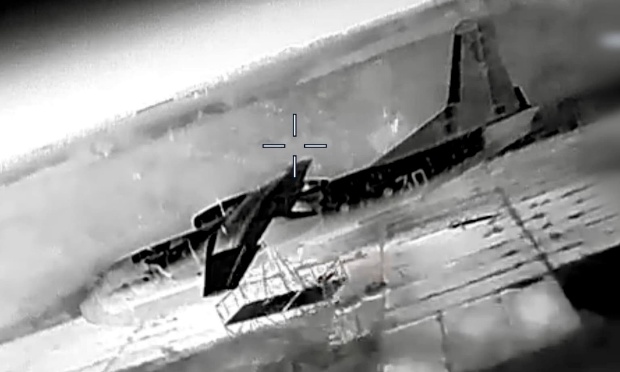
A purported footage published, shows Ukraine destroying two Russian An-26 transport aircraft and two radar stations in Crimea. (HUR)
Russian Deputy Prime Minister Aleksandr Novak’s announcement extending gasoline export bans and introducing diesel restrictions provided official acknowledgment that Ukrainian attacks had created supply crises requiring government intervention. The measures represented economic warfare success where Ukrainian capabilities were forcing Russian policy changes affecting both military operations and civilian populations.
The Southern Federal District’s 14.2 percent reduction in operational gas stations created transportation difficulties extending beyond military logistics into civilian mobility, commercial operations, and emergency services. Similar shortages in Rostov Oblast and other regions demonstrated how targeted strikes on specific refineries were generating nationwide effects.
The crisis followed Ukrainian attacks on at least 16 of Russia’s 38 oil refineries, operations that had reduced Russian diesel exports to five-year lows. The systematic nature of Ukrainian targeting revealed strategic planning that prioritized economic disruption over dramatic military effects, achieving strategic objectives through accumulated economic pressure.
Russian Military Inflation: When Victory Claims Meet Reality
Ukrainian military observer Kostyantyn Mashovets’ analysis revealed how Russian military leadership was attempting multiple offensive operations simultaneously without sufficient resources to sustain them effectively. His assessment that Russian territorial claims exceeded actual advances by percentages ranging from 5 to 112 percent exposed systematic inflation of success reports designed to maintain political support for continued operations.
The Institute for the Study of War’s calculation that Russia had actually seized 3,434 square kilometers since January versus claimed 4,714 square kilometers revealed a 37 percent inflation rate in Russian territorial claims. The discrepancies suggested systematic misrepresentation designed to create impression of military success despite limited actual progress.
Mashovets’ observation that Russian forces were being redeployed from “deprioritized sectors” to support multiple simultaneous offensives revealed resource constraints that forced difficult strategic choices. The movement of 76th Airborne Division elements from Sumy to Donetsk directions demonstrated Russian attempts to concentrate capable forces in priority areas while accepting risks elsewhere.
The analysis that Russian forces in Kupyansk were “fragile” and would require “one to two additional divisions” to achieve success highlighted fundamental resource limitations. The assessment revealed how Russian operational ambitions exceeded available capabilities, creating vulnerabilities that Ukrainian forces could potentially exploit.
Trump’s Continued Pressure: When Paper Tigers Fight Wars
President Trump’s assessment that Russia had “gained almost no land” despite massive expenditures on “bombs, missiles, ammunition, and lives” continued his rhetorical shift toward criticism of Russian military performance. His observation about minimal territorial gains following intensive bombardment reflected American intelligence assessments of Russian operational ineffectiveness.
Trump’s statement that “Putin ought to stop” the killing carried moral weight while avoiding ultimatums that could foreclose diplomatic opportunities. His praise for Turkish President Erdogan as having “big influence” on both Russia and Ukraine reflected continued American interest in third-party mediation despite bilateral negotiation failures.
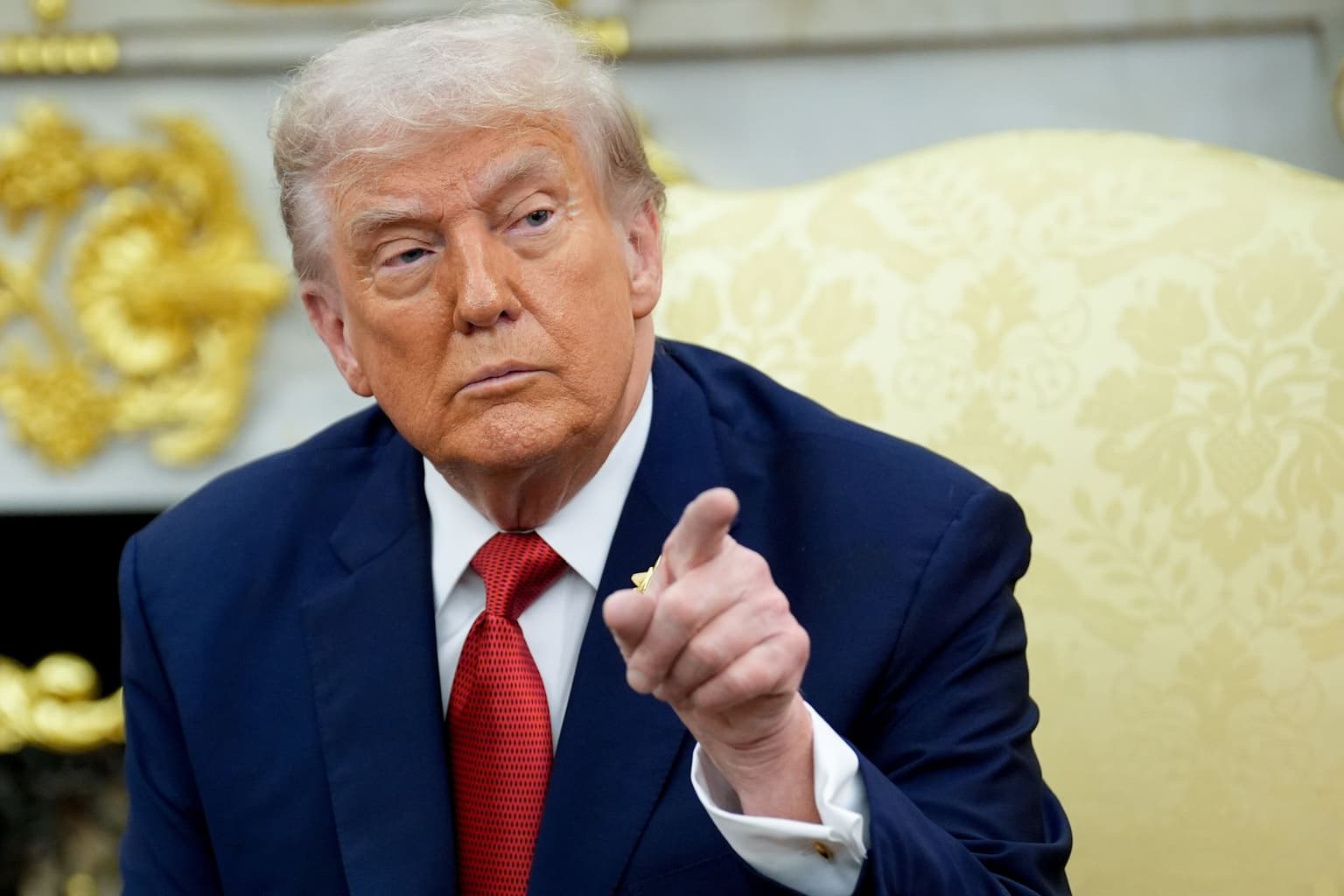
U.S. President Donald Trump, during a meeting with Recep Tayyip Erdogan, Turkey’s president, not pictured, in the Oval Office of the White House in Washington, DC, US. (Yuri Gripas/Abaca/Bloomberg via Getty Imagesú
The president’s meeting with Erdogan provided context for continued diplomatic efforts while maintaining pressure on all parties to seek negotiated solutions. Trump’s emphasis on Turkish potential influence suggested American recognition that direct U.S.-Russian negotiations had reached impasse requiring alternative approaches.
Polish Prime Minister Donald Tusk’s warning that Trump’s rhetoric might signal “reduced U.S. involvement and shift of responsibility to Europe” reflected allied concerns about American commitment levels despite supportive language. The observation about preferring “truth over illusions” suggested experienced European leaders remained skeptical about sustained American engagement.
The Day That Redefined Everything
September 25, 2025, witnessed convergence of crises that collectively redefined the nature of modern international conflict. Russian foreign ministers declared war at diplomatic meetings while Ukrainian cyber warriors disabled civilian payment systems, European diplomats delivered military ultimatums through private channels, and nuclear facilities operated on emergency power amid active combat operations.
The day demonstrated how thoroughly warfare had evolved beyond traditional military confrontation into systematic competition across all domains of national power. Cyber attacks affected civilian populations while diplomatic meetings became venues for military threats, nuclear facilities became tactical weapons, and economic systems became legitimate targets for foreign attack.
From Lavrov’s declarations to Zelensky’s diplomatic marathon, from cyber attacks on payment systems to nuclear plants without external power, September 25 revealed a conflict that had transformed international relations in ways that challenged fundamental assumptions about sovereignty, escalation, and the boundaries between war and peace. The question was no longer whether the conflict would expand beyond Ukraine’s borders, but how quickly other nations would adapt to warfare that recognized no distinction between military and civilian targets, between diplomatic and kinetic operations, between nuclear deterrence and nuclear blackmail.