
A day when Ukrainian drones struck deep into Russia’s energy heartland, gasoline shortages spread across occupied territories, and Moscow’s propaganda machine blamed Kyiv for its own provocations while Europe grappled with mysterious aircraft in its skies
The Story of a Single Day
September 27, 2025, revealed the accelerating collapse of Russia’s energy infrastructure under sustained Ukrainian attack. On this single day, Ukrainian Security Service drones struck an oil pumping station 1,000 kilometers inside Russian territory, gasoline prices in Russia reached $3.70 per gallon in some regions, and fuel shortages spread from occupied Crimea to Moscow’s Far Eastern oblasts. Meanwhile, Russian Foreign Ministry spokesperson Maria Zakharova reached new heights of absurdity by blaming Ukraine for Moscow’s own drone incursions into NATO territory, while unidentified aircraft continued testing European defenses from Denmark to Finland.
This was the 1,312th day of a conflict that had evolved from territorial conquest into systematic infrastructure warfare. Ukraine’s deep-strike campaign was achieving what conventional military pressure could not—forcing Russia to confront the economic impossibility of sustaining its war machine while maintaining domestic stability. The invaded had become the attackers, systematically dismantling the industrial foundation of Russian aggression.
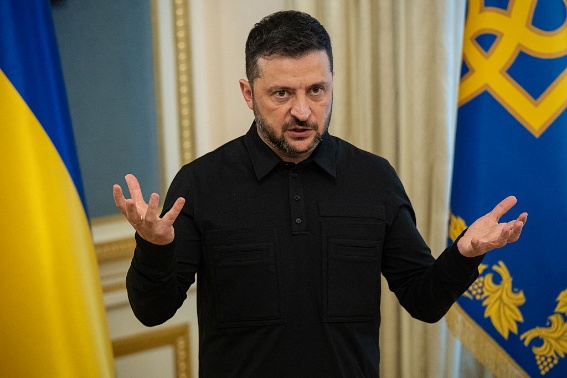
President Volodymyr Zelensky speaks to journalists at the Presidential Office in Kyiv, after returning from the U.S., where he met U.S. President Donald Trump and addressed the United Nations General Assembly. (Danylo Antoniuk/Anadolu via Getty Images)
By day’s end, Russian oil transportation through a crucial pumping station had been suspended, fuel cards were being introduced at gas stations across Russia to manage shortages, and Ukrainian forces had advanced in multiple directions while Russian propaganda desperately tried to rewrite the narrative of its own provocations. The war was no longer just about territory—it had become about Russia’s ability to function as a modern state.
Fire at the Heart of Russian Energy: The Tynogovato Strike
Ukrainian Security Service drones achieved their deepest penetration into Russian territory on September 27, striking the Tynogovato Oil Pumping Station in Kovar village, Chuvash Republic—a facility located 1,000 kilometers from the Ukrainian border that represented a crucial link in Russia’s energy distribution network. The attack by SBU Special Operations Center ‘A’ demonstrated Ukraine’s expanding capability to project force across the entire breadth of Russian territory.
The strike hit pumping station No. 1 directly, causing a fire that forced the suspension of oil transportation through the facility. Russian Governor Oleg Nikolaev admitted the station had suspended operations after sustaining what he termed “minor damage,” though the suspension of operations suggested more significant disruption than Moscow was willing to acknowledge publicly.
SBU sources confirmed the successful targeting with characteristic understatement: “The SBU continues to ‘impose sanctions’ against the Russian oil sector, which brings the aggressor country superprofits that go towards the war against Ukraine. Work to reduce the amount of petrodollars in the Russian budget will continue.”
The Tynogovato strike represented more than tactical success—it was strategic warfare designed to systematically degrade Russia’s ability to fund its military operations. The oil pumping station served as a critical node in the distribution network that moved crude oil from Siberian fields to refineries and export terminals. Its temporary shutdown created ripple effects throughout Russia’s energy sector.
The depth of the strike—1,000 kilometers from Ukraine—demonstrated the evolution of Ukrainian drone technology and operational planning. Long-range drones of the SBU’s Special Operations Center had navigated Russian air defenses, electronic warfare systems, and vast distances to achieve precision targeting of strategic infrastructure. The capability represented a fundamental shift in the war’s geographic scope.
For Russian energy planners, the Tynogovato attack highlighted the impossibility of defending every critical facility across the world’s largest country. Each successful Ukrainian strike forced Russia to divert resources from front-line operations to rear-area security, while creating uncertainty about which facilities might be targeted next.
The Gasoline Shortage Crisis: When War Comes Home
The gasoline shortage crisis that reached public attention on September 27 represented the cumulative impact of sustained Ukrainian strikes on Russian energy infrastructure. Lipetsk Oblast Governor Igor Artamonov’s public appeal for residents to “remain calm despite reports of fuel shortages” revealed how the crisis had penetrated public consciousness across Russia.
Lipetsk Oblast Governor Igor Artamonov’s public appeal for residents to “remain calm despite reports of fuel shortages” revealed the extent to which the crisis had penetrated public consciousness. His claim that shortages were due to “logistical difficulties in loading fuel from some refineries” was bureaucratic euphemism for the systematic destruction of energy infrastructure by Ukrainian forces.
Russian opposition outlet Astra reported that AI-95 gasoline prices in Lipetsk Oblast had reached approximately $3.70 per gallon—a dramatic increase from Russia’s historical average of $2.15 per gallon in September 2023 and $2.40 per gallon in September 2024. The price spike occurred despite Russian government subsidies designed to artificially depress domestic fuel costs, indicating that Ukrainian strikes were overwhelming Moscow’s ability to maintain market stability.
The shortages had forced fundamental changes in how Russians purchased fuel. Gas stations were beginning to require fuel cards for purchases, while stations in Moscow, Leningrad, Ryazan, and several Far Eastern oblasts were limiting purchases to 10- to 20-liter increments or selling only diesel. The rationing represented a return to Soviet-era distribution methods that Russians had not experienced since the 1990s.
A Kremlin-affiliated milblogger provided the most comprehensive assessment of the crisis, acknowledging that Ukrainian strikes were having “limited though painful consequences” while identifying the most severely affected regions. Fuel shortages were particularly acute in the Far East, frontline areas of Belgorod Oblast, and occupied Crimea—regions that relied entirely on external supply chains that Ukrainian forces were systematically disrupting.
The geographic spread of price increases painted a picture of nationwide disruption. Significant price spikes were occurring in Nizhny Novgorod, Rostov, Lipetsk, and Tula oblasts, as well as Krasnodar and Stavropol krais. The breadth of affected regions demonstrated that Ukraine’s campaign was achieving strategic rather than merely tactical effects.
For ordinary Russians, the fuel crisis represented the war’s most visible domestic impact. Long queues at gas stations, rationing systems, and soaring prices transformed abstract geopolitical conflict into daily inconvenience. The psychological effect was potentially more significant than the economic impact—Russians were discovering that their government could not protect them from the consequences of its foreign adventures.
Zakharova’s Absurd Theater: Blaming Ukraine for Russian Provocations
Russian Foreign Ministry spokesperson Maria Zakharova reached new levels of diplomatic absurdity on September 27 by blaming Ukraine for Russian drone incursions into Poland and Romania—provocations that had been documented by NATO radar systems and resulted in the first downing of Russian military assets by alliance forces since the war began. The accusation represented Moscow’s desperation to rewrite the narrative of its own escalatory behavior.
Zakharova’s claim that Ukraine had orchestrated the September 9-10 drone incursion into Poland and the September 13 violation of Romanian airspace defied basic logical analysis. Polish and Romanian authorities had identified the aircraft as Russian using radar tracking, electronic signatures, and debris analysis. NATO had scrambled fighter jets in response to what alliance officials characterized as deliberate provocations designed to test Western resolve.
The Russian spokesperson’s assertion that Ukraine was conducting “false flag operations” to “frame Russia and provoke a war between NATO and Russia” revealed Moscow’s recognition that its hybrid warfare campaign was backfiring. Instead of intimidating NATO into reducing support for Ukraine, Russian provocations had triggered the alliance’s Eastern Sentry mission and led to direct military engagement when Polish F-16s shot down Russian drones.
Zakharova’s warning that “a third world war will break out imminently if someone confirms Ukraine’s alleged involvement in false flag operations” demonstrated the self-contradictory nature of Russian propaganda. Moscow simultaneously denied conducting the provocations while threatening global war if Ukraine was blamed for orchestrating them—a logical impossibility that revealed the incoherence of Russian diplomatic messaging.
The false flag accusation served multiple propaganda purposes despite its obvious falsity. It allowed Russia to deny responsibility for escalatory actions while portraying Ukraine as the aggressor seeking to expand the conflict. The narrative also suggested that NATO’s defensive responses were based on Ukrainian deception rather than legitimate concerns about Russian aggression.
For Western intelligence analysts, Zakharova’s statements confirmed that Russian provocations were deliberate rather than accidental. Moscow’s elaborate justifications for documented violations of NATO airspace demonstrated consciousness of guilt—Russia knew it was conducting illegal incursions and felt compelled to create alternative explanations for its behavior.
The diplomatic theater also revealed Russia’s concern about NATO’s evolving response to hybrid warfare. The alliance’s willingness to engage Russian military assets directly over member states’ territory had apparently surprised Moscow, forcing hasty attempts to reframe the narrative and avoid responsibility for escalation.
The Drone Epidemic Spreads: Europe Under Surveillance
September 27 witnessed the most geographically dispersed outbreak of mysterious drone activity across NATO territory since the war began, with incidents spanning from Denmark’s Baltic coast to Finland’s Lapland region. The coordinated nature of the surveillance suggested systematic intelligence gathering rather than random incursions, indicating Russia’s commitment to mapping European vulnerabilities regardless of diplomatic consequences.
Danish Defense Command detected drones near multiple military facilities, including the strategically important Karup Air Base, one of Denmark’s key air force installations. The military’s decision not to disclose specific locations or numbers of suspicious aircraft highlighted the sensitivity of the intelligence gathering, while the deployment of several Danish Armed Forces units demonstrated the seriousness with which authorities treated the incursions.
In Lithuania, three drones disrupted operations at Vilnius airport, forcing delays to seven commercial flights and demonstrating how small aircraft could paralyze major transportation infrastructure. The incident showed that Russian hybrid warfare was targeting civilian as well as military assets, seeking to create maximum disruption with minimal resources.
Finland reported drone activity over the Valajaskoski Power Plant in Rovaniemi, Lapland—a facility in the country’s far north that represented a particularly bold violation of Finnish sovereignty. The geographic isolation of the target suggested sophisticated planning and long-range capabilities that extended Russian reach across the entire Nordic region.
The incidents formed part of a broader pattern that had affected Denmark repeatedly over the preceding week. Aalborg Airport had experienced three separate disruptions, Copenhagen Airport had suspended operations, and Norwegian authorities had closed Oslo Airport under similar circumstances. The systematic nature of the campaign suggested coordinated rather than opportunistic activities.
NATO’s response revealed the alliance’s growing concern about the surveillance campaign. The decision to expand Baltic Sea operations with additional military assets, including new “intelligence, surveillance, and reconnaissance platforms and at least one air-defense frigate,” demonstrated recognition that the drone incursions represented a serious challenge to collective security.
The upgrade of NATO’s Baltic Sentry mission indicated institutional adaptation to hybrid warfare threats that conventional military planning had not anticipated. The alliance was discovering that protecting member states from small, numerous, and difficult-to-detect aircraft required entirely new approaches to air defense and territorial sovereignty.
For European security planners, the drone epidemic highlighted fundamental vulnerabilities in open societies. While NATO possessed overwhelming conventional military superiority, small unmanned aircraft could gather intelligence, test response times, and create psychological pressure at minimal cost to their operators. The asymmetric nature of the threat challenged traditional concepts of deterrence and defense.
Ukrainian Advances: Reclaiming Territory Across Multiple Fronts
Ukrainian forces demonstrated sustained offensive momentum on September 27, achieving confirmed advances in northern Sumy Oblast and the Lyman direction while successfully defending positions in western Zaporizhia Oblast. Geolocated footage confirmed Ukrainian forces had retaken positions northeast of Kindrativka, north of Sumy City, while maintaining or advancing their positions near Novoselivka in the Lyman direction despite Russian claims of territorial gains.
The dispersal of Ukrainian advances across three separate regions—Sumy, Donetsk, and Zaporizhia oblasts—indicated sophisticated operational planning that forced Russian commanders to respond to multiple simultaneous threats. Each successful Ukrainian operation diverted Russian resources from other sectors, creating opportunities for additional advances.
Russian forces continued their own offensive operations, achieving confirmed advances in the Siversk, Dobropillya, Pokrovsk, and Novopavlivka directions. The geographic concentration of Russian gains in eastern Donetsk Oblast contrasted with the dispersed nature of Ukrainian advances, suggesting different strategic approaches to territorial control.
Ukrainian 11th Army Corps spokesperson Dmytro Zaporozhets provided tactical details about Russian operations in the Serebryanske forest area, where Russian forces were swimming across the Siverskyi Donets River to attack toward Serebryanka. The description of Russian infantry infiltrating Ukrainian positions in small groups of one to two soldiers indicated the grinding, attritional nature of combat that characterized the eastern front.
The Diplomatic Battlefield: Lavrov’s Empty Assurances
Russian Foreign Minister Sergey Lavrov’s address to the UN General Assembly on September 27 represented a masterclass in diplomatic deception, combining threats with reassurances in ways designed to confuse rather than clarify Russian intentions. His claim that Moscow had “no intention” of attacking European countries came as Russian drones systematically violated NATO airspace and tested alliance defense capabilities.
Lavrov’s assertion that “Russia has never had and does not have any such intentions” regarding attacks on NATO countries echoed identical assurances made before the February 2022 invasion of Ukraine. Russian officials had repeatedly denied planning military action against Ukraine while conducting the troop buildup that preceded the full-scale invasion, making current denials worthless as predictors of future behavior.
The foreign minister’s warning that “any aggression against my country will be met with a decisive response” revealed the fundamental incoherence of Russian diplomatic messaging. Moscow characterized defensive support for Ukraine as “aggression against Russia” while conducting actual aggression against multiple European states through drone incursions and hybrid warfare operations.
Lavrov’s repetition of Russian claims about remaining “open to negotiations to eliminate the root causes of the conflict” maintained the fiction of diplomatic flexibility while Russian forces continued systematic attacks on Ukrainian civilian infrastructure. The contradiction between peaceful rhetoric and aggressive actions demonstrated the propaganda nature of Russian diplomatic engagement.
The foreign minister’s accusation that NATO was attempting to “militarily encircle all of Eurasia” represented classic projection—attributing to others the imperial ambitions that drove Russian policy. Moscow’s invasion of Ukraine, threats against Baltic states, and pressure on Central Asian neighbors demonstrated Russia’s commitment to military expansion, not defensive responses to Western encirclement.
For international observers, Lavrov’s UN address served as confirmation that Russian diplomatic engagement remained fundamentally dishonest. The combination of threats and reassurances, historical revisionism and victim narratives, indicated that Moscow viewed diplomacy as an extension of warfare rather than an alternative to military action.
The Humanitarian Toll: Civilian Casualties Across Ukraine
September 27 brought fresh evidence of Russia’s systematic targeting of Ukrainian civilian infrastructure, with attacks across multiple regions resulting in at least two deaths and thirty-six injuries. The geographic spread of casualties—from Sumy in the north to Zaporizhia in the south—demonstrated the comprehensive nature of Russian efforts to terrorize the Ukrainian population.
In Sumy Oblast, a Russian drone strike killed a 59-year-old man traveling in a civilian vehicle, with the drone hitting the car’s windshield directly. The precision targeting of individual vehicles indicated sophisticated surveillance and attack capabilities designed to make normal civilian movement impossible. Another civilian was injured in the attack, highlighting the psychological warfare aspect of Russia’s campaign against non-combatants.
Dnipropetrovsk Oblast experienced attacks against the Nikopol district that injured six people, including an 86-year-old woman and an 88-year-old man. The targeting of elderly civilians revealed the indiscriminate nature of Russian strikes, which made no distinction between military and civilian targets in their effort to create maximum psychological impact.
Donetsk Oblast reported one death and nine injuries from Russian attacks, including casualties in Kostiantynivka, Druzhkivka, Siversk, and Serhiivka. The spread of attacks across multiple population centers indicated systematic efforts to make civilian life impossible in areas under Ukrainian control, forcing population displacement through terror rather than military pressure.
Kharkiv Oblast suffered attacks that injured six people, including three women in the city of Kharkiv itself. The continued targeting of Ukraine’s second-largest city, located just 30 kilometers from the Russian border, demonstrated Moscow’s commitment to attacking population centers regardless of their civilian character or strategic irrelevance.
In Kherson Oblast, Russian forces killed one person and injured twelve others while damaging residential infrastructure including seven apartment buildings and 94 houses. The systematic destruction of civilian housing served no military purpose beyond terrorizing the population and making post-war reconstruction more difficult and expensive.
The civilian casualty pattern revealed Russia’s evolution from conventional military objectives to systematic terrorism designed to break Ukrainian popular resistance. The targeting of individual vehicles, elderly civilians, and residential areas indicated deliberate policies aimed at making normal life impossible in Ukrainian-controlled territory.
Vinnytsia Under Attack: Infrastructure Strikes Continue
Russian forces targeted critical infrastructure in Vinnytsia Oblast overnight on September 27, causing fires and damage to residential buildings in central Ukraine. Regional administration deputy head Natalia Zabolotna confirmed that the attack had struck infrastructure facilities, forcing emergency services to deploy more than 30 firefighters and 8 units of equipment to extinguish the resulting fires.
The strike disrupted train traffic temporarily, though services were resumed after emergency repairs. One residential building lost power as a result of the attack, highlighting Russia’s continued targeting of civilian infrastructure far from active front lines. Vinnytsia, located approximately 200 kilometers southwest of Kyiv, represented another example of Russia’s systematic campaign against Ukrainian population centers and essential services.
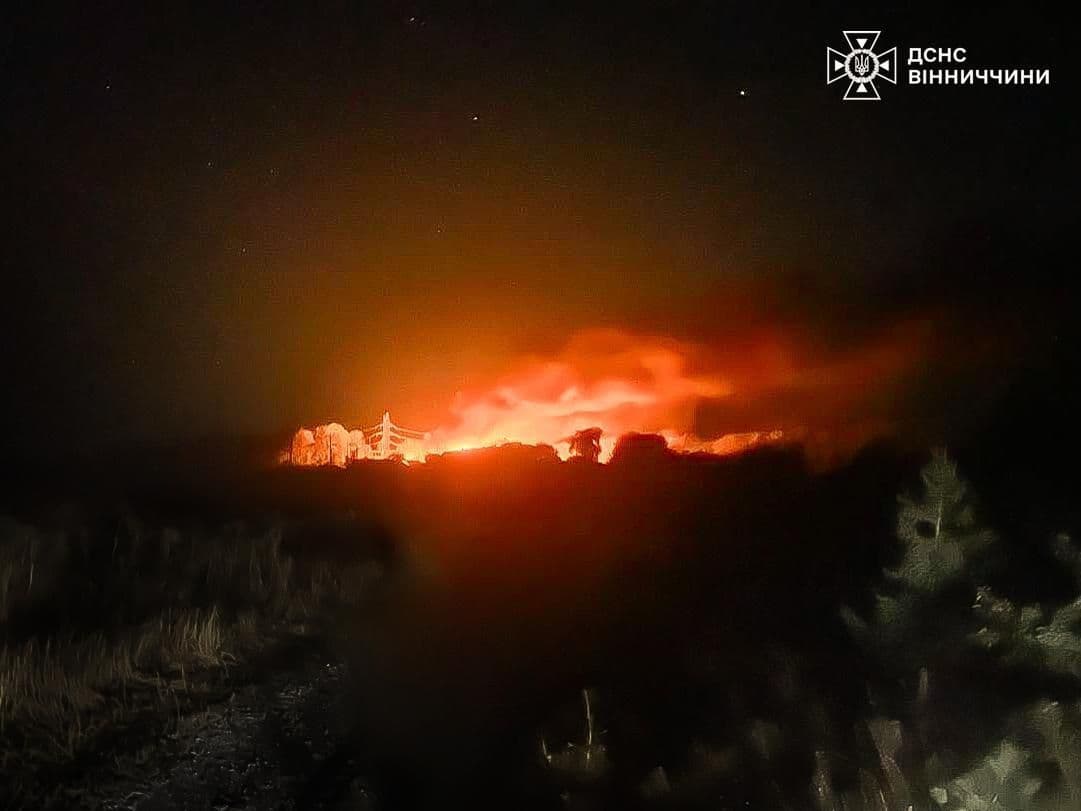
A fire burns in the aftermath of a Russian drone attack on Vinnystia overnight. (State Emergency Service/Telegram)
The attack on Vinnytsia demonstrated the geographic scope of Russian infrastructure targeting, reaching deep into central Ukraine to disrupt civilian life and essential services. No casualties were reported, but the strike reflected Moscow’s strategy of making normal life impossible for Ukrainian civilians regardless of their proximity to military operations.
Israel’s Strategic Calculation: The Patriot Delivery
President Volodymyr Zelensky’s revelation on September 27 that Israel had supplied Ukraine with a Patriot air defense system in August marked a significant shift in Israeli policy toward the Ukrainian conflict. The provision of advanced air defense capabilities represented Jerusalem’s recognition that Russian aggression posed threats to international stability that transcended regional considerations.
The Israeli decision to provide Patriots came despite Moscow’s presence in Syria and Russia’s complex relationship with Iran—factors that had previously constrained Israeli support for Ukraine. The willingness to risk Russian retaliation in the Middle East indicated Israeli assessment that Ukrainian success served broader strategic interests in containing authoritarian expansion.
Zelensky’s confirmation that the Israeli Patriot system had been “operating for a month” suggested operational success that had contributed to Ukraine’s improved air defense capabilities. The system’s integration into Ukraine’s defensive network demonstrated effective cooperation between Israeli and Ukrainian military personnel despite the sensitive nature of the technology transfer.
The Ukrainian president’s announcement that two additional Patriot systems would arrive from Germany in Fall 2025 indicated sustained international commitment to improving Ukraine’s air defense capabilities. The combination of Israeli, German, and previously delivered American Patriots created a comprehensive network capable of protecting critical infrastructure from Russian missile attacks.
For Israeli strategic planners, the Patriot delivery represented a calculated risk that Ukrainian victory would serve long-term security interests by demonstrating the costs of authoritarian aggression. The decision also reflected Israeli concerns about Russian cooperation with Iran in developing missile technologies that threatened Israeli security.
The timing of the delivery’s public revelation—during a period of intensive Russian drone attacks on civilian targets—highlighted the urgent need for improved Ukrainian air defenses. The Patriot system’s capability to intercept ballistic missiles and aircraft provided protection against Russia’s most sophisticated weapons systems.
Estonia’s Contribution: The PURL Initiative
Estonia’s announcement on September 27 that it would contribute 10 million euros to NATO’s Prioritized Ukrainian Requirements List (PURL) initiative demonstrated how smaller alliance members were adapting to support Ukraine while managing their own security concerns. The contribution represented significant financial commitment from a nation with a population of just 1.3 million people facing direct threats from Russian aggression.
The PURL initiative’s structure—using NATO coordination to purchase US-made weapons for Ukraine—addressed multiple strategic objectives simultaneously. It provided Ukraine with standardized weapons systems, supported American defense industries, strengthened NATO cooperation mechanisms, and allowed European allies to contribute financially without direct bilateral weapons transfers.
Estonia’s participation reflected the Baltic states’ acute awareness of Russian threats and their commitment to supporting Ukrainian resistance as a form of collective defense. Having experienced Soviet occupation and Russian pressure since independence, Estonian leaders understood that Ukrainian success was essential for their own long-term security.
The 10 million euro contribution, while modest in absolute terms, represented substantial commitment relative to Estonia’s defense budget and economic capacity. The proportional significance of the investment demonstrated Estonian recognition that supporting Ukraine was a strategic necessity rather than optional charity.
For NATO planners, the PURL initiative represented institutional adaptation to prolonged conflict support requirements. The mechanism allowed sustained weapons deliveries while maintaining alliance coordination and burden-sharing principles that prevented excessive dependence on any single member state’s resources.
The Estonian contribution also reflected broader patterns of European commitment to Ukrainian defense despite domestic political and economic pressures. Smaller NATO members were demonstrating that geography rather than size determined threat perception and commitment levels.
Economic Warfare: The EBRD’s Sobering Assessment
The European Bank for Reconstruction and Development’s decision on September 27 to revise Ukraine’s economic forecast downward from 3.3% to 2.5% GDP growth provided sobering context for the war’s economic impact on Ukrainian society. The revision reflected accumulating pressures from Russian attacks on energy infrastructure, agricultural disruption, and weakened export performance that constrained economic recovery.
The EBRD’s analysis identified multiple factors contributing to reduced growth projections. Declining harvest volumes resulted from April frosts and 2024 summer drought, while the European Union’s termination of tariff-free trade on 36 categories of Ukrainian goods under Autonomous Trade Measures created additional export barriers. Combined with higher import requirements due to war damage, these factors produced a $7.5 billion trade deficit in the first seven months of 2025.
Despite the downward revision for 2025, the EBRD maintained its 2026 forecast at 5% growth, assuming a ceasefire and benefits from post-war reconstruction. The projection reflected institutional optimism about Ukraine’s long-term prospects while acknowledging short-term challenges from continued fighting and infrastructure damage.
The report’s emphasis on “highly uncertain” economic outlook reflected the fundamental challenge of economic planning during active warfare. Energy security concerns, labor shortages from mobilization and emigration, and continued Russian attacks on critical infrastructure created unprecedented variables that traditional economic modeling could not adequately address.
Ukraine’s unemployment rate had fallen to 12%—its lowest level since the full-scale invasion began—but civilian workforce recruitment remained difficult due to military mobilization and population displacement. The contradiction between labor shortages and high unemployment illustrated the complex ways that warfare disrupted normal economic relationships.
The EBRD analysis provided crucial context for understanding the broader stakes of Ukrainian resistance. Economic recovery depended not only on military success but also on maintaining international support, rebuilding infrastructure, and creating conditions for refugee return and investment recovery.
The International Atomic Energy Agency Controversy
Ukraine’s criticism of the IAEA’s participation in Russia’s World Atomic Week forum highlighted growing tensions over international nuclear oversight during wartime. The Ukrainian Foreign Ministry’s statement on September 27 accused Russia of exploiting the agency “for propaganda purposes” during IAEA Director General Rafael Grossi’s visit to Moscow.
Grossi’s presence at an event celebrating the 80th anniversary of Russia’s nuclear industry, including meetings with Vladimir Putin and Rosatom CEO Alexey Likhachev, provided Moscow with international legitimacy precisely when evidence mounted of Russian war crimes at occupied nuclear facilities. The timing was particularly problematic, coming just days after new reports documented Rosatom’s complicity in torture and detention of Ukrainian nuclear plant staff.
Ukraine’s characterization of Rosatom as “an integral part of Russia’s military-industrial complex and an instrument of occupation” reflected the impossibility of treating the state corporation as a legitimate partner in nuclear safety discussions. Russian control of the Zaporizhzhia nuclear power plant had created unprecedented risks that required acknowledgment of criminal behavior rather than diplomatic accommodation.
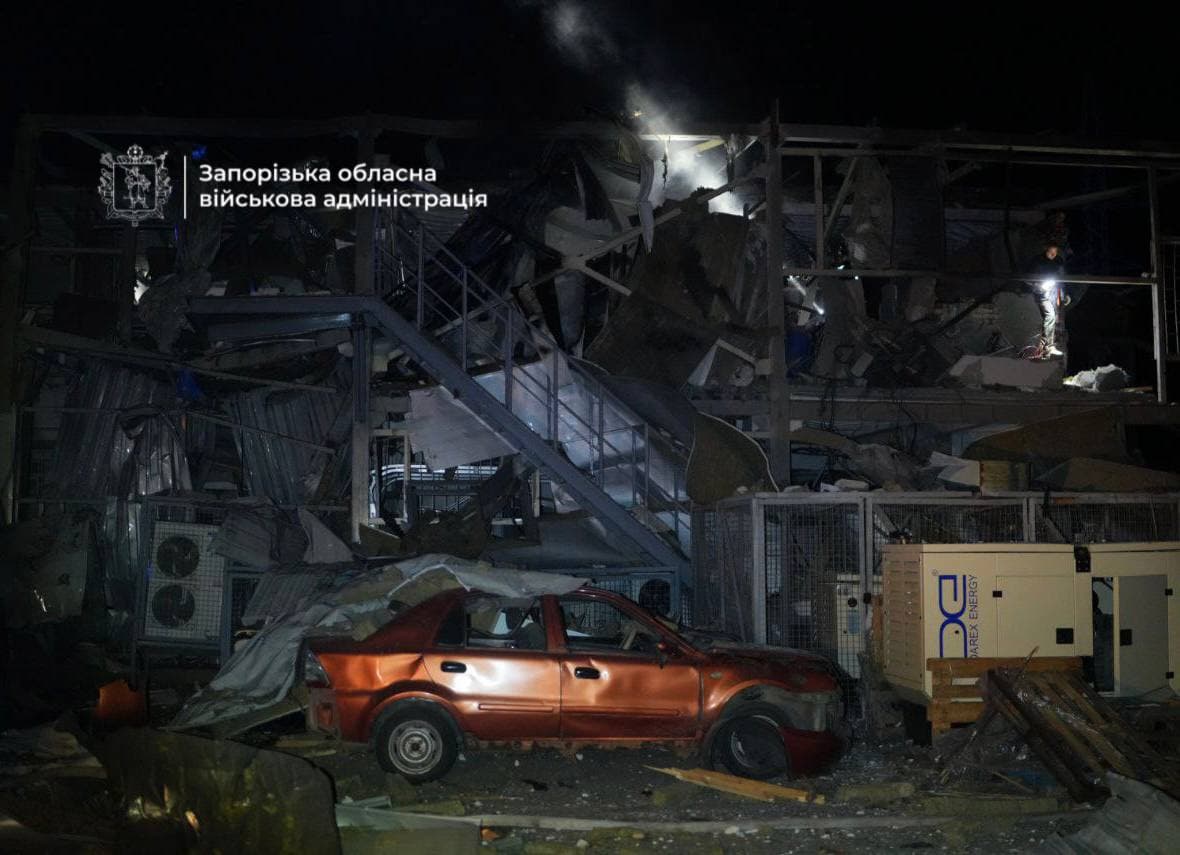
The aftermath of Russian attacks against Zaporizhzhia overnight. (Zaporizhzhia military administration/Telegram)
The controversy illustrated broader challenges facing international institutions during major power conflicts. The IAEA’s commitment to technical neutrality conflicted with the reality that one party to the conflict was systematically violating international law while using nuclear facilities as military assets. Maintaining institutional credibility required confronting rather than accommodating criminal behavior.
Truth Hounds and Greenpeace Ukraine’s research documenting Rosatom’s role in war crimes provided factual foundation for Ukrainian criticism of IAEA engagement with Russian officials. The evidence of torture, detention, and collaboration with military authorities demonstrated that treating Rosatom as a legitimate nuclear operator ignored documented human rights violations.
For nuclear security experts, the Zaporizhzhia situation represented an unprecedented challenge to international oversight mechanisms designed for peacetime cooperation rather than wartime occupation. The plant’s disconnection from Ukraine’s electrical grid while under Russian military control created precisely the dangerous conditions that international agreements sought to prevent.
The Parliamentary Rehabilitation: Russia and Belarus Return
The International Paralympic Committee’s decision on September 27 to reinstate the membership rights of Russia and Belarus represented a significant victory for Moscow’s efforts to normalize its international standing despite ongoing aggression against Ukraine. The decision paved the way for Russian and Belarusian athletes to compete under national flags at the 2026 Winter Paralympic Games in Milano-Cortina, reversing years of sanctions imposed due to the invasion.
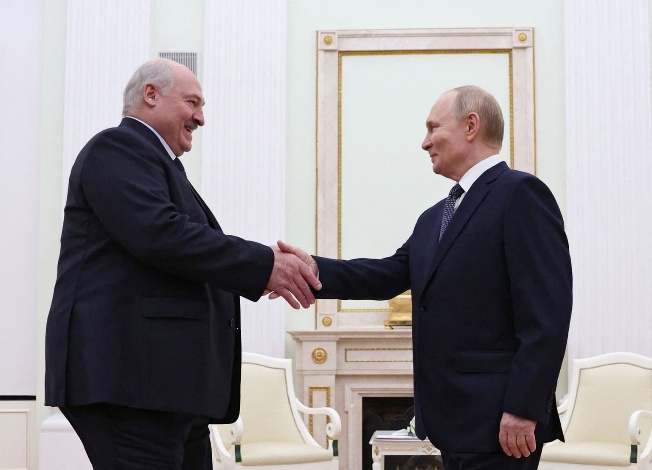
Russia’s President Vladimir Putin (R) shakes hands with Belarus’ President Alexander Lukashenko during a meeting in the Kremlin in Moscow. (Ramil Sitdikov / POOL / AFP)
Ukrainian Sports Minister Matviy Bidnyi’s condemnation of the decision as a betrayal of “conscience and the Olympic values” reflected broader Ukrainian frustration with international institutions’ willingness to accommodate Russian participation while the war continued. The restoration of full membership rights occurred as Russian forces systematically attacked Ukrainian civilian infrastructure and committed documented war crimes.
The Russian Paralympic Committee’s characterization of the decision as “fair” and “an example of how athletes’ rights should be protected without discrimination” revealed Moscow’s success in reframing the issue from accountability for aggression to protection of individual athletes. The narrative shift allowed Russia to portray itself as a victim of discrimination rather than a perpetrator of international law violations.
The decision indicated institutional accommodation of Russian pressure despite ongoing military aggression, with Russian and Belarusian committees regaining full membership rights and privileges. Participation in actual competitions would still depend on individual sport federations’ policies, most of which continued to ban Russian and Belarusian athletes from winter Paralympic sports.
The Massive Assault Begins: Russia’s 500-Drone Attack
The overnight assault that began late on September 27 represented the opening of one of the largest single attacks Russia had conducted since the war began. Ukrainian Air Force reports confirmed that Russian forces launched 115 drones of various types, including Shahed and Gerbera variants, from multiple directions including Kursk City, Millerovo in Rostov Oblast, Primorsko-Akhtarsk in Krasnodar Krai, and occupied Cape Chauda in Crimea.
Ukrainian air defenses successfully intercepted 97 of the 115 drones, while 17 drones struck six different locations across Ukraine. The attack represented the beginning of what would become an even larger assault continuing into September 28, but the September 27 component alone demonstrated the scale of Russian commitment to overwhelming Ukrainian defensive capabilities.
The Day’s Meaning: When Infrastructure Becomes Battlefield
September 27, 2025, demonstrated the war’s evolution from territorial conquest to systematic infrastructure destruction, with both sides recognizing that economic capability rather than geographic control would determine ultimate victory. Ukrainian strikes deep into Russian territory were creating fuel shortages that affected ordinary Russians thousands of kilometers from any battlefield, while Russian drone swarms terrorized Ukrainian cities in attacks designed to break popular resistance rather than achieve military objectives.
The day revealed the fundamental asymmetry that now characterized the conflict. Ukraine’s precision strikes on strategic infrastructure—oil pumping stations, refineries, distribution networks—created cascading effects throughout Russian society that were impossible to hide from the population. Russia’s massive but largely ineffective attacks on Ukrainian cities demonstrated superior quantity but inferior strategic impact.
The fuel crisis spreading across Russia represented the war’s most significant domestic consequence for Russian society since the invasion began. Gas station rationing, soaring prices, and supply interruptions brought the conflict home to ordinary Russians in ways that military casualties and international sanctions had not achieved. The crisis revealed the vulnerability of Russian state capacity to sustained Ukrainian pressure on energy infrastructure.
Europe’s continued struggle with mysterious drone incursions highlighted the war’s expansion beyond its original geographic boundaries. The systematic surveillance of NATO military facilities from Denmark to Finland suggested Russian preparation for broader conflict while demonstrating the alliance’s difficulty in responding to hybrid warfare tactics that exploited legal and operational ambiguities.
The International Paralympic Committee’s rehabilitation of Russian and Belarusian participation, combined with IAEA engagement with Russian nuclear officials, showed how international institutions were abandoning accountability in favor of false normalcy. The decisions reflected institutional capture that prioritized organizational continuity over justice for ongoing aggression.
As the 1,312th day of fighting concluded, the conflict had become a comprehensive test of societal resilience rather than military capability alone. Ukraine’s ability to project force deep into Russian territory while withstanding massive retaliation attacks demonstrated strategic adaptation that surprised both allies and enemies. Russia’s growing domestic vulnerability to infrastructure attacks suggested that the war’s outcome would be determined not by territorial gains but by economic sustainability and popular endurance.
The shadow war was no longer hidden—it had become the primary theater of conflict, where fuel shortages mattered more than frontline advances and civilian resilience determined strategic success. September 27 marked another day when Ukraine’s systematic campaign against Russian state capacity proved more strategically significant than any single battle or diplomatic initiative.