
Russia weaponizes nuclear safety while threatening arms races, French forces seize tankers launching drones over Europe, Ukrainian strikes force Moscow to import gasoline from China, and both Zaporizhzhia and Chornobyl face simultaneous crises as hybrid war spreads across the continent
The Story of a Single Day
October 1, 2025, exposed a war no longer confined to battlefields or national borders. Russia’s Deputy Foreign Minister threatened nuclear arms races while explicitly rejecting negotiations with Ukraine—using atomic blackmail to pressure Washington while prosecuting territorial conquest. French forces seized a Russian shadow fleet tanker suspected of launching drones over European cities, as Norwegian authorities detained Chinese tourists near another mysterious drone incident. Ukrainian strikes on refineries created fuel shortages so severe that Moscow prepared importing gasoline from China—a strategic humiliation for a petrostate. The Zaporizhzhia Nuclear Power Plant entered its ninth day without electricity as evidence suggested deliberate Russian sabotage, while Russian drones struck Slavutych causing a three-hour blackout at Chornobyl. Europe transferred another €4.7 billion to Ukraine from frozen Russian assets. Russian forces claimed capturing territory in Dnipropetrovsk Oblast while making confirmed advances in three tactical areas. Ukrainian drones eliminated a collaborator in occupied Kherson. Russian strikes killed five civilians and wounded over fifty across multiple regions. Denmark warned that hybrid war was “only beginning,” while Germany investigated drones surveilling critical infrastructure. General Staff revealed Russia had brought 20,000 North Korean workers to manufacture drones.
This was the 1,316th day of a conflict where nuclear safety, economic warfare, hybrid operations, and conventional combat converged into a comprehensive confrontation threatening consequences far beyond any battlefield.
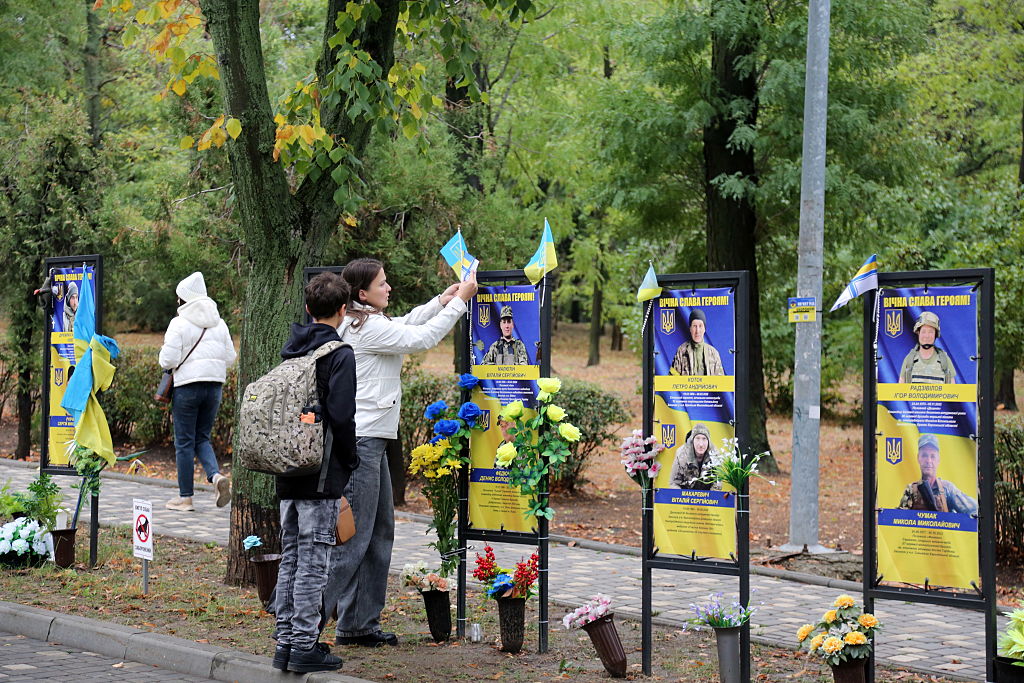
A woman with a child stands at a plaque with the name of a deceased Ukrainian soldier in Odesa’s Taras Shevchenko Central Park of Culture and Leisure, as Ukraine celebrates Defenders’ Day. (Viacheslav Onyshchenko/LightRocket via Getty Images)
Moscow’s Nuclear Blackmail: Threatening America, Refusing Ukraine
Russian Deputy Foreign Minister Sergei Ryabkov delivered a masterclass in Kremlin duplicity on October 1: threaten the United States with nuclear escalation while explicitly refusing negotiations with Ukraine. The contradiction was no longer even disguised—it was stated openly as official policy.
Ryabkov claimed that a third round of US-Russian discussions to address “irritants” would “definitely take place before autumn’s end,” though no dates were set. Russia was waiting for Trump’s response to Putin’s proposal extending adherence to the New START Treaty for one year after its February 2026 expiration. The framing presented a false choice: accept Russian demands for “stabilization” or face “a new arms race, which Russia opposes, even though Russia is guaranteed to ensure its own security.”
Kremlin Spokesperson Dmitry Peskov added theatrical flair, claiming Russia couldn’t plan high-level contacts with Ukraine because Kyiv had stopped negotiations. The accusation was transparently false—Russia had consistently demanded Ukraine’s capitulation as precondition for talks while rejecting genuine negotiations.
The parallel tracks revealed Moscow’s actual strategy: pressure Washington into normalizing bilateral relations for economic and political gain while prosecuting territorial conquest in Ukraine. The Kremlin attempted discrediting Ukraine by baselessly accusing Kyiv of halting negotiations, distracting from Russia’s uncompromising demands amounting to Ukraine’s surrender.
The cynicism was no longer subtle. Russia threatened nuclear escalation against America while refusing peace talks with Ukraine, using atomic blackmail as diplomatic leverage while claiming to desire stability. The contradictions didn’t matter—maintaining pressure on multiple fronts while avoiding responsibility for continuing conflict was the point.
The Boracay Seized: Shadow Fleet Tanker in French Custody
French authorities seized the Russian shadow fleet tanker Boracay and detained its captain and first mate on October 1 in the most aggressive European response yet to suspicions that Russia was using commercial vessels to launch drones over European territory.
President Macron stated the crew had committed “very serious offenses.” The investigation focused on “failure to justify the vessel’s nationality” and “refusal to cooperate”—phrases suggesting maritime law violations connected to broader security concerns.
The Boracay had departed Primorsk near St. Petersburg on September 20 carrying 750,000 barrels of oil, claiming India as destination. But Maritime Executive reported the vessel was one of three Russian-linked ships near Copenhagen Airport on September 22 when coordinated drone incursions forced closure. The tanker operated under multiple names—Boracay, Pushpa, Kiwala, Varuna—classic shadow fleet behavior designed to evade sanctions tracking.
Norwegian authorities reported unidentified drones near Bronnesund Airport on September 30, diverting flights. Police detained eight Chinese tourists on October 1 after drone sightings near Svolvaer Airport, arresting one and seizing equipment, though authorities stated “no current apparent connection between a state actor” and incidents.
The pattern was clear: Russia’s shadow fleet—the tanker network evading oil sanctions—potentially served dual purposes. Vessels transported sanctioned oil while providing mobile platforms for drone operations against European infrastructure. Operating in international waters, ships could launch drones toward cities while maintaining plausible deniability.
European authorities investigated three Russia-linked vessels near Copenhagen during recent drone incidents. Danish reports indicated the Russian landing ship Alexander Shabalin had been off the coast during heavy drone activity. President Zelensky and Ukrainian Navy Spokesperson Captain Dmytro Pletenchuk had reported intelligence indicating Russia was launching drones into NATO airspace from shadow fleet tankers.
The French seizure, Norwegian detentions, and accumulated evidence suggested systematic operations testing European defenses while probing response capabilities.
Russia’s Fuel Humiliation: Importing Gasoline From Asia
Russia prepared importing gasoline from China, South Korea, and Singapore to offset fuel shortages following shutdown of nearly 40 percent of refining capacity—a strategic humiliation for a petrostate that built its economy on energy exports.
Pro-government outlet Kommersant reported on October 1 that Russian refineries faced 38 percent decrease—roughly 338,000 tons daily—in primary refining capacity as of September 28 due to Ukrainian drone strikes. Energy-focused outlet Seala estimated Russia’s gasoline and diesel production capacity fell 6 percent in August and another 18 percent in September, reaching historic lows. Ukrainian strikes caused approximately 70 percent of production downtime, disabling a quarter of refining capacity by September’s end.
Crimean occupation head Sergey Aksyonov announced on October 1 a 20-liter per customer gasoline limit—tightening from the 30-liter limit imposed days earlier. The shortages’ visibility prevented Kremlin suppression despite efforts at concealment.
Russian economist Vladislav Inozemtsev noted that oil companies waited months for repairs as Western sanctions blocked equipment and replacement parts sales Russia couldn’t easily replace with Chinese equivalents. The sanctions’ secondary effects compounded—Ukrainian strikes caused immediate damage, but Western sanctions prevented rapid repairs, extending downtime and deepening shortages.
Deputy Prime Minister Alexander Novak outlined emergency measures: zero-rate import duties on Asian gasoline; authorizing only certain companies to supply fuel; and increasing Belarus imports from 45,000 to 300,000 tons monthly. Russia also planned lifting the ban on monomethylaniline—an octane-boosting additive banned since 2016 due to toxicity and cancer risks. Willingness to resurrect a carcinogenic chemical illustrated Moscow’s desperation.
Russian authorities reported large fires at the Yaroslavl Oil Refinery on October 1. Governor Mikhail Evraev claimed the incident was unrelated to drone attacks, though the fire’s cause remained unexplained. Rostov Oblast Governor Yuriy Slyusar claimed Ukrainian strikes caused fires at facilities in Verkhnedonsky Raion, with NASA FIRMS data indicating fire at Sukhodolnaya Oil Pumping Station.
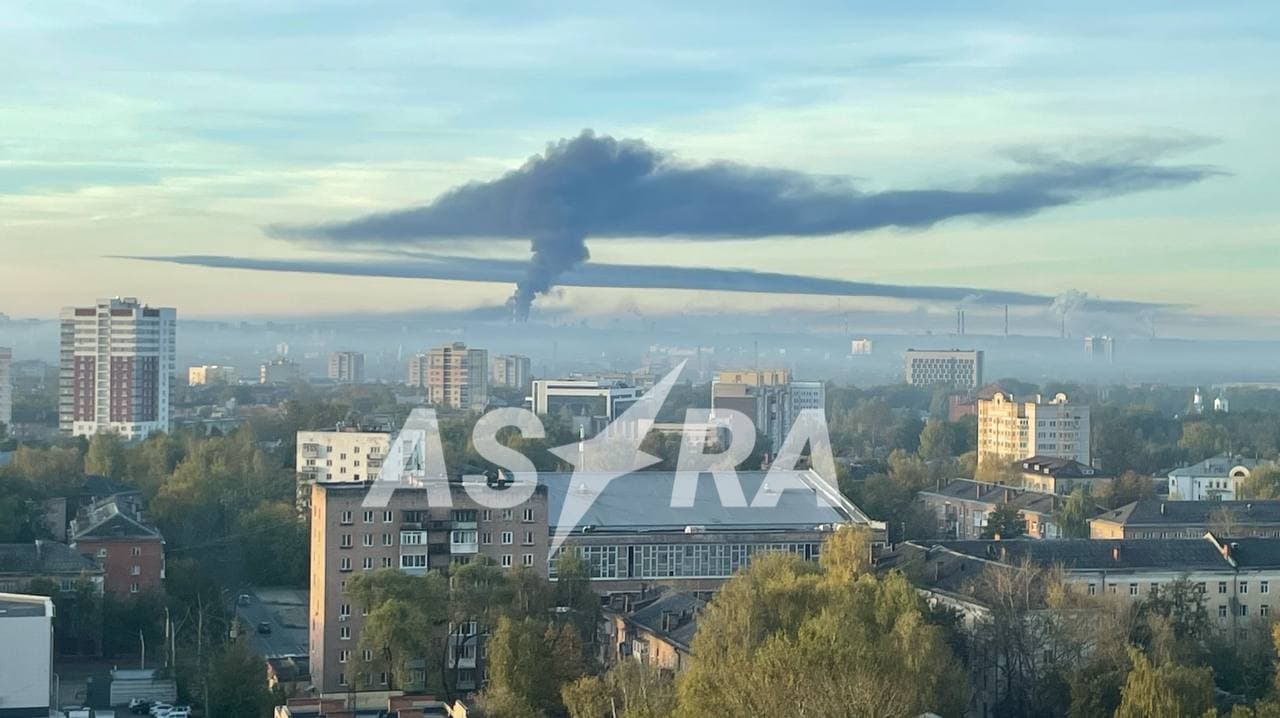
A fire broke out at the Novo-Yaroslavsky oil refinery in the Russian city of Yaroslavl. (Russian Telegram channel Astra)
For a country deriving enormous revenue from energy exports, becoming a net gasoline importer represented strategic humiliation Ukrainian officials noted with satisfaction. The fuel crisis demonstrated how strikes on infrastructure generated cascading effects through Russian economy and society.
Nine Days at Zaporizhzhia: Evidence Points to Russian Sabotage
The Russian-occupied Zaporizhzhia Nuclear Power Plant entered its ninth consecutive day without grid electricity on October 1, with evidence suggesting Russian forces had deliberately sabotaged power lines to create conditions for transferring the facility to Russia’s grid.
Greenpeace Ukraine analyzed satellite imagery published on October 1 and assessed there was no evidence of shelling of power lines, contradicting Russian claims. The assessment suggested Russian forces conducted sabotage operations against the lines—raising disturbing questions about whether Moscow deliberately created this crisis.
Russia had been constructing power lines into occupied southern Ukraine that could connect the ZNPP to Russia’s grid, with Russian officials announcing intentions to bring the plant to full operational capacity under Russian control. Transferring the ZNPP to Russia’s grid required disconnection from Ukraine’s grid—precisely the situation existing for over a week.
President Zelensky and Enerhodar Mayor Dmytro Orlov stated one diesel generator had already failed. The generators weren’t designed for extended operation—they were emergency backup systems meant for short-term use during power restoration, not as primary power sources for over a week.
IAEA Director General Rafael Grossi stated there was no immediate danger but emphasized running on diesel generators was “not sustainable.” Grossi noted Ukraine had been ready to repair another power line disconnected since May 2025, but “military situation” hadn’t allowed repairs—diplomatic language for ongoing Russian obstruction.
The ZNPP’s six reactors had remained in cold shutdown since April 2024 to mitigate nuclear disaster risks. Restarting under occupation would introduce significant risks. Russia’s occupation had degraded the plant’s security, and integrating it into Russia’s grid would exacerbate security risks, degrade Ukraine’s future power generation capacity, and serve as a tool legitimizing occupation.
The nine-day crisis with evidence of deliberate sabotage represented a dangerous inflection point in nuclear safety.
Chornobyl’s Deliberate Blackout: Three Hours in Darkness
Russian drones struck an energy facility in Slavutych causing a three-hour blackout at Chornobyl Nuclear Power Plant on October 1—the site of the world’s worst nuclear disaster experiencing dangerous power outage after Russian forces deliberately targeted infrastructure knowing the consequences.
The Energy Ministry reported “emergency situation” at several Chornobyl facilities. Due to power surges, the New Safe Confinement—the structure isolating destroyed Reactor 4 and preventing radioactive material release—was left without electricity.
President Zelensky’s accusation was explicit: “The Russians could not have been unaware that a strike on facilities in Slavutych would have such consequences for Chornobyl. And it was a deliberate strike, in which they used more than 20 drones—according to preliminary estimates.”
The use of over 20 drones suggested coordinated attack designed to overwhelm defenses and ensure successful strikes—not accidental spillover from attacks on other targets. The Energy Ministry confirmed power was fully restored late on October 1, with radiation levels remaining within normal limits. But the three-hour blackout revealed vulnerability—if backup systems had failed, consequences could have been catastrophic.
Zelensky connected the crises: “Russia is intentionally creating a risk of radiological incidents, taking advantage, unfortunately, of the weak stance of the IAEA and Director General Rafael Grossi.” The criticism came after Grossi met Putin at the Kremlin on September 25.
The simultaneous crises at Zaporizhzhia and Chornobyl revealed Russia’s willingness to weaponize nuclear safety risks—whether through deliberate policy or reckless disregard, Russian military operations were creating scenarios that could produce radiological disasters affecting far beyond Ukraine’s borders.
Five Dead, Fifty Wounded: The Daily Toll Continues
Russian attacks killed at least five civilians and injured at least 51 others across Ukrainian regions on October 1, with strikes demonstrating patterns of deliberate targeting of population centers lacking military significance.
Russia launched 49 Shahed-type drones and decoys, four Iskander-M or KN-23 ballistic missiles, and one Oniks anti-ship cruise missile overnight. Ukrainian air defenses intercepted 44 drones, while five missiles and drones struck several locations.
In Chernihiv Oblast, a Russian Iskander missile killed a man born in 1978, damaged an agricultural enterprise, and destroyed a car while targeting energy infrastructure. In Dnipropetrovsk Oblast, overnight drone attacks killed one person and injured 31 others, including a 10-year-old boy, 17-year-old boy, and 17-year-old girl.
In Donetsk Oblast, one person was killed and two injured in Kostiantynivka, with six civilians wounded elsewhere. In Kharkiv Oblast, a 64-year-old man was killed in Velyka Shapkivka village, with five injured in Kharkiv City. In Kherson Oblast, one person was killed and three injured, with five high-rise buildings and six houses damaged. In Sumy Oblast, four people were injured in drone attacks.
The casualties illustrated Russian targeting patterns: expensive missiles and drones against civilian infrastructure, attacks timed to maximize casualties when civilians were present.
Nature’s Fury: Nine Dead in Odesa Floods
At least nine people, including an 8-year-old child, died in Odesa after rainstorms and floods struck the coastal city, authorities reported on October 1. Almost a month’s worth of rain fell in half a day.
Search and rescue operations found nine bodies: six women, two men, and an 8-year-old child. Cases of hypothermia from prolonged water exposure were recorded. The State Emergency Service rescued 362 people during ongoing efforts.
Two days of heavy rain caused widespread flooding, power outages, and downed trees. Odesa Oblast, home to Ukraine’s largest seaport, had faced repeated Russian missile and drone attacks since February 2022—and now nature added another crisis to a region already struggling with war’s effects.
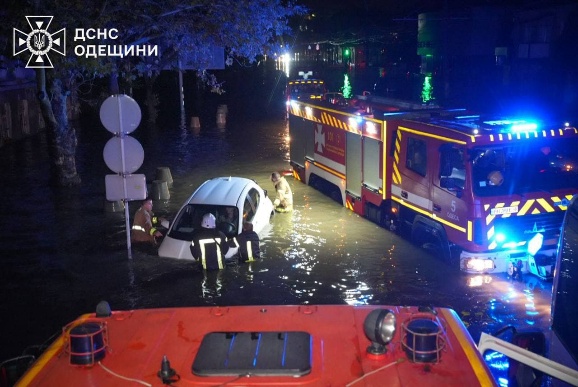
Nine people, including one child, died in Odesa due to bad weather. (Ukraine’s Emergency Story)
Europe’s Continued Support: €4.7 Billion From Frozen Assets
The European Commission announced on October 1 that its Macro-Financial Assistance loan program issued Ukraine its ninth tranche worth €4 billion (roughly $4.7 billion) secured by proceeds from frozen Russian revenues. The Commission noted overall support to Ukraine was approaching €178 billion.
With the latest tranche, the EU had funneled €14 billion to Ukraine through the Extraordinary Revenue Acceleration loans initiative. Since last year, G7 members and the EU had channeled $28 billion through ERA loans.
“Since February 2022, the European Union has been the largest provider of direct budgetary support to Ukraine—€62.5 billion,” Finance Minister Serhii Marchenko said, adding that further utilization of frozen Russian assets remained on the agenda.
Russian Claims and Confirmed Advances: The Grinding Front
The Russian Defense Ministry claimed on October 1 that troops had captured Verbove in Dnipropetrovsk Oblast. The Ukrainian military refused comment. The Kyiv Independent couldn’t verify Russian reports, though DeepState had reported Russian advances toward the village located approximately 15 kilometers from Pokrovske.
Russian forces made confirmed advances in three tactical areas. Geolocated footage published October 1 showed Russian forces advanced into southern Pankivka southeast of Dobropillya. Footage showed elements of the Russian 37th Motorized Rifle Brigade advanced in central Verbove southwest of Velykomykhailivka. Earlier footage indicated Russian forces advanced into eastern Poltavka northeast of Hulyaipole.
Ukrainian Dnipro Group Spokesperson Colonel Viktor Trehubov reported Ukrainian forces were inflicting serious losses on Russian forces in the Dobropillya area, forcing retreats. Trehubov noted Ukrainian forces exploited Russian overextension, preventing establishment of sustainable supply lines.
Across multiple sectors, fighting continued with Russian forces conducting offensive operations in northern Kharkiv Oblast, Kupyansk direction, Borova direction, Lyman direction, Siversk direction, Kostyantynivka-Druzhkivka area, Pokrovsk direction, Novopavlivka direction, Velykomykhailivka direction, and western Zaporizhzhia Oblast.
A Ukrainian company commander in Kupyansk direction stated Russian forces leveraged poor weather for small-group assaults of two to three servicemembers with drone and artillery support. A brigade commander stated Russian forces conducted constant infiltration operations into Kupyansk with one or two soldiers, maintaining positions only on northern outskirts while wearing stolen civilian clothes—war crimes under the Geneva Convention.
Ukrainian forces destroyed two Russian TOS-1A thermobaric artillery systems in Kupyansk direction—significant kills of valuable weapons systems.
Ukrainian 11th Army Corps Spokesperson Dmytro Zaporozhets reported on October 1 that Russian forces intensified operations in Siversk direction using armored vehicles and small motorcycle groups, while decreasing Kramatorsk direction operations due to weather while accumulating forces for future assaults.
A Ukrainian Pokrovsk direction NCO reported strong winds complicated drone use for both sides. Russian forces were losing huge infantry numbers attempting to envelop Pokrovsk without sufficient firepower and experiencing logistical problems.
September’s Slowdown: Russian Advances Decline 44 Percent
Ukrainian monitoring group DeepState reported on October 1 that Russia’s territorial advances slowed significantly in September, with Russian forces seizing 44 percent less land compared to August. Russian troops captured approximately 259 square kilometers—just 0.04 percent of Ukraine’s total area, marking the smallest monthly gain since May.
Russia now occupied around 19.04 percent of Ukraine’s territory. Ukraine’s most significant September losses occurred near Novopavlivka village in Donetsk Oblast. In Pokrovsk direction, Ukrainian forces sustained effective defense despite roughly one-third of all Russian assaults concentrating on Pokrovsk and surroundings.
“The cost of every meter here is significantly higher. Russia has approached the town from the south, and urban combat differs greatly in complexity from fighting in open areas,” the report read.
Since late August, Ukrainian units recaptured several villages including Zarichne, Novoekonomichne, and Udachne. The analysis suggested Russian offensive momentum was declining—whether due to Ukrainian defensive improvements, Russian exhaustion, logistical constraints, or seasonal weather changes.
Collaborator’s End: Leontiev Killed by Drone
A Ukrainian drone killed Volodymyr Leontiev, a Russian-installed official in occupied Nova Kakhovka, on October 1. Leontiev was wounded by a Baba Yaga drone attack and died in hospital, according to Moscow-appointed occupation head Volodymyr Saldo.
Leontiev, 61, had served as head of Russian-installed administration in Nova Kakhovka since April 2022. He was implicated in multiple war crimes: ordering Russian troops to abduct and torture Beryslav mayor Oleksandr Shapovalov in March 2022, earning a 15-year in absentia prison sentence; formally charged with collaboration in April 2022; and sentenced to additional 12 years for unlawfully imprisoning local journalist Oleh Baturin and other officials.
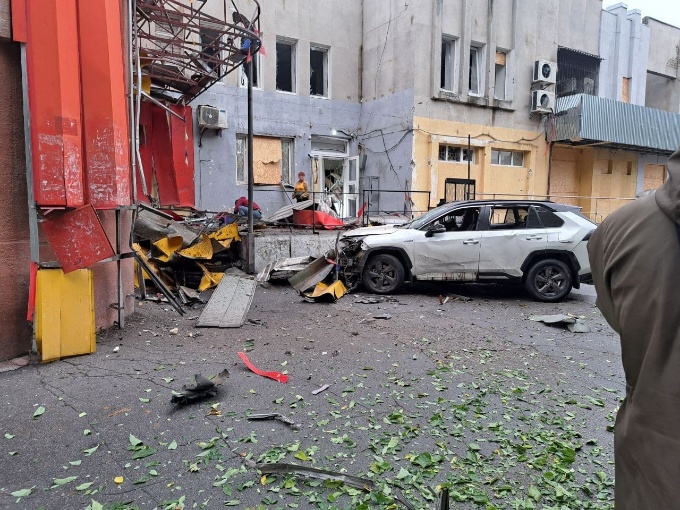
The aftermath of an alleged Ukrainian drone attack on collaborator Volodymyr Leontiev. (Volodymyr Saldo / Telegram)
The drone strike represented continuation of Ukrainian targeting of collaborators who sided with occupation authorities and committed crimes against Ukrainian civilians.
Pyongyang’s Industrial Army: 20,000 Workers Manufacturing Drones
General Staff Chief Andrii Hnatov revealed in an interview published October 1 that Russia may have brought around 20,000 North Korean workers to manufacture military goods, though data required further confirmation. Russia was using North Korean labor to produce Geran drones in Tatarstan Republic.
“That is also participation in the conflict,” Hnatov said. The revelation represented a different dimension of Pyongyang’s support—not just military personnel but industrial labor supporting war production. The arrangement allowed Russia to expand drone manufacturing without relying on limited domestic labor or exposing military production extent to domestic scrutiny.
Hnatov said North Korean troops were present in Kursk Oblast, with Russia claiming them as engineering units for demining. Ukraine hadn’t recently observed Russia involving North Korean forces in combat operations.
Denmark’s Warning: “This Is Only the Beginning”
Danish Prime Minister Mette Frederiksen told the Financial Times in an interview published October 1 that NATO must coordinate common response as hybrid war between Russia and Europe was “only beginning.”
“The idea of hybrid war is to threaten us, to divide us, to destabilise us. To use drones one day, cyberattacks the next day, sabotage on the third day. So this will not end only by boosting capabilities,” she said.
Frederiksen noted that as Denmark and Europe faced drones violating airspace, the continent’s “primary enemy” was Russia. Increasing defense spending wasn’t enough amid escalating threats.
“We need to be very open about the fact that it probably is only the beginning. We need all Europeans to understand what is at stake and what’s going on. When there are drones or cyberattacks, the idea is to divide us.”
The warning captured growing European recognition that the war had evolved into comprehensive hybrid warfare targeting societies, infrastructure, and unity.
Germany Under Surveillance: Drones Over Critical Infrastructure
Drones spotted over Kiel and other parts of Germany’s Schleswig-Holstein state may have surveilled critical infrastructure, Der Spiegel reported October 1, citing undisclosed sources. The drones flew over power plants, a university hospital, military installations, and the state government’s official residence.
Two small drones were spotted over ThyssenKrupp naval shipyard on September 25 evening. Later, a formation led by a large drone with several smaller ones was observed over Kiel Fjord, flying over the state parliament and allegedly monitoring Heide oil refinery supplying Hamburg Airport.
Interior Minister Sabine Sütterlin-Waack confirmed possible espionage investigation. German police discovered drones near Rostock seaport on September 29—large quadcopters weighing over 2.5 kilograms flying in “coordinated and synchronized” manner, suggesting professional operations.
The pattern across Europe was consistent: mysterious drones over critical infrastructure, military facilities, energy installations, and government buildings—systematic mapping of vulnerabilities.
Taiwan’s Contradiction: Funding Russia While Supporting Ukraine
Taiwan became the world’s largest Russian naphtha importer in early 2025, generating $1.7 billion in mineral extraction tax revenues for Russia—sufficient to finance 170,000 Gerbera drones used against Ukraine, according to a study published October 1.
Taiwan’s monthly imports surged sixfold between 2022 and first half 2025. In total, Taiwan imported 6.8 million tons of Russian naphtha worth $4.9 billion between February 2022 and June 2025, accounting for 20 percent of Russia’s total naphtha exports.
While Taiwan provided $50 million in bilateral aid to Ukraine since the invasion, it imported Russian fossil fuels worth $11.2 billion during that period. Some 72 percent of Taiwan’s Russian naphtha came from U.S.-sanctioned company Novatek.
“Taiwan’s reliance on Russian naphtha bankrolls Putin’s war machine and undermines its democratic allies,” said Vladimir Slivyak, Ecodefense co-chair. “Each chip forged with this fuel taints the AI revolution with the suffering of the Ukrainian people.”
The contradiction was stark: a democratic island threatened by authoritarian China was funding Russia’s war against Ukraine through massive energy purchases while providing token humanitarian assistance.
Heroes Honored: Zelensky’s Defenders’ Day Awards
President Zelensky posthumously awarded Hero of Ukraine titles to four individuals on October 1, Ukraine’s Defenders’ Day. The honorees were Andrii Parubii, veteran politician and EuroMaidan Revolution figure fatally shot in Lviv on August 30; Hennadii Afanasiev, civic activist and soldier killed in combat 2022; Volodymyr Vakulenko, children’s writer abducted and killed by Russian forces May 2022; and Stepan Chubenko, teenage schoolboy tortured and executed by Russian proxy forces 2014.
“They were special people. And they were also defenders—defenders of the idea of Ukraine, of our independence,” Zelensky wrote. “Their lives were different, and they came from different parts of our country—Lviv, Crimea, Donetsk, Kharkiv. But for many, each of them now embodies the very Ukraine that managed to show character and stand up to Russia.”
Additional Developments: Gaza, Media Pressure, Banking Failures
Kyiv welcomed President Trump’s Gaza peace plan on October 1, calling it an “important contribution” toward just settlement. The Ukrainian Foreign Ministry emphasized resolution must be based on international law principles and account for legitimate rights of Israelis and Palestinians.
Radio Free Europe/Radio Liberty’s Schemes project reported October 1 that it identified the man who visited Kyiv Independent CEO’s home on September 30 as 24-year-old Oleksandr H., apparently employed by SBU. The security service confirmed he was its employee but claimed he was investigating an organized criminal group unrelated to the Kyiv Independent.
“Given that Ukraine has seen cases of pressure on media and violence against journalists, we can’t take potential threats lightly,” editor-in-chief Olga Rudenko said October 1. “Making them public remains our best defense.”
Raiffeisen Bank International failed in its latest attempt to sell its Russian arm, Reuters reported October 1. Austria’s Raiffeisen, the largest Western bank still operating in Russia, remained crucial for facilitating Russian gas sales to Europe. Russian authorities feared a Russian buyer taking over the stake would make Raiffeisen vulnerable to U.S. sanctions.
The Day’s Meaning: Nuclear Blackmail and Spreading Shadows
October 1, 2025, revealed the 1,316th day of a war that had evolved into comprehensive confrontation across nuclear, economic, hybrid, and conventional domains threatening consequences far beyond any battlefield.
The nuclear dangers were unprecedented: two facilities facing simultaneous critical safety situations, with evidence of deliberate Russian sabotage at Zaporizhzhia and deliberate strikes causing Chornobyl blackout. Russia was weaponizing nuclear safety risks—whether through calculated policy or catastrophic recklessness—creating scenarios threatening radiological disasters affecting regions far beyond Ukraine.
Moscow’s October 1 nuclear blackmail revealed the Kremlin’s fork-tongued strategy: threaten America with arms races while refusing Ukraine negotiations, using atomic threats as diplomatic leverage while prosecuting territorial conquest, claiming to desire peace while explicitly rejecting talks.
The shadow fleet seizure exposed Russia’s hybrid warfare sophistication: using commercial vessels to evade sanctions while potentially launching drones toward European cities, maintaining plausible deniability while testing NATO defenses. The French boarding of the Boracay, Norwegian detention of Chinese tourists, and accumulated evidence suggested systematic operations probing European responses.
Russia’s fuel crisis humiliation demonstrated how Ukrainian strikes generated cascading economic effects. A petrostate importing gasoline from Asia while resurrecting banned carcinogenic additives illustrated the war’s toll on Russian economy—visible shortages Moscow couldn’t suppress despite propaganda efforts.
Taiwan’s contradiction highlighted global response complexities: a democratic island itself threatened by authoritarian neighbor was funding Russia’s war through $11.2 billion in energy purchases while providing $50 million in humanitarian aid—a ratio revealing how economic interests trumped stated values.
Denmark’s warning that hybrid war was “only beginning” captured growing European recognition that the conflict had evolved into comprehensive campaign targeting societies, infrastructure, and unity through drones, cyberattacks, sabotage, and information operations across the continent.
The grinding front-line combat continued with Russian forces making confirmed advances in three areas while Ukrainian forces inflicted significant losses and exploited overextension in others. The 44 percent September reduction in territorial gains suggested offensive momentum declining—though Russia continued pressing forward at enormous cost.
The civilian toll—five dead, fifty-one wounded including children—illustrated daily costs beyond front lines. Russian forces struck population centers lacking military significance, using expensive weapons against civilian infrastructure in patterns revealing deliberate targeting.
Europe’s €4.7 billion aid package demonstrated continued support secured by frozen Russian assets – allowing Europe to fund Ukraine while imposing costs on Moscow. The mechanism’s sustainability remained uncertain as war entered its fourth year, but the commitment represented massive financial support.
North Korea’s 20,000 workers manufacturing Russian drones revealed deepening partnership between pariah states. The arrangement allowed Russia expanding military production without domestic scrutiny while Pyongyang gained hard currency and strengthened Moscow ties.
The SBU investigation regarding Kyiv Independent CEO surveillance illustrated challenges maintaining democratic norms while fighting existential war. Security services’ apparent monitoring of independent media created troubling precedents for a country championing democratic values.
Odesa’s natural disaster – nine dead from flooding – added tragic reminder that Ukraine faced multiple simultaneous crises: fighting Russian aggression while dealing with natural disasters, energy shortages, economic challenges, and infrastructure damage from over three years of constant bombardment.
The question defining the war remained unanswered: which side could sustain losses, maintain support, preserve cohesion, and continue adapting longer than its opponent. On this single October day, both sides demonstrated capabilities and weaknesses suggesting the conflict’s conclusion remained distant.
The shadow war had spread across continents, touching nuclear facilities and shadow fleet tankers, energy markets and semiconductor supply chains, drone incidents and collaborative killings. The war had become Europe’s organizing security principle, the driver of drone warfare innovation, the test of democratic endurance, and the source of nuclear dangers threatening consequences extending far beyond any battlefield.
October 1 revealed that transformation continuing – day by day, crisis by crisis, drone by drone – with Russia weaponizing nuclear safety while refusing peace, Europe seizing shadow fleet vessels while investigating drone incidents, Ukraine striking refineries while receiving European aid, and the convergence of nuclear risks, economic warfare, hybrid operations, and conventional combat creating a crisis whose resolution would shape not just Ukraine’s future but the international order for decades to come.