
When Munich Airport closed twice in 24 hours, a double-tap strike killed civilians on a railway platform, and Czech voters threatened Ukraine’s ammunition lifeline
A Day of Calculated Terror
October 4, 2025, began with fire in a Russian refinery and ended with blood on a Ukrainian railway platform. Munich Airport closed for the second time in less than 24 hours as military reconnaissance drones prowled near its runways. In Shostka, Sumy Oblast, a savage double-tap drone strike killed civilians waiting for a train home. Russian forces advanced meter by meter across multiple fronts while Ukrainian drones traveled nearly a thousand kilometers into enemy territory. In Prague, Czech voters delivered a verdict threatening to reshape Europe’s support for Ukraine. And Ukrainian journalism lost one of its most respected voices.
This was the 1,319th day of Russia’s full-scale invasion—a day when the war’s reach extended far beyond Ukraine’s borders, when civilians became targets simply for traveling, and when the international community confronted uncomfortable questions about sustaining support.
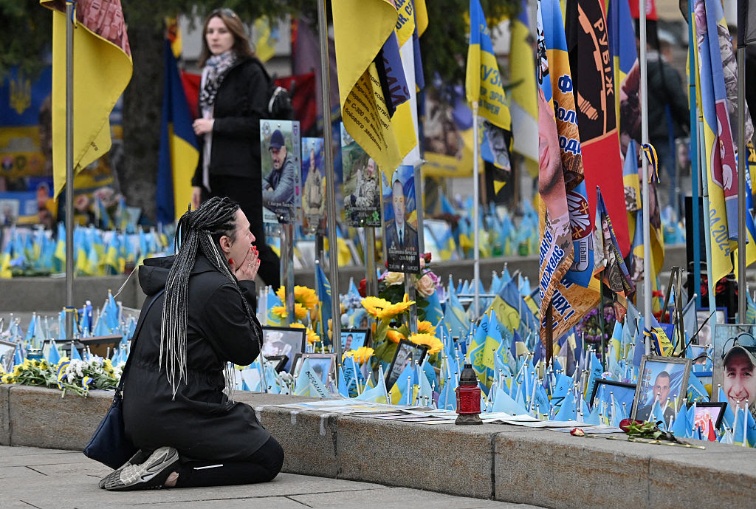
A kneeling woman reacts at a makeshift memorial for fallen Ukrainian and foreign soldiers on Independence Square in Kyiv, amid Russia’s war against Ukraine. (Sergei Supinsky/AFP via Getty Images)
Munich’s Closing Skies: Military Drones Over Germany
Munich Airport reported on October 4 that authorities had closed the facility overnight due to unidentified drones—the second closure in less than 24 hours. German outlet Bild reported these weren’t hobbyist devices but military reconnaissance drones. Authorities also detected an unidentified small aircraft near an ammunition depot.
These incursions came against the backdrop of Russia’s ongoing campaign of drone violations across at least eight European countries. Ukrainian Deputy Foreign Minister Sergiy Kyslytsia told the Guardian in an interview published October 4 that Russia was already at war with Europe. The drone incursions were deliberate attempts to “move the red lines.” Europe needed to “get serious” about the existential threat, he warned.
If Russia didn’t face a firm response from the US and EU, Putin would continue escalating, Kyslytsia stated. “I’m sure Putin gets emotional if not physical satisfaction, humiliating the West by showing what he perceives as his super-strength.”
The message was clear: Your borders mean nothing. Your defenses are porous. We can reach you whenever we choose.
Terror on Platform Four: The Shostka Massacre
The first drone struck Shostka railway station on the morning of October 4, hitting a passenger train preparing to depart for Kyiv. The explosion tore through carriages, killing and wounding passengers who had been settling into their seats.
Then came the calculated cruelty. Minutes later, as passengers evacuated and rescuers rushed to help, a second drone struck. This was a double-tap strike—deliberate targeting of first responders designed to maximize casualties.
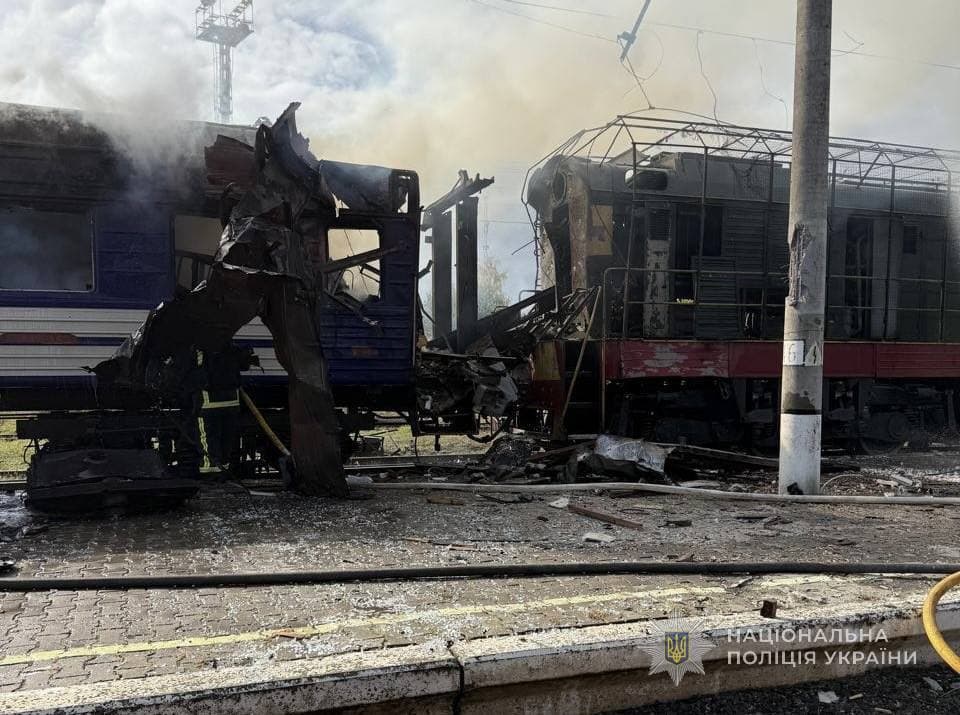
Russian drone attack on railway station in Shostka, Sumy Oblast. (Ukraine’s National Police/Telegram)
By day’s end, at least one person was confirmed dead: a 71-year-old man found in a train carriage. At least 30 others were injured, including a 44-year-old woman and her three sons, aged 14, 11, and 7. Two victims remained in intensive care. The Sumy Prosecutor’s Office changed the classification to war crimes resulting in death.
Ukrzaliznytsia confirmed the attack’s deliberate nature—the second drone struck while evacuation was underway. “It was a cowardly attack aimed at stopping the connection with our frontline areas.”
President Volodymyr Zelensky posted video showing devastated carriages. “The Russians could not have been unaware that they were striking civilians. And this is terror the world must not ignore. Every day, Russia takes people’s lives. And only strength can make them stop.”
European Commission President Ursula von der Leyen condemned the attack as evidence of “Russia’s reckless and continued willingness to target civilians.”
The attack also cut power to Shostka and surrounding districts. At least eight people were hospitalized. A pre-trial investigation into war crimes was launched.
The Night the Sky Burned: Targeting Ukraine’s Winter Lifeline
The overnight assault of October 3-4 represented Russia’s largest attack on Ukraine’s gas production infrastructure since the full-scale invasion began. Russian forces launched 109 Shahed-type drones and decoy drones, along with three Iskander-M or KN-23 ballistic missiles from Rostov and Voronezh oblasts.
Ukrainian air defenses intercepted 73 drones, but three missiles and 36 drones struck 21 locations. About 35 missiles and 60 drones targeted gas facilities in Kharkiv and Poltava regions, with some facilities critically damaged.
Naftogaz CEO Oleksiy Chernyshov condemned the strike as “targeted terror against civilian facilities that ensure gas production and normal life for people.” The attack aimed to disrupt Ukraine’s heating season and deprive citizens of heat in winter.
Russian strikes disrupted power across multiple oblasts. In Donetsk Oblast, one civilian was killed and seven injured. In Kherson Oblast, 11 people were injured, including a 38-year-old woman and two children—ages 17 and 8—struck in central Kherson. In Sumy Oblast, nine were injured, including an 8-year-old child. In Kharkiv Oblast, five were injured and 4,000 consumers lost power. In Chernihiv Oblast, approximately 50,000 consumers faced emergency power cuts.
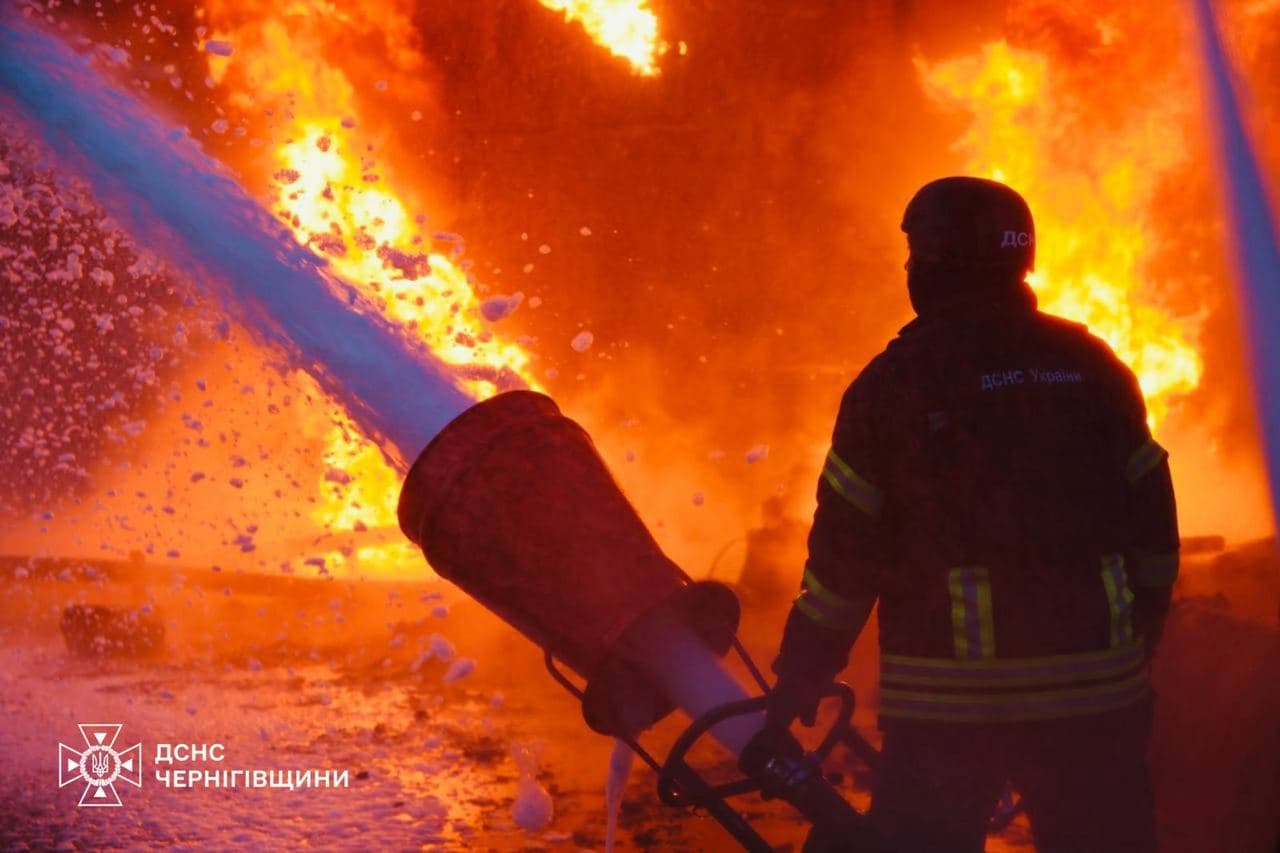
Rescuers clearing up the aftermath of a Russian attack in Chernihiv. (Viacheslav Chaus/Telegram)
Russian forces struck agricultural warehouses in Sumy Oblast, damaging facilities storing 700 and 1,000 tons of grain respectively.
Fire in the North: Ukraine’s Long Reach
Ukrainian Special Operations Forces reported on October 4 that SSO elements struck the Kirishinefteorgsintez Oil Refinery in Kirishi, Leningrad Oblast, on the night of October 3-4, with support from Russian insurgency group Chernaya Iskra.
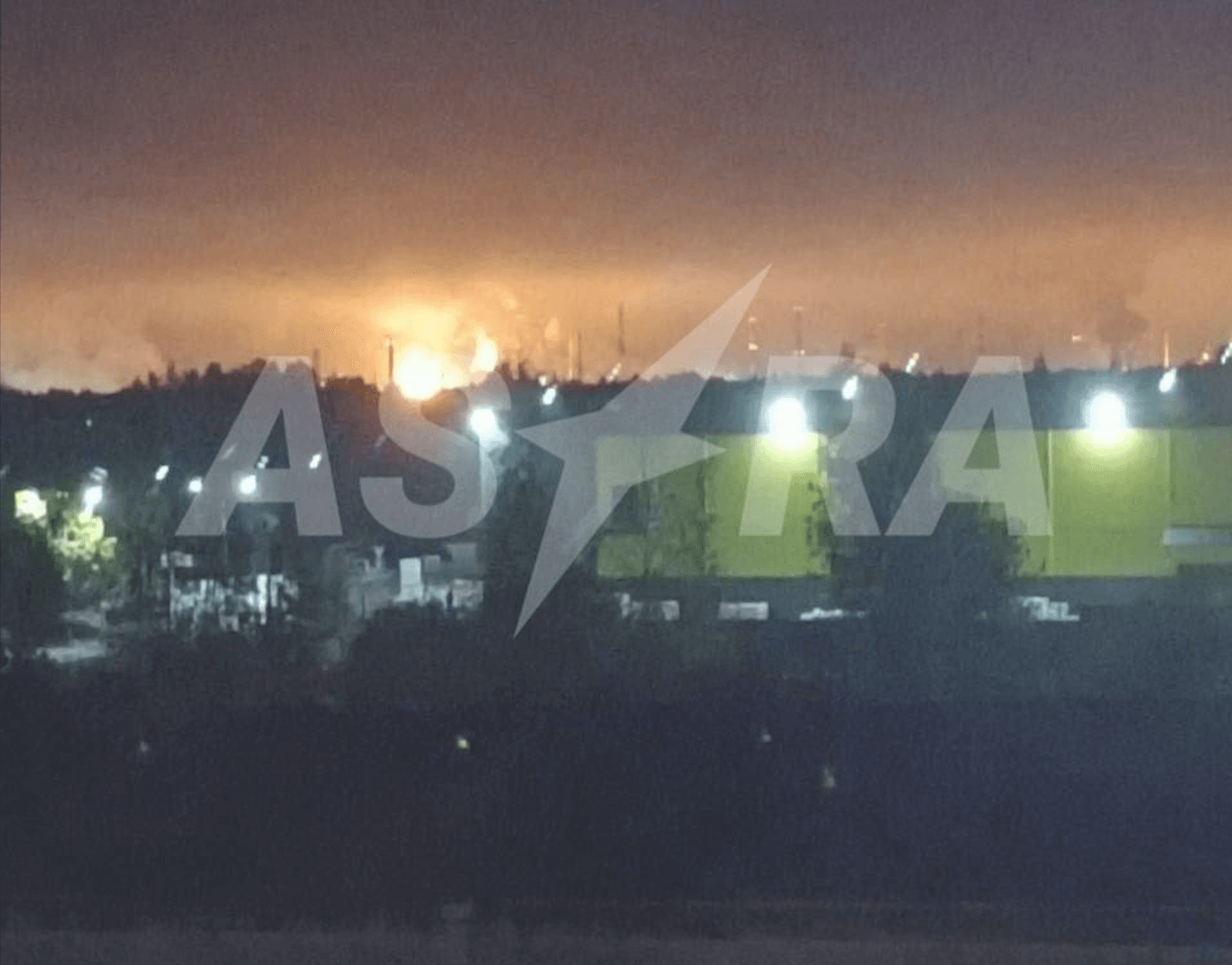
Alleged footage of an explosion at the Kirishi oil refinery in Russia’s Leningrad region following a reported drone strike overnight. The photo could not be independently verified. (Astra / Telegram)
The strike damaged installations producing linear alkylbenzenes and equipment filtering oil impurities. This was the third Ukrainian strike against the facility in 2025. The refinery has annual processing capacity of roughly 20.1 million tons and accounts for 6.6 percent of Russia’s total oil refining volume.
Geolocated footage published October 4 showed fires near the refinery, with NASA FIRMS data confirming heat anomalies. Leningrad Oblast Governor Alexander Drozdenko claimed Russian forces downed seven drones over Kirishi. The refinery is more than 800 kilometers from Ukraine’s border.
Russian opposition outlet Astra reported on October 4 that residents in Biysk, Altai Krai, were reporting acute gasoline shortages resulting in long lines and rising prices. Roughly half the gasoline stations in Biysk had closed.
Striking Deep: The Corvette on Lake Onega
Ukrainian Special Operations Forces struck a Russian Buyan-M-class corvette on Lake Onega in Karelia on the morning of October 4. The missile ship Grad, a Kalibr cruise missile carrier, was struck at 4:31 a.m. local time while traveling from the Baltic Sea to the Caspian Sea. Ukrainian forces damaged the ship’s power plant compartment.
The strike demonstrated Ukraine’s expanding capability to reach Russian military assets across vast distances. Lake Onega is located deep inside Russian territory.
The General Staff reported on October 4 that Ukrainian forces also struck a Harmony radar system and a transport-loading vehicle from an Iskander missile defense system in Kursk Oblast, and hit the command post of the Russian 8th Combined Arms Army on the night of October 3-4.
The Grinding Eastern Front: Advances Measured in Meters
Geolocated footage published October 4 confirmed Russian advances in multiple locations. In the Lyman direction, Russian forces advanced northeast of Stavky. In the Siversk direction, footage showed Russian forces raising flags in western and northern Fedorivka, indicating they had seized the settlement. In the Pokrovsk direction, Russian forces advanced in southern Pokrovsk and on the northeastern outskirts of Krasnyi Lyman. In the Velykomykhailivka direction, Russian forces advanced along the H-15 highway southeast of Andriivka-Klevtsove.
Ukrainian Commander-in-Chief General Oleksandr Syrskyi reported on October 4 that Ukrainian forces were conducting strike missions against Yampil to destroy remaining Russian sabotage groups. In the Dobropillya tactical area, Russian forces lost 47 casualties in the last day, including 32 killed. Since the beginning of Ukrainian efforts to eliminate Russia’s Dobropillya salient, Russian forces had lost about 3,520 servicemembers, including 1,988 killed, and 991 pieces of weapons and equipment.
A Ukrainian NCO operating in Pokrovsk reported that Russian forces were attacking one at a time, conducting reconnaissance-in-force missions to identify Ukrainian firing points. Russian forces were installing anti-drone protections and electronic warfare systems on vehicles and using mothership drones to extend FPV drone range. They were using Starlink to coordinate assaults.
Another Ukrainian spokesperson reported that Russian glide bomb strikes had increased and the bombs were more accurate, suggesting technical improvements. A Ukrainian brigade commander near Novoekonomichne stated Russian forces were attacking with one or two personnel and increasingly using civilian clothing to bypass Ukrainian positions—an act of perfidy, a war crime under the Geneva Convention.
An officer in Kupyansk reported that Russian forces were no longer conducting mechanized assaults due to Ukrainian drone strikes. The area 20 kilometers from the frontline was no longer safe for logistics. Russian forces conducted glide bomb strikes consistently three times each morning. Russian drone operators frequently targeted civilians when batteries were low.
A Ukrainian brigade reported that a Russian FPV drone strike near Druzhkivka killed French journalist Antoni Lallican and injured Ukrainian journalist Hryhoriy Ivanchenko, both wearing journalist vests.
The Czech Verdict: When Allies Reconsider
Czech voters delivered a consequential verdict on October 4 threatening Ukraine’s ammunition supply. Andrej Babis’s populist Ano party won approximately 35 percent of the vote with over 98 percent counted. Ano earned 81 seats in the 200-member Chamber of Deputies and will form a new coalition government, likely partnering with populist, right-wing, and anti-NATO factions.
The result threatened Czechia’s ammunition initiative—the program that had provided artillery shells during Ukraine’s severe shortage in 2024. Babis had sharply criticized the scheme and pledged to eliminate it. Czechia had planned to provide up to 1.8 million shells by the end of 2025.
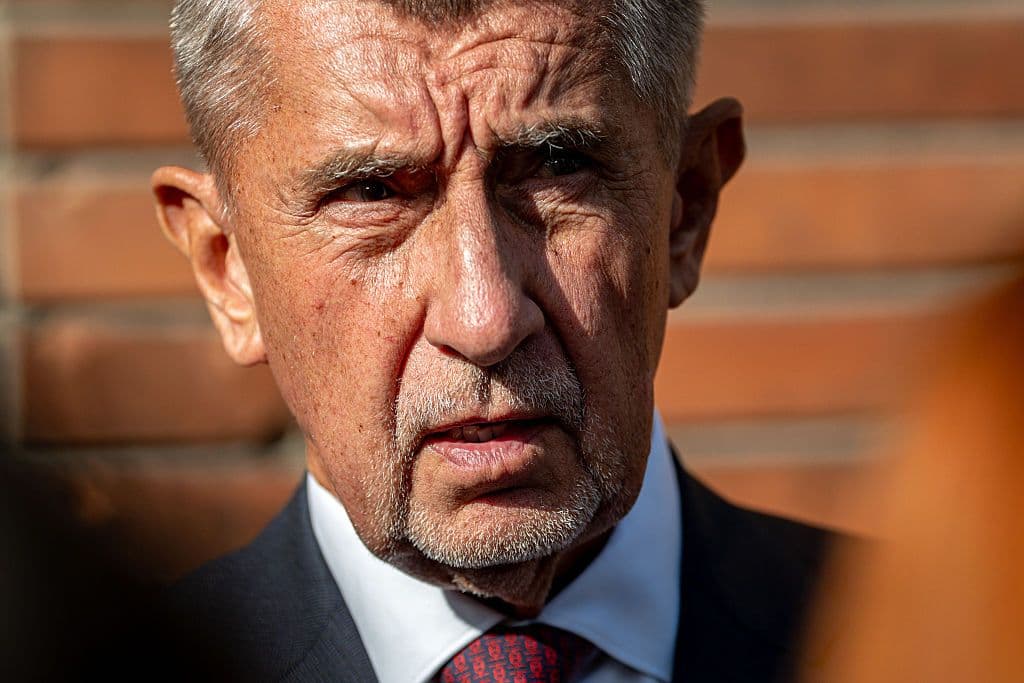
Andrej Babis, leader of the ANO movement, gives an interview during the parliamentary elections in Ostrava, Czechia. The general elections in the Czech Republic will be held. (Lukas Kabon/Anadolu via Getty Images)
In comments to Ukrainian outlet Suspilne after his victory, Babis insisted Ukraine is “not ready” to join the EU. “We are helping Ukraine through EU,” he said, suggesting the ammunition initiative “should be organized by NATO.” When asked about Ukraine’s EU accession, Babis stated: “You are not prepared for EU. You have to end the war first.”
Czechia had been one of Kyiv’s staunchest allies, providing tanks, rocket systems, helicopters, and hosting hundreds of thousands of refugees. The ammunition initiative had made significant battlefield impact, with President Zelensky crediting it with saving lives.
The Chinese Connection: Satellite Intelligence for Russian Missiles
Ukrainian foreign intelligence revealed on October 4 that China had provided Russia with satellite data used to target missile strikes on Ukraine, including strikes on facilities used by foreign companies. SZRU employee Oleh Alexandrov told Ukrinform there was evidence of “high-level cooperation between Russia and China in conducting satellite reconnaissance of Ukraine’s territory.”
The goal was identifying strategic targets for attacks. “These targets may belong to foreign investors,” Alexandrov stated. The revelation demonstrated Beijing was actively supporting Moscow’s targeting through intelligence sharing, despite officially claiming neutrality.
President Zelensky signed several decrees on October 4 extending and imposing sanctions. One decree extended existing sanctions targeting businessmen with close ties to Putin, including companies connected to sanctioned oligarchs Petr Aven, Mikhail Fridman, and Andrei Kosogov.
Another decree imposed sanctions on 33 individuals and 27 entities, including drone and aircraft engine manufacturers. Companies sanctioned included Hardberry-Rusfactor, Jupiter Plant, and Valday Opto-Mechanical Design Bureau. The sanctions also targeted Chinese firm Shenzhen Weiliao International Trade Co., Ltd., for supplying components for drone production at Russia’s Yelabuga factory.
A third decree imposed penalties on four individuals and three entities associated with Russia’s oil industry, including Nefteavtomatika and Kurgankhimmash LLC.
The Evacuation Race: Saving Lives as the Front Advances
In Dnipropetrovsk region, volunteers and police units conducted desperate evacuations as Russian forces approached settlements. The Pokrovske community, 15 kilometers from the front line, had become the focal point as Russian artillery, bombs, and drones extended their reach.
Mykhailo, an officer with the “White Angels” police evacuation unit, reported his team had evacuated more than 1,300 people from Pokrovske community since late July. “I was constantly a witness to civilian transport being hit, and there were strikes on settlements where mostly civilians were located,” he recounted. In Velykomykhailivka, while trying to persuade a man to evacuate with his elderly parents, three guided aerial bombs struck about 200 meters away, followed by a drone attack.
Volunteer coordinator Alina Subotina reported her team had evacuated 5,000 to 6,000 people in the last three months. Volunteer Volodymyr, who led church-based assistance, had lost his home in Donetsk twice—in 2014 and during the full-scale invasion.
Seventy-eight-year-old Lyudmyla Kravets was evacuated from a village under constant shelling. “There are no villages left, it’s all ruins. And now they have reached us,” she told rescuers. Her father had fought Nazi Germany, returning in 1946. “I often think, he fought the whole war for what?” she said.
Russian forces were systematically destroying everything in their path, targeting evacuation vehicles, and making entire regions uninhabitable. Intercepted Russian radio communications revealed direct orders to kill civilians. In one interception, invaders killed an entire family and used a child as a hostage, with the Russian commander ordering troops to “remove the bodies of the adults so the girl doesn’t see.”
The G7 Emergency: Coordinating Energy Defense
The G7+ energy coordination group convened an emergency meeting on October 4 in response to Russia’s intensifying attacks on Ukraine’s oil and gas facilities. Representatives of over 100 nations and international organizations attended, including the US, Canada, Germany, France, the European Commission, and UNDP.
Deputy Energy Minister Roman Andarak informed partners about the overnight attack’s scale and priority needs for repairs. “The Russians have not abandoned their intentions to plunge Ukraine into darkness on the eve of the new heating season,” Andarak said.
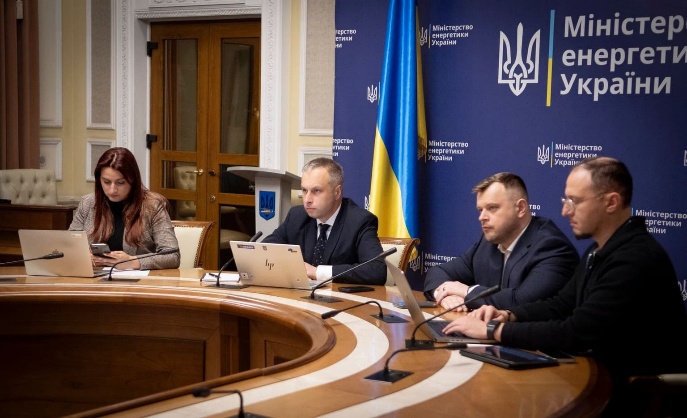
Deputy Energy Minister Roman Andarak (C) and other members of the G7+ energy coordination group in Ukraine hold an emergency meeting with international partners in Kyiv. (Energy Ministry / Facebook)
Kyiv’s most critical needs were air defense systems, purchases of additional gas volumes, and equipment for restoration. G7+ representatives pledged continued energy support and to hold another meeting soon to coordinate efforts.
Georgia’s Convulsion: Protests and Crackdowns
Georgian police cracked down on protesters with water cannons and pepper spray on the evening of October 4 as activists attempted to break into the presidential palace in Tbilisi. The protests coincided with local elections that opposition parties had boycotted.
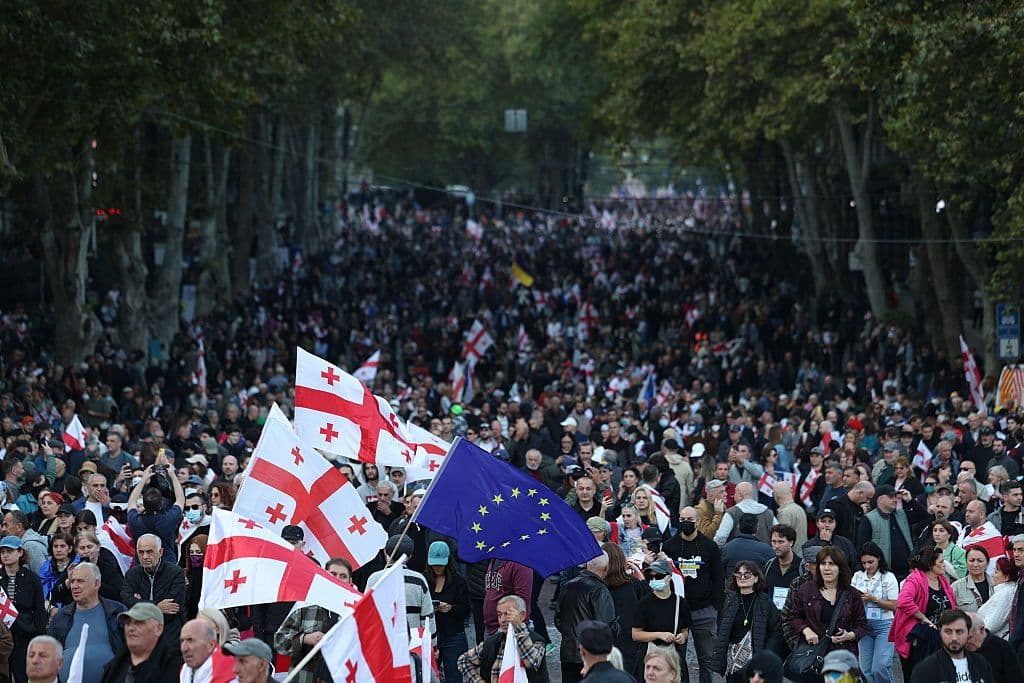
Georgian opposition supporters rally on the day of local elections in central Tbilisi. (Giorgi Arjevanidze / AFP via Getty Images)
Thousands took to the streets as voting began. At around 7 p.m., crowds marched on the presidential palace. Some attempted to break through fences, prompting Georgia’s Interior Ministry to declare the demonstration illegal and order dispersal. The Interior Ministry claimed 14 officers were injured in clashes, while video footage showed injuries among protesters. Some demonstrators erected barricades near the palace.
Former Georgian President Salome Zourabichvili criticized the attempted break-in and called on protesters to remain peaceful. “As a legitimate president, I officially reject this and continue to stand with my people peacefully until we achieve new elections.”
The protests followed disputed 2024 parliamentary elections in which Georgian Dream defeated pro-European opposition in a vote marred by fraud allegations. The European Commission had suspended Georgia’s EU accession process, and Prime Minister Irakli Kobakhidze postponed accession until 2028, triggering nationwide protests.
The Day’s Fallen: When Journalism Lost a Voice
Ukrainian journalism mourned the loss of Oleksa Shalayskyi, renowned investigative journalist and co-founder of anti-corruption project Nashi Groshi, who died on October 4 at age 58 from natural causes.
Shalayskyi had spent decades exposing corruption in Ukrainian politics and public procurement. He led respected publications including Ukrainian Week and Weekly Mirror. In 2010, he co-founded Nashi Groshi with journalist Yurii Nikolov, focused on exposing corruption schemes in public procurement. His investigations prompted criminal inquiries into officials’ wrongdoing. He co-authored investigations into the Boyko Towers oil drilling platforms and was one of the architects behind Prozorro, Ukraine’s public e-procurement system.

Renowned Ukrainian journalist and co-founder of the investigative project Nashi Groshi, Oleksa Shalayskyi, has died at the age of 58. (Screenshot from ProUA video/YouTube)
“His voice was the voice of conscience, intolerant of injustice,” the Institute of Mass Information stated. “Oleksa reacted deeply to any form of lies and abuses and always stood firmly for society’s right to know the truth.”
Journalist Yurii Nikolov wrote: “I can’t imagine what Ukrainian investigative journalism would be like without him.”
The Meaning of October 4: Terror as Strategy
October 4, 2025, revealed the war’s essential character with brutal clarity. Russian forces attacked passenger trains with double-tap strikes designed to kill rescuers. They launched their largest assault on gas infrastructure since the invasion began, targeting facilities that would keep Ukrainians warm through winter. They advanced meter by meter across multiple fronts at enormous human cost.
Ukrainian forces responded with long-range strikes hitting refineries 800 kilometers inside Russia and corvettes on lakes deep in enemy territory. European voters delivered verdicts threatening international support. China’s satellite intelligence actively supported Russian targeting. And volunteers raced to evacuate civilians from advancing Russian forces that deliberately killed those attempting to flee.
The day demonstrated that more than three and a half years into the full-scale invasion, the conflict had evolved into systematic terrorism against civilians combined with grinding attrition warfare. Russian forces couldn’t defeat Ukraine militarily, so they attacked civilian trains, gas facilities, and residential areas. They couldn’t match Ukrainian innovation, so they ground forward through mass and persistence.
The drones closing Munich Airport, the missiles hitting Shostka railway station, the systematic targeting of energy infrastructure, and the evacuation of civilians from advancing fronts revealed a war that recognized no boundaries and respected no conventions. The accumulated weight of 1,319 days of war became visible in bloodstained railway platforms, refinery fires burning deep inside Russia, Czech election results threatening ammunition supplies, and a journalist’s death marking journalism’s loss of a voice desperately needed.
The question wasn’t whether Russia would continue these tactics—October 4 demonstrated they would. The question was whether the international community would respond with sufficient force to make these tactics fail, or whether the slow accumulation of attacks, advances, and provocations would eventually achieve through persistence what Russia couldn’t accomplish through military victory.