
A day when Russian provocations reached European airports, Ukrainian drones struck deep into Siberia, and the Kremlin’s psychological warfare campaign entered a dangerous new phase
The Story of One Unprecedented Day
On the 1,322nd day of Russia’s full-scale invasion, the war transformed before the world’s eyes. Mysterious drones circled Norwegian airports as Ukrainian strike drones reached 2,060 kilometers into Siberian Russia. Moscow’s intelligence services fabricated conspiracy theories about British false flags while Russian missiles struck a Ukrainian maternity hospital. The Kremlin was systematically probing European defenses, manufacturing fear, and laying psychological groundwork for what Western analysts called “Phase 0″—preparation for possible future conflict with NATO itself. From Oslo to Tyumen, from fabricated warnings to actual strikes, October 6 revealed a conflict no longer contained to Ukrainian battlefields but spreading across a theater stretching from the Baltic Sea to Siberia.

Patients at a maternity hospital in the city of Sumy take refuge in the basement after a Russian drone hits the roof of the facility. (Francisco Richart Barbeira/NurPhoto via Getty Images)
The Phantom Fleet: Drones Over Oslo
The unidentified aircraft appeared over Oslo’s Gardermoen International Airport sometime during the night of October 5 to 6. A pilot spotted them first—between three and five drones, their origins unknown, their purposes unclear. Norwegian authorities immediately delayed several plane landings and temporarily closed the airport, adding Oslo to a growing list of European capitals forced to shut down their aviation infrastructure due to mysterious aerial visitors.
The Norwegian Eastern Police District reported that a pilot and other unspecified actors spotted the drones. Norwegian law enforcement had not yet confirmed the possible sighting by the morning of October 6 and had not attributed the event to any specific actor. But the pattern was unmistakable. The drones appeared near critical infrastructure, authorities were forced to ground flights as a precaution, and no definitive answers emerged about who was responsible or what the drones were doing.
The psychological impact was precisely what someone intended. Every airport closure, every delayed flight, every anxious passenger scanning the skies reinforced a simple message: the war was no longer contained to Ukraine, and European civilians were no longer safe in their comfortable distance from the battlefield.
The Kremlin’s False Flag Theater
While mysterious drones circled European airports, Russia’s Foreign Intelligence Service (SVR) was busy constructing an alternative reality designed to confuse, deflect, and prepare the Russian population for potential escalation. On October 6, the SVR issued one of its most baroque conspiracy theories yet: the United Kingdom, they claimed, was planning for pro-Ukrainian Russians to attack a Ukrainian Navy ship or foreign civilian vessel in a European port, then blame Moscow while using Chinese-made underwater equipment to implicate Beijing in supporting Russian aggression.
The claim was so convoluted, so obviously fabricated, that it would have been laughable under different circumstances. But this was not comedy—it was preparation. The SVR had been issuing similar false flag warnings with increasing frequency in recent weeks, targeting Poland, Moldova, Serbia, and now Britain. Each statement followed the same pattern: accuse Western nations of planning attacks they would then blame on Russia, preemptively frame any future Russian actions as defensive responses to Western provocations, and condition the Russian domestic audience to view NATO as the true aggressor.
Western analysts recognized what they were witnessing. Russia appeared to be accelerating what military planners call “Phase 0″—the informational and psychological condition-setting stage that precedes actual military operations. Russia had dramatically increased attacks on NATO states in recent weeks, including drone incursions into NATO airspace. This pattern of organized activity suggested that Russia had entered the first phase of preparations to move to a higher level of war, such as a future NATO-Russia war, though analysts were careful to note they had not observed indicators of imminent military action.
Russia had been undertaking longer-term plans that analysts assessed may be part of preparation for a NATO-Russia war in the future, such as restructuring Russia’s military districts on its western border and building up military bases on the border with Finland. But immediate indicators of active preparation for imminent conflict with NATO were not observed.
The Kremlin’s Coordinated Denial Campaign
The Kremlin’s denials of responsibility for drone incursions were equally theatrical. Dmitry Medvedev, Deputy Chairman of Russia’s Security Council, used his English-language Telegram account on October 6 to deflect blame, suggesting the drones could be Ukrainian provocations. But his real message was more menacing: Europeans needed to “get a taste of what the danger of war really means” and feel their “imminent and excruciating end closing in.”
Medvedev claimed that the reason for the incursions “is not the point.” Instead, Medvedev threateningly claimed, the point was for Europeans to feel danger closing in. He claimed that French President Emmanuel Macron and German Chancellor Friedrich Merz were “scoring political points on blood” and that Europeans might “rip the heads off” of Macron and Merz if Europeans were to “understand what war means.”
Kremlin Spokesperson Dmitry Peskov claimed on October 6 that statements from European Union leaders about Russian involvement in recent drone overflights were “sweeping and unfounded,” calling on European leaders to “broaden their horizons” rather than attributing all drone sightings to Russia.
Russian Deputy Foreign Minister Alexander Grushko implied on October 6 that Europeans were behind the latest drone incursions, claiming that drones in EU airspace aimed to increase European “military psychosis” and force European parliaments to increase military spending.
The coordinated messaging revealed a sophisticated reflexive control campaign—Moscow’s term for manipulating opponents into making decisions that actually benefit Russia. By simultaneously conducting provocations and denying responsibility, by threatening European populations while claiming victimhood, Russia was attempting to paralyze Western decision-making and create conditions where fear would override rational security policy.
Russia’s overt and covert attacks and false flag claims served multiple purposes for Moscow both internationally and at home. Russia aimed to create fear throughout the European population and fragment NATO’s resolve. The wide range in type and location of attacks and false flag claims aimed to foster a sense that the threat of violence was pervasive throughout all of Europe. Russia aimed to use fear in Europe to gain concessions in its war against Ukraine and a possible future NATO-Russia war.
Fire in the Siberian Night: Ukraine Strikes Deep
While Russian drones menaced European airports, Ukrainian drones were demonstrating capabilities that would have seemed impossible just months earlier. Late on October 6, Ukrainian strike aircraft appeared over Tyumen, a city in Siberia located 2,060 kilometers from the Ukrainian border—farther than the distance from London to Athens, deeper into Russia than any previous Ukrainian strike.
Local residents reported explosions around 8 PM local time, followed by numerous fire trucks racing through the southeastern part of the city. Russian officials from Tyumen Oblast claimed on Telegram that three Ukrainian drones were shot down over an “industrial facility,” adding that no fire, casualties, or explosions occurred. Officials further claimed that the unspecified facility was operating “without interruption” following the attack.

A purported photo of the Antipinsky oil refinery in the Russian city of Tyumen in Siberia. Ukrainian drones reportedly targeted the refinery. No damage or casualties have been reported at this time. (ASTRA/Telegram)
But Russian media Telegram channel ASTRA reported, citing local residents, that the intended target may have been the Antipinsky oil refinery, located in the southeastern part of the city. Local residents reported hearing explosions and seeing numerous fire trucks en route sometime between 8 PM and 9 PM local time. Russia’s Emergency Situations Ministry said that no fire had occurred at the refinery.
Russia’s Defense Ministry claimed it intercepted 184 Ukrainian drones overnight on October 7, with the majority shot down over Kursk, Belgorod, Nizhny Novgorod, and Voronezh oblasts. The geographic scope was staggering—Ukrainian drones were forcing Russia to defend territory stretching across thousands of kilometers.
Striking Russia’s War Machine: The Night’s Campaign
The Tyumen strike was part of an extraordinary night of Ukrainian long-range operations. The Ukrainian General Staff reported on October 6 that Ukrainian forces had struck the Sverdlov Plant in Dzerzhinsk, Nizhny Novgorod Oblast, during the night of October 5 to 6. The Ukrainian General Staff reported that the Sverdlov Plant was one of Russia’s largest explosives manufacturers and produced ammunition for aviation and artillery shells, aerial bombs, anti-tank guided missiles warheads, ammunition for Russian engineering forces, and warheads for air defense missiles. Multiple explosions and a large fire were reported at the site—a significant blow to Russia’s military-industrial capacity.
In occupied Crimea, Ukrainian drones hit the Naval Oil Terminal in occupied Feodosia. The Ukrainian General Staff reported and geolocated footage confirmed that Ukrainian forces struck the terminal, which transported oil and oil products from railway cars to sea vessels and road transport vehicles, and supplied Russian forces in Ukraine. The Ukrainian General Staff reported that the strike caused a fire at the facility.
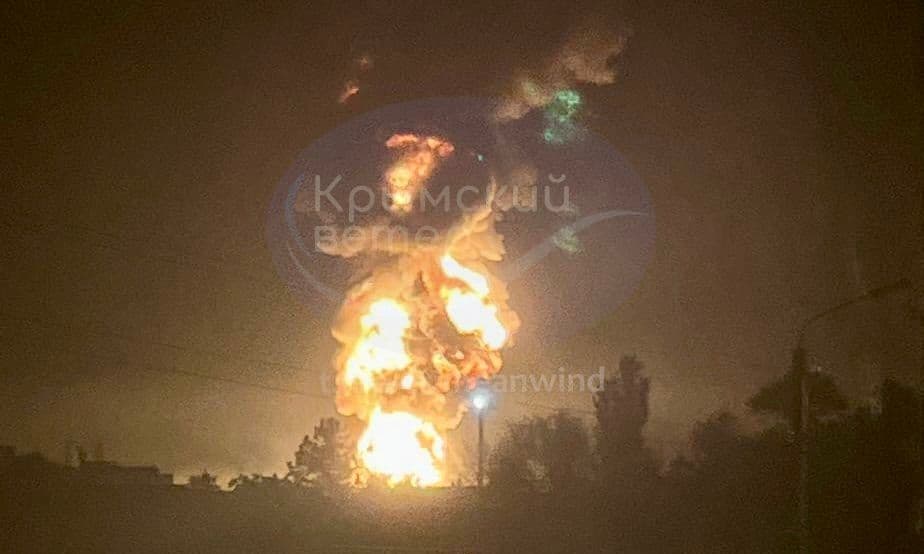
Ukrainian drones hit the Feodosia oil terminal in Russian-occupied Crimea. (Crimean Wind / Telegram)
Commander of the Ukrainian Unmanned Systems Forces Major Robert Brovdi reported that USF elements conducted the drone strike against the oil terminal and that the facility was the largest transshipment for oil products in occupied Crimea with a tank capacity of 250,000 cubic meters. Brovdi noted that Russian forces used the terminal to supply fuel to Russian forces in occupied Zaporizhia and Kherson oblasts by rail.
Russian opposition outlet Astra reported that Ukrainian forces also struck the Ayvazivska railway station in Feodosia. Pro-Ukrainian Telegram channel Crimean Wind said the explosion sparked a fire visible from tens of kilometers away, while additional blasts were reported near the Saki and Kacha airfields.
The Ukrainian General Staff reported that Ukrainian forces also struck an ammunition depot belonging to a logistics battalion of Russia’s 18th Combined Arms Army in Crimea, though the results of that strike were still being assessed.
A Kremlin-affiliated Russian milblogger claimed that Ukrainian forces struck the Tuapse Oil Refinery in Krasnodar Krai overnight, causing a fire in a security room and injuring two. Footage published on October 5 reportedly showed explosions near the Tuapse refinery. Krasnodar Krai authorities claimed that downed drone debris fell on the Tuapse Oil Refinery.
Russia’s Defense Ministry claimed it had intercepted 251 Ukrainian drones overnight, including 40 over the occupied peninsula and 20 over Nizhny Novgorod Oblast. But the fires burning across Russia told a different story. Ukraine had reached deep into the Russian heartland, striking military-industrial targets and fuel infrastructure critical to Moscow’s war effort. Every successful strike reminded Russian citizens that their government’s war had consequences reaching far beyond distant Ukrainian battlefields.
The Refinery Shutdown: Longer-Term Impact
Reuters reported on October 6 that Ukraine’s October 3 to 4 overnight strike against the Kirishinefteorgsintez Oil Refinery in Kirishi, Leningrad Oblast, had shut down its CDU-6 oil refining unit, which had a capacity of 160,000 barrels per day and accounted for 40 percent of the plant’s total refining capacity. Sources told Reuters that repairs would last one month and that the refinery would operate at 70 percent capacity during repairs—evidence that Ukrainian strikes were having sustained effects on Russian energy infrastructure and exacerbating shortages that would likely push inflation upwards and create further macroeconomic instability in Russia.
Belgorod in the Dark: Energy Infrastructure Attacked
A Ukrainian attack damaged energy facilities and disrupted power supplies in the Russian city of Belgorod. Nearly 40,000 Belgorod residents were left without electricity after the strike, which caused significant damage across seven municipalities, according to Governor Vyacheslav Gladkov.
Gladkov reported that the attack on October 5 caused significant damage. “We listened to a report from energy officials on the nature of the damage caused by the nighttime shelling of Belgorod. We have significant damage,” he said. “Scope of work will be significant.” Emergency crews were deployed to the affected areas, and hospitals in Belgorod switched to backup power. Local authorities coordinated school operations amid the outages.
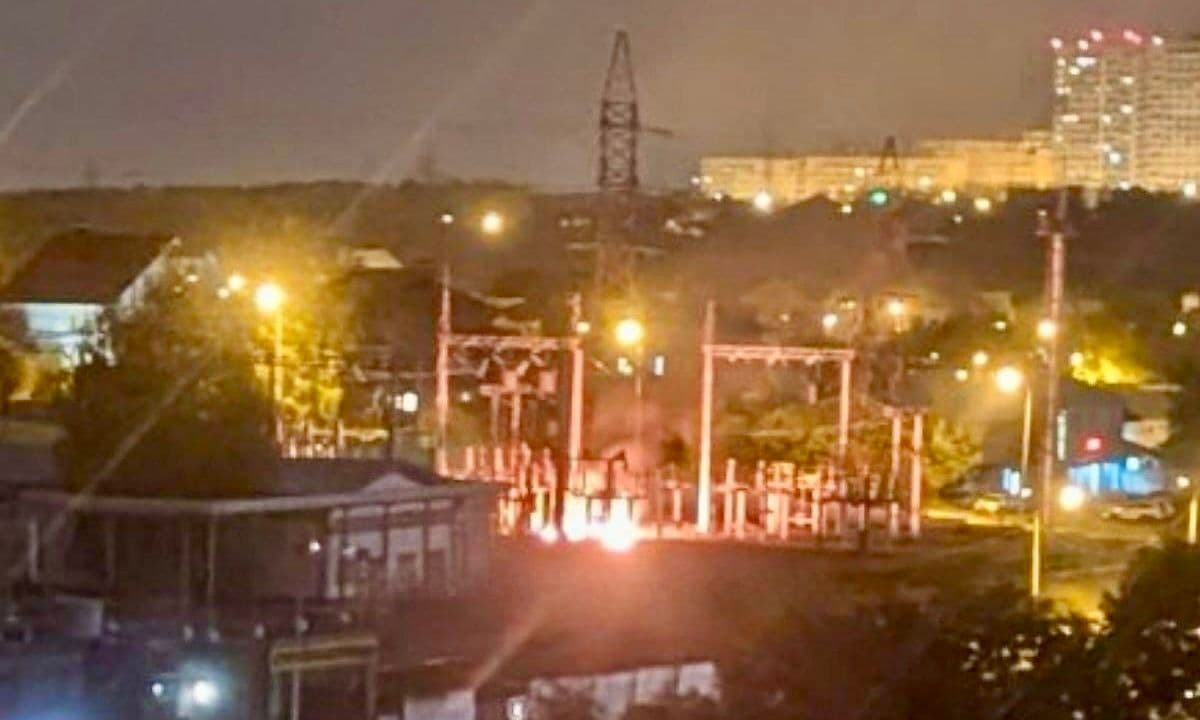
A Ukrainian attack damaged energy facilities and disrupted power supplies in the Russian city of Belgorod. (Astra / Telegram)
On the morning of October 6, Gladkov reported that partial power outages continued in 24 settlements, affecting 5,400 residents. “Restoration work is continuing, and we hope that it will be completed in the very near future,” he stated, though he did not indicate when full power restoration was expected.
Ukraine’s military intelligence released an alleged intercepted phone call on October 6 in which a Belgorod Oblast resident described widespread blackouts and internet outages following the attack. “All of Shchebekino was without power,” a woman could be heard saying. “The streets were all dark.”
The Maternity Hospital: Russia’s Calculated Cruelty
Russian troops attacked a maternity hospital in the city of Sumy during the massive overnight assault. There were 120 staff members, 35 patients, and 11 children inside the building at the time of the attack, President’s Office Head Andriy Yermak reported on October 6.
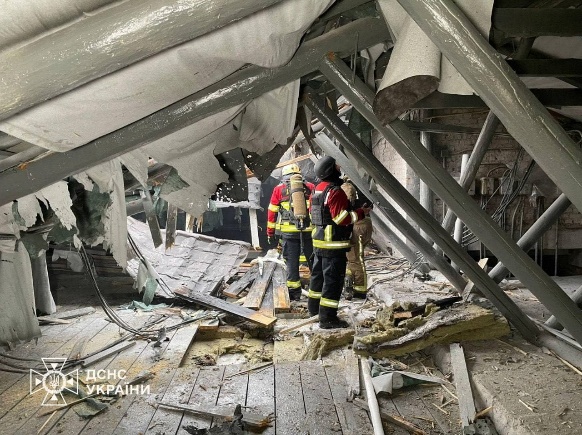
The aftermath of a Russian drone attack on a perinatal center in the city of Sumy, Ukraine. (State Emergency Service)
Everyone managed to take shelter in time, and no casualties were reported. The fire was extinguished by first responders. Footage purportedly showed a Russian drone striking the perinatal center, with the moment of impact, explosion, and immediate outbreak of fire visible.
“This is yet another cynical strike by the Russian army on civilian infrastructure—on a place where new life begins every day,” Governor Oleh Hryhorov said.
The maternity hospital strike was part of a massive Russian aerial assault that began overnight on October 5 to 6. The Ukrainian Air Force reported that Russian forces launched 116 Shahed-type, Gerbera-type, and other drones from the directions of Bryansk and Kursk cities; Millerovo, Rostov Oblast; Primorsko-Akhtarsk, Krasnodar Krai; and occupied Hvardiiske, Crimea. The Ukrainian Air Force reported that Ukrainian air defense downed 83 drones and that 30 drones struck seven locations.
Ukrainian officials reported that Russian strikes primarily targeted energy and civilian infrastructure in Chernihiv, Cherkasy, Kharkiv, Kyiv, Odesa, and Sumy oblasts. Russia was prioritizing strikes against civilians and energy infrastructure to continue its long-standing campaign to degrade Ukraine’s energy security ahead of winter and demoralize the Ukrainian populace.
Zaporizhzhia Nuclear Plant: Approaching Critical Danger
The International Atomic Energy Agency said on October 6 that it had identified shelling near the Zaporizhzhia Nuclear Power Plant, including two rounds that struck just 1.25 kilometers from the plant’s perimeter. The shelling occurred between approximately 2 PM and 3:30 PM local time and totaled about 15 rounds overall. No casualties were reported.
The IAEA warned that the military activity was adding to nuclear safety risks at a critically dangerous moment for the plant, which had been off the grid for almost two weeks. The current outage at the ZNPP, which had been ongoing since September 23, was by far the longest since Russian forces captured the plant early in the full-scale invasion.
“The nuclear safety and security system is clearly not improving. On the contrary, the risks are growing,” said IAEA Director General Rafael Grossi on Monday night. “The plant has now been without off-site power for almost two weeks, forcing it to rely on emergency diesel generators for the electricity it needs to cool its shutdown reactors and spent fuel,” he continued.
The strikes “further underlined the constant dangers facing Europe’s largest nuclear power plant during the armed conflict,” the IAEA emphasized. While the plant’s six reactors had been shut down, a constant and reliable supply of electricity was needed to cool the nuclear fuel and prevent radiation release into the environment.
Government officials and energy watchdogs had said that the deadlock was rapidly becoming critical with the facility running off emergency diesel generators, while President Zelensky accused Russia of “intentionally creating a risk of radiological incidents.”
On October 4, Grossi characterized issues with restoring a vital power link to Zaporizhzhia NPP as “a question of political will,” saying “the security situation on the ground must improve so that the technicians can carry out their vital work without endangering their lives.”
Kramatorsk Under Fire: The Fortress Belt Threatened
Kramatorsk City Military Administration Head Oleksandr Honcharenko reported on October 5 that Russian forces struck Kramatorsk with a fiber-optic FPV drone for the first time, damaging a car. Geolocated footage of the strike indicated that the location was about 20 to 22 kilometers from Russia’s closest frontline positions on the Chasiv Yar-Zaliznyanske line and a few blocks from the H20 Slovyansk-Kostyantynivka highway that ran through the entirety of Ukraine’s fortress belt in Donetsk Oblast.
Russian forces were now able to conduct FPV strikes against all the cities of the fortress belt—Slovyansk, Kramatorsk, Druzhkivka, and Kostyantynivka. Russian strikes against logistics hubs and major ground lines of communication in the fortress belt were part of Russia’s efforts to adapt its drone technologies and tactics to generate effects of battlefield air interdiction.
Russian forces were expanding their employment of fiber optic drones, including by equipping relatively cheap Molniya fixed-wing FPV drones with fiber optic cables to make the Molniyas immune to Ukrainian electronic warfare. Russia was reportedly producing over 50,000 fiber optic drones per month. Successful Russian efforts to scale up fiber optic FPV strikes against fortress belt cities and nearby ground lines of communication would significantly hamper Ukrainian logistics in Donetsk Oblast. The strike against Kramatorsk indicated that Russian forces were attempting to disrupt Ukrainian logistics not only on the southern flank of the fortress belt near Kostyantynivka, where Russian forces were prioritizing offensive operations, but also from the north.
The Grinding Eastern Front: October 6 Combat Operations
Across the sprawling eastern front, Russian and Ukrainian forces continued their grinding contest for territory on October 6.
Northern Sumy Oblast: Ukrainian Advances
Geolocated footage published on October 6 indicated that Ukrainian forces recently advanced in central Yunakivka, northeast of Sumy City. Russian milbloggers claimed that Ukrainian forces advanced near Oleksiivka north of Sumy City.
Russian forces attacked in Kursk and Sumy oblasts on October 5 and 6, including northwest of Sumy City near Bezsalivka and toward Katerynivka, north of Sumy City near Kindrativka and Oleksiivka, and northeast of Sumy City near Yunakivka. Russian sources claimed that Ukrainian forces counterattacked near Bezsalivka and Kostyantynivka.
A Russian milblogger reportedly affiliated with the Russian Northern Grouping of Forces claimed on October 6 that the Russian military command was reinforcing elements of the 1427th Motorized Rifle Regiment operating in Tetkino with elements of the 2nd Spetsnaz Brigade for future attacks on Ryzhivka. The milblogger claimed that elements of the 2nd Spetsnaz Brigade previously assisted elements of the 30th Motorized Rifle Regiment near Oleksiivka but were mostly conducting aerial reconnaissance.
The milblogger claimed that unspecified airborne elements were building new bridge crossings in unspecified areas of Kursk Oblast as the Russian military command continued to accumulate forces in the area. The milblogger claimed that Ukrainian drone strikes interdicted fuel deliveries to elements of the 2nd Battalion of the 30th Motorized Rifle Regiment along a key road.
Velykyi Burluk Direction: Russian Advances
Geolocated footage published on October 6 showed Russian servicemembers raising a Russian flag in northern Odradne, east of Velykyi Burluk, indicating that Russian forces recently advanced in the area. The Russian Ministry of Defense claimed on October 6 that elements of the Russian 7th Motorized Rifle Regiment and 79th Motorized Rifle Regiment seized Odradne. A Russian milblogger claimed that elements of the Russian 11th Tank Regiment also participated in the alleged seizure. A Kremlin-affiliated milblogger claimed that Russian forces advanced southeast of Odradne and along the Milove-Khatnie line.
Russian forces attacked east of Velykyi Burluk near Odradne on October 5 and 6. A Russian milblogger claimed that Russian forces conducted drone strikes against bridges over the Verkhnya Dvorichna River west of Ambarne and between Hryhorivka and Obukhivka.
Kupyansk Direction: Small-Group Tactics
Geolocated footage published on October 6 indicated that Russian forces recently advanced north of Pischchane, southeast of Kupyansk. Russian milbloggers claimed that Russian forces advanced in central Kupyansk and toward Bolohivka northeast of Kupyansk.
Russian forces attacked near Kupyansk itself; northwest of Kupyansk near Kindrashivka and Tyshchenkivka; north of Kupyansk near Radkivka and Zapadne and toward Kutkivka; northeast of Kupyansk near Krasne Pershe, Stroivka, and Kamyanka and toward Kolodyazne and Bolohivka; east of Kupyansk near Petropavlivka; and southeast of Kupyansk near Stepova Novoselivka on October 5 and 6. A Russian milblogger claimed that Ukrainian forces counterattacked from Kindrashivka.
The spokesperson of a Ukrainian brigade operating in the Kupyansk direction reported that Russian forces had not conducted mechanized or large-group infantry assaults for a long time. The spokesperson stated that Russian forces now attack Ukrainian positions in small infantry groups from multiple directions simultaneously in an attempt to distract Ukrainian reconnaissance and take advantage of the diversion to enter Ukrainian positions.
The Kharkiv Oblast Prosecutor’s Office reported on October 5 that Russian forces struck civilian vehicles in Kupyansk with a Molniya drone and with a first-person view drone near Kolodyazne. A Russian milblogger claimed that Russian forces were conducting strikes on Ukrainian ground lines of communication in Osynove. The milblogger claimed that Russian forces conducted a FAB-3000 glide bomb strike against Ukrainian positions near Kivsharivka and four FAB-250 glide bomb strikes against Ukrainian forces in Kupyansk.
Lyman Direction: Contested Territory
Geolocated footage published on October 5 indicated that Ukrainian forces maintained positions or advanced northeast of Stavky, north of Lyman—areas which Russian sources had previously claimed to be under Russian control. Russian milbloggers claimed that Russian forces seized Karpivka and advanced west of Shandryholove, northwest of Novoselivka, and in northeastern Yampil.
Russian forces attacked northwest of Lyman near Drobysheve, Derylove, Novoselivka, Shandryholove, and Serednie; north of Lyman near Stavky, Karpivka, and Ridkodub; northeast of Lyman near Myrne; east of Lyman near Zarichne and Torske; and southeast of Lyman near Yampil on October 5 and 6.
The spokesperson of a Ukrainian brigade operating in the Lyman direction reported on October 6 that Russian forces recently conducted an assault with a tank while motorcycles nearby carried electronic warfare devices set to different frequencies. The spokesperson reported that Russian forces were constantly innovating on the battlefield to make mechanized assaults viable again.
Another Ukrainian brigade operating in the Lyman direction reported on October 6 that Russian forces were accumulating personnel in the Lyman direction. The brigade reported that Russian forces were taking advantage of poor weather that limited Ukrainian drone operations to conduct ground operations.
Siversk Direction: Gradual Russian Progress
Geolocated footage published on October 6 indicated that Russian forces recently advanced in central Kuzmynivka, south of Siversk. Russian milbloggers claimed that Russian forces advanced west and south of Kuzmynivka and northeast of Dronivka.
Russian forces attacked northwest of Siversk near Dronivka; northeast of Siversk near Hryhorivka; southeast of Siversk near Vyimka; south of Siversk near Zvanivka and Pereizne; and southwest of Siversk near Fedorivka on October 5 and 6.
A Russian milblogger claimed that Russian forces were gradually cutting off Ukrainian ground lines of communication on the eastern and southern flanks of Siversk. A Russian milblogger claimed that Ukrainian forces maintained positions within Vyimka. Russian milbloggers claimed that Russian forces conducted a FAB-250 glide bomb against Ukrainian forces near Siversk.
Dobropillya Tactical Area: Seesawing Battle
Ukrainian military observer Kostyantyn Mashovets reported on October 6 that Ukrainian forces seized Vilne, east of Dobropillya. Mashovets stated that Ukrainian forces continued to hold Vesele and Hruzke and maintained positions near Zapovidne and Pankivka.
Geolocated footage published on October 6 indicated that Russian forces recently advanced in central Pankivka, southwest of Kostyantynivka. A Ukrainian drone unit posted the footage on October 5 and reported that Russian forces attempted to take advantage of poor weather conditions to conduct an at least reinforced company-sized mechanized assault toward Kostyantynivka. The Ukrainian drone unit reported that Ukrainian forces destroyed one tank, two armored personnel carriers, and one infantry fighting vehicle and struck three tanks, one amphibious infantry fighting vehicle, and five armored fighting vehicles.
Mashovets reported that Russian forces seized Nove Shakhove and Dorozhnie and maintained positions within Ivanivka. Russian forces attacked northeast of Dobropillya near Zolotyi Kolodyaz and southeast of Dobropillya near Zapovidne and Zatyshok on October 5 and 6.
Mashovets stated that Russian forces re-entered Zolotyi Kolodyaz and that a small Russian infantry group infiltrated Ukrainian defenses north of the settlement. Mashovets stated that Russian forces also infiltrated Ukrainian defenses northeast of Shakhove. Mashovets stated that Russian forces were accumulating infantry near Dorozhnie to attack toward Bilytske.
Mashovets stated that elements of the Russian 114th and 132nd motorized rifle brigades were attached to the 1st Slovyansk Motorized Rifle Brigade and attacked toward Bilytske. Mashovets stated that elements of the 1st, 114th, and 132nd brigades unsuccessfully attacked toward Vilne a few days ago and had to retreat back to Nove Shakhove.
Pokrovsk Direction: Multiple Russian Gains
Mashovets reported that likely elements of the Russian 1st Slovyansk Motorized Rifle Brigade, 110th Motorized Rifle Brigade, and 39th Motorized Rifle Brigade seized Krasnyi Lyman, northeast of Pokrovsk. Mashovets reported that elements of the 5th and 9th motorized rifle brigades, likely with support from the 39th Motorized Rifle Brigade, seized Novoekonomichne, also northeast of Pokrovsk.
Russian milbloggers claimed that Russian forces advanced in northern, western, and southern Pokrovsk. Russian forces attacked near Pokrovsk itself; north of Pokrovsk near Rodynske; northeast of Pokrovsk near Krasnyi Lyman, Novoekonomichne, Razine, and Sukhetske; east of Pokrovsk near Myrolyubivka and Kozatske; southeast of Pokrovsk near Novopavlivka and Lysivka; and southwest of Pokrovsk near Kotlyne, Udachne, Molodetske, and Zvirove on October 5 and 6.
The spokesperson of a Ukrainian brigade operating in the Pokrovsk direction reported that Russian forces were intensely shelling Pokrovsk, attacking in small infantry groups of two to three servicemembers, and using fiber optic drones in the brigade’s area of responsibility. The spokesperson stated that Russian forces were using mothership drones to carry and extend the range of FPV drones to strike deeper into the Ukrainian near rear and were attempting to interdict Ukrainian ground lines of communication.
The spokesperson stated that Russian forces were trying to create a numerical advantage and force Ukrainian forces to retreat. The spokesperson stated that Russian forces were trying to attack using civilian vehicles, motorcycles, all-terrain vehicles, and electronic scooters but did not use armored vehicles.
The Ukrainian 7th Rapid Reaction Corps of the Air Assault Forces operating in the Pokrovsk direction reported that Ukrainian forces for the first time destroyed a Russian Kuryer unmanned ground vehicle equipped with an AGS-17 automatic grenade launcher.
Mashovets stated that elements of the Russian 114th and 132nd motorized rifle brigades were attacking toward Rodynske and Myrnohrad and that likely elements of the 15th Motorized Rifle Brigade were attacking the railway on the western outskirts of Pokrovsk.
Velykomykhailivka Direction: Ukrainian Position Retention
Geolocated footage published on October 5 indicated that Ukrainian forces maintained positions or recently advanced north of Stepove, south of Velykomykhailivka—an area which Russian sources had previously claimed to be under Russian control. Russian milbloggers claimed that Russian forces advanced west of Stepove and toward Vyshneve.
Russian forces attacked toward Velykomykhailivka itself; north of Velykomykhailivka toward Havrylivka; northeast of Velykomykhailivka near Piddubne and Myrne; east of Velykomykhailivka near Novoselivka, Sichneve, and Voskresenka; southeast of Velykomykhailivka near Sosnivka, Berezove, Vorone, Ternove, Novomykolaivka, Komyshuvakha, and Maliivka; and south of Velykomykhailivka near Kalynivske on October 5 and 6. A Russian milblogger claimed that Ukrainian forces counterattacked near Sosnivka and Verbove.
Western Zaporizhia: Infiltration Tactics and Scorched Earth
Ukrainian Southern Defense Forces Spokesperson Colonel Vladyslav Voloshyn stated on October 6 that Russian forces were attacking near Stepove on motorcycles and trying to use infiltration tactics to penetrate Ukrainian defenses near Prymorske, Plavni, and Kamyanske in small groups and accumulate in the Ukrainian near rear.
Voloshyn reported that Russian commanders had ordered their soldiers to use scorched earth tactics to destroy buildings in frontline settlements, including Novodanylivka, Novoandriivka, and Mala Tokmachka, to prepare for more active offensive operations and deny Ukrainian forces cover and concealment from Russian drone and artillery strikes.
Russian forces attacked west of Orikhiv near Stepove, Stepnohirsk, and Plavni and northwest of Orikhiv near Prymorske on October 5 and 6.
The Tomahawk Decision: Trump’s Calculated Ambiguity
President Donald Trump told reporters in the Oval Office on October 6 that he had “sort of made a decision” on whether to supply Ukraine with Tomahawk long-range missiles. “I think I want to find out what they’re doing with them, where they’re sending them, I guess. I have to ask that question,” Trump mused.
Trump also told reporters that he was not “looking to see escalation.” The non-answer created the impression of action while preserving maximum flexibility. The Tomahawk question had become a proxy for broader debates about Western support levels. Ukrainian officials argued the missiles would enable strikes on Russian command centers and supply hubs that were currently beyond reach of Ukraine’s existing arsenal.
Trump did not directly specify what possible “decision” he had come to regarding the shipments. The ambiguity was strategic. By neither approving nor definitively rejecting the Tomahawk request, Trump kept both Ukraine and Russia uncertain about American intentions while preserving his room to maneuver.
European Solidarity: Dutch and Lithuanian Leaders Visit Kyiv
While Trump equivocated, European leaders demonstrated their commitment through personal visits to Ukraine’s capital. Dutch Prime Minister Dick Schoof and newly appointed Lithuanian Prime Minister Inga Ruginiene both arrived in Kyiv on October 6, beginning their trips by honoring fallen Ukrainian soldiers at the Wall of Remembrance.
President Zelensky accompanied Schoof during his visit, with presidential office head Andriy Yermak noting there were “many topics to discuss: war, security, justice, and the strength of our peoples. And also Ukraine’s European integration and NATO’s resilience in the face of Russian provocations.”

Dutch Prime Minister Dick Schoof met with President Volodymyr Zelensky in Kyiv. (Volodymyr Zelensky / Official website)
Zelensky said he talked about defense cooperation and sanctions on Russia with the Dutch leader. “The Netherlands is one of the most principled defenders of life—a nation that truly supports our defense, our resilience, and, importantly, our work to achieve justice,” Zelensky said. “Our focus was on Ukraine’s defense and military projects, pressure on Russia and ensuring accountability for its crimes, political cooperation, and support for our people in energy challenges.”
Ruginiene described her trip as a symbolic first visit as prime minister: “There’s nowhere I’d rather be for my first visit than in free and unbreakable Ukraine.” The timing of the visits was significant as mysterious drones circled European airports and Russian threats intensified. Both the Netherlands and Lithuania had been steadfast supporters of Ukraine, providing military aid, funding for defense systems, and signing bilateral security agreements.
Denmark Moves Against the Shadow Fleet
Denmark announced on October 6 that it was tightening controls on oil tankers passing through its waters—a direct response to intelligence about Russia’s shadow fleet being used to launch drones over European cities. The new measures would focus on older vessels frequently used by the shadow fleet, which posed environmental and safety risks due to poor maintenance.
Danish Environment Minister Magnus Heunicke said a large number of aging, unsafe oil tankers sailed through Danish territorial waters each year. “They pose a particular risk to our marine environment,” Heunicke said. “That is why we are now tightening controls with very basic environmental rules so that we can take more effective and consistent action against tankers and the Russian shadow fleet.”
Danish Industry and Trade Minister Morten Bodskov said the initiative was part of broader efforts to “put an end to the military machine of (Russian President Vladimir) Putin.” “We are using all tools,” Bodskov said. “We know from our safety checks at Skagen Red that many of these ships are old and worn out. That is why our authorities are intensifying controls to protect Denmark and Danish waters.”
The shadow fleet—tankers with opaque ownership structures operating under flags of convenience to evade Western sanctions—had become crucial to Russia’s ability to continue funding its war effort. Intelligence suggested these same vessels were serving double purposes: both evading sanctions and providing platforms for launching or controlling drones over European territory.
The Western Components Scandal: Fueling Russia’s Arsenal
President Zelensky revealed on October 6 that more than 100,000 Western-made components had been discovered in the drones and missiles Russia launched against Ukraine overnight. During the massive combined strike on the night of October 5, Russia used 549 weapon systems containing 102,785 foreign-made components.
The numbers were staggering. Attack drones contained 100,688 foreign-made components. Around 1,500 were found in Iskander missiles, 192 in Kinzhal ballistic missiles, and 405 in Kalibr cruise missiles.
These components were manufactured by companies based in the United States, China, Taiwan, the United Kingdom, Germany, Switzerland, Japan, South Korea, and the Netherlands. They included converters, sensors, and microcomputers. “Microcontrollers for UAVs are made in Switzerland, while microcomputers for drone flight control are produced in the United Kingdom,” Zelensky said.
“We have communicated proposals to curb the supply schemes. Partners already possess the detailed data on each company and each product—they know what to target and how to respond,” Zelensky said, adding that Kyiv was preparing new sanctions on the manufacturers. “It is crucial to shut down every scheme that circumvents sanctions, because Russia uses each one to keep killing. The world has the power to stop this.”
The revelation highlighted a fundamental failure of Western sanctions enforcement. While governments had banned exports of dual-use components to Russia, Moscow had adapted through smuggling networks and procurement schemes that exploited gaps in enforcement. The scandal raised uncomfortable questions about Western commitment to Ukrainian victory—if Western companies’ products were enabling Russian missiles to strike Ukrainian cities, how serious were Western governments about enforcing their own restrictions?
Military Reform: Ukraine’s Corps Structure Transition
Amid the tactical fighting and strategic maneuvering, Ukraine’s military continued implementing organizational reforms designed to improve command and control. The Ukrainian General Staff confirmed on October 6 that it was disbanding the Dnipro Group of Forces, which had been responsible for operations from Kharkiv Oblast through Zaporizhzhia City, as part of the transition to a corps structure.
Ukrainian forces formally began implementing organizational reforms to transition the Ukrainian military into a corps structure in February 2025. The Ukrainian General Staff noted that the Dnipro Group of Forces was a temporary structure and that the corps structure eliminated the need for operational-strategic groups.
Ukrainian outlet Ukrainska Pravda reported on October 6 that Major General Mykhailo Drapatyi, who headed the Dnipro Group of Forces, would retain his post as commander of Ukraine’s Joint Forces Command and move to the northeastern direction of the frontline, reducing his area of responsibility by roughly half.
Ukraine’s efforts to form an echelon between brigades and operational groups of forces and to strengthen the army corps staff structure would likely improve Ukrainian command and control for Ukrainian brigades and help facilitate more effective operations, assuming Ukraine could effectively develop the corps-level professional staff.
The POW Execution Investigation: Documenting Russian War Crimes
The Prosecutor General’s Office reported on October 6 in response to a request from Ukrinform that Ukraine was investigating evidence that Russian forces had executed at least 322 Ukrainian prisoners of war. According to the statement, 263 Ukrainian soldiers were executed on the battlefield, while 59 others were killed in the Olenivka prison explosion in the occupied part of Donetsk Oblast.
Ukrainian POWs held in Russian captivity often faced torture, abuse, and inhumane treatment, according to Ukrainian officials and human rights groups. Many former POWs had reported beatings, starvation, and psychological pressure.
To date, 80 criminal proceedings had been opened, the Prosecutor General’s Office said. Nine Russian servicemen had been formally charged, while indictments against six of them had already been submitted to court. Two had been convicted, and two more cases remained under judicial review.
The systematic nature of the executions suggested a pattern rather than isolated incidents. The investigation was part of Ukraine’s broader effort to document Russian war crimes and establish accountability through international legal mechanisms. But with over 2,500 Ukrainian POWs remaining in Russian captivity according to September estimates from Ukraine’s Interior Ministry, the priority was not only prosecuting past crimes but protecting those currently held and securing their return through prisoner exchanges.
The Day’s Meaning: When Psychological Warfare Becomes Physical
October 6, 2025, revealed the increasingly blurred boundaries between information warfare and kinetic operations, between the Ukrainian battlefield and the broader European theater, between tactical strikes and strategic messaging. Russian drones circled European airports while Ukrainian drones struck Siberian targets 2,060 kilometers from the border. Russian intelligence services fabricated conspiracy theories while Russian missiles struck Ukrainian maternity hospitals. Western leaders debated weapons transfers while Western components fueled Russian arsenals. European prime ministers honored Ukrainian fallen while their capitals grappled with mysterious aerial visitors.
The Kremlin’s “Phase 0” campaign to psychologically prepare both Russian society and European populations for potential future conflict was accelerating. Each drone overflight, each false flag accusation, each threat from Russian officials served multiple purposes: testing defenses, manufacturing fear, conditioning populations, and creating the informational environment for future escalation. Russia aimed to create fear throughout the European population and fragment NATO’s resolve through a wide range of attacks and false flag claims designed to foster a sense that the threat of violence was pervasive throughout all of Europe.
But Ukraine was demonstrating that psychological warfare could be matched with physical capability. The strikes on Tyumen showed Ukrainian forces could reach deeper into Russia than ever before, hitting targets 2,060 kilometers from the border that Moscow had assumed were beyond Ukrainian reach. The strikes on the Sverdlov Plant, Feodosia oil terminal, and other facilities demonstrated sustained capacity to disrupt Russia’s military-industrial complex and fuel supplies. The advances in northern Sumy Oblast proved Ukrainian forces retained offensive capabilities despite being generally on the defensive across the eastern front. The organizational reforms showed a military adapting and professionalizing even while fighting for survival.
The war had evolved far beyond its original form. It was now a hybrid struggle combining kinetic operations, information warfare, economic pressure, technological innovation, and diplomatic maneuvering across a theater stretching from the Baltic Sea to Siberia. Russia was attempting to expand that theater to include all of Europe, using fear as a weapon to fracture Western unity and reduce support for Ukraine.
The grinding eastern front operations told their own story. Russian forces continued making incremental gains through Velykyi Burluk, Kupyansk, Siversk, Pokrovsk, and other directions—advances measured in individual settlements and sometimes just portions of settlements, purchased at enormous cost in personnel and equipment. Ukrainian forces demonstrated resilience in holding key positions, launching limited counterattacks where opportunities emerged, and adapting to Russian small-group infiltration tactics and fiber optic drone employment.
The Zaporizhzhia Nuclear Power Plant situation remained critically dangerous, with the facility operating on emergency diesel generators for almost two weeks—the longest such outage since Russian occupation began. The 15 artillery rounds landing within 1.25 kilometers of the plant’s perimeter demonstrated how precarious nuclear safety had become in the combat zone. Every day the plant remained off the grid increased the risk of a catastrophic failure that could affect not just Ukraine but much of Europe.
The revelation about Western components in Russian weapons exposed the gap between sanctions policy and enforcement reality. More than 100,000 foreign-made parts in a single night’s barrage revealed systematic sanctions evasion that Western governments had failed to adequately address. The problem went beyond China—components from American, European, and Asian manufacturers were reaching Russian defense industries through circuitous routes that sanctions enforcement had not blocked.
Trump’s calculated ambiguity about Tomahawk missiles exemplified the uncertain state of Western support. His “sort of made a decision” formulation preserved flexibility while avoiding commitment—maintaining hope for Ukraine while suggesting to Russia that sufficiently aggressive threats might deter transfers. The contrast with the Dutch and Lithuanian prime ministers’ visits to Kyiv highlighted divisions within the Western alliance about how actively to support Ukrainian defense.
Denmark’s action against the shadow fleet represented the kind of practical measure that could actually impact Russian capabilities—targeting the vessels that both evaded sanctions and potentially enabled drone operations over European territory. But isolated national actions, however well-intentioned, could not substitute for comprehensive alliance-wide enforcement.
Whether Russia’s strategy of expanding fear throughout Europe would succeed remained unclear on this October evening. But one thing was certain: October 6 marked another step in the transformation of a contained conflict into something more complex and potentially more dangerous. Russian provocations reached new levels of boldness, from false flag conspiracy theories to drones over Oslo to shelling near nuclear facilities. Ukrainian resistance demonstrated new depths of capability, from strikes 2,060 kilometers into Russia to successful defense and limited counterattacks across the eastern front.
The question was no longer whether Russia would attempt to terrorize Europe into abandoning Ukraine. The question was whether Europe would succumb to that terror or find the resolve to resist it. On this single autumn day, both outcomes remained possible, and the future remained unwritten. The 1,322nd day of the war revealed a conflict that had transcended its original boundaries and threatened to reshape the entire European security architecture. What happened next would depend on whether fear or resolve proved the stronger force in shaping Western policy.