
As Trump and Putin planned a Budapest summit, Russia unleashed its largest power-grid attack on Ukraine—while North Korean soldiers guided strikes from Russian soil.
The Day’s Reckoning – When Peace Talks Met Missile Strikes
On October 16, 2025, the war’s contradictions reached their most surreal collision yet. At the very hour President Donald Trump was calling his conversation with Vladimir Putin “very productive,” Russian missiles were already in flight—arcing toward Ukrainian cities in the largest assault of the autumn. Diplomats spoke of Budapest summits and ceasefires, while North Korean drone operators in Russia’s Kursk Oblast adjusted rocket fire into Ukraine’s Sumy region—the first confirmed proof of Pyongyang’s soldiers directly aiding strikes on Ukrainian soil.
It was day 1,331 of a war that no longer resembled its beginnings: peace summits announced between missile barrages, Asian soldiers fighting European battles, and every hint of diplomacy answered by escalation. The day’s events exposed the war’s unshakable paradox—each step toward negotiation only seemed to intensify the fighting.
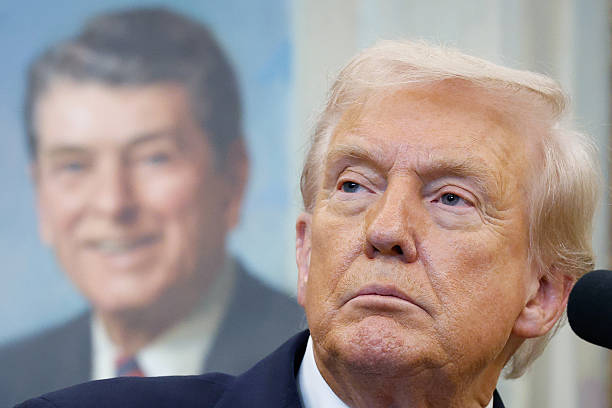
U.S. President Donald Trump speaks to reporters in the Oval Office after a two-and-a-half-hour call with Russian President Vladimir Putin, announcing plans for a Budapest summit. (Kevin Dietsch/Getty Images)
The Phone Call That Shook Two Continents
The conversation between Donald Trump and Vladimir Putin lasted two and a half hours—long enough for MiG-31 bombers to lift off from Russian airfields and take their positions for the morning’s assault on Ukraine. When Trump emerged from the call, he spoke of “great progress” and “new economic opportunities,” seemingly unaware that as he praised diplomacy, Ukrainian radar screens were already flashing with inbound missiles.
“President Putin and I will then meet in an agreed-upon location, Budapest, Hungary, to see if we can bring this ‘inglorious’ War, between Russia and Ukraine, to an end,” Trump wrote on Truth Social—capitalizing “War” as if declaring history in motion.
The announcement sent cables flying across Europe. Within hours, Hungarian Prime Minister Viktor Orbán confirmed his readiness to host the summit, celebrating his long-cultivated role as the bridge between East and West. Yet the timing was no accident. Putin had scheduled the call precisely as President Volodymyr Zelensky’s plane was en route to Washington for his own meeting with Trump. By unveiling his summit first, Putin effectively pre-empted whatever Zelensky hoped to secure in the Oval Office.
Kremlin aide Yuri Ushakov later revealed the real substance of the conversation. Putin had spent much of the call warning Trump about the “destabilizing” prospect of U.S.-supplied Tomahawk missiles—long-range weapons Ukraine desperately sought, and Moscow desperately feared. “Vladimir Putin reiterated that Tomahawks would not change the situation on the battlefield,” Ushakov said, before adding the quiet threat that their delivery would “significantly damage” U.S.-Russian relations.
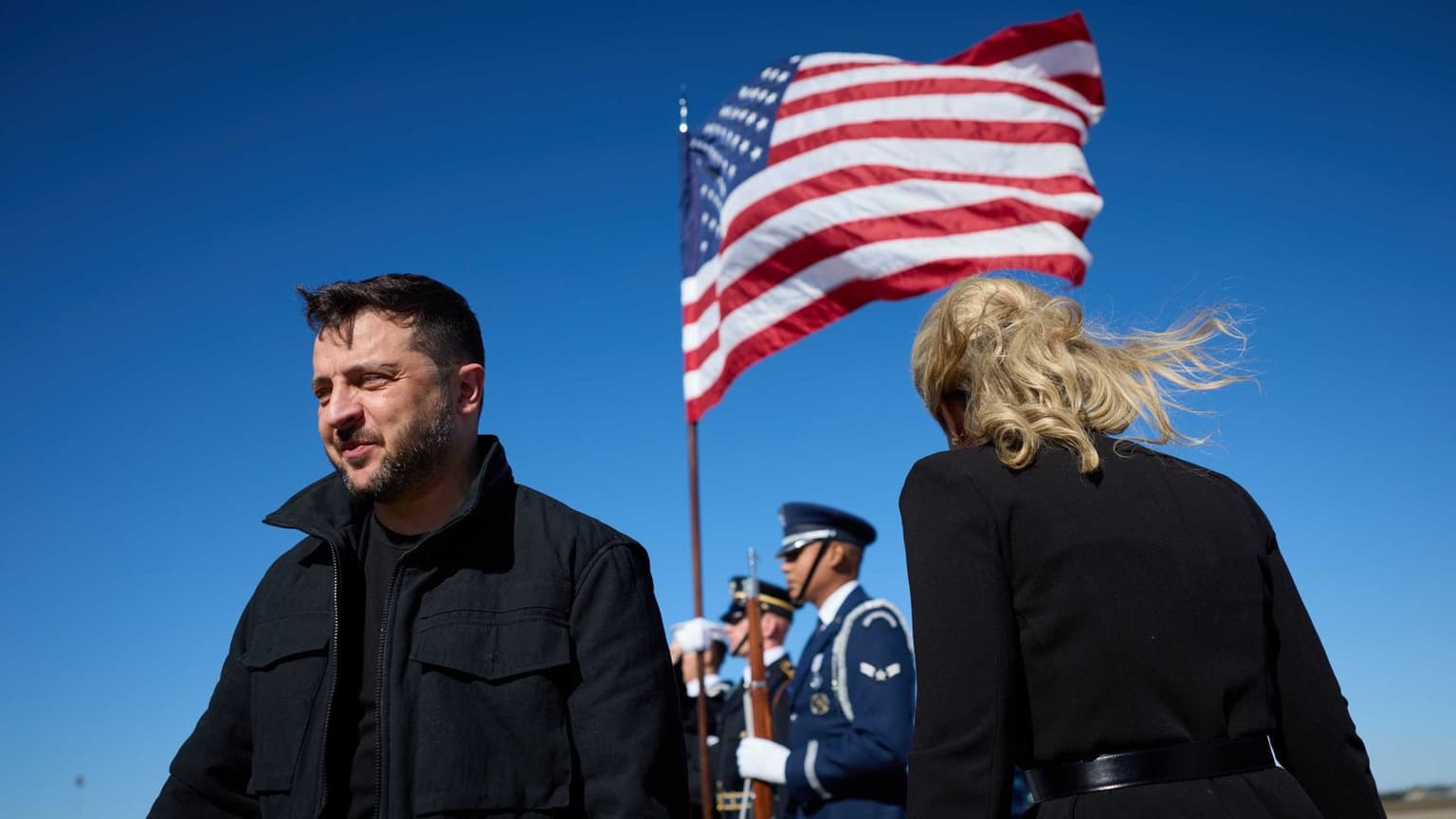
Ukrainian President Volodymyr Zelensky arrives in Washington for talks with U.S. President Donald Trump, seeking air-defense guarantees and Tomahawk missiles amid news of the planned Budapest summit. (Presidential Office)
The Morning the Lights Went Out
At 5:20 a.m., while most of Ukraine slept and diplomats in Washington were still drafting press releases about the Trump–Putin call, Russian MiG-31K fighters roared off from bases across western Russia. What followed was the largest coordinated assault on Ukraine’s infrastructure since the war began—320 drones and 37 missiles launched in overlapping waves designed to overwhelm defenses and plunge the nation into darkness.
The scale defied comprehension. Ukrainian radar operators tracked more than 200 Shahed-type drones converging from every direction—Kursk, Oryol, Smolensk, Rostov, and Krasnodar. Behind them came the missiles: Kinzhals, Iskanders, cruise warheads—a familiar but ever-evolving catalogue of destruction. Cities from Poltava to Kryvyi Rih erupted in flashes as the night turned to fire.
In Poltava Oblast, natural-gas facilities were struck directly, forcing emergency shutdowns. DTEK, Ukraine’s largest private energy company, reported 5,000 customers instantly without power. Blackouts rippled outward as the grid struggled to stabilize, each region dimming another. This was no random bombing—it was an intentional dismantling of Ukraine’s power spine before winter set in.
The attack exposed Russia’s new doctrine of attrition. Gone were the blanket “carpet raids” of earlier winters. Instead, Russian planners pursued what Ukrainian intelligence called “piecemeal tactics”—striking one region at a time to trigger localized collapses that could cascade into a national blackout. Drones arrived first to drain ammunition and distract radar, clearing the sky for missiles that followed minutes later to deliver the final blows.
The Soldiers from the East: North Korea Enters the War
The video released by Ukraine’s General Staff on October 16 lasted only seconds—but its shock waves will echo for years. Grainy footage from a downed reconnaissance drone appeared to show North Korean soldiers operating equipment inside Russia’s Kursk Oblast, directing rocket fire into Ukraine’s Sumy region. For the first time, there was visual proof that foreign troops were actively participating in attacks on Ukrainian territory.
These were not the same North Korean soldiers who perished by the thousands in human-wave assaults during the brutal winter of 2024–2025. Russia had adapted from those failures. This new contingent served as drone operators and artillery spotters—roles that kept them alive long enough to master modern warfare techniques once alien to Pyongyang.
The implications were extraordinary. Each North Korean soldier surviving this deployment would return home carrying knowledge of drone coordination, electronic warfare, and precision targeting—skills that could reshape Asia’s future battlefields. For Kim Jong Un, Ukraine had become the perfect training ground: a live-fire classroom where his troops could modernize under Russian supervision, using someone else’s weapons, in someone else’s war.
Budapest Bound: The Summit Nobody Wanted
The announcement of a Trump–Putin summit in Budapest landed like a diplomatic thunderclap across Europe. For weeks, speculation had swirled about where the two leaders might meet, but the choice of Hungary carried unmistakable symbolism. Long viewed as Moscow’s quiet ally inside the European Union, Budapest would now host what some diplomats called the most consequential meeting since Yalta.
Hungarian Prime Minister Viktor Orbán’s satisfaction was impossible to hide. After years of courting both Washington and Moscow, he had finally positioned himself as the indispensable go-between. The choice of venue was no coincidence. Hungary had withdrawn from the International Criminal Court earlier in 2025, guaranteeing Putin could attend without fear of arrest. Orbán’s vision of Hungary as a “bridge between East and West” was about to be tested on the world stage.
Yet the summit’s announcement revealed more about exclusion than dialogue. Trump’s talk of “separate but equal” meetings with Putin and Zelensky was diplomatic shorthand for sidelining Ukraine from its own peace process. Zelensky might still get his audience in the Oval Office, but the real negotiations—the ones that would shape Ukraine’s future—were already being arranged for a Budapest conference table where Kyiv would have no seat.
Zelensky’s Washington Gambit
As his plane descended toward Washington, Volodymyr Zelensky confronted the defining diplomatic test of his presidency. Hours earlier, the announcement of the Trump–Putin summit in Budapest had effectively undercut his visit before it began. Whatever assurances he might secure from Trump in the Oval Office could be rewritten two weeks later in a gilded Hungarian conference hall.
“We can already see that Moscow is rushing to resume dialogue as soon as it hears about Tomahawks,” Zelensky wrote upon landing—his message edged with frustration and resolve.
The Ukrainian president understood the choreography unfolding around him. Putin’s sudden enthusiasm for “peace” was driven not by diplomacy but by dread—fear that American Tomahawk missiles could reach deep into the Russian heartland. Zelensky’s mission was clear: win approval for those missiles, expand air-defense support, and anchor U.S. commitment beyond the shifting winds of Trump’s negotiations.
Yet his leverage had evaporated. Trump’s Budapest announcement revealed where the true conversation was heading, and Putin’s dawn missile barrage had already defined the day’s reality. By the time Zelensky touched down, the war’s next act was being scripted without him.
Fire and Fury: Ukraine Strikes Back
Even as Russian missiles pounded Ukrainian cities, Ukrainian drones were striking deep into Russia’s heartland. The Saratov Oil Refinery—hit for the third time in a month—burned through the night of October 15–16, its flames reflected in the Volga River below. Ukrainian special forces confirmed the strike on the facility, which processed nearly five million tons of fuel annually and supplied critical stock to Russia’s military network.
The attack was part of a deliberate campaign against Russia’s economic lifelines. Additional strikes on the Lukoil-Nizhegorodnefteorgsintez refinery in Nizhny Novgorod damaged key processing units, while long-range drones traveled more than 1,000 kilometers to deliver their payloads—distances that would have seemed unthinkable at the war’s outset.
But it wasn’t only refineries burning. Ukrainian drones and artillery hit electrical substations in Belgorod and Volgograd oblasts, cutting power in Russian towns even as Russian missiles darkened Ukrainian cities. The conflict had become a mirror war—each side targeting the other’s energy grid in a grim contest to see who could endure the longer night.
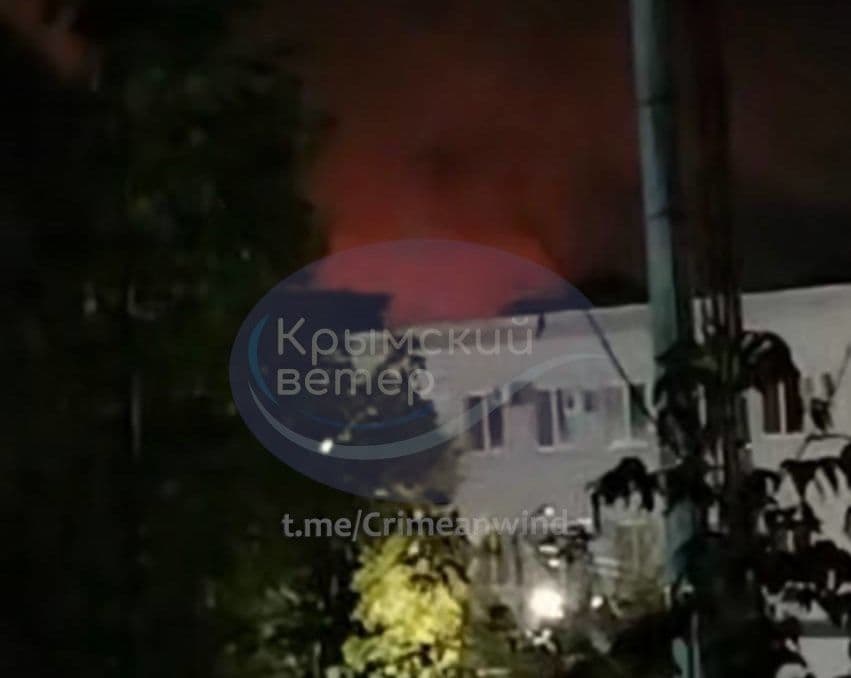
Smoke rises over the Saratov Oil Refinery in Russia after a reported Ukrainian drone strike—the third attack on the facility in a month. (Crimean Wind / Telegram)
The Battlefield Grinds On
While leaders traded promises of peace and missiles crossed the skies, the war on the ground continued its relentless arithmetic. Russian units pressed forward in northern Sumy Oblast, with clashes reported near Oleksiivka, as North Korean drone operators in neighboring Kursk guided rocket fire onto Ukrainian positions. Ukrainian special forces struck back—ambushing sabotage teams crossing from Belgorod and reclaiming pockets of forest where infiltration routes had formed.
In Pokrovsk, the cost of Russia’s attrition offensive was measured in more than numbers. Since late August, thousands of Russian troops had been killed or wounded trying to capture the city, leaving behind scorched vehicles and shattered armor that spoke louder than any communiqué. Despite the bloodshed, Moscow’s advance was still measured in meters, not miles.
The geography of war had turned on itself. In 2024, Ukraine’s bold offensive into Kursk had humiliated the Kremlin and inspired a generation of soldiers. Now those same fields served as launch zones for North Korean-operated drones striking across the border. The reversal was stark—a testament to how the front lines had hardened into symbols of endurance rather than victory.
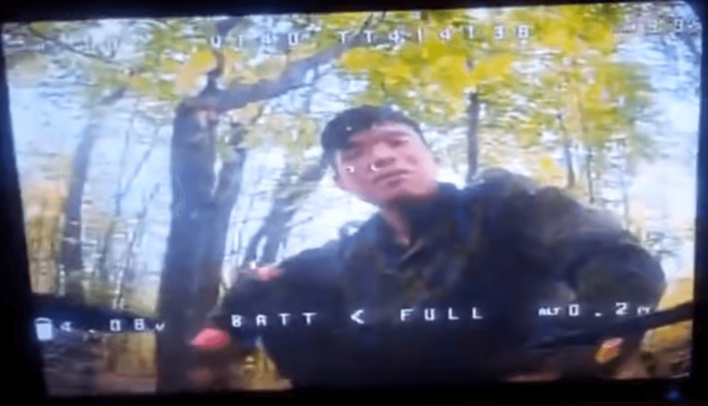
Footage released by Ukraine’s General Staff appears to show North Korean soldiers in Russia’s Kursk region directing rocket fire into Ukraine—the first visual proof of Pyongyang’s direct involvement in the war. (Ukraine’s General Staff)
Tragedy at the Training Ground
The morning’s wave of Russian attacks found another devastating target—a Ukrainian military training ground. Two ballistic missiles struck the facility despite evacuation protocols, killing and wounding soldiers who had taken shelter in reinforced zones. The Southern Operational Command’s brief statement—“it was not possible to completely avoid losses”—barely concealed the scale of the tragedy.
It was at least the fourth such strike in recent months. Even after a leadership change within Ukraine’s Ground Forces following the June attack that killed twelve recruits, Russian intelligence continued to track and target training areas with chilling precision. The logic was cruelly effective: destroy soldiers before they ever reach the front, and force Ukraine to scatter its training programs across a shrinking map of safe territory.
Each of these strikes carried a deeper cost than the lives lost. They tore holes in the continuity of Ukraine’s defense—interrupting the transformation of volunteers into veterans, and of experience into endurance. The battle for the front line was being fought even in the classrooms and drill fields behind it.
Odesa’s Game of Thrones
The political intrigue in Odesa on October 16 offered a surreal counterpoint to the war’s devastation. Mayor Hennadiy Trukhanov—recently stripped of Ukrainian citizenship by President Zelensky for holding a Russian passport—had appointed a deputy to govern the city during what he called a “temporary vacation.” Within hours, the city council secretary, Ihor Koval, declared himself acting mayor instead, plunging Ukraine’s main Black Sea port into bureaucratic chaos.
The power struggle illuminated a deeper national tension: the friction between wartime centralization and the country’s tradition of local autonomy. Trukhanov, long accused of corruption yet still popular among Odesa’s residents, embodied that paradox. His removal by presidential decree—without a court ruling or election—sparked debate over how far democracy could bend before it began to break.
Even as missiles threatened the coast, Odesa’s leadership was fighting a quieter war of its own: one over legitimacy, loyalty, and the limits of power in a nation battling for survival.
A Nation’s New Guardian
Amid a day defined by missile strikes and diplomatic tension, one development in Kyiv offered a measure of progress. On October 16, Ukraine appointed its first military ombudsman—Olha Reshetylova, co-founder of the Come Back Alive foundation—to defend the rights of soldiers and their families. It was a quiet but symbolic act of nation-building in the middle of war.
Her new office faced immediate challenges: more than 290,000 criminal cases had been opened for desertion and absence without leave, each representing a personal story of exhaustion, trauma, or disillusionment. Reshetylova’s mandate would extend far beyond discipline—into the realms of rehabilitation, fair compensation, and the reintegration of those returning from the front.
The appointment marked Ukraine’s evolution from survival mode to institutional maturity. Three years into the conflict, the country was no longer just enduring—it was building systems meant to last beyond the war itself.
The Media War’s Latest Casualty
Even journalists were not spared the day’s violence. In occupied Zaporizhzhia, Russian state correspondent Ivan Zuev was killed by a Ukrainian drone strike, and his cameraman critically wounded. The attack underscored the dangerous blur between combatant and chronicler in a war where propaganda and precision strikes now occupy the same battlefield.
Zuev’s death added to a growing and grim tally—nearly two dozen reporters have been killed since the full-scale invasion began. Each loss narrows the space for truth, replacing eyewitness testimony with official narratives and silence. In Ukraine’s skies and Russia’s broadcasts alike, the war for information has proven as deadly as the war for territory.
Chernihiv’s Calculated Gesture
Amid missile strikes and summit headlines, the day’s most surreal scene unfolded far from the front. In Chernihiv, the city council voted to rename Fairy Tale Square in honor of Donald Trump—a gesture meant, in their words, to “draw international attention to the reconstruction of the hero city of Chernihiv.” Some local officials even floated the idea that Trump might earn a Nobel Peace Prize if he succeeded in ending the war.
The move was more than civic whimsy; it was diplomacy by other means. In a moment when Ukraine’s future was being debated in Budapest and Washington, Chernihiv’s city hall turned symbolism into strategy. The renaming revealed both desperation and shrewdness—a local government trying, however absurdly, to reach the man who might decide their fate from a hotel conference room.
Economic Warfare Intensifies
While missiles fell and diplomats drafted peace communiqués, Washington opened a new front in the war—an economic one. The Trump administration floated a plan to impose massive tariffs on Chinese purchases of Russian oil, redirecting the revenue to fund Ukraine’s defense. Treasury Secretary Scott Bessent disclosed that 85 senators had signaled support for granting Trump authority to raise tariffs by as much as 500 percent on energy flows tied to Moscow.
The proposal reflected more than strategy; it revealed exasperation. American officials had grown increasingly frustrated with Europe’s reluctance to impose comparable penalties. “All I hear from the Europeans is that Putin is coming to Warsaw,” Bessent quipped. “There are very few things in life I’m sure about—but I’m sure he’s not coming to Boston.”
Behind the humor was a sharper truth: economic policy had become the new artillery of the war, with Washington seeking to strike at Russia’s revenues when weapons alone could not.
Moscow’s Information War
FSB chief Alexander Bortnikov chose October 16 to open a new front in the conflict—not on land or in the air, but in the mind. In a televised briefing, he accused Britain and NATO of orchestrating the very drone attacks that Russia itself was conducting, claiming Western intelligence agencies were behind “unauthorized drone incursions” over European territory. The message was clear: if Russia couldn’t control the narrative, it would corrupt it.
The timing was anything but random. With Moscow increasingly isolated and evidence mounting of Russian strikes on NATO members, the Kremlin sought to cloud perception through preemptive accusation. The tactic mirrored Russia’s battlefield strategy—strike first, deny later, and portray aggression as defense.
It was cognitive warfare in pure form: confuse, accuse, and invert. As missiles darkened Ukrainian skies, Moscow’s disinformation machine worked just as tirelessly to plunge truth into shadow.
The Meaning in the Mirage
October 16 exposed the contradiction at the heart of this war: the louder the talk of peace, the harder the bombs fell. While Trump and Putin spoke of a Budapest summit, North Korean soldiers adjusted Russian drones, and Ukrainian refineries lit the Russian night sky in reply. Diplomacy and destruction had become synchronized—each summit announcement met by a missile barrage, each ceasefire rumor followed by a strike.
The war was no longer confined to front lines or capitals. It now stretched across continents and cables—where economic decrees in Washington could cripple energy flows in Siberia, and where disinformation launched from Moscow could do as much damage as artillery. Every domain—cyber, energy, narrative—had fused into one continuous battlefield.
Looking ahead, the Budapest summit looms less as a promise of peace than a test of power. If history repeats itself, the meeting will produce not resolution but recalibration—a pause between offensives. For Ukraine, survival means endurance: keeping its lights on, its soldiers supplied, and its allies honest. For the rest of the world, the lesson is simpler yet grimmer. In a war built on illusions, even peace can be weaponized.