
In Moscow, Kremlin officials accused Washington of blocking peace negotiations. In Ukrainian cities, 100 Russian drones hunted civilians through the night. In Geneva, UN investigators concluded Russia’s systematic attacks constituted crimes against humanity. The 1,342nd day of war—when diplomatic theater couldn’t hide Russia’s maximalist demands.
The Day’s Reckoning
Dmitry Peskov faced the press cameras in Moscow on the morning of October 27. US-Russian relations had reached a “minimum level,” the Kremlin spokesperson said. Other officials amplified the message throughout the day: Trump was blocking peace. Washington was the obstacle. Russia stood ready to negotiate.
That same night, 100 drones lifted off from Russian territory.
They launched from Kursk, Oryol, and Primorsko-Akhtarsk—Shahed drones mostly, the Iranian-designed weapons that made a distinctive buzzing sound Ukrainians had learned to recognize in the dark. Ukrainian air defense crews tracked them on radar screens, calculated intercepts, fired. Sixty-six drones fell from the sky in pieces.
Thirty-four kept flying.
They found Kharkiv, struck residential areas where people slept. They hit energy infrastructure in Sumy, plunging neighborhoods into darkness. In Kyiv, a Shahed found the Idealist Coffee roastery around 5:30 AM—a small facility where workers roasted beans, where the smell of fresh coffee normally filled the morning air. The explosion tore through the structure. Fire spread quickly through warehouse spaces filled with coffee and packaging materials.
Two people died in the flames. Twenty-one more were wounded, pulled from wreckage by emergency responders working through smoke and falling debris. The building burned into the morning, black smoke rising over residential Kyiv.
Russia called this readiness for peace.
In Washington, Trump dismissed Putin’s nuclear theater. Putin should end the war instead of testing missiles, the president said. The United States had a submarine stationed close to Russia “that does not have to go 8,000 miles.”
That evening in Moscow, Vladimir Putin sat at his desk and signed Federal Law No. 424-FZ, withdrawing Russia from the Plutonium Management and Disposition Agreement. The 2000 pact had committed both countries to dispose of 34 tons of weapons-grade plutonium—enough for thousands of nuclear warheads. Dmitry Medvedev posted congratulations to “Russia’s friends” on social media. Other officials issued barely veiled threats about deploying Burevestnik missiles against North America.
One of the last post-Cold War nuclear arms control agreements simply ceased to exist.
Near Pokrovsk, Russian assault groups infiltrated Ukrainian lines while Ukrainian forces simultaneously pushed into Russian-held territory near Hulyaipole. Front lines dissolved into overlapping zones. Ukrainian forces breached a dam near Belgorod, flooding Russian positions. Strikes destroyed fuel depots in occupied Luhansk. Poland arrested Ukrainian citizens working as Russian spies. Italy ordered extradition in the Nord Stream case. Hungary’s Orban prepared to ask Trump for sanctions exemptions.
In Geneva, UN investigators released their findings: Russia’s systematic drone attacks on Ukrainian civilians constituted crimes against humanity.
In Moscow, Alexei Chepa explained Russia’s actual ceasefire terms. Ukraine must withdraw from four oblasts Russia didn’t fully control. The West must stop weapons supplies. Only then would Russia consider stopping its attacks.
It was the 1,342nd day of the war. Russia blamed others while launching drones at sleeping cities. Moscow spoke of peace while withdrawing from arms control and issuing nuclear threats. The only honest statement came not from the Kremlin but from the flames still burning in a Kyiv coffee roastery at dawn.
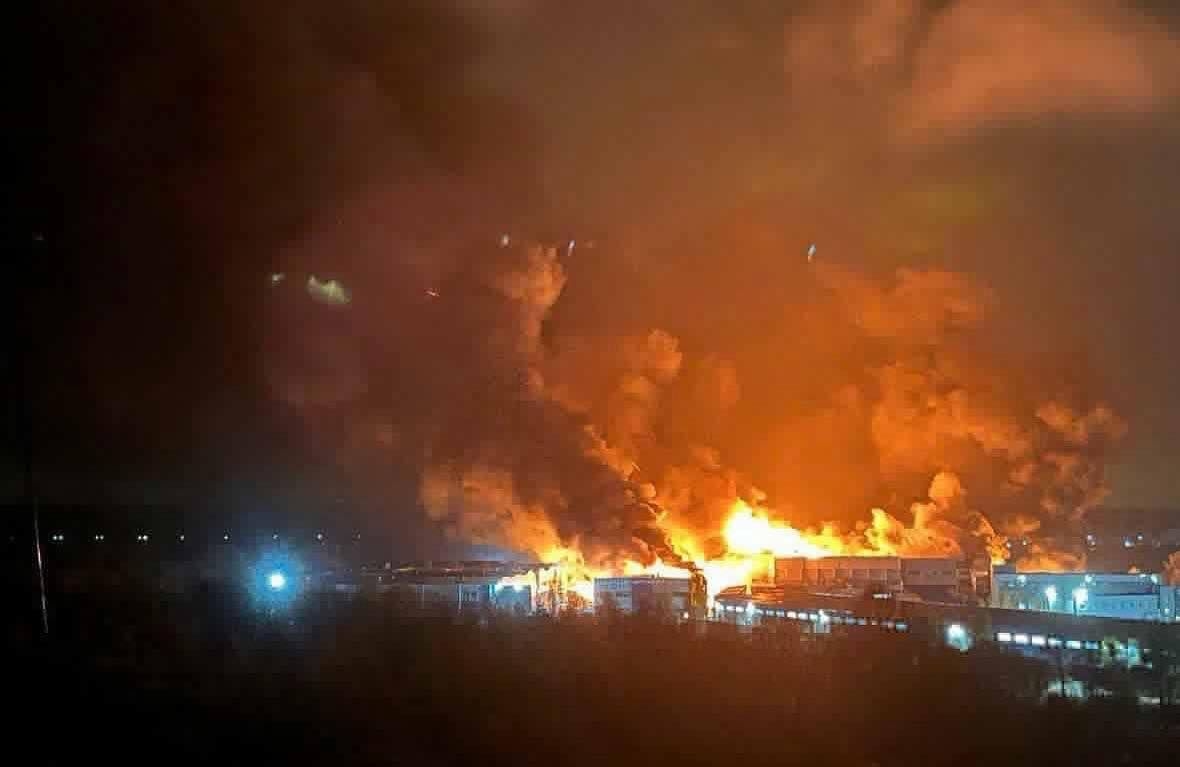
Flames consume the Idealist Coffee roastery in Kyiv after a Russian drone struck at 5:30 AM. Two workers died. (Idealist/Facebook)
Moscow’s Blame Game: When “Peace” Means Surrender
The message moved through Russian state media like a coordinated strike. Dmitry Peskov told reporters that US-Russian relations had reached a “minimum level.” Alexei Chepa, First Deputy Head of the State Duma International Affairs Committee, blamed Ukrainian pressure for changing Washington’s position. Political observer Dmitry Trenin told Kommersant that Trump wasn’t interested in peace. Commentator Vadim Trukhachev accused European states in Izvestia of sabotaging a potential Trump-Putin meeting in Budapest.
By afternoon, the narrative had solidified: America was blocking peace.
The campaign had intensified after US officials cancelled the Budapest summit and imposed new sanctions on Russia’s energy sector. Moscow needed someone to blame for diplomatic failure. Washington made a convenient target.
Chepa provided the clarity the Kremlin’s diplomatic language obscured. A ceasefire would let Ukraine “catch its breath” and attack Russia later, he said. Russia would accept a ceasefire only under specific conditions: the West must stop weapons supplies to Ukraine, and Ukraine must withdraw from Luhansk, Donetsk, Kherson, and Zaporizhzhia oblasts.
All four regions. Territories Russia didn’t fully control. Territories Ukraine would have to abandon while Russian forces remained.
It was the diplomatic equivalent of demanding surrender before agreeing to stop shooting.
The contradiction sat in plain sight. Russian officials claimed readiness for a leader-level meeting while saying no progress existed in scheduling one. They accused Trump of blocking peace while maintaining territorial demands that required Ukraine to give up land Russia hadn’t conquered. They spoke of negotiation while launching 100 drones at Ukrainian cities the same night.
The messaging wasn’t designed to achieve genuine negotiation. It was designed to shift blame onto Washington, to justify Russia’s refusal to compromise, to prepare Russian domestic audiences for continued war. The West was unreasonable, Moscow’s narrative insisted. Russia stood ready to talk. America chose conflict.
In Kyiv that night, the Idealist Coffee roastery burned. Two people died. Twenty-one were wounded.
Russia called it readiness for peace.
The Submarine Trump Didn’t Need to Mention
Donald Trump spoke to reporters on October 27 with his usual directness. Putin should end the war instead of testing a nuclear-powered missile, the president said. The United States had a nuclear submarine stationed close to Russia “that does not have to go 8,000 miles.”
Everyone understood the reference. Russia claimed its Burevestnik missile flew 14,000 kilometers. Trump was saying: we’re already there.
Moscow’s response came in layers. Peskov told reporters the test shouldn’t strain relations. But the real answer came through other channels.
Dmitry Medvedev posted congratulations to “Russia’s friends” on social media—a message aimed at Russia’s enemies. Other officials issued threats barely disguised as warnings: the Burevestnik could reach “anywhere” in North America if the US supplied Ukraine with Tomahawk missiles. State Duma Defense Committee Chairman Andrei Kartapolov told Europe it would be “too late” by the time they understood.
That evening, Putin signed Federal Law No. 424-FZ.
The document withdrew Russia from the Plutonium Management and Disposition Agreement—a 2000 pact requiring both countries to dispose of 34 tons of weapons-grade plutonium. Enough for thousands of nuclear warheads. Russia had suspended participation in 2016, demanding sanctions relief for Crimea. Now Putin ended even the pretense.
One more post-Cold War arms control agreement ceased to exist.
Only one remained: the New START treaty limiting deployed strategic nuclear weapons. It would expire February 5, 2026. After that, nothing would constrain the world’s two largest nuclear arsenals.
The Kremlin had tried this theater before—parading the Oreshnik missile in November 2024, hoping to scare the West into reducing Ukraine support. The effort fizzled. The West kept sending weapons.
Whether the Burevestnik spectacle would work better remained uncertain. But Trump’s submarine comment suggested he wasn’t impressed.
One Hundred Drones in the Dark
They launched after midnight—100 drones lifting off from Kursk, Oryol, and Primorsko-Akhtarsk. Seventy were Shaheds, the Iranian-designed weapons that made their distinctive buzzing sound as they flew toward Ukrainian cities.
Ukrainian air defense crews tracked them on radar, calculated intercepts, fired. Sixty-six drones fell from the sky. Thirty-four kept flying.
They found their targets across nine locations. Residential areas in Kharkiv. Energy infrastructure in Sumy. A railway station in Chernihiv Oblast. In Zaporizhzhia, strikes cut power to 1,700 homes. Winter was coming. Darkness and cold were weapons too.
On the P-44 highway between Sumy and Bilopillia, a drone struck a bus. Two children were wounded.
Ukrainian electronic warfare expert Serhiy “Flash” Beskrestnov reported a new horror: Russian forces had begun attaching anti-tank mines to Shahed drones. The mines detonated after the drones fell—turning wreckage into booby traps for rescue workers and civilians. Don’t approach fallen drones, Beskrestnov warned.
Even Russia’s own forces were fracturing under the strain. A milblogger affiliated with the Northern Grouping reported that elements of the 382nd Separate Naval Infantry Battalion were abandoning their positions near Kostyantynivka. Naval infantry—sailors trained for amphibious assault—now fighting in muddy fields north of Sumy. Many were leaving.
The timing was everything. While 100 drones hunted Ukrainian cities in the darkness, Kremlin officials sat in Moscow studios and blamed America for blocking peace. While mines waited in drone wreckage to kill rescuers, Russian diplomats spoke of readiness for negotiation. While children lay wounded on a highway, Peskov explained that US-Russian relations had reached a “minimum level.”
Russia called this seeking peace.
Where Front Lines Dissolve: The Pokrovsk Maze
Two hundred Russian soldiers were inside Pokrovsk on October 27. They’d infiltrated in teams of two or three, moving through gaps in Ukrainian lines, hiding in basements and shelters, waiting for reinforcements. Ukrainian forces held positions in the same neighborhoods—the Sobachovka area, the city center, the railway station. Both armies occupied the same city simultaneously.
Maps couldn’t capture this.
Geolocated footage showed Russian forces advancing on Nakhimova Street in western Pokrovsk. Other footage showed Ukrainian forces assaulting Russian positions in Rodynske to the north—Ukrainian advances in the same tactical sector where Russia was also advancing. Traditional front lines had dissolved into overlapping zones where soldiers from both armies hunted each other through ruins.
The commander of a Ukrainian platoon operating near Pokrovsk described firefights erupting as Russian infiltration teams emerged from hiding. The Ukrainian 7th Rapid Reaction Corps reported that Russian forces inside the city weren’t entrenched in defensive positions—they were simply there, waiting, scattered through buildings and basements.
Ukrainian military observer Kostyantyn Mashovets reported Russian forces had even resorted to disguising themselves as Ukrainian civilians. Determining who controlled which street had become nearly impossible.
Russian Chief of General Staff Gerasimov had claimed on October 26 that Russian forces had encircled Pokrovsk. Russian milbloggers—including Kremlin-affiliated ones—called the claim premature. Russian forces had fire control over some dirt roads, they noted, but hadn’t physically cut Ukrainian supply lines. Harassment wasn’t encirclement.
The Russian military had shifted focus and reinforcements toward Pokrovsk—between 6,000 and 10,500 troops in recent waves. The 51st Combined Arms Army reduced operations near Dobropillya to concentrate on Myrnohrad and Rodynske. The 2nd Combined Arms Army pushed harder southwest of Pokrovsk than the 51st managed near Rodynske.
It was chaos masquerading as advance. Both sides moving forward. Neither fully in control.
The Dam That Changed the River
The Belgorod Reservoir dam took the hit on October 26. Water level dropped one meter. By the next morning, Russian positions near Grafovka were flooded.
Ukrainian Unmanned Systems Forces Commander Major Robert “Magyar” Brovdi reported the strike first. Then the implications rippled outward. The 128th Motorized Rifle Brigade found its positions waterlogged. So did the 116th Rosgvardia Special Purpose Brigade and the 136th Motorized Rifle Brigade. Combat capabilities reduced. Logistics complicated. Areas of advance underwater.
But the real effect came at the Siverskyi Donets River.
Russian forces had taken advantage of the dry summer—water levels low enough to cross easily, to move supplies, to reinforce units that had pushed across near Vovchansk. Now those units found themselves on the wrong side of a rising river.
“The main thing is that the enemy’s logistics have become significantly more complicated,” a Ukrainian corps operating in northern Kharkiv reported. “The leaves have fallen too. So, the units that managed to cross the Siverskyi Donets have effectively been cut off from their main forces.”
Cut off. No secure supply lines. No reinforcements coming.
The Ukrainian report included a telling phrase: “So we’re expecting the exchange pool to be replenished”—military speak for capturing stranded soldiers who had nowhere to go.
Belgorod Oblast Governor Vyacheslav Gladkov claimed on October 27 that the situation was stable. But he’d acknowledged earlier that another strike could destroy the dam completely. That would flood several streets in local settlements—about 1,000 people lived in the threatened areas.
The strike demonstrated something elegant in its simplicity: Ukrainian forces could flood Russian positions, disrupt logistics, and trap enemy units without firing a shot at Russian soldiers directly. Water became a weapon. Geography became an ally.
One dam. One meter of water. Multiple Russian brigades now struggling with mud and rising rivers instead of advancing.
Fire on the Rails
The drones found their targets after midnight on October 26. Two fuel depots in occupied Luhansk—one in Starobilsk, another in Luhansk City itself. Ukrainian Special Operations Forces released the footage: thermal cameras showing drones closing on oil tankers lined up along railroad tracks, then flames blooming white-hot in the darkness.
The fires burned through the night.
Officials from occupied Luhansk confirmed the hits. Andrey Eliseev, deputy minister of fuel and energy for the so-called Luhansk People’s Republic, offered the sanitized version: administrative buildings damaged, several fuel trucks hit, tankers struck. Employees evacuated. No injuries.
He didn’t mention how much fuel burned. How many tankers exploded. How long the fires would take to extinguish.
The strikes formed part of Ukraine’s sustained campaign against Russian oil infrastructure—targeting facilities near and far behind the front line, cutting into Moscow’s oil revenue, disrupting the logistics that kept Russian forces supplied. Each depot destroyed meant longer supply routes for Russian units. More vulnerable trucks on contested roads. More tankers that had to travel farther, through areas where Ukrainian drones waited.
Fuel depots were nodes in a network. Take out enough nodes and the network frayed. Russian forces became less mobile, more dependent on transportation through dangerous territory, more vulnerable to interdiction at every stage.
The thermal footage showed it simply: drones approaching through darkness, then white-hot flames where fuel had been. No commentary needed. The fires spoke for themselves.
By morning, smoke still rose from both locations. Railroad tracks that had held tankers now held wreckage. Fuel that would have powered Russian military vehicles now burned uselessly into the sky. Ukrainian forces had reached 100 kilometers behind the front line with drones and turned logistics infrastructure into pyres.
When Both Flags Rise: The Hulyaipole Paradox
Ukrainian forces raised their flag in Yehorivka on October 27. Russian forces raised theirs in Pryvilne and Novomykolaivka the same day. All three settlements sat in the same tactical sector northeast of Hulyaipole.
Both sides advanced. Both claimed victories. Both were correct.
The geolocated footage told the story better than any operational map could. Ukrainian soldiers hoisting their blue and yellow flag in Yehorivka, a settlement Russian Ministry of Defense claimed their 64th Motorized Rifle Brigade had seized. The visual evidence said otherwise—Ukrainians controlled the town.
Three kilometers away, different footage showed Russian soldiers raising flags in multiple locations within Pryvilne and Novomykolaivka. Russian forces from the 60th Separate Motorized Rifle Brigade had taken both settlements. The footage confirmed it.
How did both sides advance simultaneously in the same area? The front line had dissolved into something fluid and chaotic. Russian forces continued attacks near Rybne, Novohryhorivka, Pavlivka, and Uspenivka. Ukrainian forces exploited gaps where they found them. Both armies pushed forward where resistance weakened. Both took ground on the same day.
Russian milbloggers claimed additional advances west of Zlahoda and east of Krasnohirsk—unconfirmed, but plausible given the chaos. Traditional concepts of continuous front lines meant little here. The battlefield had fragmented into dispersed, infiltration-based warfare where each side seized tactical opportunities as they appeared.
It mirrored Pokrovsk: overlapping zones, simultaneous advances, a patchwork of control that defied neat mapping. Somewhere in southern Zaporizhzhia Oblast, Ukrainian and Russian commanders both reported territorial gains to their superiors. Both were telling the truth.
The flags flew in different settlements. The war continued in all of them.
The Cigarette Balloons That Closed an Airport
They floated across from Belarus three nights in a row. Balloons drifting through the darkness toward Vilnius Airport, carrying contraband cigarettes. Each time they appeared, the airport shut down. All flights grounded. The third consecutive night, October 26-27. Fourth time that week.
Lithuanian Prime Minister Inga Ruginienė had seen enough.
Lithuania would shoot down the balloons, she announced on October 27. “To send a signal to Belarus that Lithuania will not tolerate hybrid attacks.” The shift from passive monitoring to active engagement marked an escalation—from watching airspace violations to stopping them with force.
The Lithuanian Border Service had already closed land crossings with Belarus the evening before. The border would remain shut indefinitely, though Lithuanian citizens, EU citizens, and diplomats could still pass.
The balloons themselves seemed absurd. Cigarettes floating through the night sky, forcing an international airport to cease operations. But absurdity was the point. Belarus—acting as Russia’s proxy—had found a way to disrupt Lithuanian aviation, test NATO response thresholds, and demonstrate that Lithuania couldn’t fully control its own airspace. All with balloons carrying cigarettes.
The economic cost mounted with each closure. Flights canceled. Passengers stranded. Revenue lost. Belarus imposed these costs without firing a shot, without crossing a border with troops, without doing anything that resembled traditional military action.
This was hybrid warfare at its essence: actions that individually seemed minor—cigarette smuggling balloons—but cumulatively undermined sovereignty and security. Shooting down balloons seemed excessive. Allowing persistent airspace violations established dangerous precedents.
Lithuania chose escalation. The next balloon that crossed from Belarus would face Lithuanian forces prepared to shoot. It was a strange front in a strange war: NATO preparing to engage smuggling balloons with military force because the balloons had become weapons.
The Systematic Hunt: UN Documents Russia’s Drone Terror
The UN investigators had interviewed 226 victims and witnesses. They’d examined over 500 videos, geolocating nearly half. They’d tracked drone attacks across 300 kilometers of Ukrainian territory—Kherson, Dnipropetrovsk, and Mykolaiv regions. For over a year, they’d documented Russia’s systematic campaign.
On October 27, they released their verdict: crimes against humanity.
“Russian authorities have systematically coordinated actions to drive out Ukrainian civilians from their place of residence by drone attacks, as well as deportations and transfers,” the Independent International Commission of Inquiry on Ukraine stated. This wasn’t random violence. It was deliberate depopulation through terror.
The pattern was clear. Russian drones hunted civilians—people in their homes, at humanitarian distribution points, near critical infrastructure. When emergency responders arrived—ambulances, firefighters—Russian forces hit them too. Sometimes repeatedly. Even when vehicles carried clear markings.
The commission’s findings extended beyond drone attacks. In occupied Zaporizhzhia, Russian forces had forcibly moved civilians after arrests, detentions, torture, searches, and property confiscation. The deportations and transfers constituted war crimes. The coordinated campaign to drive out civilians through sustained terror constituted crimes against humanity.
Thousands had been compelled to flee. Not by military necessity. Not by battlefield conditions. By systematic attacks designed to empty Ukrainian territory of Ukrainians.
Moscow didn’t recognize the commission. Russia hadn’t answered requests for access, information, or meetings. Russian officials consistently denied deliberately targeting civilians.
The videos told a different story. Five hundred of them. Geolocated attacks. Documented strikes. First responders hit while trying to save lives. Civilians hunted from the sky. A pattern so systematic, so coordinated, so sustained that it could only be policy.
What Ukrainians had lived through for over a year now carried the weight of international legal determination: crimes against humanity. The documentation existed. The evidence was compiled. The verdict was delivered.
The False Promise: How Kenya’s Sons End Up in Russian Trenches
They were promised jobs. Construction work, maybe. Security positions. Good money in Russia. Young Kenyan men signed contracts written in Russian—a language they didn’t understand—and flew to Moscow.
They ended up in military camps. Then in Ukraine.
Kenya’s Foreign Ministry announced on October 27 that its citizens were still being “lured” by Russian recruiters into fighting in Putin’s war. Many were now detained in military camps across Russia. Foreign Minister Musalia Mudavadi said officials had held “crucial meetings” with Moscow, petitioning for release and repatriation.
The system worked through deception. Agents masquerading as working with the Russian government used falsified information to recruit poor young men. The contracts were in Russian. The promises were lies. Once the Kenyans arrived, they found themselves trapped—tricked or pressured into fighting.
Local media in Kenya had been reporting the pattern for months. Recruitment networks targeting poor communities. Young men desperate for economic opportunities. False promises of legitimate work. Then the reality: Russian uniforms, Russian weapons, Ukrainian bullets.
Kenya’s response revealed an uncomfortable contradiction. The Foreign Ministry said Kenya remained committed to signing a labor agreement with Moscow to give Kenyans access to “genuine job opportunities in Russia.” Even as its citizens were being deceived into fighting, Kenya still wanted the economic relationship.
It was the position of poor nations everywhere: needing opportunities Russia offered, watching their young men become cannon fodder in a war that wasn’t theirs.
Russia couldn’t conduct another general mobilization without triggering domestic unrest. So, Moscow turned to foreign nationals—Africans, Asians, men from developing nations where economic desperation made recruitment easier. Men who signed contracts they couldn’t read. Men who thought they were getting jobs.
Men who ended up in trenches instead.
The Spies Who Looked Like Refugees
They arrested the pair in Katowice on October 14. A 32-year-old Ukrainian man. A 34-year-old woman. Polish security services had been watching them conduct reconnaissance of military installations, transport hubs, critical infrastructure—the entire logistics network that moved weapons and supplies to Ukraine.
They’d been installing covert surveillance devices. Gathering intelligence on Polish military personnel. Mapping the routes Western aid traveled on its way to Ukrainian forces. Two Ukrainians, working against Ukraine.
Polish security spokesperson Jacek Dobrzynski announced the arrests on October 27. He didn’t specify which foreign intelligence agency the suspects worked for. He didn’t need to. The pattern was clear.
Russia’s intelligence services had found an effective recruitment pool: Ukrainian nationals who could move through Europe with legitimate reason, who spoke the language, who blended into refugee communities, who had access others didn’t. People who looked like victims of Russian aggression while working for Russian intelligence.
The charges came on October 15. Three-month pre-trial detention imposed. The suspects had been gathering information on transport hubs used to supply Ukraine with foreign military aid—the very weapons keeping their country in the fight.
Poland had been here before. A week earlier, Prime Minister Donald Tusk announced the detention of eight individuals suspected of planning sabotage, including another Ukrainian citizen working for Russian special services. Before that, more arrests. More sabotage attempts. More hybrid attacks.
Since Russia’s full-scale invasion in 2022, Poland had faced a surge in covert operations—cyberattacks, sabotage attempts, arson. Moscow was targeting NATO’s eastern flank, trying to disrupt the support keeping Ukraine alive. Russia’s intelligence campaign extended beyond battlefield targets to the entire supply network: the railways, the warehouses, the border crossings, the people who moved weapons west to east.
Some of those people were Ukrainian. Working for Russia. Against their own country’s survival.
The Pipeline That Nobody Mourns
An Italian court ordered Serhii K.’s extradition to Germany on October 27. The Ukrainian man had been arrested near Rimini in August under a European arrest warrant. The charge: suspected involvement in destroying the Nord Stream pipelines in September 2022.
His lawyer would appeal. It probably wouldn’t matter.
The Nord Stream explosions had destroyed pipelines meant to carry Russian gas directly to Germany. The blasts came seven months into Russia’s full-scale invasion of Ukraine. Nobody knew—or at least nobody was saying—who planted the explosives on the Baltic Sea floor. But someone wanted those pipelines destroyed.
Germany wanted answers. German prosecutors issued arrest warrants for Ukrainian citizens. Poland detained Volodymyr Z. in September under a German warrant for similar charges. A Polish court rejected his extradition. Prime Minister Tusk released him from custody.
Italy took the opposite approach. The Italian Supreme Court had actually struck down an earlier extradition ruling on October 15, sending the case back to a new panel of judges. Twelve days later, that panel ordered extradition.
Kyiv denied any involvement in the sabotage. Ukraine wouldn’t interfere in EU extradition proceedings, officials said. The pipeline had never become operational anyway—critics had long argued it deepened Germany’s dependence on Russian gas and undermined European energy security.
The questions remained awkward. Who benefited from the pipeline’s destruction? Was sabotaging Russian energy infrastructure justified action or criminal destruction of property? Should Ukrainian nationals face prosecution for damaging infrastructure that would have enriched Russia during its war against Ukraine?
The answers sat buried in classified intelligence assessments and competing national narratives. European states couldn’t agree whether the pipeline’s destruction was sabotage or service. Germany wanted prosecutions. Poland released suspects. Italy extradited them.
Serhii K. would go to Germany to face charges for destroying a pipeline nobody seemed to miss.
Orban’s Bet: When Trump’s Ally Defies Trump’s Sanctions
Viktor Orban said the quiet part out loud. Hungary would find ways to “circumvent” new US sanctions on Russian energy giants Lukoil and Rosneft. Not comply. Not adjust. Circumvent.
US Ambassador to NATO Matt Whitaker responded on October 27 with barely disguised frustration. Hungary, “unlike many of its neighbors, has not made any plans or any active steps” to reduce reliance on Russian energy, he said. Washington would keep working with Budapest and partners like Croatia who could help Hungary find alternatives.
But Orban wasn’t looking for alternatives.
He was scheduled to meet Trump in Washington the following week to discuss the sanctions. Foreign Minister Peter Szijjarto told journalists Orban would be seeking a “way out”—Budapest viewed the sanctions as a mistake.
The friction was unusual. Orban and Trump typically enjoyed warm relations. Trump had called on all NATO allies to stop buying Russian energy to pressure Moscow toward peace negotiations. Orban—widely seen as the most Kremlin-friendly leader in NATO and the EU—had consistently refused.
Hungary and Slovakia remained the only EU countries still buying Russian oil through the Druzhba pipeline. Both were major Russian gas importers. Turkey was the third largest global importer of Russian fossil fuels. Together they pumped billions into Russian coffers—money that accounted for 30-50 percent of Russia’s budget revenue and 20 percent of GDP. Money sustaining Moscow’s war.
Orban was betting his personal relationship with Trump would insulate Hungary from consequences. That Trump would accept Hungarian circumvention rather than escalate pressure on a political ally. That national energy interests trumped alliance solidarity.
The meeting in Washington would reveal whether the bet paid off—or whether even close ideological allies faced limits when they openly defied American sanctions designed to strangle Russia’s war machine.
Orban was about to find out how much his friendship with Trump was worth.
What October 27 Revealed
The day laid bare Russia’s fundamental dishonesty. Moscow blamed America for blocking peace while launching 100 drones at Ukrainian cities. Kremlin officials demanded negotiations while insisting Ukraine surrender territories Russia didn’t control. Putin withdrew from nuclear arms control agreements, then claimed Washington was responsible for deteriorating relations.
The battlefield defied simple mapping. Both armies advanced near Pokrovsk and Hulyaipole simultaneously. Ukrainian forces flooded Russian positions by breaching a dam, destroyed fuel depots in occupied Luhansk, and held ground while Russian infiltration teams hunted through Pokrovsk’s ruins. Traditional front lines had dissolved into overlapping zones of chaos.
The UN’s verdict—crimes against humanity through systematic drone attacks on civilians—documented what Ukrainians had lived for over a year. Kenya’s continued recruitment complaints revealed Russia’s desperate search for manpower. Poland’s arrest of Ukrainian spies and Italy’s extradition ruling showed Russian intelligence operations reaching across Europe. Lithuania prepared to shoot down cigarette-smuggling balloons. Hungary’s Orban vowed to circumvent US sanctions.
NATO’s eastern flank faced different pressures at every point. Hybrid threats. Energy dependencies. Political calculations. Each ally navigating different combinations of risk.
The gap between Russia’s words and actions had become a chasm. Moscow spoke peace while demanding surrender. Blamed others while refusing any compromise. The Kremlin’s cognitive warfare aimed to shift blame for diplomatic failure while maintaining maximum pressure for territorial concessions.
Whether Western audiences would see through the manipulation or accept Russia’s narrative remained the crucial question. International support for Ukraine’s defense depended on recognizing the difference between Russia’s diplomatic theater and its battlefield reality.
The 1,342nd day answered one question clearly: Russia wasn’t seeking peace. It was seeking surrender wrapped in peace language.