
In Pokrovsk, Russian soldiers pushed through 60 percent of the city against defenders outnumbered eight to one. In Moscow Oblast, Ukrainian drones severed the Koltsevoy pipeline feeding Russia’s war machine with millions of tons of fuel. On the Black Sea, flames consumed the Tuapse oil terminal as Ukrainian strikes crippled Russia’s energy exports. November 1—when siege and sabotage wrote competing narratives about which side could sustain the longer war.
The Day’s Reckoning
The Black Hawk dropped fast over contested ground west of Pokrovsk, rotors hammering air thick with drone signals. Ten soldiers hit the dirt and scattered toward tree lines Russian commanders had claimed to control for weeks. Behind them, the helicopter climbed hard and vanished.
That was November 1’s opening move—a heliborne raid into territory that shouldn’t have been penetrable.
Three hundred kilometers northwest, Ukrainian drones were threading through Moscow’s air defenses toward the Koltsevoy pipeline. At 400 kilometers long, the ring carried 7.4 million tons of fuel annually from three refineries straight to Russia’s military. By dawn, all three lines would be burning near Ramensky district.
Farther south on the Black Sea, more drones streaked toward Tuapse. The oil terminal there—operated by Rosneft, critical to Russian exports—had burned once before in September. It was about to burn again.
Inside Pokrovsk itself, the mathematics had turned brutal. Eleven thousand Russian troops concentrated around a single city. Ukrainian defenders outnumbered eight to one. Russian forces had pushed through 60 percent of the streets, tactically isolating positions and achieving fire control over the last narrow supply road keeping the city alive.
But Russian milbloggers were asking uncomfortable questions. How had Ukrainian helicopters penetrated airspace “saturated” with Russian drones and air defense? Where were the intercepts? The shootdowns?
The answer hovered somewhere between Ukrainian creativity and Russian gaps—gaps that shouldn’t exist if Moscow’s claims about controlling the battlespace were accurate.
By nightfall, the contradictions had multiplied. Russia launched 223 drones against Ukrainian cities. Ukraine intercepted 206 and struck deeper into Russia than Russian forces could push into Ukraine. Russian troops controlled more of Pokrovsk than the day before. Ukrainian special forces were operating in areas Russian sources had declared secured.
Two wars were happening simultaneously. One measured in meters gained through rubble. Another measured in refineries burning 1,500 kilometers from the front.
November 1 posed a question neither side could answer: which kind of advance would ultimately matter more—Russian troops grinding through city blocks, or Ukrainian drones reaching Moscow’s fuel supply?
The siege and the strikes continued in parallel. And nobody knew which would break first.
Black Hawks Over the Impossible: The Pokrovsk Raid
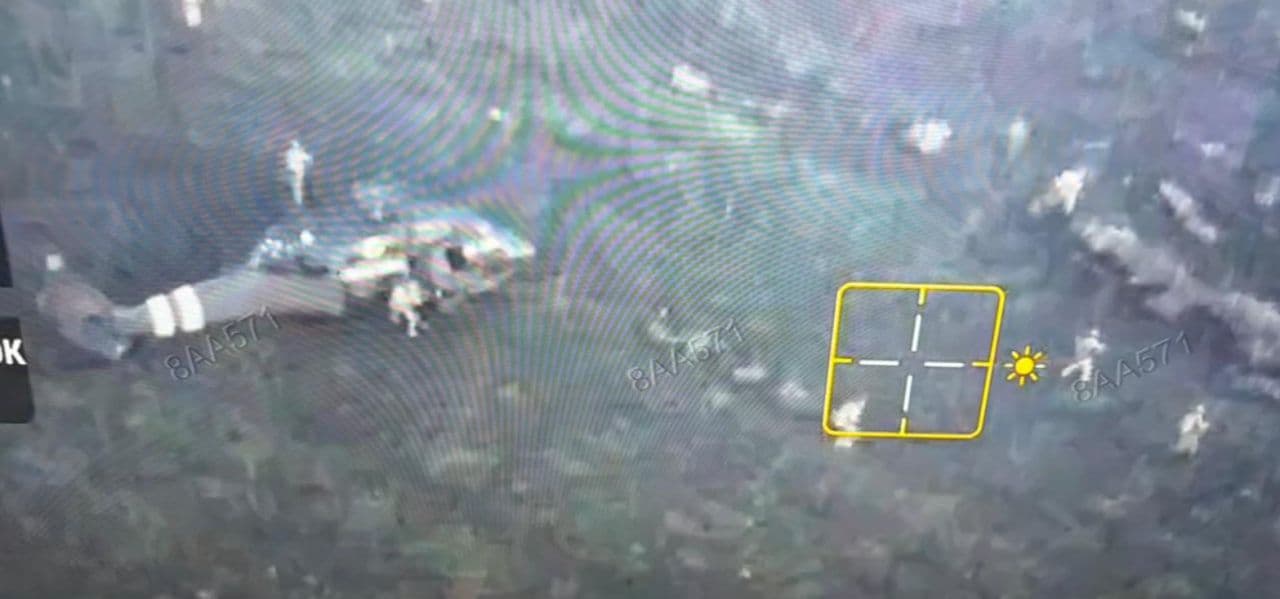
Footage appears to show a Ukrainian helicopter landing in contested territory near Pokrovsk on Oct. 31, 2025. (Oliver Carroll on X)
The UH-60 Black Hawk came in low and fast, hugging terrain Russian drones had been patrolling for weeks. Geolocated footage captured the moment it touched down—an open field west of Pokrovsk, territory Russian sources had confidently marked as secured on their situation maps.
The helicopter’s ramp dropped. Soldiers from Ukraine’s Main Military Intelligence Directorate hit the ground and moved toward positions critically important for Ukrainian logistics. Multiple helicopters were involved. All penetrated airspace that should have shredded them.
Then came the question no one wanted to ask publicly.
A Russian milblogger broke the silence first. How did Ukrainian helicopters fly through drone-saturated airspace without losses? Where were the intercepts? The answer—that Russia’s air defense umbrella over Pokrovsk had gaps large enough for helicopter insertions—wasn’t one Moscow wanted to give.
The Russian Ministry of Defense moved quickly to contain the narrative. All eleven personnel killed they claimed. The raid had been repelled. Ukraine denied it immediately, and the competing claims hung in the air like the drones that should have prevented the operation in the first place.
Commander-in-Chief Oleksandr Syrskyi framed it differently. The helicopter assault was part of a broader operation involving Special Operations Forces, the Military Law Enforcement Service, the Security Service, and military intelligence—all active in Pokrovsk. “There is no encirclement or blockade,” he said, directly contradicting Putin’s earlier claims.
Translation: Ukrainian forces could still move, reinforce, and conduct operations in a city Russian propaganda had already declared isolated.
The raid proved something more important than whatever tactical objectives it achieved. Even in areas of supposed Russian dominance, Ukrainian forces could still strike with audacity. The question was whether audacity could substitute for the numbers Ukraine didn’t have.
November 1 didn’t answer that. But it showed that Russian control over Pokrovsk wasn’t as complete as Moscow needed the world to believe.
Sixty Percent: Inside Pokrovsk’s Collapsing Defense
The numbers told the story before any soldier did. Eleven thousand Russian troops concentrated around one city. Ukrainian defenders outnumbered eight to one. Russian forces spread through 60 percent of Pokrovsk’s streets by November 1, with footholds in Rodynske to the north and Myrnohrad to the east.
The math was brutal. The trend was worse.
A senior Ukrainian brigade officer described the frontline as “porous”—a polite word for what happened when boundaries blurred, and infiltration groups moved freely. Geolocated footage showed Ukrainian forces still holding central Rodynske, areas Russian sources had claimed weeks ago. But holding scattered positions wasn’t the same as controlling territory.
The logistics picture grew darker. Russian forces hadn’t cut Ukrainian ground lines of communication—not completely. They had achieved something nearly as effective: fire control. Russian FPV drone operators positioned themselves within range to interdict the narrow roads connecting Pokrovsk and Myrnohrad.
A Ukrainian serviceman in Myrnohrad put it bluntly: Russian forces in the northern sectors “feel completely at ease.” Another officer noted that Russian forces had almost complete fire control over the single narrow road supplying Myrnohrad.
Translation: supplies could theoretically get through. But the drones made every convoy a calculated risk.
Putin, visiting a military hospital in Moscow, claimed both Pokrovsk and Kupiansk were encircled. Ukrainian commanders’ reports said otherwise, but “not encircled” was becoming a technical distinction when the last supply road ran through a gauntlet of Russian drone fire.
Pokrovsk serves as a major road and rail hub. Its capture would open routes deeper into Donetsk Oblast—the region Moscow has tried to fully occupy since 2014.
The city hadn’t fallen. But it was falling—street by street, building by building, in a grinding battle where Russian numerical superiority was slowly overwhelming Ukrainian tactical skill.
The question wasn’t whether Pokrovsk could hold indefinitely. It was how many more days the defenders could buy before the numbers won.
The War for Elevation: Fighting Over Pokrovsk’s High-Rises
Russian and Ukrainian forces weren’t just fighting for Pokrovsk’s streets. They were fighting for its rooftops.
Whoever held the high-rise buildings commanded the drones that could strike enemy supply lines 30 kilometers away. Elevation meant everything in a war where first-person view operators had replaced artillery spotters as the most valuable assets on the battlefield.
A Ukrainian officer described the new reality: Ukrainian infantry on the forward edges rarely engaged Russian forces in close combat anymore. Russian infiltration groups bypassed the frontline to hunt Ukrainian drone and mortar crews in near-rear areas—targeting the operators, not the soldiers.
The tactic was working. Ukrainian drone operators had to limit flight durations because they needed to grab rifles and repel Russian infiltrators. Constant small-group attacks forced Ukrainian forces to pull back their second echelon of drone operators, preventing strikes on Russian forces at Pokrovsk’s outskirts.
Translation: Ukrainian forces could see their targets but couldn’t stay in position long enough to engage them.
Weather became a silent participant. A high-ranking Ukrainian officer noted that 30 to 40 Russian personnel could infiltrate during rain or fog when drones couldn’t fly effectively. In fair weather, that number dropped to ten or fewer. Russian forces, recognizing the vulnerability, intensified infiltration efforts whenever precipitation grounded Ukrainian drones.
Northeast of Pokrovsk in the Kostyantynivka direction, the pattern repeated. Russian forces had reverted to small-group infiltration tactics after a failed October 27 battalion-sized mechanized assault cost them heavy casualties. Ukrainian forces captured three Russian POWs from the 242nd Motorized Rifle Regiment, revealing the scale of losses that forced the tactical shift.
The drone war had transformed urban combat in ways neither side fully anticipated. In Pokrovsk’s contested streets, whoever controlled the heights controlled the battle. And the battle for those heights was being fought building by building, operator by operator, in a grinding contest where technology mattered as much as manpower.
The Ring Burns: Severing Moscow’s Fuel Artery
Ukrainian drones threaded through Moscow Oblast’s air defenses overnight, hunting a target that shouldn’t have been reachable. The Koltsevoy pipeline—a 400-kilometer ring carrying fuel from three refineries straight to Russia’s military machine.
All three major lines went down simultaneously near Ramensky district, southeast of Moscow.
The Main Military Intelligence Directorate called it a “serious blow” to Russia’s military logistics. The numbers backed them up: 3 million tons of aviation fuel annually, plus 2.8 million tons of diesel and 1.6 million tons of gasoline. Geolocated footage showed explosions tearing through pipeline infrastructure despite anti-drone nets and armed security.
HUR chief Kyrylo Budanov didn’t hedge. “Our strikes have had more impact than the sanctions,” he said. “It’s just a mathematical truth. We caused much greater damage to the Russian Federation through direct action than any economic levers of influence that had been introduced on them until now.”
The strike came amid a broader Ukrainian drone assault. Russia’s Defense Ministry claimed it intercepted 98 drones across ten regions overnight, including eleven over Moscow Oblast. In Zhukovsky near Moscow, power outages hit. Local authorities blamed “automatic equipment shutdowns”—a euphemism that fooled no one. In Tula, drone debris fell onto city streets.
The cumulative impact was showing. SBU chief Vasyl Maliuk revealed at an October 31 briefing that Ukraine had struck oil extraction and refining facilities across Russia nearly 160 times in 2025. At least 20 of those strikes came in September and October alone, targeting six refineries, two oil terminals, three fuel depots, and nine pumping stations.
Russian domestic fuel shortages had reached 20 percent, Maliuk claimed, with 37 percent of refining capacity forced offline. Fuel deficits were reported in 57 Russian regions, prompting Moscow to ban gasoline exports through year-end.
Ukraine couldn’t match Russia’s manpower on the ground. But it could reach deeper into Russian territory than Russian forces could push into Ukraine. Every severed pipeline represented that strategic calculation—make the war cost more than Russia could afford.
Fire on the Black Sea: Tuapse Burns Again
Five Ukrainian drones converged on Tuapse, targeting the oil terminal that feeds Russia’s Black Sea energy exports. The terminal—operated by state oil giant Rosneft—had burned once before in September. Ukrainian forces were making sure it burned again.
A tanker caught fire. Four piers used for loading and unloading went offline. Port buildings took damage. Photos posted on social media showed flames rising from terminal infrastructure along the coast, with at least three separate fires visible around the facility.
Russian Telegram channels confirmed what the images showed. Krasnodar Krai officials later acknowledged drone strikes had damaged “the deck superstructure of a vessel, buildings, and terminal infrastructure.” They claimed no casualties—a routine assertion in Russian damage reports that had long since lost credibility.
An SBU source made the strategy explicit: “The SBU continues to strike at Russia’s oil refining infrastructure, which provides the enemy with resources for aggression against Ukraine. As long as the war continues, flames will continue to burn brightly at Russian oil refineries.”
The Tuapse strike came hours after Ukraine’s Navy confirmed using domestically produced Neptune cruise missiles against the Oryol Thermal Power Plant and Novobryansk electrical substation in Oryol Oblast. Both facilities supplied power to military-industrial plants. Neptune—originally developed as an anti-ship missile with 300-kilometer range, famous for sinking the Moskva in April 2022—had been upgraded for land-attack missions.

An image of a purported attack on a Russian oil terminal in the port city of Tuapse in Russia’s Krasnodar Krai late on Nov. 1, 2025. (Crimeanwind/Telegram)
Residents of Oryol reported the strikes didn’t sound like drones. Surveillance footage captured two hits on the power plant, causing blackouts across the city. Governor Andrey Klychkov claimed debris from “intercepted drones” caused the damage. The locals knew better.
Explosions were also reported in Vladimir and Yaroslavl. In Vladimir, strikes hit an electrical substation with 4,010 MVA capacity. In Yaroslavl, the Novo-Yaroslavsky refinery—Russia’s fifth-largest with 15 million tons annual capacity—took fire.
Ukraine’s deep strike campaign had evolved from raids into systematic strangulation. Every burning refinery forced Moscow to choose between repairing energy infrastructure and fueling the war machine.
Two Hundred Twenty-Three: The Night Ukraine Held the Line
Russian forces launched 223 strike drones against Ukraine overnight—Shahed-type, Gerbera-type, and other attack variants streaming from Kursk, Bryansk, Oryol, Primorsko-Akhtarsk, Millerovo, and occupied Crimea. Ukraine’s air defenses intercepted 206 of them.
Seventeen reached their targets.
In Mykolaiv City, an Iskander-M ballistic missile with a cluster warhead struck a gas station. One civilian dead, nineteen wounded, including a nine-year-old in moderate condition. In Kherson Oblast, drone and artillery strikes on over twenty settlements killed two and injured twenty-two, damaging eight apartment buildings and fifteen private homes.
In Sumy Oblast, seven were wounded across thirty-one settlements. Air raid alerts lasted fifteen hours. In Zaporizhzhia Oblast, 496 Russian attacks on fourteen settlements killed one and injured three.
The numbers formed their own narrative. Russia fired more missiles at Ukraine in October than in any month since at least early 2023—270 missiles, up 46 percent from September. Combined with 5,298 long-range drones, it represented Moscow’s most intense campaign to cripple Ukrainian energy infrastructure since the war began.
Ukrainian state electricity operator Ukrenergo announced restrictions across unspecified oblasts due to ongoing strikes. Rolling blackouts had been introduced in every region throughout October, forcing civilians to endure daily disruptions as Russia targeted the power grid for the fourth winter running.
President Zelensky told journalists that Russia’s task was “to create chaos and apply psychological pressure on the population through strikes on energy facilities and railways.” Since October 12: 3,720 strike drones, 1,370 glide bombs, nearly 50 missiles.
The UN’s Matthias Schmale warned that 2025 had been deadlier for civilians than 2024, with casualties rising 30 percent. One-third of civilian deaths and injuries came from drone attacks. “This is increasingly a technological war: a drone war,” he told reporters in Geneva.
More than 57,000 evacuees had sought help at transit sites. Markets near frontline areas were failing. “Destroying energy production and distribution capacity is a form of terror,” Schmale said. “If repairs cannot keep up with destruction, this could become a major crisis.”
The UN’s winter response plan aimed to assist 1.7 million people—but was only half funded.
Each night the drones came. Each night Ukraine counted the incoming and the intercepted, calculating survival in real time.
The Frontline Beyond Pokrovsk: Where Momentum Shifted and Stalled
While Pokrovsk commanded headlines, the broader front line stretched across hundreds of kilometers told a different story—Russian advances grinding forward in some sectors, stalling in others, and occasionally reversing.
In the Velykyi Burluk direction, Russian forces pushed north of Ambarne. Geolocated footage confirmed the gain. The Russian Northern Grouping released footage of TOS-1A thermobaric artillery strikes near Novouzhvynivka—weapons designed to incinerate everything in their blast radius, turning fortified positions into crematoriums.
Northeast of Pokrovsk in the Kupyansk direction, Russian forces maintained pressure but made no confirmed advances. Milbloggers claimed progress into central Petropavlivka and toward the Kupyansk-Vuzlovyi railway station. Geolocated footage didn’t support the claims. Fighting continued within Kupyansk itself, with Ukrainian forces counterattacking in multiple areas.
The momentum reversed in the Lyman direction. Geolocated footage showed Ukrainian forces advancing in northeastern Yampil—an area where Russian forces had recently maintained presence. A Ukrainian drone unit reported Russian forces were attacking on foot and using fewer vehicles, suggesting either supply problems or adaptation to Ukrainian drone coverage.
Southeast of Pokrovsk in the Velykomykhailivka direction, Russian forces attacked from multiple axes but failed to advance. The pattern repeated across the front: Russian forces maintained pressure but couldn’t achieve breakthroughs except at key objectives like Pokrovsk where they concentrated overwhelming force.
Glimpses behind Russian lines revealed fissures in the narrative of inexorable advance. A Russian milblogger posted footage of the 1009th Motorized Rifle Regiment filtering rainwater from puddles near Kostyantynivka due to logistics failures. The same milblogger claimed the military command was failing to evacuate bodies of soldiers killed in Vovchansk. Another reported the command was deliberately refusing to rotate servicemembers of the 1st Motorized Rifle Regiment near Bezsalivka in Sumy Oblast.
Russian forces could concentrate overwhelming numbers at decisive points. But sustaining operations strained logistics networks and exhausted troops who weren’t being rotated.
The question was whether Ukraine could exploit these weaknesses before Russian numerical superiority ground down defensive positions through sheer mass.
Shadows Over NATO: The Drones That Shouldn’t Be There
A drone appeared over Belgium’s Kleine Brogel Air Base late in the evening—the second sighting in less than 24 hours. A police helicopter gave chase. It failed to intercept.
Kleine Brogel isn’t just another military installation. While officially unconfirmed, it’s widely believed to host U.S. nuclear weapons under NATO’s nuclear sharing arrangements. The base is also set to house F-35 fighter jets beginning in 2027.
Belgian Defense Minister Theo Francken announced that images of the drones had been captured in flight. Investigations were ongoing. He released no details on the drone type or origin. He didn’t say whether the incidents connected to the surge of mysterious drone sightings raising security concerns across Europe.
Hours earlier, Berlin’s Brandenburg Airport had diverted flights after a reported suspicious drone sighting. Over the Baltic Sea, Polish fighter jets intercepted a Russian Il-20 reconnaissance aircraft for the third time in three days. The Russian aircraft operated without a flight plan or active transponder but didn’t violate Polish airspace.
The pattern suggested coordination. On October 17, allied forces shot down two drones of unknown origin near a military base in southern Estonia. Reports of drone sightings at airports had intensified in recent months, causing disruptions in France, Czechia, Germany, Lithuania, Norway, and Denmark.
The incidents followed Russian aircraft and drones violating NATO airspace multiple times. Polish forces shot down Russian drones that entered their airspace during attacks on Ukraine in early September. Days later, a Russian drone breached Romanian territory—Bucharest chose not to engage it.
For countries hosting nuclear weapons or advanced military aircraft, the drones represented more than security concerns. They were reconnaissance missions mapping defenses, testing response times, gathering intelligence that could prove invaluable in future conflicts.
The inability to intercept or identify the drones despite multiple attempts revealed a vulnerability. NATO had built an alliance to deter conventional attacks. It was struggling to counter unconventional intrusions that fell below the threshold of war but above the threshold of nuisance.
The drones kept coming. And NATO kept chasing shadows.
Voices from the North: The Prisoners Who Begged Not to Go Home
Two North Korean prisoners of war sat across from a documentary filmmaker in an undisclosed facility in Kyiv on October 28. At the end of the interview, they made an unusual request.
They wanted to live in South Korea. Not be repatriated to the North.
“They pleaded with the interviewer to promise she would return to bring them to the South,” said Jang Se-yul, head of Gyeore-eol Nation United, a human rights organization working with North Korean defectors. Jang is himself a defector.
Around 10,000 North Korean troops were sent to fight for Russia in 2024, according to South Korean and Western intelligence agencies. The two prisoners were captured after deployment to the front, where they witnessed realities propaganda hadn’t prepared them for.
One prisoner had already made the same request when visited by South Korean lawmaker Yu Yong-weon in February. Yu reported that the prisoners had witnessed injured comrades kill themselves with grenades—following instructions that North Korean soldiers receive to kill themselves rather than be taken prisoner.
“Sending the soldiers back to the North would be essentially a death sentence,” Yu said.
Under South Korea’s constitution, all Koreans are considered citizens including those in the North. Seoul has said this applies to any troops captured in Ukraine.
Photos provided by Jang’s organization showed one prisoner reading letters from defectors now living in the South. “We showed them video messages and letters from North Korean defectors to give them hope,” Jang said. The video hasn’t been released but is expected in coming weeks.
Pyongyang only acknowledged deploying troops to support Russia’s war in April, admitting some had been killed. Kim Jong Un has since met bereaved families and offered condolences for their “unbearable pain.” Around 2,000 North Korean soldiers are believed to have been killed in combat, according to Seoul’s spy agency in September.
The prisoners’ plea illuminated the cost of North Korea’s decision. Young men sent to fight in Ukrainian mud for a cause they barely understood, watching comrades die, facing a choice between death in battle, suicide in capture, or the unthinkable act of defection.
Even soldiers who had followed orders preferred imprisonment in Ukraine and exile in the South to returning home as failures.
That was Pyongyang’s verdict, delivered by the men it sent to war.
The Kremlin Silences Its Own: When the Leakers Got Leaked
The VChK-OGPU Telegram channel went dark on October 31. Not by choice. Telegram administrators blocked the main channel at the behest of Russian authorities for alleged “doxxing and extortion.”
VChK-OGPU had built its reputation on insider access. The channel claimed sources affiliated with Russian law enforcement and published purported insights into Kremlin factional dynamics, internal government assessments, significant Ministry of Defense changes, and military operation leaks—information the Russian government hoped to withhold from domestic and foreign audiences.
The backup channel, VChK-OGPU-Info, claimed Telegram removed other channels considered “irritants” to Russian law enforcement and intelligence agencies. Only Telegram management could have deleted the accounts at this scale. The channel also reported that Russian forces detained one of its authors in St. Petersburg on October 30.
This wasn’t the first purge. Telegram had deleted VChK-OGPU and several other channels in April at Russian authorities’ behest, forcing the operation onto backups.
The pattern extended beyond Telegram. Russian law enforcement detained three employees of state-owned Ural regional information agency Ura.ru in June for allegedly receiving funding from an organization designated as a foreign agent and bribing law enforcement to obtain sensitive internal reports. In late July, authorities raided Baza—a Russian outlet affiliated with law enforcement—as part of an abuse of power investigation against police officers who allegedly disclosed sensitive information.
Both publications had maintained relations within Russia’s internal government systems. Both published information that challenged official narratives. Both found those relationships no longer protected them.
The Kremlin’s message was clear: information had become as tightly controlled as territory. Sources that once operated in gray zones found those zones collapsing. Even marginally independent voices with insider access were being systematically eliminated.
By silencing these sources, the Kremlin gained tighter control over information. But it lost visibility into its own problems. The very channels that might have alerted leadership to brewing crises were being cut off, leaving Russian decision-makers increasingly isolated in bubbles of their own propaganda.
The cost of controlling the narrative was losing touch with reality. But in Putin’s Russia, that was a price worth paying.
What November 1 Revealed
Two wars happened simultaneously. Ukrainian helicopters landed in territory Russian commanders claimed to control while Russian troops spread through 60 percent of Pokrovsk. Ukrainian drones reached Moscow’s fuel pipelines while Russian drones darkened Ukrainian cities. Each side struck deep while struggling to hold near.
The day exposed competing vulnerabilities. Russia could mass overwhelming force at decisive points like Pokrovsk—11,000 troops against outnumbered defenders. But its air defense umbrella had gaps large enough for helicopter insertions, and its logistics networks showed cracks visible even to its own milbloggers. Soldiers filtering rainwater from puddles. Bodies not evacuated from Vovchansk. Troops not rotated near Bezsalivka.
Ukraine faced the mirror image. Its forces could reach 1,500 kilometers into Russia to sever pipelines and ignite refineries. But it couldn’t prevent 223 Russian drones from launching, couldn’t stop the grinding advance through Pokrovsk’s streets, couldn’t escape the mathematics of eight-to-one odds in critical sectors.
The strategic question remained unresolved: which kind of pressure breaks first? Russia’s ability to sustain mass at the cost of mounting logistics failures and personnel exhaustion? Or Ukraine’s ability to defend key positions while conducting deep strikes that may take months to cripple Russia’s war economy?
NATO’s vulnerability emerged in sharper focus. Drones probed nuclear weapons storage sites in Belgium. Reconnaissance aircraft tested Baltic airspace for the third time in three days. Police helicopters chased shadows they couldn’t catch. The alliance built to deter tank columns discovered it couldn’t counter small drones mapping its most sensitive installations.
The war’s fourth winter approached with familiar dread. Russia fired more missiles in October than any month since early 2023. Ukrainian energy infrastructure crumbled under sustained attack. The UN warned of humanitarian crisis while its winter response plan sat half-funded. More than 57,000 evacuees sought help at transit sites while markets near the front collapsed.
North Korean prisoners pleaded not to go home. Russian information channels went dark. Flames rose from Tuapse’s piers and Moscow’s pipelines. Pokrovsk’s defenders held positions Russian propaganda claimed didn’t exist.
The parallel realities persisted. And nobody knew which would ultimately determine the war’s trajectory—the grinding attrition on the ground, or the burning refineries 1,500 kilometers from the front.
What was certain: both sides were testing sustainability. The answer to which could sustain pressure longer wouldn’t come from a single day’s events.
But November 1 made clear that the testing phase was accelerating.