
Russian soldiers checked documents in Pokrovsk’s streets while Medvedev declared all Ukraine would “return to Russia”—Day 1,349, when occupation became official policy.
The Day’s Reckoning
Picture a Russian soldier stopping a Ukrainian civilian on a Pokrovsk street corner. Not to search for weapons. Not to clear the area before an assault. To check identification documents.
This is what November 3rd looked like in a city that three months ago was a killzone where Russian infantry died by the platoon trying to breach outer defenses. Now they’re setting up observation posts. Installing drone operator stations. Helping elderly residents board evacuation buses. The footage shows occupation bureaucracy, not combat operations.
Eight hundred kilometers north, you could see flames against the Saratov night sky. The oil refinery—5.8 million tons of processing capacity—burning from a Ukrainian drone strike. The third time since September Ukrainian drones found this target. Russian engineers had draped anti-drone netting over critical infrastructure. The netting’s shredded now, hanging useless while petroleum products fuel fires visible from kilometers away.
In a conference room somewhere in Britain, officials signed off on another Storm Shadow delivery. No press conference. No announcement. Just missiles being quietly loaded for transport to Ukraine while American officials continued debating whether Tomahawks were “too escalatory.”
At an airfield in Belarus, Iran’s Air Force Commander stepped off his plane to meet Belarusian counterparts. Handshakes. Official photos. Another thread in the web of military cooperation sustaining Russia’s offensive.
And in Moscow, Medvedev sat down to write his Telegram post. The one that finally dispensed with diplomatic language about “security concerns” and “protecting Russian speakers.” Ukraine will return to Russia. All of it. Not negotiated. Returned.
Commander-in-Chief Syrskyi was watching Ukrainian forces collapse a Russian salient near Dobropillya, forcing the 51st Combined Arms Army to defend when it should be encircling Pokrovsk. Every Russian unit diverted to defensive operations was one less unit tightening the noose.
Day 1,349. Document checks and deep strikes. Occupation footage and refinery fires. Declared intentions colliding with tactical realities. The war grinding forward with neither side able to force conclusions—just costs mounting and control remaining expensive to hold.
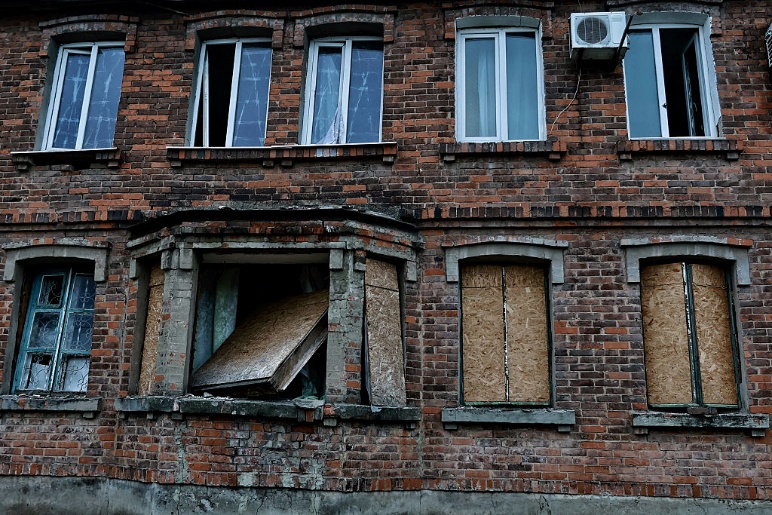
Home used to be here. Russian strikes reduced these Kostiantynivka apartment buildings to hollow concrete shells where families once slept, cooked dinner, raised children. The rubble doesn’t distinguish between military and civilian targets—neither did the missiles. (Yan Dobronosov / Global Images Ukraine / Getty Images)
Eight Hundred Kilometers Deep: The Third Strike on Saratov
The Ukrainian General Staff timestamp read 03:47 local time when the drone found its target.
Geolocated footage captured the moment—a flash of light followed by an explosion that illuminated the Rosneft Saratov Oil Refinery’s industrial maze. Flames erupted near the electrical desalting unit with atmospheric-vacuum tubes, the ELOU-AVT system that processors 5.8 million tons of crude oil annually into over twenty different petroleum products. The kind of infrastructure that keeps armies moving and economies functioning.
Russian engineers had anticipated this. Anti-drone netting draped over critical sections of the facility—the protective measures that were supposed to catch incoming threats before they struck vital equipment. The netting hung useless now, shredded or bypassed, while flames consumed what it failed to protect.
This was the third time Ukrainian drones had found Saratov since fall began. September 20th. October 16th. November 3rd. The pattern revealed Ukrainian operational doctrine: identify critical infrastructure, strike it repeatedly, force Russia to choose between repairing damage and defending against the next attack. Make every repair crew wonder if they’d finish work before the next drone arrived.
Eight hundred kilometers. That’s how far Saratov Oblast sits from Ukrainian-controlled territory. Far enough that Russian air defense should theoretically intercept drones multiple times during their journey. Should have layers of protection. Should provide sanctuary for critical infrastructure.
The flames said otherwise.
For Russian military planners watching the footage, the burning refinery represented an uncomfortable calculus. Every air defense system deployed to protect Saratov was one fewer system defending front-line positions. Every kilometer of Russian territory that needed protection diluted defenses everywhere. Ukraine could strike deep, repeatedly, with increasing accuracy—forcing Moscow to defend thousands of kilometers of potential targets rather than concentrating where it mattered most.
The Volga River flows past Saratov, making it a logistics hub connecting Russia’s industrial heartland. Twenty different petroleum products flowing from one facility. Until they didn’t.
The fires burned into the morning.
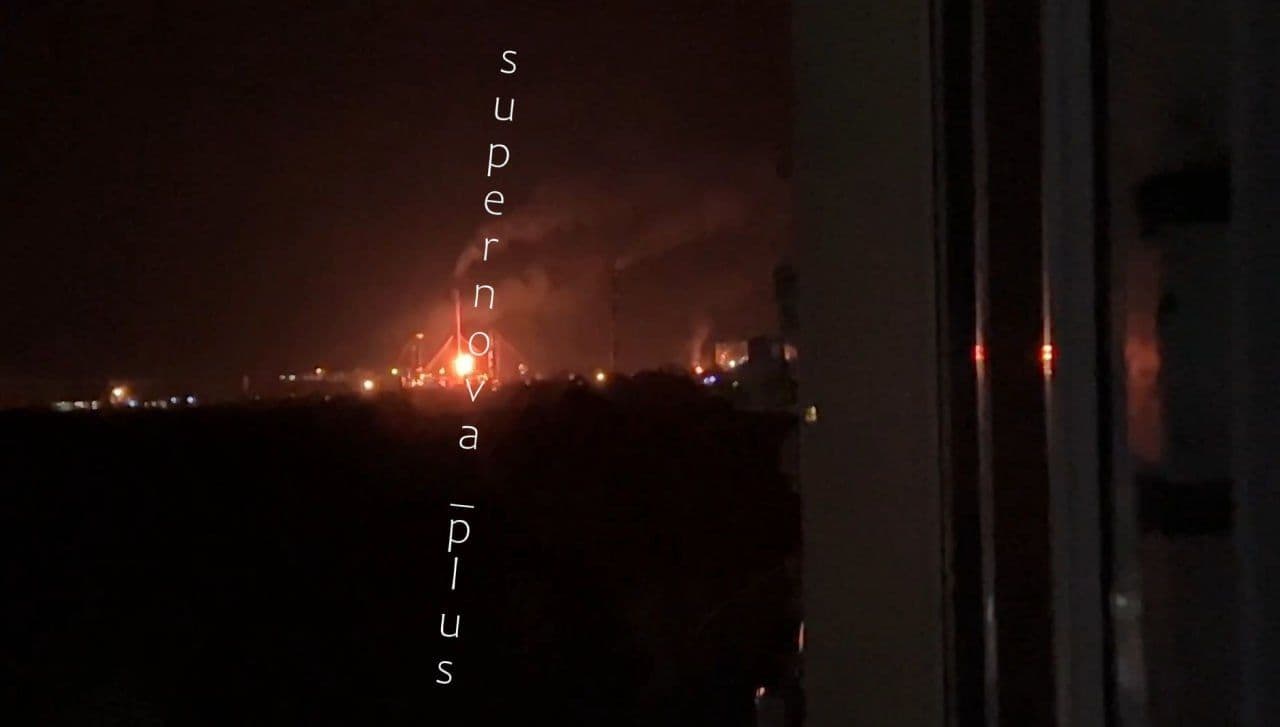
Eight hundred kilometers inside Russia, the Saratov oil refinery burns. Ukrainian drones found their target for the third time this fall, turning 5.8 million tons of annual refining capacity into flames against the night sky. Distance no longer guarantees safety. (Supernova+ / Telegram)
When Infiltrators Become Administrators
Watch the Russian soldier’s hands. Not holding a rifle. Holding identification papers.
He’s standing on a Pokrovsk street corner checking a civilian’s documents—the bureaucratic gesture of occupation authority, not the tactical movement of an attacking force. Three months ago, Russian infantry died by the platoon trying to breach this city’s outer defenses. Now they’re conducting document checks.
The geolocated footage published November 3rd showed elements of Russia’s 5th Motorized Rifle Brigade advancing through southern Myrnohrad and other forces pushing into eastern Rodynske. But the revealing story came from inside Pokrovsk itself, where Russian behavior had fundamentally transformed.
A Ukrainian officer described it clinically: Russian troops establishing forward observation posts. Concentrating personnel in specific districts. Building defensive positions in recently infiltrated areas. Setting up drone operator stations—the infrastructure needed not to attack but to control space, monitor Ukrainian movements, direct strikes against reinforcement attempts.
The infiltration routes evolved from improvised pathways to established corridors. Russian forces entered from Zvirove-Shevchenko-Novopavlivka to the south and southwest, accumulated on northeastern outskirts near Rivne. As they gathered manpower, they built layered infrastructure: observation posts, defensive positions, drone stations.
The Russian Ministry of Defense understood the psychological importance of their footage. Images showed soldiers helping elderly residents evacuate, checking identification documents. Not combat footage—occupation footage designed to normalize Russian presence, to suggest Pokrovsk had transitioned from battlefield to administered territory.
Yet Ukrainian forces struck two Russian servicemembers in northwestern Pokrovsk the previous day, eliminating them mid-infiltration before they could advance positions.
The projection of control couldn’t erase continued resistance. Russian forces could establish observation posts and check documents, but they remained targets. Every position required defense. Every administrator needed protection.
Occupation demanded not just presence but the capability to defend that presence against a determined defender willing to exact costs for every occupied meter.
The Highway That Refused to Die
The H-32 Pokrovsk-Myrnohrad highway cuts through industrial Donbas like an artery—and Russian forces spent November 3rd trying to sever it.
They failed.
The Ukrainian 7th Rapid Reaction Corps reported that Ukrainian forces had “created opportunities” to resupply and reinforce troops in the Pokrovsk direction in recent days. The phrasing was deliberately vague—no sense advertising logistics methods to Russian intelligence analysts—but the implications were unmistakable. Supplies continued flowing. Reinforcements continued arriving. The pocket remained connected rather than isolated and doomed.
The tactical geography was brutally simple: if Russia severed this artery, Ukrainian forces faced immediate withdrawal or gradual encirclement and destruction. The highway’s survival meant Ukrainian defense remained organizationally viable rather than a desperate last stand with no resupply.
More critically, Ukrainian forces had prevented Russian advances in northern Pokrovsk and blocked Russian attempts to cut the highway itself. Every meter Russia failed to gain was another day the lifeline stayed open.
The same geolocated footage documenting Russian advances also captured Ukrainian counterpressure. In eastern Rodynske—where Russian sources had confidently claimed control in previous days—Ukrainian forces had recently advanced, reclaiming positions that appeared on Russian-produced maps as secured territory. The line between controlled and contested remained fluid despite Russian projections of administrative authority.
The counterattacks revealed strategic understanding beyond tactical resilience. Defending the highway required more than static positions along its length. It required offensive operations keeping Russian forces reacting rather than executing their encirclement plan methodically. Every Ukrainian counterattack forced Russian commanders to divert resources from offensive operations toward defensive consolidation, from tightening the noose toward securing what they’d already gained.
The highway kept pumping. Russian forces kept trying to cut it. Ukrainian forces kept ensuring the attempts failed.
Day 1,349. The artery survived another day.
The Salient Russia Can’t Afford to Lose
Commander-in-Chief General Oleksandr Syrskyi’s statement on November 3rd contained the kind of operational detail that changes how you understand an entire sector’s dynamics.
Ukrainian forces were increasing pressure on the Russian salient east of Dobropillya, forcing Russian forces to disperse their troops and complicating Russia’s main effort near Pokrovsk.
The tactical geography explained why this mattered profoundly. Elements of Russia’s 51st Combined Arms Army had been exploiting the Dobropillya penetration since August while simultaneously attacking Pokrovsk from multiple directions. The 51st CAA was supposed to be encircling the Pokrovsk pocket from the north and northeast, tightening the noose in coordination with the 2nd Combined Arms Army’s advance from the south and southwest.
Classic two-pronged encirclement. Should have been working.
But Ukrainian counterattacks on the Dobropillya salient were forcing the 51st CAA into defensive operations precisely when it needed to be aggressively offensive. Russian forces that should have been pushing relentlessly toward Pokrovsk were instead defending a vulnerable salient that Ukrainian forces were systematically collapsing.
The 51st CAA faced an impossible choice: exploit Pokrovsk gains or defend the Dobropillya position. Defending was winning that internal resource allocation battle.
Syrskyi’s confirmation validated the approach. Russian forces were dispersing when they needed to concentrate. Defending when they needed to be attacking. The carefully planned two-pronged encirclement had effectively become one-pronged—with all the implications that held for operational timelines and resource requirements.
The strategy represented tactical evolution born from painful experience. Rather than simply reinforcing maximum pressure points—the instinctive response to encirclement threats—Ukrainian forces were identifying where Russian operational plans were most fragile and attacking those vulnerabilities aggressively.
Force Russia into reactive postures. Disrupt Moscow’s ability to execute methodical encirclement operations according to planned timelines. Make Russian commanders fight Ukrainian battles rather than their own.
The 51st CAA was supposed to be tightening the noose around Pokrovsk. Instead, it was defending Dobropillya.
The Quiet Part Said Loud
Dmitry Medvedev chose November 3rd to abandon diplomatic language entirely.
The Security Council Deputy Chairperson published declarations on both his English and Russian Telegram channels that erased any remaining pretense about limited objectives, security concerns, or negotiated settlements.
“The more the West supports Ukraine,” Medvedev wrote, “the larger the amount of Ukrainian territory that Russia will eventually return to its native Russia.” He called for Russia’s citizens and Russian power to “return to ancestral Russian lands” in Ukraine.
Translation: all of it.
The statement’s significance wasn’t novelty—Medvedev and Putin had made similar claims throughout the conflict. The significance was timing and explicitness. As Russian forces established administrative control in Pokrovsk and Western politicians debated aid levels and negotiation frameworks, Moscow wanted absolute clarity about what those tactical gains represented.
Not buffer zones for Russian security. Not protecting Russian-speaking populations. Not leverage for territorial negotiations. Complete absorption. Erasing Ukrainian statehood, not adjusting its boundaries.
The declaration clarified what Russian tactical successes in places like Pokrovsk were meant to achieve: not bargaining chips for eventual settlements but incremental steps toward total territorial incorporation.
The statement also served secondary purposes in Moscow’s broader information campaign. By suggesting that increased Western aid would result in larger territorial losses, Medvedev attempted to fracture European resolve—implying that supporting Ukraine was counterproductive, that the victim’s allies were somehow responsible for the aggressor’s actions.
The logic was twisted but deliberate: make European politicians agonize over whether their support was actually harming Ukraine by prolonging the conflict.
While Medvedev typed his Telegram post declaring Russia’s intention to absorb all Ukrainian territory, Russian soldiers in Pokrovsk were checking civilians’ documents and Ukrainian drones were striking refineries 800 kilometers inside Russia.
Declarations met realities. Ambitions collided with costs. The gap between what Moscow proclaimed and what Moscow could actually achieve remained stubbornly uncertain.
While Washington Debated, London Delivered
Bloomberg’s sources confirmed what Ukrainian strike planners already knew: Storm Shadow missiles had arrived.
Britain delivered an unspecified number of the long-range cruise missiles to Ukraine recently, ensuring Ukrainian forces maintained sufficient strike capabilities ahead of the approaching winter. No press conference. No dramatic announcement. Just missiles being quietly loaded and transported while American officials continued debating whether Tomahawks were “too escalatory.”
The rationale was straightforward: Russia was expected to intensify attacks on Ukrainian civilian infrastructure in campaigns designed to break civilian morale through systematic destruction of heating, electricity, and water systems. Storm Shadows had proven their value striking Russian logistics facilities, command posts, and production sites deep behind front lines.
The missiles’ sophisticated guidance systems, low-altitude flight profiles, and 250–560-kilometer range made them effective despite evolving Russian air defenses. In late October, Ukrainian forces demonstrated this effectiveness by striking the Bryansk Chemical Plant approximately 110 kilometers from the border with Sumy Oblast. Previous strikes had targeted facilities in Bryansk and Kursk oblasts and in Russian-occupied Crimea.
The delivery came as the United States continued deliberating over potential Tomahawk transfers. Tomahawks could strike targets 1,600-2,500 kilometers distant—considerably farther than Storm Shadow’s maximum range—potentially allowing Ukraine to target critical Russian infrastructure throughout western Russia.
President Volodymyr Zelensky had left his mid-October Washington meeting without any Tomahawk commitment, despite President Donald Trump floating the idea several times. Trump stated days earlier that Washington had no immediate plans to supply Tomahawks, though he characteristically added that “things can change.”
The contrast illuminated different strategic philosophies. Britain was quietly ensuring Ukraine maintained the capabilities it currently possessed. The United States was carefully calibrating which capabilities to authorize, balancing support for Ukrainian military operations against concerns about escalation dynamics.
Storm Shadows were already in Ukrainian hands. Tomahawks remained under discussion.
One Hundred Fifty-One Threats Incoming
The Ukrainian Air Force tracking screens lit up before dawn on November 3rd.
Three Kh-47M2 Kinzhal aeroballistic missiles launched from airspace over Lipetsk Oblast. Four Iskander-M ballistic missiles from occupied Crimea. Five S-300/S-400 anti-aircraft guided missiles converted to ground-attack roles from Kursk Oblast. But the missiles were just the opening act.
Then came the swarm: 138 Shahed-type, Gerbera-type, and other strike drones—including about 80 Shaheds—launched from four different directions. Kursk and Oryol cities. Millerovo in Rostov Oblast. Primorsko-Akhtarsk in Krasnodar Krai. Ukrainian air defense had to track threats across hundreds of kilometers simultaneously.
Ukrainian forces downed one Kinzhal missile and 115 drones. The interception rate demonstrated both Ukrainian air defense capability and the sheer volume of incoming threats. But the mathematics of defense were unforgiving: an unspecified number of missiles and 20 drones penetrated defenses, striking 11 locations across the country.
Russian strikes damaged civilian, residential, and energy infrastructure in Dnipropetrovsk and Mykolaiv oblasts. The targeting pattern was familiar and calculated—strikes designed to degrade Ukrainian infrastructure while staying just below the threshold that might trigger more aggressive Western responses. Energy infrastructure bore the brunt, continuing Russia’s strategy of attempting to make Ukrainian winters unlivable for civilians.
The massive strike served multiple purposes beyond physical damage. It reminded Ukrainians that geographic distance from front lines provided no immunity from attack. It demonstrated that Russia retained stockpiles of expensive missiles like Kinzhal and access to Iranian-supplied drones despite Western sanctions.
And it signaled that winter 2025-2026 would see continued Russian attempts to break Ukrainian civilian morale through systematic infrastructure destruction.
One hundred fifteen drones downed. Twenty got through. Eleven locations struck. Another night where Ukrainian air defense crews saved dozens of targets while knowing they couldn’t save them all.
Tehran Comes to Minsk
Iranian Air Force Commander Brigadier General Hamid Vahedi stepped off his plane in Belarus on November 2nd for a four-day state visit that nobody in Kyiv could afford to ignore.
The Belarusian Ministry of Defense reported that Vahedi met with Belarusian Air Force and Air Defense Forces Commander Major General Andrei Lukyanovich during his November 2-5 visit. Another step in deepening military cooperation between two of Russia’s most important partners.
The timing wasn’t coincidental. As Western nations debated aid levels to Ukraine and Russia launched massive missile and drone strikes, Tehran was strengthening its military ties with Minsk—effectively integrating itself further into Russia’s war effort through Belarus as a proxy.
The visit came months after Belarus began receiving Iranian Shahed drones, the same weapons now striking Ukrainian cities by the dozens. Vahedi’s discussions with his Belarusian counterpart likely covered Iranian drone technology transfer, joint training programs, and potentially deployment of more sophisticated Iranian weapons systems to Belarus.
The visit also served symbolic purposes—demonstrating that despite Western sanctions and isolation efforts, Russia’s partnership network remained active and expanding.
For Ukrainian planners, the implications were ominous. Belarus already hosted Russian forces and served as a launch platform for strikes against northern Ukraine. The addition of Iranian military expertise and potentially more advanced Iranian weapons systems would further complicate Ukrainian defense planning.
Every new capability deployed to Belarus was another threat vector Ukrainian forces had to defend against with finite resources. Every Iranian trainer meant more effective Belarusian drone operations. Every weapons system transferred meant more launch platforms threatening Kyiv from the north.
Vahedi’s handshake with Lukyanovich in Minsk represented more than diplomatic protocol. It represented another thread in the web of military cooperation sustaining Russia’s offensive—and another problem Ukrainian air defense would eventually have to solve.
The First to Lose Everything
Reuters confirmed what other automakers watching Russia were dreading: the three-year repurchase window had closed.
Japan’s Mazda Motor became the first foreign automaker to permanently lose Russian assets after the deadline passed without any proposal from the company to reclaim its former holdings. Mazda’s former Russian partner Sollers confirmed the forfeiture with stark simplicity: “Under the current conditions, we do not see any need for it.”
Translation: you’re not coming back.
The case established a precedent with implications extending far beyond one Japanese automaker’s financial calculations. When Western and Asian automotive companies fled Russia after the February 2022 invasion, most sold their Russian assets for symbolic sums—often single euros or dollars—while securing repurchase options for potential future reentry if circumstances changed.
Renault, Mercedes-Benz, and Hyundai maintained such clauses, betting that eventually political circumstances would allow their return.
Mazda’s forfeiture signaled with brutal clarity that those bets were increasingly likely to fail.
The Vladivostok facility that Mazda had co-owned with Sollers since 2012—originally producing Mazda CX-5 and CX-9 crossovers and Mazda 6 sedans—was now manufacturing Sollers-branded pickups and assembling tourist buses using Chinese components.
The transformation was complete. Japanese engineering replaced with Chinese components. Mazda branding replaced with Sollers branding. Global supply chains replaced with local alternatives.
The message was unmistakable: departure meant permanent loss, regardless of legal repurchase provisions or contractual guarantees. Russia’s economic isolation wasn’t temporary disruption waiting for eventual normalization. It was structural transformation creating a parallel economy that wouldn’t welcome returnees even if political circumstances changed.
For the other automakers still holding repurchase options and watching their deadlines approach, Mazda’s forfeiture answered the question they’d been debating internally: could they eventually return?
The Vladivostok facility producing Sollers pickups suggested they couldn’t.
Pressure Without Breakthrough
Beyond Pokrovsk’s increasingly fraught situation, the frontline on November 3rd revealed sustained Russian pressure across multiple sectors without the breakthrough exploitation that turns tactical gains into operational victories.
Geolocated footage and military reporting showed continued fighting in Kurakhove, Toretsk, and Chasiv Yar directions. Russian forces maintained offensive operations. Ukrainian forces maintained defensive positions. The line held.
A Ukrainian officer operating in the Kurakhove area reported that Russian forces continued attempts to advance through sustained attacks but faced determined Ukrainian resistance that prevented operational momentum. Attacks happened. Attacks failed. The pattern repeated.
In Zaporizhzhia Oblast, a Ukrainian officer reported that Russian drones were increasingly conducting kamikaze attacks directly against Ukrainian armored vehicles—a tactic reflecting continuous technological evolution. The drones found tanks, not just infantry positions. Another adaptation in a war where tactical innovation never stopped.
Geolocated footage published that day showed Ukrainian forces striking Russian positions in Kreminna Raion, demonstrating that Ukrainian forces maintained offensive capability even in sectors where front lines had remained relatively stable. Not everywhere was defense. Not everywhere was retreat.
The mosaic revealed the war’s grinding character more clearly than any single dramatic development. Russian forces pushed in Kurakhove without breakthrough. Ukrainian forces struck in Kreminna without exploitation. Drones evolved tactics in Zaporizhzhia without changing fundamental dynamics.
Pressure continued across the entire front. Breakthroughs remained elusive. The line bent in places like Pokrovsk but didn’t collapse in others like Kurakhove. Ukrainian counterpressure in places like Kreminna prevented Russian forces from concentrating overwhelming combat power at any single decisive point.
Day 1,349. The frontline mosaic shifted incrementally without fundamental transformation. Pressure without breakthrough. Resistance without reversal. The war ground forward meter by contested meter.
What November 3rd Revealed
Watch Russian soldiers checking documents in Pokrovsk while Ukrainian drones burn refineries 800 kilometers inside Russia. Listen to Medvedev declare all Ukraine will “return to Russia” while Syrskyi reports the 51st Combined Arms Army defending Dobropillya when it should be encircling Pokrovsk. See Britain quietly delivering Storm Shadows while Washington debates Tomahawks.
Day 1,349 captured the war’s essential contradictions with unusual clarity.
Russian forces achieved tangible tactical successes. They established administrative presence in Pokrovsk’s streets, transformed infiltrators into occupation authorities, launched 151 missiles and drones against Ukrainian infrastructure, maintained offensive pressure across multiple sectors. Each success generated compelling footage and territorial gains measurable on maps.
But each success came with mounting costs and complications. Ukrainian drones struck Saratov for the third time since September—demonstrating that Russian infrastructure remained vulnerable despite air defense investments and geographic distance. Ukrainian counterattacks collapsed the Dobropillya salient, forcing the 51st CAA into defensive operations precisely when it needed to be tightening Pokrovsk’s encirclement. The H-32 highway survived another day despite Russian attempts to sever it.
Medvedev’s declaration clarified Moscow’s objectives: complete absorption, not negotiated settlement. But clarity about intentions didn’t resolve uncertainty about capabilities. Could Russia sustain the offensive pace required to achieve maximalist goals? Could Ukrainian resistance complicate Russian plans sufficiently to make those goals unsustainable before Western support wavered?
The questions remained unanswered because the war remained unresolved. Russia’s methodical advances generated real territorial control at enormous cost. Ukraine’s tactical creativity ensured that control remained expensive and vulnerable. Western selective support sustained Ukrainian resistance without providing decisive advantage.
Iran’s Air Force Commander visiting Belarus while Mazda permanently forfeited Russian assets revealed the war’s expanding dimensions. Russia’s partnership network deepened while economic isolation became structural transformation rather than temporary disruption. Every thread connected: Iranian drones striking from Belarus, Chinese components replacing Japanese engineering, Storm Shadows replenishing while Tomahawks remained under discussion.
The parallel realities coexisted without resolution. Occupation and resistance. Administrative control and deep strikes. Declared intentions and uncertain capabilities. Mounting costs and continued operations.
Nobody knew which reality would ultimately matter more. Nobody knew whether Russian advances would culminate in territorial consolidation or strategic overextension. Nobody knew whether Ukrainian resistance would force Russian recalculation or gradually exhaust finite resources.
Day 1,349. The war ground forward with increasing clarity about what each side wanted and continued uncertainty about whether either could achieve it before costs became unsustainable.
The document checks continued in Pokrovsk. The refineries kept burning in Saratov. The questions remained unanswered.