
Russia fired 503 weapons in a single night—destroying power plants Ukrainian engineers had spent months rebuilding—while a battalion commander faced charges for holding a ceremony that became a Russian target.
THE DAY’S RECKONING
The drones arrived each minute.
Ukrainian air defense operators watched their screens as wave after wave appeared—Shaheds from Crimea, from Kursk, from bases across occupied territories. They fired. They reloaded. They fired again. In the span of one night, they intercepted 406 of 458 drones. Remarkable precision. Heroic effort.
It wasn’t enough.
The ballistic missiles came behind the drones. Twenty-five Iskander-Ms. Seven Kinzhals screaming down at Mach 10. Cruise missiles from the Black Sea. In Svitlovodsk, nearly fifteen drones and two missiles concentrated on a single hydroelectric plant. In Kharkiv Oblast, a gas company operator died at his station, trying to keep the heat flowing. In Dnipro, concrete collapsed between the fourth and sixth floors of an apartment building where children slept.
By dawn, state-owned Centrenergo announced what Ukrainian engineers already knew: all their thermal power plants were down. Every turbine they’d spent months secretly restoring—destroyed again. The Zmiivska plant that supplied seven percent of Ukraine’s electricity—destroyed. The Trypilska plant that provided another seven percent—destroyed. Work crews had labored through summer heat and autumn cold, moving equipment at night, camouflaging repair sites, celebrating small victories when generators came back online.
Less than a month after the previous strike, Russia had found them all again.
Three thousand kilometers west in Windsor Castle, President Zelensky stood beside King Charles III as European leaders pledged Tomahawk missiles and long-term security guarantees. Diplomats spoke of commitments and timelines. Meanwhile in Kyiv, Poltava, Odesa, emergency power cuts swept across regions as substations failed. In Dnipro, rescuers dug through rubble looking for survivors. In Horishni Plavni, families woke to darkness and cold.
Two wars were happening simultaneously. One measured in diplomatic language and Western weapons pledges. The other measured in megawatts lost and bodies recovered.
Day 1,354. Russia wasn’t trying to damage Ukraine’s energy system anymore. Russia was racing to destroy it completely before winter arrived. And on this November night, with 503 weapons launched and thermal plants burning, that race was entering its decisive phase.

Morning in Dnipro: Concrete and lives shattered between floors four and six. A Russian drone turned bedrooms into rubble while families slept. Three dead, twelve injured, including children aged two and thirteen. (Dnipropetrovsk Oblast Governor Vladyslav Haivanenko/Telegram)
THE ARITHMETIC OF ANNIHILATION
The Ukrainian Air Force lieutenant watched the numbers scroll across her screen. Twenty-five Iskander-M ballistic missiles from Kursk, Voronezh, Rostov. Ten Iskander-K cruise missiles. Seven Kinzhals—hypersonic monsters traveling at Mach 10 from Tambov Oblast. Three Kalibrs from the Black Sea. And 458 drones, roughly 300 of them Shaheds, launching from Kursk, Oryol, Millerovo, Primorsko-Akhtarsk, and occupied Crimea.
The weapons came from multiple directions simultaneously. This was not improvisation. This was three years of accumulated experience targeting Ukrainian infrastructure, refined into a single overwhelming blow.
Her team shot down 406 drones and nine missiles. Extraordinary performance under impossible conditions. But 26 missiles and 52 drones got through to strike 25 locations. Falling debris hit four more. The mathematics of aerial warfare favored the attacker who could afford to launch hundreds of weapons knowing most would be intercepted. Russia could afford those odds. Ukraine could not afford to fail even once.
The targeting revealed meticulous intelligence. At the Kremenchuk Hydroelectric Power Plant in Svitlovodsk, nearly 15 drones and two missiles concentrated fire—designed to overwhelm local defenses through sheer volume. In Horishni Plavni, Poltava Oblast, missile strikes caused citywide blackouts as temperatures dropped. In Kharkiv Oblast, a Geran-2 drone and Iskander-M struck gas infrastructure. A gas company operator died at his station, working to keep heat flowing to his community.
Then came Centrenergo’s announcement. All thermal power plants operated by the state company were down. The Zmiivska plant in Kharkiv Oblast—destroyed. The Trypilska plant in Kyiv Oblast—destroyed. Together they had supplied 14 percent of Ukraine’s electricity.
Drones arrived at rates of several per minute. Air defense systems barely engaged one wave before the next appeared. Months of dangerous restoration work—destroyed. Engineers had worked through summer, moving equipment at night, camouflaging sites, staying silent about which facilities were being repaired. The secrecy had enabled them to successfully start the current heating season despite “hellish challenges.”
Less than a month after the previous strike, Russia hit all their facilities again. The message was unmistakable: Ukraine would not be allowed to rebuild. Every restored turbine would be targeted. The energy war was attrition measured in megawatts and restoration capacity—Ukraine rebuilding, Russia destroying what had been rebuilt, the cycle continuing until something broke.
Winter was coming. Russia was ensuring Ukraine would face it in darkness.
WHEN THE DRONE FOUND THE APARTMENT
The families were sleeping when the drone struck the residential building in Dnipro. Concrete collapsed between the fourth and sixth floors. Living rooms became open air. Bedrooms became rubble. A two-year-old and a thirteen-year-old were among the twelve injured. Three people died in the wreckage. Seven required hospitalizations—broken bones, burns, trauma. Children’s toys were visible in exposed rooms that had been private homes hours earlier.
The building offered no military value whatsoever. Its only relevance was proximity to the front line.
The violence spread with systematic thoroughness. In Kharkiv Oblast, a guided bomb—a weapon requiring deliberate targeting decisions—struck a gas station in Korotych village. Two women and six men injured while refueling vehicles, buying supplies, working. A 48-year-old man died in Rokytne. Two others injured in Chuhuiv and Hrushivka. In Zaporizhzhia Oblast, three dead and six injured. Two killed in Kostiantynivka and Dobropillia in Donetsk Oblast, three more wounded. In Kherson Oblast, Russian forces hit 32 settlements including Kherson city itself. Two dead, ten injured. One injured in Poltava Oblast. A woman wounded in Kyiv Oblast.
The casualties accumulated across a map that revealed strategy: strike everywhere, terrorize everyone, demonstrate no location is safe.
Naftogaz chairman Serhiy Koretsky reported the ninth targeted attack on civilian gas infrastructure since early October. Nine attacks in five weeks. One employee injured while maintaining gas supplies for millions of Ukrainians. Production equipment damaged. Rescue workers awaited security clearance to begin repairs, unable to access sites until air raid alerts cleared.
“It’s another vile attack by the Russians aimed at depriving Ukrainians of gas, heat, and electricity in the winter,” Koretsky wrote. “It’s another act of terrorism.”
Then Foreign Minister Andrii Sybiha elevated the crisis to civilizational threat. Russian forces had targeted substations powering the Khmelnytskyi and Rivne nuclear power plants. Not the plants themselves—the infrastructure supplying them. “These were not accidental but well-planned strikes,” Sybiha stated. “Russia is deliberately endangering nuclear safety in Europe.”
Both plants remained operational, reactors secured, cooling systems functioning. But nearby strikes created vulnerabilities that could cascade into nuclear emergencies if power failed at critical moments. Backup systems existed. Every backup had its own vulnerabilities.
Russia was gambling that strikes near nuclear facilities would not cascade into meltdowns that would irradiate territory for generations. It was a gamble the world should never have been forced to accept.
THE CEREMONY THAT KILLED NINETEEN
The battalion commander organized the award ceremony in front-line areas of Dnipropetrovsk Oblast on November 1. Over 100 servicemen assembled in formation. Civilians were present nearby. It was a formal event—recognition for courage, medals pinned to uniforms, the rituals that maintain morale through acknowledgment of sacrifice.
The General Staff had prohibited such gatherings. The commander held the ceremony anyway.
An air raid alert sounded. The commander neither halted the event nor dispersed the soldiers. Russian reconnaissance had already identified the concentration. The strike package was inbound.
Three Geran drones arrived first. Then two Iskander missiles. The explosions tore through the formation. Twelve servicemen died. Seven civilians killed. Among the dead: Kostiantyn Huzenko, a photographer and serviceman with the 35th Separate Marine Brigade whose friends would later confirm his death to media.
The State Bureau of Investigation announced charges this week. The commander faces up to eight years in prison for negligence. A court in Dnipro took him into custody pending trial.
The incident crystallized an impossible tension. Award ceremonies recognize courage and maintain morale through formal acknowledgment of service. Military tradition demands such moments. Soldiers need them. But concentrated gatherings create targets that Russian reconnaissance can identify, and Russian weapons can strike before troops disperse.
President Zelensky had criticized this Soviet-era practice. Commander-in-Chief Oleksandr Syrskyi announced a ban in July following a series of strikes on training grounds and military centers. The orders were explicit. The commander violated them. Nineteen people died as a result.
Ukrainian law provided for prosecution. The military justice system would determine guilt. Ukraine was demonstrating commitment to accountability even during existential war.
But the broader question remained unanswered: how to maintain ceremony, recognition, and morale when the enemy possesses surveillance capabilities and strike weapons that make any gathering potentially fatal. The tension between human needs for ritual and technological warfare’s unforgiving surveillance would continue troubling commanders throughout the war.
The awards were never distributed. The ceremony became a funeral.
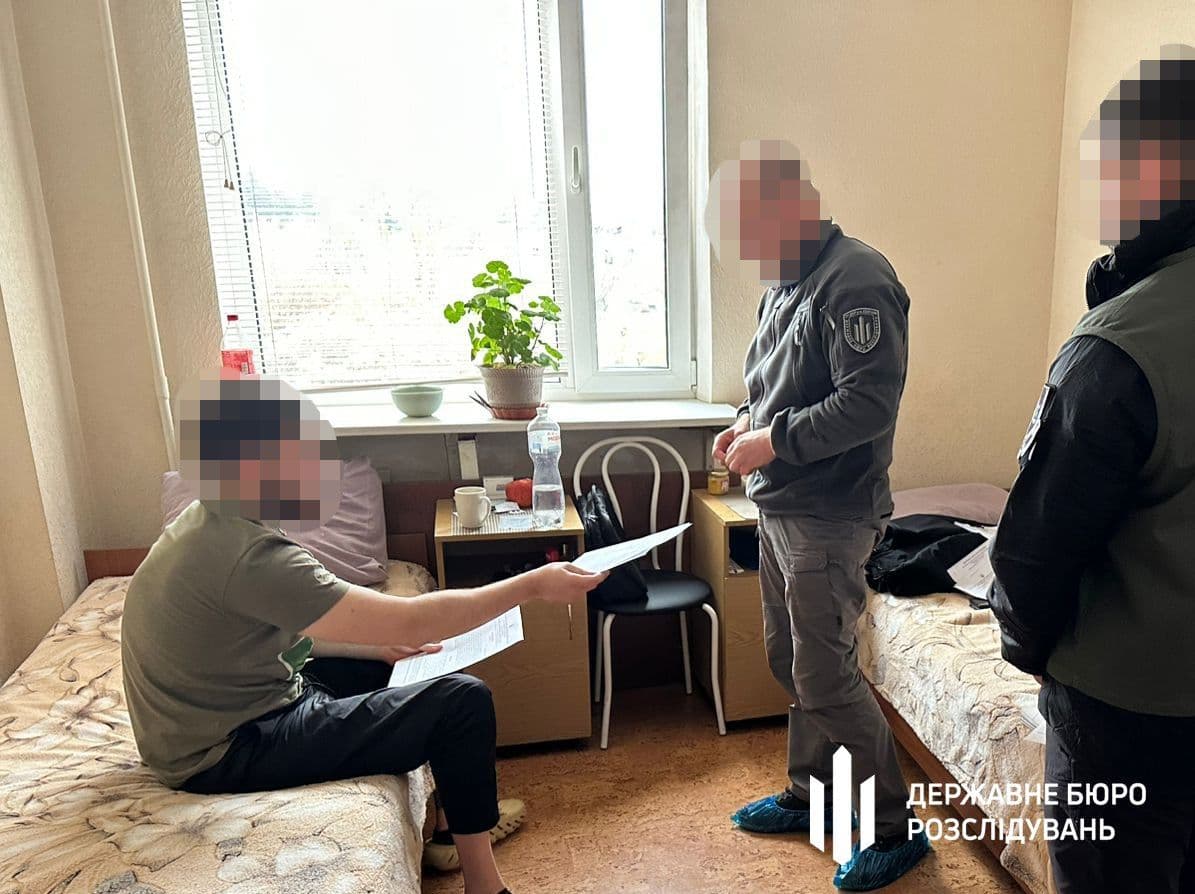
Accountability in war: This commander organized an award ceremony for over 100 soldiers despite standing orders against gatherings. Russia struck with drones and missiles. Twelve servicemen and seven civilians died. Now he faces eight years in prison. (Ukraine’s State Bureau of Investigation)
DRESSED AS CIVILIANS
The Russian soldiers removed their uniforms and put on civilian clothes. They moved through Pokrovsk’s streets carrying concealed weapons, looking like residents fleeing the fighting or trying to reach family. Ukrainian 7th Rapid Reaction Corps Spokesperson Serhiy Okishev confirmed what defenders suspected: Russian forces were using perfidy to penetrate toward the city’s northern outskirts.
Under the Geneva Conventions, this is a war crime. Armed combatants must distinguish themselves from civilians to maintain the legal protections both groups enjoy under international humanitarian law. Russian forces violating this principle endangered their own legal protections and Ukrainian civilians whom defenders would regard with increased suspicion when enemy soldiers might be hiding in civilian clothes.
Okishev stated Russian forces did not aim to establish a foothold within Pokrovsk itself but continued efforts to move through the town. Translation: they were trying to infiltrate past Ukrainian positions rather than fight for control of the city center. Ukrainian forces had partially restored logistics north of Pokrovsk and transported ammunition into the town—critical resupply that enabled continued defense.
The battle had become a microcosm of modern urban warfare’s complexity. Not front lines but interpenetrated zones. Not uniforms but disguises. Not conventional advances but infiltration missions. Ukrainian drones prevented Russian consolidation—any concentration of forces drew immediate strikes. Russian perfidy undermined civilian protections—defenders couldn’t distinguish between residents and infiltrators.
Both sides fought building-to-building while waiting for reinforcements and logistics to shift the balance. The war that started with mechanized columns racing across open terrain had evolved into something slower, messier, and more corrosive of the laws supposedly governing armed conflict.
Russian soldiers dressed as civilians were betting Ukrainian forces wouldn’t shoot people in civilian clothes. Ukrainian defenders were forced to treat every civilian with suspicion. The erosion of trust was the point. War crimes aren’t just violations of law—they’re attacks on the social fabric that enables civilian life to continue near combat zones.
In Pokrovsk, that fabric was tearing.
SHUFFLING THE DECK
Russian President Vladimir Putin signed the order on November 8. Colonel General Alexander Sanchik, who had commanded the Southern Military District for barely a year, would become Deputy Minister of Defense for Logistics. He replaced Colonel General Andrei Bulyga, who had lasted eight months in the position.
Eight months. In peacetime, that’s barely enough to understand the supply chains, let alone reform them. In wartime, it suggested either incompetence or impossible expectations. Probably both.
Sanchik’s resume showed battlefield commands, not logistics expertise. He’d led the 35th Combined Arms Army in the Eastern Military District from 2020 to 2023. Before that, deputy commander of the 58th Combined Arms Army in the Southern Military District from 2017 to 2020. He understood operations. He understood what front-line units needed. Whether he could fix the corrupt, inefficient system that failed to deliver those needs remained an open question.
A Kremlin-affiliated milblogger expressed cautious hope. Appointing a commander with a good reputation might spearhead fundamental changes, the blogger suggested. Sanchik’s experience in various command positions would help with supplies even though he lacked a logistics-focused background.
Reading between the lines: Russia’s military supply system remained broken nearly three years into full-scale war, and Putin was trying yet another personnel shuffle to fix systemic problems that couldn’t be solved by swapping generals.
No amount of tactical brilliance mattered if ammunition didn’t reach the guns. If fuel didn’t reach the tanks. If food didn’t reach the soldiers. Logistics determined whether armies advanced or stalled, whether offensives succeeded or collapsed, whether casualties could be evacuated or died waiting for transport.
Russia had launched 503 weapons at Ukraine in a single night. That required massive logistics—storing missiles, fueling aircraft, coordinating launches across multiple airbases. The strike capacity worked. But getting rations to conscripts in Pokrovsk trenches? Getting winter uniforms to soldiers freezing in dugouts? Getting replacement parts to broken vehicles?
That system was still failing. Putin was shuffling the deck again, hoping a field commander could succeed where a logistics specialist had failed.
UKRAINE STRIKES BACK
The explosion lit up the night sky in Novonikolaevskyi, Volgograd Oblast. Geolocated footage published November 8 showed the Balashovskaya Electric Substation burning—the facility that connected the Volga Hydroelectric Power Plant with central Russia. Volgograd Oblast Governor Andrey Bocharov claimed Ukrainian drone strikes left several residential areas without power.
In Belgorod Oblast, over 20,000 people woke to darkness. Governor Vyacheslav Gladkov reported an evening attack caused widespread blackouts in Belgorod city and Dubove village but no casualties. The Russian Telegram channel Shot reported Belgorod was attacked by multiple launch rocket systems and that debris from intercepted weapons struck a local thermal power plant.
In Korenevo, Kursk Oblast, an electrical substation blazed following a Ukrainian strike. Regional power outages spread. The number of affected consumers remained unclear.
The pattern was unmistakable. Russia destroyed Ukrainian power plants. Ukraine destroyed Russian power plants. Russia targeted substations. Ukraine targeted substations. Both nations were discovering that modern war’s decisive terrain was not captured cities but functioning power grids, that strategic victory required not just defeating enemy forces but collapsing enemy societies’ ability to function.
The mathematics favored Russia. Its energy system was vastly larger and more dispersed. Its population spread across eleven time zones made concentrated strikes less effective. Ukraine’s system was more compact, more vulnerable to systematic destruction. International support could rebuild Ukrainian infrastructure, but Russia could strike faster than reconstruction crews could work.
Yet Ukraine kept striking back. Partly for military effect—degrading Russia’s ability to power its war machine. Partly for psychological effect—demonstrating that Russian civilians would share the costs of Putin’s war. Partly because doing nothing meant accepting unilateral destruction while Russia’s home front remained untouched.
The energy war was mutual now. Both sides were learning the same lesson: in 21st century warfare, transformers and substations mattered as much as tanks and artillery. Control the power grid, control the ability to wage war.
The question was which nation could sustain infrastructure destruction longer. Russia with its size and resources, or Ukraine with its international backing and determination. The blackouts spreading across both countries suggested neither side had found the answer yet.
THE RAIL LINES GO DARK
The trains slowed, then stopped. Ukrainian railway operator Ukrzaliznytsia reported Russian strikes against railway infrastructure in Poltava Oblast resulted in multiple delays and disrupted power supply to several stations. Geolocated footage showed the damage: a key railway depot in Hrebinka struck—the junction connecting Kyiv and Poltava oblasts.
Passengers waited on platforms as delays rippled across the network. Troops scheduled for deployment sat in stations. Ammunition trains rerouted. Humanitarian aid convoys stalled. Medical evacuations postponed. One strike at one depot created cascading effects that spread through Ukraine’s entire logistics system like blood clots in an artery.
This was Russia’s intensifying campaign of battlefield air interdiction—systematic targeting of Ukraine’s intermediate rear area to degrade military mobility. Railways represented Ukraine’s circulatory system. Every delayed train meant delayed reinforcements. Every disrupted power line meant canceled routes. Every damaged depot created maintenance bottlenecks that accumulated over weeks.
The strategic calculus was brutal. Ukraine’s military mobility depended on functioning railways. Its economy depended on moving goods and people. Its civilian morale depended on maintaining connections between front-line regions and safer western areas. Russia was systematically attacking the infrastructure that enabled all of this, calculating that degrading logistics networks would eventually translate to front-line vulnerabilities as supplies failed to arrive and troops couldn’t redeploy to threatened sectors.
The challenge for Ukraine was defending infrastructure spread across thousands of kilometers. Air defenses concentrated around cities and critical facilities, but railway lines stretched through open country where interception was impossible. Every junction, depot, bridge, and power station became a potential target. Russia could choose when and where to strike, forcing Ukraine into reactive defense.
The only solution was rapid repair capacity—restoration crews who could fix damage faster than Russia could inflict it. As trains sat idle and stations lost power, Ukraine was testing whether its railway workers could win that race.
The war wasn’t just fought in trenches anymore. It was fought in railway depots where repair crews worked through the night, racing against the next strike.

Railway depot in Hrebinka, Poltava Oblast—hit. Trains delayed. Power stations dark. Russia is systematically destroying the arteries that move Ukraine’s troops, supplies, and civilians. Every strike ripples through the entire logistics network. (Ukraine’s State Emergency Service – Kyiv)
AROHA STANDS IN KYIV
The ambulance stood in Mykhailivska Square in central Kyiv, its white paint scorched, metal twisted from the drone strike. Aroha—”love” in Māori—was one of two New Zealand ambulances attacked by Russian drones in 2024. It no longer saved lives. Now it testified to the costs of saving lives.
Tenby Powell founded Kiwi Aid & Refugee Evacuation in May 2022 after watching the invasion unfold from his home in New Zealand. A former New Zealand Army officer, he did what soldiers do when they see a crisis: he organized a response. The charity operated entirely on private donations—no government funding, just New Zealanders and international contributors who believed Ukraine’s fight mattered.
The numbers told the story of three years operating in Red Zones near active combat. More than 650 humanitarian missions. Around 5,000 civilians evacuated. Thirty-seven ambulances and seven support vehicles delivered to medical units in Sumy, Kharkiv, Donetsk, and Kherson—the regions where Russian artillery and drones made rescue work lethal. All 38 decommissioned ambulances carried Māori names. Two had been attacked by Russian drones since June.
Powell’s team fabricated over 5,500 stoves and water boilers from recycled hot water cylinders, distributed to families and hospitals to heat homes through harsh winters. In 2023, they shipped three containers of medical aid including 1,000 hospital beds and 400 generators. As logistics networks developed, most aid was now sourced locally within Ukraine. “We do still ship ambulances from New Zealand and Australia as we can land a donated vehicle in Europe for about a third the price of a similar model,” Powell explained. “This is one of the many unseen inflationary impacts of Russia’s illegal aggression on its neighbor.”
Each stove and boiler carried a brass plaque engraved with a map of Middle Earth and the words “With Love From New Zealand.” The detail captured how Ukraine’s war had become a global cause—connecting people from opposite sides of the planet through simple acts of generosity.
Kiwi K.A.R.E. reported achieving humanitarian impact valued at $60 million since operations began. Powell emphasized humanitarian outreach strengthened international diplomacy by demonstrating commitment to global welfare and human rights while creating relationships that encouraged future collaboration.
The war neared its fourth year. Aroha stood damaged in Kyiv’s square, a reminder of both Russian war crimes and the volunteers who kept driving into danger anyway.
WHAT NOVEMBER 8 REVEALED
Two wars happened simultaneously. One measured in megawatts and thermal capacity. The other measured in whether populations could endure another winter without adequate power. Russia wasn’t trying to win territory anymore—it was trying to break Ukraine’s ability to function as a society. Ukraine wasn’t just defending cities—it was defending the infrastructure that made civilian life possible.
The asymmetry was becoming clear. Ukrainian air defenses achieved an 88 percent interception rate that would be celebrated in any previous conflict. But modern aerial warfare’s mathematics didn’t care about percentages. The remaining 12 percent plus ballistic missiles traveling too fast to intercept still devastated targets across multiple regions. Russia could afford to launch hundreds knowing most would be destroyed. Ukraine couldn’t afford to miss even once.
The restoration cycle revealed the war’s grinding nature. Engineers rebuilt. Russia destroyed. Engineers rebuilt again. Each iteration depleted Ukraine’s technical capacity, spare parts, and the morale of workers who knew their accomplishments might last only weeks. Russia retained first-strike advantage—choosing when and where to attack from positions Ukrainian weapons couldn’t reliably reach. International support enabled reconstruction, but Russia could strike faster than crews could rebuild.
Yet the vulnerability was mutual now. Ukrainian strikes left 20,000 Russians without power. The scale couldn’t match Russia’s devastation, but geography no longer protected Russian infrastructure. As Ukrainian capabilities matured, every refinery and substation hundreds of kilometers inside Russia became a potential target. Both nations were learning that 21st century warfare made transformers and substations as strategically significant as tanks and artillery.
The nuclear dimension elevated infrastructure strikes from war crimes to civilizational gambling. Substations powering the Khmelnytskyi and Rivne plants had been targeted—not the reactors themselves, but the systems supplying them. Both plants remained operational, but nearby strikes created vulnerabilities that could cascade into emergencies if power failed at critical moments. Russia was betting that attacks near nuclear facilities wouldn’t trigger meltdowns. It was a wager the world should never have been forced to accept.
The accountability story added tension between military tradition and technological warfare. How do armies maintain morale through ceremony when any gathering creates a target? How do commanders balance human needs for recognition against surveillance capabilities that make concentration fatal? The charges against the battalion commander wouldn’t resolve that tension—they would just force other commanders to navigate it.
The broader pattern was exhaustion approaching from multiple directions. Not the exhaustion of armies unable to fight, but the exhaustion of systems unable to sustain current operational tempos indefinitely. Russian logistics needed another reorganization. Ukrainian power grids needed yet another restoration cycle. Both populations needed to endure another winter under threat. Something would eventually break—supply chains, restoration capacity, civilian endurance, international support, political will. The uncertainty was what would break first and when.
Day 1,354. Russia racing to destroy Ukraine’s infrastructure before winter. Ukraine racing to rebuild before the cold arrived. Both sides targeting the other’s energy systems. Civilians dying in the crossfire. The parallel realities persisted. And nobody knew which one would ultimately determine the war’s outcome.

Belgorod burns: Ukrainian forces retaliate against Russia’s energy infrastructure, leaving over 20,000 people without power. Russia strikes Ukraine’s grid to freeze civilians. Ukraine strikes back to show the war cuts both ways. (Shot / Telegram)