
While Ukrainian rescuers pulled children’s bodies from Ternopil’s rubble, diplomats in distant capitals bargained over Ukraine’s future—without Ukraine in the room.
Today’s report is longer than usual. November 21, 2025, was a day when history threatened to repeat itself—when great powers drafted terms to force a smaller nation’s surrender, just as they did in Munich in 1938. What happened on this day affects not just Ukraine but the entire free world. Please read to the end. This matters.
The Day’s Reckoning
History has a way of repeating itself, and on this gray November day, the echoes of 1938 rang clear across Europe. In back rooms and encrypted channels, envoys from Washington and Moscow had been drafting Ukraine’s fate—28 points that read less like a peace plan and more like terms of surrender. No Ukrainian diplomats sat at that table. No European allies were consulted. Just two powers, deciding the future of a nation that has bled for its independence for nearly four years.
The parallels were impossible to ignore. In September 1938, British Prime Minister Neville Chamberlain and French Premier Édouard Daladier sat down with Adolf Hitler and Benito Mussolini in Munich. They carved up Czechoslovakia, handing Hitler the Sudetenland on a silver platter, all without Czech representatives in the room. “Peace in our time,” Chamberlain declared upon his return to London. Within six months, Hitler had swallowed the rest of Czechoslovakia whole. Appeasement hadn’t bought peace—it had merely fed the appetite for conquest.
Or consider another betrayal, one that never happened but might have changed history: imagine if France, after years of supporting the American colonies in their fight for independence, had secretly negotiated with Britain to force the colonists into submission. Imagine if French envoys and British officials had drafted terms requiring George Washington to surrender territory, disband most of his army, and accept continued British sovereignty—and then threatened to withdraw all aid and even support Britain if the colonies refused. That betrayal would have strangled American independence in its cradle.
This was Ukraine’s reality on November 21, 2025. President Volodymyr Zelensky stood in rain-soaked Kyiv, his face drawn, his words measured but unmistakable: “Either the difficult 28 points, or an extremely harsh winter. A life without freedom, without dignity, without justice.” The choice America was forcing on Ukraine was no choice at all—capitulate or fight alone.
And while diplomats argued over maps and clauses, the war continued its brutal arithmetic. In Ternopil, rescuers worked through their third day of searching rubble for bodies. Thirty-two confirmed dead, including six children. Among them: seven-year-old Amelia, a Polish girl who died in her mother’s arms as flames consumed their apartment. Across thirteen oblasts, Russian drones and missiles had killed at least eight and wounded twenty-nine in the past day alone.
The day laid bare a terrible truth: while Ukraine fought for survival, its supposed allies were negotiating its surrender. The front lines stretched from Kharkiv to Kherson, but the most dangerous battlefield had become the diplomatic arena, where America and Russia were crafting a peace that looked suspiciously like defeat.
The Secret Drafting: When Envoys Became Executioners
The plan had been taking shape for weeks in meetings so secret even Ukraine’s government didn’t know the details. Steve Witkoff, Donald Trump’s special envoy to Russia, had been meeting with Kirill Dmitriev, head of Russia’s Direct Investment Fund and Putin’s personal negotiator. Neither were traditional diplomats—Witkoff was a real estate mogul, Dmitriev a banker. But they shared Trump’s fondness for deal-making, for cutting through bureaucratic nonsense to get things done quickly.
What they produced was extraordinary in its audacity and chilling in its implications. The 28-point plan wasn’t a framework for negotiation—it was a roadmap for Ukraine’s dismemberment dressed up as peace.
The terms read like a wish list written in the Kremlin. Ukraine would withdraw from all of Donetsk Oblast it currently controlled—territory defended street by street for nearly four years. The Ukrainian military would be capped at 600,000 troops, barely enough to defend what remained. Ukraine would enshrine in its constitution that it would never join NATO. And perhaps most cynically: “full amnesty for actions during the war”—no accountability for Bucha, for Mariupol, for thousands of kidnapped Ukrainian children.
The document even bore linguistic traces of its origins. Phrases like “it is expected” sounded awkward in English but flowed naturally in Russian. Referring to occupied territories as “the new territory” was distinctly Kremlin phrasing. Parts appeared to have been written in Russian first.
The timeline was brutal: Ukraine had until Thursday, November 27—Thanksgiving Day—to accept or face consequences. Reuters reported Washington was threatening to cut arms shipments and intelligence sharing if Kyiv refused. “They want to stop the war and want Ukraine to pay the price,” one source said bluntly.
It was Munich redux. Czechoslovakia had been given a choice in 1938: accept dismemberment or face Germany alone. Now Ukraine faced the same devil’s bargain—accept these terms or watch American support evaporate, leaving them to face Russia’s war machine without the weapons that had kept them alive.
The plan even included a security guarantee—but one expiring after ten years, conveniently giving Russia time to rebuild and try again. It was peace designed not to end the war but to pause it long enough for Moscow to reload.
What made the betrayal complete was the secrecy. Ukraine learned the plan’s details not from allies but from leaks to the press. European leaders were blindsided. This wasn’t alliance management—it was two great powers deciding a smaller nation’s fate without including them in the conversation.
Ukraine’s Response: The Speech That Echoed Across Continents
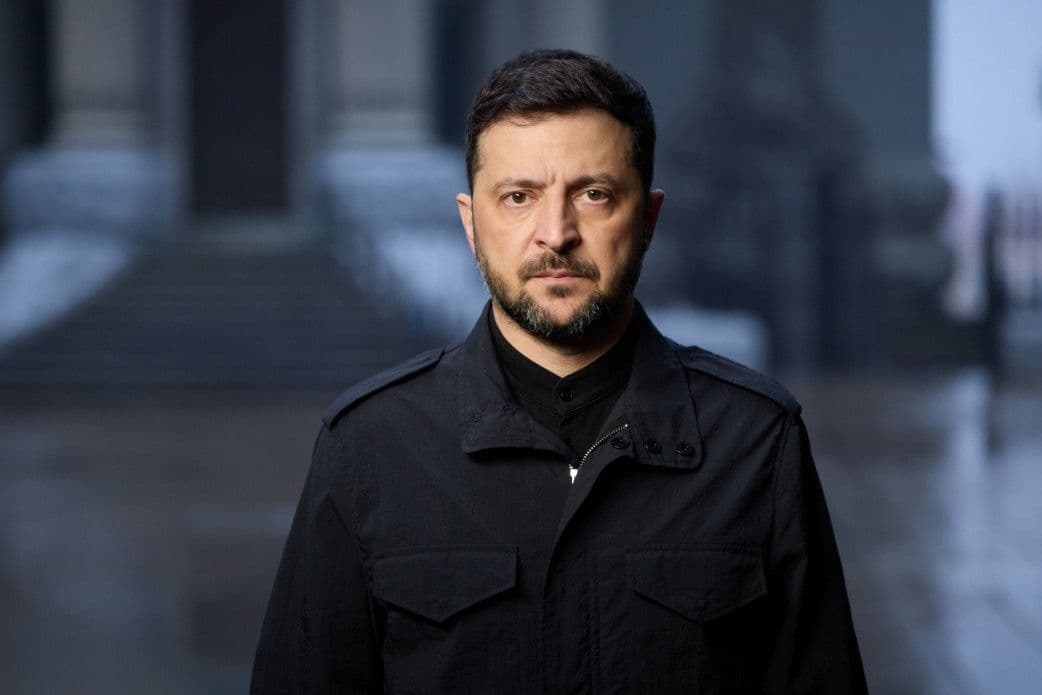
The rain fell hard on Kyiv that evening as President Volodymyr Zelensky appeared on screen, his face illuminated by harsh light, speaking with gravity that made clear history might turn on this moment.
“We are facing one of the toughest moments in our history,” he began, voice weighted with exhaustion. “Ukraine may soon face an extremely difficult choice. Either the loss of dignity or the risk of losing a key partner. Either 28 complicated points or the hardest winter yet—and the risks that follow.”
Everyone watching knew what he meant. The leaked peace plan had Ukrainian social media exploding with outrage. Zelensky was speaking to a nation that felt betrayed by the ally it had counted on most.
“A life without freedom, without dignity, without justice,” he continued. “And to trust someone who has already attacked us twice.” Why would anyone believe Putin would honor a peace deal after invading in 2014 and again in 2022?
Zelensky invoked his presidential oath from 2019, before the war changed everything. “Every day, every word of that vow I uphold. I will never betray it.” But he was walking a tightrope—rejecting the plan risked Trump’s wrath and aid cutoffs. Accepting it meant betraying everything Ukraine had fought for. So he threaded the needle: “We will work in the diplomatic arena for our peace. We must act united inside Ukraine—for our peace, our dignity, our freedom.”
Ukrainian lawmakers were less diplomatic. Inna Sovsun declared bluntly: “The price for keeping dialogue with the U.S. cannot be the sovereignty of Ukraine.” Veterans were scathing. Liubomyr Dmytryshyn, 24, said: “I fought in Donetsk Oblast not to hand it over to Russia without a fight.” Former Azov commander Bohdan Krotevych warned that limiting Ukraine’s military to 600,000 troops ensured future Russian victory: “Only our own army can protect us.”
Several lawmakers warned that accepting the plan could trigger domestic unrest. The war had forged Ukrainian identity in fire—forcing surrender now might break the country from within.
Zelensky ended with a call both defiant and desperate: “Stand with Ukraine, stand with our people.” It was aimed at Ukrainians, but also at Europe, at anyone who still believed that capitulation to aggression was disaster, not peace.
Russia’s Response: The Predator Smells Weakness
Vladimir Putin wore a military uniform when he visited the command post of Russia’s Western Grouping of Forces on November 20—only the fourth time he’d donned combat dress since the invasion began. As the world debated the 28-point peace plan, Putin wanted to send a message: Russia would take what it wanted by force if diplomacy didn’t deliver.
When he addressed the plan publicly on November 21, during a Security Council meeting, Putin’s words dripped with contempt barely disguised as diplomatic language. Yes, Russia had received the plan. Yes, it “could form the basis” of a final settlement. But it required “substantive discussion” and “necessary compromises.”
Translation: Russia wanted more.
Putin framed the 28 points as merely a “modernized version” of the Alaska summit discussions, claiming Ukraine had rejected the earlier plan. It was a masterful performance of false reasonableness—positioning Russia as the patient partner and Ukraine as the stubborn obstacle. Never mind that Russia was the aggressor committing daily war crimes.
Kremlin spokesman Dmitry Peskov reinforced the message: Russia preferred to negotiate bilateral issues with the United States separately, contradicting Trump’s stated goal of a comprehensive deal. Russia’s demands remained maximalist: full control of four oblasts including territories Russia didn’t occupy, no NATO expansion, regime change in Kyiv. In essence: Ukraine must cease to exist as a sovereign, Western-aligned nation.
Russian officials were explicit in their contempt. Duma Defense Committee Chair Andrei Kartapolov declared “a peace plan is not in Russia’s interests, given Russian advances.” Deputy Chairperson Alexei Zhuravlev insisted “the war can only end with Russia’s unequivocal victory on the front and Ukraine’s capitulation.”
Putin made this clear in his Security Council remarks: “We are open to achieving peace through diplomatic means, but we are happy to continue pursuing our war goals militarily.” Chief of Staff Valery Gerasimov declared Russian forces would continue seizing all of Luhansk, Donetsk, Zaporizhzhia, and Kherson oblasts “in accordance with existing plans.”
Then came the threat: “If Kyiv refuses President Trump’s proposals, then both they and the European warmongers should understand that the events at Kupyansk will inevitably be repeated in other key areas.”
Kupyansk—a city Russia had just falsely claimed to capture. Putin didn’t care about accuracy. He cared about the message: reject this plan, and we’ll take what we want by force.
The predator had smelled weakness. Putin understood Trump desperately wanted a deal. He understood Europe was divided. And he understood Ukraine, exhausted and pressured, might accept terms unthinkable a year ago.
So Putin waited, patient and confident. Why compromise when capitulation might be just months away?
Europe’s Rebellion: The Allies Who Refused to Forget
The phone call on November 21 was hastily arranged but carried enormous weight. German Chancellor Friedrich Merz, French President Emmanuel Macron, British Prime Minister Keir Starmer, and Ukrainian President Volodymyr Zelensky spoke for over an hour, coordinating a unified rejection of key elements of the American-Russian plan.
The statement that followed was diplomatic but unmistakable. The leaders offered “full and unwavering support” for Ukraine and declared “the current line of contact should serve as the starting point for any understanding.” Translation: no, Ukraine should not withdraw from Donetsk Oblast. Current front lines—not fantasy maps drawn in Moscow—should be the baseline.
Crucially, they added: “Any agreement affecting European states, the European Union, or NATO requires the approval of European partners or a consensus among allied nations.” Translation: America doesn’t get to redraw Europe’s security architecture without consulting Europe.
The call had been convened by Merz, who understood the historical echoes. Germany had been present at Munich in 1938. Now Germany had a chance at redemption—to stand with the victim rather than enable the aggressor.
Kaja Kallas, the EU’s top diplomat and former Estonian prime minister, had been even more direct: “The pressure must be on the aggressor, not on the victim. Rewarding aggression will only invite more of it.” Estonia had been carved up by the Molotov-Ribbentrop Pact in 1939. Estonians understood what happened when great powers bargained over small nations.
Estonian MP Marko Mihkelson was blunt: “The direct talks between the US and Russia cannot in principle lead to a JUST peace in Europe. The result would be a partial or complete surrender by Ukraine. We cannot and must not accept capitulation to Russian aggression. Negotiations with war criminals do not lead to peace.”
The European response demonstrated something crucial: the continent had learned from 1938. Chamberlain’s generation believed appeasing Hitler would preserve peace. Their children learned otherwise. Appeasement didn’t satisfy aggression—it fed it. The Sudetenland didn’t satisfy Hitler; it made him hungry for Prague.
If Putin got Donetsk, Zaporizhzhia, Kherson, and Luhansk without a fight, why would he stop there? Moldova was already in his sights. The Baltics would be next. Appeasing Russia in Ukraine wasn’t a path to peace—it was an invitation to the next war.
Europe was saying: not again. Not on our watch. Not this time.
The Corruption Angle: Selling Out Ukraine to Save His Own Skin
While soldiers died defending Pokrovsk and children burned in Ternopil, Rustem Umerov—Ukraine’s National Security and Defense Council Secretary and former Defense Minister—was busy saving himself.
The betrayal was simple and devastating. The original U.S.-Russia peace plan draft included “an audit of all international aid to Ukraine.” That audit would have examined every defense contract, every payment, every deal made during Umerov’s time as Defense Minister. It would have exposed everything.
So Umerov changed it.
According to the Wall Street Journal, citing a senior U.S. official, Ukraine successfully replaced the audit clause with “full amnesty for actions during the war” for all parties. Officially, this was sold as necessary to end hostilities—forgiving Russian war crimes and Ukrainian wartime decisions alike. But the real reason was simpler: Umerov was protecting himself.
He needed protection because he’s implicated in Ukraine’s largest corruption scandal. The National Anti-Corruption Bureau charged eight suspects in a scheme involving kickbacks at Energoatom, Ukraine’s state nuclear power company. Timur Mindich, one of Zelensky’s closest associates, allegedly ran the operation. But the charges explicitly state Mindich committed crimes by “unlawfully influencing” both Energy Minister Halushchenko and “Defense Minister Umerov.”
NABU wiretaps caught suspects discussing how to divide kickbacks “by three: you, me, and Professor”—Professor being Halushchenko’s code name. Other recordings captured Mindich in conversation with Halushchenko, discussing their schemes.
Umerov denied everything when confronted on November 21. But a senior U.S. official directly contradicted him, telling the Kyiv Independent: “This plan was drawn up immediately following discussions with Rustem Umerov, who agreed to the majority of the plan, after making several modifications, and presented it to President Zelensky.”
The modifications saved Umerov from prosecution. But they also gave Russia amnesty for Bucha, for Mariupol, for Ternopil, for every child killed and every war crime committed.
Umerov had been on a “business trip” abroad while the scandal exploded. He returned on November 20—apparently after negotiating the terms that would keep him out of prison.
So, while Ukrainian soldiers fought to save their country, Umerov manipulated peace negotiations to save himself. He sold out Ukraine’s demand for justice. He gave war criminals a pass. And he did it all to avoid accountability for stealing from the nation he’d sworn to defend.
In trying to save his skin, Umerov helped doom his country.
Ternopil’s Agony: The Third Day of Digging Through Rubble
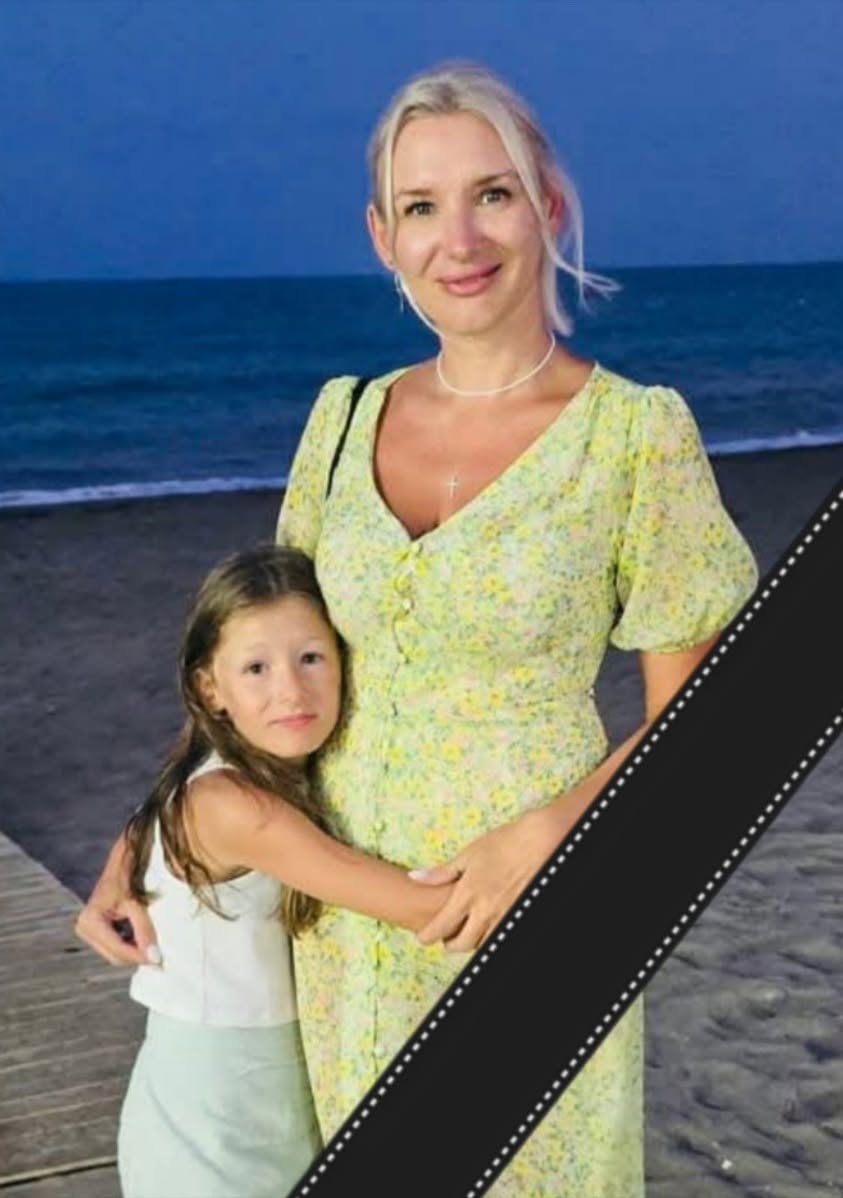 On the third day, they found Amelia.
She was seven years old. Polish by citizenship, Ukrainian by residence, human by the measure that should have mattered most. Rescuers pulled her body from the rubble of the apartment building in Ternopil, still in her mother’s embrace. They had died together as fire consumed their home; the flames so intense that neither had a chance to escape.
Oksana, Amelia’s mother, had tried to save her. In those final moments, as the Kh-101 cruise missile’s impact shook the building and fire raced through the structure, she had wrapped her arms around her daughter. That was how rescuers found them—embracing, protecting, dying together.
Ternopil Secondary School No. 27, where Amelia attended second grade, released a statement that captured the intimate horror of her death: “Amelia and her mother burned alive, embracing each other as flames swallowed their apartment. Our entire school family mourns the irreparable loss: Amelia, a bright girl, a little Angel, will never again sit at her desk, hug her classmates, or warm them with her bright gaze.”
The death toll had climbed to thirty-two. Six of them were children. Ninety-four people were injured, eighteen of them children. Sixteen people remained missing, buried somewhere in the 638 tons of debris that rescue workers had so far removed from the site.
The attack had come overnight on November 19, part of a massive Russian assault involving 48 missiles and more than 470 drones. Two high-rise buildings in Ternopil were hit. In one, damage extended from the third to the ninth floor. In the other, fire swept through dozens of apartments from bottom to top.
Residents had tried to leap from upper-floor windows to escape the flames. Some made it. Many didn’t. Interior Minister Ihor Klymenko described walking between “burnt walls” and feeling “terrible. In each apartment—a whole life that Russia destroyed in an instant.”
One hundred eighty-one rescue personnel and 52 pieces of equipment were working around the clock. They dug by hand where machinery couldn’t reach. They called out for survivors, knowing each hour that passed made survival less likely. They documented each body they found, trying to preserve dignity even in death.
Ternopil declared November 19-21 as days of mourning. On November 20, during a nationwide minute of silence, residents poured into the streets holding posters: “Remember.” “Adults and children.” “11/19.” They left fields of candles, flowers, and teddy bears at a makeshift memorial.
This was what the 28-point peace plan proposed to forgive. “Full amnesty for actions during the war” would mean no accountability for Ternopil, no justice for Amelia and Oksana, no punishment for the pilots who launched missiles at residential buildings 500 kilometers from any military target.
Amelia’s death personalized the war in a way that thousands of casualty statistics could not. She was not a soldier. She was not a militant. She was a second-grader who should have been worried about homework and friendships, not about whether a Russian cruise missile would turn her apartment into a crematorium.
Poland called it what it was: a Polish child had been “murdered” by Russia. Not killed in combat. Not a casualty of war. Murdered.
As rescuers continued their grim work on November 21, the juxtaposition became unbearable. In Kyiv, diplomats debated the fine points of a peace plan. In Ternopil, workers dug through rubble looking for a seven-year-old girl’s body. In Washington and Moscow, envoys talked about timelines and deadlines. In a schoolroom in western Ukraine, Amelia’s desk sat empty.
The war was not an abstraction. It was not a geopolitical chess match. It was Amelia and her mother, embracing as flames consumed them. And any peace plan that forgave the people responsible was not peace—it was surrender dressed up with diplomatic language.
Pokrovsk: Where Ukraine Still Holds the Line
While diplomats bargained and Russia made grandiose claims, the real war continued in the muddy streets of Pokrovsk. And there, despite everything, Ukrainian forces were not just holding—they were pushing back.
Geolocated footage showed Ukrainian forces advancing in multiple locations around the embattled city. South of Rodynske, along the T-0515 highway, Ukrainian troops reclaimed ground they had previously ceded. Northeast of Myrnohrad, another advance was documented. These weren’t massive breakthroughs, but they proved momentum hadn’t entirely shifted to Russia.
The Ukrainian 7th Rapid Reaction Corps reported that forces maintained “defined lines in northern Pokrovsk” and still controlled “positions south of the Donetska Railway line”—a critical artery Russian forces had been trying desperately to cross. Russian troops attempted to breach the railway line but were stopped cold. Ukrainian defenders held.
Inside Pokrovsk, the situation remained fluid and brutal. Russian forces infiltrated parts of the city but couldn’t establish control. Ukrainian troops conducted clearing operations in Myrnohrad, hunting down Russian infantry that had slipped through. Small Russian groups that tried to infiltrate Hryshyne were “eliminated” before they could establish positions.
Russia had committed 150,000 troops to taking Pokrovsk—naval brigades, mechanized divisions, wave after wave of infantry. They’d dropped FAB-1500 and FAB-3000 glide bombs on anything that moved. The elite Rubikon drone warfare unit had deployed with unlimited drones and highly trained operators.
Yet Pokrovsk held. For months, Ukrainian soldiers had died defending this city—died holding bunkers, died in drone strikes, died clearing Russian infiltrators from apartment buildings. Russia had advanced meter by meter through mountains of Ukrainian and Russian corpses alike. Ukrainian forces traded space for time, withdrawing from indefensible positions while maintaining coherent defensive lines. The city had become a meat grinder consuming both sides at catastrophic rates.
Russian milbloggers acknowledged Ukrainian forces maintained significant presence within Pokrovsk and surrounding areas. The narrative of imminent Russian victory didn’t match reality on the ground.
And now—after all those deaths, after all that blood—the 28-point peace plan would require Ukraine to simply hand Pokrovsk over. The plan demanded Ukrainian withdrawal from all of Donetsk Oblast, including every meter Ukrainian soldiers had defended through months of brutal combat. Every bunker they’d died defending. Every street corner they’d held against impossible odds. Russia would get through diplomacy what it couldn’t take by force. And the soldiers who died defending Pokrovsk would have died for nothing—their sacrifice erased by signatures on a document drafted in distant capitals.
In Washington and Moscow, diplomats drew lines on maps. In Pokrovsk, soldiers drew lines in blood and mud. The two types of lines rarely matched.
Crimea Burning: Ukraine Strikes Back at the Source
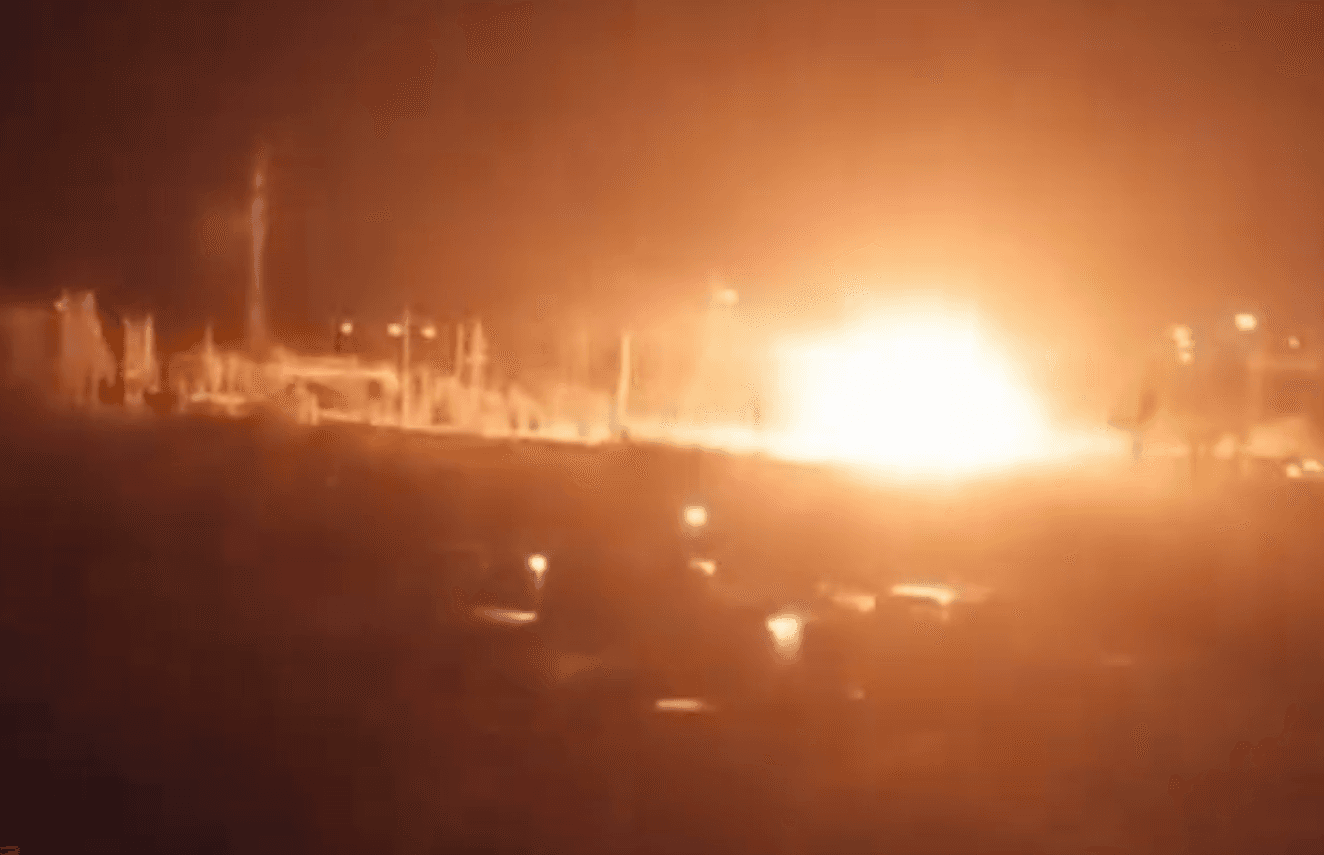
While Russian missiles killed children in Ternopil, Ukrainian forces reached deep into occupied Crimea and reminded Moscow that this war had two sides. On the night of November 20-21, Ukraine’s Main Military Intelligence Directorate (HUR) struck the infrastructure Russia used to sustain its air war against Ukrainian cities.
HUR released video footage showing successful strikes on multiple high-value targets across occupied Crimea. A Ka-27 multifunctional naval helicopter—costing tens of millions of dollars—was destroyed, degrading Russia’s Black Sea Fleet capability. More significantly, Ukraine struck multiple radar systems forming the backbone of Russia’s air defense network: the Lira-A10 airfield radar, the 55Zh6U “Nebo-U” radar station, the “Nebo-SV” radar in its distinctive dome, and the P-18 “Terek” radar station.
Destroying these radars created gaps in Russia’s ability to detect and track incoming Ukrainian drones and missiles. Taking them offline forced Russia to either accept blind spots or redeploy radars from other locations, creating vulnerabilities elsewhere.
Later that night, Ukrainian drones targeted the Yany Kapu electric substation in northern Crimea. Cutting power to military installations degraded Russia’s ability to operate radar systems, command centers, and critical infrastructure.
The strikes served multiple purposes. Tactically, they degraded Russia’s ability to launch air attacks against Ukraine. Strategically, they demonstrated that Ukraine retained offensive capability despite pressure to accept a peace deal that would severely limit its military. And psychologically, they sent a message to Putin: Ukraine was not defeated, not demoralized, not ready to surrender.
The timing was not coincidental. As Trump and Witkoff pushed Ukraine to accept the 28-point plan, Ukrainian forces were proving they could still hurt Russia. The strikes were a form of negotiation conducted not with words but with explosives. They said: We are not weak. We are not broken. And any peace you force on us will be temporary because we will never stop fighting for our territory.
The operations also highlighted what Ukraine stood to lose if it accepted the peace plan’s military restrictions—limiting forces to 600,000 troops and restricting weaponry. Would that include the drones that struck Crimea? Russia would never agree to equivalent restrictions. The Kremlin would maintain its massive military while Ukraine accepted permanent military inferiority—guaranteed to lose any future conflict.
That’s why Ukrainian commanders continued strikes even as pressure mounted. Every successful operation demonstrated capability and resolve. Every destroyed radar or helicopter made clear that Ukraine was not a defeated nation begging for terms but a combatant capable of inflicting serious damage on its aggressor.
Crimea had been Russia’s great prize in 2014. For ten years, Russia treated it as conquered territory, building military infrastructure and using the peninsula as a platform for further aggression.
Now that infrastructure was burning. And every explosion in Crimea reminded Putin that conquest has costs, that holding territory requires defending it, and that Ukraine would never stop trying to reclaim what was stolen.
The Wider War: Across a Thousand-Kilometer Front
While Pokrovsk and the peace plan dominated headlines, the war ground on across a thousand-kilometer front. In Kupyansk, Siversk, and a dozen other cities, soldiers fought and died in battles that would never make the news.
Kupyansk had become a case study in Russian propaganda versus reality. Putin himself declared that Russian forces had seized the city. Chief of the General Staff Valery Gerasimov backed the claim. The Russian Ministry of Defense issued triumphant statements.
And then reality intruded. Ukrainian forces denied the claims outright, reporting they were “detecting and eliminating Russian sabotage groups that infiltrated the town.” About 40 Russian soldiers were scattered across northern Kupyansk—infiltrators, not occupiers. Even Kremlin-affiliated Russian milbloggers admitted there was “no evidence of Russian control.”
The pattern had become familiar: small Russian groups would sneak into contested areas, raise flags, film videos, then retreat or be destroyed before Ukrainian counter-attacks.
Putin used Kupyansk as a threat in his peace plan remarks: “The events at Kupyansk will inevitably be repeated in other key areas” if Ukraine rejected the 28 points. But the threat rang hollow when Kupyansk itself remained contested and Russian “control” was fictional.
Elsewhere, Russian forces exploited fog and rain to launch assaults, taking advantage of weather that degraded Ukrainian drone effectiveness. But weather advantages were temporary. Once visibility improved and Ukrainian drones returned to the skies, Russian assault groups became targets again. Advances made in fog evaporated in sunshine.
Around other cities, the same pattern repeated. Russia seized small villages after days of grinding combat—advancing at walking pace and catastrophic cost. Ukrainian forces conducted tactical withdrawals from some positions, preserving their forces rather than dying in indefensible positions. But each withdrawal fed Russian propaganda about momentum and inevitable victory.
What none of the front-line reports captured was the exhaustion. Ukrainian forces had been fighting for nearly four years—first in Donbas since 2014, then across the entire country since February 2022. Equipment wore out faster than it could be replaced. Ammunition stocks dwindled. Western aid continued but never quite matched promises.
Russian forces faced catastrophic casualties, equipment shortages, declining morale—but they had depth Ukraine couldn’t match. Russia’s population was three times larger. Its industrial base could still produce artillery shells and drones. Putin could afford to spend lives in ways no democratic leader could.
So the war continued its grim arithmetic: Russia advancing slowly at enormous cost, Ukraine defending stubbornly while bleeding resources, both sides locked in a struggle that neither could win decisively but neither would abandon.
The 28-point peace plan proposed to freeze these battle lines in place. But frozen conflicts had a way of thawing. Georgia’s frozen conflict with Russia remained frozen for years—until 2008, when Russia invaded again. Moldova’s frozen conflict in Transnistria has lasted three decades with no resolution. Cyprus has been divided since 1974.
Freezing the conflict in Ukraine wouldn’t bring peace. It would give Russia time to rebuild its military, consolidate control over occupied territories, and prepare for the next phase of conquest. Ukrainian soldiers fighting across the front understood this instinctively. That’s why they kept fighting despite exhaustion, despite pressure for peace, despite the temptation to just stop and rest.
Because rest would be temporary. And the next war would be worse.
What November 21 Revealed
History repeated itself on November 21, 2025. In conference rooms and encrypted messages, envoys from Washington and Moscow drafted terms for Ukraine’s partial surrender without Ukraine in the room. They called it a peace plan. But stripped of euphemism, the 28 points read like an armistice dictated to a defeated nation—except Ukraine hadn’t been defeated.
The historical parallel to Munich 1938 was unavoidable. Like Czechoslovakia, Ukraine found itself abandoned by the alliance system it had counted on. Like Czechoslovakia, Ukraine discovered that when great powers want to make a deal, small nations become bargaining chips. Promises of “peace in our time” meant “your time is up.”
Hitler didn’t stop at the Sudetenland; he took Prague six months later. Then Poland. Then France. Each compromise fed the appetite for more. World War II could have been prevented if France and Britain had stood firm in 1938. Instead, they chose appeasement—and bought a brief peace at the cost of millions of lives.
Putin has already shown the pattern. Crimea in 2014. Escalation in Donbas. Full invasion in 2022. And now, not defeated, he was being offered another prize: recognition of his conquests, lifting of sanctions, Ukrainian military limitations, and time to rebuild for the next war.
But there was another betrayal—older and more bitter. In 1994, Ukraine signed the Budapest Memorandum. In exchange for giving up the world’s third-largest nuclear arsenal, Ukraine received security assurances from the United States, the United Kingdom, and Russia. The memorandum promised to respect Ukraine’s sovereignty and territorial integrity. It promised that if Ukraine faced aggression, the guarantor nations would act.
Ukraine kept its promise. It surrendered 1,900 strategic nuclear warheads, 176 intercontinental ballistic missiles, 44 strategic bombers. It made itself vulnerable, trusting that the guarantees would hold.
Russia broke the memorandum in 2014 when it seized Crimea. And now, thirty years later, one of the guarantor nations—the United States—was secretly negotiating Ukraine’s dismemberment with the aggressor. The very nation that had promised to protect Ukraine’s sovereignty was drafting terms that would erase it.
This was the ultimate lesson of November 21: written guarantees from great powers are worthless when inconvenient. Treaties can be ignored. Promises can be abandoned. And nations that give up their weapons in exchange for paper guarantees learn too late that sovereignty cannot be defended with signatures.
Europe’s resistance offered some hope. Germany, France, and Britain stood with Ukraine, rejecting key elements of the American-Russian plan. Europe had learned from Munich—perhaps better than America had.
Yet despite the betrayal, despite the pressure, despite the exhaustion, Ukrainian forces still fought. In Pokrovsk, in Crimea, across a dozen fronts, soldiers continued defending their country. They fought not because victory seemed imminent but because surrender was unthinkable.
Amelia’s death in Ternopil crystallized the stakes. She was seven years old. She died embracing her mother as fire consumed them. The 28-point peace plan proposed to forgive that murder in the name of reconciliation. Every Ukrainian family with lost loved ones faced the same obscenity: accept amnesty for your child’s killers, or lose American support.
As darkness fell on November 21, rescuers in Ternopil continued pulling bodies from rubble. Soldiers in Pokrovsk maintained their defensive lines. Drones flew toward targets in Crimea. And ordinary Ukrainians tried to survive another day of a war that had consumed their country for nearly four years.
The 28-point peace plan sat on desks in Kyiv, Washington, Moscow, London, Paris, and Berlin. It promised an end to the war. It offered security guarantees and pathways to reconstruction.
But Ukraine had heard those promises before. In 1994, they were called the Budapest Memorandum. And history was teaching them again: guarantees from great powers mean nothing when those powers find it convenient to forget.
History would judge whether the world learned from 1938 or repeated it. November 21, 2025, suggested the lesson remained unlearned.