
While negotiators convened in Geneva’s conference rooms, Ukrainian drones turned a Moscow power plant into a pillar of flame—and the contradiction defined the war’s impossible equation.
The Day’s Reckoning
Picture the contradiction: in a Swiss ballroom overlooking Lake Geneva, diplomats debated ceasefires and territorial concessions. Two thousand kilometers east, the Shatura Thermal Power Plant erupted into flame, its explosion visible across Moscow Oblast. One Ukrainian projectile. One flash. Then fire climbing into the Russian sky.
November 23, 2025, was the day diplomacy returned—and the day Ukraine reminded everyone why it still held leverage. While Trump administration officials pressed Kyiv to accept a 28-point peace plan demanding capitulation, Ukrainian forces demonstrated reach that couldn’t be negotiated away: strikes deep into Russia’s heartland, soldiers clearing Russian infiltrators from Pokrovsk’s ruins block by bloody block.
The paradox was brutal. Washington set a November 27 deadline for Ukraine to accept terms that would cede Donbas, cap its military at 600,000 troops, and abandon NATO membership. Russia welcomed the proposal. But on the ground, Russian forces were still dying in Pokrovsk, still failing to break through Zaporizhzhia, still watching their infrastructure burn. Europe arrived in Geneva with a counterproposal rejecting nearly everything Moscow demanded.
It was the war’s central truth again: neither side could dictate terms because neither was winning. Russia advanced meters at catastrophic cost. Ukraine struck deep but couldn’t reclaim territory. Between those realities, diplomats spoke of deadlines meaningless to soldiers defending Pokrovsk or partisans sabotaging trains in Rostov.
By nightfall, Geneva produced joint statements about “productive dialogue.” Shatura still burned. And Ukrainian families listened to air raid sirens while distant politicians debated whether their nation should exist.
Flames Before Dawn: The Strike That Woke Moscow
The projectile came in darkness, streaking low over industrial flatlands east of Russia’s capital. It found the Shatura Thermal Power Plant—120 kilometers from the Kremlin—with surgical precision. One impact. Then the night tore open.
Video footage captured the moment: a brilliant flash turning darkness to day, then a fireball climbing skyward. Black smoke billowed into a column that blotted out stars. Moscow Oblast Governor Andrei Vorobyov claimed power supply remained stable; the fire contained. But footage told a different story: precision interdiction, Ukraine reaching into Russia’s industrial core.
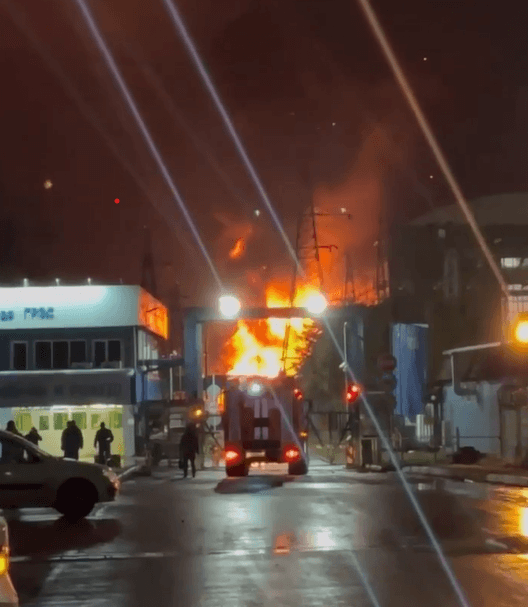
Earlier that night, Moscow’s air defense had scrambled. The mayor reported two drones shot down en route to the capital. Zhukovsky Airport suspended operations. But at least one got through. Shatura sat far enough from Moscow to avoid panic, close enough to send a message: Ukrainian drones could fly 500 kilometers deep and hit targets that mattered.
This wasn’t random terror. Shatura powered Moscow’s industrial suburbs—factories and distribution networks sustaining Russia’s war effort. Striking it was economic warfare. In recent months, Ukraine had intensified exactly these operations: refineries in Saratov and Orsk, oil depots in Crimea, power plants in occupied Donetsk. The pattern was clear: if Russia would grind Ukrainian cities with glide bombs, Kyiv would dismantle the industrial machine feeding Russian aggression.
The timing was no accident. As diplomats gathered in Geneva to discuss terms limiting Ukraine’s military, this strike demonstrated leverage Kyiv still possessed. The smoke from Shatura reminded everyone that compromise extracted under pressure was worthless if one side retained means to inflict unprevented pain.
By morning, Russian state media buried the story. But fire crews still worked at Shatura, and the turbines sat silent. The message burned clear: any peace leaving Ukraine defenseless would be temporary.
Geneva’s Marble Halls: Where Compromise Met Reality
The Swiss conference halls filled with people who believed wars could end with words on paper. Secretary of State Marco Rubio arrived with a 28-point document drafted in secret with Russian counterparts: Ukraine would cede unoccupied Donetsk and Luhansk, cap its military at 600,000 troops, abandon NATO hopes, and prohibit foreign troops on its soil. In exchange, Russia would promise—in Russian law—not to attack again. Security guarantees were vague, echoing the Budapest Memorandum that left Ukraine defenseless in 2014.
Europe’s counterproposal rejected it all. France, Britain, and Germany demanded no territorial concessions, an 800,000-troop cap, U.S.-backed security guarantees equivalent to NATO Article 5, frozen Russian assets for reconstruction, and return of all POWs including children. The gap was a chasm.
Rubio called the plan “a living, breathing document,” acknowledged Ukraine needed to “feel safe,” and admitted security guarantees were “not strong enough yet.” The November 27 deadline might extend. But behind closed doors, the reality was messier. Ukrainian officials pushed back on troop limits. Europeans warned the plan rewarded aggression. Trump complained on social media: “Ukraine leadership has expressed zero gratitude.”
The Nordic-Baltic Eight pledged continued support, rejecting any peace violating Ukrainian sovereignty. Forty-seven European parliamentarians warned Trump against “appeasement,” invoking Reagan: “We win, they lose.”
By evening, a joint statement declared talks “constructive” and announced an “updated framework” respecting Ukrainian sovereignty. Details remained undisclosed. But everyone knew the uncomfortable truth: the Kremlin had already rejected any plan short of Ukrainian capitulation. Deputy Foreign Minister Ryabkov reiterated Russia’s maximalist demands—destruction of Ukrainian statehood, NATO rollback, recognition of annexations.
Geneva’s halls could host endless diplomacy. But the war wouldn’t end there. It would end in Pokrovsk, where soldiers hunted infiltrators through ruins—or when one side finally broke.
Pokrovsk: The City That Refuses to Fall
Pokrovsk’s center looked like the end—collapsed buildings, rubble-choked streets, walls pockmarked by shrapnel, windows blown out completely. But Ukrainian soldiers moving through those ruins knew better. This wasn’t the end. This was the fight.
Russian forces had infiltrated for weeks—small groups, sometimes individuals dressed as civilians, slipping through gaps to establish positions deep inside. The strategy: avoid direct assaults Ukrainian drones could obliterate, seep into the urban maze, force close-quarters combat where numbers might matter. DeepState’s mapping showed advances near the railway station, pedagogical college, Sobornyi Square.
But Ukraine’s Airborne Assault Forces reported Russians “not managing to fortify.” Firefights raged citywide, but Ukrainian troops held positions, conducting “search and destroy” operations—hunting building by building, room by room. The 7th Rapid Reaction Corps noted Russian attempts to push into northern Pokrovsk via Donetska Railway were repelled with “heavy losses.” Since November began: 388 Russian soldiers killed, 87 wounded.
Special Operations Forces released strike footage: a Russian sniper position demolished, a concentration of the 336th Naval Infantry Brigade hit hard, ammunition depots destroyed. Precision kills disrupting logistics faster than Moscow could rebuild.
But the broader picture was grimmer. Russian forces systematically worked to complete the Pokrovsk-Myrnohrad encirclement. Geolocated footage showed advances in northern Rodynske. Milbloggers claimed a “kill zone” between Pokrovsk and Chervonyi Lyman—terrain so drone-saturated no vehicle survived.
ISW’s assessment: Russian forces would “very likely” seize Pokrovsk and Myrnohrad eventually. But it had taken 21 months to advance 40 kilometers to this point. At current rates—9.3 square kilometers daily across the entire theater—finishing Donetsk Oblast would take until August 2027, assuming everything held constant. Beyond Pokrovsk lay the Fortress Belt: Slovyansk and Kramatorsk, where Russia’s slow march would stall against heavier fortifications.
Pokrovsk hadn’t fallen. And every day it held was another day Russia bled for inches it couldn’t afford.
Partisans in the Night: Fire on the Tracks
The locomotive sat quiet at Rostov-Tovarny freight yard, engines humming, waiting for its next load of ammunition bound for the front. Rostov-on-Don lay just 65 kilometers from Ukraine—close enough that its railways had become arteries feeding Russia’s war machine. Everything passed through: tanks, artillery shells, troop rotations. The station was vital. Which made it a target.
Atesh partisans had watched for weeks, tracking schedules, identifying vulnerabilities. On November 23’s darkness, operatives slipped into the rail yard carrying jerrycans of flammable liquid. Video showed them dousing the locomotive’s interior, methodical and unhurried, before vanishing. The second video: flames erupting inside the cabin, metal warping, control panels melting.
Atesh claimed the sabotage “disrupted movement schedules of trains carrying ammunition, equipment, and reserves to the front.” The Kyiv Independent couldn’t verify full damage, but the message was clear: even deep in Russian territory, the war had partisans willing to strike. Rostov served as a “main distribution hub for Southern and Eastern force groupings.” Burning one locomotive wouldn’t stop the war. But burning one every few weeks, cutting cables, sabotaging signals—that persistent disruption accumulated. Trains delayed meant ammunition shortages. Shortages meant units underequipped. Underequipped meant battlefield failures.
This wasn’t Atesh’s first Rostov operation—or even this month’s first. Earlier in November, they’d destroyed a relay cabinet in Russian-occupied Zaporizhzhia, delaying transports there too. The pattern: distributed small-scale sabotage, individually insignificant, cumulatively devastating. Russia couldn’t defend every rail line constantly. Constant defense required constant manpower—every soldier guarding freight yards was one not fighting in Pokrovsk.
The fire burned through the night, lighting the yard orange and black. By morning, the charred husk sat on twisted tracks. And somewhere in the city, Atesh was already planning the next strike.
Russia’s war machine was vast but brittle. One fire at a time, the partisans tested exactly how brittle.
Where Fog Became a Weapon: Zaporizhzhia’s Deadly Blindness
The attack came invisible. Fog settled thick over southern Novodanylivka near Orikhiv, turning the steppe into white void. Ukrainian drones grounded. Observation posts saw fifty meters maximum. Through that blindness, Russian armor rolled—two tanks, two APCs, motorcycles carrying assault troops. A reduced company-sized mechanized push. This time, weather gave them cover.
Geolocated footage showed Russian forces advancing into southern Novodanylivka, vehicles grinding through mud, infantry dismounting under fog’s protection. Ukrainian brigades reacted—anti-tank teams, FPV drones despite poor visibility, artillery on relayed coordinates. When fog lifted: both tanks burning, APCs destroyed, motorcycles scattered. But ground was seized that clear weather would have denied.
The pattern repeated across Zaporizhzhia. Milbloggers claimed advances northeast of Shcherbaky, north of Mali Shcherbaky, in central Stepnohirsk. Attacks toward Hulyaipole—northwest toward Varvarivka, north toward Yablukove, east toward Malynivka. Most failed. But fog gave windows.
Russia’s Ministry of Defense claimed the 36th Motorized Rifle Brigade seized Vidradne and Tykhe. Footage from Tykhe showed one soldier raising flags—infiltration changing nothing about terrain control but giving Moscow television footage. ISW assessed most as infiltrations, not secured advances.
The broader picture troubled: Russia launching mechanized assaults—first significant armor use here in months. Committing the 127th Motorized Rifle Division, 1430th Regiment, 7th Airborne. Real formations with tanks and artillery. Moscow saw opportunity.
Ukrainian forces responded with precision. Brigades destroyed multiple armored vehicles before consolidation. FPV drones hunted infantry through fog when thermal signatures gave positions away. By evening, fog lifted. Ukrainian drones circled again. Russian vehicles that advanced at dawn sat as smoking ruins by nightfall.
Weather had given Russia a weapon. They would use it again.
The Drone Swarm: Ninety-Eight Reasons to Fear the Night
They came in waves from airbases scattered across western Russia and Crimea—Oryol, Kursk, Millerovo, Primorsko-Akhtarsk, Cape Chauda. Ninety-eight drones, mostly Iranian Shaheds, engines audible from kilometers away. Some carried warheads. Others were decoys to saturate defenses. The swarm spread across Ukraine’s night sky.
Ukrainian air defense scrambled. S-300 batteries engaged at long range. Mobile guns tracked targets. Electronic warfare attempted jamming. By dawn: sixty-nine destroyed, twenty-seven reached targets.
Strikes hit everywhere. Dnipro: residential building erupted, fourteen injured including an eleven-year-old. Impact shattered windows across three floors. Zaporizhzhia: drone struck supermarket and residential buildings, six wounded. Governor Fedorov reported over 870 strikes in 24 hours—drones, glide bombs, artillery on Stepnohirsk, Orikhiv, Hulyaipole.
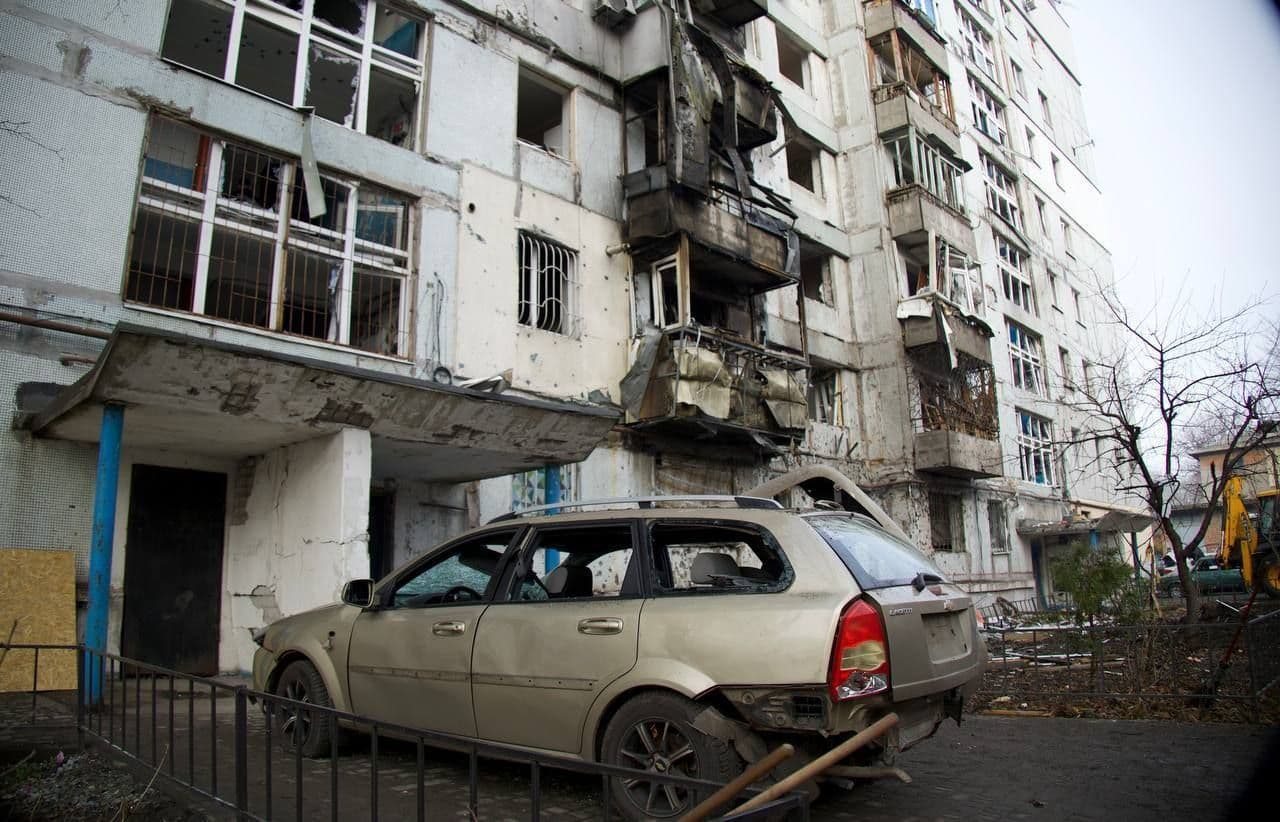
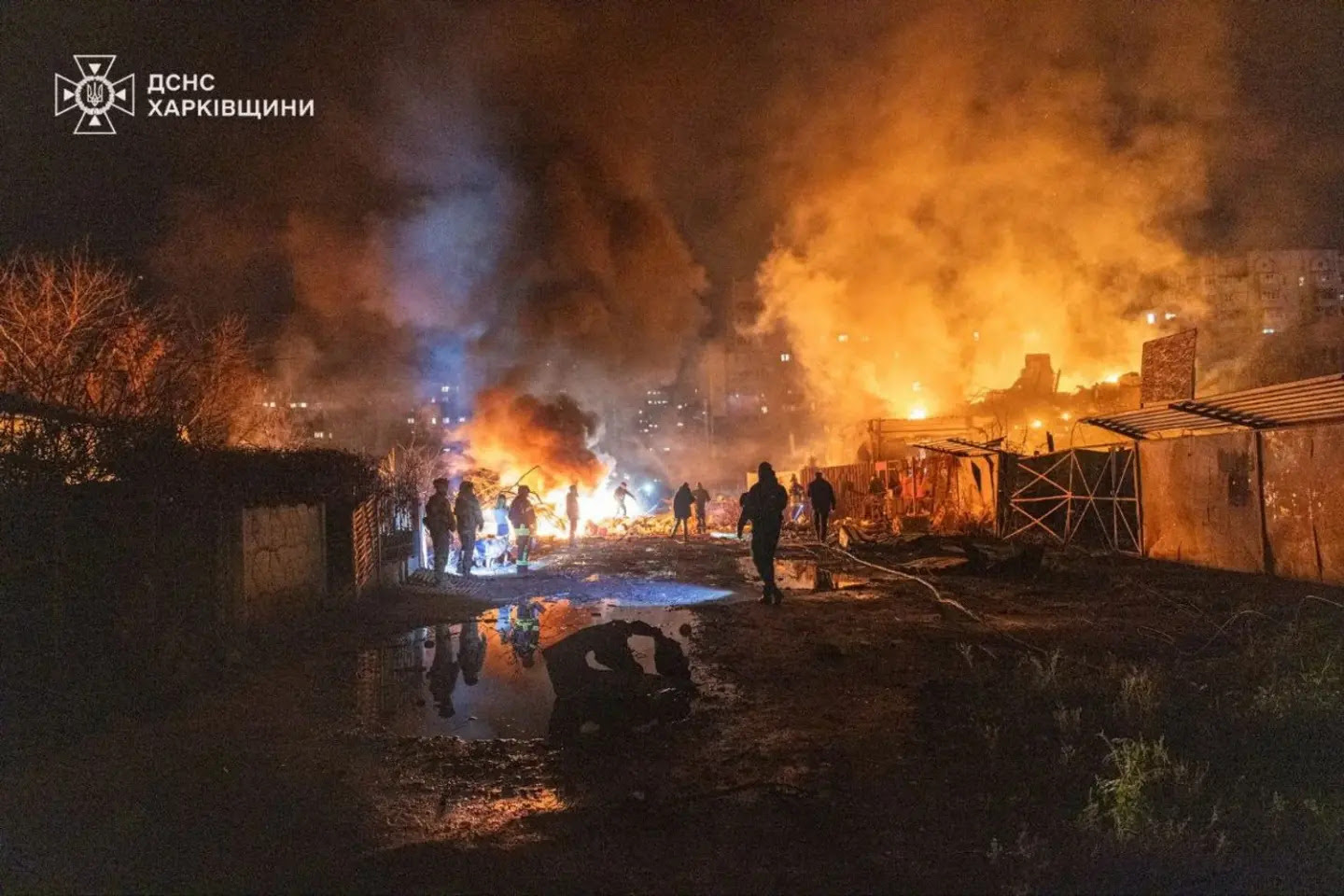
Kherson Oblast: four dead, eleven injured including a child. Odesa: 16,000 homes lost power after infrastructure strikes. Kharkiv evening attack: four killed, seventeen injured including children aged eleven and twelve. Fires across two districts while drones circled, waiting for rescue workers before striking again.
But the most troubling strike missed. A Russian drone fell near Grindu village in Romania—NATO soil. Second incident in two months. Romanian officials called it “systematic provocation.” The risk: Russia’s drones flew low along the Danube targeting Ukrainian ports at Izmail. One navigation error from spreading war beyond Ukraine’s borders.
Zelensky reported Russian forces launched over 1,050 drones, almost 1,000 glide bombs, 60+ missiles during the week. Relentless campaign degrading infrastructure, terrorizing civilians, forcing air defense from front lines.
The math was brutal: ninety-eight launched, sixty-nine destroyed, twenty-seven hits. From Moscow’s perspective, those hits were worth the cost. The sky over Ukraine never slept. Neither did the people listening for engines in darkness.
Where Death Came Without Mercy: The Execution of Five
The video surfaced November 22, grainy and brutal. Five Ukrainian soldiers lay on the ground, hands likely bound, defenseless. Russian troops stood over them. Then gunfire. Execution-style killings, methodical and cold. When shooting stopped, five men were dead, another war crime added to the Prosecutor General’s list.
DeepState, the Ukrainian mapping organization posting the footage, was still investigating when and where executions occurred. Location unconfirmed. But the act was clear: Russian forces murdered prisoners of war, violating Geneva Conventions that prohibit torture, violence, and execution of captured combatants. Not the first time. Not the last.
Ukraine’s Prosecutor General already investigated evidence of at least 322 Ukrainian POW executions since invasion began. That number grew weekly. November 15: two more soldiers shot dead near Zatyshshia in Zaporizhzhia. An FPV drone eliminated the killers twenty minutes later. Now five more names would join the tally of men who surrendered in good faith and died for it.
The executions revealed something darker than battlefield brutality: systematic disregard for laws of armed conflict, either tacitly approved by command or so embedded in unit culture that soldiers believed murder would go unpunished. Every Ukrainian soldier knew the risk: surrender might mean torture, disappearance, or a bullet. That knowledge made every defensive position more desperate, every encirclement more deadly. If surrender wasn’t an option, soldiers would fight to the end—and Russian casualties would climb.
The video would circulate through Ukrainian military channels, shared among units as grim reminder of what capture meant. It would harden resolve. Fuel anger sustaining soldiers through grinding combat. And ensure that when Russian forces eventually faced accountability—if they ever did—there would be evidence for tribunals.
Five men. Five executions. One more atrocity in a war drowning in them.
The Fronts That Never Sleep: From Kharkiv to Kherson
While attention fixed on Pokrovsk and Geneva, the war ground forward across a dozen other fronts—some advancing, some stalemated, all bleeding. Russian forces attacked near Vovchansk and Lyman in Kharkiv Oblast, assaults withering under Ukrainian drone strikes. They pushed toward Kupyansk, where Ukrainian forces reportedly still fully controlled Kupyansk-Vuzlovyi despite Russian encirclement claims. Gerasimov’s November 20 claim that Russian forces seized Kupyansk itself remained unverified—even Russian milbloggers expressed skepticism.
In Borova direction, unconfirmed reports suggested Russian advances near Bohuslavka and Zahryzove, though Ukrainian counterattacks contested both. Near Slovyansk and Siversk, Russian forces conducted infiltration missions into Platonivka, preparing for future Siversk assaults by amassing infantry on the city’s outskirts. Lieutenant Colonel Zaporozhets estimated Russian forces aimed to consolidate positions around Siversk by December for a winter assault.
South in Kostyantynivka-Druzhkivka, Russian forces marginally advanced in western Ivanopillya but remained bogged down in urban combat. Kramatorsk endured Smerch strikes killing three civilians, followed by Geran-2 drones targeting storage—battlefield air interdiction systematically degrading Ukrainian logistics.
In Velykomykhailivka direction, Russian forces claimed Tykhe seizure, though footage showed only infiltration missions rather than secured control. Ukrainian forces counterattacked near Dobropasove and Oleksandrivka. Farther south in Zaporizhzhia, mechanized assaults near Novodanylivka and infiltrations near Vidradne showed Russia probing for weaknesses.
Along the Dnipro in Kherson Oblast, Russian forces kept shelling from the eastern bank, achieving little except casualties and terror. They claimed partial clearing of Odradokamyanka on the western bank, but Ukrainian forces held firm.
The pattern was consistent: Russia attacked everywhere simultaneously, stretching Ukrainian defenses thin, hoping one sector would collapse. Ukraine responded by trading space for time, withdrawing when necessary, counterattacking when possible, bleeding Russian forces for every meter. Neither side was winning. Both endured. The war stretched on—Kharkiv to Kherson, a thousand-kilometer front where every day brought new casualties and no conclusion.
What November 23 Revealed
The day exposed the war’s central paradox: diplomacy cannot end what force has not decided. In Geneva, negotiators drafted frameworks while Ukrainian drones turned Russian power plants into flame. They debated troop caps while soldiers hunted infiltrators through Pokrovsk. Two realities existed in parallel, each undermining the other’s logic.
Trump officials believed pressure could force peace—set a deadline, threaten aid cuts, and Ukraine would accept Russian-written terms. But November 23 showed why that failed. Ukraine still held cards: strikes on Moscow Oblast, clearing Russian troops from cities, bleeding mechanized assaults into scrap. As long as those capabilities existed, no imposed peace would hold.
Europeans understood better. Their counterproposal rejected territorial concessions, demanded real security guarantees, called for using frozen Russian assets for reconstruction. They recognized peace without justice was deferred war. But Europe lacked leverage—America controlled needed weapons, and Trump seemed willing to trade Ukrainian sovereignty for diplomatic appearance.
The Kremlin’s response was predictable: welcomed American proposal, rejected European counterproposal, reiterated nothing less than Ukrainian capitulation was acceptable. Ryabkov’s insistence on “root causes”—NATO expansion, weapon deployments, alleged discrimination—showed Moscow’s maximalist goals unchanged. Putin wanted Ukraine dismembered and NATO weakened.
So the war continued. Russian forces advanced through fog and mechanized assaults. Ukrainian forces struck back with drones and artillery. Partisans burned locomotives. Civilians died. POWs were executed. And diplomats spoke of “productive dialogue” that meant nothing if both sides believed they could still win.
November 23 revealed what the war had become: attrition where neither side could force victory, neither would accept defeat, and the only certainty was more death. The war wouldn’t end on November 27 with signatures. It would end when one side broke—or when both admitted continuing was worse than compromising.
That day hadn’t come. The fires still burned. Soldiers kept fighting.
Masterful writing, Doug!!! This expose uncovers the bitter reality of this unjust war, and the crimes of the heartless invaders. Thank you for the long hours that you invested here to help the world know the truth.
Mark Rampton