
In Miami hotel suites, American diplomats briefed Ukrainians on Putin’s terms while seven hundred kilometers inside Russia, Ukrainian drones incinerated oil refineries—and in a Donetsk trench, a Russian soldier murdered a surrendering prisoner with raised hands.
The Day’s Reckoning
At 9:30 a.m. in a Miami hotel suite, Steve Witkoff briefed Ukrainian officials on his December 2 conversation with Putin. The room was climate-controlled, the coffee hot, the discussion theoretical.
At that same moment in Pokrovsk, Commander Yevhen Lasiichuk studied maps showing the railway line that marked the front. His headquarters wasn’t heated. The coffee was cold. The Russian forces trying to encircle his city were very real.
Day 1,381.
In Krasnodar Krai, flames climbed into the night sky as Temryuk seaport burned—Ukrainian drones converting LNG infrastructure to smoke. Seven hundred kilometers north in Samara Oblast, the Syzran Oil Refinery took direct hits. In Volgograd Oblast, the Balashovskaya electrical substation went dark. Ukraine was hitting Russia where it fueled the war machine.
In Siversk direction, a Russian soldier executed a Ukrainian prisoner whose hands were raised. The 88th Motorized Rifle Brigade cameraman kept filming. A Telegram channel affiliated with Russia’s 3rd Combined Arms Army posted the video, labeling the murder “humane treatment.”
This was the war’s fourth winter—when peace talks proceeded in Florida while execution videos circulated on Russian military channels, when diplomats discussed ceasefires while defenders expanded logistics routes under drone fire.
Pokrovsk still stood despite twenty-one months of assault and four days of premature Russian victory claims. Ukrainian forces cleared Russian positions from Novopavlivka. But Russian drones hunted supply trucks across 50-kilometer depths, and eighteen rescued children told stories of grenade-throwing classes.
The gap between what diplomats discussed and what commanders fought had never been wider. Thursday, December 5, 2025—when the distance from Miami to Pokrovsk could be measured in miles or in the unbridgeable chasm between negotiating peace and waging total war.
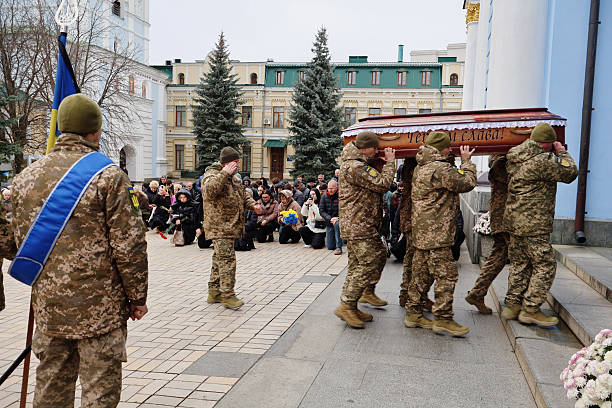
Vasyl ‘Beirut’ Khomko came home to Kyiv’s golden domes: The former travel show director who spent years showing Ukrainians the world died defending it. Military honors at St. Michael’s Cathedral, but the front took another storyteller who chose to fight. (Andriy Zhyhaylo/Oboz.ua/Global Images Ukraine via Getty Images)
The Florida Hotel Suite Where Ukraine’s Future Was Discussed Without Ukrainians
The Miami hotel conference room had excellent Wi-Fi and ocean views. Rustem Umerov and Andriy Hnatov sat across polished mahogany from Steve Witkoff and Jared Kushner, listening to a briefing about the December 2 meeting with Putin.
The Ukrainians hadn’t been in that room.
This was day two of talks that began November 30 and had already consumed multiple Florida locations—Miami, Hallandale Beach, venues notable mainly for their distance from Pokrovsk. Witkoff described what Putin said. Kushner added context. The Ukrainians took notes about conversations shaping their country’s future that happened without them present.
The peace framework had evolved from 28 points to 20, each revision reflecting the gap between Washington’s timeline and Kyiv’s survival calculations. Quick settlement versus sustainable security. American impatience versus Ukrainian existence. The questions hadn’t changed since Hallandale Beach, only the hotel: What price for peace? Who decides when pragmatism becomes capitulation?
In Moscow, Presidential Aide Yuriy Ushakov told reporters Russia was “waiting on a response.” The phrasing was careful—patient but expectant, like a creditor checking on overdue payments.
The choreography was obvious. American envoys brief Ukrainians on Putin conversations. Russian officials publicly await Ukrainian replies. Everyone performs for audiences beyond the room. Diplomats in Florida discuss theoretical ceasefires while commanders in Donetsk expand logistics routes under drone fire.
Whether this kabuki produced actual peace or merely consumed time while Russian forces ground forward—that was the question haunting every session. The hotel coffee stayed hot. The Atlantic stayed blue outside floor-to-ceiling windows. And three thousand kilometers east, the front line ran along a railway through frozen rubble where theoretical peace meant nothing and Russian drones hunted supply trucks.
The Railway Line That Proved Russia’s Victory Claims Were Lies
Commander Yevhen Lasiichuk pulled up the map and drew a line along the railway tracks bisecting Pokrovsk. “This is the front,” he said.
Not encircled. Not surrounded. Not captured.
Four days earlier, Russian propaganda channels had declared Pokrovsk fallen. The 7th Air Assault Corps commander’s assessment demolished those claims with geographic precision that left no room for spin. Ukrainian forces held full control of northern Pokrovsk. Active defensive positions anchored the city center. Supply rotations continued. Defenders were expanding ground communication routes despite Russian drones hunting every truck.
The southern approaches? “More complicated,” Lasiichuk said carefully.
Translation: difficult but not impossible.
Neighboring Myrnohrad told a tighter story. Russian forces had squeezed logistics access hard enough that moving supplies into the city required luck and timing. Units still entered to carry out missions, but every convoy ran the gauntlet. An artillery battalion commander reported Russian drones operating across 50-kilometer depths—battlefield air interdiction that degraded Ukrainian capabilities through patient pressure rather than dramatic encirclement.
This was sophistication. Moscow learned from previous urban meat grinders that direct assault into fortified cities produced casualty rates even Russian mathematics couldn’t sustain. So they maneuvered around flanks. Infiltrated from multiple directions. Let drones do the interdiction work. Geolocated footage showed advances north and southeast of Myrnohrad, probes into northwestern Pokrovsk—evidence of pressure, not pocket closure.
Twenty-one months.
That’s how long the campaign for Pokrovsk had ground on. Russian forces would likely eventually take both cities—the math wasn’t kind to defenders. But “eventually” remained undefined. And Ukrainian forces intended to make every meter as expensive as possible, converting Russian advance into blood expenditure that even Moscow’s appetite for attrition might not indefinitely sustain.
The railway line still marked the front. The city still stood.
Seven Hundred Kilometers Inside Russia, the Sky Burned
The Temryuk seaport in Krasnodar Krai erupted at 2:47 a.m. Ukrainian drones found the LNG facilities that fed Russian army logistics—1,350 square kilometers of harbor infrastructure converting to flames visible across the region. Evacuated port workers stood at safe distances, watching their workplaces burn.
The General Staff called it “ongoing battle damage assessment.”
Translation: still counting what we destroyed.
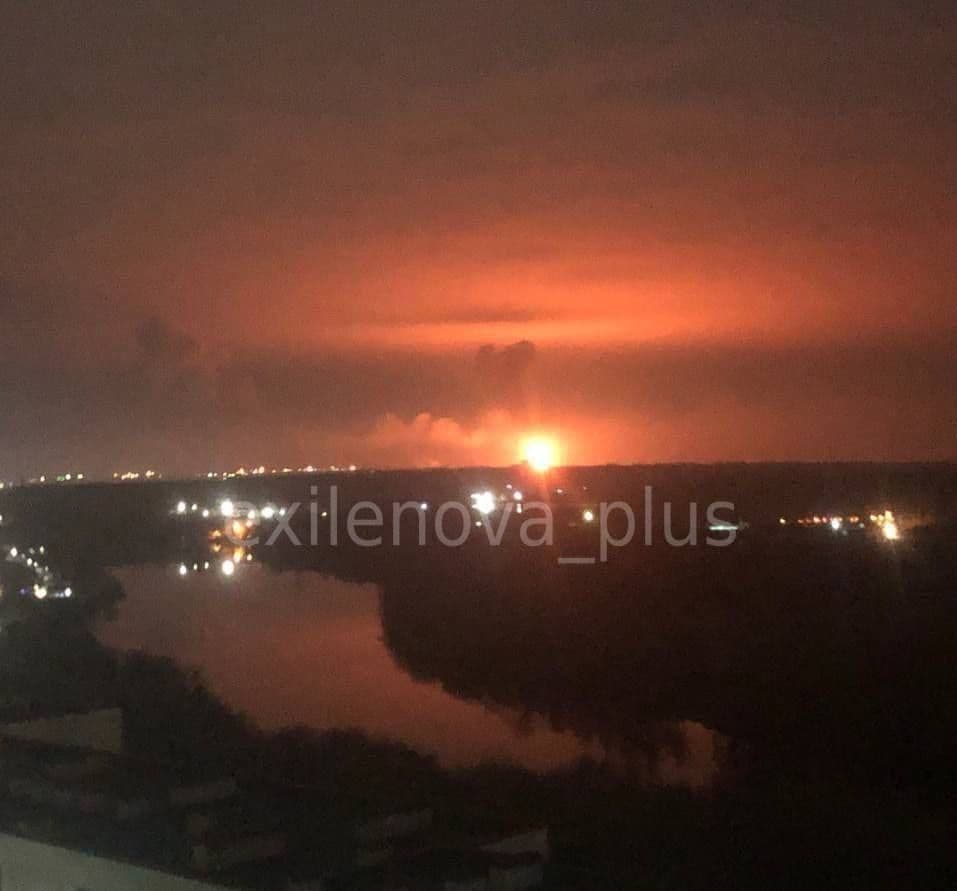
Seven hundred kilometers inside Russia, the sky burned orange: Ukrainian drones found the Syzran Oil Refinery in Samara Oblast, converting petroleum that fueled Putin’s war machine into flames that lit the night. Russia’s deep rear isn’t safe anymore. (ExilenovaPlus / Telegram)
At dawn, the Syzran Oil Refinery in Samara Oblast—seven hundred kilometers from Ukraine’s border—took direct hits. Annual processing capacity: 7 to 8.9 million tons. A significant node in the petroleum network that converted Russian crude into military mobility. The General Staff’s official statement aimed to “reduce the military and economic potential of the Russian aggressor.”
Translation: we’re systematically dismantling the infrastructure that fuels Putin’s war.
In Volgograd Oblast, the Balashovskaya electrical substation went dark. Major Robert “Magyar” Brovdi, commander of Ukraine’s Unmanned Systems Forces, confirmed the strike without elaborating. These weren’t terror attacks against civilian targets—they were precision strikes against dual-use infrastructure serving military purposes. Distinctions that mattered in international law if not to Russian civilians whose heating went cold.
Meanwhile, Ukraine’s Main Military Intelligence Directorate released its Crimean scorecard: one Su-24 tactical bomber struck, one 39N6 Kasta-2E2 radar system destroyed, one Orion reconnaissance drone eliminated, two Podlyot radar stations damaged, plus a freight train and Ural truck for good measure. Two weeks of systematic work across occupied Crimea, each strike eroding Moscow’s ability to monitor Ukrainian maritime operations.
Geolocated footage confirmed damage at Novofedorivka Airbase and a railway depot in northern Feodosia.
Russia’s deep rear wasn’t safe anymore. Ukrainian drones ranged across a thousand-kilometer arc from Crimea to the Volga, finding refineries and substations and radar installations, converting petroleum infrastructure to smoke and Russian military advantage to rubble. Every successful strike meant fewer Russian tanks with fuel, fewer bases with power, fewer radars tracking Ukrainian movements.
The campaign continued because Ukraine couldn’t match Russian conventional power. So, it struck where Russia thought itself invulnerable—deep inside its own borders, where the war was supposed to be someone else’s problem.
The Settlement Russia Claimed but Ukraine Still Held
Geolocated footage from Novopavlivka told a story Russian milbloggers didn’t want to admit: Ukrainian forces advancing along the T-0420 highway through a settlement Moscow had declared captured. The western bank of the Solena River was cleared of Russian troops. Possibly the entire village—verification ongoing, but the direction of movement was unmistakably Ukrainian.
Even while defending Pokrovsk, Ukraine could still attack.
A brigade spokesperson described the Russian assault pattern with clinical precision. First wave: poorly trained conscripts sent to draw Ukrainian fire and die. Rubikon drone operators expanded kill zones, interdicting logistics routes. Second wave: relatively well-trained troops the command actually wanted to preserve. The Ukrainian response—clearing urban positions—complicated Moscow’s offensive timelines in ways Russian planners hadn’t anticipated.
Six kilometers north of Borova, Russian forces pushed into southern Bohuslavka. Hundreds of meters, not kilometers. Incremental progress toward threatening Ukrainian supply lines through northern Donetsk Oblast. Blood for meters, as always.
In the Slovyansk-Lyman sector, mercenaries from unspecified African countries joined intensifying Russian assaults. Ukrainian 3rd Army Corps Spokesperson Oleksandr Borodin noted a new Russian tactic: raising flags during infiltration missions to exaggerate gains for propaganda cameras. The flags suggested control. Actual combat suggested otherwise. Ukrainian forces still held Novoselivka and Stavky despite Russian social media claiming victory.
Along the Sumy Oblast border, Russian commanders demonstrated learning. They waited for fog—conditions that degraded Ukrainian drone reconnaissance—then assaulted positions during the narrow weather windows when technological advantages temporarily disappeared. Sophistication born from necessity.
Near occupied Dokuchaievsk, Ukrainian artillery found a Russian training ground. Sixty servicemembers killed or wounded before they could reach the front. Another asymmetric approach to degrading combat power—hitting reinforcements in rear areas rather than waiting to face them in trenches.
The front shifted in both directions. Russia advanced hundreds of meters near Borova. Ukraine cleared settlements near Pokrovsk. The narrative of inexorable Russian advance confronted the reality of Ukrainian counterstrikes that kept appearing where Moscow thought the questio
Five Drones Over France’s Nuclear Submarines
The restricted airspace over Île Longue base exists for one reason: four ballistic missile submarines carrying France’s nuclear deterrent sit in hardened pens below. On Thursday, five unidentified drones flew directly over them.
Defense Minister Catherine Vautrin confirmed French forces intercepted the drones using “unspecified means.” Military sources told Agence France-Presse that marines opened fire. Other reports suggested jamming attempts. The contradiction revealed either confusion or deliberate ambiguity about what worked and what didn’t.
French officials declined attribution pending investigation.
But the pattern was clear. Similar overflights had occurred previously over the Crozon peninsula—testing boundaries without crossing into restricted zones. This time the drones penetrated SSBN base airspace, crossing red lines that previous reconnaissance had merely approached.
Escalation or emboldened operators. Either way, someone was mapping French defenses.
The incident fit what analysts called Russian “Phase Zero” operations—covert and overt attacks against European infrastructure designed to prepare conditions for possible future NATO-Russia conflict. Whether Moscow directly controlled these particular drones or merely inspired proxy operators mattered less than the demonstrated vulnerability. High-value military sites proved susceptible to small unmanned aircraft that conventional air defenses struggled to counter effectively.
France’s nuclear deterrent remained secure in reinforced concrete and steel. But psychological effects couldn’t be dismissed as tactically insignificant. Someone had flown drones over the submarines that guaranteed French sovereignty. Someone had tested response capabilities and mapped defensive reactions. Someone had proven that restricted airspace protecting strategic nuclear assets could be penetrated by small drones that cost less than the missiles fired trying to stop them.
The submarines stayed safe in their pens.
But the airspace above them? That was apparently negotiable.
“Humane Treatment”
The Ukrainian soldier’s hands were raised. The Russian soldier of the 88th Motorized Rifle Brigade shot him anyway near Svyato-Pokrovske in the Siversk direction. The cameraman kept filming.
A Russian Telegram channel claiming official 3rd Combined Arms Army affiliation posted the video. Their description of the murder: “humane treatment.”
The Orwellian inversion was so brazen it suggested either complete moral collapse or deliberate psychological warfare—publish the war crime, label it mercy, demoralize Ukrainian forces through demonstrated brutality that Russian command wouldn’t even pretend to punish.
The pattern had appeared in other sectors where Russian forces intensified operations and infiltrated urban areas. Either command discipline broke down during offensives, or military leadership tacitly endorsed terror tactics. The distinction mattered legally but not practically—dead prisoners with raised hands looked the same regardless of whether orders came from above or initiative from below.
The Ukrainian 10th Mountain Assault Brigade reported the incident. The Prosecutor General’s Office opened investigation under Article 438 of the Criminal Code covering war crimes resulting in death. The formality of legal process contrasted starkly with the summary execution it documented—one side investigating, one side filming and publishing.
Three hundred twenty-two executed prisoners of war. That was the count as of October 6—only cases with sufficient documentation to support formal charges. The actual number remained unknowable but certainly higher.
Each execution violated Geneva Conventions that Russian command either endorsed or permitted through willful neglect. Each video posted to Telegram channels with official military affiliations. Each labeled something other than what it was.
Hands raised. Shot anyway. Filmed. Published. Called “humane.”
Day 1,381 of the war, when Russian forces discussed peace in Miami while their soldiers executed surrendering Ukrainians and broadcast the murders as policy.
One Hundred Thirty-Seven Drones Hunting Heat and Light
They came from five directions overnight—Kursk, Oryol, Millerovo, Primorsko-Akhtarsk, and occupied Crimea. One hundred thirty-seven Shahed-type drones hunting Ukrainian energy infrastructure as winter deepened. Ukrainian air defense downed eighty. Fifty-seven got through, striking thirteen locations across the country.
The lights went out.
Ukrenergo implemented rolling blackouts as repair crews worked to restore capacity degraded by months of systematic targeting. This was Russia’s winter strategy: freeze them into submission when bullets couldn’t break them.
In Izyum, a Russian drone found a civilian truck. Two dead. The National Police documented it as part of Moscow’s expanding campaign against civilian logistics—blur the line between military and civilian targets until everything became legitimate prey.
Kharkiv absorbed multiple strikes. Slovyansk too. Each attack calibrated to degrade both civilian morale and military logistics simultaneously—make the population suffer, make the government choose between protecting cities or frontlines.
Russian milbloggers posted footage showing FAB-500 guided glide bombs hitting apartment buildings in Hulyaipole, Zaporizhia Oblast. Not accidental strikes. Not collateral damage. Deliberate targeting of residential areas in contested urban zones, demonstrating Moscow’s willingness to level civilian infrastructure when military targets proved too difficult.
In Chernihiv Oblast, the State Emergency Service reported residential damage where drones hit critical infrastructure and civilian areas with indiscriminate abandon. The pattern was established, the strategy clear: systematic targeting of energy infrastructure during winter months, inducing civilian suffering to create pressure on Kyiv to accept unfavorable peace terms.
Cold and darkness spreading through cities far from active combat.
This was how Russia negotiated—drones against power plants while diplomats discussed ceasefires, FAB-500 bombs against apartments while envoys briefed about peace frameworks. Make Ukrainian civilians freeze in the dark, then offer to turn the heat back on in exchange for territorial concessions.
Day 1,381. Fifty-seven drones got through. The cold was coming.
Two Hundred Ten Billion Euros That America Didn’t Want Ukraine to Have
Bloomberg broke the story: American officials were lobbying European governments to block the EU’s €210 billion reparations loan—a plan using immobilized Russian central bank reserves as collateral for immediate Ukrainian financing.
Washington’s argument: preserve the funds for future peace deals rather than directing them toward measures “extending the war.”
Translation: save Russian money for Russia, not Ukraine.
German Chancellor Friedrich Merz rejected American intervention publicly and bluntly. The asset decision was purely European, he declared, and the money must flow to Ukraine rather than American economic interests. His tone reflected growing European frustration with Washington’s peace process—which seemed more focused on quick settlement favorable to Moscow than sustainable security architecture protecting Ukrainian sovereignty.
Belgian Prime Minister Bart De Wever remained the primary EU obstacle, citing legal and financial risks that lawyers and financial scholars largely disputed. One dissenting voice versus European consensus.
A leaked December call transcript revealed the transatlantic tension clearly. Zelensky on the line with Merz, Macron, and European Commission President Ursula von der Leyen—all three European leaders repeatedly emphasizing their control over asset decisions.
Merz urged Zelensky to clarify to Americans that “the immobilized assets are entirely for us to decide on.”
Macron insisted “anything on frozen assets should be at our hands.”
The coordination suggested European determination to retain sovereignty over decisions Washington sought to influence through diplomatic pressure. Russian central bank reserves—frozen after invasion—now became battleground for transatlantic dispute about who decided Ukraine’s financial lifeline.
Europe wanted to use Russian money to fund Ukrainian defense. America wanted to preserve Russian money for eventual peace deal. The gap revealed fundamentally different approaches: Europeans willing to help Ukraine fight, Americans eager to help Russia negotiate.
Two hundred ten billion euros. Immobilized Russian assets. European money sitting in European banks. And Washington lobbying against using it to help the country Russia invaded.
The National Security Strategy That Accused Europe of “Civilizational Erasure”
Washington’s new National Security Strategy landed with the diplomatic subtlety of a FAB-500 bomb. The document accused the EU of “civilizational erasure” through migration policies and censorship resulting in “loss of national identities and self-confidence.”
Not Russian aggression. Not Chinese expansion. Migration and censorship.
The rhetoric echoed Vice President JD Vance’s February Munich Security Conference speech identifying uncontrolled migration and free speech retreat as Europe’s main security challenges while downplaying—barely mentioning—Russian and Chinese threats. Now it was official doctrine.
On Ukraine, the strategy declared American interest in negotiating “expeditious cessation of hostilities” to enable post-war recovery, stabilize European economies, and “reestablish strategic stability with Russia.”
Translation: quick settlement, normalized relations with Moscow, Ukrainian victory optional.
The document warned against perceiving “NATO as a perpetually expanding alliance”—a shift from post-Cold War expansion strategy that cast explicit doubt on Ukrainian membership aspirations. Some NATO members would “become majority non-European within a few decades,” the strategy suggested, framing demographic change as security threat undermining alliance cohesion.
The overall tone marked radical departure from decades of American policy emphasizing transatlantic unity and Eastern European integration into Western security architecture.
European officials reading the document could draw only one conclusion: they stood increasingly alone.
America’s National Security Strategy prioritized “strategic stability with Russia” over Ukrainian sovereignty, accused Europe of civilizational suicide through immigration, questioned NATO expansion, and framed alliance demographic change as threat. This wasn’t traditional transatlantic partnership—this was America declaring Europe the problem and Russia a potential partner.
Day 1,381. Ukrainian forces defended Pokrovsk while Washington published doctrine suggesting the real security threat wasn’t Russian tanks grinding through Donetsk but European migration policies and free speech debates.
The strategy didn’t mention executed prisoners or burning oil refineries. It mentioned “civilizational erasure” and “expeditious cessation of hostilities.”
Europe was alone.
The Summit Where Putin Found His Fuel Buyer
Putin smiled in New Delhi—his first India visit in four years, a diplomatic spectacle demonstrating that Western sanctions had limits when Asian economies needed cheap oil.
Modi characterized the talks as reflecting “particularly privileged partnership.” Putin emphasized Russia’s reliability as energy supplier to India’s “rapidly growing economy.”
Translation: India bought discounted Russian crude that Europe wouldn’t touch anymore.
The numbers told the story. Trade between the countries reached $140 billion, almost entirely driven by oil sales that were negligible before February 2022. Eighty-five percent of Russian crude exports now flowed to Asia when combined with Chinese purchases—Western attempts to constrain Russian revenue foundering against economic pragmatism that outweighed moral opprobrium.
American tariffs hadn’t changed Indian calculations. Washington imposed 25 percent levies on Indian imports, followed by additional penalties targeting energy trade with Moscow. The pressure succeeded mainly in irritating New Delhi without altering fundamental economic decisions.
For Putin, the Delhi summit provided both diplomatic validation and economic lifeline. Proof that Russia could redirect energy flows away from sanctioning Western markets toward Asian economies hungry for discounted petroleum. European customers lost, Asian buyers found, revenue streams maintained.
For Modi, the relationship delivered cheap fuel during India’s transition to renewable energy. Practical considerations trumping abstract solidarity with Ukrainian victims whose bodies subsidized discounted oil prices.
The summit occurred while Ukrainian forces defended Pokrovsk and Russian soldiers executed prisoners and drones hunted power plants. But in New Delhi’s climate-controlled conference rooms, such realities seemed distant. Putin and Modi discussed “particularly privileged partnership” and “rapidly growing economy” and energy reliability—diplomatic language obscuring the simple transaction underneath.
Russia needed buyers. India needed cheap oil. Ukrainian suffering was neither party’s concern.
The photographs showed Putin smiling. The crude kept flowing east. The war continued funding itself through Asian markets that Western sanctions couldn’t close.
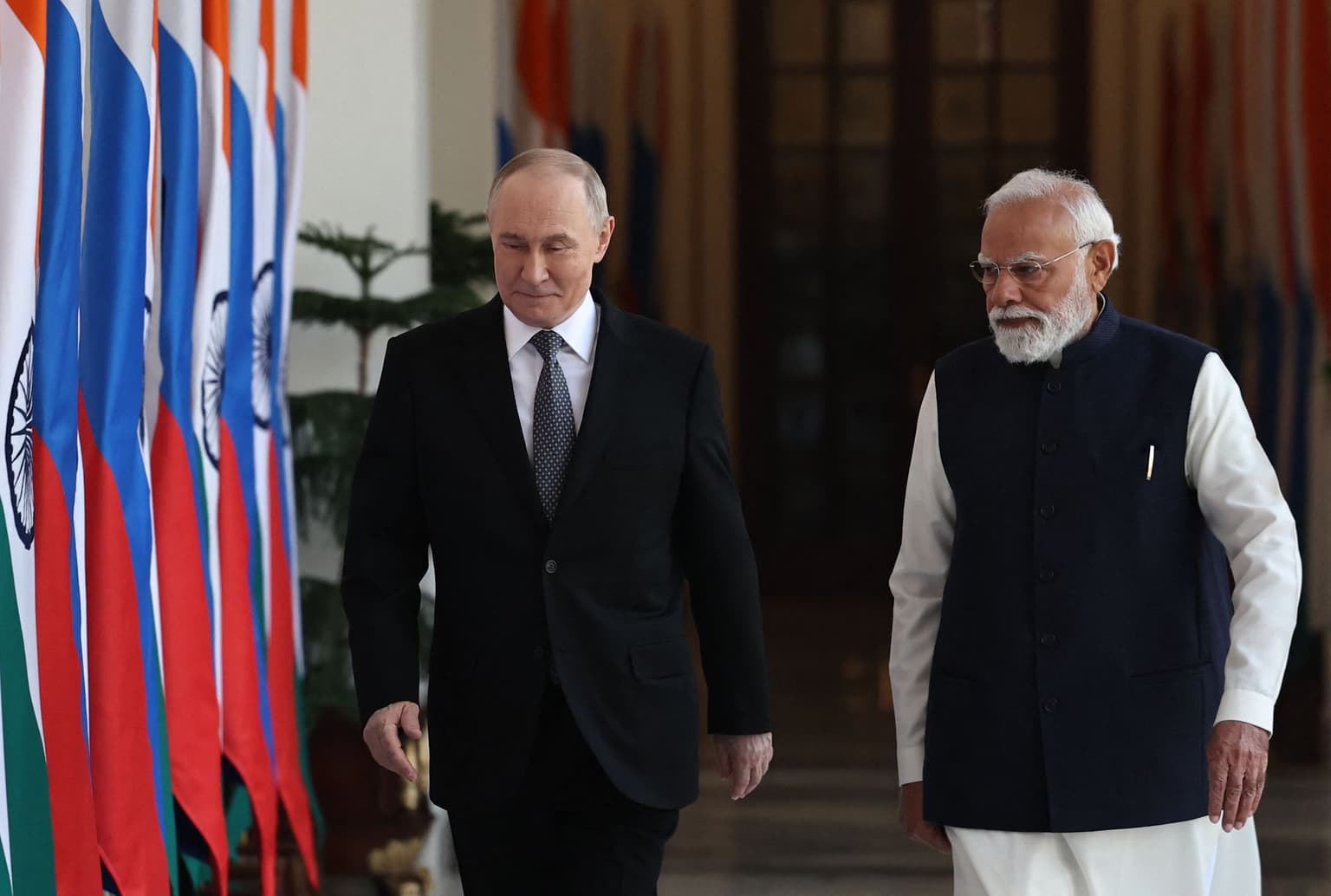
Putin found his fuel buyer in New Delhi: Modi praised their “particularly privileged partnership” while Russia’s president smiled—discounted oil flowing east replaced European markets, and India’s economic pragmatism trumped Ukrainian bodies. Eighty-five percent of Russian crude now goes to Asia. (Alexander Kazakov/AFP via Getty Images)
The Gas Stations America Couldn’t Sanction
Washington extended waivers through late April 2026 permitting Lukoil-branded gas stations abroad to continue operations—softening October sanctions that were supposed to mark the Trump administration’s first direct penalties against major Russian energy firms.
The Treasury Department authorization covered roughly 2,000 stations across Europe, Central Asia, the Middle East, and the Americas. Including 200 stations in New Jersey, Pennsylvania, and New York where American drivers filled tanks at Lukoil pumps despite sanctions against the parent company funding Putin’s war.
The contradiction was glaring.
Sanction the company. Exempt the gas stations. Punish Russian energy giants while ensuring Western consumers faced no disruption to their preferred brands. Financial warfare had limits when domestic political costs appeared—New Jersey voters noticed gas station closures more than Ukrainian casualties.
Lukoil and Rosneft remained critical Russian economic actors whose petroleum revenues funded military operations. But American willingness to grant operational waivers suggested that comprehensive energy sector sanctions—which Kyiv had urged for years—conflicted with Washington’s actual priorities.
Those priorities: avoid inconveniencing American consumers.
The waiver extension demonstrated sanctions’ fundamental complexity—or perhaps just their fundamental unseriousness. Attempt to constrain Russian revenue while permitting 2,000 branded retail outlets to continue selling Russian petroleum products across four continents. Call it sanctions while carving out exemptions large enough to drive tanks through.
Day 1,381. Ukrainian forces struck Russian refineries seven hundred kilometers inside Russia because comprehensive sanctions remained politically impossible. Washington couldn’t close Lukoil stations in New Jersey, so Ukrainian drones did the work American policy wouldn’t—attacking the petroleum infrastructure that funded the war at its source rather than through half-hearted financial measures riddled with waivers.
Two thousand gas stations. Late April 2026. Russian oil flowing through American pumps while Ukrainian cities froze in the dark.
Eighteen Children Who Came Home—and Thousands Who Couldn’t
Taras was seventeen when Save Ukraine extracted him from Russian-occupied southern Kherson Oblast. His Russian-controlled education included grenade throwing and trench drills—militarization of childhood preparing Ukrainian youth for service in Russian armed forces fighting against their own country.
Thirteen-year-old Olesia’s mother faced threats of basement detention and regular military police visits pressuring enrollment in Russian schools. Psychological warfare targeting families attempting to preserve Ukrainian identity under occupation.
Eighteen children aged 2 to 17 returned Thursday. Regional Governor Oleksandr Prokudin called it a “real miracle,” acknowledging the difficulty of operations that had now rescued over 1,000 children but left thousands more waiting in territories where Save Ukraine couldn’t reach.
Each rescue represented both success and failure.
The United Nations demanded immediate return of all deported and forcibly transferred Ukrainian children—demands that meant nothing to authorities implementing deliberate policy of cultural erasure through generational replacement. International law classified it genocide. Moscow called it education.
Save Ukraine continued rescue operations because the alternative was abandonment, even as everyone involved understood the fundamental impossibility of reaching every child in need. The math was brutal: eighteen rescued, thousands remaining. One thousand total extracted, tens of thousands still trapped learning Russian history and throwing grenades and drilling in trenches.
This was occupation’s long game—erase Ukrainian identity one generation at a time, convert Ukrainian children into Russian citizens who would grow up believing Kyiv was always Russian and their parents’ resistance was always futile.
Taras came home at seventeen after years of grenade training. Olesia escaped with her mother after months of military police pressure. Eighteen children total on Thursday.
The thousands still waiting would learn Russian or face basement detention. They would throw grenades in training or watch their families suffer. They would be erased or rescued, educated or extracted, converted or saved.
If Save Ukraine could reach them.
What December 5 Revealed
Two realities existed simultaneously, and both were true.
In Miami, American diplomats briefed Ukrainians on Putin conversations about peace frameworks. In Siversk, Russian soldiers executed a prisoner with raised hands, filmed it, and posted the video calling the murder “humane treatment.”
These weren’t parallel developments but connected manifestations of the same strategy: talk peace while waging total war, demonstrate through brutality exactly what terms Moscow intended to impose.
Pokrovsk still stood after twenty-one months. Ukrainian forces expanded logistics routes under fire. Desperate but not hopeless—the kind of tactical reality Florida hotel suites couldn’t capture. American envoys discussed territorial concessions, abstractions meaningless to commanders defending the city.
Ukrainian drones struck seven hundred kilometers inside Russia because asymmetric warfare was what remained. Temryuk burning. Syzran damaged. Balashovskaya dark. Each strike degraded Moscow’s offensive capacity, converting petroleum infrastructure to smoke. Military necessity and strategic message both: Ukraine would fight regardless of peace talk progress.
French nuclear base overflights and Washington’s National Security Strategy revealed European security architecture dissolving under combined Russian aggression and American disengagement. Drones over ballistic missile submarines. NATO expansion declared finished. Europe accused of “civilizational erasure.” The post-Cold War order collapsing in real time.
The executed prisoner. The rescued children who’d learned grenade drills. Modi and Putin discussing oil over Ukrainian bodies. Lukoil waivers permitting Russian petroleum sales. Each facet of conflict determining not just Ukraine’s future but the entire international order.
Day 1,381 offered no resolution. Only evidence that war continued while diplomats talked and commanders fought and children suffered and prisoners died with hands raised. The peace negotiated in Miami bore no resemblance to the war waged from Pokrovsk to Île Longue.
The gap between negotiating and fighting continued widening.
And the day offered no indication when or how that gap might close.