
In Moscow, Dmitry Peskov praised America’s new National Security Strategy as “largely consistent with Russia’s vision”—words that sent tremors through European capitals and Ukrainian command posts.
The Day’s Reckoning
Dmitry Peskov smiled.
That alone should have alarmed anyone watching. Russia’s spokesperson doesn’t smile at American policy—he weaponizes it, twists it, denounces it. But on December 7, 2025, standing before Moscow’s press corps, Peskov delivered something far more unsettling than his usual venom: praise. The new U.S. National Security Strategy was “largely consistent with Russia’s vision.”
In Kyiv, officials who had spent 1,383 days reading between Kremlin lines understood immediately. When your enemy endorses your ally’s strategy, you’re no longer standing on solid ground.
That same morning in Kharkiv Oblast, Russian missiles collapsed bridges across the Pechenihy Reservoir Dam—cutting water supplies to Ukraine’s second-largest city and severing supply routes to defensive positions along multiple fronts. Overnight, 241 Russian drones had swarmed Ukrainian skies in one of the war’s largest single-night aerial assaults. In Kostiantynivka, artillery bombardment lasting nearly an hour left three dead and fourteen homes gutted.
And in Doha, Qatar, Donald Trump Jr. stood before cameras at a luxury forum and casually suggested his father might “walk away” from Ukraine. He called Zelensky “one of the greatest marketers of all time”—not a compliment—and dismissed Ukrainian corruption concerns with the kind of selective outrage that ignored his family’s own $400 million Qatari jet.
The day’s contradictions played out in parallel universes.
In Prague, Czech President Petr Pavel warned Europe might need to shoot down Russian aircraft if violations continued. In Washington, outgoing envoy Keith Kellogg declared peace negotiations were “the last two meters away” from completion. In Engels, deep inside Russia, Ukrainian drones struck the strategic bomber base that launched attacks against Ukrainian cities. In Brussels, European officials prepared new visa restrictions against Russians who continued traveling freely while their government waged total war.
The architecture of support that had sustained Ukraine through four winters showed cracks running deeper than tactical setbacks. This wasn’t just about military aid or diplomatic pressure. This was about whether democracies could maintain long-term commitments against adversaries who measured success in decades, accepted casualties in hundreds of thousands, and viewed Western attention spans as strategic vulnerabilities to exploit.
Day 1,383. The Kremlin smiled. Bridges collapsed. Drones swarmed. And the son of an American president suggested abandonment might be on the table—all while Russia’s war machine ground forward, trading horrific losses for incremental gains, betting that patience would outlast principle.
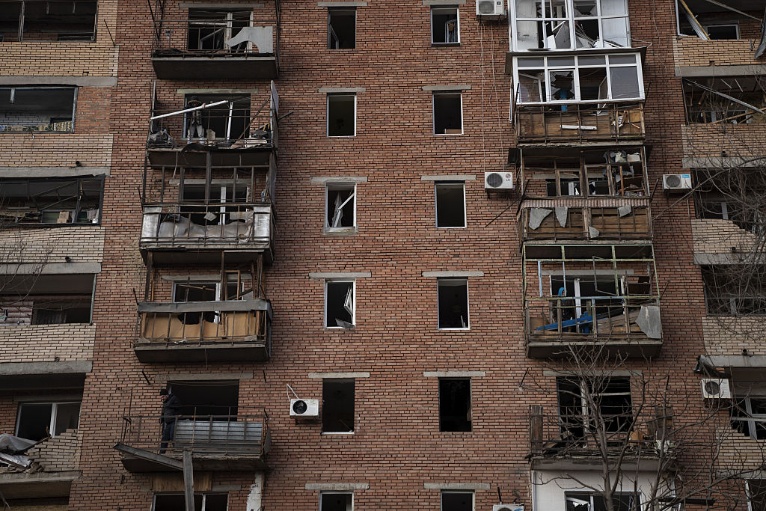
Sloviansk, December 7: A residential building reduced to rubble by Russian FAB-250 bombs and drones. One person died. A 15-year-old boy lies wounded somewhere in the wreckage. This is what Russia calls “liberation.” (Jose Colon/Anadolu via Getty Images)
When Moscow Cheered for Washington
Dmitry Peskov doesn’t compliment American policy. He dissects it, denounces it, weaponizes every syllable for propaganda purposes. For three years, every American decision had been met with threats, grievances, theatrical outrage.
But on December 7, standing before Moscow’s press corps, Peskov delivered something far more dangerous than anger: praise.
“The new U.S. NSS is largely consistent with our vision.”
The words landed like artillery in European capitals. The newly released U.S. National Security Strategy—America’s blueprint for confronting global threats—had earned the Kremlin’s enthusiastic endorsement. Peskov highlighted exactly what Moscow wanted the world to notice: the strategy called for cooperation with Russia and declined to list Russia as a “direct threat” to the United States.
Translation: America was backing down.
Dmitry Medvedev piled on with barely concealed satisfaction. The man who’d spent the war issuing nuclear threats now praised Washington’s willingness to discuss “security architecture”—Moscow’s euphemism for redrawing European defense arrangements to diminish NATO’s role along Russia’s borders.
“The NSS unexpectedly aligns with Russia’s ideas about the need to share security and respect the sovereignty of states,” Medvedev declared. He said this with a straight face. From Moscow. Which had invaded its neighbor specifically to erase sovereignty as a concept.
The window of opportunity for dialogue was now “ajar,” he added—as if Russia hadn’t spent three years trying to bash down Europe’s entire door.
The Kremlin’s strategy was sophisticated and multipronged. By praising the NSS, Moscow created the impression that Trump’s administration was already accommodating Russian interests before negotiations even began. It drove wedges between Washington and European allies alarmed by the strategy’s softer language. And it established baseline expectations: any “dialogue” would start from premises favorable to Moscow, not from Ukraine’s right to territorial integrity.
In Kyiv, officials read the same document in silence. Their unease was warranted.
When your enemy praises your ally’s strategic vision, you’re entitled to worry about whose side that vision actually serves.
When Water Became a Weapon
The bridge near Staryi Saltiv disappeared in fire and twisted steel on December 7. One moment, a crossing point. The next, rubble in water and convoys searching for alternate routes.
Russian missiles weren’t just destroying concrete. They were severing arteries.
The grim inventory: the T-2111 Chuhuiv-Velykyi Burluk road—closed. The T-2104 highway—shut down. And most critically, the Pechenihy Reservoir Dam—struck by direct hits.
At noon, Oleksandr Husarov announced what everyone feared: traffic across the dam was suspended. The structure wasn’t just infrastructure—it was lifeline architecture. It supplied water to Kharkiv, Ukraine’s second-largest city. It provided the only crossing point for Ukrainian forces supplying defensive positions along multiple directions.
The Ukrainian 16th Army Corps had watched it coming.
“The Ukrainian side has long been aware of the potential risks and is ready for the dam to be critically damaged,” they reported with matter-of-fact grimness. “Appropriate response plans were developed in advance.”
Translation: Ukrainian commanders had already identified alternate routes, pre-positioned supplies, and built contingency logistics networks.
South near the Zaporizhia-Dnipropetrovsk border, the pattern repeated. Geolocated footage showed Russian drones striking a bridge across the Haichur River in Andriivka—cutting Ukrainian supply lines to forces on the east bank. The strike revealed Russian confidence: they believed they could cross elsewhere or rebuild after advancing.
Moscow’s strategy was transparent—degrade Ukrainian ground lines of communication, then exploit the gaps. The approach had worked in Pokrovsk where Russian forces concentrated overwhelming assets on a single sector.
But spreading that campaign across northern Kharkiv Oblast meant diluting effects. Strike capabilities stretched thin. Ukrainian forces adapting faster.
The geolocated footage told two stories. Yes, the Pechenihy dam bore missile scars. Yes, bridges lay in twisted ruins.
But Ukrainian recovery crews were already working. Traffic diverted. Military convoys still moving.
Infrastructure could be destroyed. The logistics system behind it had learned to flow like water around obstacles—finding new paths when old ones disappeared.
The Day Balloons Closed an Airport
Vilnius International Airport went dark on December 6. Not from missiles or cyberattacks. From balloons.
They drifted across from Belarusian airspace—simple, low-tech, harmless-looking objects that carried no explosives, launched no missiles, killed no one. Yet they forced a NATO member state to suspend civil aviation operations. Passengers stranded. Flights diverted. An international airport paralyzed by what looked like children’s party decorations.
Hybrid warfare in its purest form.
The balloons achieved their strategic purpose with elegant efficiency: they demonstrated that Russia’s cobelligerent could penetrate alliance airspace at will. They tested whether NATO would actually enforce its own borders when violations came packaged too ambiguously for conventional military responses. And they established precedents—accustoming adversaries to accept violations that would have been unthinkable years earlier.
Western intelligence analysts had a term for this: “Phase Zero”—Russia’s psychological conditioning campaign preparing for potential future NATO-Russia conflict. Not isolated pranks. Strategic groundwork.
Belarus had become Moscow’s proving ground. Hosting Russian forces. Allowing missile launches from its territory. Storing Russian nuclear weapons. The buffer state through which Moscow conducted provocations while maintaining threadbare deniability.
Czech President Petr Pavel understood exactly what was happening.
“I believe there will be a moment, if these violations continue, where we will have to use stronger measures, including potentially shooting down a Russian airplane or drones,” he told the Sunday Times on December 7.
His logic was uncompromising: “Russia wouldn’t allow repeated violations of their airspace. And we have to do the same.”
The violations were “deliberate, well-planned and focused on several objectives”—demonstrating capability, testing Western air defenses, probing alliance resolve. Each successful penetration without consequence invited the next, more aggressive test.
Pavel’s warning revealed deeper calculations. Europe could no longer rely on American commitment to defend every airspace violation. Trump’s ambivalence had made that undeniable.
“We in Europe should be able to do it on our own,” Pavel argued. Translation: Europe needed capability to fight and win without substantial American support.
Because American support was no longer guaranteed.
The balloons kept drifting. And NATO kept calculating whether objects that looked harmless were worth shooting down before they evolved into something worse.
The Night 241 Drones Came
Ukrainian Air Force battle management screens lit up shortly after midnight on December 7. Threat indicators multiplied across displays—241 unmanned aerial vehicles launching simultaneously from Kursk, Oryol, Rostov Oblast, Krasnodar Krai, and occupied Crimea.
A multi-directional swarm designed to overwhelm through sheer numbers.
The aerial armada represented Russia’s strategic pivot. Unable to maintain expensive cruise missile strikes due to production constraints, Moscow had discovered cheaper mathematics: each Shahed cost perhaps $50,000 to produce. Each Ukrainian air defense missile used to shoot it down cost significantly more. Send enough drones, and you bankrupt defenses through attrition.
But Russian forces hadn’t relied solely on cheap drones. Three Kh-47M2 Kinzhal hypersonic missiles launched from Tambov Oblast added complexity—their speed and maneuverability complicating Ukrainian intercept calculations. Two Iskander-M ballistic missiles from Kursk Oblast forced air defenses to track threats operating at vastly different speeds, altitudes, and flight profiles simultaneously.
Ukrainian air defenses rose to meet the challenge.
By 0900 local time—with strikes still ongoing—the Air Force tallied results: 175 drones downed, two of three Kinzhals intercepted, both Iskander missiles destroyed. A 73 percent shootdown rate against overwhelming numbers.
Impressive.
But 65 drones penetrated defenses, striking targets across 14 locations.
In Novhorod-Siverskyi, Chernihiv Oblast, a 50-year-old man died when a Geran drone struck his house. A police officer was injured in the same attack. In Sloviansk, one person was killed and eight wounded. Seven high-rises, twelve houses, three commercial premises, and six cars bore explosive scars.
The casualty reports accumulated with grim routine: two dead, 19 injured across multiple oblasts.
Behind each number stood stories. Families awakened by explosions. Rescue workers pulling victims from rubble. Hospitals treating burns and shrapnel wounds. Communities learning to live with the possibility that any night might bring death from above.
The drones kept coming. The mathematics favored the attacker. And 73 percent effectiveness meant 27 percent got through—every single night.
When Kostiantynivka Burned
The bombardment started sometime after dawn on December 7 and didn’t stop for nearly an hour. Russian artillery crews fired conventional shells and Smerch multiple rocket launchers into Kostiantynivka’s residential districts—not precision strikes against military targets, but area saturation designed to terrorize.
The city was surrounded on three sides by Russian positions. Civilians lived within range of weapons designed to destroy tank columns and fortified positions. They had nowhere to run that Russian guns couldn’t reach.
When the explosions finally stopped, three civilians lay dead and seven wounded. Fourteen homes bore high-explosive scars—roofs collapsed, walls punctured, windows shattered across entire neighborhoods. The mathematics of artillery against residential areas: your home becomes grid coordinates; your life becomes acceptable collateral damage.
In Borova village, Kharkiv Oblast, the war came even closer. Just five kilometers from Russian positions, a combined strike using guided bombs and rocket launchers killed one man and injured two others in their seventies. Five kilometers. Weapons that could reach them within seconds of firing. No warning. No shelter deep enough.
Living at that proximity meant accepting that any moment might bring the sound you’d learned to recognize—the whistle of incoming fire, the seconds to decide whether to run or drop, the mathematics of blast radius versus available cover.
Meanwhile, Russian forces adapted their tactics in real time. Operators had begun attaching ropes to drones to tangle Ukrainian aerial vehicles midair—a low-tech solution to the high-tech problem of Ukrainian drone superiority in certain sectors. Crude but effective. The war’s constant evolution: each side countering the other’s advantages through whatever means worked, regardless of sophistication.
In Kostiantynivka, recovery crews pulled bodies from rubble while calculating how long they had before the next barrage began. The city surrounded on three sides. Nowhere to evacuate. Just the daily mathematics of survival under guns that could reach anywhere.
When Medicine Became a Target
The BaDM pharmaceutical warehouse burned through the night of December 7, flames consuming 60,000 square meters of Ukraine’s capacity to treat its wounded and sick. Russian airstrikes had targeted one of Ukraine’s two largest pharmaceutical distributors—not a military installation, but a civilian facility marked clearly with company logos in a known commercial district.
Easy to identify. Easy to destroy. Devastating to eliminate.
The targeting pattern revealed deliberate strategy. Pharmaceutical distribution centers were large, vulnerable, and undefended. Destroying them created cascading effects throughout Ukraine’s healthcare system without triggering the international outcry that targeting hospitals might generate. Smarter, from Moscow’s perspective, to burn the warehouses that supplied the hospitals than to bomb the hospitals themselves.
BaDM’s statement following the attack used corporate language to describe catastrophe. The company was “effecting changes within its logistics model” and working to “minimize the impact on the availability of medicine.”
Translation: Ukraine’s pharmaceutical supply chain was learning to operate as a wartime military logistics network. Dispersing stocks. Creating redundant distribution channels. Accepting that centralized warehouses had become legitimate targets in Russia’s conception of total war.
For frontline medics, the implications were immediate.
Antibiotics for infected wounds. Pain medications for the dying. Surgical supplies for emergency operations. Insulin for diabetics. Chemotherapy drugs for cancer patients. All of it flowed through distribution networks that Russian strikes were systematically dismantling.
Every destroyed warehouse meant delayed deliveries. Forced substitutions. Life-or-death triage decisions about which patients received which medications when supplies ran short.
In field hospitals near Pokrovsk, medics were already rationing antibiotics. In Kharkiv, oncology wards were stretching chemotherapy protocols. In Kyiv, pharmacies were explaining to elderly customers that their heart medications would arrive late—if they arrived at all.
The flames that consumed BaDM weren’t just destroying concrete and inventory. They were killing Ukrainians who would die from treatable conditions because their medicine burned before reaching them.
Blood for Meters: Northern Sectors
Russian forces attacked everywhere across northern Kharkiv Oblast on December 7. They broke through nowhere.
Around Vovchansk, Vilcha, Lyman, and Synelnykove, Russian milbloggers claimed progress—west of Lyman, east of Vilcha, southern Vovchanski-Khutory. The claims lacked geolocated evidence. Elements of the 128th Motorized Rifle Brigade ground through Vovchansk’s ruins in urban combat that consumed lives faster than territory could be seized.
Near Kupyansk, the Russian Ministry of Defense claimed seizure of Kucherivka, crediting the 121st Motorized Rifle Regiment.
But Ukrainian military observer Kostyantyn Mashovets painted a different picture: Russian forces “struggling to make advances,” the 1st Guards Tank Army withdrawing due to insufficient forces, the 68th Motorized Rifle Division left to hold positions while supply lines stretched thin. Ukrainian fires interdicted Russian resupply through the Kindrashivka-Kalynove corridor north of Kupyansk, creating “significant problems with combat capabilities.”
In Siversk, geolocated footage showed Russian servicemembers conducting infiltration missions into eastern and central sectors—operations that Russian sources immediately claimed as territorial seizures. But these were flag-waving exercises in contested urban terrain, not changes in control. The 88th Motorized Rifle Brigade struck Ukrainian positions in northeastern Svyato-Pokrovske, refining contested zone maps without fundamentally altering who held what.
Near Kostyantynivka-Druzhkivka, Ukrainian forces demonstrated that defense could include offense. Geolocated footage showed Ukrainian advances in northwestern Ivanopillya—small gains, symbolically important.
Then Ukrainian forces destroyed a dam along the M-03 highway northeast of Pryvillya, deliberately flooding areas where Russian forces attempted to advance. The tactical calculation: trading immediate mobility for defensive advantages, creating water barriers that forced Russian units to find alternate crossings or wait.
Russian milbloggers claimed seizures of Sofiivka and advances near Pryvillya and Minkivka. The claims followed familiar patterns—infiltration missions announced as territorial gains that didn’t necessarily change control of terrain.
The Pokrovsk Grinder
The statistics from Pokrovsk on December 7 told the story of industrial-scale attrition.
Ukrainian Operation Task Force East repelled 82 Russian assaults, with 45 concentrated in Pokrovsk sector alone. Russian casualties: 431 combatants eliminated, 983 UAVs destroyed, one tank, 66 other weapons and equipment units, 46 UAV crews struck. Ukrainian rocket forces and artillery: 1,094 fire missions supporting defensive operations.
In Pokrovsk specifically, Ukrainian defenders stopped 45 assault actions toward Nove Shakhove, Novopavlivka, Hryshyne, Chervonyi Lyman, Rodynske, Myrnohrad, Kotlyne, Udachne, Molodetske, and Dachne. Ukrainian troops neutralized 110 enemy combatants including 83 killed, destroyed seven vehicles, one motorcycle, 26 UAVs, one artillery system, and 12 personnel shelters.
Russian forces attacked without confirmed advances.
The battle had evolved into a technological duel. FPV drone operators from Russia’s 80th Sparta Separate Reconnaissance Battalion interdicted Ukrainian supply lines in Myrnohrad. Operators from the 132nd Motorized Rifle Brigade hunted Ukrainian drones. Drone dominance determined tactical success as much as infantry maneuver.
Ukrainian forces organized “additional logistics routes” into Pokrovsk and Myrnohrad—acknowledging primary supply lines had become too dangerous while demonstrating secondary networks could sustain operations. Ukrainian commanders were identifying and eliminating Russian forces already inside Pokrovsk itself while preventing further Russian entry.
The exchange rates were brutal. Russian forces trading massive casualties for zero confirmed territorial gains. But the attacks kept coming—45 separate assault actions in one sector in one day.
Day 1,383 in Pokrovsk. Ukrainian forces held. Russian forces died. And the grinder kept turning.
Southern Advances: Zaporizhzhia’s Slow Collapse
Near Hulyaipole in Zaporizhzhia Oblast, Russian forces made marginal gains on Dobropillya’s eastern outskirts on December 7. Geolocated footage confirmed advances toward the Haichur River—the natural barrier that would determine whether Russian offensives could achieve operationally significant westward momentum.
Russian milbloggers claimed advances to the river itself in eastern Hulyaipole. The assertions awaited confirmation.
DeepState reported Russian occupation of Solodke in Polohiv district, positioning Russian forces northeast of Hulyaipole and increasing pressure from multiple directions. Further north near Yampil in Kramatorsk district, Russian advances threatened new attack avenues toward Sloviansk and Kramatorsk if Russian forces could consolidate gains.
The pattern across southern sectors revealed incremental Russian progress—not dramatic breakthroughs, but steady pressure that accumulated over weeks into operationally significant advances. Each small village seized positioned Russian forces closer to major urban centers, opened new approach routes, and forced Ukrainian defenders to stretch limited reserves across expanding frontages.
For Ukrainian forces, the challenge was managing these multiple threatened sectors simultaneously. Every village lost in Zaporizhzhia meant forces diverted from Pokrovsk. Every advance near Yampil threatened the approaches to Kramatorsk. The strategic dilemma: where to concentrate limited reserves when Russian forces attacked everywhere at once.
Day 1,383. Russian forces traded massive casualties for incremental territorial gains. The Kremlin’s willingness to accept these exchange rates suggested either unlimited confidence in mobilization sustainability or desperation to show progress before potential peace negotiations.
The mathematics of attrition ground forward, measuring progress in meters purchased with blood.
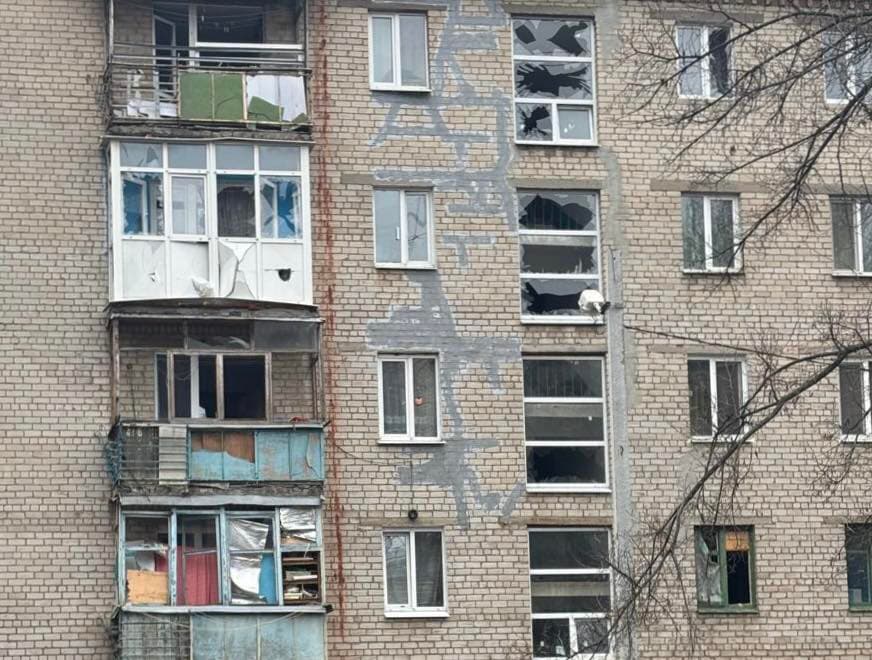
Kramatorsk territorial community after Russian shelling: Windows shattered, walls punctured, another neighborhood learning to live with the mathematics of artillery—where homes become targets and survival becomes chance. (Oleksandr Honcharenko, head of the Kramatorsk Military Administration / Facebook)
The Flag That Came Back
The Ukrainian flag rose over Tykhe village on December 6. Not a symbolic gesture in contested terrain. A complete liberation.
The 67th Mechanized Brigade executed the operation with surgical precision—identifying Russian defensive positions, assembling overwhelming local combat power, and striking with speed that prevented reinforcement. “Through coordinated, well-planned, and decisive actions, Ukraine’s 67th Separate Mechanized Brigade expelled Russian forces from Tykhe and fully cleared the village of occupiers,” the brigade reported.
Russian forces had held Tykhe. Now they didn’t.
The village itself held limited strategic value—a small settlement in Dnipropetrovsk Oblast without critical infrastructure or key terrain. But the demonstration effect reverberated through Ukrainian units defending across multiple sectors. Russian advances weren’t irreversible. Ukrainian forces retained offensive capability. Tactical planning could overcome numerical disadvantages.
For Russian forces, Tykhe’s loss illustrated persistent problems. Taking ground through mass assault was one challenge—holding it against counterattacks proved another. Russian forces lacked sufficient quality infantry to both continue offensive operations and defend rear areas simultaneously.
Every village seized required garrison forces. Air defense coverage. Logistics support. Resources that Russian command couldn’t provide across all contested areas at once.
The mathematics worked against occupation. Russian forces could seize territory faster than they could consolidate it. Ukrainian counterattacks exploited that gap—striking where Russian defenses were thin, overwhelming isolated garrisons before reinforcements arrived, and liberating settlements that Russia’s propaganda had already claimed as permanent conquests.
Tykhe was small. But the principle scaled. If Ukrainian forces could take back one village through careful planning and decisive action, they could take back others.
The flag rose. Russian forces retreated. And Ukrainian units across multiple sectors watched, remembering that defense didn’t preclude offense—that the right moment, the right plan, and sufficient combat power could reverse Russian gains.
Even on day 1,383.
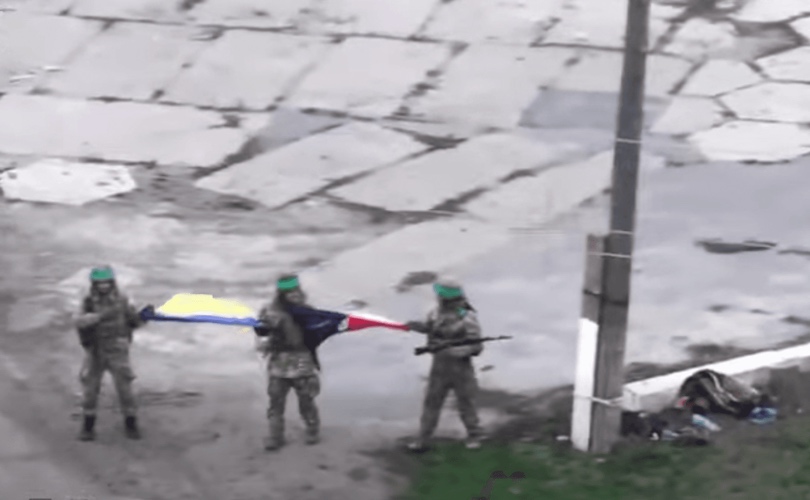
Tykhe village, Dnipropetrovsk Oblast: Ukrainian soldiers raise their flag after expelling Russian forces. The village itself holds little strategic value, but the message resonates—Russian advances aren’t irreversible, and Ukrainian units still know how to attack. (67th Mechanized Brigade / Facebook)
The Son’s Threat
Donald Trump Jr. stood at the Doha Forum in Qatar on December 7 and casually suggested his father might abandon Ukraine. Not as official policy. Not as confirmed strategy. Just a thought, delivered with calculated ambiguity.
“I think he may.”
Three words that sent tremors through Kyiv. The president’s son carried no official position, held no diplomatic credentials, represented no formal policy. But he participated in backchannel talks with Ukrainian politicians, traveled in Special Envoy Steve Witkoff’s circles, and demonstrated willingness to express views his father might prefer to keep ambiguous.
When he spoke about Ukraine, people listened. Not because of his expertise. Because of his last name.
Trump Jr. launched into systematic attack. Ukraine was “a far more corrupt country than Russia” before the war. President Zelensky was “one of the greatest marketers of all times”—not a compliment. American support was unreasonable given Kyiv’s corruption. Sanctions “did nothing to actually help.”
The criticism gained superficial credibility from Kyiv’s genuine corruption scandal that had recently forced multiple high-level resignations, including former Presidential Office head Andriy Yermak.
But Trump Jr.’s corruption concerns appeared selective at best, hypocritical at worst.
He delivered this anti-corruption speech in Qatar—the same country whose government had gifted his family a $400 million luxury “jumbo plane.” His father’s administration had systematically dismantled anti-corruption oversight in the U.S. government. The president faced multiple indictments including racketeering, falsifying business records, and attempting to overturn election results.
Applying rigorous anti-corruption standards to Ukraine while ignoring them domestically revealed an approach less concerned with ethics than with creating pretexts for policy changes.
Accuracy wasn’t the point. The speech aimed to establish narrative framework justifying potential American withdrawal: corruption makes Ukraine unworthy, sanctions don’t work, and the president’s “unpredictability” forces “intellectually honest” negotiations.
Translation: negotiations where Ukraine makes concessions under threat of abandonment.
For Ukrainian officials, this was the nightmare scenario. Not overt abandonment but something more insidious—conditional support that could evaporate if Ukraine didn’t accept terms favorable to Russia.
The corruption angle provided perfect leverage. Real enough to be credible. Selective enough to ignore comparable issues elsewhere. Flexible enough to justify any level of pressure Washington chose to apply.
Day 1,383. The president’s son suggested abandonment. And Ukrainian officials calculated how many concessions they’d be forced to make to keep American weapons flowing.
The Last Ten Meters to Surrender
Keith Kellogg stood at the Ronald Reagan National Defense Forum on December 6 and declared peace was nearly complete. Just ten meters to the goal. Almost there. The final stretch.
The U.S. President’s special representative for Ukraine was set to step down soon, and his California speech read like a swan song—a final attempt to shape the diplomatic landscape before departure.
“The last 10 meters to the goal are always the most difficult,” Kellogg declared, comparing peace negotiations to a battlefield advance. The sticking points: control of Donetsk Oblast and the Russian-occupied Zaporizhzhia nuclear power plant. These represented “the final stretch.”
His optimism contrasted sharply with reality on the ground.
Moscow was demanding full control of four Ukrainian oblasts it only partially occupied. Insisting on territorial concessions that would legitimize conquest. Refusing meaningful security guarantees that might constrain future aggression.
Calling this “the last two meters away” from peace required extraordinary faith in Russian good intentions or willingness to pressure Ukraine into accepting unfavorable terms.
The peace plan that Trump envoys Steve Witkoff and Jared Kushner were reportedly shopping to Kyiv and Moscow contained 28 points covering territorial concessions and security guarantees—the two issues that had derailed every previous negotiation attempt.
According to Axios reporting, calls between American negotiators and President Zelensky had grown tense. The proposals Moscow found encouraging, Kyiv found alarming.
The difference mattered enormously. Ukraine faced the prospect of American negotiators measuring success by reaching any agreement rather than reaching an agreement that preserved Ukrainian sovereignty.
Kellogg’s “last ten meters” metaphor revealed the problem. In his framing, the goal wasn’t Ukrainian victory or territorial integrity—it was simply reaching the finish line of negotiations, regardless of terms.
Peace at any price. Agreement for agreement’s sake. The final stretch before American patience ran out.
For Ukrainian officials listening, Kellogg’s optimism sounded less like hope and more like a countdown to abandonment dressed in the language of diplomatic achievement.
The Czech Who Saw Clearly
Czech President Petr Pavel proposed something remarkable in his Sunday Times interview published December 7: a path to sustainable peace that didn’t require surrendering the principles that had sustained Ukrainian resistance.
He called it a “modern version” of a pan-European security pact—a 21st-century update of the 1975 Helsinki Accords. The framework would recognize Russian concerns about NATO expansion and European security architecture, but only within strict constraints: Russia must recognize the territorial sovereignty of all signatories and accept “enforceable constraints on its behavior.”
The proposal’s genius lay in its conditionality.
Pavel wasn’t suggesting appeasement or accepting Russian demands at Ukraine’s expense. He was offering a future negotiating framework contingent on Russia demonstrating behavior fundamentally different from its current conduct.
“Such a negotiation will have to be led with two equal sides,” Pavel emphasized. “Not Russia imposing on us, but rather coming to an agreement.”
But Pavel’s security vision extended beyond diplomatic frameworks to military capabilities. Europe needed the capacity to “fight and win a war on its own without substantial help from the United States.”
This wasn’t anti-American rhetoric. It was realistic assessment of changing geopolitical realities where American priorities might focus on Asia-Pacific while European security threats demanded immediate attention.
“If the U.S. were busy elsewhere, Asia-Pacific, for example, and unable to provide key capabilities such as intelligence, transport, communications, and logistics,” Pavel warned, “We in Europe should be able to do it on our own.”
Translation: American security guarantees could no longer be assumed automatic. European sovereignty required European capability.
Pavel’s dual vision—diplomatic frameworks for potential future accommodation alongside military capabilities for present deterrence—represented the mature strategic thinking that European leaders needed to sustain through years of continued confrontation.
Russia might eventually accept a security architecture that constrained its behavior. But only if Europe demonstrated both willingness to negotiate and capacity to resist.
Day 1,383. One European leader understood that sustainable peace required credible threat of sustainable war. And that Europe couldn’t wait for America to provide either.
When Engels Burned
The explosions rattled Saratov Oblast overnight on December 7—600 kilometers inside Russia, far from any front line, deep in territory that Russian citizens had believed safe from the war their government started.
Ukrainian drones struck near Engels—home to Russia’s Engels-2 strategic bomber base and the Kristal oil refinery that supplied fuel to the Tu-95 and Tu-160 aircraft that regularly launched cruise missiles against Ukrainian cities.
Russia’s Defense Ministry reported shooting down 77 Ukrainian drones overnight, including 43 over Saratov Oblast. The numbers suggested Ukrainian forces had launched over 100 drones, accepting significant attrition rates to ensure some penetrated Russian air defenses.
Local Telegram channels reported multiple explosions near Engels. Russian authorities declined to confirm specific damage. The pattern was familiar—Ukrainian strikes targeted strategically significant infrastructure, Russian air defenses intercepted some percentage, both sides claimed success.
But the flames rising near Engels told their own story.
The airfield hosted the long-range bombers that attacked Ukrainian cities. The Kristal refinery provided the fuel that kept those bombers operational. Targeting this infrastructure represented direct counter-force operations—destroying Russia’s capacity to attack Ukraine by eliminating the logistics that sustained Russian aviation.
In Rostov Oblast, drone attacks damaged a power line tower in Sholokhovsky district, leaving 250 residents without electricity. Governor Yury Slyusar assured the public no injuries had occurred—a small mercy in exchanges where civilian infrastructure increasingly became legitimate military targets for both sides.
For Russian citizens in regions hundreds of kilometers from Ukraine’s borders, the strikes represented psychological warfare as much as kinetic effects. The war Putin had promised would be quick and victorious had instead brought air raid sirens, power outages, and evacuated airports to cities that had seemed safely distant from combat.
Every successful Ukrainian penetration of Russian airspace undermined Kremlin narratives about invulnerability and winning.
Day 1,383. Ukrainian drones reached 600 kilometers into Russia. The bombers that struck Ukrainian cities now watched fires burn at their own bases. And Russian citizens learned what Ukrainians had known for years—that distance provides no sanctuary when drones fill the skies.
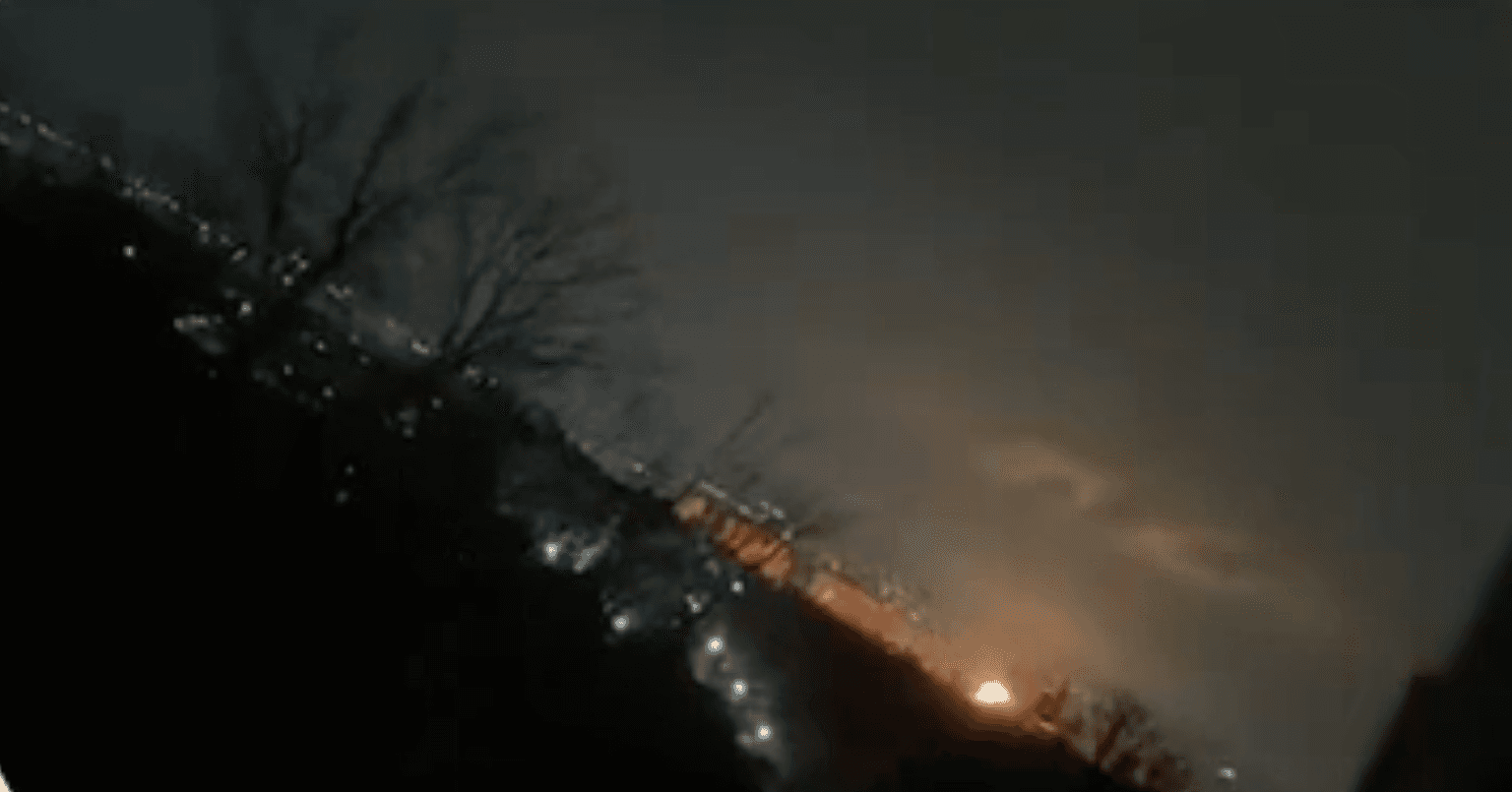
Engels, Saratov Oblast, overnight: Flames rise near the strategic bomber base that launches cruise missiles against Ukrainian cities. Ukrainian drones reached 600 kilometers into Russia to strike the infrastructure that enables bombardment. The war Putin promised would stay far away now brings explosions to Russian heartland cities. (Exilenova Plus/Telegram)
When Beijing Drilled With Moscow
China’s Defense Ministry announced joint Russian-Chinese anti-missile exercises on December 6—drills conducted on Russian territory demonstrating coordination between two militaries whose “no-limits” partnership had deepened significantly since Moscow’s 2022 invasion.
The standard disclaimers followed immediately. The exercises weren’t directed against any third party. Didn’t respond to international developments. Were simply routine military cooperation.
The denials fooled no one.
Joint anti-missile drills between two nuclear-armed powers bordering NATO territory were inherently strategic, regardless of official narratives about defensive purposes. This was Russia’s economic and military lifeline demonstrating that it extended beyond sanctions reach, beyond diplomatic isolation, beyond Western interdiction.
For Ukraine, the implications were profound.
As long as China continued supporting Russia economically, Western sanctions would achieve only limited effectiveness. As long as Beijing provided diplomatic cover, international isolation would remain incomplete. As long as Chinese defense equipment flowed to Russian forces—whether directly or through shell companies and third countries—Ukraine faced an adversary whose supply chains stretched across continents.
The exercises represented another incremental step in a partnership that had evolved from cooperation of convenience to strategic alignment. China wasn’t merely refusing to condemn Russia’s invasion—it was actively enabling it through economic support, diplomatic protection, and military coordination.
Day 1,383. Russian and Chinese forces practiced intercepting missiles together. The message wasn’t subtle: Russia’s war against Ukraine had a powerful backer whose resources dwarfed anything Europe could mobilize, whose diplomatic weight could veto UN resolutions, and whose military industrial capacity could sustain Russian operations indefinitely.
Western leaders could impose sanctions. Beijing could circumvent them. Western allies could provide weapons. China could ensure Russia never ran out. And Ukrainian forces would continue fighting an adversary whose logistics stretched from Vladivostok to the South China Sea.
When Vacations Became Sanctions
The statistics told a troubling story: over 600,000 Russians secured Schengen visas in 2024—an increase of more than 80,000 from the previous year. This happened while Russia intensified its war against Ukraine and multiplied hybrid attacks against European infrastructure.
Russians were traveling to Europe in greater numbers even as their government waged total war against a European neighbor.
The European Commission prepared new guidelines on December 7 to address this absurdity. Border nations like Finland and the Baltic states—which had experienced Moscow’s aggression firsthand—had been demanding action for months. They’d implemented strict visa rules unilaterally, creating a patchwork system where France, Spain, and Italy maintained relaxed policies.
The proposed restrictions aimed to establish common standards that would make Russian travel more difficult and expensive across the entire European Union.
The visa restrictions formed part of the EU’s broader 19th sanctions package, which targeted Russia’s shadow fleet of tankers evading oil embargoes, banned reinsurance for Russian tankers, and imposed limitations on major oil companies. The measure reflected recognition that individual mobility could serve strategic purposes—intelligence gathering, sanctions evasion, or simply maintaining the appearance of normalcy for Russian citizens while their government waged war.
The proposed restrictions would build on Brussels’ 2022 termination of the visa facilitation agreement that had made Russian travel relatively easy for years. But the new guidelines went further, attempting to create unified European approach to what border nations increasingly viewed as a security issue.
For Russian citizens accustomed to European holidays, the tightening restrictions represented another incremental cost of their government’s war—not dramatic enough to spark domestic unrest, but sufficient to remind them that international isolation carried personal consequences.
For European officials, visa restrictions offered a tool that imposed costs without directly escalating military tensions. Targeting the comfortable classes whose support Putin valued while avoiding the economic self-harm of more comprehensive sanctions.
Day 1,383. Russian missiles struck Ukrainian cities. And Russian tourists discovered their summer vacation plans to Paris and Barcelona were becoming more complicated.
What December 7 Revealed
December 7, 2025, revealed warfare conducted simultaneously on military, diplomatic, and informational fronts.
The Kremlin praised American strategic thinking. Trump Jr. accused Ukraine of corruption. Kellogg declared peace nearly complete. Pavel warned Europe might shoot down Russian aircraft. Each statement was a weapon deployed where narrative mattered as much as firepower.
On the ground, the arithmetic of attrition ground forward. Bridges collapsed. Pharmaceutical warehouses burned. Ukrainian defenders held contested terrain through tactical withdrawals and stubborn stands. Daily casualty counts—two dead here, nineteen wounded there—accumulated into strategic exhaustion.
Ukrainian drones struck Engels, 600 kilometers into Russia. Russian drones swarmed Ukrainian skies in waves of 241. Aerial warfare had evolved into industrial-scale attrition where production capacity mattered more than tactical victories.
The international response fractured predictably. Czech leaders threatened escalation. American envoys promised imminent peace. Chinese forces exercised with Russian units. Belarusian balloons drifted across NATO borders.
Beneath the operations lay a fundamental contest: whether democracies could maintain long-term commitments when confronting adversaries who operated on different timescales and accepted different costs.
Russia had demonstrated willingness to sacrifice hundreds of thousands of casualties, destroy its international reputation, and mortgage its economic future. The Kremlin’s enthusiasm for American strategy suggested Moscow believed Western attention spans were short, that political pressures would eventually outweigh strategic commitments, and that patient autocracies would outlast impatient democracies.
Yet Ukraine continued fighting, adapting, surviving. Tykhe’s liberation demonstrated offensive capability. Alternate logistics into Pokrovsk showed operational flexibility. Engels strikes proved Ukraine could reach deep into Russia despite vast disadvantages.
The fundamental question remained: could Ukraine preserve sovereignty while its largest supporter wavered, its enemy’s allies deepened support, and its population endured the fourth winter of total war?
Day 1,383 provided no clear answers. Only more evidence that the war had evolved beyond military contest into comprehensive test of endurance, adaptation, and will.
The Kremlin smiled. Ukrainian forces held. Diplomats spoke of peace while both sides positioned for continued conflict.
And the drone strikes, artillery barrages, and casualty reports continued—marking another day in a war whose ending remained stubbornly out of reach.