
As Russia debuts robot vacuum-bomb launchers and winter cripples Ukrainian drones, Kyiv hits an oil refinery 800 kilometers inside Russia and the Kremlin signals confidence by putting a war milblogger on its election slate.
The Day’s Reckoning
The tracked robot rolled forward in the winter haze and raised its launch rails toward Ukrainian trenches. No crew inside. No fear. Just thermobaric rockets designed to flood bunkers with fire and vacuum.
Eight hundred kilometers away, flames climbed into the night sky above the Saratov Oil Refinery after Ukrainian drones reached deep into Russia’s industrial heartland. For workers reporting the morning shift, distance from the front no longer meant safety.
In Moscow, officials finalized a September election slate that put a war milblogger alongside doctors, diplomats, and Security Council chiefs—political theater carried out as if the war were a distant backdrop.
This was day 1,426.
Winter set the terms. Fiber-optic cables stiffened and froze. Optics clouded with snow. Wind shoved drones off course. The machines that had given Ukraine battlefield eyes through 2024 and 2025 went blind in January’s cold. Russian units held positions taken in cross-border raids not because they were strong, but because Ukraine’s aerial advantage had iced over.
The war’s two rhythms ran in parallel. In Russia, engineers solved a frontline problem by removing humans from the most dangerous job—sending robots to deliver vacuum bombs where crews could not survive. In Ukraine, long-range drones kept proving that Russian industry remained within reach, even in midwinter.
And in the Kremlin, the calendar kept moving. Campaign posters would be printed. Ballots prepared. A performance of normalcy rehearsed for a country at war.
January 19 was the day winter became a weapon, robots carried death to the trenches, and the front line stretched from frozen fields to refinery gates—proof that this war was not slowing down. It was changing.
Fire Without Fear: The Day Robots Learned to Carry Vacuum Bombs
The first frames are grainy and gray, winter light flattening everything into steel and snow. Then the machine comes into view—low, tracked, and unmanned—rolling forward with the calm certainty of something that does not need to survive. On its back: twin 220mm launch rails taken from Russia’s TOS-1A Solntsepek thermobaric system. A robot, now carrying vacuum bombs.
This is the Malvina-M. And it is built for a battlefield where human crews have become liabilities.
Thermobaric weapons work by emptying the air. They disperse an explosive cloud, ignite it, and consume the oxygen around it, creating a pressure wave and heat that crushes lungs, collapses bunkers, and turns trenches into ovens. Russia’s traditional launcher—the TOS-1A on a tank chassis—had to creep within six kilometers of the front to fire. Big. Expensive. Slow. And now, dangerously exposed to Ukrainian drones.
So Russian engineers cut the crew out of the equation.
According to Ukrainian defense outlet Militarnyi, they mounted the thermobaric system directly onto an unmanned ground vehicle. Remote-controlled. Expendable. A machine that can crawl to the edge of a trench, unleash its rockets, and either retreat—or be destroyed—without a single body to recover.
It is the next turn in a war already reshaped by drones. Both sides broke their formations into smaller, hidden units. Maneuver gave way to concealment. Now Russia has taken the most dangerous job on the battlefield and handed it to a machine.
For Ukrainian defenders, the change is more than technical. Anti-armor tactics assume crews who want to live. Crews who hesitate. Crews who retreat.
A robot does neither.
It can be ordered forward into certain destruction if the mission demands it. And when it carries vacuum bombs, the difference is not just tactical.
It is psychological.
You are no longer fighting soldiers.
You are waiting for a machine that does not care if it dies.
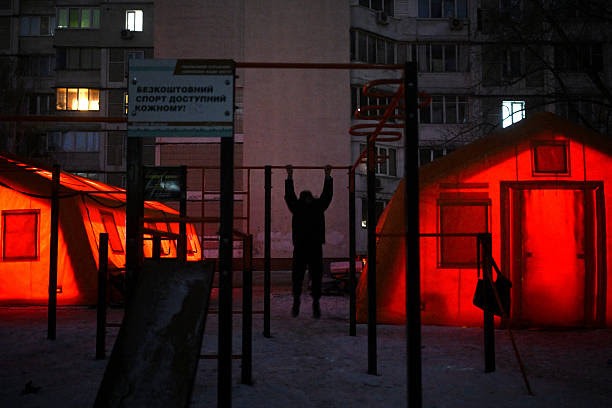
A man exercises at an outdoor sports ground next to tents with heating set up in the courtyard of a residential building in Kyiv. Russia again launched a large-scale attack on Kyiv overnight on Jan. 19-20, targeting critical infrastructure, as the city continues to face widespread heat and electricity outages. (Sergei Gapon / AFP via Getty Images)
Eight Hundred Kilometers of Fire: The Night Ukraine’s Drones Found Saratov
The sky over Saratov lit up just after midnight.
An explosion tore through the oil refinery complex and sent fire climbing into the winter darkness. By morning, workers arriving for their shifts passed scorched walls and drifting smoke — proof that the war had crossed 800 kilometers of Russian territory to reach them.
Ukrainian OSINT groups published the footage hours later. Flames inside the refinery perimeter. A deep strike far from the front. Russia’s Defense Ministry said air defenses shot down 29 Ukrainian drones over Saratov Oblast — a number that revealed the scale of the attack. This was not a single aircraft slipping through radar. It was a swarm.
For Ukraine, Saratov was part of a pattern built across 2025. Long-range drones had burned refineries, fuel depots, and logistics hubs deep inside Russia. Each strike carried the same message: geography no longer protects Russian industry. The war follows pipelines, rail lines, and power grids.
For Russian planners, the problem is permanent. Every system guarding a refinery is one less protecting troops at the front. Russia’s territory is too vast to seal. Too many targets. Too few interceptors.
The economics favor Kyiv. Ukrainian drones cost thousands. Russian missiles cost hundreds of thousands. Even successful defenses drain resources.
But the impact reaches beyond infrastructure.
Oil workers in Saratov now go to work knowing Ukrainian drones may return. Insurance costs climb. Foreign partners reconsider operations. Each strike leaves behind uncertainty that settles over Russia’s energy heartland.
The front line used to be in Ukraine.
Now it runs through Saratov.
Ballots at War: The Kremlin Turns Propagandists into Politicians
The list landed quietly, passed to journalists by three sources who knew where to look. By nightfall, RBK had it: the Kremlin’s top five candidates for September 2026’s State Duma elections.
Dmitry Medvedev. Sergei Lavrov. Captain Vladislav Golovin. Doctor Maryana Lysenko.
And a milblogger.
Yevgeny Poddubny—one of the war’s most influential nationalist correspondents—now stood alongside Russia’s security chief, its foreign minister, a pandemic hero, and the head of Yunarmia. A man who built his authority on the front line was being folded into the state itself.
The lineup radiated confidence. Medvedev and Lavrov were never meant to take seats. They were there to lend gravity to the ballot, to wrap the vote in the prestige of power. Lysenko carried the memory of COVID wards and Hero of Labor medals. Golovin brought youth and military symbolism.
But Poddubny was different.
For years, milbloggers had shaped the war narrative for Russia’s most committed supporters—naming failures, praising brutality, demanding escalation. Now the Kremlin was not silencing that influence. It was absorbing it. Turning information warfare into formal politics.
Medvedev’s placement at the top was no accident. He had become the regime’s voice for its most extreme positions, issuing nuclear threats and repeating justifications for Ukraine’s invasion that official channels avoided. By leading the ticket, he turned that rhetoric into policy.
Lavrov’s presence completed the picture. He spoke of “root causes.” Of “Novorossiya.” Of settlements that demanded Ukrainian capitulation.
This is how Russian elections work. Famous figures headline the slate, then quietly step aside. United Russia fills the chamber. Democracy is performed. Power remains untouched.
And the war continues.
The September vote will unfold under mobilization orders and casualty lists. The Kremlin believes politics can project stability even when the front line refuses to move.
Control the story. Print the ballots.
Call it normal.
Frozen Wires and Blind Skies: The Day Winter Beat the Drones
The cold did what Russian artillery could not.
Along the border near Hrabovske, Ukrainian drone crews watched their screens go unreliable as temperatures dropped. Fiber-optic cables stiffened and froze. Optics clouded with snow. Wind shoved aircraft off course. The machines that once gave Ukraine constant eyes over the battlefield began to fail.
Colonel Viktor Trehubov said it plainly on January 19. Winter weather was shutting drones down. Cables froze. Wind and snow stole targeting. And Russian forces held positions taken in cross-border raids not because they were stronger—but because Ukraine’s aerial advantage had iced over.
The admission carried weight. For two years, Ukrainian units had punched far above their numbers with cheap, prolific drones—cutting supply lines, hunting armor, spotting artillery. The front learned to move under their gaze. Now physics pushed back. Batteries drained faster. Controls lagged. Images blurred into white.
Russia seized Hrabovske on December 21. Through January, they stayed.
Geolocated footage on January 19 showed Russian troops still holding southern Hrabovske, exposed on ground that should have favored Ukrainian fire. The stalemate did not come from Russian dominance. It came from weather.
The implications stretch across the front. If winter keeps degrading drone operations, Moscow gains a seasonal window where artillery and manpower count for more. Ukraine will need heated lines, weather-hard optics, new guidance—or accept a winter of reduced reach.
And the probing has already begun.
Trehubov reported Russian units feeling for weak spots along Kharkiv Oblast’s border, pushing into new areas near Dehtyarne. Small groups test the line. If something bends, they widen the breach. Winter thins surveillance. Probing gets cheaper.
On January 19, the numbers favored Russia for a simple reason.
The sky went blind.
Steel Over the River: When Russia Began Cutting Ukraine’s Roads to War
The bridge shuddered, then split.
A Russian Geran strike drone dropped into the railway span over the Seym River north of Lysohubivka, tearing through steel and concrete nearly 80 kilometers from the front. The blast echoed down the frozen waterway and left a jagged gap where trains once carried ammunition and fuel toward the line.
Geolocated footage published January 19 captured the moment. It was at least the second bridge strike in Sumy Oblast since the start of the year.
This was not random destruction. It was preparation.
Battlefield air interdiction is a slow campaign. Not one strike, but many. Bridges. Rail nodes. Supply depots. Roads that seem ordinary until they vanish. Over weeks and months, the goal is to starve front-line units of fuel, shells, and reinforcements until defenses thin and positions collapse.
Russian forces have run this playbook before. In Pokrovsk. In Hulyaipole. There, logistics broke first. Then the line bent.
The Seym River strike fits the pattern. Russia has probed across the Sumy border in recent weeks, raids meant more for pressure than territory. But cutting bridges is different. It is groundwork. It is what you do before you move.
The logic is simple. Destroy a bridge and trucks detour for hours. Rail traffic stops completely. A single gap ripples through the supply chain. Do it again next week. And the week after. Eventually, the math catches up.
For Ukrainian planners, the message is blunt. The war is no longer only about trenches and tree lines. It is about rivers, rails, and concrete spans far behind the guns.
If Moscow is shaping Sumy for future operations, Ukraine will need to rebuild bridges under fire, reroute convoys through longer corridors, and shield infrastructure that once seemed safely out of range.
The front line still measures gains in meters.
But the war is now being fought on the roads that feed it.
Closing the Noose: Russia Pushes Around Kharkiv’s Northern Gate
The line moved again.
Geolocated footage published January 19 showed Russian troops likely inside Dehtyarne, northeast of Kharkiv City. Another village pressed into the map. Another bend in Ukraine’s northern defenses. A spokesperson for a Ukrainian brigade described the pressure near Vovchansk as constant—assaults that never quite stop, vehicles driving reinforcements forward under fire.
Moscow is no longer charging the town head-on.
Colonel Viktor Trehubov confirmed Russian forces are working the flanks instead, seizing settlements around Vovchansk rather than storming its streets. It is a calculation learned in blood. Urban fighting kills attackers in bulk. Encirclement is slower—but cheaper.
The war reached into Kharkiv itself.
A Russian milblogger posted footage that appeared to show Tornado multiple-launch rockets striking a 330-kilovolt substation in the city. A deliberate hit on civilian power. Darkness as a weapon. Heat cut. Another reminder that Russia’s campaign is not only about ground—it is about making life impossible.
On the ground, the force mix reveals the method. Chechen Akhmat Spetsnaz for shock and intimidation. Motorized rifle units for steady pressure. FSB elements to follow and consolidate control once ground is taken.
This is how Russia advances now.
Edge forward through villages. Close the ring around towns. Break infrastructure inside the city.
Not fast.
Relentless.
The Line Slips East: Russia Grinds Forward Beyond Lyman
The forest line no longer holds where it did.
Geolocated footage on January 19 traced Russian units moving east of Lyman, their advance stitched together through tree belts and frozen fields. More video followed from northwestern Zarichne. Then more. The pattern sharpened.
Myrne. Zarichne. Yampolivka. Torske.
Villages east of Lyman that had resisted for months were now likely in Russian hands, along with the open ground west and southwest of Zarichne. The front did not collapse. It sagged. Then slid.
This is positional war at its most brutal. Russian units push across wide frontages, feeding small groups into fire, absorbing losses to find weak seams. When a position finally bends, commanders rush reserves forward and turn a breach into new ground before Ukrainian lines can reset.
The gains are counted in meters. The cost in bodies.
East of Lyman, the map is being rewritten one field at a time.
And the fields are falling.
The Math of Blood: Russia Keeps Coming at Pokrovsk
The footage shows Ukrainian soldiers edging forward through central Ivanopillya, south of Kostyantynivka—small gains carved out under fire. Proof that the line can still move the right way, even as pressure builds.
But near Pokrovsk, the rhythm is different.
The 7th Rapid Reaction Corps reported on January 19 that Russian units keep trying to slip toward Hryshyne in tiny groups because they can’t mass for full assaults. Ukrainian defenses have stopped advances in northern Myrnohrad. Trenches hold. Positions stand.
Then the battalion commanders speak.
They describe Russians attacking in teams of one to three men, pushed forward again and again until whole regiments are burned out. Prisoners say retreat means execution. So they keep walking into fire. Through mud. Through shelling. Through weather that hides their movement just long enough to reach Ukrainian lines.
Bad weather helps them. Snow and wind mask approach routes. Russian units use the cover to infiltrate. Ukrainian forces rotate, dig deeper, build new defensive groups. The line bends but does not break.
Yet the numbers never go away.
ISW assesses that Pokrovsk and Myrnohrad will eventually fall after a 22-month campaign. Not because Ukraine fights poorly. But because Russia has more men and accepts more deaths.
Even when Ukrainians trade three for one, the arithmetic favors Moscow. Russia feeds the line with bodies. Ukraine counts every loss.
This is the logic of positional war. Gains measured in meters. Victory purchased in blood.
And at Pokrovsk, Russia is still paying.
Holding the Line at Kupyansk: When Propaganda Meets the Battlefield
The claim raced across Russian media: fifteen Ukrainian battalions surrounded. Kupyansk-Vuzlovyi on the brink. Collapse imminent.
Colonel Viktor Trehubov shut it down.
On January 19, Ukraine’s Joint Forces Task Force spokesperson said plainly that the story was fiction. No encirclement. No trapped battalions. Just another attempt to shake morale and convince the world that Ukraine’s defenses were folding.
The battlefield told a different story.
Geolocated footage from the same day showed Ukrainian units striking Russian troops south of Pishchane after failed infiltration attempts. Small groups had tried to slip through. They were spotted. Then hit. The line held.
This is the daily rhythm around Kupyansk. Russian units probe constantly, pressing into tree lines and fields, searching for a seam that might tear open. When nothing gives, they pull back and try again somewhere else. A war of patience and pressure.
The stakes are enormous.
Kupyansk sits on ground that anchors northeastern Kharkiv Oblast. If it falls, Russian forces gain leverage across the entire sector and open new approaches toward Kharkiv City itself. Ukraine knows it. Russia knows it. That is why the pressure never stops.
And that is why the lies keep coming.
Encirclement stories. Imminent collapse. Battalions supposedly lost.
But on the ground, Ukrainian units keep firing back. Russian probes keep failing. And Kupyansk remains in Ukrainian hands.
For now.
Fire in the Rear: Ukraine Reaches Deep Into Russia’s War Machine
The strikes came in waves.
On January 19, Major Robert “Magyar” Brovdi reported Ukrainian drones tearing into Russia’s rear areas, hitting a drone warehouse belonging to the 51st Combined Arms Army in occupied Novokrasnyanka—33 kilometers behind the front. FP-2 drones, built in Ukraine, slipped through the dark and found their target.
The night before, the pattern repeated across occupied Donetsk Oblast. A drone warehouse inside Donetsk City. The Karavan traction power substation near Andriivka. Two more substations in Mariupol. One after another, critical nodes feeding Russia’s war effort went dark.
This campaign has been building since late 2025. Ammunition dumps. Fuel depots. Command posts. Equipment storage. Each strike slows Russia’s tempo and forces its logistics deeper into hiding. Each fire burns through a system already strained by sanctions, bottlenecks, and transport limits.
The drone warehouses mattered most.
Drones now shape every modern fight—scouting, striking, jamming, guiding artillery. Destroying stockpiles means fewer eyes in the sky, fewer guided attacks, more blind spots for Russian units on the line. One warehouse lost can ripple across an entire sector.
For Russian planners, there is no perfect defense. Centralize supplies and invite catastrophe. Disperse them and slow distribution. Every choice bleeds efficiency.
The reach of these strikes—from Novokrasnyanka to Donetsk City to Mariupol—forces air defenses to spread thin. Ukraine concentrates on chosen targets. Russia must try to guard everything.
And the drones keep coming.
They are Ukrainian-made now. Built at home. Launched from Ukrainian hands.
The war machine is being hunted from the inside out.
Engines in the Dark: The Night Russia Sent 145 Drones
The sound arrived first—a rising whine from every horizon.
On the night of January 18 to 19, Russia launched 145 drones toward Ukraine, ninety of them Shahed-type systems, lifting from Kursk and Oryol, Millerovo, Primorsko-Akhtarsk, occupied Cape Chauda in Crimea, and occupied Donetsk City. Waves converged at once.
Air defenses flared across Chernihiv, Dnipropetrovsk, Kharkiv, Kyiv, and Odesa. By morning, 126 drones had been destroyed. Thirteen struck twelve locations. Debris fell in five more places. Energy, industrial, and civilian sites took hits again.
This is the winter pattern: saturate the shield, then let the few that slip through do the damage.
The swarms show Moscow’s adjustment. Launch from multiple axes. Arrive together. Force defenders to split fire and burn costly interceptors. Even with interception near ninety percent, the remainder still burns.
The math favors the attacker—drones cost thousands; missiles cost hundreds of thousands.
So the pressure accumulates. Repair after repair. Night after night.
On January 19, the sky became a frontline—and Ukraine fought it engine by engine.
Closing In on Hulyaipole: Russia Tightens the Vice
The pressure is coming from both sides.
On January 19, Colonel Vladyslav Voloshyn described a front that will not settle near Hulyaipole, Zelene, and Varvarivka. Russian units are pushing from the north and the south, trying to peel Ukrainian defenders off positions on the town’s northern, northeastern, and southern edges. The line flexes. The shelling does not stop.
Then the air campaign surged.
In a single day, Russian aircraft dropped 35 KAB guided glide bombs on Zaliznychne. The strikes were deliberate and concentrated—the kind of firepower Moscow saves for battles it intends to win. Each bomb is costly. Each is chosen. The message is commitment.
This is not a rush into the streets.
Russian commanders are avoiding the meat grinder of urban combat. Instead, they are drawing a ring. Seize the approaches. Cut the exits. Make Hulyaipole a pocket. If the encirclement holds, Ukrainian units will face a choice: withdraw or be crushed under air and artillery without the protection of maneuver.
The tactic is slow. It demands patience and constant pressure from multiple directions. But it suits Russia’s war—an army built for grinding campaigns, willing to trade time for ground.
Around Hulyaipole, the vice is tightening.
And every glide bomb brings the jaws a little closer.
Scorched Ground and Shattered Shields: Russia Can’t Hold What It Takes
The villages are there on the map. On the ground, they are gone.
On January 19, a Russian milblogger admitted what the battlefield had already shown: Russian units cannot consolidate in Stepove, Mali Shcherbaky, or Shcherbaky because there is nothing left to hide behind. Every building has been smashed. Windbreaks are burned to stubble. What remains are open fields and frozen lanes where advancing troops stand naked under Ukrainian fire.
It is the price of Russia’s own method. Months of artillery and airstrikes erased Ukrainian cover—and erased Russian cover with it. When troops move in to hold the ruins, there are no walls, no basements, no tree lines. Ukrainian drones find them immediately. Artillery follows. Ground taken becomes ground lost unless paid for in casualties.
At the same time, Ukraine showed what it can still reach.
The Security Service released footage documenting strikes across occupied Crimea: a 96L6E radar tied to an S-400 system at Belbek, a radar dome and Nebo-U system south of Feodosiya, and two Pantsir air-defense units at Hvardiiske. The tally ran to roughly $4 million in destroyed systems—and fewer Russian eyes watching the sky.
The message ran in two directions. At home, proof of reach. Abroad, proof of capability. On the front, a reminder that Russia’s shield in Crimea is thinning.
Russia burns the ground to take it.
Ukraine hunts the systems meant to hold it.
Building the Shield: Ukraine Hands Its Skies to a Drone Hunter
The appointment came as the sirens kept sounding.
On January 19, President Volodymyr Zelensky named Pavlo Yelizarov deputy commander of the Air Force, a move meant for a winter when Russian drones keep coming and cities keep going dark. It was part of a wider reshuffle at the start of 2026—but this post sits at the heart of the war now.
Yelizarov’s mandate is transformation.
Mobile fire groups. Interceptor drones. “Small” air-defense systems that kill threats on approach instead of after impact. “There will be a new approach,” Zelensky said. “This system will be transformed.”
Defense Minister Mykhailo Fedorov framed the goal as an “anti-drone dome over Ukraine”—a nationwide shield built to break swarms before they reach homes, power stations, and factories. He pointed to Yelizarov’s record leading a National Guard drone unit that, he says, destroyed more than $13 billion in Russian equipment—claiming every fifth Russian tank lost was tied to Yelizarov’s teams.
The choice is unconventional, and that is the point.
Before the invasion, Yelizarov was a businessman and television producer. When the war came, he joined territorial defense, moved into special operations, started building drones, and formed the Lasar Group under the National Guard. A civilian turned innovator, shaped by necessity.
The timing could not be starker. Russia launched up to 100,000 drones in 2025, battering energy grids and apartment blocks and making last winter the deadliest for civilians since 2022. Ukraine has received new air-defense systems—but Zelensky has warned that some arrived when launchers were already “without missiles.”
Now Yelizarov steps in to help Air Force commander Anatolii Kryvonozhko build a shield while the sky is on fire—and more changes are coming.
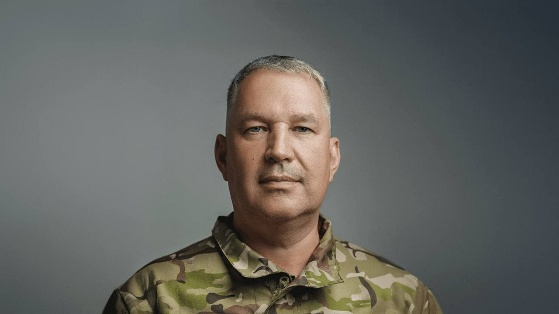
Pavlo Yelizarov, appointed Air Force Deputy Commander by President Volodymyr Zelensky. (Mykhailo Fedorov / Telegram)
The Day’s Meaning: When Winter Turns the Battlefield Against the Machines
The robot rolled forward without a crew, carrying vacuum bombs toward the trench line. No fear. No hesitation. Just rails and rockets and remote control. Russia’s thermobaric unmanned vehicles marked a new phase of the war — a battlefield where the most dangerous work is handed to machines, and human life is removed from the equation. It was engineering shaped by pressure, a solution built for a front where drones made traditional launchers too slow, too visible, too vulnerable.
But the same technology that reshaped the fight also betrayed it.
In January, Ukraine’s drones — the machines that had ruled the skies through 2024 and 2025 — began to fail. Fiber-optic cables stiffened and froze. Optics clouded in snow. Wind shoved aircraft off course. Russian units held exposed positions not because they were strong, but because Ukraine’s greatest advantage went blind in the cold. Winter did what weapons could not. It turned physics into a combat multiplier.
The war, meanwhile, refused to slow.
Ukrainian drones still reached deep into Russia when weather allowed, setting Saratov’s refinery ablaze hundreds of kilometers from the front. Russian units still pressed Ukrainian lines at Kupyansk, probing for weakness, testing the edges of the defense. In Moscow, officials still planned September elections, confident that political theater could proceed even as the country bled.
The Kremlin’s candidate list — with a milblogger standing beside ministers and generals — showed a regime that now treats propaganda as formal power. Narrative control is no longer a background operation. It is governance.
For Ukrainians living through day 1,426, the challenges are stacking up. Robot weapons creeping toward trenches. Bridges collapsing under air strikes. Fronts grinding forward on sheer numbers. Drones freezing mid-mission. A winter that punishes every exposed wire and lens.
This war is not ending.
Prayer For Ukraine
- For protection over the front-line defenders.
Pray for Ukrainian soldiers holding frozen trenches against drones, artillery, and robot weapons. Ask God to guard their lives, steady their hands, sharpen their awareness, and shelter them from unseen threats in the cold and darkness. - For civilians under constant aerial attack.
Lift up families in Kyiv, Kharkiv, Odesa, Chernihiv, Dnipro, and across the country who live under the sound of engines in the night. Pray for warmth where power is lost, peace where fear lingers, and protection over homes, hospitals, and schools. - For wisdom and strength for Ukraine’s leaders and defenders.
Pray for President Zelensky, military commanders, air-defense crews, drone operators, and emergency responders. Ask God to grant clarity in decisions, endurance in exhaustion, and courage when the pressure does not lift. - For those wounded, grieving, and displaced.
Remember the injured in hospitals, the families who have lost loved ones, and the millions forced from their homes. Pray for healing, comfort, provision, and the assurance that they are not forgotten. - For an end to the violence and a just peace.
Pray that God would restrain evil, protect the innocent, and open a path toward a peace that is real, lasting, and rooted in justice — not fear or force. Ask that the war would not be allowed to consume another generation.