
Russian drone operators deliberately targeted miners returning from work and struck a maternity hospital the same day Moscow framed the full theft of Ukrainian territory as a reasonable compromise in stalled peace talks.
The Day’s Reckoning
The DTEK service bus rolled along a road near Ternivka, miners inside thinking about home. A Shahed drone’s camera locked on. The operator watched the feed, identified a civilian vehicle, and chose to strike.
The bus slammed into a fence. Injured men climbed out, pulling each other to safety. A second drone arrived. Its operator saw civilians fleeing the wreckage and made a second choice—guiding the drone into the people already wounded. Twelve miners died. Sixteen were injured, seven critically. Ukraine’s largest private energy company suffered its single worst loss of the war.
Hours earlier in Zaporizhzhia, drones hit a maternity hospital at midday. Women were being examined when the blast tore through the reception area. Six were injured. Later, another strike hit a residential district. A four-year-old boy was among the wounded. “A war waged against life,” the regional governor said.
At the same time in Moscow, officials were selling theft as restraint. Bloomberg reported that Vladimir Putin views Ukraine surrendering all of Donetsk and Luhansk—plus freezing the front in Zaporizhzhia and Kherson—as a “concession.” Foreign Minister Sergei Lavrov amplified the pitch, likening Russia and the United States to fellow great powers and urging bilateral deals that sideline Europe and Ukraine alike.
Elsewhere, SpaceX quietly began restricting Russian use of Starlink on drones. Ukrainian officials confirmed real disruptions. The technology war shifted, slightly, even as the killing continued.
Talks were postponed to February 4–5. The calendar moved. The drones did not.
Day 1,439 revealed the pattern: civilians targeted on roads and in hospitals, maximal demands dressed up as compromise, and diplomacy advancing in parallel with deliberate violence. The war against life pressed on, indifferent to pauses that existed only on paper.
A War That Follows People Home
The miners weren’t soldiers. They weren’t moving equipment or guarding positions. They were going home.
That was the crime.
This war no longer waits at the front line. It rides the roads after sunset. It watches buses leaving factories. It hovers above shift changes and commute routes. It arrives when the workday ends and families expect someone to walk through the door.
Coal dust still clung to their clothes. Hands were sore from hours underground. Thoughts were already elsewhere—dinner tables, children’s voices, quiet rooms after long shifts. The bus carried nothing strategic. No weapons. No troops. Only tired men heading back to ordinary lives.
And still the drones came.
This is what the war has become: not just shells and trenches, but choices made from video feeds. Operators watching civilians clearly and deciding that work itself is punishable. That labor is a target. That getting home alive is optional.
It is a war against workers because energy keeps the country standing. A war against civilians because fear travels faster than tanks. A war against the simple idea that if you survive your shift, you deserve to survive the drive home.
The front line stretches now into bus seats and roadside fences. Into places where no one signed up to fight.
And every evening, when workers leave their jobs, the war goes with them.
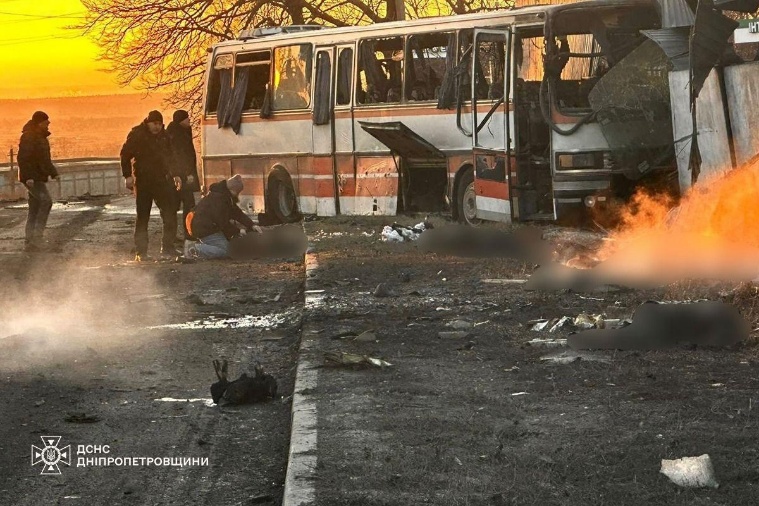
The aftermath of a Russian attack near the city of Pavlohrad in Dnipropetrovsk Oblast, Ukraine. (Ukraine’s State Emergency Service / Telegram)
The strike came at noon, when the maternity hospital was busiest.
Women sat in examination rooms. Nurses moved between desks. A reception area filled with quiet conversations and paperwork. Then the drone hit, igniting a fire in the gynecological department—flames where expectant mothers had come for reassurance.
Six people were injured. Two of them were women being examined when the blast tore through the building. The timing was precise. Midday. Maximum presence. Maximum harm.
Governor Ivan Fedorov called it proof of a war waged against life. The words fit because the target did. A place where pregnancies are monitored, where infants are checked, where life is supposed to be protected—chosen deliberately.
Later that same day, another drone struck a residential district. Three more were injured: two women and a four-year-old boy. Different locations, same logic. Homes. Hospitals. Children.
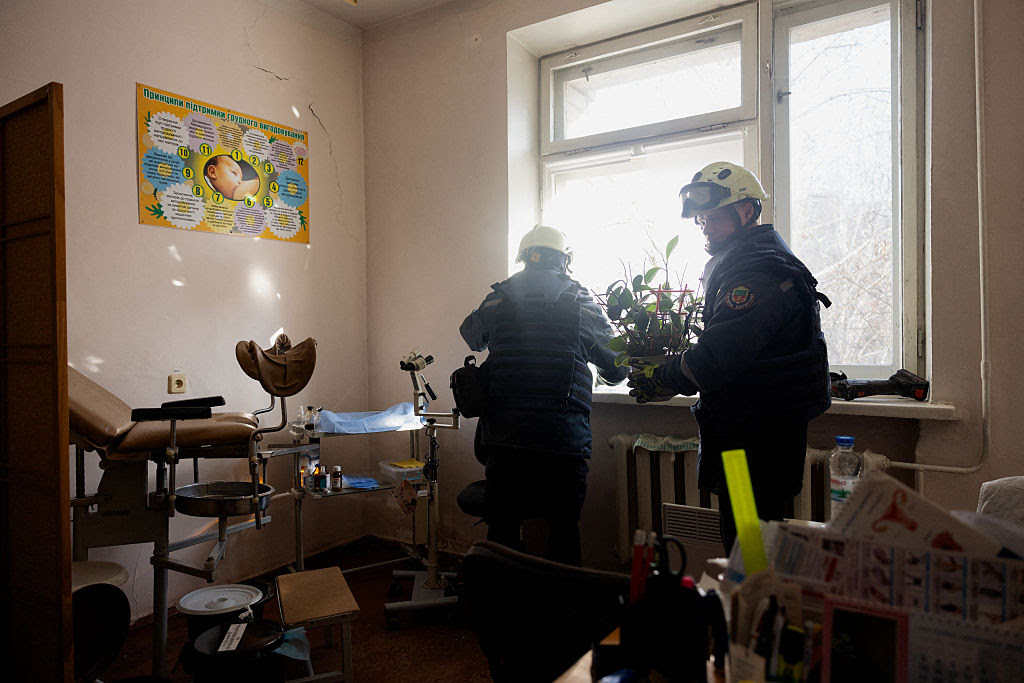
A rescue worker clears debris after a Russian drone struck a maternity hospital in Zaporizhzhia. (Photo by Tetiana Dzhafarova / AFP via Getty Images)
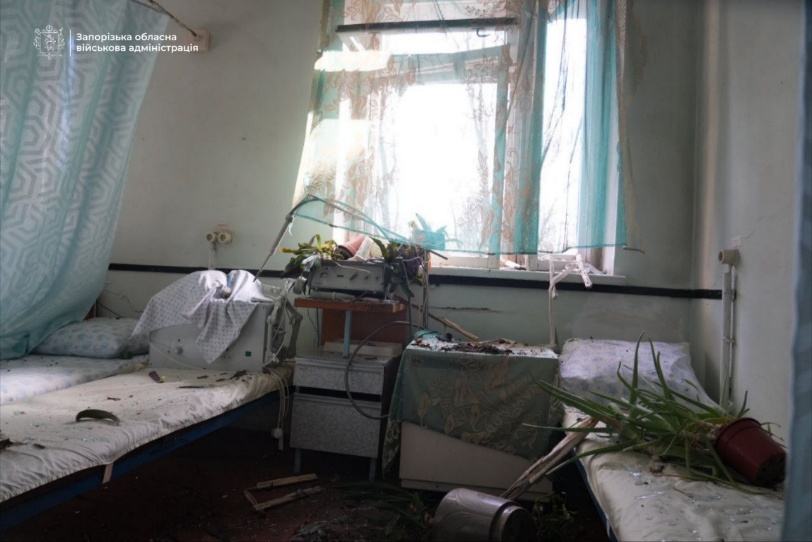
The aftermath of a Russian attack on the maternity hospital in the city of Zaporizhzhia, Ukraine. (Zaporizhzhia Regional Military Administration)
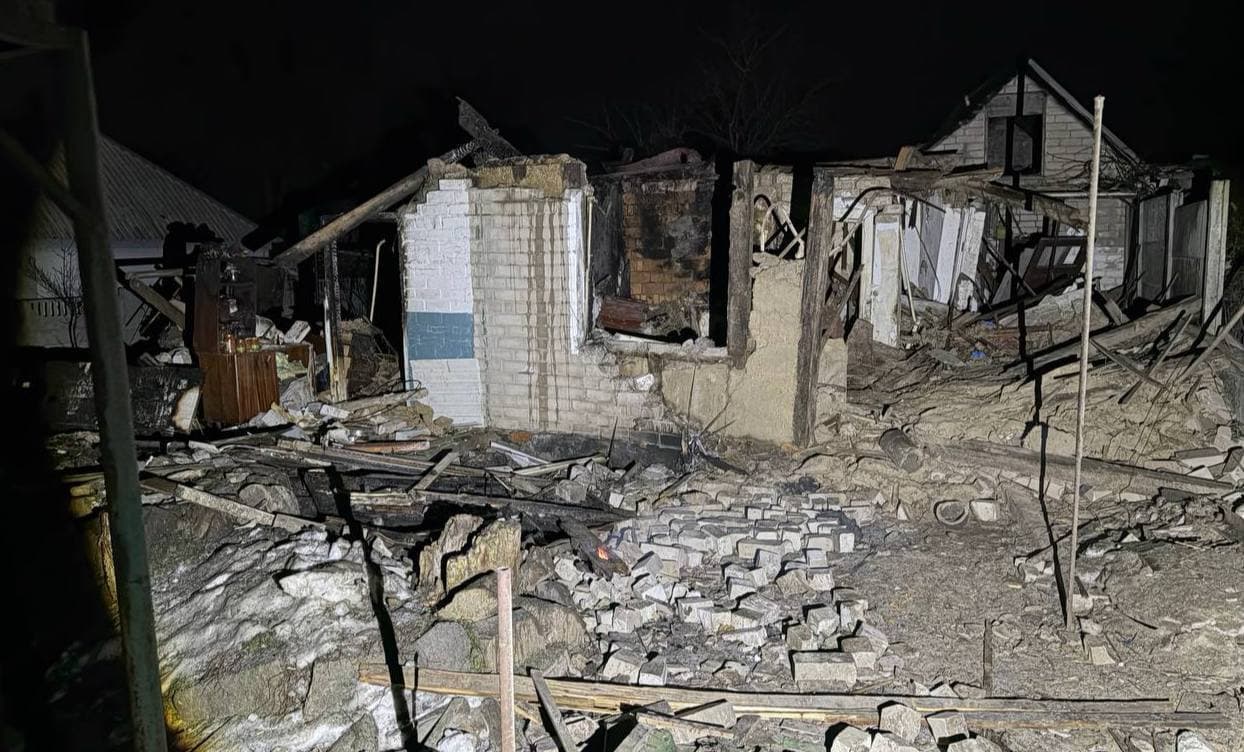
The aftermath of a Russian attack on the city of Dnipro, Ukraine, overnight. (Oleksandr Hanzha/Telegram)
Nearly three dozen buildings were damaged across the city. Apartment blocks scarred. Houses shattered. Windows blown out, smoke rising over neighborhoods already worn thin by years of bombardment.
This was not new. In 2022, a Russian strike on a maternity ward in Vilniansk killed a two-day-old boy. The pattern never stopped—medical facilities hit, pregnant women endangered, infants caught in the blast radius.
The attack landed during the final hours of a ceasefire that applied only to Kyiv. Zaporizhzhia was never covered. The hospital was never protected.
The wounded were treated. The buildings would be repaired.
The message remained: even places where life begins are not off-limits.
The “Compromise” That Demands Everything
Behind the scenes, the language of peace was being hollowed out.
Russian insiders made the position clear: Moscow saw little chance of a real breakthrough in talks, yet would continue presenting its demands as reasonable. The word concession was doing heavy lifting—bending under the weight of what it was asked to hide.
The framing came from the top. Ukraine surrendering all of Donetsk and Luhansk, while freezing the current frontlines in Zaporizhzhia and Kherson, was described as Russian restraint. The logic was deliberate and inverted. Russia had illegally annexed four entire oblasts in 2022. It had failed to seize them fully. Not taking what it could not yet capture was now being sold as moderation.
Military delegations could debate mechanics—monitoring lines, sequencing ceasefires, technical enforcement. But territory was reserved for leaders. And the leadership position was unchanged: total acquisition, minus unfinished work, counted as compromise.
Earlier proposals had pressed Ukraine to concede Donbas outright. Later versions tried softer language—demilitarized zones, economic corridors. Moscow rejected them all. Instead, it offered a trade that wasn’t one: accept maximal losses in the east, and Russia would temporarily stop insisting on full control in the south.
This was the deal. Hand over land Russia could not take by force, and Russia would pause its demands elsewhere.
The dishonesty was staggering. Claim territory you don’t control. Fail to seize it militarily. Then demand it diplomatically—and expect appreciation for not asking for more.
Bloomberg’s reporting confirmed what Kyiv already understood: Russia was performing reasonableness for foreign audiences while keeping its ambitions intact. Talks would resume February 4–5 in Abu Dhabi. The language would soften. The demands would not.
Ukraine would face pressure to accept loss disguised as peace.
And the gap between Russian “compromise” and Ukrainian sovereignty would remain unbridgeable.
Flattery as Strategy: How Moscow Tried to Talk Over Ukraine
The interview was delivered smoothly, almost casually, but every word was placed with care.
On February 1, Foreign Minister Sergei Lavrov spoke to Kremlin journalist Pavel Zarubin with a clear audience in mind: Donald Trump. Russia, Lavrov said, stood alongside the United States as a fellow great power. The two nations should work together. Build economic projects. Strike bilateral deals. Avoid confrontation—especially the “heated” kind.
Then came the turn.
Europe, Lavrov warned, was trying to drive wedges between Washington and Moscow. The implication was unmistakable. Leave Europe out. Negotiate directly. Treat security concerns from Poland or the Baltic states as background noise. Reduce the conversation to two capitals—and one problem to be managed.
The tactic was familiar. Since Trump’s return to office, the Kremlin had leaned heavily into great-power language, recasting Russia as heir to Soviet superpower status rather than a regional aggressor fighting a war of territorial expansion. The flattery was deliberate: speak to Washington as an equal, and the conversation shifts from invasion to partnership.
Lavrov’s pitch aimed to narrow Trump’s focus. Bilateral deals instead of alliances. Arms talks instead of borders. Ukraine not as a negotiating party, but as an object—its future discussed by others.
The assumption was simple. That Trump would value exclusive power-to-power negotiations over European unity. That economic incentives might outweigh security commitments. That sidelining Europe would feel like efficiency, not error.
Whether it would work was unclear. But the timing mattered. Lavrov made his case just days before talks in Abu Dhabi, laying out Moscow’s preferred script in advance.
That same day, Russian drones struck miners on a civilian bus and hit a maternity hospital. The language of partnership floated above a battlefield where civilians were the targets.
The contradiction was stark.
But contradictions only matter if the listener refuses the frame.
When the Signal Finally Went Dark
For months, the drones kept flying farther than they should have.
They came out of the darkness, struck deep behind Ukrainian lines, and vanished—guided not just by operators, but by a civilian technology never meant to be a weapon. Starlink kept them connected. Starlink kept them lethal.
On February 1, that began to change.
Elon Musk posted a brief message saying SpaceX had taken “effective” steps to stop Russian forces from using Starlink on drones. The wording was careful. The shift was not. Russian drone operators were suddenly losing signal mid-flight.
Within hours, Ukraine confirmed it. Defense Minister Mykhailo Fedorov said the results were real. Work was already underway on the next phase—systems that would ensure only authorized terminals could function inside Ukraine. Publicly, he thanked Musk. Privately, Ukrainian commanders watched the sky.
Russian milbloggers noticed almost immediately. At speeds above 75 to 90 kilometers per hour, connections were failing. Shahed drones. Molniya FPVs. BM-35 strike drones. The long reach Russian forces had come to rely on was shrinking.
The restrictions came late. Ukrainian officials had warned for weeks—shown evidence—that Russian units were using Starlink-equipped drones to extend strike ranges dramatically. The terminals had arrived through gray markets, intermediaries, captured equipment. However they came, they were there. And they were killing.
The dilemma had always been cruel. Ukrainian troops depended on Starlink for frontline communications. Many trusted it more than radios. Restrict it too broadly, and Ukrainian defenses suffered. Restrict it too narrowly, and Russian drones kept coming.
In 2024, Musk had dismissed reports of Russian Starlink use as false. By February 1, the proof was undeniable.
The restrictions disrupted Russian operations. That mattered. But the delay mattered too. By the time the signal dimmed, Ukrainian rear areas had already burned.
Better late than never—but never late without cost.
For one day, the drones lost their edge. Tomorrow, the technology war would continue.
Meetings on the Calendar, Missiles in the Sky
The date changed. The war did not.
On February 1, President Volodymyr Zelensky announced that trilateral talks involving the United States, Ukraine, and Russia would take place in Abu Dhabi on February 4–5, not that day as originally planned. The shift reflected familiar uncertainty—over format, substance, and whether the talks would produce anything beyond another rearranged schedule.
Moscow confirmed the new dates. Behind the scenes, Russian envoy Kirill Dmitriev had already met U.S. officials in Miami. Bilateral conversations first. Ukraine brought in later. Positions shaped before Kyiv entered the room.
Zelensky said Ukraine was ready for real discussion, for a framework that might move the war toward a dignified end. He planned to meet his own team the next day to prepare. He spoke of an intense month ahead, of American mediation focused on reducing attacks.
“The people’s trust,” he said, “depends on de-escalation.”
That same day, twelve miners were killed on a bus. Six people were wounded in a maternity hospital. De-escalation was not reaching the places that mattered.
The talks were expected to center on an energy ceasefire and the future of Donbas. Russia’s position was unchanged: Ukraine must cede all of Donetsk and Luhansk—including territory Russia does not control. Bloomberg reported that Vladimir Putin regarded this demand as a concession.
Trump had recently said Putin agreed to pause attacks on Ukrainian cities for a week. Moscow clarified the pause applied only to Kyiv and only until February 1. Zaporizhzhia was not covered. Neither was the road near Ternivka.
The calendar kept moving. February 1 became February 4–5. Miami, then Abu Dhabi. Bilateral meetings, then trilateral ones. Frameworks drafted while drones kept flying.
What remained certain was this: talks would proceed while Russian attacks continued. Peace would be discussed as civilians were buried.
Diplomacy advanced.
The war did not wait.
The Border That Wouldn’t Stay Quiet
The satellite images arrived without drama. Concrete pads. Fresh earth. Long-neglected structures coming back to life.
On February 1, Finland’s national broadcaster Yle published images showing Russian military construction at the Rybka base in Petrozavodsk, about 175 kilometers from Finland’s border. For two decades, the Soviet-era garrison had been little more than a relic. Now it was being reclaimed—assigned to the 44th Army Corps of Russia’s newly formed Leningrad Military District.
The base already had what mattered: an airfield, equipment depots, space to grow. Russia was expanding all of it. The ruins of an old military past were being reshaped into infrastructure for a future one, aimed squarely at NATO’s newest member.
Farther north, the pattern repeated. In Kandalaksha, just 115 kilometers from Finland, a new military town was rising at the Luptsche-Savino garrison—purpose-built for an artillery brigade and an engineering brigade. Not symbolic forces. Practical ones.
This was not improvisation. In 2024, Russia split its Western Military District into Leningrad and Moscow districts, tightening command along the northern frontier. The 44th Army Corps was formed the same year. Pieces moved into place with methodical patience.
The rhetoric had come first. Russian officials, including Vladimir Putin, warned that Finland’s NATO membership was hostile. Used the same language once deployed against Ukraine. Built the narrative before building the bases.
The pattern was familiar: name the threat, claim provocation, prepare the ground.
Finland joined NATO seeking protection from invasion. It received security guarantees—but not quiet. Russian pressure did not vanish. It reorganized.
The message was unmistakable. Membership bought allies if war came. It did not buy relief from being watched, tested, and prepared for.
The border remained intact.
The pressure did not lift.
The Sky That Kept Being Tested
The objects drifted in quietly, carried by wind and intent.
On the night of January 31 into February 1, “balloon-like” devices crossed from Belarus into Polish airspace. Poland’s Armed Forces reported the intrusion the next day. It was not an isolated event. It was the third launch in four days.
Lithuania had already seen more. Forty-two balloons in a single stretch of airspace—an unprecedented number. The incursions were growing more frequent, more routine, harder to dismiss as coincidence.
Polish officials said the purpose was reconnaissance. Test the radars. Measure response times. See what lights up the screens and how quickly decisions are made. This was Phase Zero—conditioning before conflict. The kind that doesn’t start with missiles, but with normalization.
The dilemma was deliberate. Shoot the balloons down and risk accusations of NATO aggression against “smugglers.” Ignore them and allow systematic violations of sovereign airspace to become background noise. Either choice favored Moscow.
Officially, the balloons were blamed on cigarette smuggling. The story offered deniability, but it fit poorly. Smuggling didn’t explain the sudden surge. Didn’t explain the coordination. Didn’t explain why the launches increased as Belarus became more deeply folded into Russia’s war machine.
Belarus was no longer a buffer. It was a platform.
That same pattern appeared farther west. German outlet Bild reported that roughly twenty-three drones flew over the Immelmann military airfield in Lower Saxony. No actor was immediately identified, but German authorities had previously pointed to Russia in similar incidents.
Balloons over Poland and Lithuania. Drones over Germany. Different tools, same purpose.
NATO’s eastern flank was being pressed not with force, but with questions. How much provocation triggers a response? How much intrusion becomes acceptable?
The sky kept testing the answer.
Meters Bought With Bodies
The fighting did not stop. It simply failed to move.
On February 1, Russian forces pushed across multiple fronts, pressing forward where they could, probing where they could not. The maps barely changed. The cost did.
In northern Kharkiv Oblast, Moscow claimed it had seized Zelene, northeast of the city. Within hours, the claim unraveled. A Russian milblogger tied to the Northern Grouping admitted only two soldiers had slipped into the village—no control, no breakthrough. Zelene had been “taken” before, then lost, then taken again on paper. On the ground, it remained contested.
Between Zelene and Sereda, Russian infantry crossed open fields and paid for every step. The same milblogger described heavy losses in the 9th Motorized Rifle Regiment—so severe that casualty evacuation became impossible. Soldiers refused to advance. Commanders responded by sending cooks, drivers, air-defense crews forward as infantry. Units from the 41st Regiment were pulled back from Starytsya, too depleted to hold.
Elsewhere, Ukraine clawed back inches. Geolocated footage showed Ukrainian advances in eastern Riznykivka, east of Slovyansk—a small gain, but one achieved in a sector Russia had been grinding for months. Near Kostyantynivka, Ukrainian forces struck a house Russian infiltrators had occupied in Minkivka, eliminating small teams slipping into the city. Claims of Kostyantynivka’s capture were denied, again.
Fog hung low across the front. Drones struggled. Infiltration teams moved in ones and twos, sometimes on ATVs. The same cover that helped Russian scouts also allowed Ukrainian resupply and rotation.
Behind the lines, Ukrainian strikes hit drone control points and command posts. On the Arabat Spit, partisans knocked out a Russian communications tower, silencing electronic warfare equipment.
Across Sumy, Kharkiv, Donetsk, and Zaporizhzhia, assaults came and stalled. Counterattacks followed. The line bent, but did not break.
Meters changed hands.
Nothing decisive moved.
The Day’s Meaning
February 1 revealed the war’s central lie with brutal clarity.
Air defenses worked. Seventy-six of ninety drones were shot down overnight. The numbers looked reassuring—until fourteen still got through. Enough to kill. Enough to wound. Enough to prove that interception rates mean little to the people standing where one drone lands.
Across Ukraine, civilians paid the margin of error. A man and woman died in Dnipro. Elderly men were wounded in Sumy Oblast. Villages in Kharkiv and Kherson were struck. Then came the moments that defined the day: miners killed on a bus as they tried to get home; women wounded in a maternity hospital at midday; a four-year-old injured in a residential neighborhood.
These were not accidents. They were choices.
The day exposed the growing contradiction between diplomacy and reality. A ceasefire was said to exist—limited to Kyiv, limited in time, and meaningless everywhere else. It expired on schedule, but its protection had never arrived. The miners died during its final hours. The maternity hospital was hit during its final hours. The pause existed only in statements.
At the same time, negotiations advanced. Talks were rescheduled. Frameworks discussed. Russia presented total territorial seizure as “concession.” Lavrov spoke of great-power deals. Starlink restrictions finally began to bite. Military fronts stalled without breakthroughs. Hybrid pressure mounted along NATO’s borders.
All of it happened in parallel.
February 1 showed that the war’s center of gravity is no longer territory alone—it is credibility. Ceasefires that don’t protect civilians erode trust. Talks that proceed while violence escalates feel detached from lived reality. Diplomacy that ignores who is dying loses moral weight.
The day did not answer whether negotiations will bring peace or formalize loss. It answered something simpler and darker: until civilian lives matter at the negotiating table, the war will continue to speak louder than the talks.
Prayer For Ukraine
- For the families of the miners and civilians killed
Pray for comfort for families who buried loved ones taken while simply returning home, seeking care, or living ordinary lives. Ask that grief would not harden into despair, and that God’s presence would be felt in homes now marked by absence. - For the wounded and the traumatized
Pray for healing for those injured in the bus attack, the maternity hospital strike, and residential bombardments. Ask for strength for doctors, nurses, and first responders who treat wounds while carrying their own exhaustion and sorrow. - For protection of civilians and restraint of violence
Pray that attacks on noncombatants would cease, that those who target civilians would be stopped, and that systems meant to protect life would hold firm. Ask God to shield the vulnerable where human defenses fail. - For truth and wisdom in diplomacy
Pray that negotiations would be guided by justice rather than convenience, and that false compromises would be exposed for what they are. Ask for wisdom and courage for leaders so that peace efforts do not come at the cost of innocent lives. - For endurance and hope for Ukraine
Pray for resilience for a nation carrying loss day after day. Ask that hope would not be extinguished by ongoing violence, and that faith, solidarity, and moral clarity would sustain Ukraine through another long stretch of uncertainty.