
As glide bombs killed a mother and 11-year-old girl in Sloviansk, the Kremlin tightened its grip at home—silencing Telegram, coercing POW families, and pushing a peace plan designed to leave Ukraine defenseless.
The Day’s Reckoning
The first glide bomb hit Sloviansk just after morning light settled over the frozen rooftops. The second followed. Then four more.
Six FAB-250s in total, dropped on a city barely 25 kilometers from the front.
When the dust cleared from a residential building, an 11-year-old girl and her mother were dead. Sixteen others were injured. In Donetsk Oblast, negotiations about territory were unfolding in distant conference rooms. In Sloviansk, the argument was settled by explosives.
At the same hour, Sergei Lavrov sat beneath studio lights on Russian state television, blaming the United States for the war’s stalemate. In Moscow, federal censors were throttling Telegram—the messaging platform Russian soldiers rely on to coordinate drone strikes and air defense. And across occupied territory, Russian forces were threatening the families of Ukrainian prisoners of war, demanding they register stolen Starlink terminals under their own names, warning of prosecution if they refused.
On the battlefield, Russian troops pressed along nearly every active axis—Kharkiv, Kupyansk, Lyman, Kostyantynivka, Pokrovsk, Hulyaipole, Orikhiv, Kherson. The map shifted only slightly: Zaliznychne fell. Elsewhere, Ukrainian defenses held. Overnight, Ukrainian strikes hit fuel depots, drone facilities, repair units, and radar stations from Bryansk to occupied Zaporizhzhhia.
Far from the front, other signals flickered. In Cortina d’Ampezzo, Ukraine’s Olympic flag bearer returned to training wearing a banned helmet honoring fallen athletes. In Brussels, officials discussed accelerating Ukraine’s path to EU membership. In Rome, 80 generators were loaded for a winter-strained grid.
Day 1,447 was not defined by a breakthrough.
It was defined by control—of territory, of information, of narrative—and by the cost of losing it.
The Script of Surrender: Lavrov’s War That Never Changes
Under the studio lights of NTV, Sergei Lavrov did not improvise.
He adjusted his papers, looked into the camera, and delivered a familiar accusation: Washington is to blame. The latest sanctions from Trump’s administration. The secondary tariffs on buyers of Russian oil. Proof, he said, that American policy is “moving in the wrong direction.”
Across Moscow, State Duma official Alexei Chepa reinforced the line. Not words, he insisted—actions. And those actions confirm the United States remains Russia’s adversary.
Then Lavrov reached for a document the Kremlin keeps in permanent rotation: the 2022 Istanbul Protocols. He spoke of them as unfinished business, as if Ukraine had once agreed and simply forgotten. But the fine print tells another story.
Under that framework, Russia—the invading power—would have been named a neutral “guarantor” of Ukraine’s security. Moscow and Beijing would hold veto power over any response to future aggression. Ukraine would lose the right to receive military assistance from allies. Its armed forces would be capped at levels too small to defend its own borders.
Translation: sovereignty in name, vulnerability in practice.
Lavrov presented it as peace. It was structured as paralysis.
Three years into the war, the Kremlin’s negotiating position has not shifted a centimeter. What Moscow demands now is what it demanded before February 2022: a Ukraine too weak to resist and a Europe too divided to intervene.
The cameras switched off.
The script remained.
When the Signal Dies: Moscow Cuts the Lifeline to Its Own Front
The complaints started quietly.
Messages stalled. Videos wouldn’t load. Frontline channels froze mid-update. By the morning of February 9, Telegram users across Russia were refreshing their screens in frustration. By February 10, Roskomnadzor made it official: the platform was being throttled.
The explanation sounded routine—fraud prevention, extremism control. But the real audience wasn’t scammers. It was the 144 million Russians who rely on Telegram daily. It was the milbloggers whose battlefield posts have often revealed more about the war than state television ever would.
Sources close to the Presidential Administration told opposition outlet Verstka this was a “test.” A rehearsal for something larger. September’s State Duma elections are approaching, and the Kremlin fears what 70 percent victory margins might provoke. Pavel Durov, Telegram’s founder, offered a sharper interpretation: Moscow wants users pushed onto Max, the state-controlled messaging app launched in March 2025 that has struggled to attract followers.
Then the soldiers started speaking up.
Milbloggers warned the throttling had a “profound” impact on military communications. One called Telegram a “lifeline.” Air defense units. Maneuver groups. Drone coordination. All slowed.
This came just nine days after SpaceX shut down Russian Starlink terminals, cutting connectivity for roughly 90 percent of Russian units. Partisan sources described command structures as “effectively paralyzed.” Friendly fire incidents reportedly increased.
In the same week, Moscow severed both the satellite link that enabled drone strikes and the messaging app that filled the gaps when the internet failed.
An army fighting on foreign soil was now fighting its own bandwidth.
Political control came first. Operational efficiency came second.
And on a modern battlefield, that order matters.
Forced Signatures: How Moscow Turned POW Families Into Targets
The phone call doesn’t come from a number you recognize.
It comes with instructions.
On February 10, Ukraine’s Coordination Headquarters for the Treatment of Prisoners of War issued a warning: Russia is pressuring the families of captured Ukrainian soldiers to register Starlink satellite terminals under their own names.
The demand sounds technical. It isn’t.
After Ukraine and SpaceX introduced a mandatory whitelist system that shut down Russian Starlink terminals, Russian units lost a critical tool for drone coordination and battlefield communication. Instead of abandoning the network, they searched for a workaround. They found one in the relatives of the people they hold captive.
Registering a Starlink terminal requires identity verification through Ukrainian government platforms—Army+, the Diia app, or an administrative services center. Once a Ukrainian citizen’s name is attached, the terminal works. If that connection guides a drone strike against Ukrainian infrastructure, the registered individual can face criminal liability under Ukrainian law.
Translation: sign the paperwork, and you risk prosecution at home. Refuse, and your captured son or husband remains at the mercy of his jailers.
Communications expert Serhii “Flash” Beskrestnov reported that Russian operatives are offering up to ₴10,000 (about $232) for the registration. Payment for a signature that could help direct explosives.
It is coercion layered on coercion.
Families already living with the silence of captivity are now being asked to choose between legal danger and something worse. Ukrainian officials urge anyone approached to contact the Coordination Headquarters and law enforcement immediately.
On this front, there are no trenches.
Only pressure points.
Six Bombs and One Number: 681
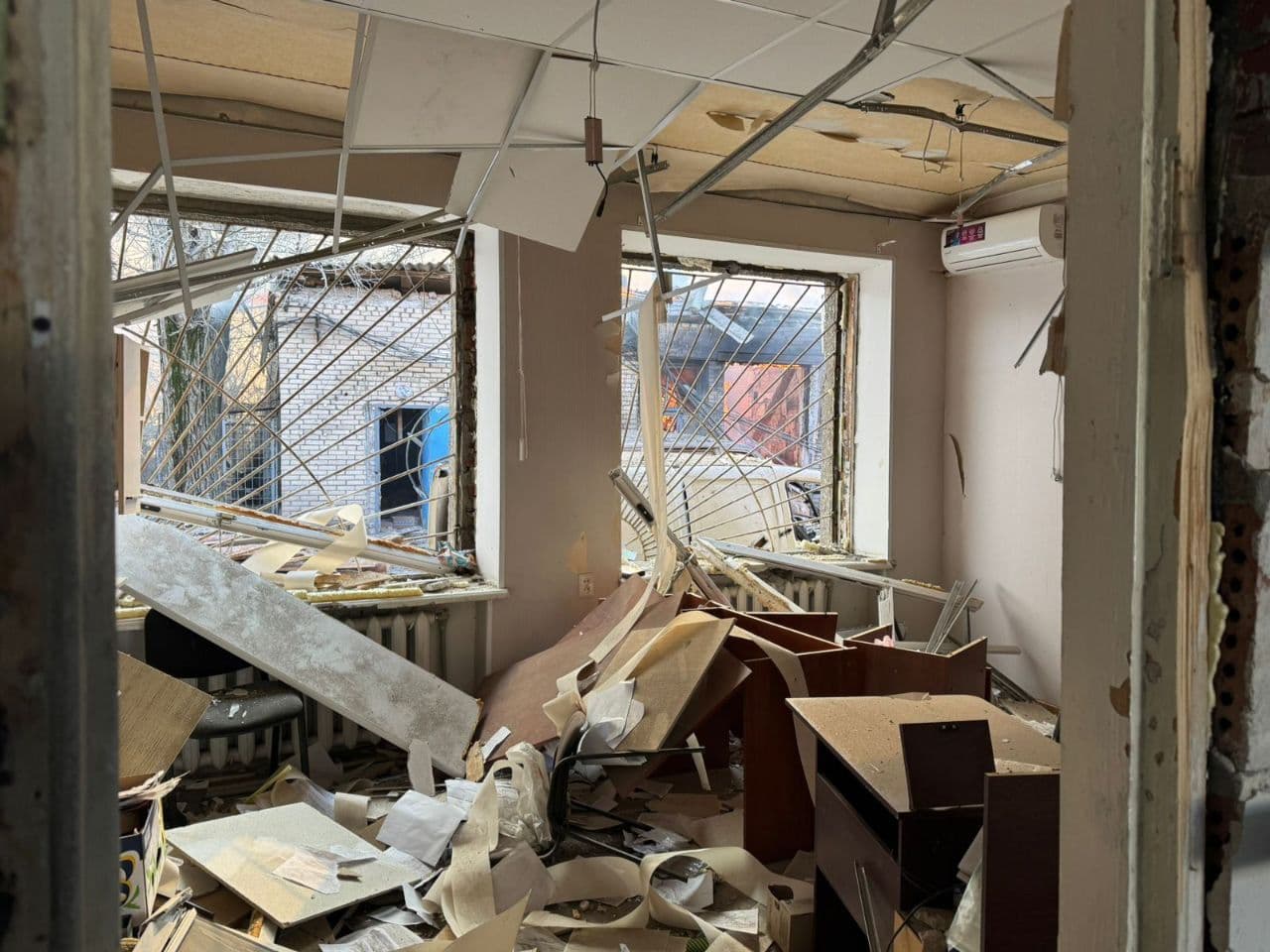
The first blast shattered the windows.
The second collapsed a wall.
By the time the sixth FAB glide bomb struck Sloviansk on the morning of February 10, smoke was rolling through a residential building barely 25 kilometers from the front line. Rescuers climbed over broken concrete and twisted rebar. When they finished pulling people from the rubble, 16 were injured.
Two were dead.
A mother. Her 11-year-old daughter.
With the child’s name added, the official tally of Ukrainian children confirmed killed since the full-scale invasion rose to 681. The Prosecutor General’s Office updates the number case by case, name by name. It does not move quickly. It only moves when another child dies.
Regional governor Vadym Filashkin did not soften the language. “Every day for Donetsk Oblast is a new war crime by the Russians,” he said. “Attacks on peaceful cities, on homes, on children are terror that has no justification.”
Sloviansk once held around 105,000 people. It remains one of the largest Ukrainian-controlled cities in Donetsk Oblast. Russian advances in 2025 pushed the front to within 25 kilometers of its center—close enough for glide bombs, close enough for FPV drones that hum low over rooftops.
Moscow claims all of Donetsk Oblast as its own under its 2022 annexation decree. It has never taken Sloviansk. Yet it continues to demand that Ukraine surrender the rest of the region as a condition for peace talks.
On February 10, diplomats discussed Donetsk’s future in Abu Dhabi.
In Sloviansk, the number climbed.
Pressure Everywhere, Breakthrough Nowhere
At dawn, the map looked red with arrows.
Vovchansk. Kupyansk. Lyman. Kostyantynivka. Pokrovsk. Novopavlivka. Oleksandrivka. Hulyaipole. Orikhiv. Kherson. On February 10, Russian forces pushed along nearly every active axis. The pattern repeated itself: pressure without penetration. In most sectors, Ukrainian lines held.
In Sumy Oblast, Russian troops probed north near Kindrativka, northeast near Yunakivka, southeast near Pokrovka—mirroring activity along the Kursk border. Near Yablunivka, 22 Russian servicemembers attempted to crawl through a gas pipeline toward Ukrainian positions. The 8th Air Assault Corps reported that all but one were eliminated.
Elsewhere, movement flickered. Zaliznychne, west of Hulyaipole in Zaporizhzhia Oblast, fell to elements of the 114th Motorized Rifle Regiment—the day’s single confirmed territorial gain. Geolocated footage showed incremental advances in southwestern Novoandriivka, central Pleshchiivka, northwest of Ivanopillya, and marginal movement south of Kostyantynivka in Sumy Oblast. Russian forces pressed toward Novomykolaivka, Filiya, and Dachne without confirmed breakthroughs. The Velykyi Burluk direction in Kharkiv Oblast was unusually quiet.
Then came the warning from the Slovyansk direction. Russian infantry crossed frozen stretches of the Siverskyi Donets River, infiltrating from the Serebryanske forest. Sleeper drones. Remote mining. Supply routes threatened. The frozen river became a new approach vector—one absent from standard frontline maps.
Ukraine answered at distance. Strikes hit a fuel depot near Fedorivka, a repair unit near occupied Yalta, drone facilities near Komysh-Zorya and Vysoke, and manpower concentrations near Khliborobne. A drone control point near Tetkino in Kursk Oblast was destroyed. In Bryansk, a 96L6 radar station 111 kilometers from the border was reportedly struck, two mobile fire groups failing to intercept. Earlier in February, hangars at Kapustin Yar used for missile pre-launch preparations were damaged.
Near Dobropillya, Ukrainian forces advanced in northern Novyi Donbas, forcing Russian units tightening around Pokrovsk to defend their flanks. Roughly 150,000 Russian personnel now operate in the Pokrovsk direction alone, supported by specialized drone units.
The front bent.
It did not break.
The Night of 125: What Slipped Through
They lifted off from six points stretching from Kursk to Krasnodar.
One hundred twenty-five drones—Shahed-type, Gerbera-type, Italmas-type and others—crossed into Ukrainian airspace overnight on February 9–10. Radar screens lit up. Air defense crews tracked, locked, fired.
By dawn, 110 had been destroyed.
Thirteen reached their targets. Two more fell as debris overpopulated areas.
Energy infrastructure, residential buildings, railways, civilian facilities—impacts reported in Sumy, Chernihiv, Kharkiv, and Odesa oblasts. In Sumy Oblast, a Geran-2 drone hit a train car at Tereshchenska station in Voronizh, tearing track and injuring one civilian. In Chernihiv Oblast, another drone struck a diesel train at Snovsk station. Deputy Prime Minister Oleksiy Kuleba confirmed both railway hits.
Analysts describe it as battlefield air interdiction.
Translation: disrupt the rails, slow the war machine.
Rear logistics are lifelines. Damage them, and front-line advances become easier to sustain.
For the Ukrainian crews, the arithmetic carried weight. One hundred ten drones stopped midair. Fifteen not stopped.
Each one that broke through carried a question mark until impact—power grid, railway junction, or someone’s home.
By morning, the answers lay in twisted steel and burned wiring.
The next wave will ask again.
The Helicopter That Didn’t Return
The announcement came without details.
On February 10, Ukraine’s 11th Separate Army Aviation Brigade “Kherson” confirmed that its Mi-24 crew did not return from a combat mission. No coordinates. No description. Only grief: “Only the best sons of Ukraine are capable of defending the Motherland so heroically.”
The Mi-24—the Soviet-era “Hind” gunship—remains essential to Ukraine’s fight. It strikes ground targets, hunts at low altitude, and intercepts Russian Shahed drones where fixed-wing aircraft cannot operate. It flies into airspace that leaves little margin for error.
Aviation losses have been sustained and painful. In December 2025, another Mi-24 crew from the 12th Brigade was lost, including Hero of Ukraine Oleksandr Shemet. He had flown the final air breakthrough to Azovstal before his helicopter later collided with a Russian drone over the Cherkasy region.
This war asks everything of those who fly.
Sometimes, it keeps them.
The Arsenal Behind the Curtain
The report did not arrive with sirens.
It arrived with procurement records.
On February 9, Ukrainian open-source outlet Frontelligence Insight reported that Russia has been acquiring foreign machine tools—from Taiwan, the United Kingdom, Germany, and Italy—to modernize Uralmash Plant No. 9. The factory manufactures artillery barrels for Koalitsiya and Msta self-propelled howitzers, and tank barrels for the T-14 Armata, T-90, T-72, and T-62.
Barrels are expendable.
By October 2024, Russia was producing about 50 artillery barrels per year—a clear bottleneck in an artillery-intensive war. Rifling wears down. Metal fatigues. Guns without barrels become scrap.
If sanctions-evasion routes through intermediaries are allowing Moscow to import precision machine tools it cannot produce domestically, that bottleneck narrows.
Frontelligence’s documents suggest Russia knows its limitation. Its precision machining industry has eroded over three decades. It cannot build the advanced tools it needs. But it appears confident it can continue acquiring them through third parties despite Western sanctions.
Sanctions are a lever, not a wall.
On Uralmash’s factory floor, there are no front lines. Yet every completed barrel extends the life of a weapon firing toward Ukraine.
Industrial capacity, too, is a battlefield.
Rebuilding Command Under Fire
Oleksandr Syrskyi did not unveil new territory gained.
He described a structural shift.
On February 10, Ukraine’s commander-in-chief said the army’s transition to a corps command system had entered its “second stage.” The reform began in early 2025 to fix a battlefield flaw: brigades fighting under oversized, temporary headquarters with little direct accountability.
The new structure forms 18 permanent corps—16 within the Armed Forces, two under the National Guard. Each commands about five brigades in a defined sector and now includes its own artillery brigades and drone regiments expanded from battalion size. Authority is tighter. Firepower is integrated.
Syrskyi credited the corps model with increasing Russian losses.
But transition carries risk. Brigades rotating into their designated corps sectors expose vulnerabilities, especially where reserves are thin and Russia scans for openings. Some corps, like the 3rd built around the 3rd Assault Brigade, have cohered quickly. Others have seen commanders dismissed after poor results.
The second stage, Syrskyi suggested, is refinement under fire.
Ukraine is restructuring its command architecture while the war continues to test it.
When the Foreign Flags Came Down
The announcement came on December 31.
Ukraine’s International Legion—formed in the frantic early days of invasion—was being dissolved. Foreign volunteers would be folded into standard assault units of the Ground Forces. Some legionnaires had learned weeks earlier. Others heard only when the decision became public.
The reasoning was clinical. The Legion, first under Territorial Defense and later the Ground Forces, had fulfilled its emergency role. Commanders wanted cohesion, integration, standardization. Foreign fighters would now serve inside assault regiments—the most combat-intensive formations in the army.
On paper, it made sense.
On the ground, it felt abrupt.
Danish volunteer Bjorn Kallsoy, call sign “Viking,” told Le Monde that sudden transfers created poor communication and sinking morale. Conditions deteriorated. Chief of staff Andriy Spivak warned that something intangible risked disappearing: bilingual officers who bridged cultures, multilingual recruitment networks, a doctrine blending drone operators with infantry in ways few conventional units had attempted.
Several veterans cautioned that the move could deter future volunteers. Ukraine, in its fourth year of war, cannot easily afford to lose experienced fighters—or the signal that they are welcome.
The HUR military intelligence unit’s separate international formation remains intact, recruiting foreigners with prior combat experience. And foreign fighters in regular army units retain the right to leave after six months.
Whether they stay—and whether others still come—will shape more than morale.
It will shape manpower.
Europe’s Gamble: Membership Before the War Is Over
In Brussels, the idea sounds almost radical.
Seat Ukraine at the table first. Finish the paperwork later.
According to a February 10 Politico report, EU officials are weighing what they call “reverse enlargement”—allowing Ukraine to enter EU decision-making structures as early as 2027, even if every accession reform is not yet complete. It would be unprecedented. Membership not as a reward at the end of the road, but as a strategic act in the middle of war.
The obstacle has a name: Viktor Orban.
Hungary’s prime minister holds a single-state veto over enlargement decisions that require unanimity. For years, he has blocked Kyiv’s path. EU officials are watching Hungary’s upcoming elections closely, calculating whether a change in government could unlock the door. If Orban remains, Brussels is quietly considering reviving Article 7 proceedings—the mechanism that could suspend Hungary’s voting rights.
Across the Atlantic, another lever may matter more. European officials believe Trump, casting himself as peace broker, could pressure Orban to step aside. A firm EU accession date is reportedly embedded in a draft US-backed settlement framework.
Volodymyr Zelensky has been explicit about why the timing matters. “Because the date will be signed by Ukraine, Europe, the USA and Russia.”
For Kyiv, EU membership is not a ceremonial finish line.
It is deterrence written into architecture.
Japan at the Constitutional Edge
The report began in Tokyo and echoed through Brussels.
On February 10, NHK, citing unnamed NATO officials, said Japan plans to join the Prioritized Ukraine Requirements List initiative—the NATO framework that allows partner nations to fund US-manufactured weapons purchases for Ukraine. Twenty-four countries have already signed on, including Australia and New Zealand.
Within hours, denials followed. The Japanese embassy rejected the report. Chief Cabinet Secretary Minoru Kihara said no such decision had been made.
But the debate is real.
Japan has already committed roughly $15 billion in aid to Ukraine—mostly humanitarian and financial—with another $3.5 billion pledged. It is Kyiv’s largest non-Western financial backer. The February 8 snap election victory of the Liberal Democratic Party, led by defense-oriented Prime Minister Sanae Takaichi, has widened the space for stronger security policies.
Article 9 still looms over every calculation. Japan’s post-war constitution restricts lethal military assistance abroad. The PURL mechanism, as reported, would involve non-lethal contributions—radar systems, body armor. Even so, funding US weapons purchases for a country at war presses against long-standing constitutional restraint.
The question is not only whether Tokyo joins.
It is how far it is willing to interpret its own limits.
For 2026, the answer may reshape more than Japan’s foreign policy.
The Territory Moscow Keeps in Reserve
Sviatlana Tsikhanouskaya did not describe Belarus as neutral ground.
In her February 10 interview with RBC-Ukraine, she called it what it has become under Alexander Lukashenko: “a full-fledged rear base for Russia’s war effort.” Russian troops rotate through its territory. Weapons move across its soil. Joint exercises blur into staging operations. Strikes on Ukraine have launched from Belarusian territory.
Her warning was aimed beyond Minsk—toward peace negotiators drafting frameworks in distant capitals. Leave Belarus out of any future security arrangement, she said, and you hand the Kremlin a consolation prize. A frozen status quo. A preserved launchpad. A state that remains tethered to Moscow’s military orbit.
Two International Criminal Court cases involving Lukashenko are under consideration, including allegations of complicity in the abduction and deportation of Ukrainian children.
Tsikhanouskaya dismissed the idea that recent prisoner releases signal reform. “He is using political prisoners as hostages to try to soften sanctions and gain legitimacy,” she said. Despite the releases, Viasna estimates 1,120 political prisoners remain in Belarusian custody.
On January 25 in Vilnius, Tsikhanouskaya met Zelensky bilaterally for the first time. They discussed Ukraine appointing a special envoy on Belarus.
The message was clear.
Belarus is not a side issue.
It is part of the front line—whether the maps show it or not.
The Faces on the Helmet
Vladyslav Heraskevych returned to the ice.
The 27-year-old skeleton racer, Ukraine’s flag bearer at the Winter Olympics in Cortina d’Ampezzo, lowered his visor and pushed off for training. The helmet he wore had already been banned.
Seven faces stared back from it.
Weightlifter Alina Perehudova. Boxer Pavlo Ischenko. Figure skater Dmytro Sharpar—Heraskevych’s former teammate. Four others. All killed since Russia’s full-scale invasion. More than 650 Ukrainian athletes and coaches have died in the war. These seven were a fraction.
The International Olympic Committee invoked Rule 50 of the Olympic Charter, which prohibits political gestures. The helmet, it said, crossed that line.
Heraskevych disagreed.
“What rule is being violated?” he asked. “This helmet is no more propaganda than the flags of other countries that athletes carry on their jackets.” He acknowledged he could be disqualified. He trained in it anyway. He is scheduled to compete on February 12.
President Zelensky publicly backed him, writing on X that this truth cannot be inconvenient or dismissed as politics—it is a reminder to the world of what modern Russia is. Ukraine’s National Olympic Committee formally requested permission for the helmet.
The decision now rests with the IOC.
Whether it allows the portraits—or disqualifies Ukraine’s flag bearer for wearing them—will say something about what the Olympic movement chooses to see.

Recruiting the Desperate: Moscow’s Trail to Nairobi
In Nairobi, the warning did not come from a battlefield.
It came from a podium.
On February 10, Kenya’s Foreign Minister Musalia Mudavadi announced he will travel to Moscow to confront the Kremlin over its recruitment of Kenyan nationals to fight in Ukraine. “We have seen loss of lives,” he said, describing Russia’s methods as “unacceptable and clandestine.”
Kenya estimates roughly 200 of its citizens have entered Russian service. The real number may be higher; none traveled through official channels. In the past two months alone, more than 30 Kenyans have been evacuated from Russia. Authorities have shut down 600 fraudulent recruitment agencies that lured job seekers with promises of overseas work.
Mudavadi said he will press for the release of Kenyans held as Ukrainian prisoners of war and check on those hospitalized.
The pattern extends beyond Kenya. Ukrainian intelligence reports more than 1,400 individuals from 36 African countries have been recruited into Russian forces. Ambassador Yurii Tokar framed it bluntly: Russia is “looking for people for cannon fodder everywhere it is possible”—from Central Asia to India and Nepal, now to Africa.
A foreign minister flying to Moscow to demand his citizens be left alone is not routine diplomacy.
It is a sign of strain.
The manpower pool inside Russia is tightening.
And the search has gone global.
When Rome Sent Light
Three trucks left the Basilica of Saint Sophia in Rome and headed for Fastiv and Kyiv.
Inside: 80 electric generators and thousands of medical supplies—antibiotics, anti-inflammatories, supplements, and melatonin. The Vatican announced the shipment on February 9, arranged by Pope Leo XIV after Ukrainian bishops warned of worsening civilian hardship amid Russian strikes on energy infrastructure and subzero temperatures.
The generators will power darkened buildings.
The melatonin speaks to something quieter. Vatican officials noted high demand among civilians enduring relentless night attacks. Drone sirens. Missile alerts. Sleep fractured into fragments.
Before becoming pontiff, Leo denounced Russia’s invasion as imperialist aggression. He has since offered the Vatican as a venue for peace talks. Zelensky supports the proposal. Moscow has declined.
Another shipment of medicine and food is being prepared.
The trucks from Rome cannot stop the strikes.
But in winter, electricity means heat. Medicine means resilience. And a few hours of uninterrupted sleep is its own kind of relief.
Burying the Grid Before the Next Strike
Concrete is being poured where transformers once stood exposed.
Ukraine has begun moving key electricity substations underground, sealing them inside reinforced bunkers designed to survive the missile and drone strikes that have steadily dismantled the country’s energy generation capacity. One substation is already secured. A second is under construction. Nearly 100 critical facilities may require the same treatment.
Each one costs tens of millions of dollars.
Ukrenergo CEO Vitaliy Zaichenko told the Kyiv Independent that outside financing will be necessary—likely from the European Investment Bank, which provided €86 million for anti-drone protection in 2024. But funding depends on timing. Ukrenergo defaulted under the strain of full-scale invasion and restructured $825 million in bonds last April. Another debt restructuring process must conclude in the coming months before new support can flow.
The logic is brutal and simple.
Russia has crippled generation capacity in central, southern, and eastern Ukraine. Those regions now draw electricity from plants in the west. Without substations to distribute that power, the current stops. Above ground, a single strike can disable them. Underground, they endure.
This is not expansion.
It is survival engineering.
The race is against time—and against the next wave of missiles aimed at what remains above the surface.
The Silence at City Hall
The letter was signed by seventeen organizations.
It asked for something simple: a press conference.
On February 10, Kyiv civil society groups publicly called on Mayor Vitalii Klitschko to face open questions for the first time since 2019. Not a managed appearance. Not pre-approved prompts. A real press conference. Seven years have passed while the capital endured war, blackouts, and infrastructure collapse.
Kyiv is living through rolling power outages as Russian strikes hammer the energy grid. Heating infrastructure damage has left entire neighborhoods without warmth in one of the coldest winters in a decade. The coalition described the city’s condition as a “multidimensional crisis—managerial, infrastructural, and communicational.”
They want answers about unfinished construction projects, historical preservation, accessibility, procurement, and military support.
Klitschko, a former heavyweight boxing champion who has led the capital since 2014, responded to criticism on February 4 with a line that spread quickly online: “When there is a lot of snow, the mayor is guilty, but when the weather is good, nobody mentions the mayor.”
For residents sitting in cold apartments and organizations gathering signatures in wartime Kyiv, weather metaphors were not the point.
They are asking for accountability.
And for the microphone to be opened.
Testing the Edge of the Baltic Sky
The radar contact appeared over the Baltic.
On January 28, Spanish EF-18M Hornets intercepted a Russian Su-30SM2 flying near NATO airspace as part of the Baltic Air Policing mission. Spain disclosed the encounter in early February.
The Russian aircraft did not cross into NATO territory.
It did not have to.
Analysts call it “Phase Zero”—a sustained pattern of low-grade probing meant to test readiness and strain cohesion without open confrontation. The intercepts continue. The flights continue. The pattern is not accidental.
Each encounter is brief: identify, escort, disengage.
But repetition carries weight.
The Baltic sky has become a testing ground, where seconds and distances measure resolve.
No escalation.
Just a slow, deliberate provocation.
The Day’s Meaning
February 10 was a study in contradiction.
In Sloviansk, a glide bomb ended the life of an eleven-year-old girl. In Rome, generators were loaded onto trucks to keep Ukrainian apartments warm. In Moscow, Sergei Lavrov repeated a script unchanged since 2022, while Russian factories quietly searched the world for the machine tools that keep artillery barrels turning.
On the front, Russian forces pressed almost everywhere and broke almost nowhere. One village gained. Hundreds of kilometers contested. Frozen rivers turned into new avenues of infiltration. The line bent but did not snap.
Overnight, 125 drones crossed the sky. Most were destroyed. Some were not. Rail lines were struck. A helicopter crew did not return. In Nairobi, a foreign minister prepared to fly to Moscow to demand that his citizens not be used as expendable manpower. In Brussels and Tokyo, debates unfolded about architecture—security guarantees, constitutional limits, enlargement before reform.
And in Kyiv, civil society asked its mayor to answer questions.
The pattern beneath it all is this: Russia is tightening control at home while stretching outward abroad—probing NATO airspace, recruiting in Africa, leveraging Belarus, pushing an Istanbul framework designed to freeze Ukraine in permanent vulnerability. It is fighting for ground in Donetsk while fighting for narrative in every capital that matters.
Ukraine, meanwhile, is doing something less theatrical but more enduring.
It is reorganizing its army mid-war. Burying substations underground. Integrating foreign volunteers. Hardening institutions while missiles fall.
One side seeks leverage.
The other seeks resilience.
On Day 1,447, the battlefield did not decide the war.
But the systems being built—or strained—did.
Prayer For Ukraine
- For the families in Sloviansk and across Donetsk Oblast — Pray for the loved ones of the mother and eleven-year-old girl killed by glide bombs, and for all civilians living within range of daily strikes. Ask for comfort, protection, and endurance in cities that wake each morning not knowing what the sky will bring.
- For protection over Ukraine’s defenders — Lift up the air defense crews who faced 125 drones, the Mi-24 pilots who did not return, and the soldiers holding frozen river lines. Pray for wisdom in command, alertness in the night, and supernatural protection in the air and on the ground.
- For resilience in Ukraine’s infrastructure — Pray that efforts to bury substations, protect the power grid, and secure generators succeed quickly. Ask for timely financing, honest stewardship, and endurance for civilians facing cold, blackouts, and sleep deprivation.
- For truth and accountability in leadership — Pray for integrity among city, national, and international leaders. Ask that transparency prevail, that decisions be guided by justice rather than pride, and that systems built during war emerge stronger and more accountable.
- For global awareness and moral clarity — Pray that the nations weighing policy decisions—whether in Brussels, Tokyo, Nairobi, or Rome—act with courage and discernment. Ask that manipulation, coercion, and exploitation be exposed, and that peace efforts be grounded in righteousness, not convenience.