
As a Russian Shahed drone strikes a moving passenger train in Kryvyi Rih, killing one and wounding civilians, Vladimir Putin spends the same day calling Gulf leaders to position himself as a Middle East peacemaker. Iranian threats in the Strait of Hormuz send oil prices surging—potentially refilling the Kremlin’s war chest—while Emmanuel Macron announces an expansion of France’s nuclear arsenal as Europe prepares for a more dangerous future. On Day 1,350, battlefield violence, energy markets, and global diplomacy collided in a single, uneasy moment.
The Day’s Reckoning
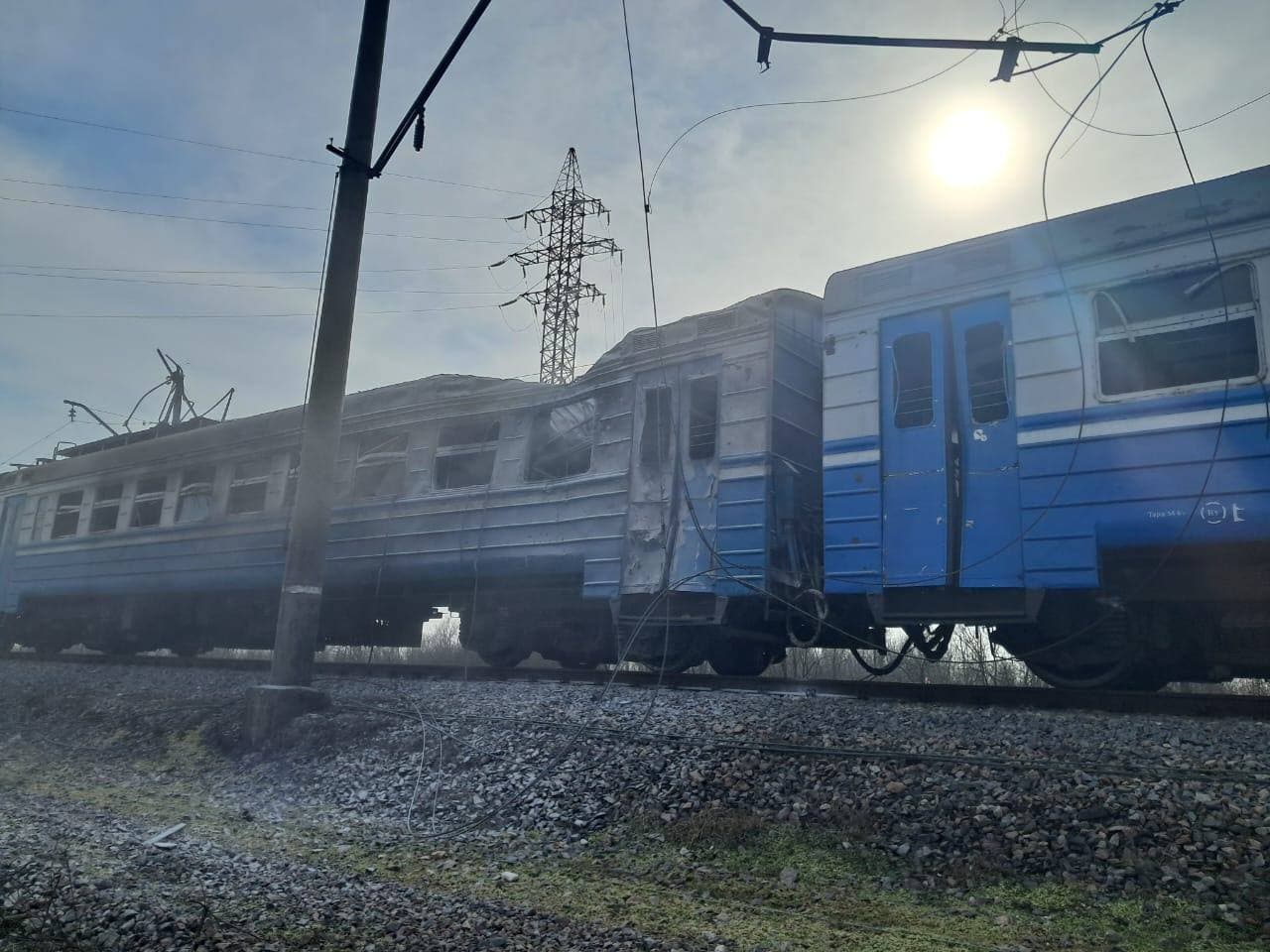
At midday in Kryvyi Rih Raion, a suburban passenger train rolled forward under a pale sky. Then a Shahed drone found it.
One carriage took the hit. Fire. Screams. The crew slammed the brakes and passengers stumbled out onto the tracks. One person was killed. Ten were wounded, including a 10-year-old girl. By evening, Ukrzaliznytsia restricted suburban rail traffic across Dnipropetrovsk Oblast. President Volodymyr Zelensky had warned Russia would expand its targets from energy grids to logistics and water. Now trains were on the list.
While firefighters doused smoke in Kryvyi Rih, Vladimir Putin worked the phones. Saudi Crown Prince Mohammad bin Salman. Bahrain’s King Hamad bin Isa al Khalifa. Qatar’s Emir Sheikh Tamin bin Hamad al Thani. UAE President Mohammed bin Zayed al Nahyan. Same message each time: Russia stands ready to stabilize tensions around Iran. Diplomatic solutions. Responsible mediation.
Oil traders were listening. Iranian threats in the Strait of Hormuz pushed Brent crude from $73 on February 27 to over $82 on March 2. Vessel traffic through the Persian Gulf dropped by at least 33 percent. Analysts floated $90 to $100 per barrel. For Moscow, every dollar meant relief after a year of falling revenues, gold sales, and tax hikes to fund the war.
In France, at L Ile Longue, Emmanuel Macron announced France would expand its nuclear arsenal for the first time since 1992. “To be free, one needs to be feared,” he said, as Poland, Germany, the Netherlands, Belgium, Greece, Sweden, and Denmark opened deterrence talks.
And overnight, Ukrainian drones struck Novorossiysk, damaging oil tankers, warships, and air defense radars. Commander in Chief Oleksandr Syrskyi claimed Ukraine captured more territory in February than Russia did.
Day 1,350. A train burning. Oil surging. Europe rearming. The war widening in every direction at once.
The Calls Made While the War Continued
The phones in the Kremlin did not ring loudly, but the timing was precise.
On March 2, Vladimir Putin moved quickly through four Gulf capitals. He spoke with Saudi Crown Prince Mohammad bin Salman al Saud, Bahraini King Hamad bin Isa al Khalifa, Qatari Emir Sheikh Tamin bin Hamad al Thani, and UAE President Mohammed bin Zayed al Nahyan. Each call carried the same tone: Russia was ready to help stabilize tensions around Iran. Diplomacy was urgent. Moscow had experience guiding difficult nuclear negotiations and finding workable compromise.
The language was calm. The moment was not.
US-Israeli military pressure on Tehran had raised the temperature across the region. Iran, a critical supplier of the Shahed drones Russia uses against Ukraine, now stood at the center of another crisis. Gulf states held financial leverage and influence over global energy flows that Moscow could not afford to alienate. Putin’s task was delicate: maintain partnership with Tehran while positioning Russia as mediator to its uneasy neighbors.
He had done this before, after the June 2025 Israel-Iran war. When tensions spike, Moscow steps forward offering steadiness.
Yet even as he spoke of de-escalation abroad, Russian forces were widening their strike campaign inside Ukraine. The contrast was stark but calculated. If Russia could secure influence in Gulf capitals while sustaining ties with Iran, it preserved the economic and diplomatic space needed to continue the war.
These were not casual conversations. They were moves on a larger board.
The Price of a Barrel, The Price of a War
The number flashed across trading screens before most people understood what it meant.
Brent crude closed at $82.37 per barrel on March 2, up sharply from $73 just days earlier on February 27, before joint US-Israeli strikes against Iran. By the time markets recalibrated, the price eased toward $78, but the direction was clear and traders were already recalculating risk.
In the Persian Gulf, Iranian strikes on several US- and UK-linked oil tankers and Islamic Revolutionary Guard Corps threats against vessels moving through the Strait of Hormuz had forced shipping companies into emergency deliberations. Vessel traffic through the Gulf dropped by at least 33 percent. Insurers raised premiums. Captains waited for clearance. Every hesitation tightened supply.
Analysts began floating projections of $90, even $100 per barrel.
In Moscow, the math was brutally simple. Oil and gas revenues had been sliding throughout 2025. Officials expected further declines in 2026 and had already turned to selling gold reserves and raising value added tax to sustain spending. Kommersant reported that Russia might increase production from 9.1 million barrels per day in 2025 to 10.9 million in 2026 as OPEC+ caps eased, a three percent increase partly driven by Ukrainian strikes on Russian energy infrastructure.
High oil prices could stabilize the Kremlin’s finances and extend its ability to fund the war in Ukraine. The surge was not engineered in Moscow; it was triggered by Iranian actions that forced global markets to react. Yet Putin needed the spike to endure.
That was the risk. Iran was unlikely to sustain a blockade of the Strait of Hormuz indefinitely. If traffic normalized, prices could fall as quickly as they rose. The windfall rested on forces beyond the Kremlin’s control.
The Ceasefire Zelensky Put on the Table
When London floated the idea, Kyiv heard an opportunity.
On March 1, UK Prime Minister Keir Starmer said Ukrainian and British experts would help Middle Eastern partners shoot down Iranian drones. The statement sounded routine, but it carried an uncomfortable truth: Gulf states with more advanced and numerous air defense systems were struggling to match Ukraine’s interception rates against the same Iranian-origin Shahed drones.
The numbers made the difference clear. On March 2, Presidential Advisor Oleksandr Kamyshin said more than ten Ukrainian companies were producing interceptor systems. Ukrainian forces were maintaining roughly a 90 percent interception rate against Russian Shaheds, even as Moscow launched them in massive waves. In February 2026 alone, four strike packages each contained more than 400 drones and missiles.
President Volodymyr Zelensky sharpened the contrast. Bloomberg reported Bahrain, Jordan, Kuwait, Qatar, and the UAE intercepted 385 Iranian missiles and 881 drones in the first 48 hours of the US-Israeli campaign. The UAE alone downed 165 missiles and 541 drones. Yet at least 58 Iranian drones still hit targets, and observers believe the real number was higher.
Zelensky then set his condition. Ukraine had received no direct request to deploy its operators, but if Middle Eastern states wanted Kyiv’s best drone intercept teams, they would need to persuade Russia to accept a short-term ceasefire in Ukraine lasting two weeks to two months.
The proposal was deliberate. Ukraine had endured Russia’s largest drone barrage of 810 drones in September 2025 and its largest missile strike of 127 missiles in August 2024. Years of defending against modernized Shaheds had created hard-earned expertise. That knowledge had value.
At the same time, Zelensky warned that a prolonged US-Iran war could strain supplies of US-made Patriot systems, especially PAC-3 interceptors Ukraine depends on. He said he did not currently see shortages and that the PURL program continued, but sustained conflict would tighten inventories.
Ukraine was not offering charity. It was bargaining for time.
The Day the Trains Became Targets
The train was already moving when the drone locked on.
It was a suburban passenger train rolling through Kryvyi Rih Raion, carrying commuters who expected delays, not impact. Then a Russian Shahed descended. One carriage took the strike, and flames tore through the metal shell. The crew slammed the brakes and passengers stumbled onto the tracks as smoke climbed into the afternoon sky. First responders raced in from nearby stations.
One person was killed. Ten were wounded, including a 10-year-old girl and a 17-year-old boy. Five remained hospitalized in moderate condition. Within hours, Ukrzaliznytsia restricted suburban train movement across Dnipropetrovsk Oblast, forcing civilians to weigh a new calculation each time they boarded.
President Volodymyr Zelensky had warned this shift was coming. On March 2, he said Russian forces were preparing a new wave of strikes against logistics and water infrastructure after spending Winter 2025-2026 trying to collapse the energy grid. On February 22, he had already signaled that railway logistics were moving into Russia’s target set.
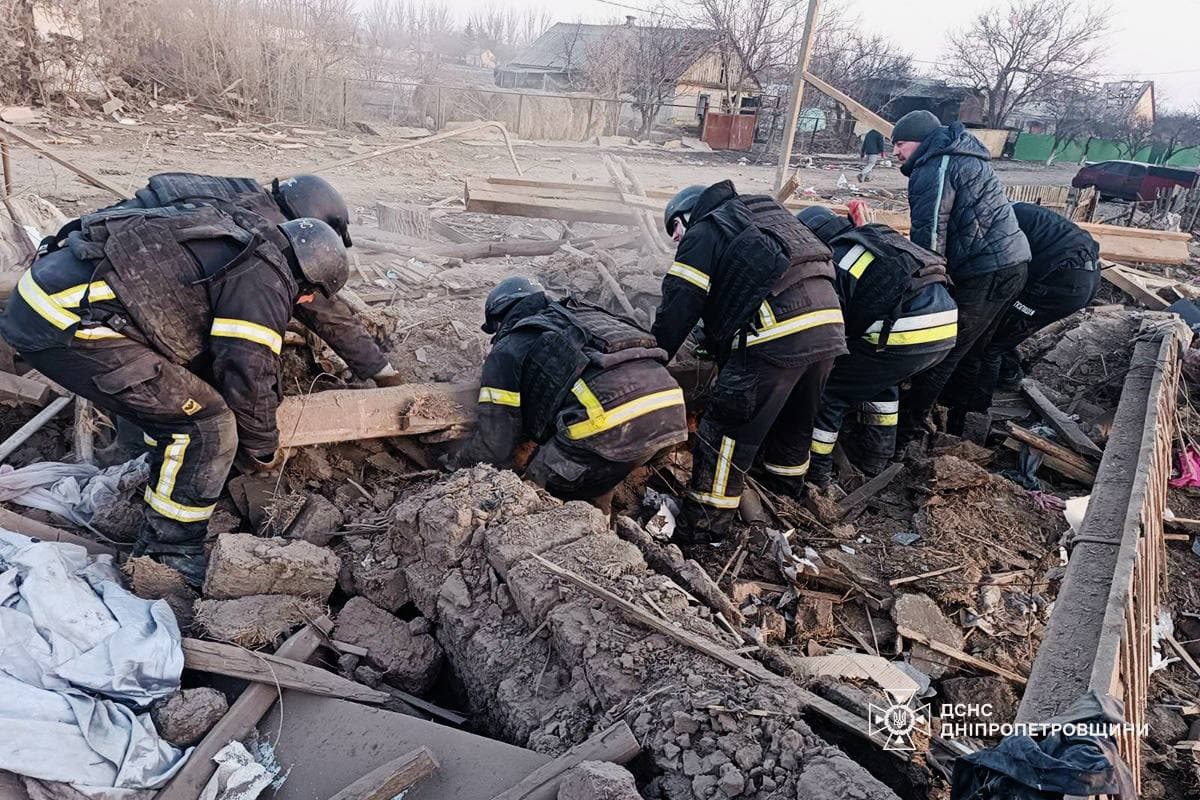
The March 2 strike was the second reported attack on a passenger train since January 27, when another train was hit in Kharkiv Oblast. The escalation did not begin this week. Ukrzaliznytsia had reported that in July 2025 Russia intensified strikes on rail infrastructure, targeting major junctions in Lozova, Synelnykove, and Koziatyn—critical nodes for civilian travel and frontline supply.
The pattern is deliberate. Strike energy. Strike heat. Then strike movement. Force Ukraine to defend everything at once and stretch air defenses thin. Every train hit widens the battlefield beyond the front line. Every logistics hub damaged slows both civilians and soldiers.
The wounded child in Kryvyi Rih was not collateral damage. She was evidence of a strategy expanding by design.
The Port That Was Supposed to Be Safe
Flames rose over Novorossiysk before dawn.
On March 2, the Ukrainian General Staff reported that Ukrainian forces struck the Sheskharis oil terminal and the naval base in Novorossiysk, Krasnodar Krai. The language was restrained, but the targets were not. Oil tankers burned at the terminal. An S-400 air defense system radar was damaged.
Sources in Ukraine’s Security Service told Suspilne that the destruction ran deeper. Warships were hit. The guidance radar of an S-300 system was damaged. A Pantsir-S2 air defense system was struck. Six of the terminal’s seven oil tankers were reportedly damaged. Geolocated footage published on March 1 showed a drone diving into the port as fire rolled across the oil terminal. Russian officials later confirmed a fire at the loading dock.
Novorossiysk is not a frontline city. It is a logistical artery, a major port moving both commercial cargo and military supplies. Damaging six of seven tankers constrains Russia’s ability to export petroleum products and narrows the revenue streams feeding the war. Damaging radar systems weakens the shield meant to prevent it from happening again.
The General Staff also detailed earlier strikes. On February 27–28, Ukrainian attacks on the Albashneft Oil Refinery in Novominskaya destroyed four RVS-5000 tanks and damaged three RVS-2000 tanks, along with pipelines and an underground tank. This was not a single blow but a sequence, each hit compounding the last.
For Russian planners, the message was unmistakable. Ukrainian forces can reach deep into Krasnodar Krai and choose targets that matter. Every air defense unit redeployed to guard rear infrastructure leaves fewer systems covering front-line troops.
Novorossiysk was meant to be distant from the war. It is not anymore.
The Day Europe Chose to Be Feared
The wind off the Atlantic cut across the docks at L Ile Longue as President Emmanuel Macron stood before France’s ballistic missile submarines and delivered a message Europe had been circling for months.
On March 2, he announced that France would increase its nuclear warhead stockpile for the first time since at least 1992. The words were deliberate. “To be free, one needs to be feared,” Macron said, framing deterrence not as ambition but as necessity.
He outlined a plan that would ripple beyond France’s coastline. Elements of France’s strategic air forces could be temporarily deployed to allied states. European partners would be invited into joint nuclear deterrence exercises. Conversations had already begun with the United Kingdom, Germany, Poland, the Netherlands, Belgium, Greece, Sweden, and Denmark.
Macron did not specify how many additional warheads France would add, but he insisted the country must retain “assured destructive power.” He made clear that if France ever had to use its arsenal, no state, however powerful, could shield itself. Under France’s constitution, that decision rests solely with the president. Since Britain left the European Union in 2020, France remains the bloc’s only nuclear power.
Polish Prime Minister Donald Tusk confirmed Warsaw was in talks with Paris and other European allies about advanced nuclear deterrence, saying they were arming together so adversaries would never dare attack. German Chancellor Friedrich Merz signaled closer coordination, though Macron ruled out German aircraft carrying French nuclear weapons.
Behind the announcement was a calculation shared quietly across European capitals. Confidence in long-term US nuclear guarantees has been shaken by shifting American defense priorities and political tensions. Macron argued that stronger missile defenses among adversaries and the risk of hostile coordination demanded reinforcement of Europe’s deterrent.
Critics, including the International Campaign to Abolish Nuclear Weapons, warned the expansion could cost billions. European leaders were measuring a different cost. Russia’s war against Ukraine is entering its fifth year, and the security order that once seemed fixed now feels conditional.
At L Ile Longue, the submarines did not move. The doctrine did.
The Winter Moscow Was Supposed to Win
For months, the narrative seemed fixed. Russia was grinding forward. Ukraine was absorbing blows. Then on March 2, Commander-in-Chief Oleksandr Syrskyi disrupted the script.
He wrote that Ukrainian forces had captured more territory in February 2026 than Russian forces occupied during the same period. “We survived this difficult ‘battle of the winter,’” he said, describing gains that marked Ukraine’s strongest territorial performance since the Kursk Oblast incursion began in summer 2024.
President Volodymyr Zelensky had already claimed on February 21 that Ukrainian counteroffensives liberated 300 square kilometers. Open-source project Deep State recorded 126 square kilometers of Ukrainian territory lost in February, the lowest monthly loss since summer 2024. The arithmetic suggested a shift, even if incremental.
Across much of the front, Russian advances slowed during winter, echoing patterns from a year earlier. In Zaporizhzhia and Dnipropetrovsk oblasts, Ukrainian units pushed forward. Videos circulated throughout February showing assaults and clearing operations along the boundary where the two regions meet.
The General Staff reported liberation of nine settlements in the Oleksandrivka direction and ongoing clearing of three more. Ukrainian forces launched counterattacks after Russian units lost Starlink access, disrupting command and control during the initial phase. Since January 29, 2026, Ukrainian forces have inflicted 6,537 Russian casualties and destroyed 419 pieces of equipment.
Deep State has not yet reflected the counterattacks on its maps, citing operational security. Many gains remain extended clearing operations rather than breakthrough seizures of fortified lines. Winter conditions have favored defense, with cold weather exposing Russian infiltration groups to drone kill zones before they can close distance.
Syrskyi added that Russian losses, averaging above 1,000 personnel per day over winter, exceed recruitment capacity.
The front has not collapsed. It has tightened.
Pressure on the Gates of Slovyansk
The first clue came in a short video on March 1. A Russian soldier moved along the northern edge of Lyman, slipping through broken tree lines and frozen ground. The infiltration did not flip the map, but it revealed how far Russian forces had edged forward near Stavky. The line had shifted, even if only by meters.
The next day, Moscow claimed it had taken Drobysheve northwest of Lyman and Riznykivka east of Slovyansk. Whether every claim holds is less important than the pattern. Russian forces are pushing along the arc that leads toward Slovyansk, tightening pressure step by step.
The fighting stretches around Lyman and along the approaches east and northeast of Slovyansk. Ukrainian units are counterattacking in places, slowing the momentum. Artillery duels roll across the tree lines, and drones hunt for movement in open ground. This is not a lightning offensive. It is pressure applied daily.
The Slovyansk direction matters because it sits inside what Ukrainian commanders call the Fortress Belt in Donetsk Oblast, a chain of hardened defensive positions guarding major urban centers. If Russia can find a weak seam here, it opens pathways toward Kramatorsk and deeper into Ukrainian-held territory.
Shelling has already reached the outskirts of Kramatorsk. Three civilians were killed in recent artillery strikes. The message is clear: this is preparation, not improvisation.
Russian forces are testing defenses ahead of a projected Spring-Summer 2026 offensive. They probe, absorb losses, adjust, and probe again. The ground may change slowly, but the intent is unmistakable.
Slovyansk has not fallen. The fortress still stands.
But the battering has begun.
Pokrovsk Waits for the Next Wave
From the north of Pokrovsk, the line keeps shifting by streets, not kilometers.
Ukrainian military observer Kostyantyn Mashovets reported Russian forces advancing to Shakhtarska Street in southern Bilytske, a settlement just above the city. That movement suggests earlier gains southeast of Bilytske and tightening pressure from multiple directions. Russian troops are pushing toward Bilytske from the road near Rodynske and from the south, though attempts to slip in from the east have failed.
The fighting stretches around Pokrovsk’s northern approaches and along its western and southwestern edges. Ukrainian forces have launched counterattacks west of the city, preventing the situation from collapsing inward. The map looks tense but not broken.
What has changed is the tempo.
A Ukrainian battalion chief of staff operating in the Pokrovsk direction reported that Russian assault activity has temporarily decreased. Clearer weather has made concealment harder. With improved visibility, Ukrainian drones and reconnaissance units can detect assault groups earlier, turning open ground into a kill zone before Russian infantry can close the distance.
That pause does not signal retreat. According to Mashovets, Russian forces are concentrating infantry near Myrnohrad and Rodynske, building combat power behind the line. Units are active between Bilytske and Myrnohrad and along the approaches north of Pokrovsk. Russian elements are reportedly still operating inside parts of the city itself.
This looks less like exhaustion and more like preparation.
Pokrovsk has endured months of pressure. Now the assaults have slowed, but the buildup continues. Russian commanders appear to be waiting for conditions to shift in their favor before resuming heavier attacks.
The crisis has not passed.
It is gathering force.
When the Signal Went Dark
For months, the fighting around Kostyantynivka felt relentless. Artillery corrections came quickly. Drone strikes adjusted mid-flight. Russian assault groups moved with coordination that suggested someone, somewhere, always had the signal.
Then on February 1, the signal faltered.
A non-commissioned officer from a Ukrainian brigade in the Kostyantynivka direction reported that Russian combat activity has noticeably decreased compared to previous months. The change followed the block on Russian Starlink terminals, a quiet technical move that disrupted more than internet access. It cut into the nervous system of Russian operations.
Russian forces continue to attack near and inside Kostyantynivka and along approaches toward Druzhkivka, probing roads and highways that link the fortress towns of Donetsk Oblast. A Russian source claimed advances along the main highway connecting Pokrovsk and Kostyantynivka. Drone duels and artillery exchanges have not stopped.
What has shifted is the precision.
Starlink terminals had allowed Russian units to conduct reconnaissance, coordinate assaults, and adjust artillery and drone strikes in real time despite Ukrainian electronic warfare. With access degraded, Russian forces are reportedly struggling to synchronize combined arms operations. Artillery corrections take longer. Reconnaissance feeds are less reliable. Drone pilots lose connection at critical moments.
On a battlefield where seconds determine survival, that lag matters.
The calm around Kostyantynivka is not peace. It is friction introduced into an enemy system that had grown accustomed to seamless communication. Ukrainian defenders still face attacks, but they face fewer of them and with less coordination than before.
Whether the disruption will last remains uncertain. Russia will seek alternatives, reroute signals, restore networks.
For now, though, a technical blackout has created something rare on this front.
Breathing space.
Dobropillya: Ground Taken, Ground Cleared
East of Dobropillya, Russian assault groups keep testing the line, slipping toward Novyi Donbas and nearby settlements in short, sharp pushes. They enter, try to hold, and then Ukrainian forces move in and clear them out. The ground changes hands for hours, not days.
According to Ukrainian military observer Kostyantyn Mashovets, Russian forces are concentrating east and south of Dobropillya, attempting to secure positions that would tighten pressure on the city. Units have pushed toward key terrain in that sector and gained a foothold in quarries northeast of Dobropillya, likely reaching the edge of a nearby settlement. But footholds are not control.
Assault groups periodically enter Novyi Donbas and Vilne, only to be forced back. The pattern is consistent: infiltration, brief presence, systematic clearing. Russian commanders appear intent on establishing durable positions that could anchor future advances. Ukrainian defenders are determined to prevent consolidation before trenches are dug and supply lines secured.
This is contested terrain defined by repetition rather than breakthrough. Drones track movement across open ground. Artillery responds quickly. Every incursion risks heavy losses before a position can solidify.
Dobropillya remains under Ukrainian control.
The struggle here is incremental and deliberate. If Russia can convert temporary footholds into permanent positions, the balance shifts. If Ukraine continues to clear each incursion, the line holds.
For now, the clearing operations are keeping the map from moving.
The Northern Front That Refuses to Break
Along Ukraine’s northern rim, the war feels stubborn rather than explosive.
In Sumy Oblast, Russian forces continue pressing toward the regional capital, probing villages north and northeast of Sumy City. Assault groups move forward under drone cover, but the line has not shifted. Ukrainian defenders hold positions despite steady pressure. Drone strikes continue to hunt movement near the border, yet no breakthrough has materialized.
Behind the firing lines, a different signal emerged from Russian channels. A military blogger aligned with Russia’s western grouping claimed paratroopers were not being paid for leave, hospital stays, or combat bonuses. Headquarters reportedly acknowledged the debt but failed to reimburse soldiers retroactively. Whether exaggerated or accurate, the accusation hints at strain inside the Russian military machine even as operations continue.
Farther east, in northern Kharkiv Oblast, the pattern repeats. Russian forces attacked northeast of Kharkiv City and along the Oskil River corridor near Kupyansk, testing positions without securing new ground. Moscow claimed to have seized a small settlement, a claim echoed before in January, raising questions about whether earlier gains were reversed or overstated.
The terrain here is unforgiving. Forest belts, river lines, and exposed fields favor defense when visibility is clear. Ukrainian units have leveraged that terrain effectively, turning repeated assaults into attritional exchanges rather than territorial losses.
The northern axes remain active but static. Russia continues to probe for openings across Sumy and Kharkiv, yet the defensive line holds.
The pressure is constant.
The map, for now, is not moving.
Zaporizhzhia: The Front That Will Not Crack
South of Zaporizhzhia, the fighting grinds forward in fragments.
Russian forces continue pressing in the Hulyaipole direction, probing north and west of the town in repeated assaults. Claims of advances circulate through Russian channels, including assertions of movement near Hirke. Ukrainian officials reject those claims, stating their forces still control key positions and that fighting is unfolding only a few kilometers away. The ground is contested, but it has not broken.
Ukrainian observers report their units operating within striking distance of the road linking Hulyaipole and Velyka Novosilka, a route that carries both military and logistical weight. The battle here is not about dramatic territorial shifts but about inches gained and denied across open fields and shattered villages.
Farther west, near Orikhiv, Russian forces attempt infiltration missions under drone cover. Geolocated footage shows small groups moving into northern Prymorske, but without altering control of terrain. Assaults continue along the approaches east and west of Orikhiv, testing Ukrainian defenses while avoiding decisive engagement.
The pressure is not limited to infantry.
Ukrainian Defense Minister Mykhailo Fedorov reported Russian forces struck Komyshuvakha along the highway toward Zaporizhzhia City with guided glide bombs, reaching roughly 13 kilometers from the frontline. The strikes signal an intent to stretch the battlefield deeper into rear areas and complicate logistics.
In the Kherson direction, Russian forces also continue limited ground attacks without confirmed gains.
Across southern Zaporizhzhia, the pattern remains consistent. Russia applies steady pressure, probing for a fracture. Ukraine counters, holds, and denies consolidation.
The front moves in theory.
In practice, it grinds.
Blinding the Battlefield
The explosions were not aimed at trenches.
They were aimed at eyes.
On March 2, the Ukrainian General Staff reported strikes against Russian electronic intelligence concentrations in occupied southern territories, positions positioned dozens of kilometers behind the frontline. These were not random targets. They were part of the nervous system that feeds Russia’s drone and artillery war.
Ukrainian Unmanned Systems Forces Commander Major Robert “Magyar” Brovdi said Ukrainian forces struck a Kasta radar system in occupied Zaporizhzhia Oblast that had previously restricted Ukrainian drone operations at both tactical and operational depth. Geolocated footage also showed a strike against a Buk air defense system near the southern coast, reportedly using a loitering munition.
Additional strikes hit radar systems near the border and northeast of Kupyansk, along with a long-distance space communications center in Crimea and another radar station deeper inside occupied territory. Some of these targets lay more than a hundred kilometers from the line of contact.
This was not a search for dramatic headlines. It was a campaign to remove sight.
Rather than focusing solely on frontline units, Ukrainian forces are systematically targeting air defense and reconnaissance infrastructure. Every radar destroyed creates a gap. Every electronic intelligence node eliminated reduces Russia’s ability to track Ukrainian drones and adjust fire in real time.
The approach requires patience. Immediate tactical risks are accepted in order to open wider corridors later. Blind the radar, and the sky becomes navigable. Disrupt communications, and coordination fractures.
Drones began this war as defensive tools, intercepting and spotting. Now they are being reshaped into instruments of depth, striking behind the line to erode the systems that protect it.
The battlefield is still loud.
But it is becoming harder for one side to see.
Ninety-Four in the Dark
The night began the way so many do now, with radar screens lighting up and operators counting the incoming shapes.
Between March 1 and 2, Russia launched 94 drones toward Ukraine, most of them Shahed-type. They came from multiple directions, fanning out from Russian territory and occupied Crimea. The tactic was familiar: spread the launches, stretch the defenses, force choices.
By 0800 local time, Ukrainian forces reported downing 84 of them. Ten drones struck four locations. Debris from intercepted drones fell in two more. The interception rate was high, nearly nine out of ten, but not perfect.
Residential areas and civilian infrastructure were hit in Chernihiv, Kharkiv, and Odesa oblasts. Energy facilities were struck, causing power outages in Donetsk, Zaporizhzhia, and Sumy. An Iskander-M ballistic missile hit an open area in Mykolaiv Oblast on the evening of March 1.
The human toll accumulated across regions. At least nine people were killed and 19 injured over the past day. In Kherson Oblast, attacks on multiple settlements, including the city itself, killed four and injured five. Kramatorsk suffered two fatalities. Separate strikes in nearby communities added more dead and wounded. In Dnipropetrovsk Oblast, a 55-year-old man was killed. In Chernihiv Oblast, a drone destroyed a woman’s house and killed her inside. In Zaporizhzhia Oblast, four people were injured, including two children.
The numbers tell part of the story. Launch enough drones to saturate defenses in certain sectors and accept losses elsewhere. Keep the tempo steady. Force Ukraine to intercept nightly, draining missiles and systems.
An 89 percent interception rate shows resilience.
The remaining 11 percent still finds homes.
Mission 077: Wiring the Frontline
The ceremony in Kyiv on February 25 looked ordinary: tables, vehicles, stacked boxes. But what was being handed over was not hardware. It was connection.
Under their seventh joint initiative, Kyivstar and the Come Back Alive Foundation delivered communications equipment and vehicles to newly formed army corps defending Ukraine’s northern border. The project, launched in late October 2025, aimed to raise Hr. 77 million to ensure secure and reliable battlefield communications. It reached the front as Mission 077.
The delivery included laptops, Starlink terminals, power stations, charging hubs, radios, pickup trucks, and minibuses. For soldiers in dispersed positions along the border, this equipment means more than convenience. It means that a command post can speak clearly to a frontline unit. It means that reconnaissance data reaches artillery before the target moves. It means coordination survives when shells start falling.
Danylo, a civil-military cooperation officer of the 21st Army Corps, said the project mattered because units could select what they actually needed to perform their tasks. That choice is strategic. Communication failures cost lives.
Kyivstar CEO Oleksandr Komarov noted that reliable communications are vital on the battlefield. Across seven joint projects, more than Hr. 500 million has been raised, with a significant portion coming from Kyivstar and its customers. For Mission 077 alone, tens of millions were contributed by the company and its clients.
Come Back Alive Foundation Director Taras Chmut described communications as the nervous system of the Defense Forces. Without them, no offensive works and no defense holds. A Starlink terminal without a laptop or power supply is useless. A radio without transport is isolated.
Mission 077 did not deliver weapons.
It delivered coherence.
The Fund That Must Outrun the War
For months, the reconstruction fund was an agreement on paper, the product of minerals negotiations between Washington and Kyiv. On March 2, it began to take shape.
Ukraine’s Economy Ministry announced that the U.S.-Ukraine Reconstruction Investment Fund reviewed 138 submissions and shortlisted 22 potential projects. Eight are already investment-ready, valued at roughly $1.2 billion. The remaining proposals are still being assessed.
The distribution tells its own story. Sixty-two percent of proposals came from the energy and energy security sector, where Russian strikes have done the most damage. Transport and logistics followed, along with critical minerals and advanced technologies. The focus is not abstract growth. It is survival infrastructure.
Deputy Economy Minister Yegor Perelygin suggested the speed of the fund’s creation may itself be an achievement. The proposal portal opened in January. Within weeks, a shortlist exists. The ministry has said it aims to launch three projects within the first 18 months.
The scale of the challenge remains staggering. The World Bank estimates Ukraine will need at least $588 billion for recovery as the invasion enters its fifth year. For the first decade, profits from the fund are to be reinvested in Ukraine’s economy. Kyiv and Washington each allocated $75 million in seed capital last September.
The fund does not rebuild cities overnight. It signals that reconstruction planning is moving from speeches to selection, from proposals to projects. The war continues to destroy, but parallel systems are forming to rebuild.
Recovery has not arrived.
It has begun organizing itself.
Naftogaz Resets the Board
For weeks, the vacancy lingered like a question no one wanted to answer.
On March 2, Ukraine’s government appointed a new supervisory board for state-owned energy giant Naftogaz, ending a month-long delay and formally replacing Rostyslav Shurma, a former official recently charged with embezzling millions of hryvnias.
The new independent members come from Poland, Denmark, Canada, and Norway. Deputy Economy Minister Anna Artemenko was named the new state representative, taking the seat once held by Shurma, a former aide to President Volodymyr Zelensky who was dismissed in December.
The reshuffle follows mounting scrutiny over corruption in Ukraine’s energy sector. After a major wartime scandal at the state-run nuclear firm Energoatom surfaced in November 2025, Zelensky announced a broader reboot of supervisory boards across the energy and defense industries. The message was clear: credibility must be rebuilt, even while the war continues.
Shurma had already been viewed with suspicion before being charged in January 2026 with embezzling Hr 141.3 million. Though believed to be living in Germany, he reportedly continued participating in board meetings from abroad until his dismissal, just weeks before his contract was set to expire.
Anti-corruption lawyer Tetiana Shevchuk described the new board as a “small step” toward cleaning up the sector. Removing Shurma may not resolve deeper structural problems, but it signals that the inertia protecting questionable appointments is no longer untouchable.
Naftogaz sits at the center of Ukraine’s energy security at a time when infrastructure remains under constant threat. Reforming its oversight is not symbolic housekeeping. It is part of restoring confidence in institutions that must function under fire.
The board has changed.
The repair work begins now.
Quebec’s Vote, Ukraine’s Shadow
On February 25, Quebec’s National Assembly marked the invasion’s fourth anniversary with something rare in politics: unanimity. Premier Francois Legault and representatives from every party backed a motion that named the war’s human and material costs and pledged solidarity with Ukrainians and Quebecers of Ukrainian descent.
The text anchored itself in first principles. It reaffirmed Ukraine’s territorial integrity, the values of democracy and the rule of law, and the need for continued international support for both defense and reconstruction. It also pointed toward a diplomatic end state, calling for a lasting peace with security guarantees negotiated by all parties.
Then the chamber went quiet. Lawmakers observed a minute of silence for the victims, a brief stillness that carried the weight of four years of funerals and ruined homes.
Afterward, Legault welcomed a Ukrainian delegation to Quebec City and discussed conditions inside Ukraine. Eugene Czolij, the Honorary Consul of Ukraine in Montreal, thanked the premier for reaffirming territorial integrity and for support offered to displaced Ukrainians living in Quebec. The front is an ocean away, but the message was close and clear: solidarity is not only a federal decision, and it is not finished.
Fined for Saying the War Exists
Inside a penal colony in Siberia, the war followed Anton Saikhiev even into confinement.
According to Russia’s independent outlet Mediazona, a February 25 court verdict fined the 38-year-old Ukrainian prisoner of war 30,000 rubles for “discrediting” the Russian military. His offense was not sabotage or violence. It was speech.
The verdict states that Saikhiev told two fellow inmates that the Russian Army attacked and occupied Ukraine, that its presence there was illegal, that civilians were killed, and that social facilities were struck by missiles. Those inmates later testified against him. The court record noted he did not deny making the statements and confirmed that they reflected his opinion.
Prosecutors insisted no pressure was applied to secure testimony. The words themselves were treated as the violation.
Saikhiev was captured in 2022 while defending Mariupol and later sentenced on terrorism charges tied to his service in Ukraine’s Azov units. Moscow has long framed its invasion as a fight against so-called neo-Nazism, casting Azov as a central justification for broader war aims.
Now a prisoner in Buryatia, far from the battlefield, Saikhiev has been punished for describing the conflict he was captured fighting.
The fine is small in monetary terms. Its meaning is not.
In this case, the state did not dispute the content of his claim. It criminalized the act of stating it. The verdict underscores how tightly the war narrative is controlled inside Russia, extending even into penal colonies.
Saikhiev remains imprisoned.
The truth he spoke now carries a price tag.
The War That Finds You
Anastasia Kochetova brought her son to Dubai for something simple: quiet.
After three years of explosions in Ukraine, she wanted him to rest somewhere far from sirens. Instead, she wrote on Instagram that the war followed them. Airspace closed. Tension rose. “I brought my child for the first time in three years to rest from the explosions – and they caught up with us here,” she said.
What unsettled her most was not just the danger. It was the unfamiliarity. In Ukraine, she trusts the air defense system. She trusts the rhythm of warnings and interceptions. In a foreign country, she does not know what to expect.
Another Ukrainian, PR professional Alexa Govoruha, had already moved twice because of war, first from Ukraine to the United Kingdom in 2022 and then to Dubai six months ago. Now she heard explosions again. An Iranian missile was intercepted near her home. Her daughter, who was nine when Russia invaded Ukraine, did not panic. She set up her remote school lessons in the bathroom without being told. Experience had trained her.
A third Ukrainian reflected that four years ago she met the invasion in Kyiv. Now she faces new tension in Dubai, but without panic. War changes your nervous system.
Foreign Minister Andrii Sybiha said he received assurances from the UAE government that Ukrainian citizens would be protected. Airspace restrictions remained in place.
Thousands of kilometers from Kyiv, Ukrainians found themselves calculating safety again. The geography changed.
The instinct did not.
America Turns the Shahed Back
On February 28, a drone built from an idea borrowed in war made its combat debut.
U.S. Central Command confirmed it used low-cost one-way attack drones during strikes on Iran as part of Operation Epic Fury. The system, revealed publicly on March 1, is called LUCAS—the Low-Cost Unmanned Combat Attack System. Its design is based on the Iranian Shahed-136, the same model Russia has used repeatedly against Ukrainian cities.
The symmetry is hard to miss. A drone engineered in Iran, copied and weaponized by Russia over Ukraine, is now reverse-engineered by the United States and turned back toward Tehran.
Task Force Scorpion Strike had deployed to the Middle East in December 2025, positioning LUCAS as both deterrent and strike option against Iran and its aligned forces. Developed by the Pentagon and Arizona-based SpektreWorks, the drone can fly long distances autonomously, launch from land or sea platforms, and operate in coordinated swarms. At roughly $35,000 per unit, it costs a fraction of traditional precision munitions.
The appeal is strategic as much as financial. Low-cost systems can saturate defenses and complicate interception calculus. When deployed in groups, they change the economics of air defense.
The debut also reflects lessons learned from Ukraine. In 2025, Washington accelerated drone production to compete with Russia and China, and launched joint interceptor production with Kyiv. Ukraine’s experience countering Shahed-style drones helped shape American procurement decisions.
LUCAS is not just a new weapon.
It is a sign that the drone war pioneered over Ukrainian skies is reshaping global doctrine. What began as asymmetric terror has become a template for modern combat.
The Map They Were Told to Remove
The uniform was ready. Blue and yellow. Clean lines. And across it, a map of Ukraine within its internationally recognized borders.
That was the problem.
Ukraine’s National Paralympic Committee President Valerii Sushkevych said the International Paralympic Committee barred the team from wearing its ceremonial kit at the upcoming Winter Games, ruling that the design was political. The map included all temporarily occupied territories. “No, no, no – this will not do,” Sushkevych recalled them saying. He described the uniform as symbolic, a clear declaration that Ukraine exists as a whole, without occupation.
The design came from Ukrainian fashion designer Viktor Anisimov, who also created the team’s 2024 summer Paralympics uniforms. It was meant to be worn in Milan from March 5 to 16, where 35 Ukrainian athletes will compete in four sports.
The decision did not arrive in isolation. In February, skeleton racer Vladyslav Heraskevych was disqualified from the Winter Olympics for wearing a helmet depicting Ukrainian athletes killed in the war. He was later awarded the Order of Freedom by President Zelensky. Freestyle skier Kateryna Kotsar had to remove the slogan “Be Brave Like Ukrainians” from her helmet. Short track skater Oleh Handei altered equipment featuring a line from poet Lina Kostenko.
Meanwhile, six Russian and four Belarusian athletes will compete under their national flags, the first time the Russian flag has flown at the Paralympics since 2014.
The line drawn by officials was procedural. The effect felt political.
Ukraine’s athletes can compete.
Their map cannot.
Peace Talks, Little Faith
After 1,350 days of war, most Ukrainians no longer confuse negotiation with resolution.
A poll published March 2 by the Kyiv International Institute of Sociology found that about 70 percent of respondents do not believe ongoing talks between Ukraine, the United States, and Russia will produce lasting peace. Only 25 percent said they rather believed the negotiations could succeed, while 5 percent were undecided.
The numbers reflect fatigue but also pattern recognition.
For months, Washington has positioned itself as mediator between Kyiv and Moscow. President Volodymyr Zelensky indicated in February that the United States would likely press both sides to reach some form of agreement by summer, tying the timeline to American political dynamics. He also said the U.S. has the leverage to end the war, but only by increasing pressure on Vladimir Putin through sanctions and advanced weapons deliveries.
The territorial question remains the hardest barrier. Kyiv argues that freezing current front lines offers the most realistic path to a ceasefire. Moscow continues demanding Ukrainian withdrawal from occupied regions as a precondition; a demand Kyiv rejects.
The poll underscores that resistance to concessions runs deep. Fifty-seven percent oppose withdrawing from Donetsk Oblast in exchange for security guarantees. Twenty-nine percent find it difficult but generally acceptable. Seven percent are willing to accept it.
Recent diplomacy included a call between Zelensky and President Donald Trump and a meeting of senior officials in Geneva. Another round was planned for early March, though location details remained fluid.
Talks continue.
Belief does not.
The Day Meaning Split in Two
March 2 did not move in one direction. It moved in several at once.
A Russian drone struck a moving passenger train near Kryvyi Rih, wounding a ten-year-old girl as Moscow expanded its target set from energy grids to rail lines and water systems. At the same time, Vladimir Putin phoned Gulf leaders, presenting himself as a mediator in Middle Eastern tensions while oil prices climbed on Iranian threats to shipping. Every dollar added to crude carried the possibility of easing pressure on Russia’s strained war finances, even if the surge depended on forces Moscow could not control.
In Europe, Emmanuel Macron announced expansion of France’s nuclear arsenal, signaling that some governments are preparing for a future in which American guarantees feel less certain. In Kyiv, President Volodymyr Zelensky floated a conditional offer to send Ukrainian drone operators abroad in exchange for a short ceasefire, turning battlefield experience into diplomatic leverage.
On the front, Ukrainian forces reported territorial gains in February exceeding Russian advances, even as Russian units continued probing near Slovyansk and pressuring Pokrovsk. The map shifted in both directions, challenging narratives of inevitability. Deep behind the line, Ukrainian drones struck Russian oil infrastructure and air defense systems, degrading the machinery that sustains Moscow’s offensive.
Beyond the battlefield, 70 percent of Ukrainians told pollsters they do not believe talks will bring lasting peace. Provincial lawmakers in Quebec stood in silence for Ukraine while international officials barred Ukrainian athletes from wearing a map of their own country.
The contradictions did not cancel each other out. They accumulated.
The train stood damaged. The oil terminal burned. Diplomats dialed. Soldiers advanced and withdrew.
Meaning did not resolve.
It divided.
Prayer For Ukraine
1. Protection Over Civilians and Infrastructure
Lord, we pray for the families struck by drones and missiles — for the wounded child on the train in Kryvyi Rih, for those grieving in Kherson, Kramatorsk, and across the frontline regions. Shield homes, railways, power stations, and water systems. Guard the vulnerable and restrain the hand that seeks to destroy.
2. Strength and Precision for Ukraine’s Defenders
Strengthen the soldiers holding the lines in the east and south. Give clarity in drone warfare, courage under fire, and endurance in long nights of defense. Protect those clearing infiltrations and those striking deep to weaken the machinery of war.
3. Integrity and Renewal Within Ukraine
We ask for integrity in leadership — for reform in energy, defense, and reconstruction efforts. Expose corruption, strengthen accountability, and establish trustworthy institutions that serve the people with honesty and courage.
4. Wisdom in Diplomacy and Global Decisions
Grant discernment to President Zelensky and to world leaders navigating ceasefire talks, nuclear deterrence debates, oil shocks, and shifting alliances. Let negotiations move toward a just and secure peace — not illusion, not delay, but lasting security for Ukraine.
5. Endurance for Ukrainians at Home and Abroad
Comfort displaced families and those who thought they had found safety far from the war. Guard children hardened by sirens and uncertainty. Renew hope, steady hearts, and surround the Ukrainian people with Your sustaining presence.
Lord, defend Ukraine, restrain evil, and bring a just and enduring peace.