
As the Kremlin declares old peace terms obsolete and pushes for expanded demands, Ukrainian Storm Shadow missiles strike Russia’s second-largest military microchip plant in Bryansk—crippling a critical supplier for missile and air-defense systems. At the same time, Ukrainian forces press forward near Kupyansk, Hulyaipole, and other sectors while drones and strikes ignite fires deep inside Russia. The day revealed a stark contradiction: Moscow raises its diplomatic demands even as Ukraine systematically targets the industrial backbone of Russia’s war machine.
The Day’s Reckoning
March 11 revealed the war’s central paradox with striking clarity: as Moscow raised its demands, Ukrainian forces were quietly dismantling the industrial foundations that make those demands possible.
Kremlin spokesman Dmitry Peskov declared that the 2022 Istanbul proposals—already requiring Ukraine’s strategic capitulation—no longer “correspond to the changed situation.” The statement signaled that Russia intended to seek even greater concessions.
Within hours, Ukrainian forces demonstrated what had actually changed.
Five Storm Shadow missiles struck Building No. 4 of the Kremniy El microchip factory in Bryansk, Russia’s second-largest producer of military microelectronics. Satellite imagery suggested the workshop inside may have to be permanently decommissioned. The plant supplied components for Russian missiles, air-defense systems, and military communications.
The strike was not an isolated event.
Ukrainian forces advanced near Kupyansk, Oleksandrivka, Hulyaipole, and the Kostyantynivka-Druzhkivka sector while drones and missiles struck logistics hubs, air-defense systems, and depots across occupied territories. Deep inside Russia, a metallurgical plant burned in Tula, while Sochi endured a prolonged drone assault that forced the closure of its airport.
Russian officials attempted to minimize the damage. Russian military bloggers did the opposite.
Ultranationalist commentators erupted in anger, questioning why air defenses had failed to protect a critical defense-industry facility. Their frustration exposed a widening gap between official messaging and battlefield reality.
The contradiction defined the day.
Russia signaled expanding political demands, insisting that battlefield “realities” justified tougher negotiating terms. Yet those same realities showed Ukrainian forces striking critical defense infrastructure hundreds of kilometers inside Russia while pressing forward on multiple fronts.
Diplomatic goalposts were moving.
Factories were burning.
And the question hanging over the war was no longer simply what Russia demanded—but how long the industrial base sustaining those demands could endure.
When Moscow Quietly Raised the Price of Peace
Inside a Kremlin briefing room, a journalist asked Dmitry Peskov a direct question: did Russia still stand by the 2022 Istanbul peace proposals?
The spokesman’s reply was brief but revealing.
“Reality has changed.”
Russian state media quickly repeated the phrase, declaring the Istanbul framework no longer fit the moment. Yet Peskov never explained what “reality” he meant—or what new terms might replace the already sweeping conditions Moscow had once demanded.
Those original proposals had already pushed Ukraine toward strategic capitulation. Under the draft protocol, Russia—the country invading Ukraine—would paradoxically serve as a “guarantor” of Ukraine’s security. Moscow and Beijing would gain veto power over responses to future aggression. Ukraine would pledge permanent neutrality, sharply limit its military, and refuse foreign military assistance.
Even that, it seemed, was now insufficient.
Grigory Karasin, chairman of the Federation Council’s international affairs committee, soon reinforced the message. The Istanbul proposals were “irrelevant,” he said. Four years had passed, and Ukraine’s leadership still refused to negotiate. The implication was clear: Ukraine’s refusal to surrender justified expanding Russia’s demands.
On Russian state television, commentator Dmitry Simes echoed the argument. Europe’s geopolitical “realities,” he claimed, had grown more dangerous for Russia since 2022.
The word reality appeared again and again.
But the narrative unfolding on Russian television clashed with events on the battlefield. Ukrainian counterattacks near Kupyansk, Oleksandrivka, Hulyaipole, and across Zaporizhia had already begun to challenge the story of Ukrainian collapse.
The statements from Moscow were not meant to describe reality.
They were meant to shape it.
By declaring yesterday’s peace terms obsolete, the Kremlin was preparing the ground for larger demands—pressuring Kyiv and Washington to concede more, and faster.
The goalposts were not simply moving.
They were accelerating.
Five Missiles That Crippled a War Factory
While Moscow spoke about “changed realities,” those realities arrived over Bryansk in the form of five Storm Shadow cruise missiles.
The Ukrainian General Staff confirmed the strike on the Kremniy El microchip factory, one of Russia’s most important producers of military electronics. But the missiles were only part of the story. For the first time in a strategic strike against Russia’s defense industry, Ukrainian operators used a drone to provide real-time fire correction, guiding the missiles as they closed on their targets.
The result was devastating precision.
Satellite imagery analyzed by Ukrainian open-source intelligence showed five direct hits on Building No. 4. Analysts concluded the workshop inside would likely require permanent decommissioning. Kremniy El was not an ordinary factory. It was Russia’s second-largest supplier of microchips for the Ministry of Defense.
Those chips powered the core of Russia’s weapons systems.
The plant supplied components to Almaz-Antey, manufacturer of Russian air-defense systems, and to Tactical Missiles Corporation, which produces the Kh-59, Kh-69, Kh-101, and Kh-555 cruise missiles repeatedly used against Ukrainian cities.
Inside the destroyed workshop, engineers produced high-frequency transistors essential for military communications and electronic warfare. Other production lines supplied components for Yars, Bulava, and Topol-M intercontinental ballistic missile systems.
Five missiles had cut directly into a supply chain stretching from battlefield radios to nuclear deterrence.
The irony was unmistakable.
The factory producing electronics for missiles fired at Ukraine had itself been destroyed by missiles supplied to Ukraine.
Bryansk governor Alexander Bogomaz reported six people killed and thirty-seven injured in the strike.
When Moscow Tried to Rewrite the Strike
The smoke over Bryansk had barely begun to settle when Moscow moved to control the story.
Russia’s Ministry of Foreign Affairs quickly claimed the Storm Shadow strike had targeted civilians. Officials insisted Ukraine could not have carried out such an attack without British and NATO intelligence support. In Moscow’s telling, the strike was not a Ukrainian military operation against a defense factory but a British attempt to derail potential negotiations involving Russia, Ukraine, and the United States.
Kremlin spokesman Dmitry Peskov repeated the accusation. Foreign Ministry spokeswoman Maria Zakharova echoed it. State Duma deputies amplified the same message.
But the evidence told a different story.
Satellite imagery revealed precise impacts on Building No. 4 within the Kremniy El complex, a major producer of military microelectronics for Russia’s defense industry. The strikes were concentrated and deliberate, centered on a defense-industrial workshop rather than nearby civilian areas.
That made Moscow’s narrative difficult to sustain.
If the attack targeted civilians, why were the hits focused on a specific workshop inside a military electronics plant? And if Western intelligence had helped guide the strike, did that not also confirm Ukrainian forces had successfully penetrated Russian air defenses and hit a heavily protected defense facility deep inside Russia?
Even so, Moscow escalated its warnings.
Russia’s Foreign Ministry threatened “a fundamentally new level of destruction and human casualties,” accusing Britain of crossing the limits of international law.
The warning came even as Russia continued near-daily missile and drone attacks across Ukraine—strikes that had killed at least nine civilians the previous day.
The Kremlin’s War Cheerleaders Turn on Their Own Command
The anger after the Bryansk strike did not first erupt in Kyiv.
It erupted inside Russia’s own pro-war community.
Ultranationalist milbloggers—many of whom had spent months praising the invasion and repeating Kremlin claims about Ukraine’s collapse—suddenly turned their fury on Russian authorities. While officials tried to minimize the strike on the Kremniy El microchip factory, the bloggers were asking a far more dangerous question: how had one of Russia’s most critical defense facilities been left exposed?
Their frustration was aimed not at Ukraine but at Moscow.
They mocked the silence surrounding Russia’s air defenses, noting bitterly that “no one” seemed willing to say how many missiles had actually been intercepted. If the defenses had worked, they argued, the numbers would be everywhere.
The bloggers also knew what had been hit.
Kremniy El produced components essential for Russian weapons systems, including the Yars, Bulava, and Topol-M strategic missiles. Some warned that replacing the specialists killed in the strike would not be easy—an acknowledgment largely absent from official statements.
The criticism widened quickly: missile shortages, weak electronic warfare, sanctions preventing repairs to damaged air-defense systems, and the failure to stop Ukrainian launch platforms.
The complaints revealed the deeper truth.
This was not a small disruption.
It was a visible crack in Russia’s military-industrial armor.
Factories Burning, Resorts Under Siege
The explosions in Bryansk were not the only fires Russia faced that night.
Hours after the Kremniy El strike, flames erupted hundreds of kilometers away at the Kosogorsk Metallurgical Plant in Russia’s Tula region. Videos circulating on social media showed thick smoke rising above the sprawling industrial complex outside the settlement of Kosaya Gora. The plant, one of Russia’s oldest metallurgical enterprises, does not assemble weapons itself—but it produces the metals that feed Russia’s arms industry.
The cause of the blaze was never officially confirmed. Yet earlier that evening, air raid alerts had sounded across the region as Ukrainian drone threats approached.
Tula lies more than 300 kilometers from the Ukrainian border. The incident underscored an uncomfortable reality for Russian planners: Ukrainian strikes were now reaching deep inside the country and appearing across multiple regions at once. Russian air defenses could not protect every factory, every refinery, every industrial complex. Ukrainian commanders understood that—and were beginning to test the limits.
Further south, another symbol of Russian normal life was suddenly interrupted.
The Black Sea resort city of Sochi, long celebrated as Russia’s premier vacation destination, endured what Mayor Andrey Proshunin described as an “unprecedented” drone assault. Air raid warnings stretched across nearly a full day. The city’s airport shut down, stranding travelers and delaying flights.
Officials reported no casualties, though one drone fell onto a residential home and sparked a fire.
Sochi had seen drone strikes before. But never like this.
For nearly twenty-four hours, the resort city lived under the sound of air defense and alarms—a reminder that the war was reaching far beyond the front.
Pipelines, Pressure, and the Kremlin’s Warning
As Ukrainian strikes lit up factories and military targets across Russia, Moscow opened a different front—one aimed at the negotiating table.
Russian officials accused Ukraine of plotting attacks on energy infrastructure tied to gas supplies for Turkey. According to Gazprom, Russian defenses had repelled twelve attempted strikes over two weeks against facilities supporting the TurkStream and Blue Stream pipelines.
Kremlin spokesman Dmitry Peskov said Moscow had warned Ankara directly that Ukraine was planning sabotage against Black Sea pipeline infrastructure. The claim echoed an earlier warning from Vladimir Putin, who had cautioned that any attack on those pipelines could derail peace negotiations.
The timing was hard to miss.
On the same day Peskov declared the old Istanbul negotiation framework obsolete and hinted at expanded Russian demands, Moscow also raised alarms about alleged Ukrainian sabotage that could threaten the peace process entirely.
Gazprom said the Russkaya compressor station in Krasnodar Krai had come under attack, while two other stations—Beregovaya and Kazachya—were reportedly targeted the day before. Russia’s Defense Ministry added that air defenses shot down 185 Ukrainian drones overnight across multiple regions, including occupied Crimea and waters over the Black and Azov seas.
Ukraine offered no immediate comment.
The pipelines at the center of Moscow’s warning carry enormous geopolitical weight. TurkStream moves Russian gas from Krasnodar Krai beneath the Black Sea into Turkey before continuing to Bulgaria, Serbia, Hungary, and Greece—one of the last remaining routes supplying Russian gas to Europe. Blue Stream runs from Stavropol Krai directly to Ankara.
To some analysts, the pattern was unmistakable.
By warning of pipeline sabotage while simultaneously expanding diplomatic demands, the Kremlin was sending a message: negotiations—and Europe’s remaining gas flows—could both be at risk.
The Frontline Moves While the Kremlin Talks
While Moscow spoke of negotiations and accusations, the war on the ground was quietly shifting.
Ukrainian forces advanced in several sectors, challenging the Kremlin’s narrative that Ukrainian defenses were collapsing. Near Kupyansk in Kharkiv Oblast, geolocated footage showed Ukrainian troops pushing Russian positions back across terrain that had been fiercely contested for months.
Further south in Zaporizhia Oblast, Ukrainian units pressed forward near Oleksandrivka and Hulyaipole, continuing a steady campaign against Russian defensive lines.
One clip from March 10 showed a Ukrainian strike on a Russian servicemember in Novohryhorivka, southeast of Oleksandrivka—evidence the settlement had likely fallen back into Ukrainian control. Fighting continued nearby around Novohryhorivka and Berezove along the border of Zaporizhia and Dnipropetrovsk oblasts.
Colonel Vladyslav Voloshyn of Ukraine’s Southern Defense Forces said elements of Russia’s 90th Tank Division remained in the Oleksandrivka sector. But heavy losses had crippled the 6th Tank Regiment, forcing commanders to send detained soldiers from military police custody to refill its ranks—an unusual measure that hinted at growing manpower shortages.
In the Hulyaipole direction, footage from March 11 showed Ukrainian soldiers clearing a Russian-held residential building and basement in southeastern Rizdvyanka.
Elsewhere, Ukrainian units advanced in the Kostyantynivka–Druzhkivka tactical area in Donetsk Oblast, complicating Russian offensive plans there.
None of the gains were dramatic breakthroughs.
They were something more persistent: steady, deliberate pressure across multiple sectors—moves that prevented Russian forces from concentrating strength at any single decisive point.
Russia Attacks Pokrovsk — But the Frontline Refuses to Move
Russian troops kept pressing toward Pokrovsk.
The battlefield barely moved.
Geolocated footage showed Russian infiltration teams probing northwest of Udachne and near Hryshyne. Other attacks pushed toward Shevchenko, Rodynske, and Bilytske, while pressure also came from the northeast near Sukhetske and east toward Myrnohrad. Assaults came from several directions.
None produced a breakthrough.
Ukrainian defenders held their ground and maintained fire control over the roads leading into Pokrovsk. Russian units increasingly used towns and buildings to hide movement and stage attacks.
Ukrainian officers say the pattern of Russian air attacks may also be shifting.
Volodymyr Polevyi of Ukraine’s 7th Rapid Reaction Corps reported that Russian KAB glide-bomb strikes around Pokrovsk have decreased. In recent months, the sector had absorbed about a quarter of Russia’s total KAB strikes.
The reason may lie farther south.
Ukrainian counterattacks near Oleksandrivka and Hulyaipole appear to have forced Russian commanders to divert aircraft and other resources away from Pokrovsk.
There are also signs of redeployment.
A Ukrainian brigade reported Russian elements moving from the Pokrovsk direction toward Oleksandrivka—another sign that Ukrainian pressure elsewhere is reshaping the battlefield.
For now, the attacks continue.
But the line still holds.
Dobropillya’s Muddy Battlefield Stops the Advance
North of Dobropillya, Russian troops kept attacking.
The front barely moved.
Geolocated footage showed Ukrainian strikes hitting Russian positions west of Zvirove. A Russian milblogger also reported Ukrainian counterattacks from Vilne, east of the city. Russian commanders still appear determined to capture Dobropillya and nearby Bilytske, a move that would increase pressure north of Pokrovsk.
The latest assault came with vehicles.
A Ukrainian brigade reported a company-sized attack using about twelve all-terrain vehicles. The column pushed forward but Ukrainian defenders repelled it before Russian troops could seize ground.
The battlefield itself is slowing the war.
An intelligence officer from the brigade said mud has turned the surrounding fields into obstacles, limiting both vehicles and infantry and reducing the number of assaults.
So Russian forces are leaning more heavily on drones.
Molniya and Lancet loitering munitions are now striking Ukrainian positions while ground units regroup.
Communications remain another weakness.
Russian troops still struggle to replace Starlink during assaults, a vulnerability Ukrainian forces continue exploiting.
For now, Dobropillya holds.
The attacks continue, but the breakthrough Russia needs has not come.
Novopavlivka: Attacks That Go Nowhere
Russian forces continued pressing in the Novopavlivka direction, but the frontline held.
Geolocated footage from March 9 showed Ukrainian troops striking a Russian soldier northwest of Filiya during an infiltration attempt that failed to change control of the ground. Russian assaults also pushed toward Novopavlivka and northeast toward Muravka and Novomykolaivka.
The pattern remained unchanged: steady Russian pressure, stubborn Ukrainian defense, and no breakthrough.
Drone War Stalls Russia in the South
Along Ukraine’s southern front, Russian attacks continued but gained nothing.
In the Kherson direction, Russian troops launched limited assaults southeast of Kherson City near Velykyi Vilkhovyi Island. The attacks failed to push Ukrainian defenders back.
Instead, Ukrainian drones were striking behind the lines. Russian milbloggers reported Ukrainian drone attacks hitting vehicles up to 25 kilometers from the frontline during the past week.
The pressure appears to be affecting Russian operations.
Colonel Vyacheslav Volodin of Ukraine’s Southern Defense Forces said Russian commanders cancelled leave for drone operators stationed in Oleshky south of Kherson because of poor combat performance.
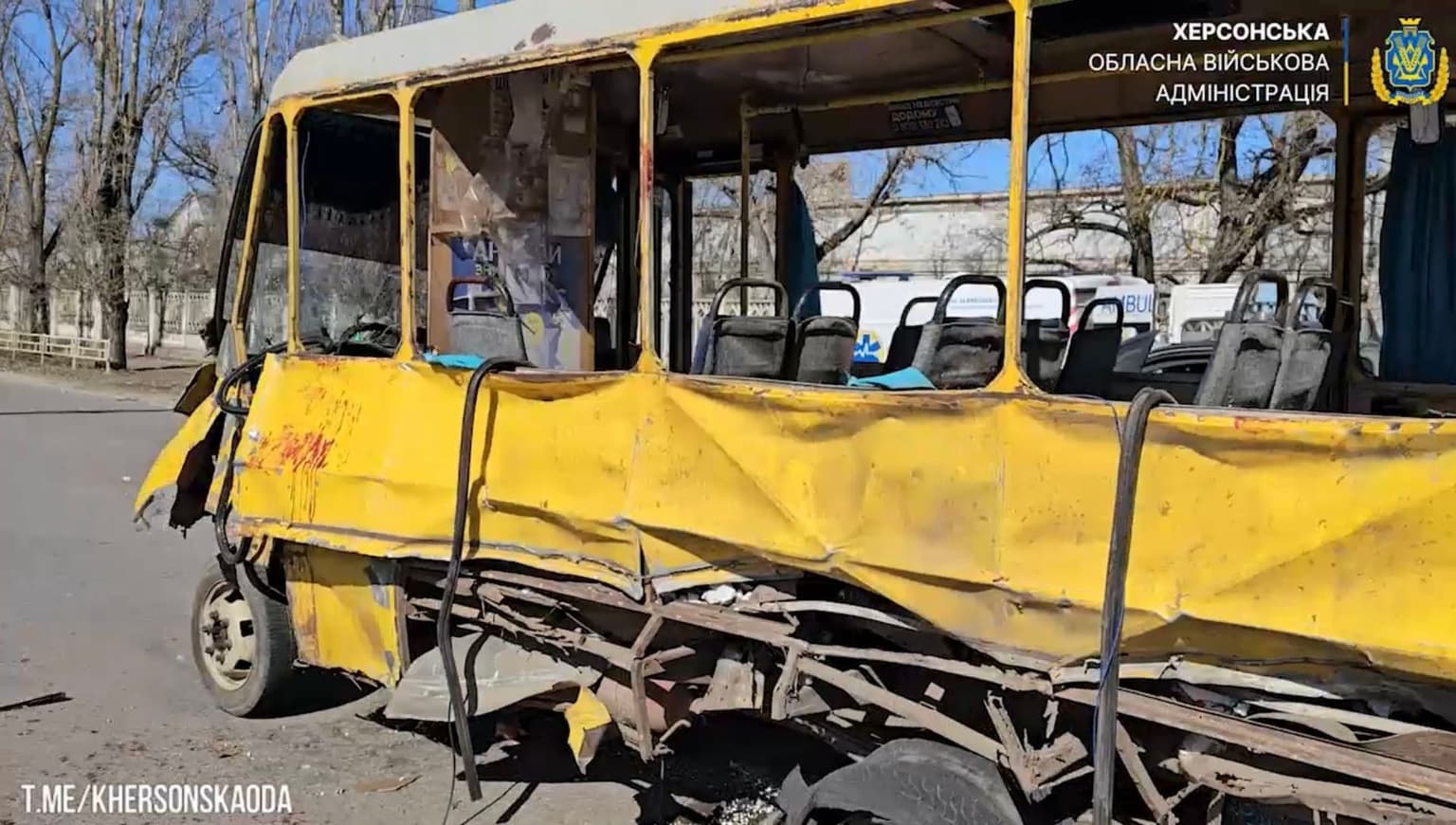
A civilian bus after a Russian drone strike in Kherson Oblast. (Telegram)
Further east in western Zaporizhia, Russian forces attacked near Prymorske, Stepnohirsk, Luhivske, Bilohirya, and Shcherbaky. The assaults created fighting but no territorial gains.
Russian units are increasingly relying on Molniya fixed-wing drones—cheap aircraft built from simple materials but capable of carrying large warheads.
The drone war is intensifying.
But across the southern front, the line still holds.
Fires Across the Occupied Zone
Nightfall brought another wave of Ukrainian strikes across Russian-held territory.
Between March 10 and 11, Ukrainian forces targeted command posts, ammunition depots, air defenses, and fuel sites across a wide stretch of occupied land. The attacks unfolded in a pattern—hit the command structure, disrupt logistics, then strike the fuel and weapons that keep the war moving.
In Donetsk Oblast, Ukrainian forces struck a Russian command post in occupied Avdiivka. Further south, a major fire erupted after an ammunition depot near Shyroka Balka was hit. Logistics sites near Maryanivka and Pryshyb were also struck.
The strikes continued westward into Zaporizhia Oblast.
Ukrainian drones destroyed a Buk-M1 air-defense system near Bahativka and hit additional depots near Pryshyb and Maryanivka. A drone warehouse near Novozlatopil was also targeted. Ukrainian drone commander Robert “Magyar” Brovdi said operators struck a command post and logistics site belonging to Russia’s 108th Airborne Regiment near Pryshyb.
Fuel infrastructure was hit as well.
Ukrainian forces struck fuel depots near Berdyansk and Kuznetsivka, both deep behind Russian lines.
Taken together, the strikes formed a clear pattern: weaken air defenses, destroy ammunition, cut fuel, and disrupt command.
Across the occupied territories, fires marked each link of Russia’s supply chain.
Ukraine Strikes the Shield Over Crimea
Ukrainian strikes reached deep into occupied Crimea.
Ukraine’s General Staff reported attacks on Russian oil depots near Dzhankoi and Azovske, fuel sites supporting Russian forces on the peninsula.
But the most significant hit came in Sevastopol.
Ukrainian Special Operations Forces reported a drone strike on a 64N6E radar tied to an S-400 air-defense system. Footage later showed drones hitting the installation.
The radar serves as the system’s eyes, detecting aircraft and guiding interceptors.
Damaging it weakens Russia’s air-defense coverage over Crimea and the Black Sea.
The strikes followed a clear Ukrainian pattern: hit the fuel that sustains operations, then damage the defenses protecting those supplies.
Each attack removes another layer.
Across Crimea, the shield guarding Russian forces is slowly thinning.
Russia Floods the Sky With Drones
Air raid sirens sounded across Ukraine as another wave of Russian drones filled the night sky.
Between March 10 and 11, Russia launched ninety-nine drones—including Shahed, Gerbera, and Italmas types—from multiple directions such as Bryansk, Kursk, Rostov Oblast, and occupied Crimea.
Ukraine’s Air Force reported ninety drones shot down. Nine reached their targets, while debris fell in several areas.
Some attacks struck civilians.
In Kharkiv, a Shahed drone hit a food enterprise, killing two people and injuring at least seven. In Zaporizhzhia, guided aerial bombs wounded at least thirteen more.
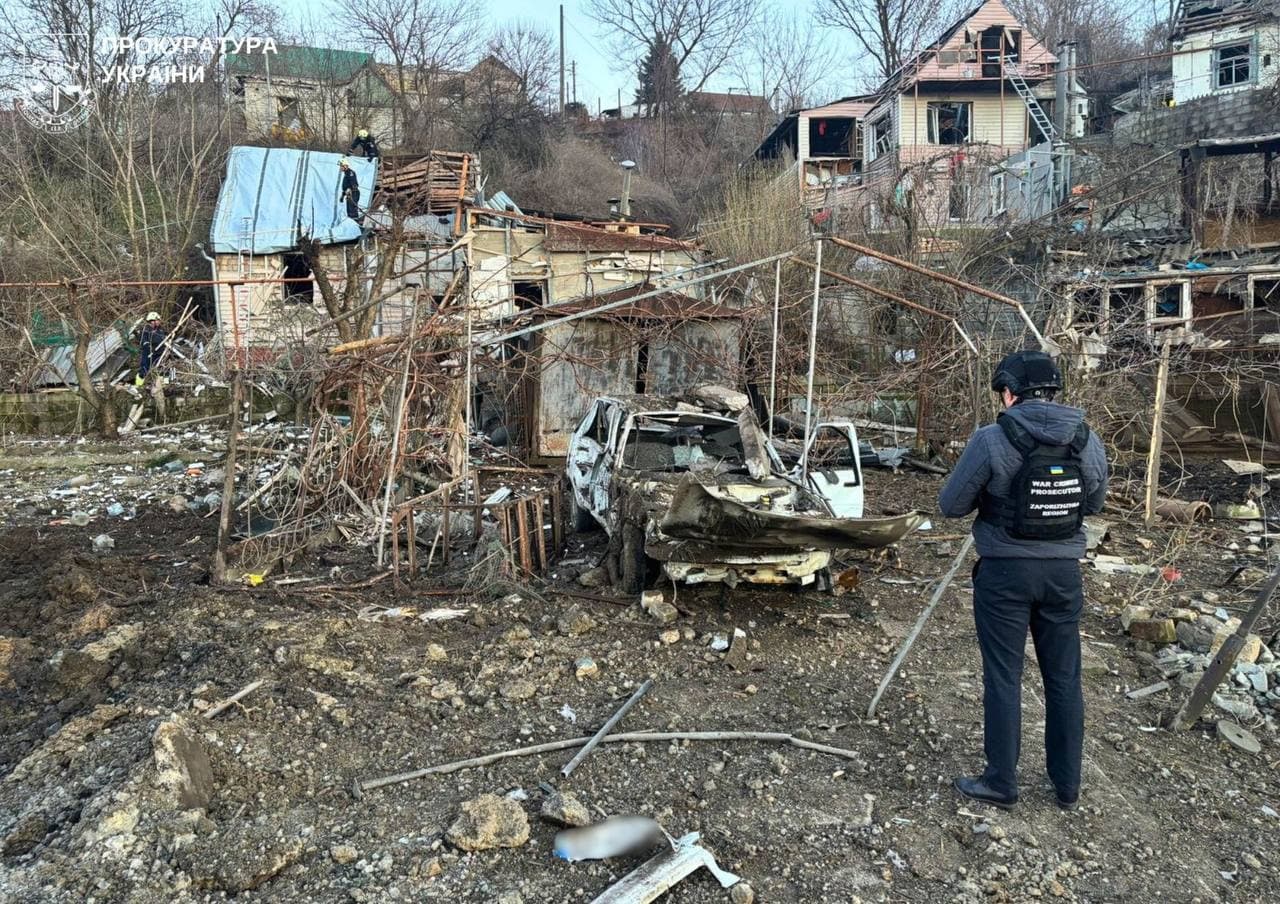
The aftermath of a Russian guided aerial bomb attack on Zaporizhzhia Oblast. (Zaporizhzhia Regional Prosecutor’s Office / Telegram)
The attack reflected Russia’s evolving tactic: overwhelm defenses with large numbers of cheaper drones.
Some get through.
Many do not.
But while drones filled the sky, Ukrainian strikes were hitting the factories and supply chains that support Russia’s drone war.
Patriot Missiles Reinforce Ukraine’s Sky Shield
As Russian missiles and drones continued striking Ukrainian cities, new defenses quietly arrived.
President Volodymyr Zelensky announced that Germany had delivered additional PAC-3 interceptor missiles for Ukraine’s Patriot air defense systems. The shipment was part of the air-defense support promised by partners during the February Ramstein meeting.
The missiles are designed to destroy ballistic missiles and aircraft, strengthening Ukraine’s ability to defend its cities and infrastructure.
Their arrival came at a telling moment.
While Ukraine struck Russian defense industries—including the microchip facility hit in Bryansk—Western allies were reinforcing the shield protecting Ukrainian skies.
The strategy is becoming clear: weaken the factories producing Russian missiles while strengthening the defenses that stop them.
Battlefield Lessons Travel West
Germany is turning to Ukraine’s battlefield experience to prepare its own army.
German Army chief Lt. Gen. Christian Freuding said Ukrainian military instructors will soon begin training German soldiers, sharing lessons learned from fighting Russia’s full-scale invasion.
The first group, likely several dozen Ukrainian trainers, will spend weeks working inside German army schools. Their focus will include artillery coordination, drone warfare, armored combat, engineering, and modern command systems shaped by years of war.
Freuding said Ukraine’s army now holds unique experience.
“The Ukrainian military is currently the only one in the world with frontline experience against Russia,” he said.
The training reflects growing concern across Europe. German and other Western intelligence assessments warn that Russia could be capable of threatening NATO territory by 2029.
Freuding said the timeline leaves little room for delay.
“That’s almost the day after tomorrow,” he warned.
Ukraine’s soldiers, hardened by years of combat, are now teaching the very tactics Europe may need to defend itself.
Ukraine Builds a Drone Industry
Ukraine is rapidly reducing reliance on Chinese components as it expands domestic drone production. Drones have become the dominant weapon of the war. According to Major Robert “Magyar” Brovdi, commander of Ukraine’s Unmanned Systems Forces, they now account for more than 90 percent of Russian battlefield losses.
In 2022 most Ukrainian drones depended almost entirely on Chinese parts. By 2025 that share had fallen to about 38 percent as Ukraine accelerated domestic manufacturing and supply diversification.
China imposed export restrictions on several drone-related technologies beginning in 2023, tightening them further in 2024. Analysts say Russia has still managed to obtain some components through alternative channels.
Ukraine is responding by building its own industry. New systems include the fiber-optic “Ptashka” quadcopter designed to resist electronic warfare, as well as domestically produced reconnaissance drones intended to replace Chinese DJI models.
Companies like Fire Point now manufacture most engine components for long-range strike drones inside Ukraine.
Ukraine’s Drone Expertise Goes Global
Ukraine’s battlefield innovation is now shaping security far beyond its borders.
President Volodymyr Zelensky said Ukraine has developed world-class expertise in countering Iranian-designed drones widely used by Russia against Ukrainian cities. That experience has drawn international attention.
At Washington’s request, Ukraine recently sent drone specialists and interceptor systems to Jordan to help defend US military bases from Iranian drone attacks. Zelensky said the United States made the request only days earlier and Ukrainian experts deployed almost immediately.
“It’s a good feeling,” Zelensky said, crediting Ukrainian soldiers, engineers, and industries that expanded rapidly during the war.
The cooperation reflects a striking reversal of roles. A country fighting for its own survival is now exporting battlefield knowledge to protect American forces and regional allies.
Zelensky has also suggested Middle Eastern partners could exchange air defense missiles for Ukraine’s drone-interception technology as Kyiv continues seeking ways to offset shortages of Western interceptor ammunition.
Ukraine Exposes Russia’s Warrior-Athletes
Ukrainian Military Intelligence has revealed new evidence that some Russian para-athletes competing in international sports are also active participants in the war against Ukraine.
The report, released with Ukraine’s Ministry of Youth and Sports and the Center for Countering Disinformation, identified six athletes who simultaneously serve in Russia’s military. Ukrainian officials say the cases highlight how Moscow uses international sports to normalize its global standing while continuing military aggression.
Among those named is Artemy Repkin, a lieutenant colonel in the Russian armed forces and member of Chuvashia’s Paralympic athletics team. Ukrainian intelligence says he also serves as deputy commander of the 96th Separate Reconnaissance Brigade of Russia’s 1st Tank Army.
Another athlete, Dmitry Borisov, reportedly commands a motorized rifle company in the 69th Guards Motor Rifle Division while competing in Paralympic powerlifting. Anton Lishik, a senior warrant officer, was identified as both a military archery team member and an active combat participant.
Ukrainian officials argue athletes serving in combat roles should be barred from international competitions, including participation under neutral status.
The Paralympic Disgrace
Ukraine sharply condemned the International Paralympic Committee on March 11 over what officials described as systematic mistreatment of Ukrainian athletes and fans during the 2026 Winter Paralympic Games.
In a joint statement, Ukraine’s Foreign Ministry and Ministry of Youth and Sports accused the IPC of allowing Russian and Belarusian flags at the Games while attempting to suppress Ukrainian national symbols. Ukrainian officials said the actions demonstrated disregard for a nation fighting for survival against Russian aggression.
Ukraine’s National Paralympic Committee reported several incidents involving pressure on Ukrainian athletes and team members. Among them was the removal of Ukraine’s national flag from the team’s building, despite similar displays being allowed at previous Paralympic Games. Officials also reported that an IPC representative attempted to confiscate earrings worn by Ukrainian athlete Oleksandra Kononova that displayed the Ukrainian flag alongside the words “stop war.”
The controversy intensified after Russian and Belarusian athletes were allowed to return to Paralympic competition under their national flags following earlier bans imposed after Russia’s invasion.
Ukrainian officials argue the situation reveals a stark moral contradiction within international sport. Athletes from the nation defending itself against invasion faced restrictions on national expression, while competitors representing the aggressor state were allowed to participate under national symbols.
For Kyiv, the dispute goes beyond sports. It reflects a broader struggle over whether international institutions will confront or accommodate Russia’s war against Ukraine.
Trump Envoys Meet Kremlin Negotiator
While Ukrainian forces struck Russian factories and advanced on several fronts, diplomatic maneuvering continued far from the battlefield. On March 11, US Special Envoy Steve Witkoff confirmed that Kremlin representative Kirill Dmitriev met with members of the Trump administration in Florida.
Dmitriev, a close economic adviser to Russian President Vladimir Putin and head of the Russian Direct Investment Fund, led the Russian delegation. The American team included Witkoff, Jared Kushner, and White House senior adviser Josh Gruenbaum. After the meeting, Witkoff offered only a brief public description, writing that the teams “discussed a variety of topics” and agreed to remain in contact.
The talks followed a March 9 phone call between Donald Trump and Vladimir Putin. During that conversation, Putin reportedly raised proposals related to the expanding conflict involving Iran, a crisis that has complicated US efforts to broker negotiations between Russia and Ukraine.
The timing underscored Russia’s shifting diplomatic posture. Kremlin spokesperson Dmitry Peskov had just declared earlier negotiation frameworks obsolete while signaling that Moscow expected broader Ukrainian concessions in any future settlement.
Meanwhile, the Trump administration was weighing the possibility of easing sanctions on Russian oil as global energy prices surged following the US-Israel strike on Iran in late February. The disruption has already allowed Russia to expand exports, with Washington easing some restrictions affecting Indian imports of Russian crude.
Dmitriev previously helped design an earlier US-backed peace framework that demanded major concessions from Ukraine. Notably, Ukraine was not represented at the Florida meeting.
Hungary’s Unofficial Mission
A group of Hungarian officials entered Ukraine on March 11 claiming they intended to assess the condition of the Druzhba oil pipeline and push for the restoration of Russian oil transit to Hungary. But Kyiv quickly made clear the visitors were not recognized as an official delegation.
Zoltan Kovacs, spokesperson for Hungarian Prime Minister Viktor Orban, announced that the group was traveling to Ukraine to advocate for restarting pipeline flows. Ukraine’s Foreign Ministry responded with carefully worded clarification. The individuals, it said, had entered Ukraine under the standard visa-free travel rules available to citizens of Schengen countries.
Because the visitors had no formal diplomatic status and no scheduled official meetings, the ministry emphasized it was incorrect to describe them as a delegation. In effect, Hungary had sent representatives, but Ukraine had not agreed to receive them in any official capacity.
The dispute centers on the Druzhba pipeline, which carries Russian oil to Hungary and Slovakia through Ukrainian territory. Transit through the line has been halted since late January after Russian strikes damaged energy infrastructure in western Ukraine.
Budapest and Bratislava have accused Kyiv of deliberately stopping the flow, while Ukrainian officials maintain the disruption resulted from Russian attacks.
Relations between Kyiv and Budapest have deteriorated further following another confrontation earlier in March, when Hungarian authorities seized vehicles belonging to Ukraine’s state-owned Oschadbank that were transporting large sums of cash and gold. Ukrainian staff were later released, but the funds remained confiscated.
Against that backdrop, Hungary’s uninvited visitors arrived hoping to discuss energy transit—while Ukraine made clear they had come only as private travelers.
Russia’s Digital Crackdown
Mobile internet disruptions across parts of Russia will remain in place as long as necessary to ensure public safety, the Kremlin said Wednesday after outages were reported in Moscow and several other cities.
Kremlin spokesman Dmitry Peskov said the restrictions were linked to Ukraine’s “increasingly sophisticated attack methods,” arguing that stronger technological countermeasures were needed.
Disruptions were reported in regions including Oryol and Tula south of Moscow. Russian security services have repeatedly claimed Ukraine uses messaging apps such as Telegram to recruit collaborators and coordinate sabotage operations inside Russia.
Authorities have responded by tightening restrictions on Telegram and WhatsApp while promoting a state-backed messaging platform called Max.
Critics and civil rights advocates say the measures are aimed less at security than at tightening state control over information.
As Ukrainian drone strikes reach deeper into Russian territory, Moscow has increasingly paired physical defenses with digital restrictions designed to limit communications that could assist intelligence gathering or sabotage operations.
Mariupol Property Seizures Expand
Russian occupation authorities in Mariupol are disconnecting apartments from utilities as part of a broader effort to identify and confiscate housing, Ukraine’s National Resistance Center reported March 11.
Residents whose electricity has been cut are instructed to contact Energosbyt Donetsk, the main power supplier in Russian-controlled areas of Donetsk Oblast. To restore service, homeowners must reissue documentation and provide detailed information about the people registered at the property.
According to the Resistance Center, the process is presented as a routine administrative update. In practice, however, the personal data is transferred to occupation authorities and used to facilitate the seizure of housing.
“The disconnection of utilities becomes the first stage of the mechanism for real estate redistribution,” the Center said.
The policy follows a December 2025 decree by Russian President Vladimir Putin that allows authorities to confiscate residential property in occupied territories if it shows signs of being “ownerless.” In reality, many of the original owners fled or were killed during Russia’s invasion.
Petro Andriushchenko, head of the Center for the Study of the Occupation, said the decree effectively legalized property seizures. Occupation authorities can simply refuse to recognize ownership documents and declare homes abandoned.
He estimated that about 5,000 apartments in Mariupol had already been confiscated by December 2025, with another 100 to 200 properties being seized each week.
Mariupol was devastated during the Russian siege between February and May 2022. Tens of thousands of civilians are believed to have died as the city was largely destroyed.
Now, Ukrainian officials say, the confiscation of homes belonging to the dead and displaced is being formalized through bureaucratic procedures such as utility disconnections.
Ukraine’s Economic Devastation Quantified
Russia’s full-scale invasion has inflicted staggering economic damage on Ukraine. A new assessment by the KSE Institute estimates total economic losses—including both current and projected lost revenue—at roughly $1.7 trillion, with an additional $600 billion in lost value added.
Losses in value added alone now exceed Ukraine’s entire pre-war GDP from 2021 by more than three times. Earlier estimates released in July 2024 placed lost revenue at $1.164 trillion and lost value added at $385.7 billion. The revised figures reflect updated methodology, new company-level and sector data, and an expanded timeframe covering losses through the end of 2026.
The heaviest losses have struck Ukraine’s productive sectors. Trade accounts for about $696 billion in lost revenue, followed by industry, construction, and services at $645.6 billion, and agriculture at $81.9 billion. Critical infrastructure has also suffered major damage, including energy losses estimated at $75.3 billion and transport at $60.2 billion.
Beyond lost output, the war has generated additional costs across the country. Housing damage is estimated at $26.8 billion, while demining operations total $24.6 billion. Social support spending has climbed to $7.5 billion, and about $13 billion has gone toward dismantling destroyed assets and clearing debris.
Together, the figures quantify the enormous economic destruction caused by Russia’s invasion.
The Day’s Meaning: Moving Goalposts
March 11 exposed a widening gap between rhetoric and reality in the war.
Kremlin officials declared earlier negotiation frameworks obsolete and hinted that Ukraine must accept even broader concessions. Yet on the same day, Ukrainian forces demonstrated how dramatically the battlefield had shifted. Storm Shadow missiles struck Russia’s Kremniy El microchip factory in Bryansk, damaging one of the country’s key defense industrial sites. Satellite imagery showed precise impacts on the facility while Russian milbloggers demanded answers about failed air defenses.
At the same time, Ukrainian troops advanced in multiple sectors. Geolocated footage confirmed gains near Kupyansk in Kharkiv Oblast and in the Zaporizhia directions of Oleksandrivka and Hulyaipole, while additional pressure developed in the Kostyantynivka-Druzhkivka area of Donetsk Oblast. Ukrainian strikes also targeted logistics depots, air defense systems, and command sites across occupied territories.
Inside Russia, the consequences spread beyond the battlefield. Fires broke out at a metallurgical plant in Tula, drones disrupted activity around Sochi, and Moscow imposed mobile internet outages while blaming Ukraine’s “sophisticated attack methods.”
Beyond combat, the war’s global dimensions became clearer. Germany delivered Patriot interceptors to strengthen Ukraine’s air defenses and announced Ukrainian trainers would help prepare German forces for a potential Russian threat by 2029. Ukrainian drone specialists deployed to Jordan to help defend U.S. bases against Iranian drones. A nation fighting for survival was now exporting battlefield expertise abroad.
Meanwhile, diplomatic maneuvering continued elsewhere. U.S. envoys met a senior Russian economic adviser in Florida hours after Moscow declared earlier peace terms obsolete. Ukraine was not represented in the talks.
The contradictions defined the day. Russia expanded its demands while Ukrainian strikes damaged military production inside Russia. Diplomacy advanced while combat intensified. The war’s goalposts were shifting again—and the battlefield kept rewriting the terms.
Prayer For Ukraine
- Protection for Those Under Fire
Lord of mercy, we lift before You the people of Ukraine who endured another night of drones, missiles, and air raid sirens. Protect families in cities like Kharkiv and Zaporizhzhia, where civilians were injured as attacks struck homes and workplaces. Guard the defenders who stand between destruction and the innocent. Give them courage, clarity, and strength, and place Your shield over those who sleep under threat. - Comfort for the Displaced and the Grieving
Father of compassion, we remember the countless families whose homes were destroyed in places like Mariupol and across the occupied territories. Many mourn loved ones lost in the siege or live as refugees far from home. Bring comfort to the grieving and hope to the displaced. May those who lost homes, land, and security find restoration, dignity, and the promise that injustice will not have the final word. - Wisdom for Leaders and Negotiators
God of truth, we pray for wisdom for leaders in Ukraine and across the world who face decisions about war, peace, sanctions, and diplomacy. Grant them discernment and courage to pursue justice rather than expediency. May negotiations be guided not by pressure or manipulation, but by truth, accountability, and a genuine desire for a just and lasting peace. - Justice and Restraint in the Midst of War
Righteous Judge, we ask that wrongdoing be exposed and that those responsible for violence, corruption, and exploitation be held accountable. Protect Ukraine from those who would steal homes, silence voices, or profit from suffering. Restrain those who seek escalation and destruction, and turn hearts away from cruelty toward repentance and justice. - Strength and Endurance for the Ukrainian People
Faithful God, we thank You for the resilience of Ukraine’s people—the soldiers defending their land, the workers rebuilding communities, and the innovators developing new tools to protect their nation. Renew their strength when weariness grows. Fill them with courage, unity, and hope. May Ukraine stand firm through this trial and emerge with peace, freedom, and restoration. Amen.