
In Krasnodar Krai, Ukrainian drones turned three oil facilities into infernos in three days. In Kupyansk, an entire Russian division pulled back from the front, too broken to fight. In Moscow, diplomats slammed the door on European peace talks while their own spring offensive drowned in burned armor and depleted ranks—Day 1,481, when Russia’s war machine stalled and its fuel supply burned.
The Day’s Reckoning
On the Kupyansk front, a Russian division was retreating—not to regroup, not to reposition, but because it had nothing left to fight with. The 144th Motorized Rifle Division had burned through so many soldiers and so much equipment that Ukrainian sources said it had simply ceased to function as a combat formation. An entire division, pulling back from a front where Russia was supposed to be advancing.
That single image captured March 15th, Day 1,481, in miniature. Russia’s spring offensive—the mechanized push that was supposed to shatter Ukrainian lines with armor and exploit the gaps—had instead shattered itself. Zelensky stood before journalists and said it plainly: “The spring campaign, as it had been planned, drowned in this spring for the Russians; they were unable to advance.” Not stalled. Not delayed. Drowned.
Five hundred kilometers southeast, the evidence was burning. Ukrainian drones hit the Tikhoretsk oil pumping station overnight—the same facility they’d struck three days earlier—while another swarm found an oil depot in Labinsk and the Afipsky Oil Refinery smoldered from the night before. Three major energy targets across Krasnodar Krai in 72 hours, a systematic campaign turning southern Russia’s oil infrastructure into a nightly bonfire. In occupied Crimea, Ukrainian strikes knocked out radar stations and an S-400 launcher, methodically blinding the air defenses that were supposed to stop exactly these kinds of attacks.
In Paris, France was preparing to send Ukraine an untested ballistic missile killer. In Moldova, a country not even at war, authorities declared an environmental emergency after Russian strikes on a Ukrainian hydropower plant poisoned the Dniester River. Along Russian trenches, military police checked soldiers’ phones—not for leaks, but to make sure they’d deleted Telegram.
Stalled offensives, burning refineries, broken divisions, contaminated rivers. Day 1,481 belonged to no one except the war itself.
Dead Armor, Burning Spring: How Russia’s Grand Offensive Ate Itself
Imagine planning a spring offensive for months—massing armor, positioning mechanized columns, rehearsing the breakthroughs that would finally crack Ukrainian defensive lines wide open. Then imagine watching all of it burn.
That is what Zelensky described to journalists on March 15th, and his metaphor cut deliberately. Spring offensives carry weight in military history: firm ground, long daylight, the season when armies launch campaigns meant to decide wars. Russia built exactly that kind of campaign. Mechanized pushes. Armored exploitation. Coordinated breakthroughs. “They are carrying out offensive actions, but they are all the same,” Zelensky said. “They cannot break through anywhere—we are burning their equipment.”
The wreckage told the story. Unable to advance with armor, Russian commanders had abandoned mechanized warfare entirely, sending instead small infiltration groups and endless low-level assaults—the desperate tactics of an army that can no longer maneuver as a modern fighting force. Ukrainian pressure had forced Moscow into a shell game, shuttling depleted units between sectors after operations around Kupyansk in 2025 and recent fighting in southern Ukraine recaptured roughly 400 to 435 square kilometers. “We saw how they began moving troops from the Donetsk direction here, because they were afraid that the Armed Forces of Ukraine would move further than those 430 kilometers,” Zelensky explained. The result: an army stretched across every axis, too thin everywhere to break through anywhere.
Then came the revelation that silenced the room. Captured Russian operational maps showed territories Moscow intends to seize in the coming years—plans reaching far beyond any settlement framework under discussion. “This shows that they definitely have no thoughts about stopping the war,” Zelensky said. “Why do we react to the words of one leader or another that Putin wants to end the war? He does not want to. Otherwise, his maps should look different.”
Russia keeps investing in missiles, not infrastructure. The maps aren’t aspirational. They’re operational.
Krasnodar in Flames: The 72 Hours That Torched Russia’s Oil Lifeline
The first fire hadn’t died before the next one started.
On March 13, Ukrainian drones found the Afipsky Oil Refinery in Krasnodar Krai and set it burning. The following night, they returned to the Tikhoretsk oil pumping station—one of southern Russia’s largest oil logistics hubs, a sprawling complex channeling fuel toward the Black Sea—and lit it up for the second time in four days. Repair crews from the SBU’s March 11-12 strike were still assessing damage when the sky filled with drones again. Then, as March 15 turned to March 16, another swarm struck an oil depot in Labinsk, 345 kilometers southeast of occupied Crimea and 500 kilometers from Ukrainian-controlled territory.
Three major energy targets. One region. Seventy-two hours. Each fire a message that the previous one wasn’t a fluke.
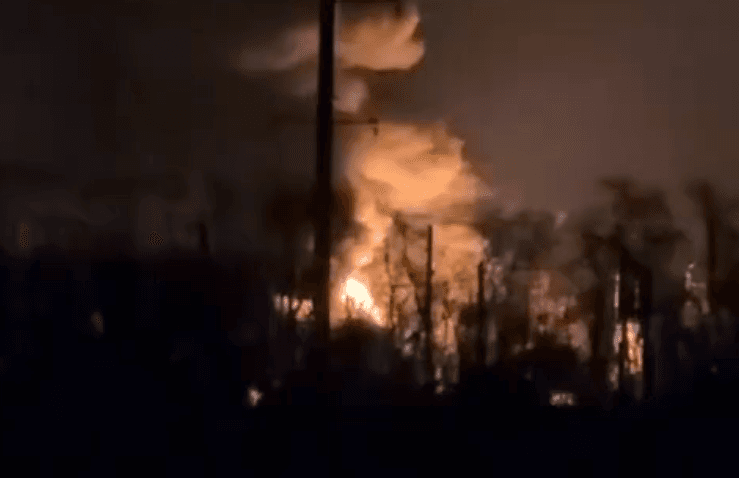
Geolocated footage from Tikhoretsk showed flames climbing above the pumping station while local authorities offered the reflexive explanation—debris from “downed drones”—that fooled no one watching the videos on Telegram. Ukraine’s General Staff confirmed that both the Afipsky refinery and the nearby Port Kavkaz facility, where three people were injured and a technical vessel damaged, had been directly supplying the Russian military.
Now stand in a Russian energy planner’s shoes. Every repair crew you send to Tikhoretsk works wondering whether they’ll finish before the next swarm arrives. Every barrel that can’t flow is revenue that can’t buy missiles. Every air defense battery repositioned to shield a refinery is one fewer protecting soldiers at the front.
Ukraine wasn’t just hitting infrastructure. It was forcing Moscow to choose between fueling its war machine and defending it.
Cutting Russia’s Eyes Out: The Surgical Strike on Crimea’s Air Defenses
While Krasnodar’s refineries burned, Ukrainian forces were performing a different kind of operation in occupied Crimea—not destroying what Russia owns but destroying what Russia sees.
Overnight on March 14-15, strikes hit two radar systems near the village of Liubknekhivka. The first was the 59N6-E “Protivnik,” a long-range surveillance radar that tracks aircraft, cruise missiles, and ballistic targets at high altitude—the early warning system that gives Russian operators their picture of the sky. The second was the 73E6 “Parol,” the identification friend-or-foe system that tells Russia’s air defense network which contacts are friendly, and which are threats. Knock out the Protivnik and the operators go blind. Knock out the Parol and every surviving radar screen becomes a guessing game—is that blip one of ours, or something that’s about to kill us?
The same night, Ukrainian forces hit an S-400 “Triumf” launcher near Dalne, one of Russia’s most advanced air defense systems and the backbone of Crimea’s protective shield. The General Staff also confirmed that a Valdai radar struck near Prymorske on March 10 had sustained significant damage—a system designed specifically to detect the low-flying drones Ukraine relies on for its deep-strike campaigns.
Each system destroyed peeled back another layer of Crimea’s defenses, creating blind spots that subsequent Ukrainian strikes could fly through. The strategy was cumulative: degrade the ability to see, then degrade the ability to shoot, then send the next wave through the gaps.
The pattern extended north. Ukrainian strikes knocked out energy infrastructure in Belgorod City, triggering power outages across Russia’s own border region. In occupied Luhansk, Special Operations Forces hit an air defense missile depot near Dovzhansk, 142 kilometers behind the front line, producing a fire visible in geolocated footage. Russia was losing eyes, launchers, and ammunition simultaneously.
The Untested Shield: France Gambles Its Newest Weapon on Ukraine’s Skies
Somewhere in a French defense facility, engineers were preparing to ship a weapon that has never heard a shot fired in anger. On March 14, Zelensky announced that France would send Ukraine the newest SAMP/T NG anti-aircraft missile system—built specifically to kill ballistic missiles in flight. No army has ever fired it at an incoming warhead. No operator has ever watched its tracking screens during a real Iskander launch. Ukraine would be the proving ground where the system either validated years of French engineering or exposed its limitations under the most unforgiving conditions imaginable.
The need was visceral. Russia’s strike packages increasingly lean on ballistic missiles—Iskanders, Kinzhals, weapons that scream in at speeds current Ukrainian air defenses struggle to match. Zelensky and Macron agreed that if the SAMP/T NG proved itself against Russian ballistic missiles in Ukrainian combat, Kyiv would be first in line for full production systems.
The deal served both nations with elegant pragmatism. France would get something no amount of simulation can provide: combat-validated proof that its latest air defense technology works, data worth billions in future export contracts to every country watching Russian missiles on the evening news. Ukraine would get a capability that could fundamentally change what happens when a ballistic missile is heading for a city block or a power station.
But beneath the promise lay an uncomfortable truth both leaders left unspoken. The SAMP/T NG was coming to Ukraine precisely because everything the West had already sent hadn’t solved the ballistic missile problem. This wasn’t reinforcement. It was hope that the next generation might succeed where the current one couldn’t.
Shut Out and Forgotten: Europe Rejected, America Distracted, Diplomacy Dead
French national security adviser Emmanuel Bonne and adviser Bertrand Buchwalter flew to Moscow with a straightforward request: let Europe have a seat at the table where Ukraine’s future was being negotiated. They sat across from Russian presidential aide Yuri Ushakov and made their case. His answer, as one senior European diplomat paraphrased it to the Financial Times: “Sorry, actually, no we don’t.”
Then Kremlin spokesperson Dmitry Peskov twisted the blade. “The Europeans don’t want to help the peace process,” he told the FT, adding that the French delegation “didn’t bring any positive signals.” Picture that for a moment—Russia lecturing Europe about wanting peace while its drone operators were programming coordinates for that night’s hundred-drone salvo against Ukrainian cities.
But Moscow’s rejection wasn’t even the worst news European diplomats carried home. The American-led peace process itself was coming apart. Washington’s attention had pivoted hard toward the Middle East, where the war between the U.S., Israel, and Iran was consuming the political oxygen and military resources that Ukraine desperately needed. Rising oil prices and relaxed American sanctions enforcement were simultaneously padding Moscow’s war chest with fresh revenue.
The timeline told the story of a process dying. The last trilateral talks in Geneva on February 17-18 produced nothing. A follow-up in Abu Dhabi scheduled for March 5 was postponed after U.S.-Israeli strikes on Iran—and never rescheduled. European officials warned that American weapons shipments, particularly the air defense systems Ukraine needed to stop the ballistic missiles France was now trying to counter, could be delayed as Washington prioritized the Middle East. EU foreign policy chief Kaja Kallas named the problem directly: “competition for the same assets.”
Even Peskov conceded “a pause has indeed appeared in the talks.” When Moscow and its adversaries agree diplomacy is dead, diplomacy is dead.
Delete the App or Face the Police: Russia’s War on Its Own Communications
Picture a Russian soldier crouched in a trench, thumb hovering over the delete button on the one app that connects him to his squad leader, his drone operator, his supply chain, and the milblogger channels that tell him what’s actually happening on the front. Now picture a military policeman standing over him, checking that he does it.
A prominent Russian milblogger reported on March 15 that elements of the Russian military had ordered troops to remove Telegram—the messaging platform that has served as the backbone of Russian battlefield coordination since the invasion began—and military police were enforcing compliance phone by phone. The mandated replacement was Max, a state-controlled app so dysfunctional that some special forces units had already banned it outright.
The enforcement was a mess. Some units rigidly policed the ban while others kept using Telegram as though nothing had changed, a patchwork that suggested individual commanders were issuing orders rather than the Ministry of Defense rolling out a universal directive—though it could also mean Moscow was testing a quiet unit-by-unit rollout. The Kremlin’s official stance remained hopelessly contradictory: in February, officials claimed Russian forces weren’t using Telegram for frontline communications, then backtracked furiously after the milblogger community erupted. Communications Minister Maksut Shadayev insisted no decision had been made to restrict the app in the war zone.
The stakes couldn’t have been higher. Russia’s February 1 Starlink block had already degraded battlefield communications. Now troops were being told to abandon the informal networks that compensated for rigid official channels—the coordination threads, the real-time drone alerts, the unit-to-unit warnings that kept men alive—and replace them with an app the milblogger community called “very inconvenient to use.”
In a war where seconds of communication delay separate evading a drone from dying under one, “very inconvenient” is a death sentence.
Bled White: An Entire Russian Division Collapses at Kupyansk
The news arrived buried in the day’s tactical updates, the kind of line item easy to scroll past. It shouldn’t have been.
A Ukrainian source reporting on Kharkiv Oblast disclosed that Russia’s 144th Motorized Rifle Division—part of the 20th Combined Arms Army, Moscow Military District—had lost so many soldiers and so much equipment in the Kupyansk direction that it no longer functioned as a fighting force. The division was pulling back from its positions entirely. Not a battalion tactical group. Not a regiment. A full division, gutted beyond recovery on a front where Russia was supposed to be advancing.
The Kupyansk axis had been one of Moscow’s priority offensives for months, the planned crossing of the Oskil River that would push Russian forces westward into eastern Kharkiv Oblast. The 144th was one of the primary instruments of that ambition, and the ambition had consumed it whole. Russian forces continued attacking across the sector—near Fyholivka to the northeast, Podoly and Kucherivka to the east, Hlushkivka and Novoosynove to the southeast—but a Ukrainian counterattack north of Kupyansk and General Staff reports of striking a Russian manpower concentration nearby suggested Ukraine was already exploiting the hole the 144th left behind.
Think about what replacing a division means for Russian planners already struggling to feed fresh bodies into a front stretching over a thousand kilometers. You don’t rebuild a division’s worth of combat power in weeks. You recruit, train, equip, and integrate—all while the sector you pulled the broken formation out of still demands offensive pressure. Every replacement soldier funneled toward Kupyansk is one fewer available for Pokrovsk, or Zaporizhzhia, or the next crisis point that hasn’t erupted yet.
The 144th went to Kupyansk to break through. Kupyansk broke the 144th instead.
A Thousand Kilometers of Grinding: The Front That Swallowed Russia’s Momentum
Walk the front line on March 15 from north to south—more than a thousand kilometers of contested earth—and you’d find the same story repeating in different accents: Russian forces pushing, Ukrainian forces holding, and the line refusing to snap.
Near Slovyansk, it was Ukraine on the attack. Geolocated footage showed Ukrainian troops pushing into southern Yampil southeast of Lyman, while additional footage confirmed they still held Ozerne—an area Russian sources had claimed as their own. Behind Russian lines, the Atesh partisan group struck a different kind of blow: agents destroyed a transformer powering the headquarters of the Russian 123rd Brigade in occupied Severodonetsk, 32 kilometers from the front, and published footage of the saboteur setting the fire.
In the Kostyantynivka-Druzhkivka area, the war moved in both directions simultaneously. Ukrainian forces advanced into southern Kostyantynivka—contradicting Russian claims of control—while Russian troops gained ground northwest of Stupochky. A Ukrainian company commander described the human fuel feeding Russia’s advances: recruits conducting ground assaults three weeks to a month after signing contracts. Bodies barely trained, sent forward to die or take a trench.
At Pokrovsk, the 7th Rapid Reaction Corps was clearing central Hryshyne in heavy fighting while Russian drone operators from the 75th Motorized Rifle Regiment fielded multiple drones in coordinated swarms—the drone war evolving in real time. Across the Zaporizhzhia front, Russian forces attacked from Hulyaipole to western Orikhiv and Ukrainian forces counterattacked near Prymorske and Stepnohirsk, while mid-range strikes destroyed a logistics warehouse near Osypenko and a drone storage site near Prymorske, both 90 kilometers behind the lines.
From Dobropillya to Oleksandrivka, Russian attacks produced nothing. Near Kherson, assaults on Bilohrudyi and Kruhlyk islands went nowhere. In northern Kharkiv—Vovchanski Khutory, Fyholivka, Vovchansk—and northwest of Sumy City, the pattern held. One hundred forty-four combat engagements in 24 hours. Not one breakthrough.
The front bent. It shifted. It did not break.
Five Dead, Forty-Seven Wounded: Another Day of Dying for No Reason
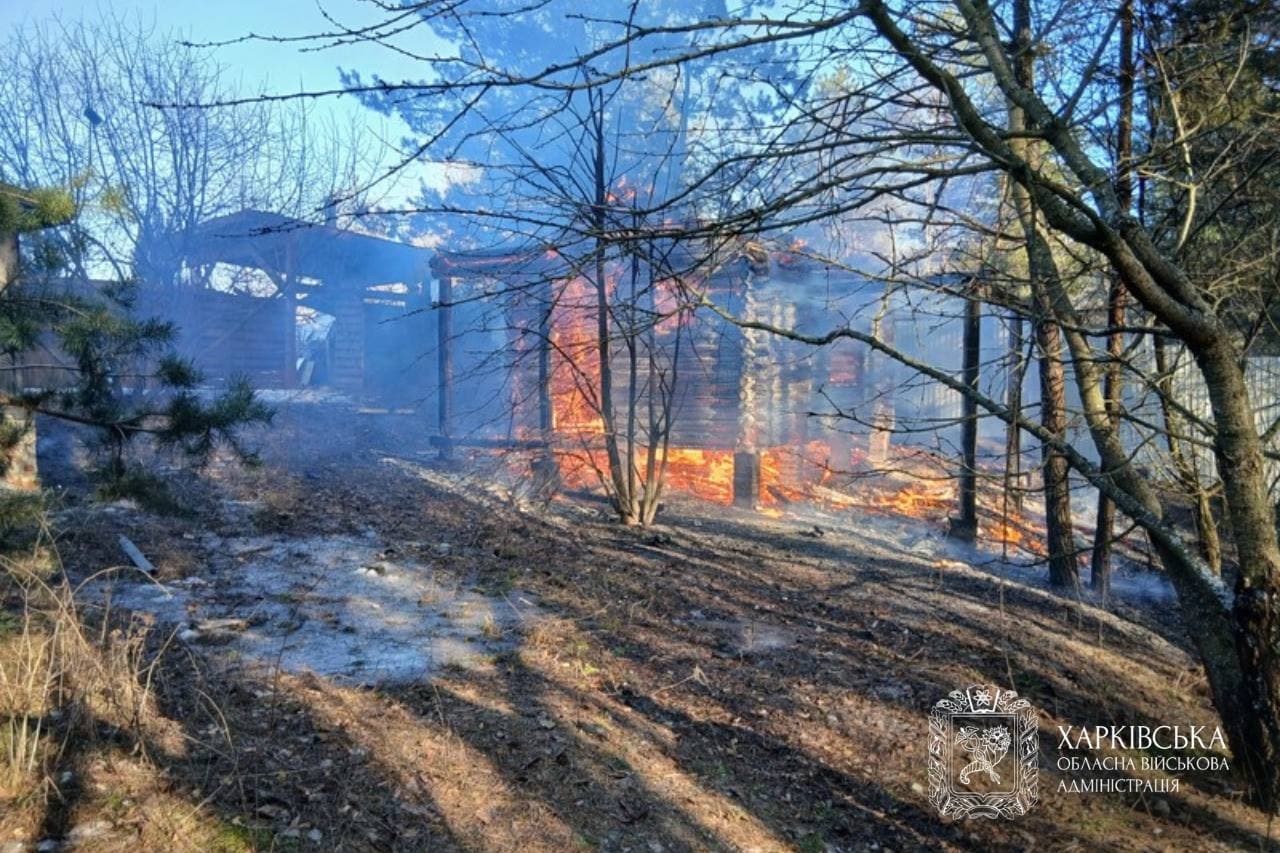
Two emergency medics were racing toward someone who needed help near the village of Chervona Khvylia in Kharkiv Oblast when a Russian strike found them instead. A 27-year-old and a 56-year-old died where their ambulance stopped. A 54-year-old colleague survived, wounded. Their medical vehicle was destroyed. They became two of the five civilians Russia killed on March 15, and three of the forty-seven it wounded.
In Kherson Oblast, Russian strikes tore through residential neighborhoods, killing one person and injuring seventeen—three of them children—while damaging six apartment buildings and twenty-one private homes. Across Zaporizhzhia Oblast, the scale was staggering: 735 Russian strikes on 43 settlements in a single day, two people killed, twenty-two wounded, and 405 separate reports of damage to homes, infrastructure, and vehicles. In Sumy Oblast, drone and guided bomb strikes wounded four civilians. In Dnipropetrovsk, two more.
Twenty-one settlements across Kharkiv Oblast absorbed Russian fire in 24 hours—guided aerial bombs, Geran-2 drones, Lancets, Molniyas, FPVs raining down on railway infrastructure in Bohodukhiv, residential homes, power lines, warehouses, a civilian enterprise in Kupiansk. A 63-year-old woman was wounded in the shelling. In Chernihiv Oblast, drones from the overnight swarm of 97 hit a checkpoint, transport infrastructure, and energy systems. Near Novoselytsya in Sumy Oblast, a passenger locomotive took a direct strike.
Zelensky put the past week into numbers that deserve to be read slowly: approximately 1,770 long-range strike drones, over 1,530 guided glide bombs, and about 86 missiles including more than 20 ballistic missiles since March 8. Zaporizhzhia’s military administration head reported a 78 percent drone interception rate near the city. Do the math on the other 22 percent across seven days of that volume, and you begin to understand what Ukrainian civilians absorb while the world discusses peace frameworks.
The evacuation center in Lozova received 89 more people that day. More than 22,700 have passed through since it opened.
Poisoned Water: Russia’s War Seeps Across Moldova’s Border
Moldova isn’t at war. But on March 15, petroleum products were flowing through its drinking water because Russia is.
Moldovan authorities declared a fifteen-day environmental emergency in the Dniester River basin after oil contamination from Russia’s strike on Ukraine’s Novodnistrovsk Hydropower Plant drifted downstream and crossed the border. Government laboratories found petroleum products and aromatic hydrocarbons exceeding safety limits in river water that feeds Moldovan communities. President Maia Sandu announced the emergency measures bluntly: “We declared an environmental alert and are acting to protect our people.”
Officials moved to install containment barriers at the Dubasari Reservoir and began assessing water wells that could serve as alternative sources, while Prime Minister Alexandru Munteanu urged citizens to rely only on official information as international teams deployed through the EU Civil Protection Mechanism. The contamination arrived one day after a Russian Shahed-type drone violated Moldovan airspace during an overnight mass strike against Ukraine—Moscow’s war physically crossing a sovereign border in two ways within 48 hours.
Romanian Foreign Minister Oana Toiu named the responsible party without hedging: “Russia has full responsibility.” Bucharest offered Chisinau direct assistance in managing the environmental threat.
Since Russia’s full-scale invasion began in 2022, Moldova—a small country with no army to speak of and no seat at any negotiating table—has absorbed mounting security pressure, political interference, and now literal poison in its rivers. Moldovan Foreign Minister Mihai Popsoi condemned the airspace breach, warning that Russia’s war threatens regional security and the safety of Moldovan citizens who never asked to be part of it.
A country that isn’t fighting is cleaning hydrocarbons out of its water supply because a country that is fighting got its hydropower plant bombed. That is what this war looks like at its edges.
$300 Million in Netting: The War to Keep Ukraine’s Roads Alive
Think about driving a supply truck down a road where Russian drone operators are hunting you from above. No cover. No warning. Just asphalt and sky and the knowledge that an FPV drone can find your vehicle and kill everyone inside it before you hear the propellers. Now imagine someone draping a net over that road for 600 kilometers.
That is exactly what Deputy Prime Minister Oleksii Kuleba announced on March 15—anti-drone protective netting along approximately 600 kilometers of front-line roads, shielding the logistical corridors that supply Ukrainian forces and evacuate wounded soldiers. Three ministries—Infrastructure, Defense, and Health—jointly identified the priority routes, an unusual coordination that reflected what was at stake: these roads are the arteries that keep the army breathing, and Russia’s drone operators had turned every exposed stretch into a kill zone.
The price tag landed at more than 12.8 billion hryvnias, roughly $300 million, and the ambition extended far beyond the initial 600 kilometers. Defense Minister Mykhailo Fedorov announced plans for another 4,000 kilometers of netting by the end of 2026—a scale that revealed just how thoroughly drones had rewritten the logistics of modern warfare.
While one arm of government strung nets over roads, another was rebuilding the roads themselves. Prime Minister Yulia Svyrydenko reported that more than 518,000 square meters of road damage had been repaired since January, with plans to accelerate from 60,000 to 150,000 square meters per day by month’s end. Build the roads, shield them, repair them when they’re hit, shield them again—the infrastructure war grinding forward underneath the one that makes the headlines.
Confiscated Earrings and Blood-Stained Flags: Ukraine’s War Reaches the Paralympics

Oleksandra Kononova was wearing earrings. Small ones—depicting the Ukrainian flag and the words “stop war.” An IPC representative confronted her and aggressively tried to confiscate them. At the same Games, skeleton racer Vladyslav Heraskevych refused to remove a helmet bearing the faces of Ukrainian athletes killed during Russia’s invasion. The IPC barred him from competing.
This was the Milano Cortina 2026 Winter Paralympic Games, which concluded on March 15 with Russian and Belarusian athletes competing under their national flags for the first time since 2014—reinstated by the International Paralympic Committee while Ukraine’s athletes faced what their National Paralympic Committee called “systematic pressure” to hide their identity and silence their protest. Ukraine’s Foreign and Sports ministries called the IPC’s conduct a “disgrace,” denouncing the organization for welcoming “blood-stained Russian and Belarusian flags” while trying to ban Ukrainian national colors.
Ukraine’s athletes answered on the course. Seventh in the medal standings with 19 medals—three gold, eight silver, eight bronze—all in Para Biathlon and Para Cross-Country Skiing, surging to an early lead with six medals on the first day of competition alone.
Zelensky answered with sanctions. Ten Russian Paralympic athletes who had fought in Russia’s war and promoted Kremlin propaganda were sanctioned on March 15. But the list reached far beyond sport: 130 individuals and 48 companies tied to Russia’s defense industry, including firms supplying components for the Kometa satellite navigation system that guides the drones, cruise missiles, and ballistic missiles striking Ukrainian cities. Iranian companies and citizens who helped Russia establish domestic Shahed-type drone production and trained the operators launching them nightly were also targeted.
Earrings confiscated. Helmets banned. Flags welcomed. Sanctions imposed. The war found the Paralympics, and the Paralympics couldn’t pretend otherwise.
What March 15th Revealed
The gap between what Russia wants and what Russia can do grew wider on Day 1,481, and you could measure it in the distance between captured maps and collapsed divisions.
Zelensky showed the world operational plans marking territories Moscow intends to seize for years to come. Maximalist aims, drawn in confident lines across Ukrainian soil. But the army holding the pencil can’t advance with armor anymore, is bleeding divisions dry at Kupyansk, and can’t decide whether its own soldiers should be allowed to use the messaging app that holds their battlefield communications together. The ambition is imperial. The execution is falling apart.
The symmetry of the day’s strikes told its own story. Russia launched 97 drones at Ukrainian cities and hit a hydropower plant hard enough to poison a neighboring country’s drinking water. Ukraine sent its drones 500 kilometers into Krasnodar Krai and burned three oil facilities in 72 hours, then methodically blinded Crimea’s radar network and killed an S-400 launcher. Both sides reaching deep into each other’s territory—but only one side is running out of divisions to do it with.
Diplomacy offered no relief. Moscow slammed the door on Europe. Washington looked toward the Middle East. The Geneva talks produced nothing, the Abu Dhabi follow-up was never rescheduled, and even the Kremlin admitted a pause had settled over negotiations.
The spring offensive drowned, but drowning isn’t ending. Russian forces still attacked across every sector of the front on March 15. Commanders still sent recruits into combat weeks after they signed contracts. Drones still flew every night. The war didn’t stall—it shifted into a mode of mutual exhaustion that neither side can sustain indefinitely and neither side can stop.
Day 1,481. The fires in Krasnodar burned into the morning. The front held another day. Nothing was resolved.
Prayer For Ukraine
- Protection for the Medics Who Run Toward Danger
Lord, we lift up the emergency medical workers of Ukraine—those who race toward explosions while everyone else runs away. Today near Chervona Khvylia, two medics were killed and a third wounded while responding to an earlier strike. They died doing what You call all of us to do: caring for the suffering. We ask Your shield over every medic, every ambulance driver, every paramedic working under fire across Kharkiv, Kherson, Zaporizhzhia, and every corner of this war. Give them courage when the sky is not safe.
- Comfort for the Wounded and the Displaced
Father, we pray for the forty-seven civilians wounded today—the three children hit in Kherson, the 63-year-old woman struck in Kupiansk, the families across 43 Zaporizhzhia settlements absorbing 735 attacks in a single day. We pray for the 89 people who arrived at the Lozova evacuation center today, and the more than 22,700 who have passed through before them. Meet them in their exhaustion. Heal their wounds. Remind them they are not forgotten, even when the world’s attention drifts elsewhere.
- Wisdom for Leaders Navigating a Fractured Diplomacy
God of wisdom, the doors of diplomacy are closing. Moscow has rejected Europe’s voice at the table. Washington’s gaze has turned toward the Middle East. The Geneva talks produced nothing, and the Abu Dhabi meeting was never rescheduled. We ask You to grant discernment to President Zelensky, to European leaders seeking a path forward, and to all those who hold the power to move toward peace. Do not let exhaustion become abandonment. Do not let distraction become indifference.
- Justice for a Poisoned River and a Violated Border
Righteous God, Russia’s strikes have now poisoned Moldova’s drinking water—a country not even at war, cleaning hydrocarbons from the Dniester River because a hydropower plant was bombed across the border. We cry out for justice against those who wage war so recklessly that it contaminates the water of innocent nations. We pray for Moldova’s people as they navigate this emergency, and for the athletes who faced intimidation simply for wearing their nation’s colors. Let those who silence truth and punish courage be held to account.
- Endurance for Those Who Defend and Those Who Endure
Lord of strength, Ukraine’s soldiers fought 144 engagements along the front today and held the line across a thousand kilometers. They cleared buildings in Hryshyne, advanced in Yampil, counterattacked at Kupyansk, and burned the oil infrastructure funding Russia’s war machine 500 kilometers behind enemy lines. Their resilience defies what should be possible. We ask You to sustain them—body, mind, and spirit. Sustain the engineers stringing 600 kilometers of protective netting over roads. Sustain the road crews repairing what Russia destroys each night. Sustain this nation, Lord. Bring justice to the oppressor, strength to the defender, and bring this war to an end.