
Ukraine Daily Briefing | June 29, 2026 | Day 1,587 of the Full-Scale Invasion
Prepared by Dayana Bozhyk
Putin told Kremlin journalist Pavel Zarubin that Russian forces are advancing rapidly on nearly every front and that Ukrainian long-range strikes have had no effect on the battlefield — claims ISW assessed as dramatically exaggerated against verified territorial control data. Putin also acknowledged for the first time that no written agreement was reached at the August 2025 Alaska summit. A Russian morning strike on Dnipro killed six people and injured 35. Russian attacks nationwide killed at least 16 and injured 125. An explosion in Monaco injured a Ukrainian businessman’s family. Lukashenko met Xi Jinping in Beijing for the second consecutive day. Ukraine charged lawmaker Mykola Tyshchenko with soliciting a $1 million bribe. Sweden signed a $4.83 billion submarine deal with Poland.
THE DAY’S RECKONING
Putin gave Kremlin-aligned journalist Pavel Zarubin a number for nearly everything on June 29: Russian forces are 10.5 kilometers from Sumy. They are 2.5 to 5 kilometers from Kupyansk. They have cleared a majority of Lyman, seized 96 percent of Kostyantynivka, and are advancing one to 1.3 kilometers per day toward Zaporizhzhia. Ukrainian long-range strikes, he said, have “absolutely” not affected the front. Set against ISW’s verified control-of-terrain data, nearly every figure was off by a factor of two to five — Russian forces hold less than five percent of Lyman, not a majority; roughly 37 percent of Kostyantynivka, not 96; and have advanced at 3.79 square kilometers per day in June 2026, a quarter of August 2025’s rate.
The gap between Putin’s numbers and the actual map is, at this point, the story. So is what Putin admitted alongside the exaggerations: that no written agreement exists from the August 2025 Alaska summit, confirming what Secretary Rubio had already said publicly. And that Russia’s gasoline shortage is real, even as he called it not critical.
On the ground, the war kept doing what the numbers cannot capture. A morning strike on Dnipro — over 100 kilometers from the front — killed six people before breakfast. A bomb went off in an apartment building in Monaco, injuring the family of a sanctioned Ukrainian businessman. And Lukashenko spent a second day in Beijing, three hours with Xi Jinping, looking for cover.
PUTIN’S NUMBERS VS. THE MAP: ISW DOCUMENTS THE GAP
Putin used a June 28 interview with Kremlin journalist Pavel Zarubin, published June 29, to construct a narrative of pervasive Russian battlefield success that ISW’s verified data directly contradicts. Putin claimed Russian forces have cleared a majority of Lyman, advanced into Mykolaivka east of Slovyansk, and sit eight to nine kilometers from Slovyansk and four kilometers from Kramatorsk. ISW assesses Russian forces maintain a presence in only 4.3 percent of Lyman and remain roughly 12 kilometers from Mykolaivka, 19 kilometers from Slovyansk, and 14 kilometers from Kramatorsk.
Putin claimed Russia’s Southern Grouping has seized 96 percent of Kostyantynivka and that forces have bypassed the city entirely to enter Oleksiievo-Druzhkivka. ISW assesses Russian forces maintain a presence in only 36.98 percent of Kostyantynivka and remain roughly seven kilometers from Oleksiievo-Druzhkivka — a gap consistent with Ukrainian 19th Army Corps statements that only 90 to 150 Russian servicemembers actually operate inside the city. Putin claimed Russian forces advanced into Hannivka and Dobropillya itself; ISW assesses Russian forces remain roughly seven kilometers from both. Putin claimed Russian forces are 10.5 kilometers from Sumy City; ISW assesses Russian infiltrators are roughly 13 kilometers away and consolidated advances roughly 17 kilometers away.
Putin claimed Russian forces are 2.5 to five kilometers from western Kupyansk and have nearly encircled 5,000 Ukrainian servicemembers in the Rubtsi direction south of Borova, with only two kilometers remaining to complete an encirclement. ISW has observed no evidence of any such encirclement threat and assesses Russian forces maintain a presence in only 2.39 percent of Kupyansk and 2.77 percent of Kupyansk-Vuzlovyi, with no consolidated positions in either town. A battalion commander from Ukraine’s 13th National Guard Brigade “Khartiia,” callsign “Miami,” told Kyiv Post that Russian forces continue trying to infiltrate Kupyansk’s approaches but that there has been no significant escalation in recent weeks, and that mechanized assaults remain absent. “Everyone has long become accustomed to the false statements made by Russia’s political and military leadership,” Miami said, adding that Khartiia’s units maintain a “kill zone” on Russian approach routes and conduct daily search-and-strike missions.
Putin claimed the Eastern Grouping is advancing one to 1.3 kilometers per day in the Zaporizhzhia sector and outright denied any recent Ukrainian territorial liberation, dismissing Ukrainian gains as sabotage groups wearing Russian uniforms. ISW assesses Ukrainian forces have liberated over 400 square kilometers in the Oleksandrivka direction alone since January 1, 2026. Russia’s overall rate of advance has fallen to 3.79 square kilometers per day in June 2026, down from 16.65 square kilometers per day in August 2025 — a decline of more than 75 percent that directly undercuts Putin’s claim that Ukrainian strikes have had no effect on frontline operations. ISW assesses Putin is constructing this narrative specifically to portray Russia’s position as unchanged or improved since the Alaska summit, despite the dramatically different battlefield reality, and to obscure the domestic economic strain from Ukraine’s strike campaign behind a story of inevitable victory.
PUTIN: NO WRITTEN ALASKA AGREEMENT EXISTED; REJECTS TWO UKRAINIAN CEASEFIRE PROPOSALS
In the same interview, Putin acknowledged for the first time that the August 2025 Alaska summit produced no signed agreement. The Kremlin’s official readout of the interview omitted these comments, but Zarubin posted the full video retaining them. Putin claimed Russia had nonetheless agreed “in spirit” to unspecified U.S. proposals and said Russia remains ready to continue negotiations on that basis. The admission follows Secretary of State Rubio’s June 25 statement that Alaska produced only a proposal, not a signed agreement — and appears calculated to avoid directly contradicting Washington while still pressing the U.S. to resume talks as though the battlefield situation has not changed since August 2025, when Russia was advancing more than four times faster than it is now.
Putin also disclosed, for the first time publicly, that Ukraine had proposed two ceasefire arrangements: a mutual halt to long-range strikes, and a ceasefire limited to Mykolaiv, Dnipropetrovsk, Kharkiv, and Sumy oblasts — areas outside the four oblasts Russia claims to have annexed. Putin rejected both, saying Russia has no interest in granting Ukraine such “salvation,” and claimed Ukraine proposed the ceasefires because Russian long-range strikes are more damaging to Ukraine than Ukraine’s are to Russia, and because Ukraine wants to redeploy troops from quieter sectors to the four contested oblasts. Putin reiterated that Russia’s objective remains “the final seizure of Donbas and Novorossiya” and that Russian forces will do “everything” to achieve his war goals. Kremlin spokesperson Peskov echoed this on June 29, citing Putin’s June 2024 speech demanding Ukrainian withdrawal from all four oblasts and abandonment of NATO membership as preconditions for talks. Russian State Duma Defense Committee Deputy Chairperson Alexei Zhuravlyov stated on June 26 that Russia can only ensure its security when Ukraine “ceases to exist.” Putin separately said he expects a U.S. negotiating team to visit Moscow once the “active phase” of the Iran conflict has passed.
PUTIN ACKNOWLEDGES FUEL SHORTAGES, PROMOTES COMPLIANT MILBLOGGERS
Putin’s June 28 acknowledgment of Russia’s fuel crisis — gas station lines, gasoline export bans, reserve drawdowns — came alongside an effort to elevate Kremlin-loyal military bloggers as the primary voice shaping Russian public understanding of the war. Putin praised Russian military correspondents for reporting “objectively and comprehensively,” and Defense Minister Belousov held a June 29 meeting with select co-opted milbloggers including Alexander Sladkov, Yevgeny Poddubny, and Semyon Pegov to discuss Russian air defense and drone shortfalls. ISW assessed the meeting as a calculated move: by allowing these milbloggers to publicly identify specific weaknesses in air defense and strike capability — issues that do not threaten Putin’s narrative of frontline success — the Kremlin creates space to suppress criticism that would undermine the larger story of inevitable victory. The approach comes as other, less Kremlin-aligned milbloggers have grown openly critical of Russia’s failure to defend against Ukraine’s long-range strike campaign.
Russian business newspaper Kommersant reported on June 29 that the fuel crisis is now reaching commercial transportation: trucking companies are warning customers of tariff increases of at least 10 percent starting July 1, 2026, due to gasoline supply interruptions. Pro-war Russian Telegram channels, cited by Foreign Policy and amplified by Ukraine’s Astra channel, separately claimed Russian assault soldiers now survive an average of 20 to 35 minutes on the frontline, with training-to-deployment timelines compressed to 10 days to three weeks. One channel, “Notes of a Veteran,” wrote that “in autumn there will either be peace or mobilization,” advising draft-age men to prepare an “emergency backpack.” Historian Peter Frankopan, writing in Foreign Policy, cited Western intelligence estimates of Russian casualties exceeding 30,000 per month, with total losses potentially surpassing one million killed or wounded since 2022.
UKRAINIAN STRIKES: MOSCOW OBLAST COMMS NODE CONFIRMED DESTROYED; BRIDGES AND COMMAND POSTS HIT
The Ukrainian General Staff confirmed on June 29 that its June 26 strike on two Russian military communications facilities near Minyayevo, Moscow Oblast, destroyed one building and significantly damaged another; satellite imagery showed damage to a reported node of the Russian 918th Information Reception and Transmission Center, run by the GRU. Separately, Ukrainian forces struck a road bridge near occupied Novoazovsk on the M-14 Rostov-Crimea highway roughly 140 kilometers from the frontline, two railway bridges in occupied Luhansk Oblast, a logistics warehouse near occupied Novosvitlivka, three drone command posts near Hulyaipole, Tetkino in Kursk Oblast, and occupied Bakhmut, and an electronic warfare command post near Velyka Novosilka. Geolocated footage confirmed a Russian logistics vehicle burning in occupied Svatove and a Russian truck struck on the Yenakiyeve-Debaltseve highway.
Ukraine’s Unmanned Systems Forces reported striking 31 Russian air defense assets, primarily in occupied Crimea, between June 1 and June 29. Ukraine’s military intelligence directorate (GUR) reported striking six fuel tankers, two freight trains, three fuel tanks, a Kasta-2E2 radar system, and other military equipment in Crimea over the same period. Russian opposition outlet Astra reported that transport costs along the M-14 highway connecting mainland Russia to Crimea have surged to between 260,000 and 500,000 rubles ($3,300 to $6,500) due to the sustained strike campaign on the route.
FRONTLINE: NO CONFIRMED ADVANCES; UKRAINE RESUMES COUNTERATTACKS IN LYMAN, OLEKSANDRIVKA, ZAPORIZHZHIA
Neither Russian nor Ukrainian forces made confirmed territorial advances on June 29. Russian forces continued operations without gains in northern Sumy Oblast, north and northeast of Kharkiv City, Velykyi Burluk, Kupyansk, Borova, Slovyansk, Kostyantynivka-Druzhkivka, Dobropillya, Pokrovsk, Novopavlivka, Oleksandrivka, Hulyaipole, and western Zaporizhzhia Oblast. Ukrainian military observer Kostyantyn Mashovets reported Ukrainian forces resumed counterattacks in the Lyman direction against Russia’s 20th Combined Arms Army and in the Oleksandrivka direction south of the Vovcha River against Russia’s 36th Combined Arms Army. Ukrainian military observer reports and two Ukrainian brigades operating near Hulyaipole refuted the Russian Ministry of Defense’s June 28 claim to have seized Novoselivka, reporting instead that Ukrainian forces captured a Russian serviceman from the group that attempted to raise a flag there. Mashovets separately reported Ukrainian forces resumed counterattacks in the Orikhiv-Zaporizhzhia City direction against Russia’s 58th Combined Arms Army.
The Russian Ministry of Defense continued its cognitive warfare campaign near Oleksandrivka, claiming on June 29 that elements of the Russian 36th Separate Motorized Rifle Brigade seized Bohodarivka, following similar claims on June 27 and 28 regarding Novoskeliuvate and Pysantsi. All three locations are at least 14 to 15 kilometers from the furthest confirmed extent of Russian advances or infiltrations. Russian forces conducted a glide bomb strike on Kharkiv City’s Kholodnohirskyi Raion on June 29, killing one person and injuring at least 12. Russian forces continue using FPV drones rather than ground vehicles to resupply troops near the Oskil River, as Ukrainian strikes have made conventional logistics too dangerous; the drones’ limited payload capacity requires multiple flights to supply even a few infantrymen. In Kharkiv Oblast, geolocated footage from June 27 showed a Russian FAB-500 glide bomb strike on a bridge over the Senyok River near Osynove. In the Slovyansk direction, geolocated footage showed a Russian FAB-1500 strike on a Siverskyi Donets River crossing near Mayaky, and the Russian MoD published footage of two FAB-1500 strikes on a Ukrainian position in Mykolaivka — published 12 hours after Putin had already claimed Russian forces had advanced into the settlement. In the Pokrovsk direction, Russian forces are intensifying frontal assaults rather than infiltration tactics in an effort to reach Serhiivka, and are concentrating around Hryshyne with the goal of reaching Dobropillya, using Pokrovsk itself as a force concentration and drone launch point.
DNIPRO MORNING STRIKE KILLS SIX; NATIONWIDE TOLL REACHES 16 KILLED, 125 INJURED
Russian forces launched 108 Shahed, Gerbera, and Italmas-type drones and Parodiya decoys overnight on June 28 to 29 from Bryansk, Kursk, Oryol, Millerovo, Primorsko-Akhtarsk, occupied Donetsk Oblast, and occupied Cape Chauda and Hvardiiske in Crimea. Ukrainian air defenses downed 82; 25 drones struck 11 locations, with debris falling at four more. Strikes hit residential and commercial infrastructure in Chernihiv, Dnipropetrovsk, Kharkiv, Kirovohrad, Mykolaiv, Poltava, Sumy, and Zaporizhzhia oblasts, with Ukrenergo reporting power outages in Sumy, Donetsk, Kharkiv, Zaporizhzhia, Dnipropetrovsk, and Poltava oblasts. Russian forces continued striking Ukrainian gas stations in Chernihiv, Kharkiv, and Poltava oblasts as part of a campaign to replicate the effects of Ukraine’s refinery strikes. Ukrainian Air Force spokesperson Colonel Yuriy Ihnat reported Russia is increasingly prioritizing strikes on frontline oblasts and ballistic missiles, noting that more than 20 drones struck frontline oblasts overnight specifically because interception is harder near the front, and that Russia stockpiled drones in May 2026 to enable larger simultaneous launches.
A morning Russian strike on Dnipro City killed at least six people and injured 35, four critically; authorities had not disclosed the weapon used as of reporting, though the city sits over 100 kilometers from the front. Across the wider Dnipropetrovsk region, Russian forces also struck Nikopol and the Marhanets, Chervonohryhorivka, Tomakivka, and Pokrovske communities, damaging administrative buildings, a gas station, shops, homes, and vehicles; a 54-year-old woman was hospitalized in serious condition. Russian forces also struck the Krynychky community in Kamianske district, igniting a barley field, and the Petropavlivka community in Synelnykove district.
In Zaporizhzhia Oblast, six people were killed and 34 injured over the 24-hour period; a morning drone strike on a passenger minibus killed three and injured eight, including a child. In Kharkiv Oblast, two people were killed and 25 injured, including a 10-year-old girl and a 16-year-old boy wounded in a village south of Kharkiv. In Sumy Oblast, at least two people were killed and nine injured. In Donetsk Oblast, seven people were injured. In Kherson Oblast, 14 people were injured. In Chernihiv Oblast, a drone strike on a gas station injured one worker.
LUKASHENKO SPENDS SECOND DAY IN BEIJING WITH XI; BELARUS WARNS OF “FULL CAPABILITIES” RESPONSE
Belarusian President Alexander Lukashenko met Chinese leader Xi Jinping in Beijing on June 29, his 17th state visit to China, a day after a red-carpet welcome and a meeting that lasted more than three hours at the Diaoyutai state guesthouse. Xi described Belarus-China relations as being at a “historic peak” and called the two countries “iron friends,” according to Belarusian state media. Belarusian Deputy Prime Minister Nikolai Snopkov said the two sides discussed political, economic, and industrial cooperation, with Lukashenko proposing closer investment and economic ties. The visit comes days after Lukashenko met Putin at his Valdai residence, and as Ukraine continues warning against deeper Belarusian involvement in the war.
Belarusian Deputy Foreign Minister Igor Sekreta said Minsk would respond with “full available capabilities” to any unauthorized crossing of its border, describing the frontier as a “red line” defined by Lukashenko, and claimed Western countries understand that any strike on the Russia-Belarus Union State would trigger an immediate response. Zelensky has said construction of road networks, ammunition depots, and fuel storage facilities is nearing completion along five border corridors — Kobryn-Kovel, Ivanove-Manevychi, Luninets-Sarny, Rechitsa-Korosten, and Gomel-Chernihiv — citing intelligence chief Oleh Lugovskyi. Zelensky separately confirmed on June 24 that the Belarusian relay stations used to guide Russian drones into Ukraine had stopped operating that week, though it remains unclear whether they were dismantled or simply switched off.
FRANCE PROGRESSES ON SCALP LICENSING; DENMARK DRONE DEAL NEARS SIGNATURE
Defense Minister Fedorov said Ukraine is making “progress” in negotiations with France on licensing domestic production of SCALP long-range cruise missiles, speaking alongside Danish counterpart Jeppe Bruus on June 29. “There is indeed progress, but it is still too early to say, because it is a difficult process regarding intellectual property,” Fedorov said, noting Zelensky and Macron discussed the matter during Zelensky’s recent visit to France. Fedorov called it unprecedented that licensing discussions began at all following the G7 summit, where leaders said they were “ready to consider” extending production licenses to Ukraine. Ukraine has separately been pursuing U.S. licenses to produce Patriot interceptors domestically.
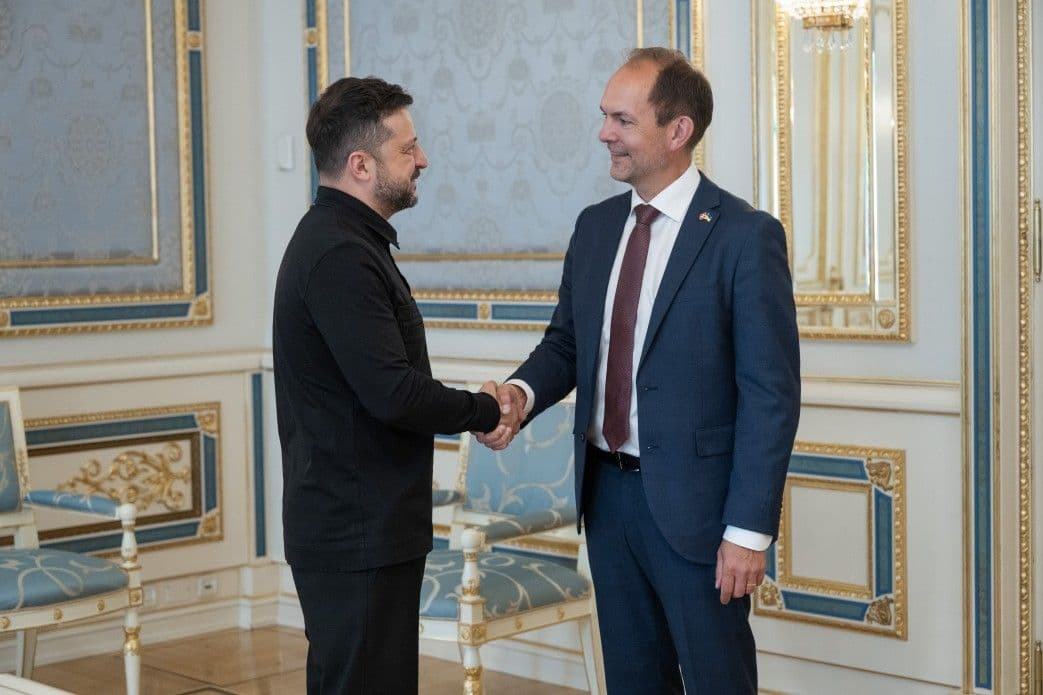
President Volodymyr Zelensky greets Danish Defense Minister Jeppe Bruus in Kyiv. (President’s Office).
Zelensky and Bruus, in Kyiv for Bruus’s first visit since his appointment, discussed finalizing Ukraine’s drone cooperation agreement with Denmark. “I know that our teams worked on it, and it is almost ready,” Zelensky said, expressing hope of signing soon. The two also discussed Denmark’s upcoming 30th aid package and cooperation on European anti-ballistic missile defenses. Denmark has provided approximately 9.7 billion euros in military assistance and 1.1 billion euros in civilian support to Ukraine since 2022.
NORTH KOREAN CASUALTIES IN KURSK EXCEED 7,000, HUR SAYS
Ukraine’s military intelligence directorate (HUR) said North Korean troops suffered more than 7,000 casualties fighting alongside Russian forces to repel Ukraine’s Kursk Oblast incursion in 2024 to 2025 — a figure exceeding the previous South Korean and British intelligence estimate of roughly 6,000 killed and wounded. “The North Korean regime is trying to conceal the actual losses that its army units suffered in the war against the Ukrainian Defense Forces,” HUR said. South Korean intelligence had reported roughly 11,000 North Korean troops stationed in Kursk Oblast as of early 2026. HUR also reported that Russia has increased imports of North Korean-manufactured 122mm and 152mm artillery shells, weapons, and ballistic missiles in early 2026. “Aid from North Korea allows Russia to continue its war against Ukraine, having become a steady source of supplies,” HUR said, noting the partnership benefits both sides: Russia compensates for ammunition and manpower shortages while North Korea gains technological advancement for its missile and nuclear programs.
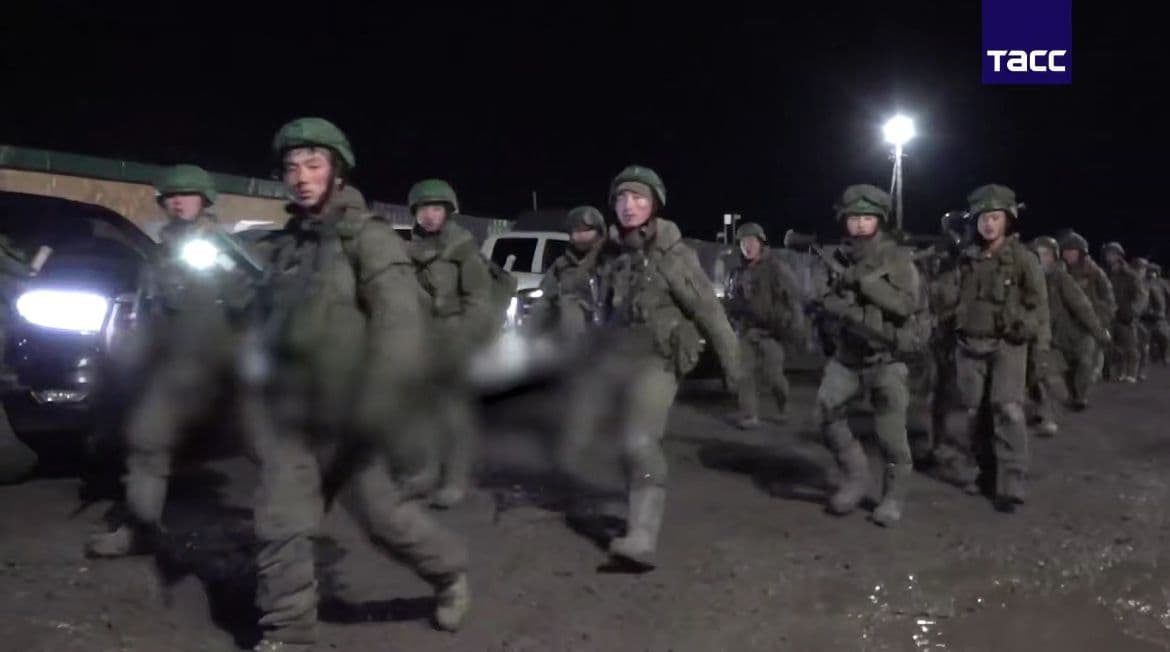
North Korean troops, wearing full Russian military uniforms and carrying rifles, are shown marching at night in footage released. (Screenshot from a video released by the Russian state news agency TASS)
MONACO EXPLOSION INJURES UKRAINIAN BUSINESSMAN’S FAMILY; TYSHCHENKO CHARGED WITH BRIBERY
An explosion at an apartment building in Monaco on the evening of June 29 injured three members of the same Ukrainian family: a couple aged 50 to 60, both in critical condition, and their 13-year-old daughter, who sustained non-life-threatening injuries. French outlet BFM TV identified the injured man as Ukrainian businessman Vadym Yermolaiev, a Dnipro-born investor and former CEO of Alef Group who renounced Ukrainian citizenship for Cyprus in 2019; Zelensky sanctioned Yermolaiev in 2023, freezing his assets and barring Ukrainian financial operations for 10 years. Monaco’s Minister of State Christophe Mirmand called the explosion “likely an attack” and said it was the first such incident in the principality’s history. Monaco’s Prosecutor General said an individual was seen leaving a package in the building’s lobby before fleeing; the device was reportedly filled with bolts and metal shot to increase the blast force. The motive and the building’s specific target remain unclear; police are searching for a suspect.
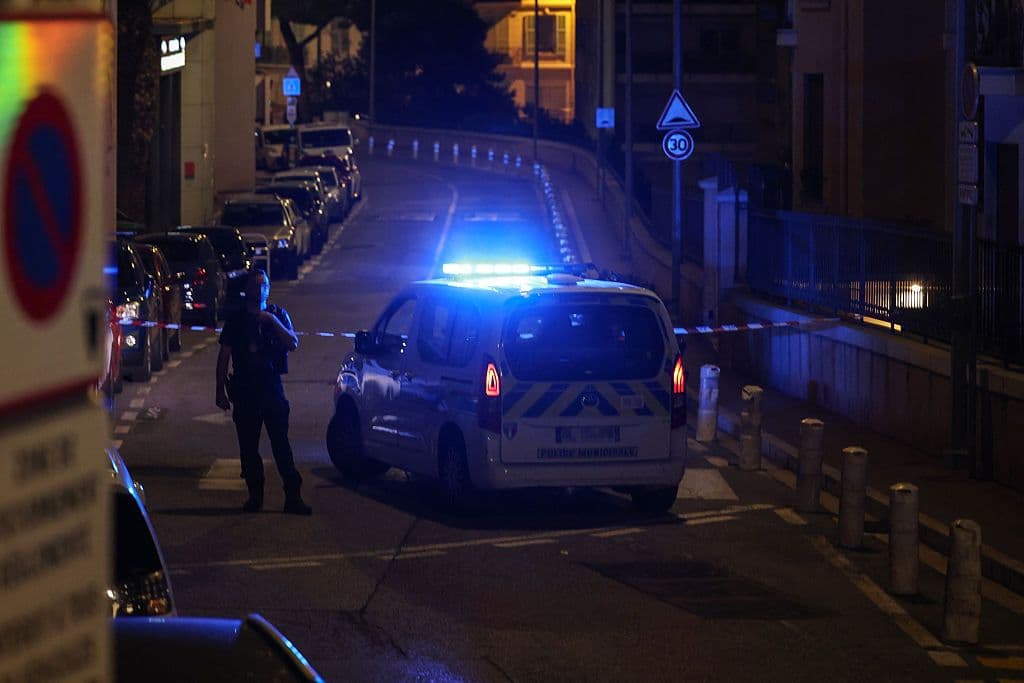
A police officer stands guard next to a police car after setting up a security perimeter on a street following an explosion that occurred in a residential building in Monaco, near the border with France. (Valery Hache / AFP via Getty Images)
Separately, Ukraine’s National Anti-Corruption Bureau charged lawmaker Mykola Tyshchenko — expelled from Zelensky’s Servant of the People party in 2023 — with soliciting a bribe worth more than $1 million in 2023 in exchange for using his parliamentary influence to benefit call centers, though NABU said he did not ultimately receive the money. Tyshchenko was also charged with money laundering Hr 12.6 million ($280,000) through a sham gift agreement with his ex-wife and lying about it in his asset declaration. Tyshchenko has faced multiple prior controversies, including a 2024 charge for illegally detaining a former soldier and a 2023 expulsion following an unauthorized wartime trip to Thailand.
SWEDEN SIGNS $4.83 BILLION SUBMARINE DEAL WITH POLAND; BALTIC SEA PACT LAUNCHED
Swedish defense company Saab signed a 47 billion kronor ($4.83 billion) contract with Poland on June 29 to supply three A26 submarines, alongside a weapons package and training support, with final deliveries scheduled for 2038. “The three A26 submarines meet Poland’s current and future defence requirements and will play a pivotal role in enhancing security in the Baltic Sea region,” Saab CEO Micael Johansson said. Poland and Sweden simultaneously launched the Baltic Sea Pact, a framework for deeper bilateral security and defense-industrial cooperation that explicitly identifies Russia as the primary long-term threat to the region. “Through joint efforts and close cooperation with international partners and Allies, we are prepared to lead regional initiatives aimed at constraining Russia and curbing its space for malign actions,” the joint Swedish-Polish statement said.
POLAND DETAINS 11 SUSPECTED RUSSIAN-FUNDED PROVOCATEURS RECRUITING UKRAINIAN REFUGEES
Poland’s Internal Security Agency and Border Guard detained nine Ukrainian citizens and two Belarusians across Warsaw, Wroclaw, Krakow, Zakopane, and Bydgoszcz on suspicion of recruiting Ukrainian refugees for paid pro-Russian protests, Polish officials reported June 29. Poland’s minister overseeing intelligence agencies, Tomasz Siemoniak, said the group had paid Ukrainian refugees since autumn 2025 to participate in demonstrations intended to influence Ukrainian migrants, with funding allegedly traced to Russia. All detainees have already been expelled from Poland. Polish authorities have previously detained Ukrainian nationals on suspicion of spying or planning sabotage on behalf of Russian intelligence services.
June 29, 2026 ended with two competing versions of this war on record: Putin’s, in which Russian forces are nearly everywhere they claim to be and Ukrainian strikes change nothing, and ISW’s, built from verified satellite imagery and geolocated footage, in which Russia holds a fraction of what Putin described and is advancing at a quarter of last summer’s pace. Between those two versions, six people in Dnipro did not survive breakfast, a family in Monaco is recovering from a bomb built with bolts and metal shot, and Lukashenko spent a second day in Beijing hoping Xi Jinping offers him room to maneuver that Moscow will not. The map does not lie as easily as the men who claim to control it.
A PRAYER FOR UKRAINE
1. For the Six Killed in Dnipro Before Breakfast
Lord, a Russian strike hit Dnipro City on the morning of June 29, killing six people and injuring 35, four critically, in a city more than 100 kilometers from the front line. We do not yet know what weapon was used or why this strike came when it did. We know only that six people who woke up that morning expecting an ordinary Monday did not live to see the afternoon. We pray for their families, for the four still fighting for their lives in critical condition, and for a city that has absorbed strike after strike while remaining, on paper, far from any battle line. Let the distance from the front mean something again.
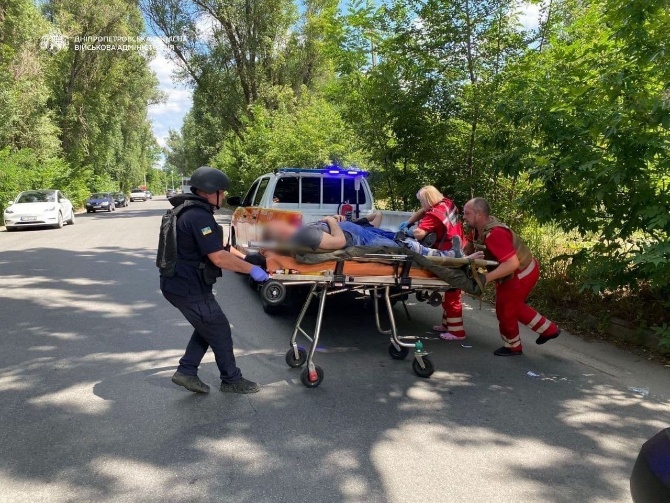
A morning Russian attack on Dnipro killed at least four people and injured 28, the local authorities reported. (Dnipropetrovsk Oblast Governor Oleksandr Hanzha/Telegram)
2. For the Child in the Monaco Apartment Building
Father, a 13-year-old girl was injured when a bomb filled with bolts and metal shot exploded in her family’s apartment building in Monaco on June 29. Her parents are in critical condition. We do not know if this attack was connected to the war, to sanctions, to business disputes, or to something else entirely — Monaco’s own prosecutor does not yet know either. We pray for this child, for whatever she witnessed, and for her parents’ recovery. We ask that the truth of what happened be found, and that no child anywhere pays the price for decisions made by adults far above her.
3. For the Children Wounded in Kharkiv and Zaporizhzhia
God of the young, a 10-year-old girl and a 16-year-old boy were wounded in a village south of Kharkiv on June 29. A child was among those hurt in a minibus strike in Zaporizhzhia the same morning. These are not isolated incidents — they are Monday’s entries in a ledger that has been filling for 1,587 days. We pray for each of these children by name, though we do not know their names. We ask for their full recovery, for parents who can find the strength to comfort them, and for a day, someday soon, when this particular kind of news stops being routine.
4. For the Soldiers Who Know the Numbers Are False
Lord, a Ukrainian battalion commander named Miami told a reporter on June 29 that his soldiers have long grown accustomed to false statements from Russian leadership — and then described, in plain terms, the actual work: holding defensive positions, conducting search-and-strike missions, maintaining a kill zone, preparing for whatever comes next. We pray for him and for every soldier who knows the real map, who lives inside the gap between what Putin claims on television and what is actually true on the ground. Give them rest when they can get it, accuracy in their work, and the knowledge that the truth they are defending matters more than the lies arrayed against it.
5. For the North Korean Soldiers, and for Honesty About Every Cost of This War
God of all nations, more than 7,000 North Korean soldiers were killed or wounded fighting in Kursk Oblast for a war that was never theirs, sent by a government that will not even acknowledge how many of them died. We pray for their families in North Korea, who may never learn the truth of what happened to their sons. We pray, too, for honesty about every cost of this war — Ukrainian, Russian, North Korean, and beyond — because every inflated claim and every concealed casualty count is its own kind of violence against the truth. Let the full accounting come, in time, for everyone this war has consumed.